Veena Bhargava Textbook Solutions: Pollution - Types and Sources

Chapter 15
Pollution - Types and Sources
Class 9 - Veena Bhargava Geography Solutions
Answer the following questions
Question 1Define pollution. How is it caused?
Answer
Ans: Pollution is the introduction of harmful or poisonous substances into the environment that make air, water or soil unsafe for humans, animals and plants. It is caused by natural processes such as volcanic eruptions, forest fires and erosion, and more often by human activities such as industrial emissions, improper waste disposal, vehicle exhaust, agricultural chemicals and deforestation.
Question 2State the causes of soil pollution.
Answer
Ans: The main causes of soil pollution include:
- Industrial waste: Disposal of chemical-laden effluents, fly ash from thermal plants and wastes from refineries contaminate the topsoil and may reduce its fertility.
- Urban commercial and domestic waste: Accumulation of non-biodegradable materials such as glass, plastic and electronic waste remains in the soil for long periods and contaminates it.
- Chemical fertilisers: Excessive or improper use of chemical fertilisers disturbs natural nutrient balance and may lead to soil salinisation and runoff into water bodies.
- Biomedical waste: Discarded hospital waste, syringes and plastics introduce pathogens and toxic substances into the soil if not treated safely.
- Pesticides: Repeated use of pesticides leaves nitrates, phosphates and other residues in the soil which can persist and harm plants, animals and groundwater.
State the effects of freshwater pollution. How is it caused?
Answer
Ans: Effects of freshwater pollution include:
- Eutrophication and aquatic death: Excess nitrates and phosphates from fertilisers and detergents cause rapid growth of algae and aquatic plants. When these plants die and decompose, they use up dissolved oxygen and fish and other organisms may die.
- Ecosystem disruption: Heavy metals and toxic chemicals harm fish, plants and microorganisms, upsetting the natural balance of the water ecosystem.
- Oil spills: Oil forms a thin film on the water surface that prevents oxygen exchange and coats organisms, causing suffocation and long-term habitat damage.
- Thermal pollution: Warm water discharged from industries reduces dissolved oxygen levels and can kill temperature-sensitive aquatic life.
Freshwater pollution is caused by:
- Natural sources: These include animal waste, decaying organic matter and minerals that dissolve into water.
- Human sources: Urbanisation and industrialisation contribute through:
- Sewage and domestic waste
- Industrial effluents
- Agricultural runoff (fertilisers and pesticides)
- Nuclear waste
- Oil spills from ships and pipelines
- Thermal discharges from factories and power plants
How do agricultural wastes harm the environment?
Answer
Ans: Agricultural wastes harm the environment in several ways:
- Pollution of surface waters: Runoff from farms carries organic and inorganic pollutants, including pesticides and animal waste, into rivers and lakes.
- Eutrophication: Excess nitrates and phosphates from fertilisers stimulate algal blooms which reduce oxygen and harm aquatic life.
- Soil impact: Continuous use of chemical fertilisers and pesticides can alter soil structure and nutrient balance, reducing fertility over time.
- Radiation contamination: In limited cases, the use of radio-tracers or contaminated fertilisers can introduce radioactive pollutants if proper safety measures are not followed.
Which gases are emitted through refrigerators and air-conditioners?
Answer
Ans: Chlorofluorocarbons (CFCs) are the gases commonly emitted by older refrigerators and air-conditioners. When released into the upper atmosphere, CFCs break down ozone molecules and contribute to ozone layer depletion. Many modern systems now use alternative refrigerants with lower ozone-depleting potential.
Question 6Differentiate between the natural and man-made sources of pollution.
Answer
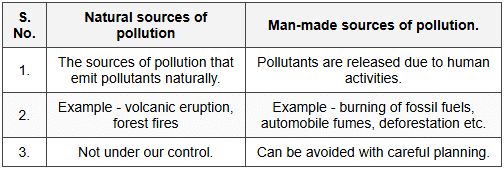
Ans: Natural sources of pollution arise from Earth's own processes and include:
- Volcanic eruptions (ash and gases)
- Forest fires (smoke and particulates)
- Dust storms and pollen
- Sea spray and biological decay
Man-made (anthropogenic) sources include:
- Industrial emissions and factory effluents
- Vehicle exhausts and transport-related pollution
- Agricultural chemicals (fertilisers and pesticides)
- Domestic and municipal waste, including plastic and untreated sewage
What is meant by oil spill?
Answer
Ans: An oil spill is the accidental or deliberate release of oil into the sea or other water bodies. The oil spreads over the surface, forming a layer that blocks oxygen exchange, coats marine organisms and shorelines, and causes large-scale damage to aquatic life and coastal ecosystems.
Question 8How is oil spill caused?
Answer
Ans: Oil spills can be caused by:
- Waste oil from city drains and tankers: Improper disposal or leaks during transportation.
- Leakage from oil wells: Offshore platform accidents or pipeline failures.
- Accidental spills: Ship collisions, groundings or operational errors during loading and unloading.
What is meant by radiation?
Answer
Ans: Radiation is the emission of energy in the form of particles or electromagnetic waves from radioactive substances or energetic processes. Sources include cosmic rays, radioactive materials and some human activities (for example, nuclear reactors and certain medical procedures). Excessive exposure to radiation can harm living tissues and the environment.
Question 10Explain the following terms:
(a) Smog
(b) Pollutants
(c) CFC
(d) Eutrophication
Answer
Ans:
(a) Smog: A mixture of smoke and fog, often found in industrial or heavily populated areas, especially in cold weather. Smog reduces visibility and causes respiratory problems.
(b) Pollutants: Substances that contaminate the environment and cause harm. Pollutants can be natural (for example volcanic ash) or man-made (for example plastics, chemical wastes).
(c) CFC: Chlorofluorocarbons are synthetic compounds once widely used as refrigerants and in aerosol sprays. They release chlorine atoms in the upper atmosphere which destroy ozone molecules and create the ozone hole.
(d) Eutrophication: The process in which excess nutrients (mainly nitrates and phosphates) enter water bodies, causing overgrowth of algae and plants. Decomposition of this excess biomass depletes oxygen, harming fish and other aquatic life.
Question 11Write a short note on the following:
(a) Radiation
(b) Oil spill
(c) Air pollution
(d) Noise pollution
Answer
Ans:
(a) Radiation: Emission of particles or electromagnetic rays from radioactive sources. Natural sources include cosmic rays and terrestrial radioisotopes; man-made sources include nuclear reactors and medical uses of radioisotopes. Exposure must be controlled to avoid health risks.
(b) Oil spill: The release of oil into the marine environment which forms surface films, kills marine animals and birds, and pollutes coasts; clean-up is difficult and costly.
(c) Air pollution: The contamination of the atmosphere by gases, smoke and dust from both natural events (such as wildfires) and human activities (such as vehicles, industries and burning of fossil fuels), causing health and environmental problems.
(d) Noise pollution: Unwanted or harmful sound from transport, industrial activity, construction and loud entertainment. It can cause hearing loss, stress, sleep disturbance and reduced productivity.
Question 12What kind of pollution is produced by brick kilns?
Answer
Ans: Brick kilns produce mainly air pollution. They emit large amounts of smoke, dust and particulate matter, plus carbon dioxide and other gases from burning fuel. These emissions can cause respiratory problems and reduce air quality in surrounding areas.
Question 13How is thermal pollution caused?
Answer
Ans: Thermal pollution is produced when industries and power plants discharge heated water into rivers, lakes or seas. The rise in water temperature lowers dissolved oxygen levels and disrupts aquatic ecosystems, often killing sensitive plants and animals.
Question 14What are the sources of radioactive pollution?
Answer
Ans: Sources of radioactive pollution include:
- Natural sources: Cosmic rays and naturally occurring radioactive minerals in the earth.
- Man-made sources: Wastewater and emissions from nuclear power plants, nuclear weapon tests, mining and processing of uranium, and medical or industrial facilities that use radioisotopes.
How do water bodies get contaminated by the effluents from industries?
Answer
Ans: Water bodies get contaminated by industrial effluents through:
- Introduction of organic pollutants: Untreated waste and sewage from factories introduce bacteria and organic matter that deplete oxygen.
- Chemical discharge: Toxic chemicals, dyes and heavy metals from industrial processes contaminate rivers and lakes and can accumulate in the food chain.
- Toxic and radioactive materials: Leaks or improper disposal can release hazardous and radioactive substances into water.
- Acid precipitation: Air pollution from industry can lead to acid rain, which lowers the pH of water bodies and harms aquatic life.
- Leaching of heavy metals: Metals from industrial sites can leach into soil and be washed into nearby water bodies during rainfall.
What is the difference between primary and secondary pollutants?
Answer
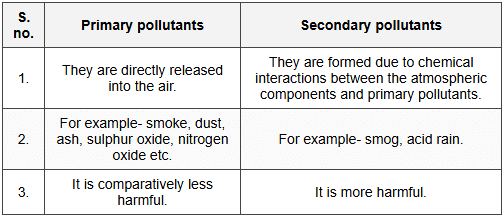
Ans: Primary pollutants are emitted directly into the air from identifiable sources. Examples include sulphur dioxide (SO2), carbon monoxide (CO), nitrogen oxides (NOx) and suspended particulate matter (SPM).
Secondary pollutants are not emitted directly but form in the atmosphere by chemical reactions between primary pollutants and other substances; a common example is ground-level ozone, which forms when nitrogen oxides and volatile organic compounds react in sunlight.
How does urbanization cause air pollution?
Answer
Ans: Urbanisation increases air pollution through:
- Vehicle emissions: More cars, buses and aircraft produce carbon monoxide, hydrocarbons and nitrogen oxides.
- Industrial discharges: Factories in and near cities emit sulphur oxides, hydrocarbons and other pollutants.
- Burning of waste: Open burning of garbage releases carbon dioxide and toxic gases.
- Brick kilns and domestic fuel: These emit smoke, soot and particulate matter.
- Household products: Some cleaning agents and aerosols release volatile organic compounds that add to indoor and outdoor pollution.
Choose the correct option Question 1
Which of the following reasons is the main cause of Acid rain?
- Due to the emission of CO2 in the air
- Due to the emission of Carbon Monoxide in the air
- Due to the emission of Sulphur dioxides in the air
- All the above
Answer
Ans: (c)
Explanation: Sulphur dioxide (SO2) and nitrogen oxides released from burning fossil fuels react with water vapour in the atmosphere to form sulphuric and nitric acids. These fall as acid rain, damaging vegetation, buildings and aquatic ecosystems.
Question 2Which of the following is a secondary pollutant?
- Smoke
- Ozone
- Sulphur dioxides
- Dust
Answer
Ans: (b)
Explanation: Ozone at ground level is a secondary pollutant formed by chemical reactions between primary pollutants (such as nitrogen oxides and volatile organic compounds) in the presence of sunlight. Smoke, sulphur dioxide and dust are emitted directly and are therefore primary pollutants.
Question 3SPM stands for
- Suspended Poisonous Matter
- Soluble Poisonous Material
- Smoky Particulate Matter
- Suspended Particulate Matter
Answer
Ans: (d)
Explanation: SPM stands for Suspended Particulate Matter, which refers to tiny solid or liquid particles suspended in the air. These particles can be inhaled and cause respiratory problems.
Question 4Which of the following chemical compounds is mainly responsible for the formation of ozone hole?
- CO2
- CFC
- SO2
- NO
Answer
Ans: (b)
Explanation: Chlorofluorocarbons (CFCs) release chlorine atoms in the stratosphere that catalyse the destruction of ozone molecules, leading to thinning of the ozone layer and the ozone hole.
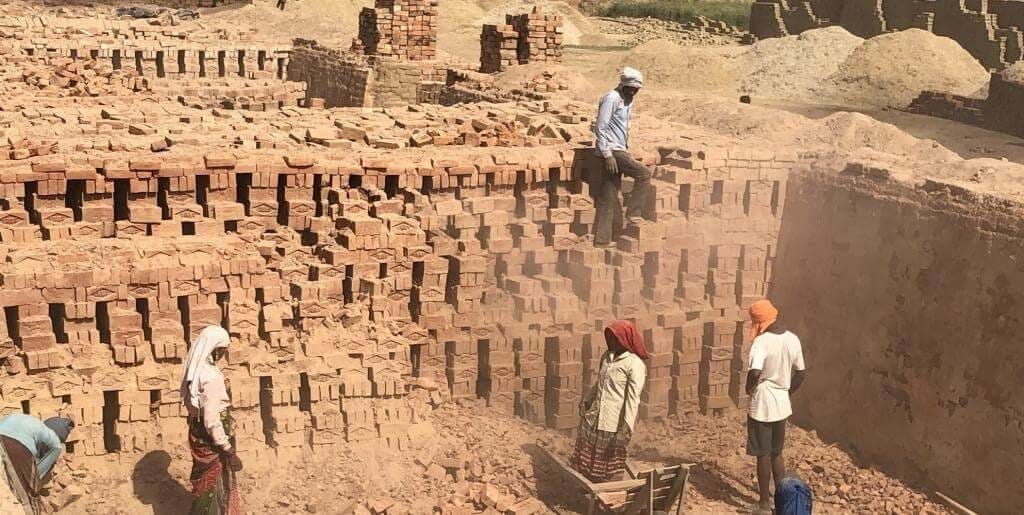
Question 5Study the picture and identify which type of environmental pollution is mainly caused by the activity practised here.
- Noise pollution
- Water pollution
- Air pollution
- Radioactive pollution
Answer
Ans: (c)
Explanation: The activity in the picture releases visible smoke and emissions into the atmosphere, which contaminate the air and lower air quality. Therefore the main pollution caused is air pollution.
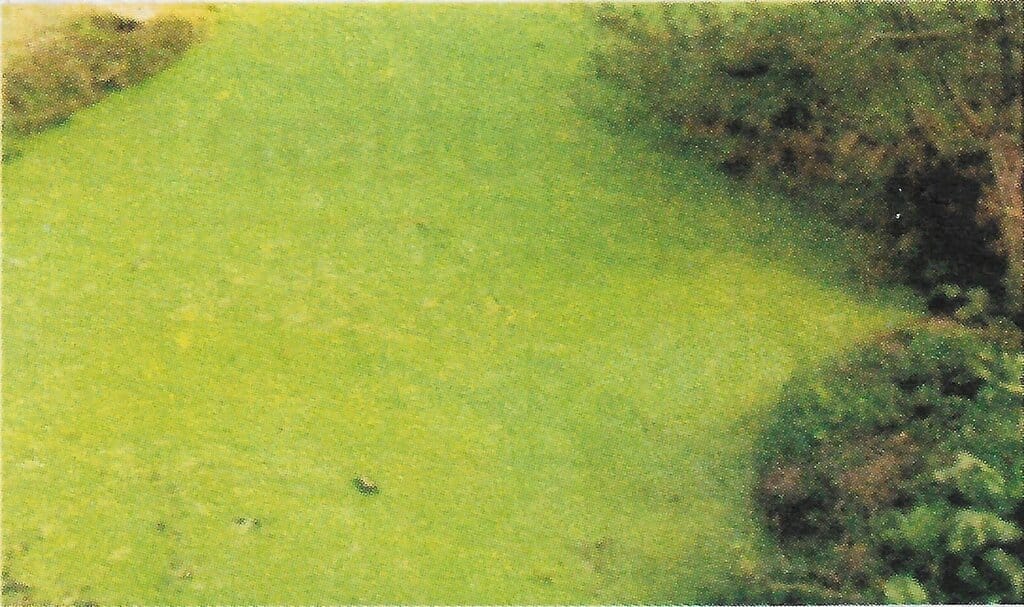
Question 6Study the picture and identify the type of environmental pollution caused here.
- Soil pollution
Answer
Ans: The activity shown causes water pollution.
Explanation: The image illustrates discharge or dumping that contaminates nearby water bodies. Although the sole option listed is 'Soil pollution', the visible signs in the picture (for example, effluent entering water) indicate that water pollution is the main problem.
Question 7Thermal pollution is caused by
- the discharge of fertilizer on the Water body
- the discharge of domestic waste in the water body
- the discharge of hot water of thermal power plants in the water body.
Answer
Ans: (c)
Explanation: Thermal pollution results when industries, especially thermal power plants, discharge heated water into rivers or lakes. This raises the water temperature and reduces dissolved oxygen, harming aquatic life.
Question 8Which of the following is not a man-made source of radioactive pollutant?
- Wastes from the nuclear power stations
- Mining & processing of Uranium Ore
- Cosmic rays
- X-ray wastes
Answer
Ans: (c)
Explanation: Cosmic rays originate from outer space and are a natural source of radiation. The other options are man-made or arise from human activities.
Question 9Study the picture and identify the type of environmental pollution caused here.

Answer
Ans: Noise pollution.
Explanation: The image shows loud activities (for example heavy traffic or construction) that generate high sound levels. Such excessive sound disturbs people and wildlife and is classed as noise pollution.
Question 10Which of the following is not a man-made source of air pollution?
- Automobile pollution
- Forest fires
- Industrial pollution
- Brick Kilns
Answer
Ans: (b)
Explanation: Forest fires are a natural source of air pollution when they occur naturally. The other items-automobile emissions, industrial discharges and emissions from brick kilns-are primarily caused by human activities.
Give reasons for the following Question 1
Noise pollution is prevalent in towns and cities.
Answer
Ans: Noise pollution is widespread in towns and cities because of high traffic volumes, frequent construction work, crowded public spaces, industrial activities and loud entertainment. These concentrated human activities produce continuous and high-level sounds, and the lack of adequate noise control measures or barriers allows noise to spread and affect large populations.
Question 2Acid rainfall is a result of the burning of fossil fuel.
Answer
Ans: Acid rain results from the burning of fossil fuels because fuels such as coal and oil release sulphur dioxide (SO2) and nitrogen oxides (NOx) when burned. These gases react with water vapour in the atmosphere to form acids (sulphuric and nitric acids), which then fall as acidic precipitation, damaging plants, buildings and aquatic life.




