IBPS RRB PO General/Financial Awareness 2026: Topic-wise Weightage & Strategy

IBPS RRB PO Exam Pattern 2026
The Institute of Banking Personnel Selection (IBPS) conducts the Common Recruitment Process (CRP) for Regional Rural Banks (RRBs) to identify qualified candidates for managerial-level positions across India. This national-level examination serves as a gateway to becoming a Probationary Officer (Officer Scale-I), as well as Managers (Scale-II) and Senior Managers (Scale-III) within the country's rural banking network.
Building a career as an RRB PO offers a unique opportunity to contribute directly to the nation's financial development while securing a stable, rewarding position in the public sector. The role is designed for professionals who aim to lead banking operations in rural and semi-urban areas, focusing on essential functions such as credit management, loan processing, and agricultural banking.
The recruitment drive is structured to assess foundational aptitude, specialized professional knowledge, and banking suitability through a multi-stage evaluation process. By standardizing the assessment across various scales, the IBPS RRB PO 2026 exam ensures a merit-driven selection of future leaders for India's Regional Rural Banks.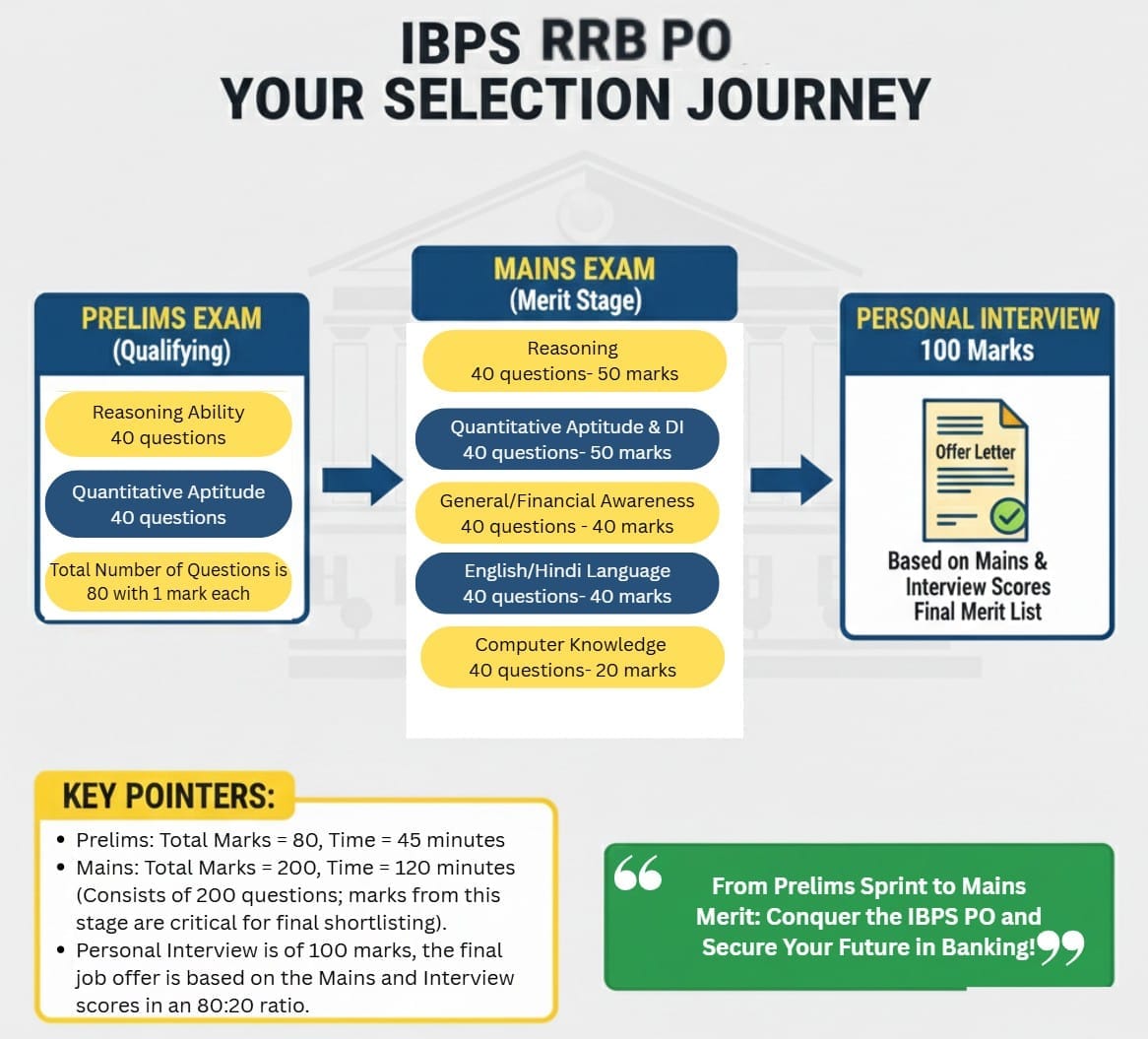
1. Selection Process by Scale
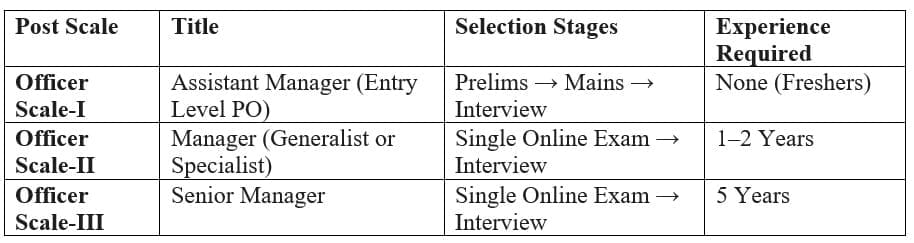
The recruitment process is divided into three Group "A" officer categories:
I. Preliminary Examination Pattern (Scale-I)
The Preliminary stage is a speed-based qualifying round designed to test your foundational aptitude in logic and calculation.
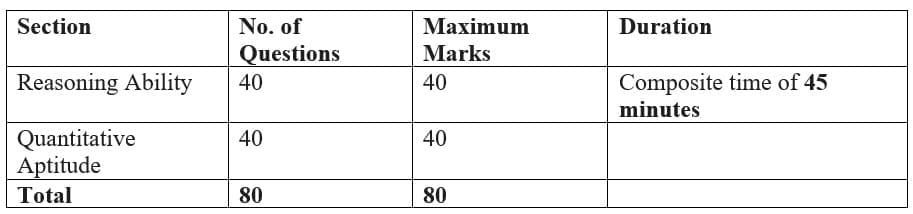
Key Detail: There are no sectional timers; you are free to allocate the 45 minutes between the two sections as you see fit. A penalty of 0.25 marks applies for every wrong answer in all exams.
II. Main Examination Pattern (Scale-I)
The Mains exam is the merit-defining stage that tests a broader range of skills, including digital literacy and financial awareness.
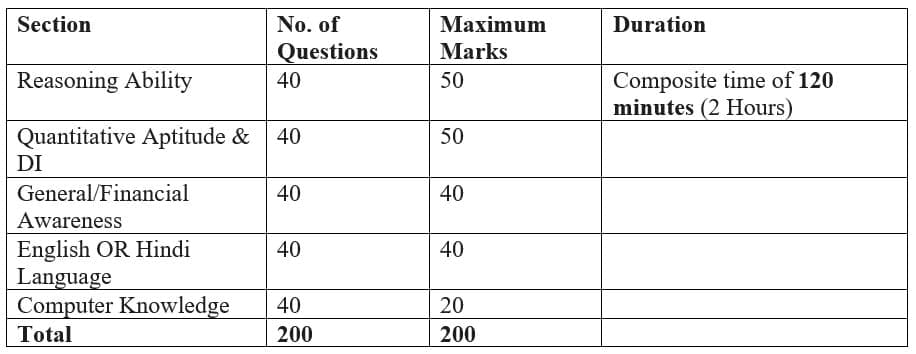
You have the unique option to choose between English or Hindi for the language section based on your proficiency.
III. Scale-II (General Banking Officer) & Scale-III Pattern
This pattern is designed for Generalist roles and mirrors the complexity of a Mains-level examination in a single sitting.
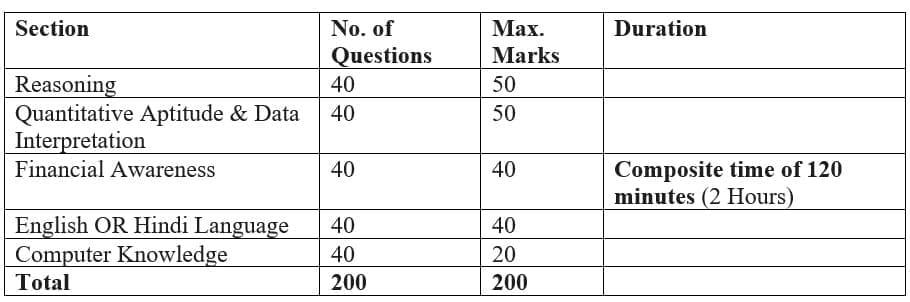
Unlike Scale-I, there is no Preliminary round; your performance in this single exam determines your interview shortlisting. Reasoning and Quantitative Aptitude are the highest-scoring sections, with a weightage of 1.25 marks per question.
IV. Scale-II (Specialist Cadre) Pattern
This pattern applies to specialist roles such as IT, Chartered Accountant, Law, Treasury, Marketing, and Agriculture Officers.
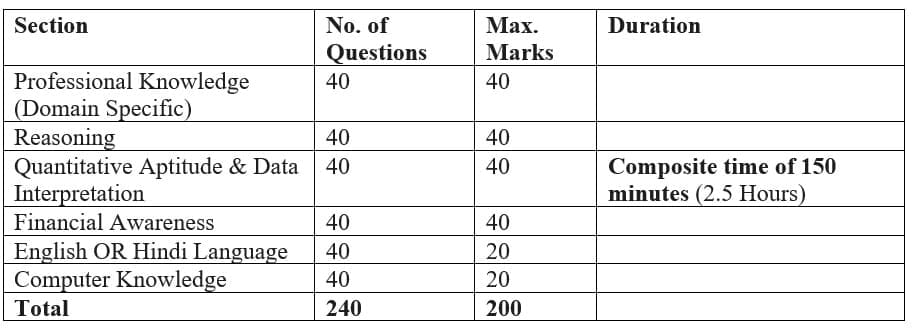
Candidates are given an additional 30 minutes to account for the increased question count and technical depth. The core "Professional Knowledge" section tests your specific field of expertise (e.g., JAVA/Networking for IT Officers).
IBPS RRB PO General/Financial Awareness 2026 Syllabus
The awareness section for IBPS RRB 2026 is divided based on the post category. While the core topics overlap, the exam structure distinguishes between General Awareness (for entry-level PO) and Financial Awareness (for experienced/specialist roles).
I. General Awareness (Officer Scale-I / PO)
This section is a "Merit Stage" exclusive in the Mains exam. It focuses on evaluating your knowledge of daily current events and foundational banking concepts.
1. Current Affairs (The Rank Booster):
- Timeframe: High focus on news from the last 4-6 months.
- National & International news: Appointments, awards, honors, summits, and sports.
- Science & Technology: Defense deals, space missions (ISRO/NASA), and new digital innovations.
- Rural & Social Initiatives: Ministry-led programs for social welfare and rural upliftment.
2. Banking & Rural Awareness:
- RBI Pillar: Functions of RBI, Monetary Policy (Repo Rate, CRR, SLR), and the RBI Act 1934.
- RRB Context: Structure of Regional Rural Banks, sponsor banks, and the role of NABARD in rural credit.
- Digital Banking: NPCI products (UPI, NEFT, RTGS), cybersecurity awareness, and digital wallets.
3. Government Schemes & Economy:
- Financial Inclusion: PM Jan Dhan Yojana (PMJDY), Atal Pension Yojana (APY), and Mudra Yojana.
- Agricultural Schemes: PM Kisan, Kisan Credit Card (KCC), and rural development projects.
- Economic Indicators: Key features of the Union Budget, Economic Survey, and GDP projections.
4. Static GK:
- Geography & Institutions: State capitals, currencies, national parks, and headquarters of international organizations (UN, IMF, World Bank).
- Records: Important days, books and authors, and "First in India" records.
II. Financial Awareness (Officer Scale-II & III)
For Scale-II (GBO) and Scale-III (Senior Manager) posts, the syllabus shifts from general news to technical financial management.
1. Advanced Banking Regulations:
- Compliance: Banking Regulation Act 1949, SARFAESI Act, and Basel I, II, III Norms.
- Risk Management: NPAs (Non-Performing Assets), Asset Reconstruction, and loan restructuring.
2. Corporate & Financial Analysis:
- Statement Analysis: Ratio analysis, Cash Flow statements, and Balance Sheet interpretation.
- Investment Decisions: Working capital management, Time Value of Money, and Dividend Policy.
3. Markets & Instruments:
- Capital Markets: Functions of SEBI, Mutual Funds, Derivatives (Futures & Forwards), and financial market instruments.
- Global Economy: Impact of global economic institutions like the IMF and World Bank on Indian markets.
Edurev Tip: Unlike calculative sections, Awareness is a "Time Saver." Aim to finish all 40 questions in under 10-12 minutes. Use the saved time for complex Data Interpretation or Puzzles. In 2026, rural banking context in questions has increased significantly-prioritize NABARD and Agricultural Policy updates.
IBPS RRB PO Awareness Section: Topic-wise Weightage
The following weightage tables reflect the distribution of questions based on the latest 2026 trends for both the General Awareness (Scale-I) and Financial Awareness (Scale-II/III) sections.
I. General Awareness Weightage (Officer Scale-I)
This section is the merit-defining stage for the entry-level PO role.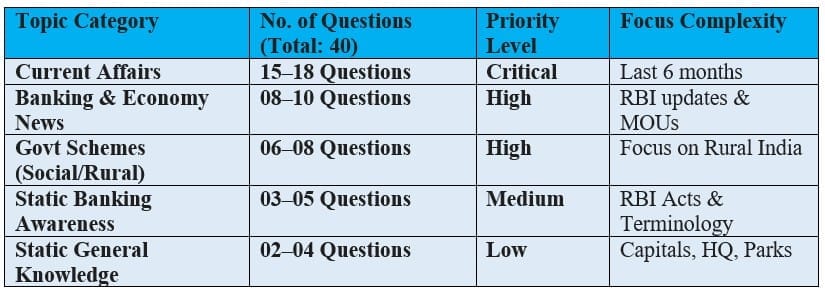
II. Financial Awareness Weightage (Officer Scale-II & III)
This section focuses on technical domain knowledge for experienced/specialist roles.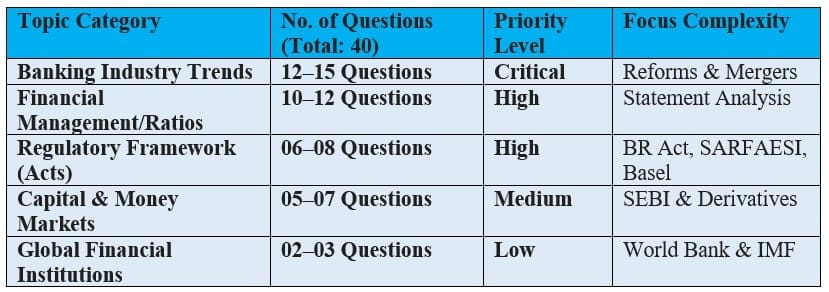
IBPS RRB PO General/Financial Awareness- Success Strategy
Why You Should Crack the IBPS RRB PO 2026
Transitioning from a student to a professional is a major milestone. Cracking this exam offers more than just a job; it provides a platform for both personal and societal impact.
- Financial Independence & Stability: A career as an RRB PO offers a competitive starting salary (approx. ₹74,000+ in-hand) alongside benefits like medical aid, pension schemes, and concessional loans.
- Rapid Career Trajectory: The promotional hierarchy is clear and merit-based. Starting as an Assistant Manager, you can advance to Deputy Manager, Branch Manager, and eventually reach senior leadership roles like General Manager.
- Direct Social Impact: Unlike urban banking, an RRB PO works at the grassroots level, facilitating agricultural growth, supporting local farmers, and implementing government development schemes that directly uplift rural India.
- Professional Identity: Beyond the designation, it offers a respected identity in society, providing a sense of pride for your family and establishing you as a leader in your community.
Preparation Strategy: The "Daily-Weekly" Loop
The Goal: 32+ Marks. Success in Awareness depends on consistency and multiple revisions rather than last-minute cramming.
Study Commitment: 1.5 hours of daily focused study.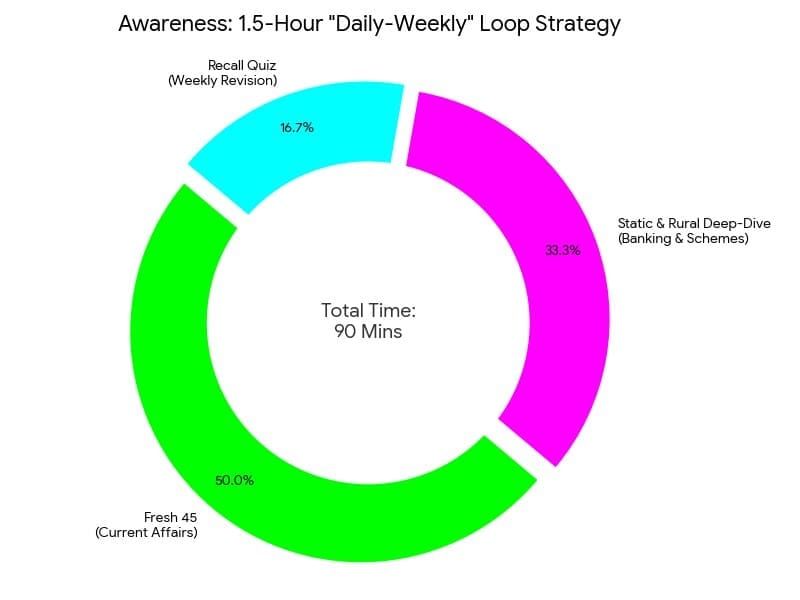
Part 1: The "Fresh 45" (45 Minutes)
- Focus: Daily Current Affairs and Banking News from reliable sources.
- The Task: Read the top 10-15 news items of the day. Focus on "Who, What, Where, and Why."
- The Goal: Stay updated in real-time to avoid a backlog of news as the exam approaches.
Part 2: The Static & Rural Deep-Dive (30 Minutes)
- Focus: Banking Terminology, RBI Acts, and Agricultural Schemes (e.g., KCC, PM-Kisan).
- The Technique: Use "Flashcards" for static data like Headquarters, Currencies, and National Parks.
- The Goal: Ensure that the "fixed" marks from static portions are never lost.
Part 3: The "Recall" Quiz (15 Minutes)
- Focus: Cumulative Revision.
- The Task: Take a quick 20-question quiz on news from last week.
- The Goal: Strengthen your long-term memory and identify areas where your retention is weak.
Edurev Tip: Develop a "Zero-Guesswork" policy. In Awareness, it is easy to feel "familiar" with an option that is actually a trap. If you aren't 100% sure, Skip. One wrong guess here can wipe out the hard-earned marks of a 5-mark math problem.
The 30-day preparation Roadmap
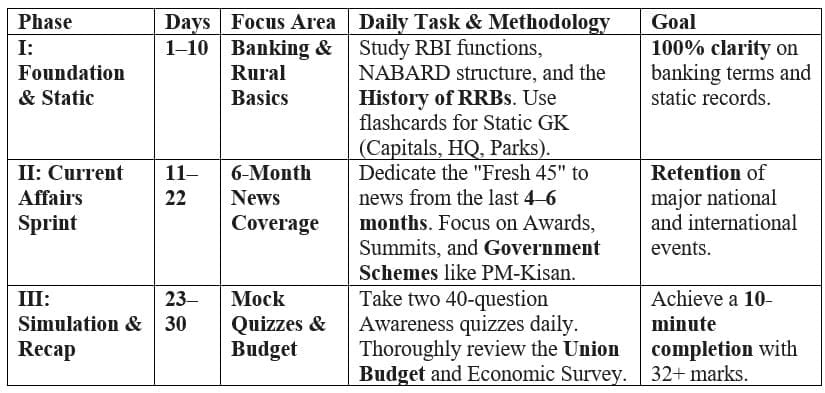
Custom Roadmap- Where do you stand
Success in the IBPS PO 2026 exam depends on identifying your unique strengths and weaknesses to turn daily effort into a definitive job offer.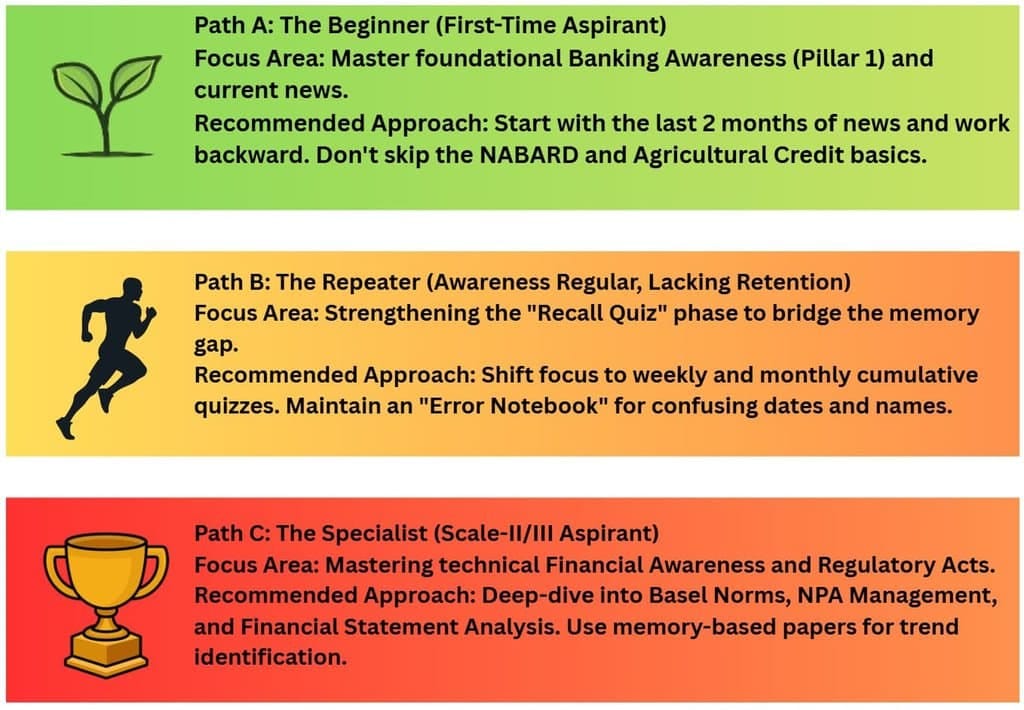
"Cracking the IBPS RRB PO 2026 is not just about mastering a syllabus; it is about demonstrating the discipline and resilience required to lead India's rural banking transformation. Every scheme you memorize and every current event you analyze brings you one step closer to the cabin of an Officer. Stay focused, stay consistent, and secure your future in banking!"
FAQs on IBPS RRB PO General/Financial Awareness 2026: Topic-wise Weightage & Strategy
| 1. What is the exam pattern for the IBPS RRB PO? |  |
| 2. What topics are covered under the General/Financial Awareness section of the IBPS RRB PO exam? | |
| 3. How can candidates strategise to prepare for the General/Financial Awareness section? | |
| 4. What is the importance of topic-wise weightage in the IBPS RRB PO General/Financial Awareness section? | |
| 5. What resources are recommended for effective preparation for the General/Financial Awareness section? | |