IBPS RRB PO Computer Knowledge Syllabus 2026: Topic-wise Weightage & Strategy

IBPS RRB PO Exam Pattern 2026
The Institute of Banking Personnel Selection (IBPS) conducts the Common Recruitment Process (CRP) for Regional Rural Banks (RRBs) to identify qualified candidates for managerial-level positions across India. This national-level examination serves as a gateway to becoming a Probationary Officer (Officer Scale-I), as well as Managers (Scale-II) and Senior Managers (Scale-III) within the country's rural banking network.
Building a career as an RRB PO offers a unique opportunity to contribute directly to the nation's financial development while securing a stable, rewarding position in the public sector. The role is designed for professionals who aim to lead banking operations in rural and semi-urban areas, focusing on essential functions such as credit management, loan processing, and agricultural banking.
The recruitment drive is structured to assess foundational aptitude, specialized professional knowledge, and banking suitability through a multi-stage evaluation process. By standardizing the assessment across various scales, the IBPS RRB PO 2026 exam ensures a merit-driven selection of future leaders for India's Regional Rural Banks.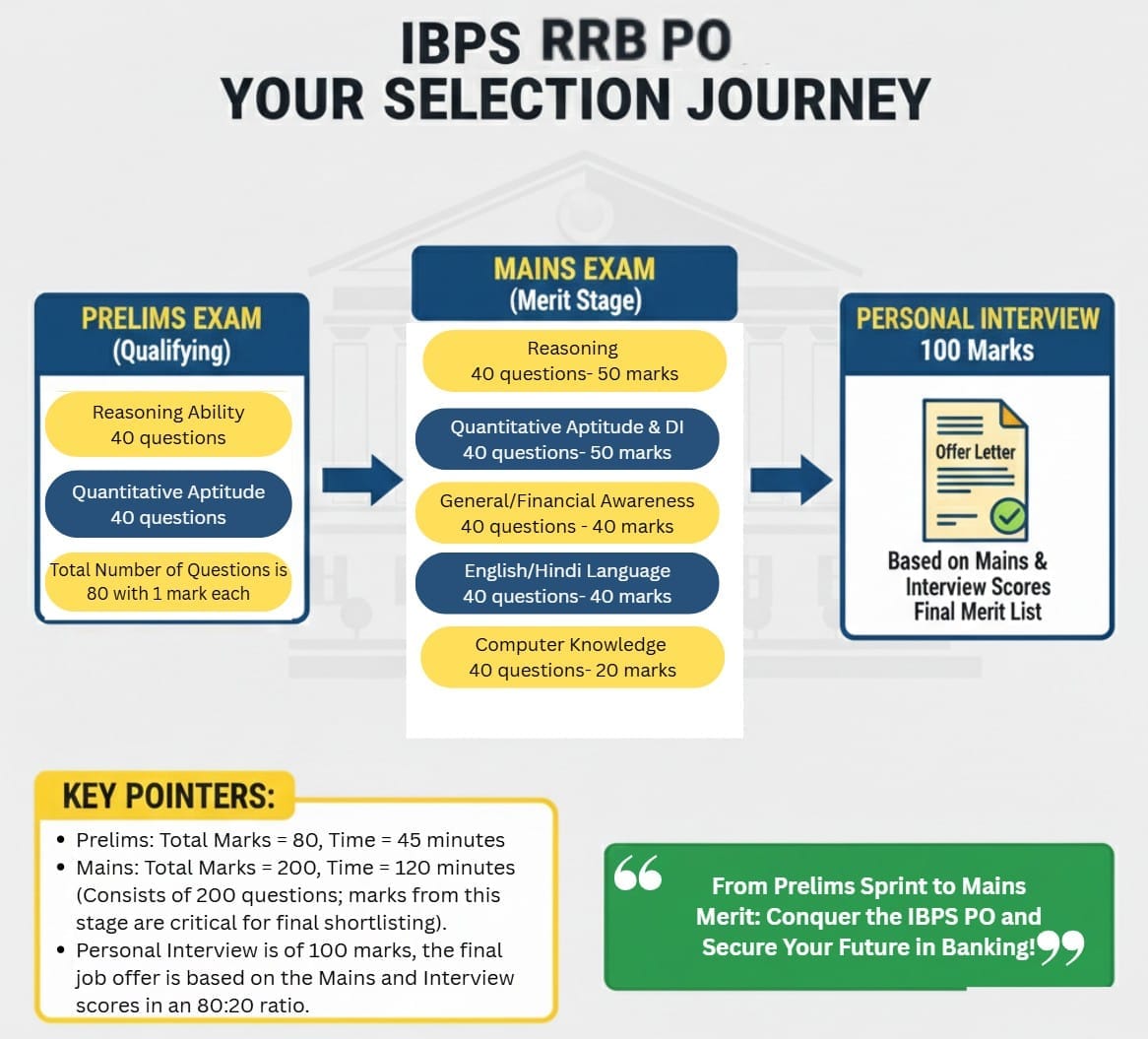
1. Selection Process by Scale
The recruitment process is divided into three Group "A" officer categories:
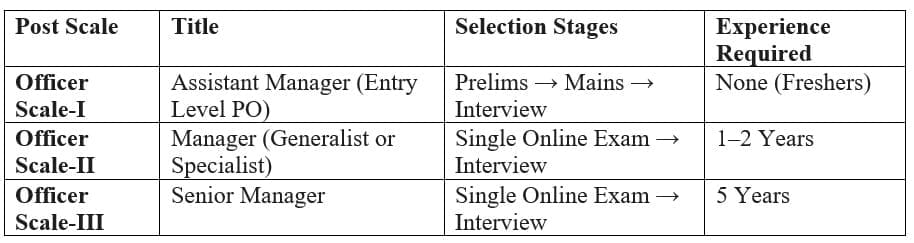
I. Preliminary Examination Pattern (Scale-I)
The Preliminary stage is a speed-based qualifying round designed to test your foundational aptitude in logic and calculation.
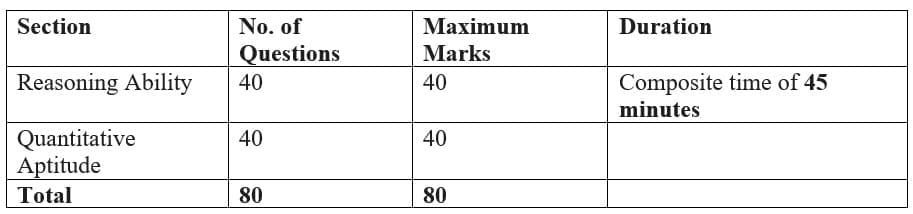
Key Detail: There are no sectional timers; you are free to allocate the 45 minutes between the two sections as you see fit. A penalty of 0.25 marks applies for every wrong answer in all exams.
II. Main Examination Pattern (Scale-I)
The Mains exam is the merit-defining stage that tests a broader range of skills, including digital literacy and financial awareness.
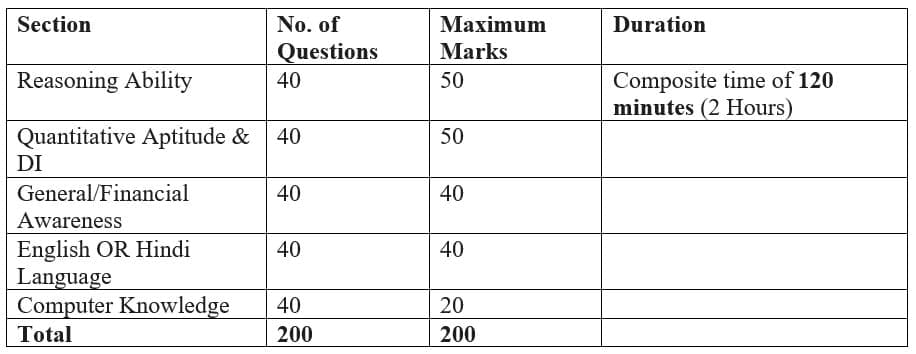
You have the unique option to choose between English or Hindi for the language section based on your proficiency.
III. Scale-II (General Banking Officer) & Scale-III Pattern
This pattern is designed for Generalist roles and mirrors the complexity of a Mains-level examination in a single sitting.
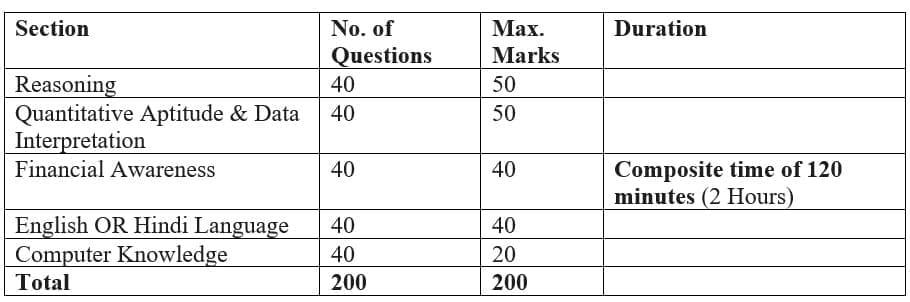
Unlike Scale-I, there is no Preliminary round; your performance in this single exam determines your interview shortlisting. Reasoning and Quantitative Aptitude are the highest-scoring sections, with a weightage of 1.25 marks per question.
IV. Scale-II (Specialist Cadre) Pattern
This pattern applies to specialist roles such as IT, Chartered Accountant, Law, Treasury, Marketing, and Agriculture Officers.
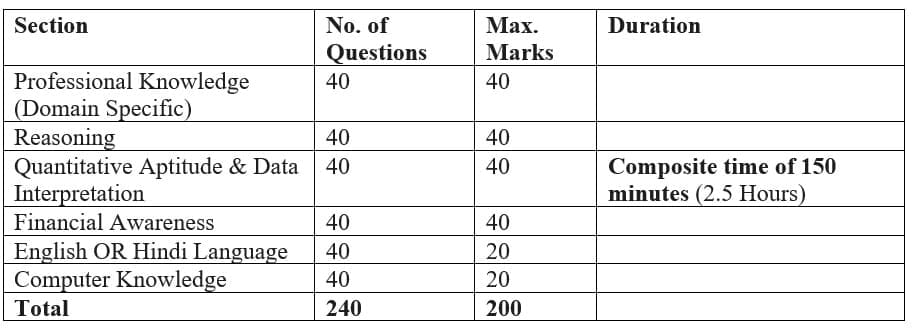
Candidates are given an additional 30 minutes to account for the increased question count and technical depth. The core "Professional Knowledge" section tests your specific field of expertise (e.g., JAVA/Networking for IT Officers).
IBPS RRB PO Computer Knowledge 2026 Syllabus
The Computer Knowledge section is a "Merit Stage" exclusive, appearing in the Mains examination for Scale-I and as part of the single online exam for Scale-II and III. While it carries a high number of questions, it is designed to test your digital literacy and technical aptitude in a banking environment.
I. Fundamentals & Hardware (The Basics)
- Computer Architecture: Understanding of CPU, Input/Output devices, and Memory units (RAM/ROM).
- Operating Systems: Basics of Windows, Android, and iOS; understanding of file systems and user interfaces.
- History & Generations: Evolution of computers from vacuum tubes to modern AI-driven processors.
II. Software & Productivity Tools
- MS Office Suite: In-depth knowledge of MS Word, MS Excel (formulas and functions), and MS PowerPoint.
- Keyboard Shortcuts: Common shortcuts for navigation, formatting, and system operations.
- Database Management (DBMS): Basic concepts of data storage, retrieval, and SQL fundamentals.
III. Networking & Cyber Security
- Internet & Networking: Understanding of LAN, WAN, MAN, IP Addresses, and OSI Model layers.
- Cyber Security Awareness: Knowledge of viruses, malware, phishing, firewalls, and encryption protocols.
- Web Browsing: Protocols like HTTP/HTTPS and the role of Search Engines and Web Servers.
IV. Advanced & Technical Logic
- Binary Logic: Number system conversions (Binary to Decimal, Hexadecimal, etc.).
- Logic Gates: Understanding the functions of AND, OR, NOT, NAND, and XOR gates.
- Flowcharts & Algorithms: Solving aptitude problems based on logical flowcharts.
Edurev Tip: In the IBPS RRB PO exam, Computer Knowledge is often merged with the Reasoning section in terms of time management. Since each question is worth 0.5 marks, it is a high-accuracy, low-time-investment section. Aim to complete all 40 questions in 8-10 minutes to maximize the time available for complex Reasoning puzzles.
IBPS RRB PO Computer Knowledge Topic-wise Weightage
The Computer Knowledge section for the 2026 Merit Stage consists of 40 questions carrying a total of 20 marks (0.5 marks per question). Based on the analysis of recurring trends and recent shifts, the following table outlines the expected question distribution.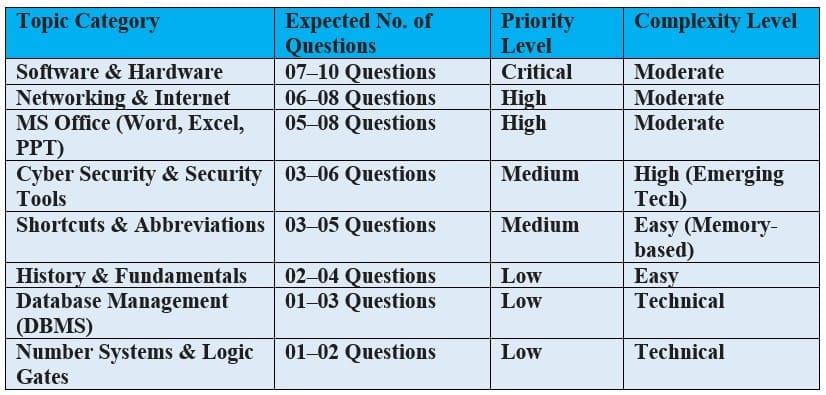
This section is designed to be finished in under 8-10 minutes. By answering these 40 questions rapidly, you earn "bonus time" to tackle complex Reasoning Puzzles or Data Interpretation sets.
IBPS RRB PO Computer Knowledge- Success Strategy
Why You Should Crack the IBPS RRB PO 2026
Transitioning from a student to a professional is a major milestone. Cracking this exam offers more than just a job; it provides a platform for both personal and societal impact.
- Financial Independence & Stability: A career as an RRB PO offers a competitive starting salary (approx. ₹74,000+ in-hand) alongside benefits like medical aid, pension schemes, and concessional loans.
- Rapid Career Trajectory: The promotional hierarchy is clear and merit-based. Starting as an Assistant Manager, you can advance to Deputy Manager, Branch Manager, and eventually reach senior leadership roles like General Manager.
- Direct Social Impact: Unlike urban banking, an RRB PO works at the grassroots level, facilitating agricultural growth, supporting local farmers, and implementing government development schemes that directly uplift rural India.
- Professional Identity: Beyond the designation, it offers a respected identity in society, providing a sense of pride for your family and establishing you as a leader in your community.
Preparation Strategy: The "Daily Tech-Drill"
The Goal: 15+ Marks (out of 20). Focus on building familiarity through regular, short bursts of study rather than exhaustive reading.
Study Commitment: 45 minutes of daily focused practice.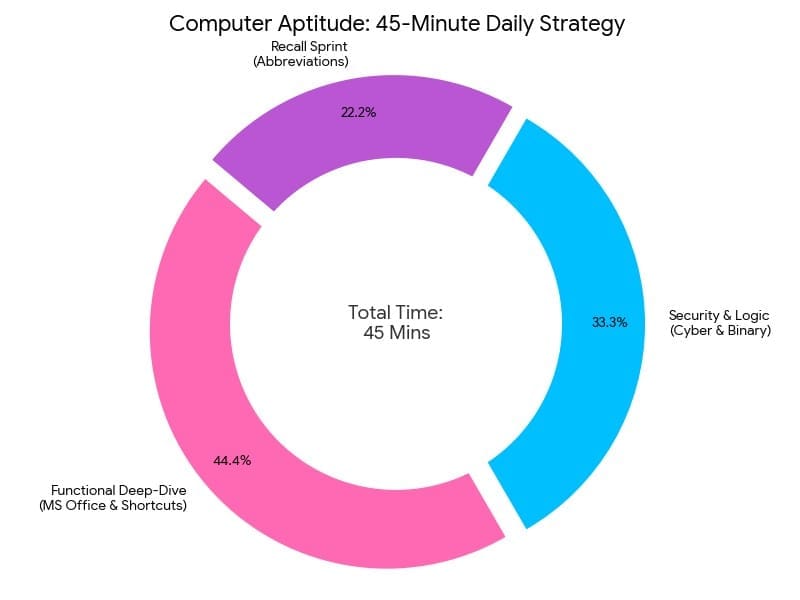
Part 1: The "Functional" Deep-Dive (20 Minutes)
- Focus: MS Office Suite (Word, Excel, PowerPoint) and Keyboard Shortcuts.
- The Task: Instead of reading, do. Open a spreadsheet and practice the formulas and shortcuts mentioned in your study material.
- The Goal: Move from theoretical memory to "Muscle Memory," ensuring you never stumble on shortcut-related questions.
Part 2: The "Security & Logic" Block (15 Minutes)
- Focus: Cyber Security (Viruses, Firewalls) and Binary Logic/Logic Gates.
- The Technique: Create a "Logic Chart" for conversions and gate functions. Review the latest cyber threats in the banking industry.
- The Goal: Master the technical "Technical Depth" topics that most candidates skip.
Part 3: The "Recall" Sprint (10 Minutes)
- Focus: Abbreviations and Fundamental Terminology.
- The Task: Rapid-fire quiz on common acronyms (e.g., HTTP, ASCII, DBMS).
- The Goal: Solidify the "Score Boosters" that require zero calculation and only instant recall.
Edurev Tip: In the exam, keep an eye out for "Mixed Logic" questions-where a Reasoning puzzle might be combined with a Computer flowchart. Practicing this "Technical Aptitude" blend is the secret to scoring in the top percentile.
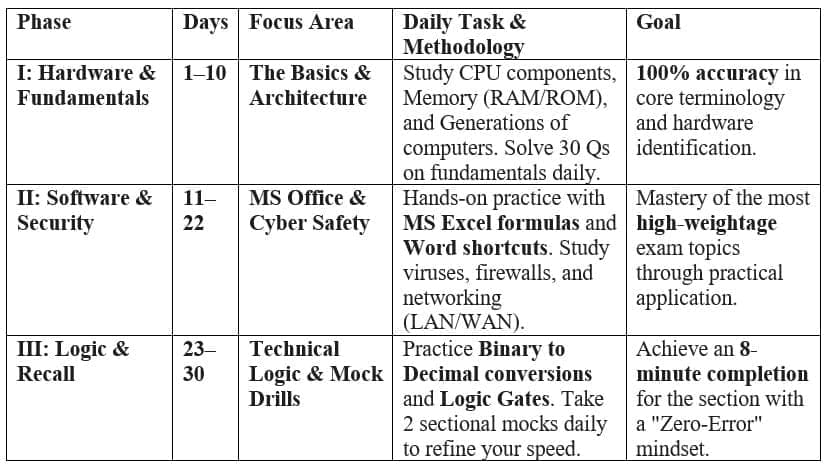
The 30-day preparation Roadmap
Custom Roadmap- Where do you stand
Success in the IBPS PO 2026 exam depends on identifying your unique strengths and weaknesses to turn daily effort into a definitive job offer.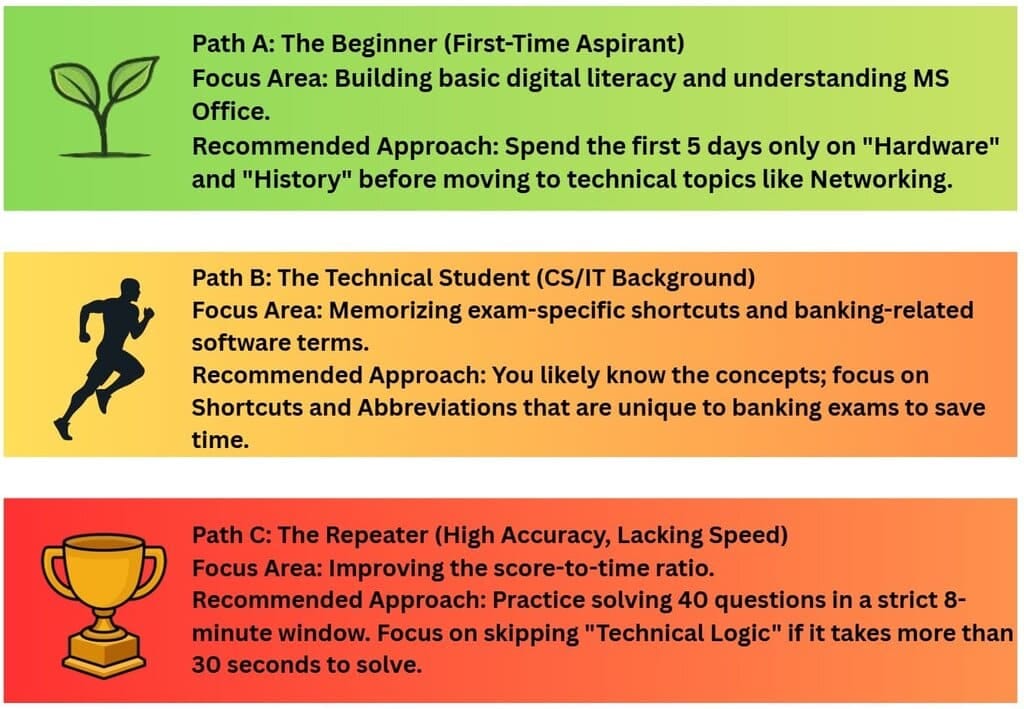
"Cracking the IBPS RRB PO 2026 is not just about mastering a syllabus; it is about demonstrating the discipline and resilience required to lead India's rural banking transformation. Every shortcut you memorize and every security protocol you understand brings you one step closer to the cabin of an Officer. Stay focused, stay consistent, and secure your future in banking!"
FAQs on IBPS RRB PO Computer Knowledge Syllabus 2026: Topic-wise Weightage & Strategy
| 1. What is the exam pattern for the IBPS RRB PO exam? |  |
| 2. What topics are covered under the Computer Knowledge syllabus for the IBPS RRB PO exam? | |
| 3. How is the topic-wise weightage distributed in the Computer Knowledge section of the IBPS RRB PO exam? | |
| 4. What strategies can be employed to succeed in the Computer Knowledge section of the IBPS RRB PO exam? | |
| 5. Why is it important to prepare specifically for the Computer Knowledge section in the IBPS RRB PO exam? | |