IBPS Clerk Reasoning & Computer Aptitude Syllabus 2026: Topic-wise Weightage & Strategy

IBPS Clerk Exam Pattern 2026
The IBPS Clerk (Customer Service Associate) recruitment is a two-stage online process designed to test a candidate's speed, accuracy, and foundational knowledge. Unlike officer-level exams, there is no interview for this post; your final selection is determined strictly by your performance in the Main examination. This makes the Mains stage the ultimate merit hurdle for securing a position in one of the participating public sector banks.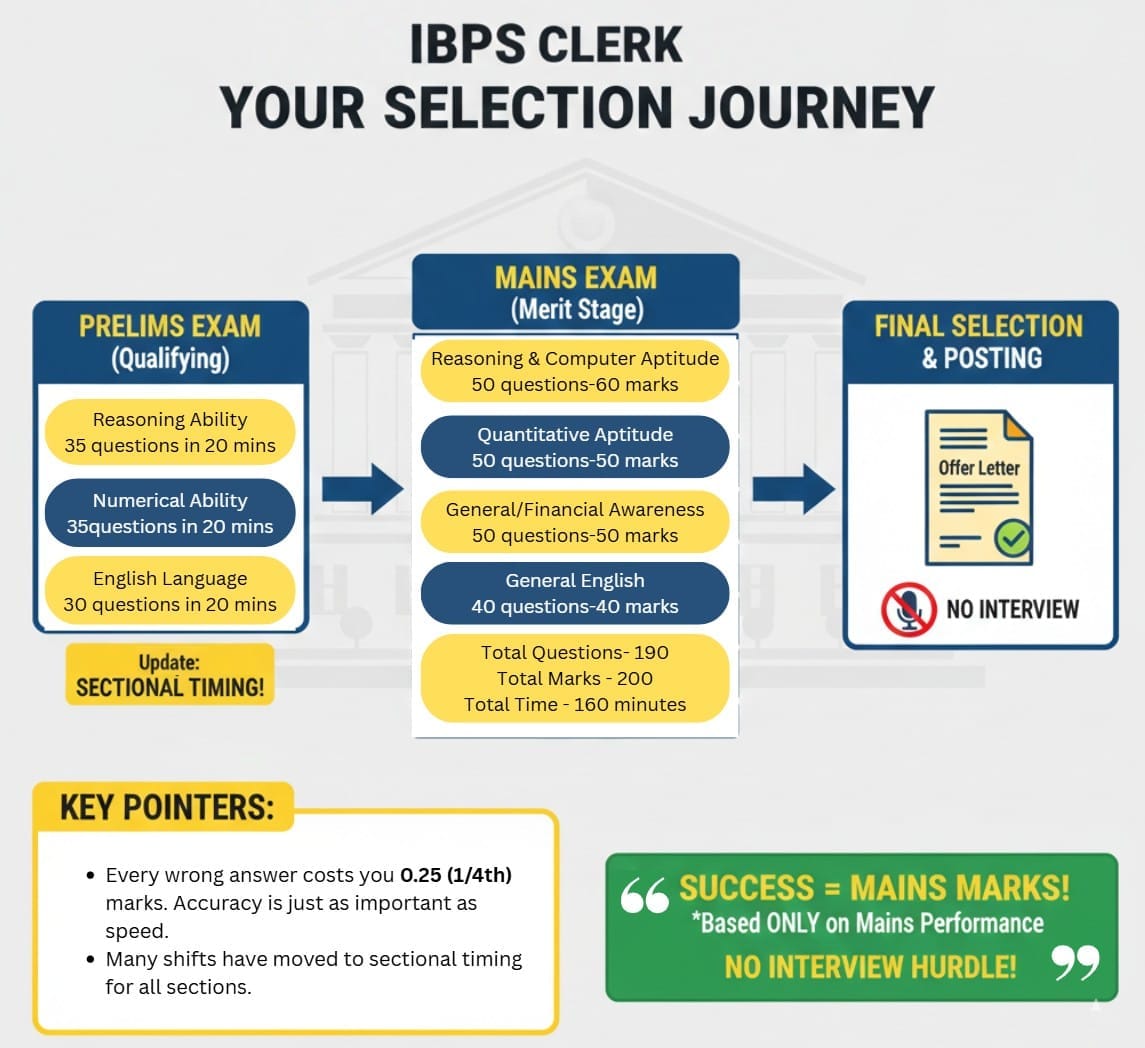
I. Preliminary Examination (Qualifying Stage)
This is a screening test intended to shortlist candidates for the next phase. It is a race against time where you have 60 minutes to solve 100 questions.
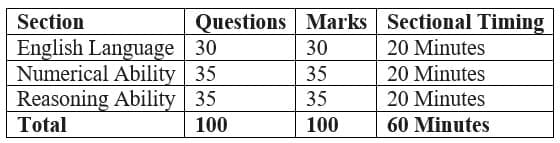
Note: Candidates must qualify in each of the three sections by securing cut-off marks decided by IBPS. Marks obtained in the Preliminary exam are not counted for the final merit list.
II. Main Examination (The Merit Stage)
The final job offer is based on these scores. You have a total of 160 minutes to manage four distinct sections.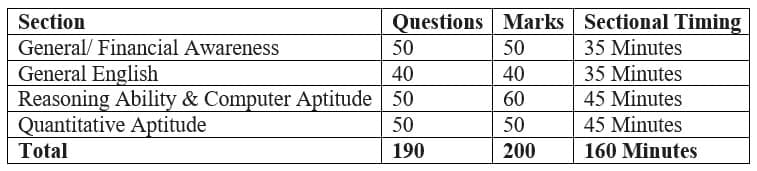
Note: Every wrong answer in both Prelims and Mains costs you 0.25 (1/4th) of the marks assigned to that question. Sectional timing is strictly enforced; you cannot switch between sections until the time for the current section expires.
IBPS RRB Clerk Reasoning Ability & Computer Aptitude Syllabus 2026
I. Preliminary Examination: Reasoning Ability
The Prelims focus on speed and accuracy with 35 questions to be solved in 20 minutes. The topics are generally more direct and less time-consuming.
- Puzzles & Seating Arrangement (High Weightage): Linear (Single/Double row), Circular (Facing inside/outside), Floor-based, and Box-based puzzles.
- Syllogism: Direct questions including "Only a few" and "Only" types.
- Inequalities: Direct mathematical comparisons.
- Coding-Decoding: Traditional substitution coding.
- Miscellaneous: Blood Relations: Simple family tree problems.
- Direction Sense: Basic distance and path finding.
- Series: Alphanumeric, Number, and Alphabetical series.
- Order & Ranking: Height/Weight comparisons and position ranking.
II. Main Examination: Reasoning & Computer Aptitude
The Mains stage increases the difficulty level significantly. The section is combined into 50 questions for 60 marks, with Computer Aptitude questions introduced here.
A. Advanced Reasoning Ability
- Complex Puzzles: Multi-variable puzzles (e.g., Floor puzzle + Color + Profession), Circular arrangements with blood relations, and Uncertain number of persons in a row.
- Input-Output: Sequential machine tracing of numbers and words.
- Coded Logic: Coded Inequalities, Coded Blood Relations, and Coded Direction Sense.
- Data Sufficiency: Determining if 2 or 3 given statements are enough to answer a question.
- Logical/Verbal Reasoning: Statement-Assumption, Cause & Effect, Course of Action, and Inference-based questions.
B. Computer Aptitude (Mains Exclusive)
This part focuses on fundamental digital literacy and logic-based computing.
- Hardware & Software: Generations of computers, CPU components, and Input/Output devices.
- Operating Systems: Basics of Windows, Linux, and common keyboard shortcuts.
- MS Office Suite: Functional knowledge of MS Word, Excel, and PowerPoint.
- Internet & Networking: Network types (LAN/WAN), Web protocols, Email basics, and Cybersecurity (Viruses, Firewalls).
- Modern Logic: Binary number conversions and logic-based flowcharts.
Edurev Tip: Always attempt the Computer Aptitude questions before touching complex puzzles. These questions are direct and can be solved in seconds, giving you a massive time "buffer" for the more grueling Reasoning problems.
IBPS Clerk Reasoning Ability & Computer Aptitude - Topic-Wise Weightage
To maximize your score, it is essential to prioritize topics based on their recurring importance in recent exams. In the IBPS Clerk Prelims, speed is your primary tool for 35 questions, whereas the Mains stage (50 questions) shifts the focus toward complex analytical depth and accuracy.
The following table outlines the expected number of questions per topic based on the latest 2025-26 trends for both exam stages.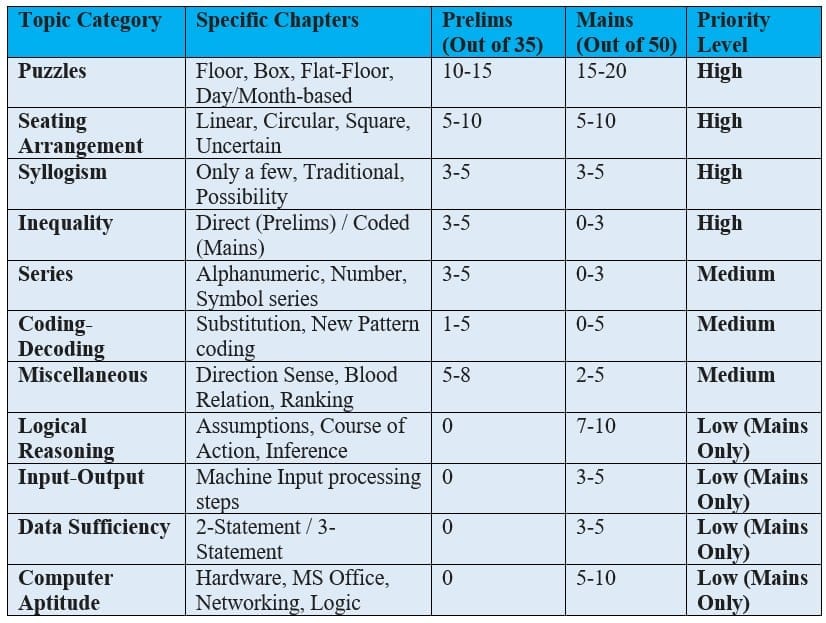
Edurev Tip: Puzzles and Seating Arrangements together account for nearly 50% of the reasoning section in both stages. Mastering these is non-negotiable for a high percentile.
IBPS RRB Clerk Reasoning Ability & Computer Aptitude - Success Strategy
Why Crack IBPS Clerk?
Before starting the "how," it is vital to understand the "why." The IBPS Clerk role is one of the most sought-after banking careers for several key reasons:
- Zero Interview Anxiety: Your final selection is based 100% on your Mains score. There is no interview hurdle, making it ideal for candidates who excel in written competitive exams.
- Job Security & Stability: As a permanent government-mandated role in public sector banks, it offers unparalleled job security and a fixed monthly salary with regular increments.
- Work-Life Balance: Unlike officer-level roles, clerical positions typically have standard office hours and less operational pressure, allowing for a healthy personal life or further study.
- Home State Posting: IBPS Clerk recruitments are state-wise, often allowing you to serve in your own region, which provides long-term local stability.
- Career Growth: A clerk is just the beginning. Through internal promotional exams, you can rise to Officer (Scale 1) and eventually reach senior management levels like General Manager.
I. Prelims Strategy: The 20-Minute Sprint
The Goal: 30+ Marks. With a strict 20-minute sectional timer for 35 questions, every second counts.
Study Commitment: 1.5-2 hours of daily focused Reasoning practice.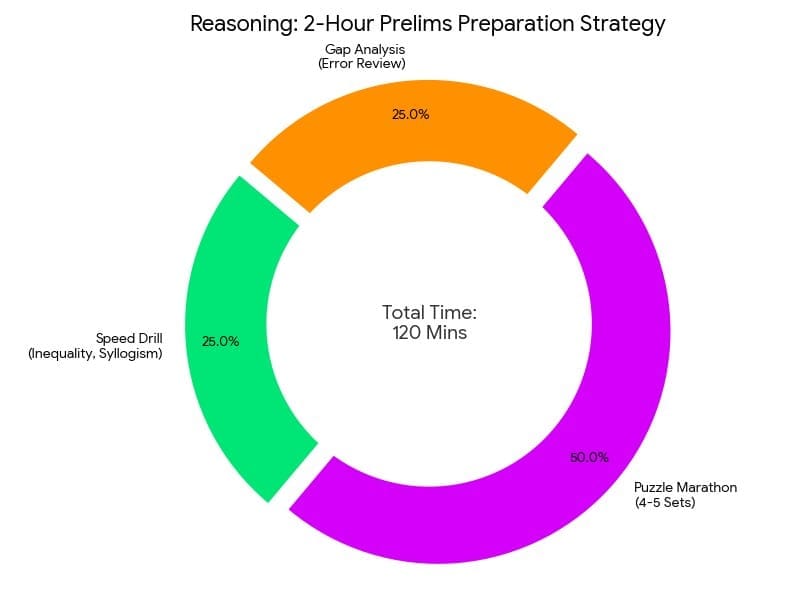
Part 1: The Speed Drill (30 Minutes)
- Focus: Miscellaneous Topics (Inequalities, Syllogism, Alphanumeric Series, Coding-Decoding).
- The Task: Solve 25-30 questions using a stopwatch.
- The Goal: These are your "buffer" marks. Aim to finish these in 8-10 minutes during the exam with 100% accuracy to save time for puzzles.
Part 2: The Puzzle Marathon (60 Minutes)
- Focus: 4-5 Sets of Puzzles/Seating Arrangements.
- The Task: Solve 1 Linear Row, 1 Circular, 1 Floor/Flat, and 1 Scheduling (Day/Month) puzzle daily.
- The Technique:
- Attempt 1: Solve with a 3-minute timer.
- Attempt 2: If you get stuck, solve without a timer to understand the logical flow.
- Reflection: Identify the "Anchor Clue" (the fixed piece of information). If you started with the wrong clue, you've found your primary weakness.
Part 3: The "Gap" Analysis (30 Minutes)
- Focus: Review and Revision.
- The Task: Review your "Error Notebook." Attempt the questions you missed yesterday.
- The Goal: Build muscle memory for complex conditions (e.g., "only a few," "not more than two") so you don't overthink them during the 20-minute window.
II. Mains Strategy: The 45-Minute Marathon
The Goal: 35+ High-Accuracy Marks. In Mains, the combined section has 50 questions for 60 marks, and the difficulty level is significantly higher.
Study Commitment: 2.5 hours of daily focused practice, including 30 minutes specifically for Computer Aptitude.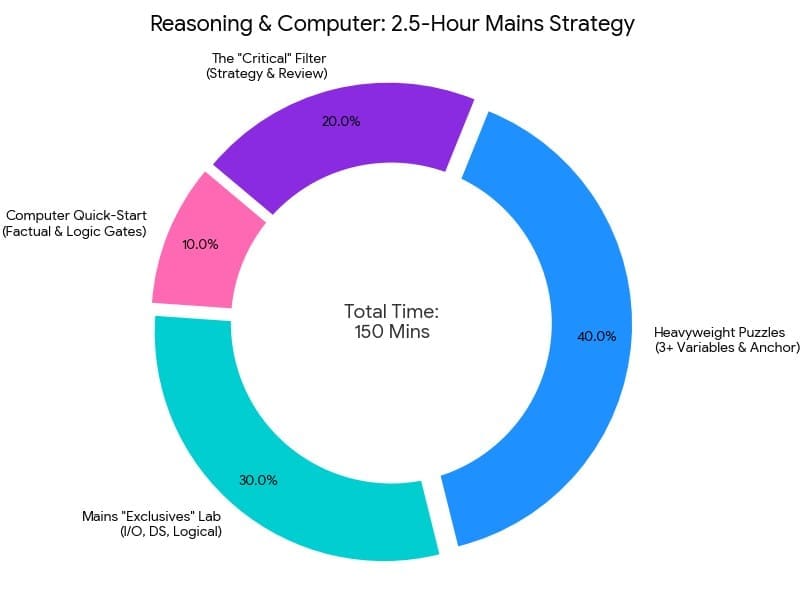
Part 1: The "Computer Knowledge" Quick-Start (15 Minutes)
- Focus: Computer Aptitude (Hardware, Networking, MS Office, Shortcuts, and Flowcharts).
- The Task: Solve theoretical and logic-based computer questions first.
- The Goal: These are "low-hanging fruit." Because they are mostly factual or logic-gate based, they can be solved in seconds. Clearing these early provides a psychological boost and saves maximum time for complex puzzles.
Part 2: The "Mains Exclusives" Lab (45 Minutes)
- Focus: Advanced topics like Machine Input-Output, Data Sufficiency (2-3 statements), and Logical Reasoning (Inferences, Cause & Effect).
- The Task: Alternating days between these topics to master "Pattern Shift" logic.
- The Goal: These topics are often mathematically simpler than high-level puzzles but are skipped by many because they look "lengthy". Mastering them gives you a competitive edge.
Part 3: The "Heavyweight" Puzzle Practice (60 Minutes)
- Focus: 2-3 sets of High-Level Puzzles (3+ variables) daily.
- The Task: Practice multi-variable arrangements (e.g., Floor + Color + Profession) and "Uncertain Number" puzzles.
- The Technique:
- The 5-Minute Map: Spend the first few minutes just mapping variables. Do not start drawing until you identify the Anchor Point.
- The "Skip-on-Sight" Rule: If a puzzle doesn't click within 3 minutes, move on. In Mains, solving even 2-3 solid puzzles correctly can place you in the top percentile.
Part 4: Strategy & The "Critical" Filter (30 Minutes)
- Focus: Reviewing Mains-level mocks and practicing Verbal Reasoning.
- The Task: Develop a "Zero-Error" mindset. For Critical Reasoning, if the logic feels subjective, learn to Skip immediately.
- The Goal: One wrong guess in Critical Reasoning can wipe out the marks earned from a difficult puzzle. Use this time to identify your "Time-Traps" and avoid them in the real exam.
Edurev Tip: Use the Two-Case Method for all seating arrangements. Drawing two possible diagrams simultaneously prevents you from having to restart the entire puzzle if one possibility fails halfway through.
The 30-Day Preparation Roadmap
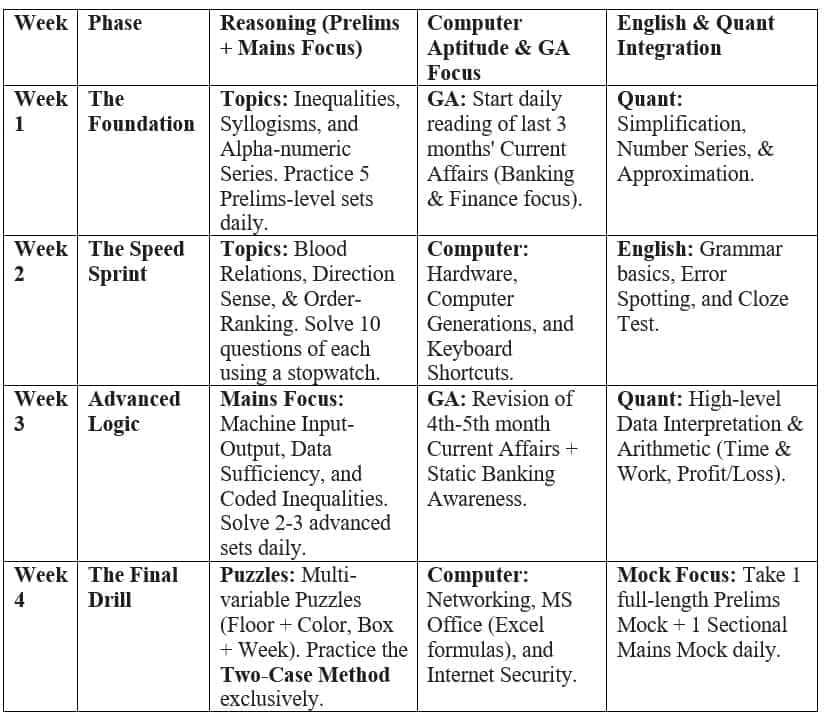
Custom Roadmap - Where do you stand?
The strategy for a first-time aspirant is vastly different from someone who missed the cut-off by 0.5 marks. Choose the path that matches your current level: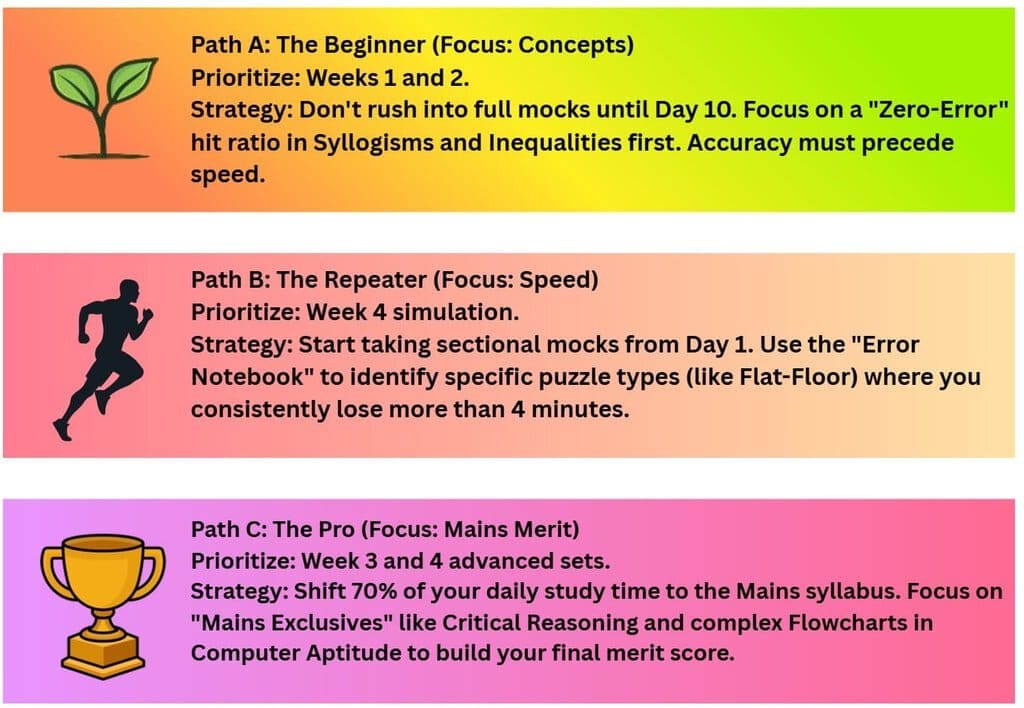
"Success in the IBPS Clerk exam isn't just about solving questions; it's about mastering the speed and accuracy that will define your career in banking-start your practice sets today and secure your place in the future of the banking industry!"
FAQs on IBPS Clerk Reasoning & Computer Aptitude Syllabus 2026: Topic-wise Weightage & Strategy
| 1. What is the exam pattern for the IBPS Clerk exam? |  |
| 2. What topics are covered under the Reasoning Ability and Computer Aptitude syllabus for the IBPS RRB Clerk? | |
| 3. How can candidates strategise for success in the IBPS Clerk Reasoning Ability and Computer Aptitude section? | |
| 4. What is the topic-wise weightage for the Reasoning Ability and Computer Aptitude sections in the IBPS Clerk exam? | |
| 5. Why is it important for candidates to stay updated with the syllabus and exam pattern for the IBPS Clerk exam? | |