UPSC Exam > UPSC Notes > History CSE > Infographics: The Northern India (800-1200 A.D.)
Infographics: The Northern India (800-1200 A.D.)

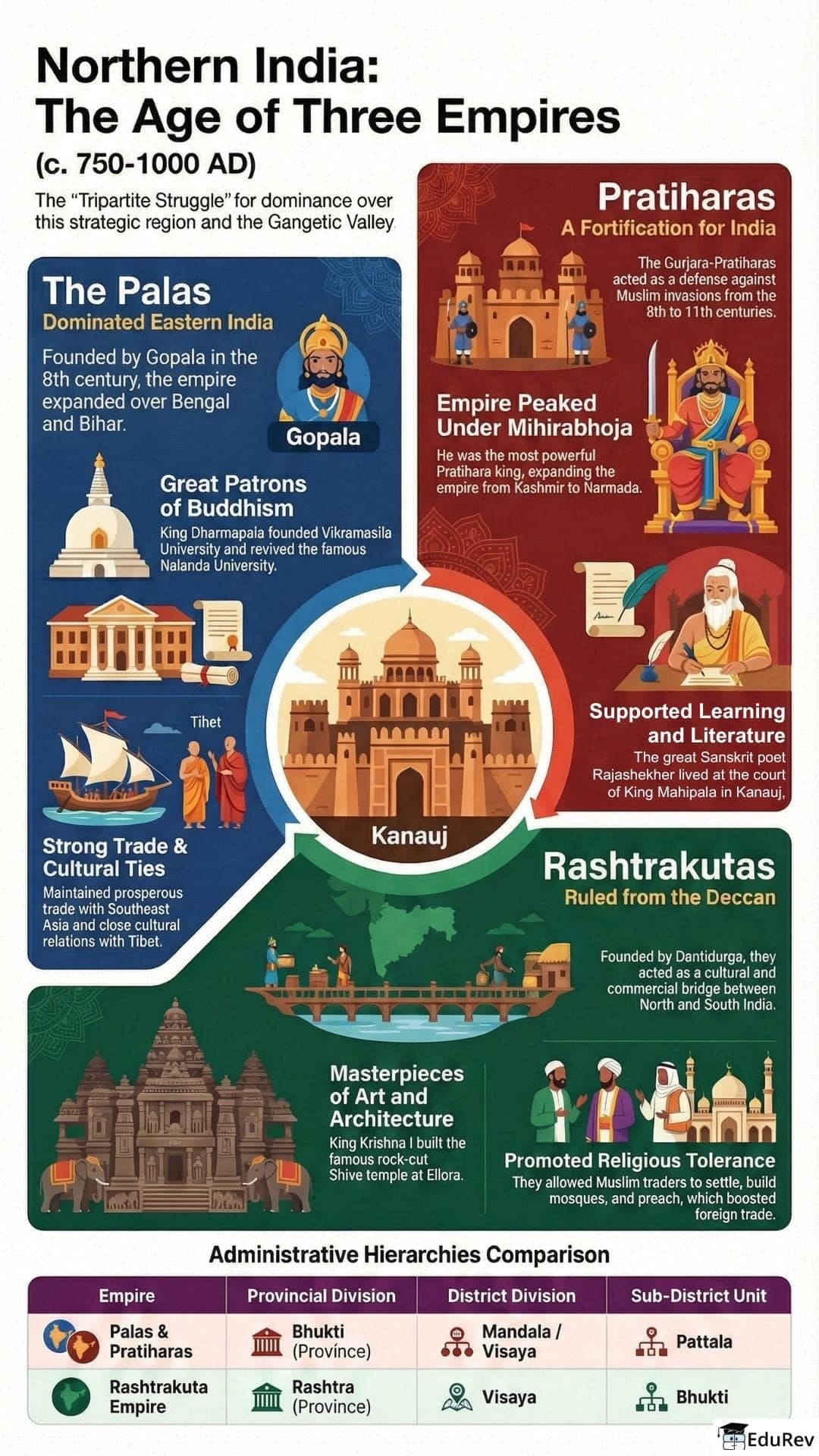
The document Infographics: The Northern India (800-1200 A.D.) is a part of the UPSC Course History for UPSC CSE.
All you need of UPSC at this link: UPSC
FAQs on Infographics: The Northern India (800-1200 A.D.)
| 1. What were the significant political developments in Northern India between 800-1200 A.D.? |  |
Ans. During this period, Northern India saw the rise and fall of several significant dynasties, including the Gurjara-Pratiharas, Rashtrakutas, and the Palas. The Gurjara-Pratihara dynasty, in particular, played a crucial role in resisting Arab invasions and maintaining regional power. The period was characterised by feudalism, with local rulers asserting authority while the central power fluctuated among these dynasties.
| 2. How did the economy of Northern India evolve during 800-1200 A.D.? | |
Ans. The economy of Northern India during this time transitioned towards increased agricultural production, with advancements in irrigation techniques. Trade flourished due to the establishment of trade routes connecting Northern India with Central Asia and the Mediterranean, facilitating the exchange of goods such as textiles, spices, and precious stones. Urban centres began to emerge as important commercial hubs.
| 3. What role did religion play in the culture of Northern India during this era? | |
Ans. Religion was a significant aspect of life in Northern India between 800-1200 A.D. Hinduism and Buddhism coexisted, with notable developments in temple architecture and the patronage of religious institutions. The period also saw the emergence of new sects and the spread of Bhakti movement, which emphasised personal devotion over ritualistic practices, influencing society and culture profoundly.
| 4. What were the key features of art and architecture in Northern India during this period? | |
Ans. Art and architecture in Northern India from 800-1200 A.D. are marked by the construction of grand temples, which showcased intricate sculptures and carvings. The Dravidian and Nagara styles influenced temple architecture, with notable examples including the sun temples and intricate frescoes. The period also witnessed the flourishing of various art forms, including miniature paintings and metalwork.
| 5. How did the social structure of Northern India change between 800-1200 A.D.? | |
Ans. The social structure of Northern India during this period became increasingly stratified, with the emergence of a more defined caste system. The influence of feudal lords and landowners grew, leading to greater disparities in wealth and power. This era also saw the rise of merchant and artisan classes, contributing to a more complex social hierarchy and the development of urban societies.
About this Document

4.65/5 Rating

Apr 19, 2026 Last updated
Related Exams
Document Description: Infographics: The Northern India (800-1200 A.D.) for UPSC 2026 is part of History for UPSC CSE preparation. The notes and questions for Infographics: The Northern India (800-1200 A.D.) have been prepared according to the UPSC exam syllabus. Information about Infographics: The Northern India (800-1200 A.D.) covers topics like and Infographics: The Northern India (800-1200 A.D.) Example, for UPSC 2026 Exam. Find important definitions, questions, notes, meanings, examples, exercises and tests below for Infographics: The Northern India (800-1200 A.D.).
Introduction of Infographics: The Northern India (800-1200 A.D.) in English is available as part of our History for UPSC CSE for UPSC & Infographics: The Northern India (800-1200 A.D.) in Hindi for History for UPSC CSE course. Download more important topics related with notes, lectures and mock test series for UPSC Exam by signing up for free. UPSC: Infographics: The Northern India (800-1200 A.D.)
Description
Infographics: The Northern India (800 of History provides you one-page visual summary of the chapter covering all the important topics. Download the PDF from EduRev.
Information about Infographics: The Northern India (800-1200 A.D.)
In this doc you can find the meaning of Infographics: The Northern India (800-1200 A.D.) defined & explained in the simplest way possible. Besides explaining types of Infographics: The Northern India (800-1200 A.D.) theory, EduRev gives you an ample number of questions to practice Infographics: The Northern India (800-1200 A.D.) tests, examples and also practice UPSC tests



Related Searches
mock tests for examination, ppt, study material, video lectures, Sample Paper, Semester Notes, Viva Questions, Infographics: The Northern India (800-1200 A.D.), Infographics: The Northern India (800-1200 A.D.), Previous Year Questions with Solutions, Free, Important questions, Infographics: The Northern India (800-1200 A.D.), Objective type Questions, shortcuts and tricks, MCQs, Extra Questions, practice quizzes, pdf , past year papers, Summary, Exam;