UPSC Exam > UPSC Notes > History CSE > Infographics: Reform Movements
Infographics: Reform Movements

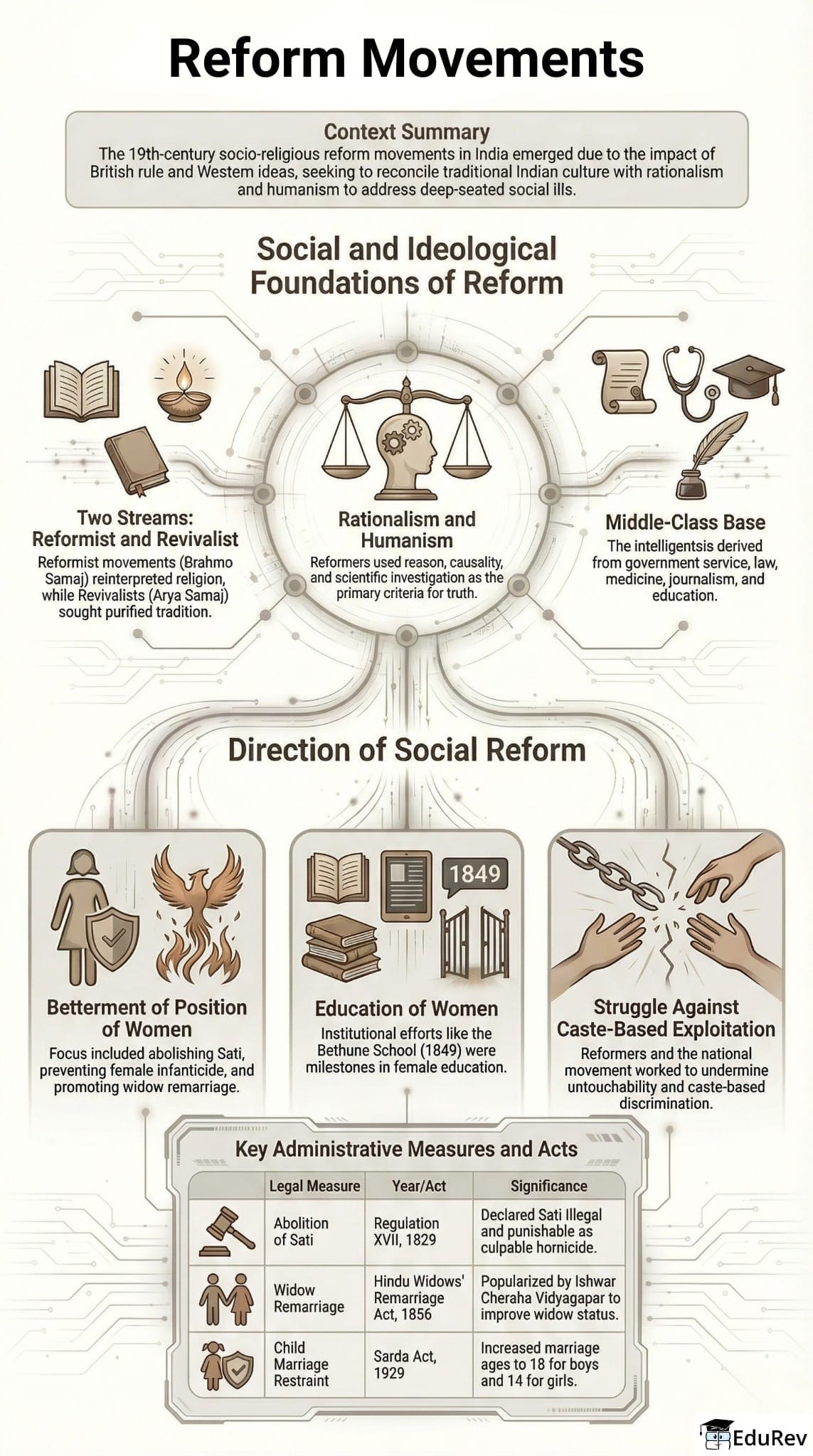
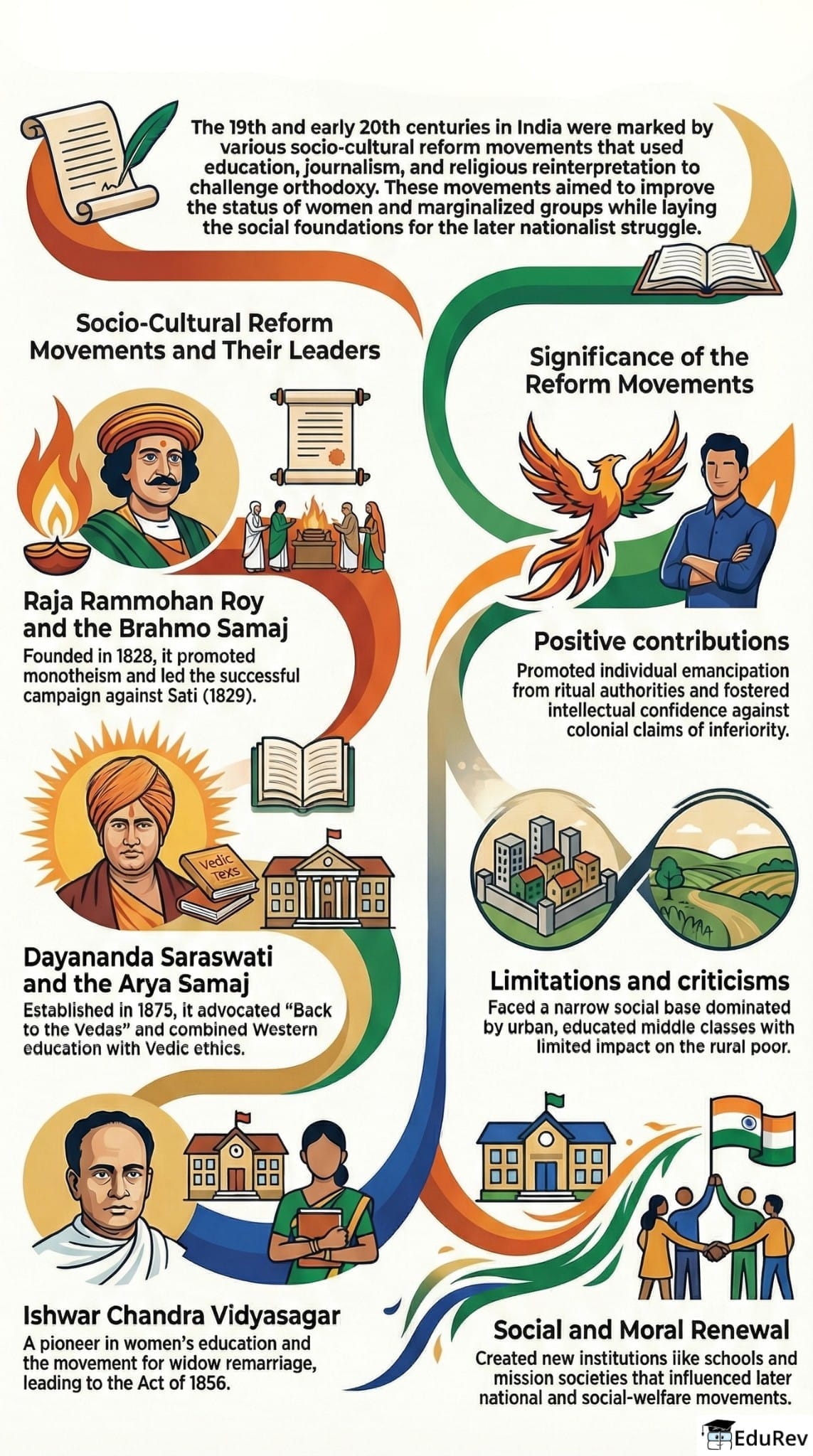
The document Infographics: Reform Movements is a part of the UPSC Course History for UPSC CSE.
All you need of UPSC at this link: UPSC
FAQs on Infographics: Reform Movements
| 1. What are reform movements? |  |
Ans. Reform movements are collective efforts aimed at advocating for changes to societal norms, laws, or institutions to improve conditions or address social injustices. These movements often seek to promote equality, justice, and social welfare in various aspects of life, including education, gender rights, and political representation.
| 2. What were the key objectives of the reform movements in India? | |
Ans. The key objectives of the reform movements in India included the abolition of social evils such as sati (the practice of widow immolation), the promotion of women's rights, the upliftment of lower castes, and the introduction of modern education. These movements aimed to create a more just and equitable society and sought to eradicate superstitions and oppressive customs.
| 3. Who were some prominent leaders associated with reform movements in India? | |
Ans. Prominent leaders associated with reform movements in India included Raja Ram Mohan Roy, who is often referred to as the father of the Indian Renaissance for his efforts in abolishing sati and promoting education; Jyotirao Phule, who worked towards the upliftment of the lower castes and women's education; and Swami Vivekananda, who emphasised the importance of social reform and spiritual awakening.
| 4. How did the British colonial rule influence reform movements in India? | |
Ans. British colonial rule played a significant role in influencing reform movements in India by introducing new ideas of democracy, rights, and modernity. The exposure to Western education and liberal values prompted Indian reformers to critique traditional practices and advocate for social reforms. However, the colonial government also sought to control these movements and often viewed them as threats to their authority.
| 5. What impact did reform movements have on Indian society? | |
Ans. Reform movements had a profound impact on Indian society by challenging and changing traditional norms and practices. They led to significant legal reforms, such as the abolition of sati and the promotion of women's rights. These movements also laid the groundwork for the later struggle for independence by fostering a sense of social consciousness and unity among diverse communities.
About this Document

4.96/5 Rating

Apr 19, 2026 Last updated
Related Exams
Document Description: Infographics: Reform Movements for UPSC 2026 is part of History for UPSC CSE preparation. The notes and questions for Infographics: Reform Movements have been prepared according to the UPSC exam syllabus. Information about Infographics: Reform Movements covers topics like and Infographics: Reform Movements Example, for UPSC 2026 Exam. Find important definitions, questions, notes, meanings, examples, exercises and tests below for Infographics: Reform Movements.
Introduction of Infographics: Reform Movements in English is available as part of our History for UPSC CSE for UPSC & Infographics: Reform Movements in Hindi for History for UPSC CSE course. Download more important topics related with notes, lectures and mock test series for UPSC Exam by signing up for free. UPSC: Infographics: Reform Movements
Description
Infographics: Reform Movements of History provides you one-page visual summary of the chapter covering all the important topics. Download the PDF from EduRev.
Information about Infographics: Reform Movements
In this doc you can find the meaning of Infographics: Reform Movements defined & explained in the simplest way possible. Besides explaining types of Infographics: Reform Movements theory, EduRev gives you an ample number of questions to practice Infographics: Reform Movements tests, examples and also practice UPSC tests



Related Searches
Free, Summary, ppt, Important questions, Infographics: Reform Movements, mock tests for examination, Objective type Questions, Infographics: Reform Movements, shortcuts and tricks, pdf , Semester Notes, Infographics: Reform Movements, Sample Paper, Viva Questions, study material, Extra Questions, Previous Year Questions with Solutions, video lectures, MCQs, practice quizzes, past year papers, Exam;