UPSC Exam > UPSC Notes > Indian Polity CSE > Infographics: Parliament
Infographics: Parliament

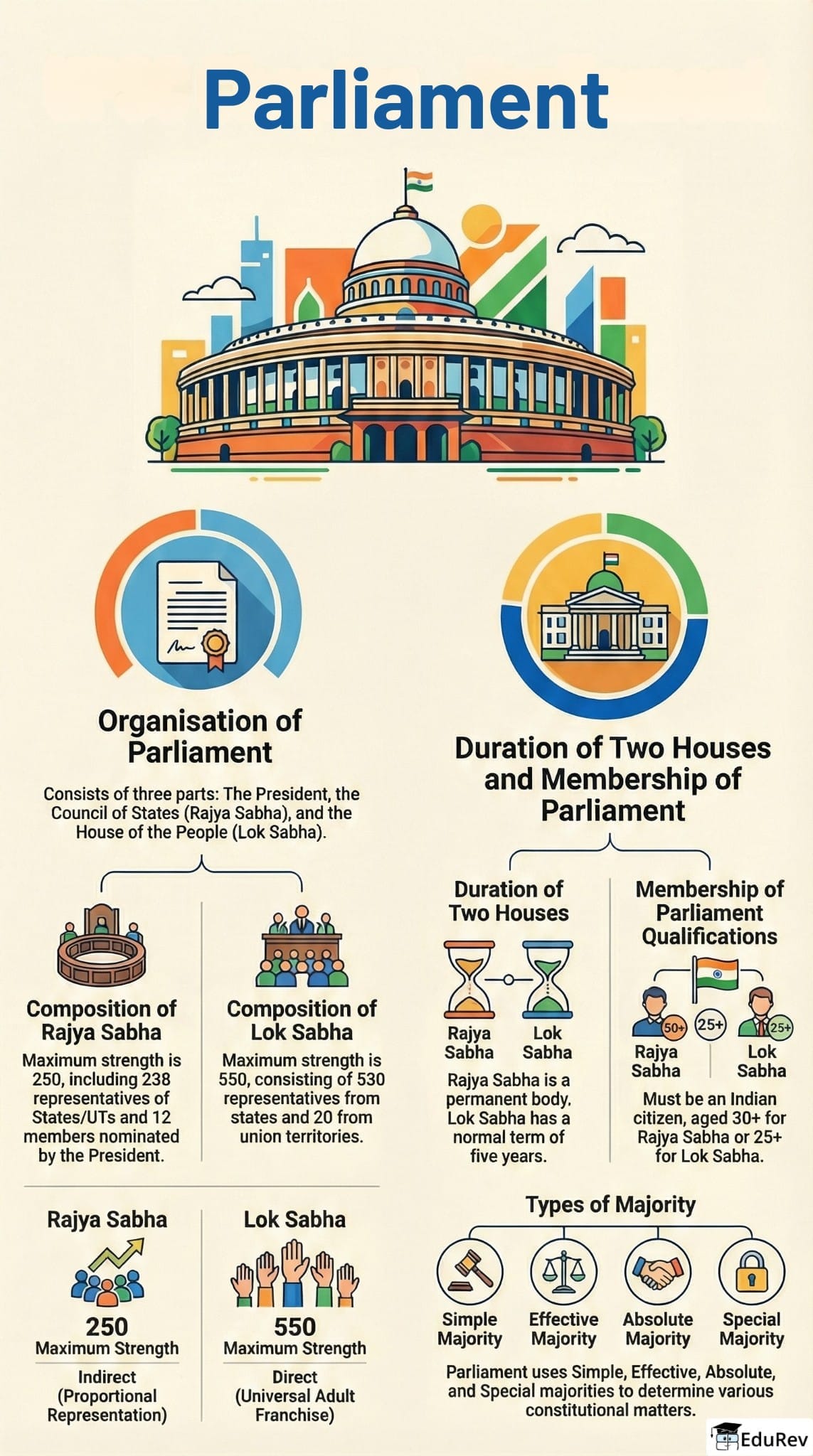
The document Infographics: Parliament is a part of the UPSC Course Indian Polity for UPSC CSE.
All you need of UPSC at this link: UPSC
FAQs on Infographics: Parliament
| 1. What is the structure of the Parliament in India? |  |
Ans. The Parliament of India is a bicameral legislature, consisting of two houses: the Lok Sabha (House of the People) and the Rajya Sabha (Council of States). The Lok Sabha is composed of Members of Parliament (MPs) elected directly by the people, while the Rajya Sabha is made up of representatives elected by the state legislatures and appointed members.
| 2. What are the main functions of the Parliament? | |
Ans. The main functions of the Parliament include making laws, representing the electorate, scrutinising the government, and approving the budget. It also plays a crucial role in discussions regarding national policies and issues, and holds the executive accountable through various means, including Question Hour and debates.
| 3. How are members of the Lok Sabha elected? | |
Ans. Members of the Lok Sabha are elected through a direct voting process in general elections held every five years. Each MP represents a specific constituency, and the candidate who receives the highest number of votes in that constituency is elected to the Lok Sabha.
| 4. What is the role of the Rajya Sabha in the legislative process? | |
Ans. The Rajya Sabha, as the upper house of Parliament, reviews and suggests amendments to legislation proposed by the Lok Sabha. While it cannot initiate money bills, it plays a significant role in representing the interests of the states and ensuring that legislation considers diverse regional perspectives.
| 5. What is the significance of the President's role in the Parliament? | |
Ans. The President of India plays a ceremonial role in the Parliament, summoning and proroguing sessions, giving assent to bills, and addressing both houses during the joint sitting. The President's approval is necessary for a bill to become law, making their role crucial in the legislative process.
About this Document

4.66/5 Rating

Apr 30, 2026 Last updated
Related Exams
Document Description: Infographics: Parliament for UPSC 2026 is part of Indian Polity for UPSC CSE preparation. The notes and questions for Infographics: Parliament have been prepared according to the UPSC exam syllabus. Information about Infographics: Parliament covers topics like and Infographics: Parliament Example, for UPSC 2026 Exam. Find important definitions, questions, notes, meanings, examples, exercises and tests below for Infographics: Parliament.
Introduction of Infographics: Parliament in English is available as part of our Indian Polity for UPSC CSE for UPSC & Infographics: Parliament in Hindi for Indian Polity for UPSC CSE course. Download more important topics related with notes, lectures and mock test series for UPSC Exam by signing up for free. UPSC: Infographics: Parliament
Description
Infographics: Parliament of Indian Polity provides you one-page visual summary of the chapter covering all the important topics. Download the PDF from EduRev.
Information about Infographics: Parliament
In this doc you can find the meaning of Infographics: Parliament defined & explained in the simplest way possible. Besides explaining types of Infographics: Parliament theory, EduRev gives you an ample number of questions to practice Infographics: Parliament tests, examples and also practice UPSC tests



Related Searches
Exam, Summary, Objective type Questions, past year papers, Sample Paper, Infographics: Parliament, Important questions, Semester Notes, study material, Extra Questions, pdf , MCQs, Infographics: Parliament, Free, video lectures, Infographics: Parliament, shortcuts and tricks, practice quizzes, mock tests for examination, Viva Questions, Previous Year Questions with Solutions, ppt;