UPSC Exam > UPSC Notes > Current Affairs & Hindu Analysis: Daily, Weekly & Monthly > PIB Summary - 19th February 2026
PIB Summary - 19th February 2026

India's Strengthened Sports Ecosystem (Union Budget 2026-27)
Issue in Brief
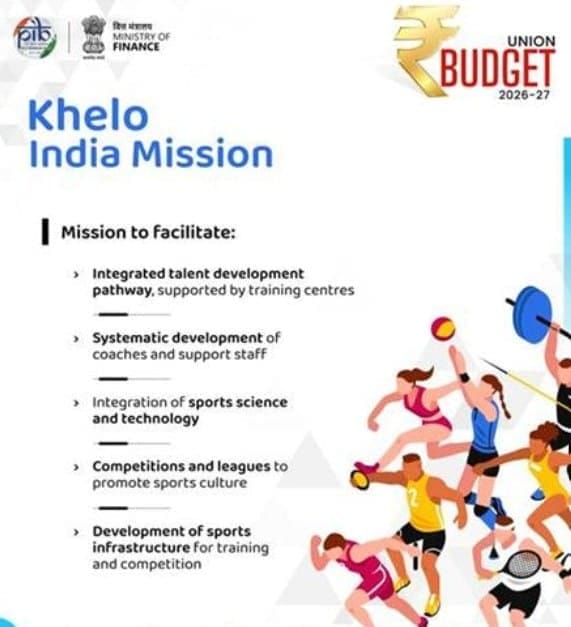
- Khelo India was launched in 2017-18 as a central sector scheme to promote grassroots sports, infrastructure development, competitions, and talent identification.
- The Union Budget 2026-27 upgrades it to the Khelo India Mission - a decade-long (2026 onwards), outcome-oriented, mission-mode initiative to transform India's sports ecosystem holistically.
- The Ministry of Youth Affairs and Sports received its highest-ever allocation of ₹4,479.88 crore, reflecting strong fiscal commitment to youth empowerment and sporting excellence.
- Key provisions include ₹924.35 crore for Khelo India in 2026-27 and a new ₹500 crore Sports Goods Manufacturing Initiative to integrate sports into industrial and economic growth.
- National ambition: Position India among the top 10 sporting nations by 2036 and top 5 by 2047, aligned with the Viksit Bharat vision.
Relevance for UPSC
GS 1 (Society)
- Youth empowerment and social mobility via sports.
- Gender inclusion and women's participation in competitive sports.
- Sports as a tool for national identity, unity, and social cohesion.
GS 3 (Economy)
- Expansion of the sports economy through the manufacturing initiative.
- Job creation in coaching, sports science, analytics, and allied sectors.
- Export potential via domestic sports goods clusters.
Constitutional and Legal Dimensions
- Article 21 (Right to Life): Encompasses health, dignity, preventive healthcare, and mental well-being; structured sports promotion advances holistic development.
- Article 47 (DPSP): Directs improvement of public health; mass sports engagement operationalises this through fitness and youth frameworks.
- Sports subject under Entry 33, State List - Union support via centrally sponsored schemes exemplifies cooperative federalism and national benchmarking.
- Compliance with World Anti-Doping Agency (WADA) norms safeguards fairness and India's global credibility.
- Olympic governance aligns with International Olympic Committee (IOC) standards.
Governance and Institutional Shift
- Shift from scheme-based (2017-2026) to mission-mode (2026 onwards) emphasises long-term planning, measurable KPIs, and accountability.
- Funding progression: ₹1,756 crore (2017-20) → ₹3,790.50 crore (2021-26) → ₹924.35 crore (2026-27) for Khelo India.
- Focus on seamless talent pipeline: Grassroots → scientific training → elite academies → international exposure to reduce dropout.
- Move towards evidence-based governance with performance metrics, infrastructure standards, and federated coordination.
Economic Dimensions
- Global sports industry > $500 billion (manufacturing, broadcasting, infrastructure, analytics, events) - offers export and employment opportunities.
- ₹500 crore initiative boosts domestic equipment production, R&D, and MSME integration into global supply chains.
- Infrastructure growth creates multiplier effects in construction, tourism, sports medicine, media, and analytics.
- Aligns with Skill India by developing skills in coaching, physiotherapy, sports science, and performance analytics.
Social and Ethical Dimensions
- Builds discipline, teamwork, resilience, and leadership - enhances social capital and national pride.
- Promotes gender equality and inclusive access, upholding constitutional non-discrimination.
- Mass participation helps curb non-communicable diseases (NCDs), yielding long-term health savings and productivity gains.
- Transparent federation governance and zero-tolerance anti-doping preserve ethical integrity and public trust.
Infrastructure and Technology
- Grassroots complexes in rural/semi-urban areas reduce spatial inequities and widen talent pool.
- Adoption of sports science, biomechanics, AI tracking, and injury analytics improves competitiveness and athlete longevity.
- Digital scouting and monitoring systems improve school-academy-federation coordination.
- PPP models accelerate stadium/academy development with fiscal sustainability.
Challenges and Gaps
- Governance issues and politicisation in federations hamper transparency and athlete welfare.
- Urban-rural infrastructure divide restricts equitable access to quality training.
- Weak social security (insurance, pensions) leads to financial insecurity and early dropouts.
- Doping risks reputational harm and international sanctions if enforcement is inadequate.
Way Forward
- Create an independent National Sports Development Authority for federation oversight, audits, and performance monitoring.
- Institutionalise athlete welfare (insurance, pension, education, post-retirement careers).
- Develop export-oriented sports manufacturing clusters with innovation grants.
- Integrate sports under NEP 2020 for universal physical literacy and early talent spotting.
- Bolster NADA enforcement for global-standard doping control.
Exam-Oriented Pointers (Prelims)
- Khelo India launch: 2017-18; upgraded to Mission in 2026-27.
- Ministry allocation (2026-27): ₹4,479.88 crore (highest ever).
- Khelo India allocation (2026-27): ₹924.35 crore.
- Sports Goods Manufacturing Initiative: ₹500 crore.
- Sports: State List (Entry 33).
VoicERA Launched on BHASHINI National Infrastructure (India AI Impact Summit 2026)
Issue in Brief
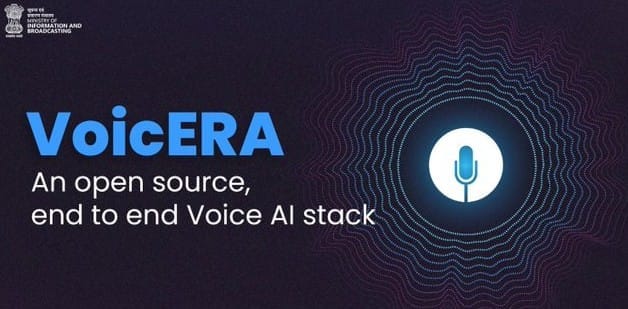
- VoicERA - an open-source, end-to-end Voice AI stack - launched at the India AI Impact Summit 2026.
- Developed by Digital India BHASHINI Division (DIBD) under Digital India Corporation (DIC), MeitY.
- Deployed on BHASHINI National Language Infrastructure, creating a scalable national layer for multilingual voice and conversational AI.
- Features: Open, pluggable, interoperable, cloud/on-premise deployable - reduces duplication and vendor lock-in.
Relevance for UPSC
GS 3 (Science & Technology)
- Strengthens sovereign AI and indigenous voice tech.
- Open-source design minimises vendor dependence.
- Aligns with data protection under DPDP Act, 2023.
GS 3 (Economy)
- Boosts startups via shared APIs.
- Export potential of DPI models to Global South.
Constitutional and Legal Dimensions
- Article 14: Promotes equality via multilingual digital access across linguistic diversity.
- Article 19(1)(a): Enhances free expression through native-language state communication.
- Article 21: Supports dignity and access for low-literacy/digital-excluded groups.
- Complies with DPDP Act, 2023 for consent, data processing, and accountability.
- Advances Digital India sovereign capability, reducing foreign platform reliance.
Governance and Institutional Architecture
- BHASHINI: Core national infrastructure for translation, speech recognition, and cross-lingual services.
- VoicERA extends it to real-time conversational AI, speech, and multilingual telephony.
- Collaborative model: EkStep Foundation, COSS, IIIT Bengaluru, AI4Bharat (public-private-academic).
- Enables quick departmental adoption for services like agri-advisory, grievances, education, livelihoods, and scheme access.
Digital Public Infrastructure Perspective
- Treats Voice AI as a Digital Public Good, akin to Aadhaar (identity) and UPI (payments).
- Open architecture ensures interoperability, scalability, and cost efficiency.
- Cloud/on-premise options enhance security and adaptability for Centre/State use.
- Addresses digital divide through population-scale multilingual telephony.
Economic and Innovation Dimensions
- Builds sovereign ecosystem in speech recognition, NLP, and conversational AI.
- Lowers barriers for startups/MSMEs to develop voice solutions.
- Drives productivity in agri-tech, ed-tech, fintech, telemedicine, etc.
- Positions India as inclusive AI leader with DPI export potential to Global South.
Social and Inclusion Dimensions
- Voice interfaces empower low-literacy, disabled, and rural users.
- Preserves linguistic diversity and cultural inclusion in digital governance.
- Strengthens participatory governance via voice-based feedback/grievance systems.
- Reduces welfare access costs in remote/aspirational areas.
G. Technology and Security Dimensions
- Modular design (speech recognition + NLU + synthesis) allows upgrades and audits.
- Open-source improves transparency, auditability, and accountability.
- Secure frameworks align with national cybersecurity goals.
- Enables scalable AI public services nationwide.
Challenges and Risks
- Privacy/consent issues from large-scale voice data collection.
- Algorithmic bias in dialects/accents affecting equity.
- Telecom/digital literacy gaps limiting uniform reach.
- Cybersecurity threats in voice authentication.
Way Forward
- Formulate National Voice AI Governance Framework for ethics, audits, and transparency.
- Integrate VoicERA into State portals for cooperative federalism.
- Strengthen consent/anonymisation protocols per DPDP Act, 2023.
- Enrich indigenous language datasets to minimise bias.
- Export BHASHINI-VoicERA model via digital diplomacy to Global South.
The document PIB Summary - 19th February 2026 is a part of the UPSC Course Current Affairs & Hindu Analysis: Daily, Weekly & Monthly.
All you need of UPSC at this link: UPSC
FAQs on PIB Summary - 19th February 2026
| 1. What initiatives are being proposed in the Union Budget to strengthen India's sports ecosystem? |  |
Ans. The Union Budget outlines several initiatives aimed at enhancing India's sports ecosystem, including increased funding for sports infrastructure, support for grassroots level sports development, and initiatives to promote sports in educational institutions. These initiatives are designed to foster a culture of sports and physical fitness across the nation.
| 2. How does the VoicERA initiative contribute to the digital landscape in India? | |
Ans. The VoicERA initiative is aimed at enhancing voice recognition technology and accessibility in India. By focusing on local languages and dialects, VoicERA seeks to empower users through better interaction with digital services, thereby expanding the reach of technology to a broader audience and supporting the digital inclusion agenda.
| 3. What role does the BHASHINI initiative play in India's AI development? | |
Ans. BHASHINI serves as a national language translation initiative that aims to bridge language barriers in digital communication. By facilitating the development of AI tools that operate in multiple Indian languages, it supports the growth of AI applications that are inclusive and accessible to diverse populations across the country.
| 4. What are the expected outcomes of the National Infrastructure initiative mentioned in the AI Impact Summit? | |
Ans. The National Infrastructure initiative is anticipated to result in enhanced digital infrastructure that supports AI research and development. This includes improved access to data, increased collaboration between public and private sectors, and the establishment of frameworks that encourage innovation and application of AI technologies in various sectors, thus driving economic growth.
| 5. How does the integration of AI in sports benefit athletes and coaches? | |
Ans. The integration of AI in sports can benefit athletes and coaches by providing data-driven insights and analytics that enhance performance. AI technologies can analyse player statistics, optimise training regimens, and assist in injury prevention, leading to improved overall athletic performance and better strategic decisions during competitions.
About this Document

4.76/5 Rating

Apr 18, 2026 Last updated
Related Exams
Document Description: PIB Summary - 19th February 2026 for UPSC 2026 is part of Current Affairs & Hindu Analysis: Daily, Weekly & Monthly preparation. The notes and questions for PIB Summary - 19th February 2026 have been prepared according to the UPSC exam syllabus. Information about PIB Summary - 19th February 2026 covers topics like and PIB Summary - 19th February 2026 Example, for UPSC 2026 Exam. Find important definitions, questions, notes, meanings, examples, exercises and tests below for PIB Summary - 19th February 2026.
Introduction of PIB Summary - 19th February 2026 in English is available as part of our Current Affairs & Hindu Analysis: Daily, Weekly & Monthly for UPSC & PIB Summary - 19th February 2026 in Hindi for Current Affairs & Hindu Analysis: Daily, Weekly & Monthly course. Download more important topics related with notes, lectures and mock test series for UPSC Exam by signing up for free. UPSC: PIB Summary - 19th February 2026
Description
PIB Summary of Current Affairs & Hindu Analysis - covers all the important topics from the book, explained in easy language for better understanding. Free PDF available for download.
Information about PIB Summary - 19th February 2026
In this doc you can find the meaning of PIB Summary - 19th February 2026 defined & explained in the simplest way possible. Besides explaining types of PIB Summary - 19th February 2026 theory, EduRev gives you an ample number of questions to practice PIB Summary - 19th February 2026 tests, examples and also practice UPSC tests



Related Searches
Sample Paper, PIB Summary - 19th February 2026, video lectures, shortcuts and tricks, PIB Summary - 19th February 2026, PIB Summary - 19th February 2026, ppt, Free, practice quizzes, Viva Questions, Objective type Questions, Exam, MCQs, Important questions, study material, Semester Notes, Extra Questions, Previous Year Questions with Solutions, Summary, past year papers, mock tests for examination, pdf ;