SSAT Upper Level Writing Sample Mastery Guide


Overview of the Writing Section
The SSAT Upper Level writing section requires students to compose a writing sample in response to one of two prompt types. This section appears at the beginning of the test and allows you to demonstrate your ability to organize thoughts, develop ideas, and communicate effectively under timed conditions. Although the writing sample is not scored by the SSAT, it is sent directly to the schools you are applying to, and admissions officers use it to assess your writing ability, creativity, and critical thinking skills.
You will be given two prompts: one creative or narrative prompt and one essay prompt. You must choose one and write your response on the provided pages. Understanding the differences between these prompt types is essential for making a strategic choice and crafting a strong response.
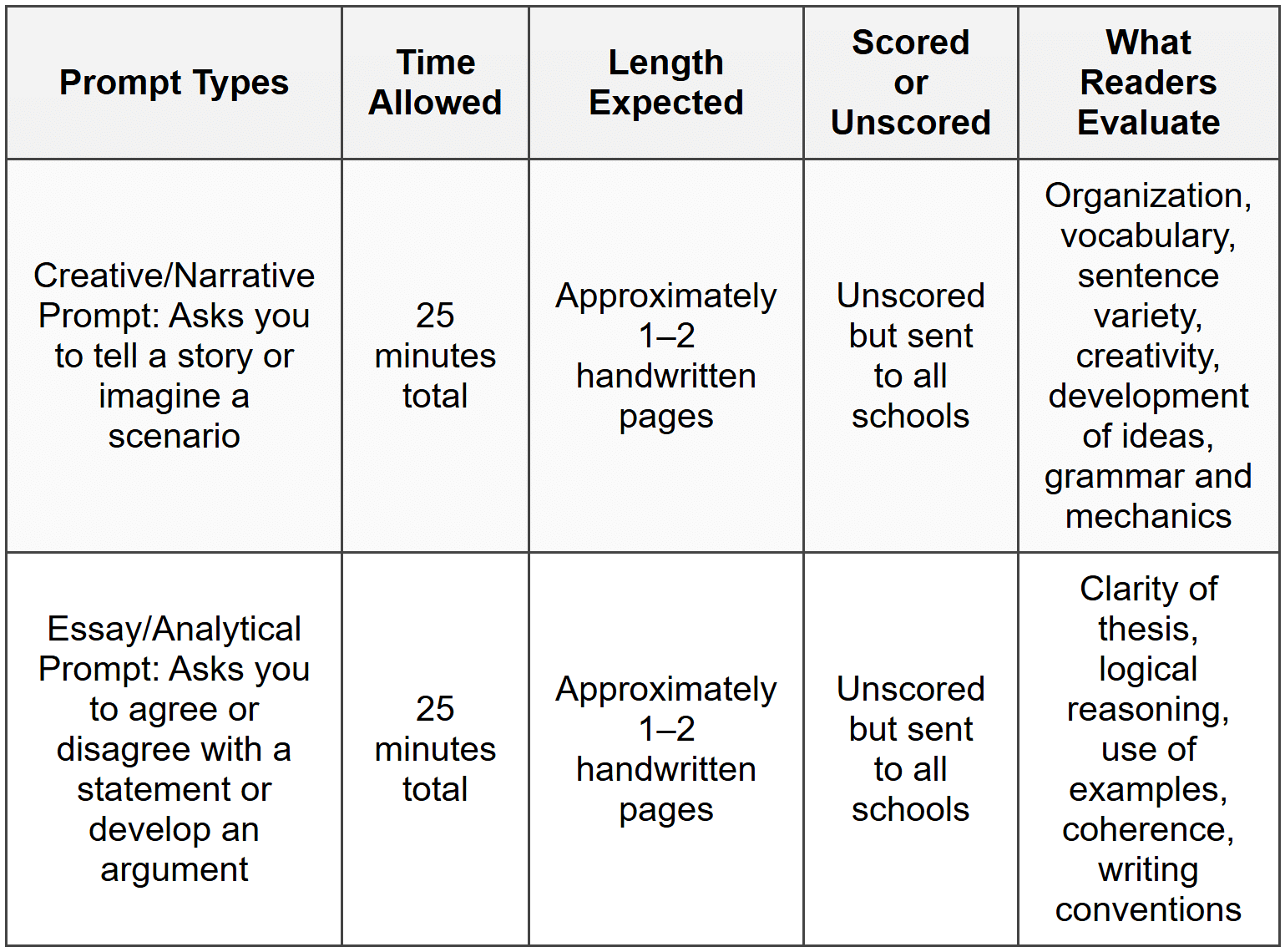
Admissions readers look for students who can think clearly, express themselves with precision, and sustain a focused response from beginning to end. They value authentic voice, mature vocabulary, and the ability to develop an idea beyond surface-level observations.
Fundamental Rules of Strong Writing
Mastering a few core principles will elevate your writing immediately. Each rule below is illustrated with a weak example and a strong revision. Study the differences carefully and apply these lessons to every sentence you write.
Specificity
Vague language weakens your writing. Specific details create vivid images and demonstrate your ability to think precisely.

Active Voice
Active voice creates energy and clarity. Passive voice often obscures the subject and drains momentum from your sentences.

Sentence Variety
Monotonous sentence structure bores readers. Vary your sentence length and construction to create rhythm and maintain interest.

Show Don't Tell
Instead of labeling emotions or qualities, illustrate them through action, dialogue, or sensory detail.

Precise Word Choice
Generic verbs and adjectives weaken impact. Choose words that convey exactly what you mean.

Pre-Writing and Planning Strategies
Effective planning is the foundation of a strong writing sample. Even two minutes of focused preparation will result in a more coherent, well-organized response. Do not skip this step, even if you feel confident about your topic.
Choosing Your Prompt
When selecting between the narrative and essay prompt, consider the following questions:
- Which prompt sparks an immediate idea or memory?
- Which type of writing do you typically perform better in-storytelling or argumentation?
- Can you think of at least two specific examples or details for this prompt right away?
- Does the prompt allow you to showcase your vocabulary and sentence variety?
Strategic tip: Choose the prompt that allows you to write with confidence and depth. A well-developed narrative is superior to a thin analytical essay, and vice versa. Trust your instincts but make your choice within the first 60 seconds.
Creating a Fast Outline
Once you have chosen your prompt, spend 90-120 seconds creating a simple outline. This does not need to be formal; jot down key ideas in the margin or at the top of your response sheet.
Sample 2-Minute Planning Template:
Opening: Hook with a specific image or bold statement
Body Point 1: First reason/example/event
Body Point 2: Second reason/example/event
Body Point 3 (optional): Third reason/example/event or complication
Conclusion: Reflection, insight, or broader implication
Opening Line Strategies
Your opening sentence sets the tone and captures the reader's attention. Avoid generic statements like "In today's world" or "Many people believe." Instead, try one of these approaches:
- Action: Begin in the middle of a moment-"The door slammed behind me, and I realized I had forgotten my keys."
- Dialogue: Open with a compelling piece of conversation-"You're going to regret this," my sister warned as I signed up for the marathon."
- Bold claim: State your thesis with confidence-"Failure teaches more than success ever could."
- Vivid image: Paint a picture-"The gymnasium smelled of sweat and rubber, and the scoreboard glowed red: 10 seconds remaining."
Narrative vs. Analytical Writing Strategies
The two prompt types demand different approaches. Understanding the structure and expectations of each will help you craft a focused, effective response.
Narrative Writing Strategy
Definition: Narrative writing tells a story, whether real or imagined, with a clear sequence of events, vivid details, and a meaningful takeaway or insight.
Structural Approach:
- Establish the setting and situation quickly
- Introduce a problem, challenge, or key moment
- Develop the middle with sensory details, dialogue, and action
- Resolve the situation or show a turning point
- Conclude with a reflection that reveals what you learned or how you changed
Model Opening Sentence: "The auditorium lights dimmed, and I gripped the edges of the podium, my prepared speech suddenly feeling inadequate."
Model Closing Sentence: "As I walked off the stage to scattered applause, I understood that courage is not the absence of fear, but the decision to speak despite it."
Common Pitfalls:
- Writing a plot summary without reflection or emotional depth
- Including too many events and losing focus
- Telling the reader what you felt instead of showing it through actions and dialogue
- Ending abruptly without insight or closure
Analytical Writing Strategy
Definition: Analytical writing presents a clear thesis in response to a prompt, supports that thesis with logical reasoning and examples, and demonstrates critical thinking.
Structural Approach:
- State your thesis clearly in the opening paragraph
- Present your first supporting reason with a specific example
- Present your second supporting reason with a specific example
- If time permits, acknowledge a counterargument and refute it briefly
- Conclude by restating your thesis in fresh language and suggesting a broader implication
Model Opening Sentence: "While technology offers undeniable conveniences, excessive reliance on digital devices erodes our capacity for deep thinking and genuine human connection."
Model Closing Sentence: "Only by balancing innovation with intentionality can we harness technology's benefits without sacrificing the creativity and empathy that define us."
Common Pitfalls:
- Stating a thesis that merely restates the prompt without taking a position
- Offering generalizations instead of specific, concrete examples
- Failing to connect examples back to the thesis
- Writing a conclusion that simply repeats the introduction word-for-word
Vocabulary Upgrades and Transition Words
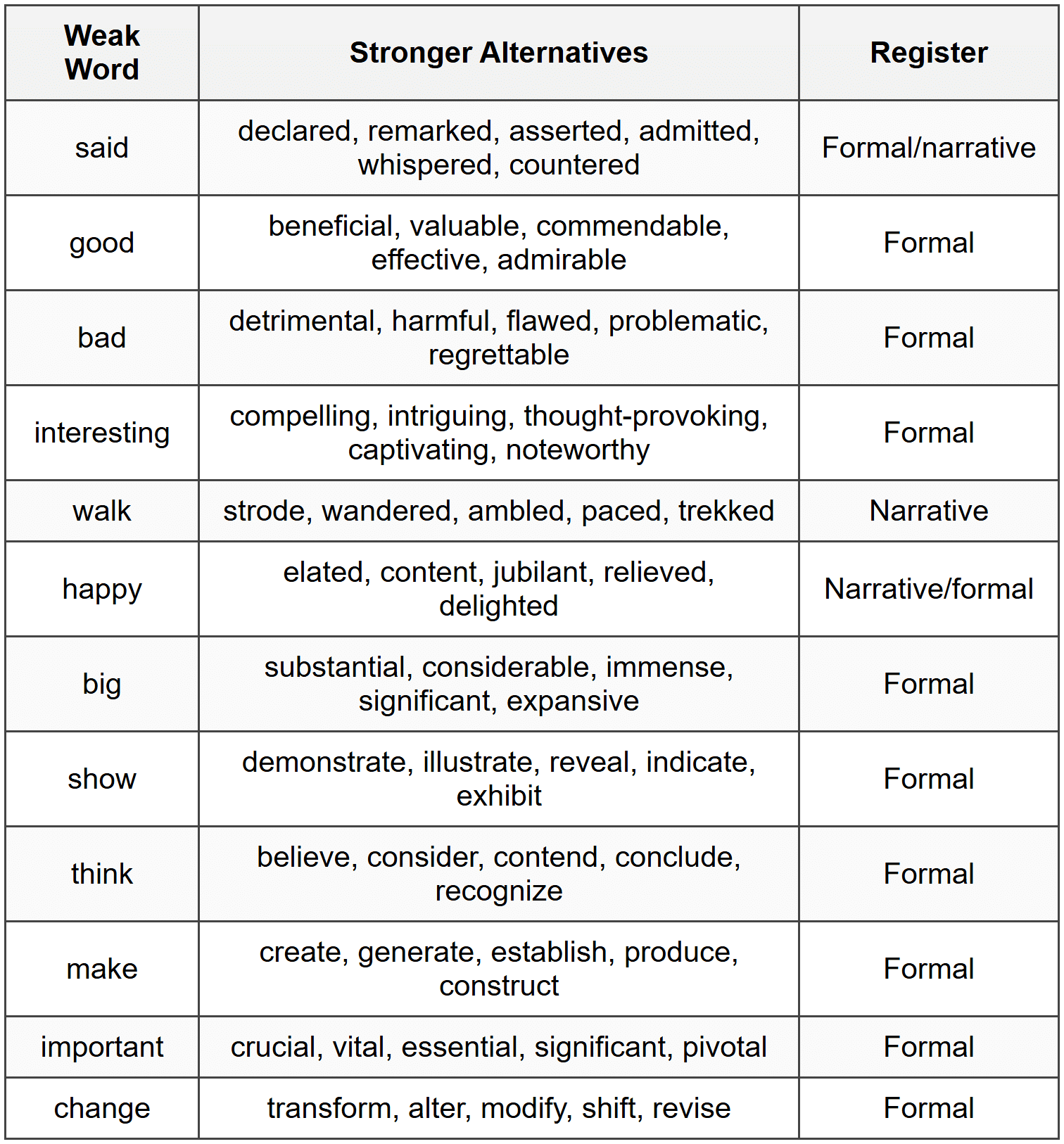
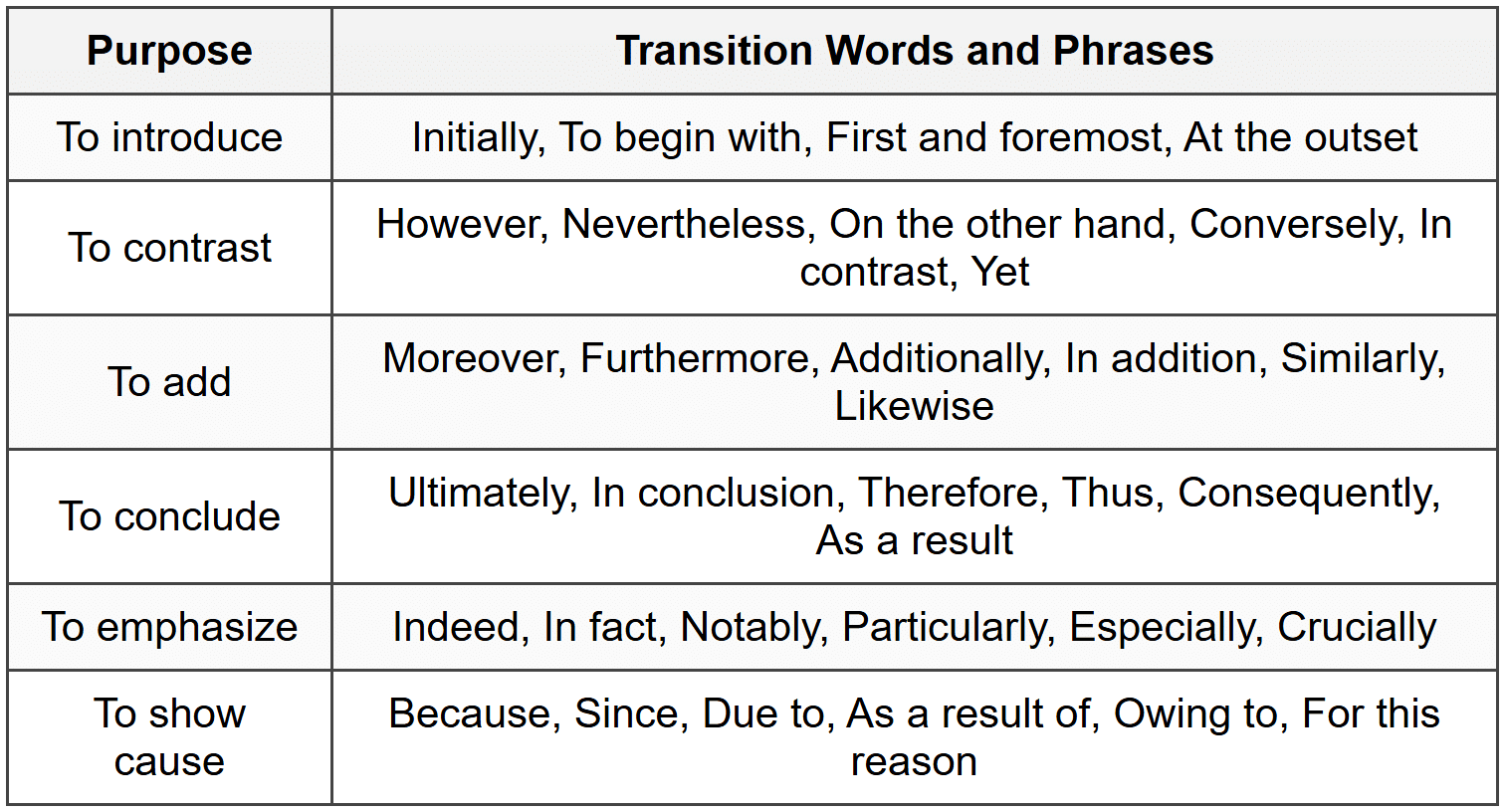
Expanding your vocabulary and using transitions purposefully will make your writing more sophisticated and cohesive. The tables below offer practical upgrades you can implement immediately.
Vocabulary Upgrades
Transition Words by Purpose
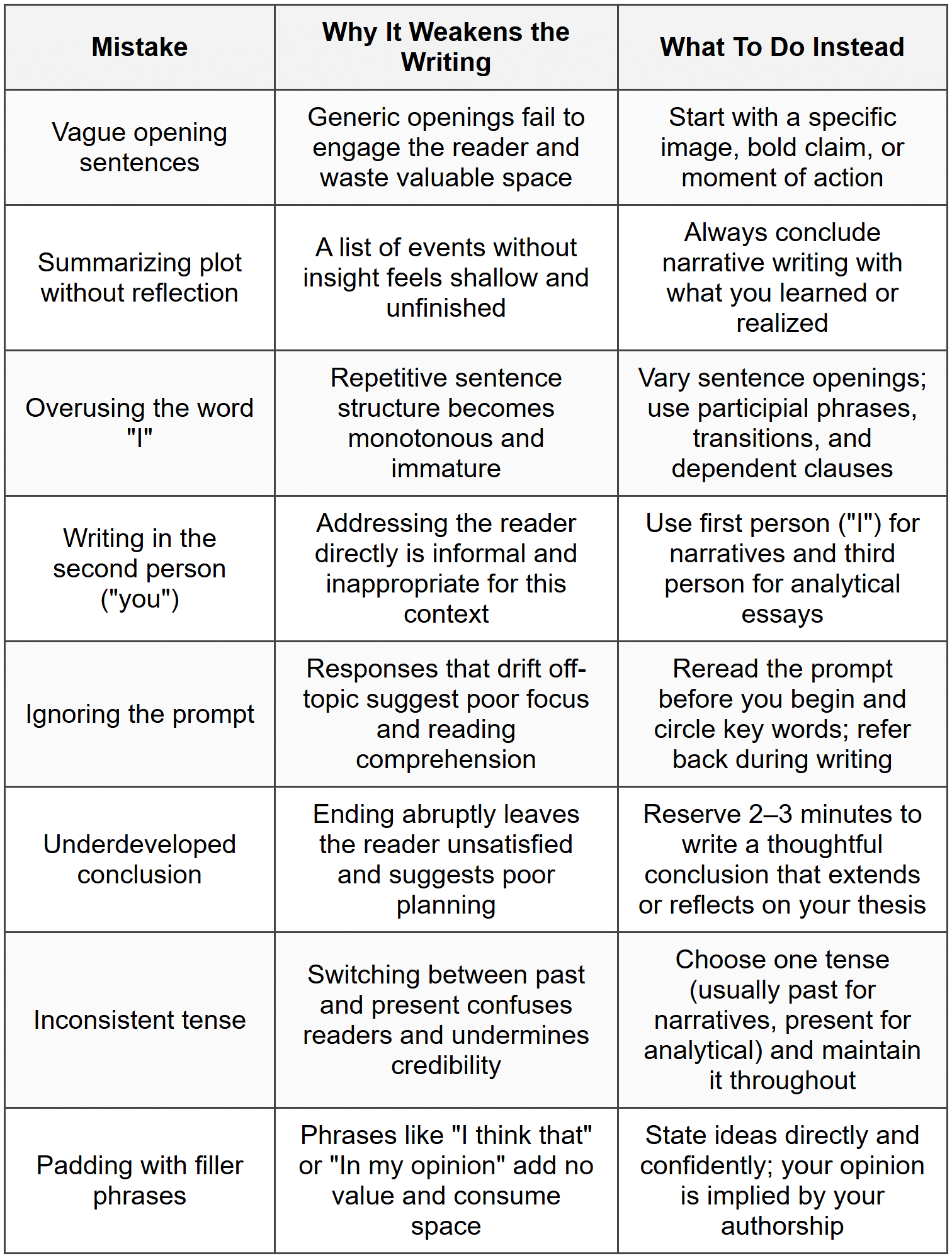
Common Mistakes to Avoid
Even strong writers fall into predictable traps under time pressure. Awareness of these mistakes will help you avoid them during your writing sample.
Time Management Plan
Twenty-five minutes may seem generous, but time passes quickly when you are writing by hand. Follow this structured plan to ensure you complete a polished response.
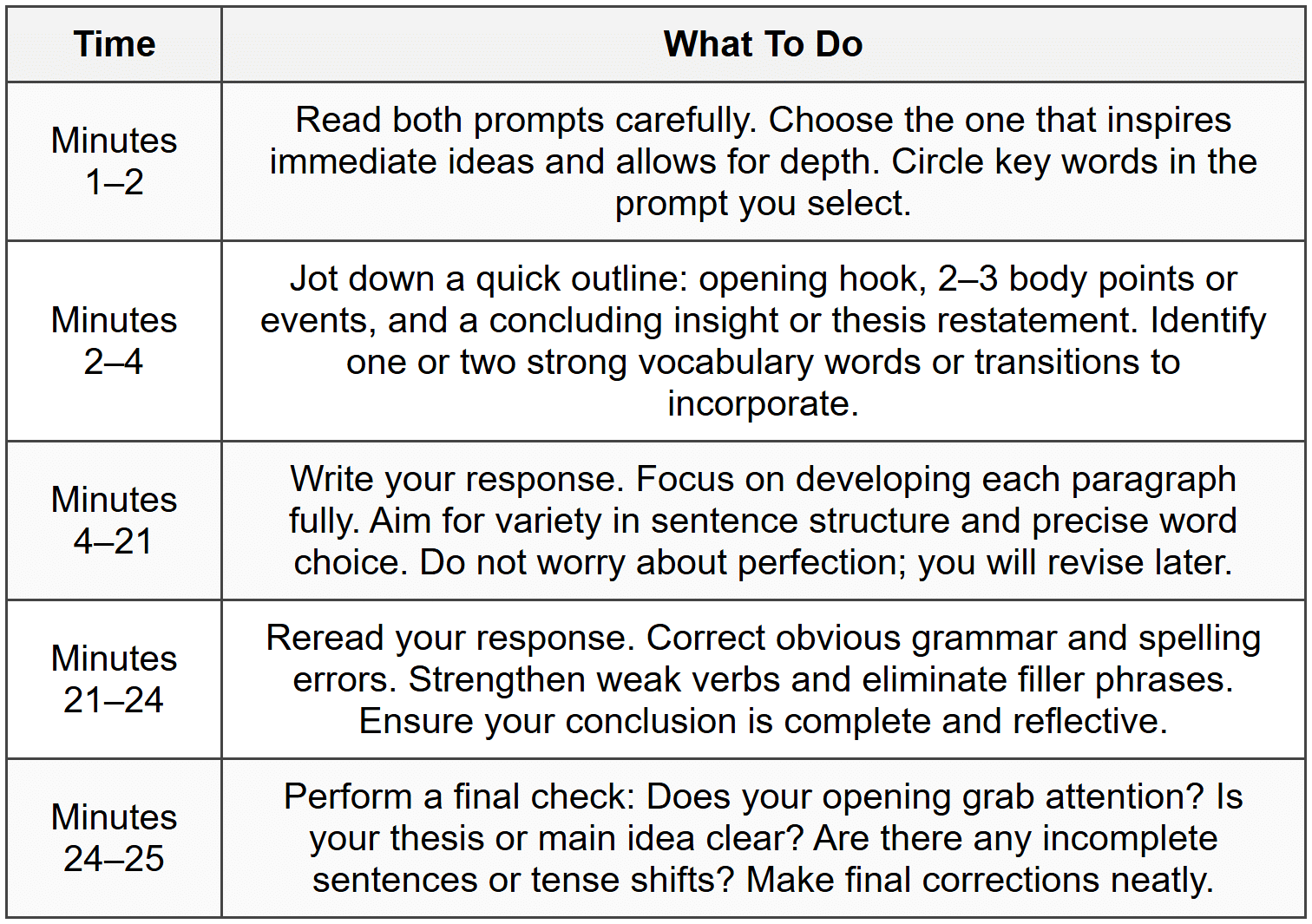
Golden Rule: If you are running out of time, prioritize writing a strong conclusion over adding more body content-an incomplete essay signals poor planning, but a well-rounded piece with slightly less development still demonstrates competence.
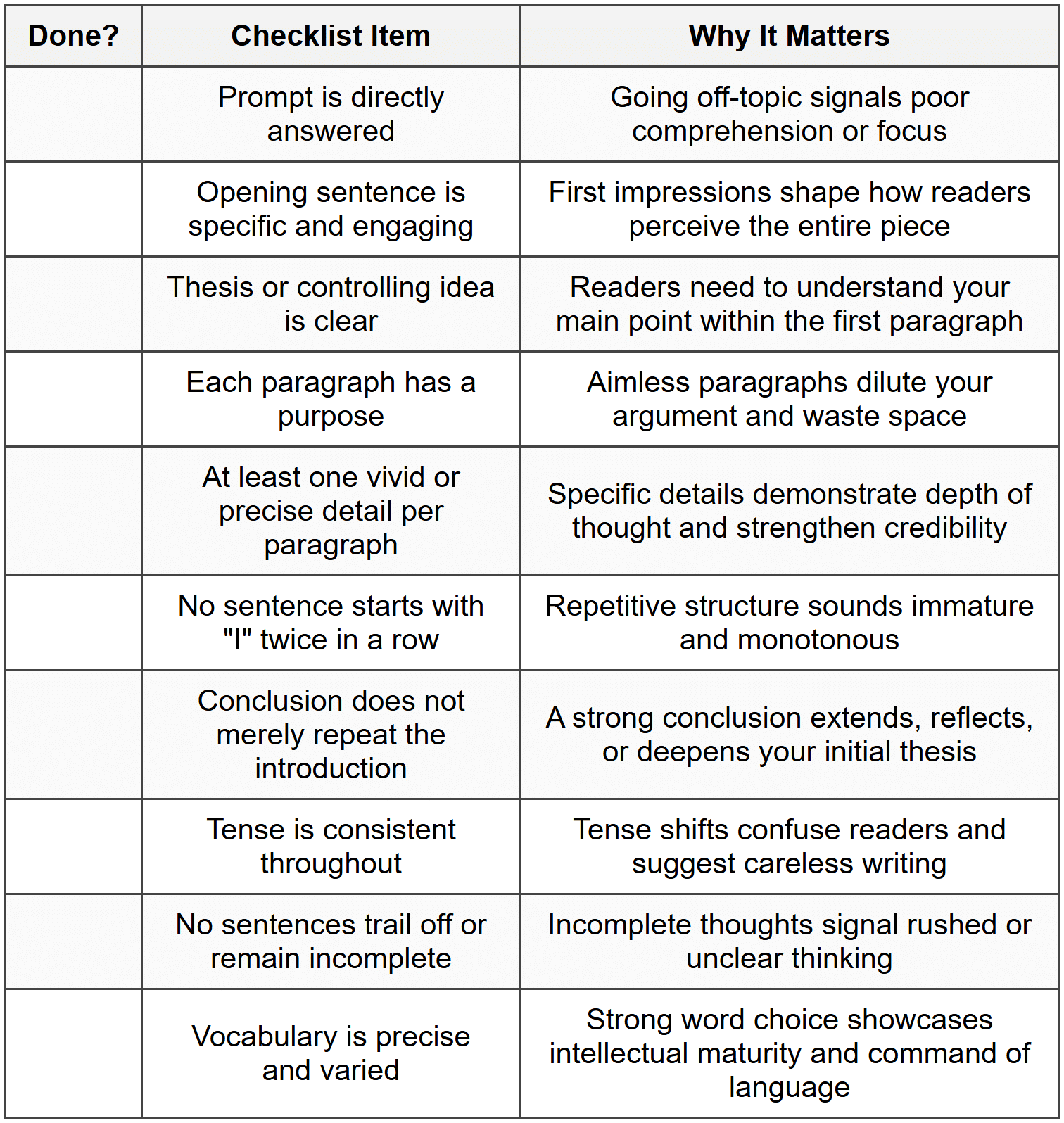
Final Checklist
Before you put down your pencil, use this checklist to verify that your writing sample meets the highest standards. Each item directly contributes to the overall impression your essay makes on admissions readers.
FAQs on SSAT Upper Level Writing Sample Mastery Guide
| 1. What are the fundamental rules of strong writing? |  |
| 2. What strategies can be employed during the pre-writing and planning phase? | |
| 3. How do narrative and analytical writing strategies differ? | |
| 4. What are some common mistakes to avoid in writing? | |
| 5. How can time management be effectively planned for writing tasks? | |