CBSE Class 6 > Class 6 Notes > Mathematics > RS Aggarwal Solutions: Symmetry (Exercise 11B)
RS Aggarwal Solutions: Symmetry (Exercise 11B)

Q1. Observe each of the following sequences of paper folding and cutting, and draw the output pattern obtained on opening the paper.
Ans: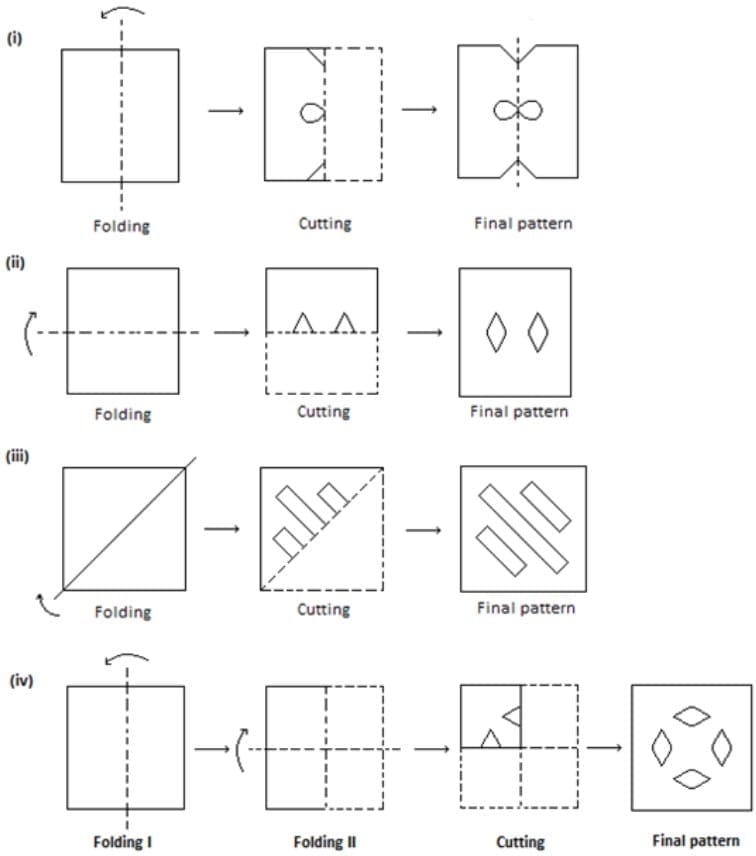
Q2. Given the line of symmetry, find the other hole in each case.
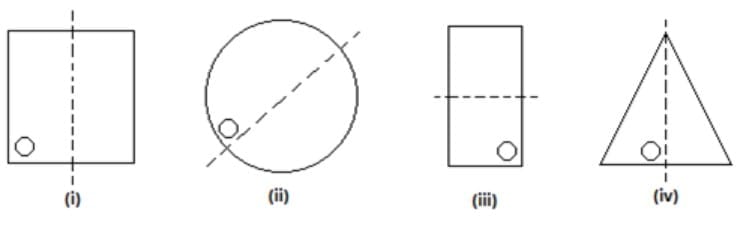
Ans: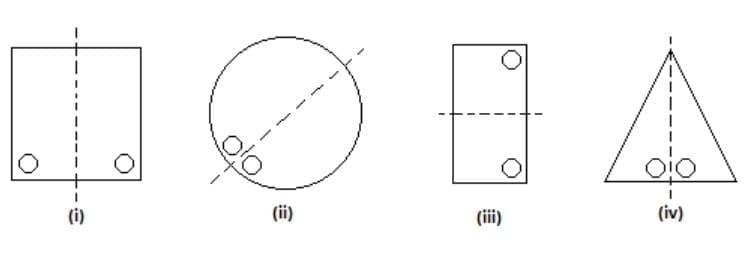
Q3. Observe each of the following sequences of paper folding and punching, and draw the output pattern obtained on opening the paper.
Ans: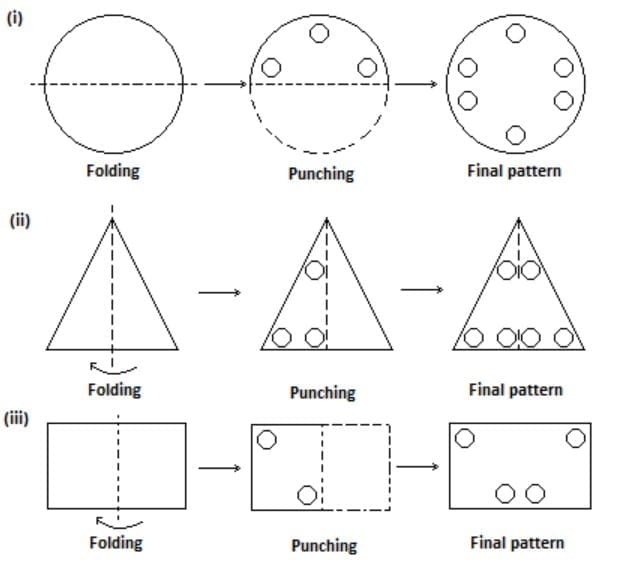
The document RS Aggarwal Solutions: Symmetry (Exercise 11B) is a part of the Class 6 Course Mathematics for Class 6.
All you need of Class 6 at this link: Class 6
FAQs on RS Aggarwal Solutions: Symmetry (Exercise 11B)
| 1. What is symmetry in geometry? |  |
Ans. Symmetry in geometry refers to a balance and proportion in shapes where one side is a mirror image of the other. It can be seen in two main types: reflective symmetry, where one half is a reflection of the other, and rotational symmetry, where a shape can be rotated around a central point and still look the same.
| 2. How can we identify lines of symmetry in shapes? | |
Ans. To identify lines of symmetry in shapes, one can fold the shape along a line and see if both halves match perfectly. For example, a square has four lines of symmetry, while a circle has infinite lines of symmetry as any diameter divides it into two equal halves.
| 3. What are some common shapes that exhibit symmetry? | |
Ans. Common shapes that exhibit symmetry include squares, rectangles, circles, and equilateral triangles. Each of these shapes has specific lines of symmetry; for instance, a rectangle has two lines of symmetry, while an equilateral triangle has three.
| 4. What is the significance of symmetry in art and nature? | |
Ans. Symmetry is significant in art and nature as it creates balance and harmony, making objects visually appealing. In nature, many living organisms, like butterflies and flowers, display symmetry, which can be linked to evolutionary advantages, such as attracting mates or camouflage.
| 5. Can a shape have more than one type of symmetry? | |
Ans. Yes, a shape can have more than one type of symmetry. For example, a circle has both reflective and rotational symmetry, as it can be divided into equal halves in multiple ways and looks the same when rotated at any angle.
About this Document

4.76/5 Rating

Apr 29, 2026 Last updated
Related Exams
Document Description: RS Aggarwal Solutions: Symmetry (Exercise 11B) for Class 6 2026 is part of Mathematics for Class 6 preparation. The notes and questions for RS Aggarwal Solutions: Symmetry (Exercise 11B) have been prepared according to the Class 6 exam syllabus. Information about RS Aggarwal Solutions: Symmetry (Exercise 11B) covers topics like and RS Aggarwal Solutions: Symmetry (Exercise 11B) Example, for Class 6 2026 Exam. Find important definitions, questions, notes, meanings, examples, exercises and tests below for RS Aggarwal Solutions: Symmetry (Exercise 11B).
Introduction of RS Aggarwal Solutions: Symmetry (Exercise 11B) in English is available as part of our Mathematics for Class 6 for Class 6 & RS Aggarwal Solutions: Symmetry (Exercise 11B) in Hindi for Mathematics for Class 6 course. Download more important topics related with notes, lectures and mock test series for Class 6 Exam by signing up for free. Class 6: RS Aggarwal Solutions: Symmetry (Exercise 11B)
Description
RS Aggarwal Solutions: Symmetry (Exercise 11B) of Mathematics on EduRev - covers important questions, MCQs with answers. Helps you prepare for exam.
Information about RS Aggarwal Solutions: Symmetry (Exercise 11B)
In this doc you can find the meaning of RS Aggarwal Solutions: Symmetry (Exercise 11B) defined & explained in the simplest way possible. Besides explaining types of RS Aggarwal Solutions: Symmetry (Exercise 11B) theory, EduRev gives you an ample number of questions to practice RS Aggarwal Solutions: Symmetry (Exercise 11B) tests, examples and also practice Class 6 tests



Related Searches
Semester Notes, past year papers, shortcuts and tricks, RS Aggarwal Solutions: Symmetry (Exercise 11B), practice quizzes, MCQs, Exam, video lectures, Summary, Free, Previous Year Questions with Solutions, Sample Paper, mock tests for examination, study material, Extra Questions, RS Aggarwal Solutions: Symmetry (Exercise 11B), RS Aggarwal Solutions: Symmetry (Exercise 11B), Objective type Questions, Important questions, pdf , ppt, Viva Questions;