Practice Questions :Cellular Energetics

SECTION I: MULTIPLE CHOICE
Directions
This section contains 20 multiple-choice questions. For each question, select the best answer from the four choices provided. Some questions may instruct you to select two answers; these will be clearly marked. You may use a calculator on this section.
Questions 1-2 refer to the following information:
Figure 1: Rate of Oxygen Consumption in Germinating and Non-Germinating Seeds
A group of students measured oxygen consumption in germinating pea seeds and non-germinating pea seeds at two different temperatures (10°C and 25°C) over a 20-minute period. The following data were collected:
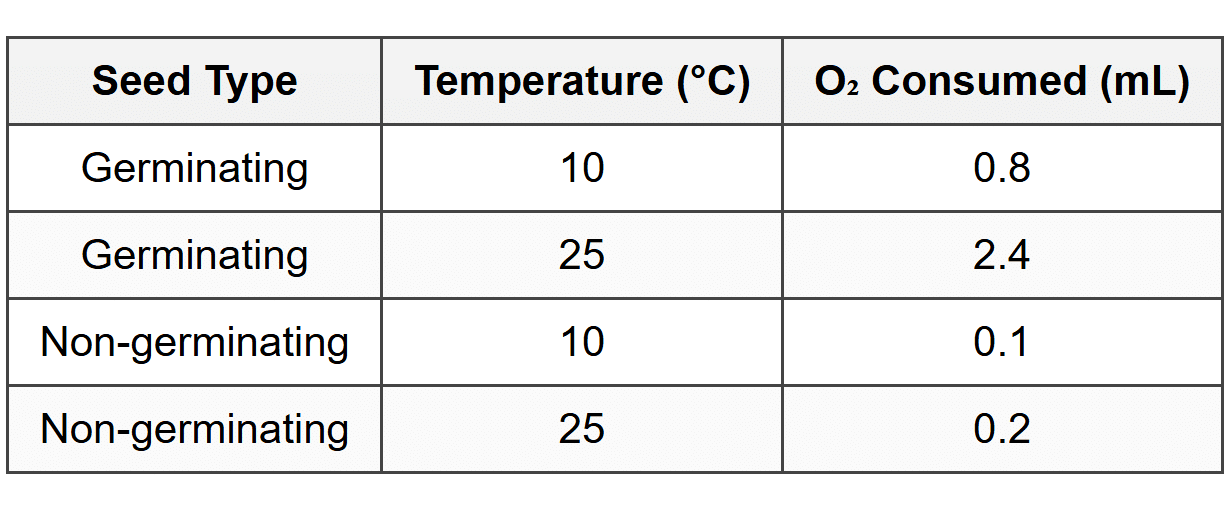
1. Which of the following claims is best supported by the data in Figure 1?
- Temperature has no effect on cellular respiration rates in seeds.
- Germinating seeds have higher rates of cellular respiration than non-germinating seeds at both temperatures tested.
- Non-germinating seeds rely primarily on fermentation for ATP production.
- Oxygen consumption decreases as temperature increases in all seed types.
2. The increased oxygen consumption observed in germinating seeds at 25°C compared to 10°C is most directly explained by which of the following?
- Higher temperatures denature enzymes involved in glycolysis, increasing the demand for oxygen.
- Increased kinetic energy at higher temperatures leads to more frequent molecular collisions and faster enzyme-catalyzed reactions in cellular respiration.
- The electron transport chain operates independently of temperature because it is located in the mitochondrial membrane.
- Germinating seeds switch from aerobic respiration to anaerobic fermentation at higher temperatures.
3. A student is investigating the effect of different wavelengths of light on the rate of photosynthesis in spinach leaf disks. The student places leaf disks in a sodium bicarbonate solution and exposes them to light. As photosynthesis occurs, oxygen accumulates in the leaf tissues, causing the disks to float. Which of the following would be the most appropriate dependent variable to measure?
- The wavelength of light used in each trial
- The concentration of sodium bicarbonate in the solution
- The time required for 50% of the leaf disks to float
- The number of leaf disks placed in each test tube
Figure 2: ATP Production Under Different Conditions
Researchers measured ATP production in yeast cells under four different conditions:
- Condition A: Aerobic conditions with glucose
- Condition B: Anaerobic conditions with glucose
- Condition C: Aerobic conditions without glucose
- Condition D: Anaerobic conditions without glucose
ATP production (in arbitrary units per cell) was: A = 38, B = 2, C = 0, D = 0
4. Which of the following conclusions is best supported by the data in Figure 2?
- Yeast cells produce equal amounts of ATP under aerobic and anaerobic conditions as long as glucose is present.
- The presence of oxygen significantly increases ATP yield from glucose metabolism in yeast cells.
- Yeast cells can produce ATP through oxidative phosphorylation in the absence of glucose.
- Fermentation produces more ATP per glucose molecule than aerobic respiration.
5. During the process of glycolysis, glucose is converted to two molecules of pyruvate. Which of the following accurately describes the energy transformations that occur during this process?
- Energy from ATP hydrolysis is used to phosphorylate glucose and intermediates, and energy from oxidation reactions is captured in NADH and ATP.
- Glucose is oxidized directly by oxygen molecules, releasing energy that is captured entirely in the form of ATP.
- All of the energy stored in glucose bonds is released as heat, with no energy captured in chemical bonds.
- Pyruvate molecules are reduced to form ATP, while glucose molecules are phosphorylated by NADH.
Figure 3: Mitochondrial Structure and Function
The diagram below represents a mitochondrion with labeled regions:
- Region I: Outer membrane
- Region II: Intermembrane space
- Region III: Inner membrane
- Region IV: Mitochondrial matrix
6. The Krebs cycle (citric acid cycle) and the conversion of pyruvate to acetyl-CoA occur in which region of the mitochondrion?
- Region I only
- Region II only
- Region III only
- Region IV only
7. Select TWO answers. Which of the following statements correctly describe the role of the electron transport chain in cellular respiration?
- High-energy electrons from NADH and FADH₂ are passed through a series of protein complexes, releasing energy used to pump protons across the inner mitochondrial membrane.
- The electron transport chain directly produces most of the ATP in cellular respiration through substrate-level phosphorylation.
- Oxygen serves as the final electron acceptor in the electron transport chain, forming water when it combines with electrons and protons.
- The electron transport chain occurs in the cytoplasm of prokaryotic cells and the mitochondrial matrix of eukaryotic cells.
8. A researcher treats cells with an inhibitor that prevents the formation of ATP synthase complexes in the inner mitochondrial membrane. Which of the following effects would most likely be observed?
- The proton gradient across the inner mitochondrial membrane would continue to form, but ATP production would dramatically decrease.
- Glycolysis would be completely inhibited because ATP synthase is required for glucose phosphorylation.
- NADH production would increase because cells would rely more heavily on oxidative phosphorylation.
- The electron transport chain would function normally and compensate by producing ATP through substrate-level phosphorylation.
Figure 4: Absorption Spectrum of Chlorophyll
The graph below shows the absorption spectrum of chlorophyll a and chlorophyll b across different wavelengths of light (400-700 nm). Both pigments show peak absorption in the blue region (400-500 nm) and the red region (650-700 nm), with minimal absorption in the green region (500-600 nm).
9. Based on the absorption spectrum shown in Figure 4, which of the following predictions about photosynthesis rates under different light conditions is most accurate?
- Photosynthesis will proceed at the highest rate under green light because chlorophyll reflects green wavelengths.
- Photosynthesis will proceed at similar high rates under both blue and red light because chlorophyll absorbs these wavelengths most efficiently.
- Photosynthesis will proceed at the same rate under all wavelengths of visible light because plants can use any light energy.
- Photosynthesis will be completely inhibited under blue light because high-energy photons damage chlorophyll molecules.
10. The light-dependent reactions of photosynthesis occur in the thylakoid membranes and produce which of the following products that are directly used in the Calvin cycle?
- Glucose and oxygen
- ATP and NADPH
- Carbon dioxide and water
- ADP and NADP⁺
11. Select TWO answers. Which of the following are direct products of the light-dependent reactions of photosynthesis?
- Oxygen gas (O₂)
- Glucose (C₆H₁₂O₆)
- ATP
- Carbon dioxide (CO₂)
Figure 5: Calvin Cycle Carbon Fixation Data
Researchers provided radioactively labeled carbon dioxide (¹⁴CO₂) to illuminated chloroplasts and tracked the incorporation of ¹⁴C into organic molecules over time. The table below shows the percentage of ¹⁴C found in different molecules at various time points after exposure:
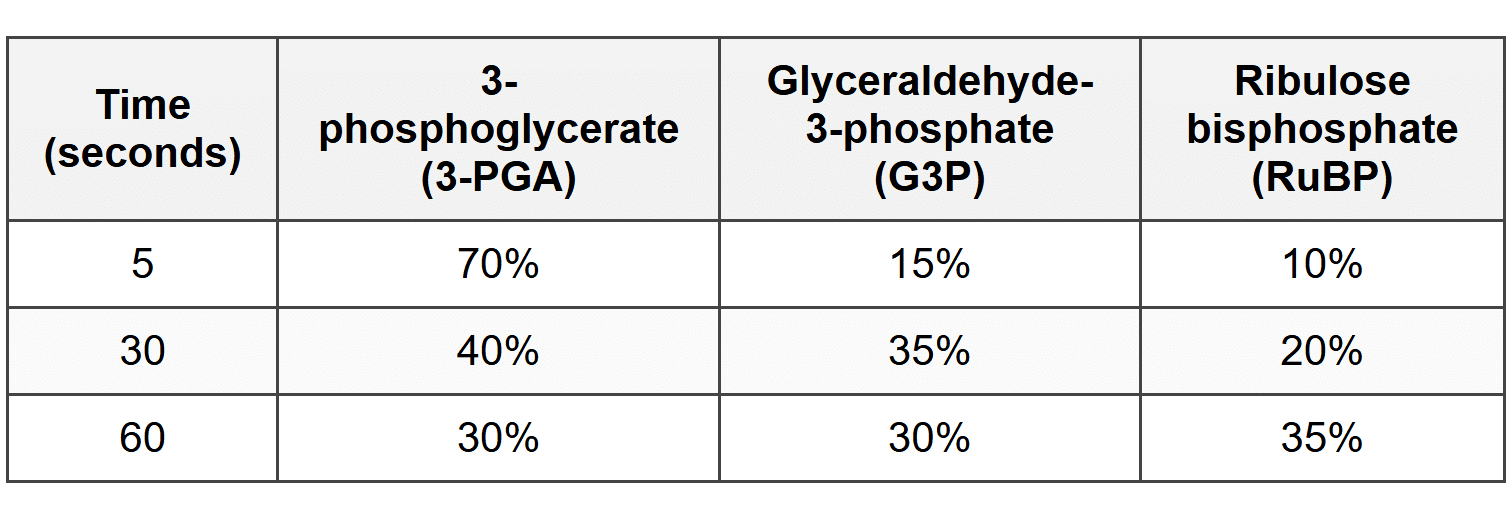
12. Which of the following claims about the Calvin cycle is best supported by the data in Figure 5?
- 3-phosphoglycerate is the first stable organic molecule produced when CO₂ is fixed by the enzyme rubisco.
- G3P is produced before 3-PGA in the Calvin cycle because it appears in the data at 5 seconds.
- RuBP is the first molecule to incorporate ¹⁴C from ¹⁴CO₂ because it is the CO₂ acceptor molecule.
- The Calvin cycle does not require ATP or NADPH because these molecules are not labeled with ¹⁴C.
13. A mutation in a plant results in a nonfunctional enzyme rubisco. Which of the following processes would be most directly impaired?
- The splitting of water molecules during photosystem II activity
- The fixation of carbon dioxide into 3-phosphoglycerate during the Calvin cycle
- The generation of a proton gradient across the thylakoid membrane
- The reduction of NADP⁺ to NADPH during the light-dependent reactions
Figure 6: Comparison of C3 and C4 Photosynthesis
Two plants, Species X (a C3 plant) and Species Y (a C4 plant), were grown under identical conditions with varying CO₂ concentrations. Their rates of photosynthesis were measured and are shown below:
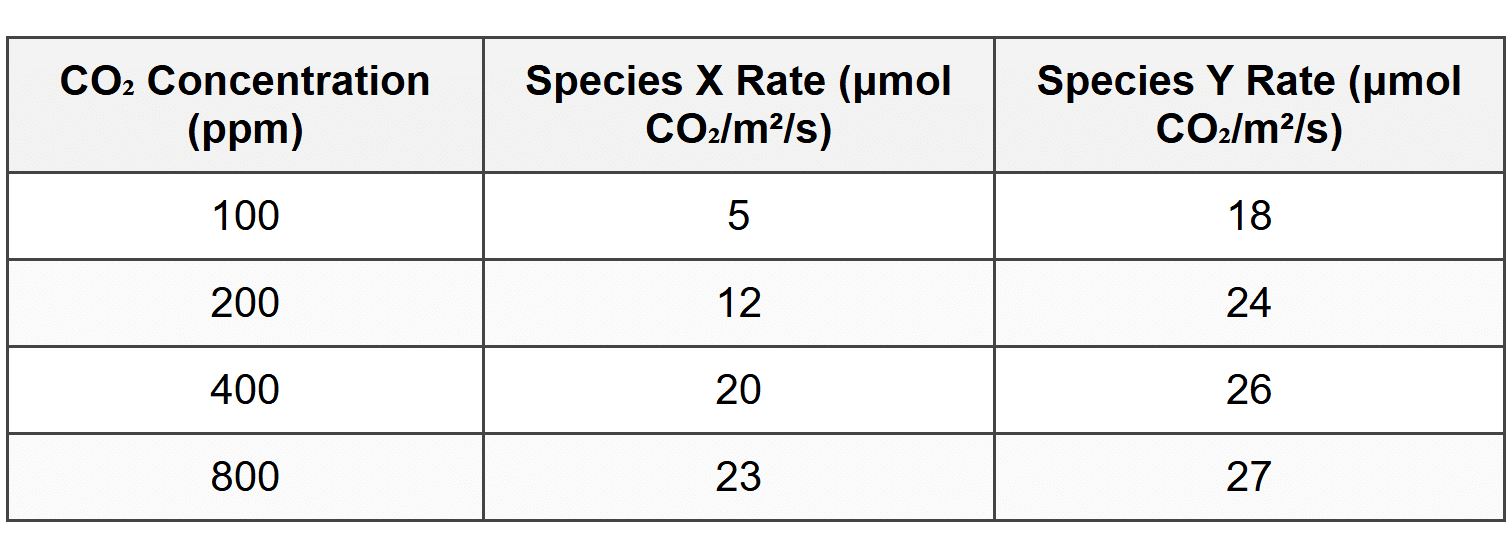
14. Which of the following explanations best accounts for the difference in photosynthesis rates between Species X and Species Y at low CO₂ concentrations?
- Species Y (C4) concentrates CO₂ in bundle-sheath cells, reducing photorespiration and maintaining higher photosynthesis rates even when atmospheric CO₂ is low.
- Species X (C3) is more efficient at low CO₂ concentrations because it uses less ATP per molecule of CO₂ fixed.
- Species Y produces oxygen as a byproduct of photosynthesis, which inhibits rubisco activity at low CO₂ concentrations.
- Species X relies on CAM photosynthesis, which is less efficient than C4 photosynthesis under all conditions.
15. During aerobic cellular respiration, the majority of ATP is produced during which stage?
- Glycolysis, through substrate-level phosphorylation
- The Krebs cycle, through substrate-level phosphorylation
- Oxidative phosphorylation, using the proton gradient generated by the electron transport chain
- Fermentation, through the regeneration of NAD⁺
Figure 7: Effect of Inhibitor on Cellular Respiration
A researcher adds a chemical inhibitor to actively respiring mitochondria. After the addition of the inhibitor, the following observations are made:
- Oxygen consumption by the mitochondria stops immediately.
- The proton gradient across the inner mitochondrial membrane dissipates.
- ATP production decreases to near zero.
- NADH levels increase in the mitochondrial matrix.
16. Based on the observations in Figure 7, the inhibitor most likely affects which of the following components?
- ATP synthase, preventing protons from flowing through the enzyme
- The electron transport chain complexes, preventing electron transfer and proton pumping
- Pyruvate dehydrogenase, preventing the conversion of pyruvate to acetyl-CoA
- Phosphofructokinase, the rate-limiting enzyme of glycolysis
17. In the absence of oxygen, many organisms can produce ATP through fermentation. Which of the following best describes the primary purpose of fermentation?
- To produce large quantities of ATP through substrate-level phosphorylation
- To regenerate NAD⁺ so that glycolysis can continue to produce ATP
- To convert pyruvate directly into carbon dioxide and water
- To generate a proton gradient that drives ATP synthase
18. Cyanide is a poison that binds to cytochrome c oxidase in the electron transport chain, preventing the transfer of electrons to oxygen. Which of the following cellular responses would most likely occur immediately after cyanide exposure?
- An increase in ATP production as cells switch to more efficient metabolic pathways
- A buildup of NADH and FADH₂ as the electron transport chain becomes blocked
- An increase in oxygen consumption as cells attempt to overcome the blockage
- Enhanced activity of the Krebs cycle to compensate for reduced electron transport
Figure 8: Chemiosmosis in Chloroplasts and Mitochondria
Both chloroplasts and mitochondria use chemiosmosis to produce ATP. A student creates a table comparing the two processes:
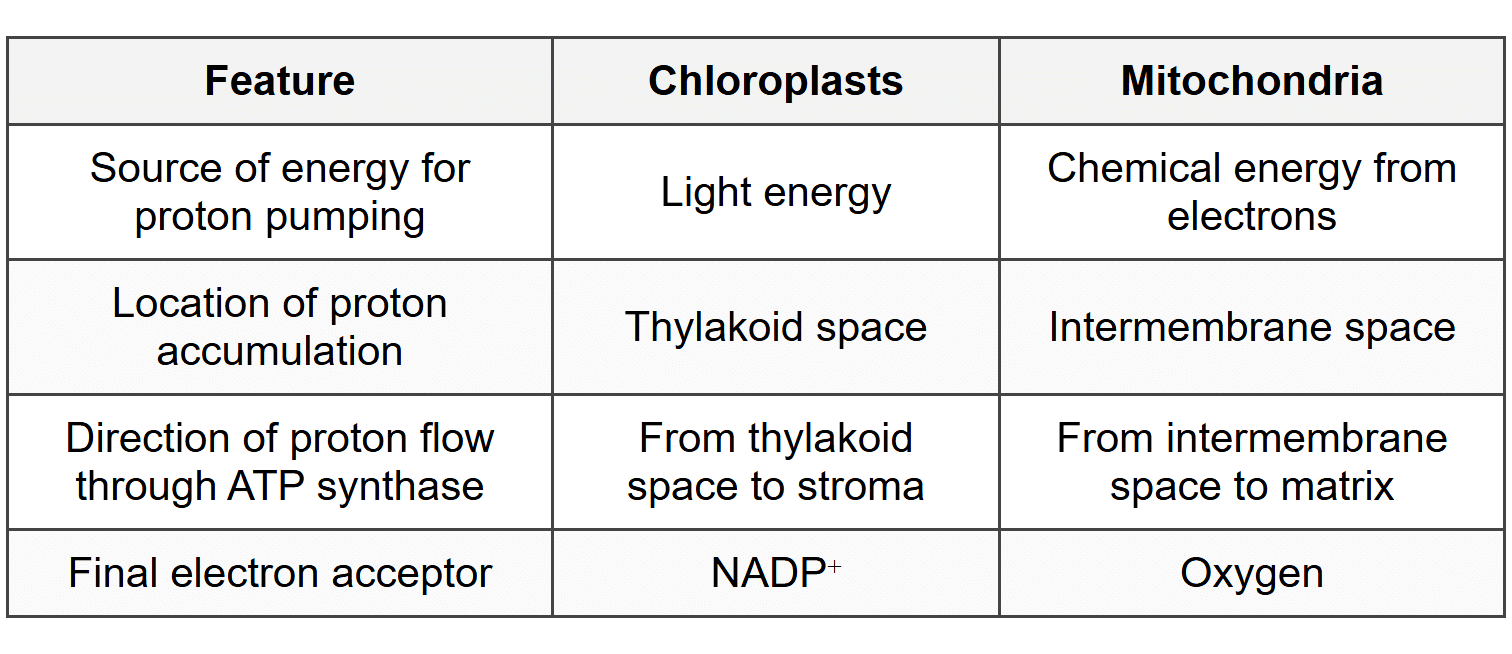
19. Which of the following statements represents a key similarity between chemiosmosis in chloroplasts and mitochondria, as shown in Figure 8?
- Both processes ultimately produce glucose as an energy storage molecule.
- Both processes use a proton gradient across a membrane to drive ATP synthesis through ATP synthase.
- Both processes occur in the cytoplasm of prokaryotic cells.
- Both processes use oxygen as the final electron acceptor in their electron transport chains.
20. In muscle cells undergoing strenuous exercise, oxygen availability becomes limited and lactate fermentation occurs. This metabolic shift allows continued ATP production primarily because it:
- produces additional ATP molecules through the reduction of pyruvate to lactate
- regenerates NAD⁺, which is required for glycolysis to continue
- directly phosphorylates ADP using energy from lactate breakdown
- pumps protons across the mitochondrial membrane to maintain the proton gradient
SECTION II: FREE RESPONSE
Directions
This section contains 2 free-response questions. Answer each question thoroughly, using complete sentences and appropriate biological terminology. Show all work for mathematical calculations. You have approximately 50 minutes for this section.
Question 1 (Long FRQ - 10 points)
A research team is investigating the effects of temperature on cellular respiration rates in germinating mung bean seeds. The researchers hypothesize that higher temperatures will increase the rate of cellular respiration up to an optimal temperature, after which enzyme denaturation will cause rates to decrease.
Experimental Setup:
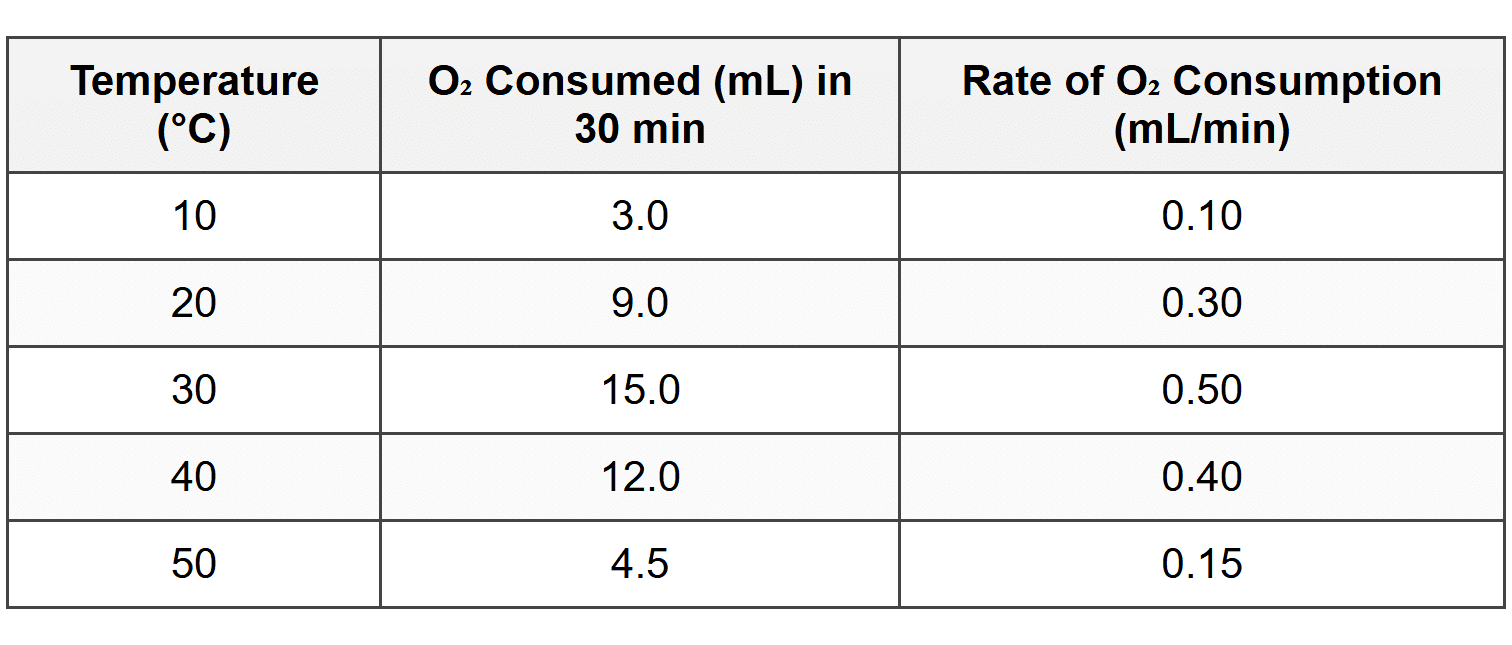
The researchers placed equal masses of germinating mung bean seeds in respirometers at five different temperatures: 10°C, 20°C, 30°C, 40°C, and 50°C. Each respirometer contained a potassium hydroxide (KOH) solution to absorb CO₂ produced during respiration. The change in gas volume in each respirometer was measured over 30 minutes, reflecting oxygen consumption. The following data were collected:
- Identify the independent variable and the dependent variable in this experiment.
- Describe the relationship between temperature and the rate of cellular respiration shown in the data. Include specific data points in your answer.
- Explain why the rate of oxygen consumption decreased at temperatures above 30°C, using your knowledge of enzyme structure and function.
- Calculate the Q₁₀ value for cellular respiration between 10°C and 20°C. The Q₁₀ represents the factor by which the rate increases for every 10°C rise in temperature and is calculated using the formula: \[ Q_{10} = \frac{\text{Rate at } T + 10°C}{\text{Rate at } T} \] Show your work.
- Design a controlled experiment to test whether the decrease in respiration rate at 50°C is due to enzyme denaturation or another factor such as seed death. Your answer must include:
- A clear description of the experimental procedure
- Identification of the control group
- The expected results if enzyme denaturation is reversible versus irreversible
- Explain how the process of cellular respiration in germinating seeds connects to the broader concept of energy flow in biological systems. In your answer, describe how the energy stored in glucose is transformed through cellular respiration and how this energy supports metabolic processes necessary for germination.
Question 2 (Short FRQ - 4 points)
Photosynthesis consists of two major sets of reactions: the light-dependent reactions and the light-independent reactions (Calvin cycle).
- Describe the role of photosystem II in the light-dependent reactions, including:
- The source of electrons for photosystem II
- What happens to water molecules
- The products generated
- Explain how the products of the light-dependent reactions (ATP and NADPH) are used in the Calvin cycle. Your answer must identify the specific steps of the Calvin cycle where each product is consumed.
- Predict what would happen to the rate of the Calvin cycle if the light intensity were suddenly decreased. Justify your prediction by explaining the relationship between the two sets of reactions.
ANSWER KEY
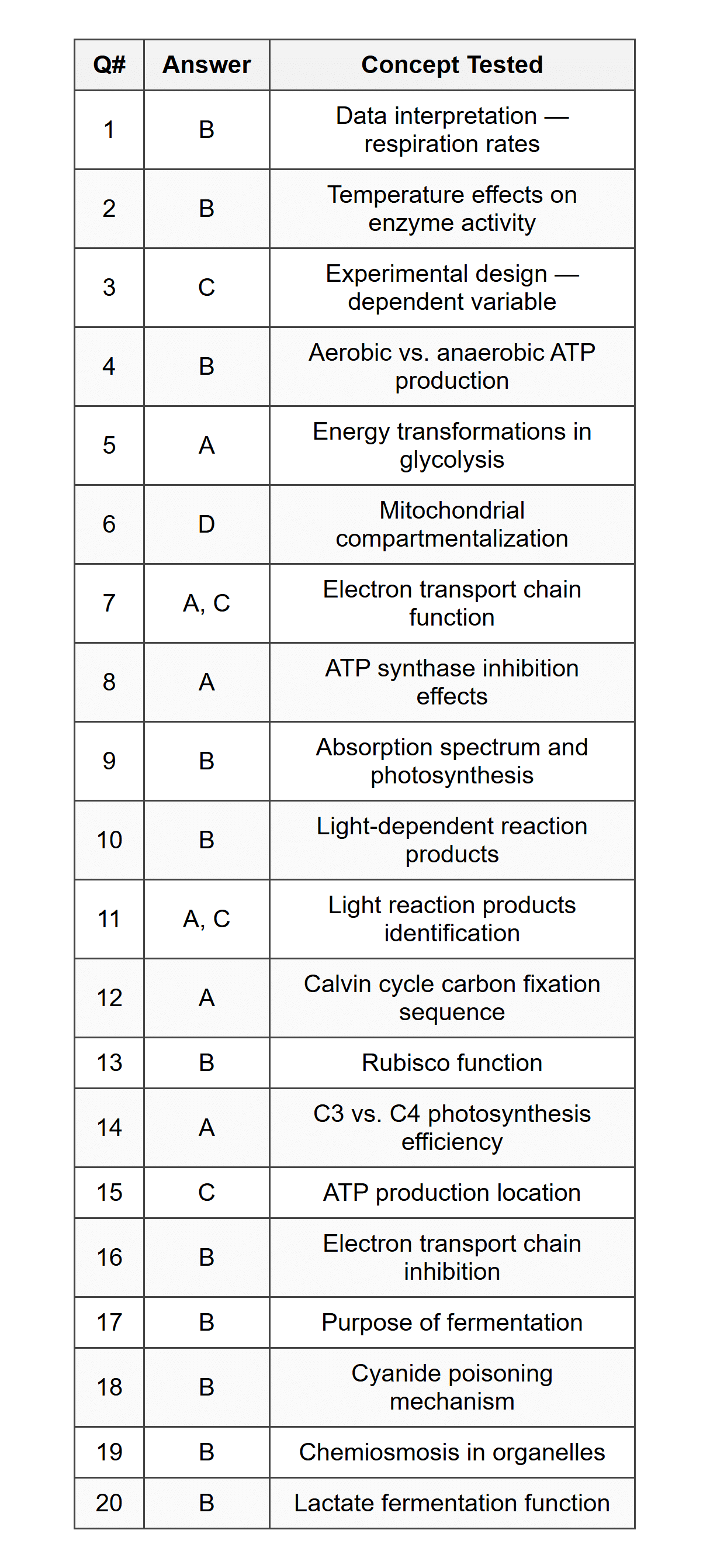
Part A - Multiple Choice Answer Table
Part B - Free Response Detailed Answers
FRQ 1 - Answer Key
Part A: Identify the independent and dependent variables
Independent variable: Temperature (measured in °C)
Dependent variable: Rate of oxygen consumption (measured in mL/min) or total volume of oxygen consumed (measured in mL)
Scoring note: 1 point for correctly identifying both variables. The student must identify the variable being manipulated and the variable being measured.
Part B: Describe the relationship between temperature and the rate of cellular respiration
The rate of cellular respiration increases as temperature increases from 10°C to 30°C, rising from 0.10 mL/min at 10°C to 0.30 mL/min at 20°C and reaching a maximum of 0.50 mL/min at 30°C. Above 30°C, the rate decreases, dropping to 0.40 mL/min at 40°C and 0.15 mL/min at 50°C. This pattern suggests an optimal temperature around 30°C, with reduced efficiency at both lower and higher temperatures.
Scoring note: 2 points total - 1 point for correctly describing the initial increase in rate with temperature using specific data values; 1 point for correctly describing the decrease above 30°C with specific data values.
Part C: Explain why oxygen consumption decreased at temperatures above 30°C
At temperatures above 30°C, the rate of oxygen consumption decreased because enzymes involved in cellular respiration (such as those in glycolysis, the Krebs cycle, and the electron transport chain) began to denature. Enzymes are proteins with specific three-dimensional structures maintained by hydrogen bonds and other weak interactions. Excessive heat disrupts these bonds, causing the enzyme's active site to change shape. When the active site is deformed, the enzyme can no longer bind effectively to its substrate, reducing the rate of the catalyzed reactions. As cellular respiration slows due to reduced enzyme activity, less oxygen is consumed by the mitochondria.
Scoring note: 2 points total - 1 point for identifying enzyme denaturation as the cause; 1 point for explaining that denaturation involves disruption of enzyme structure/active site, leading to loss of catalytic function.
Part D: Calculate the Q₁₀ value between 10°C and 20°C
Given:
Rate at 10°C = 0.10 mL/min
Rate at 20°C = 0.30 mL/min
Formula:
\[ Q_{10} = \frac{\text{Rate at } T + 10°C}{\text{Rate at } T} \]
Calculation:
\[ Q_{10} = \frac{0.30 \text{ mL/min}}{0.10 \text{ mL/min}} \]
\[ Q_{10} = 3.0 \]
Answer: The Q₁₀ value is 3.0, meaning the rate of cellular respiration triples for every 10°C increase in temperature in this range.
Scoring note: 1 point for correct calculation with work shown and proper units or dimensionless ratio indicated.
Part E: Design a controlled experiment to test for reversible vs. irreversible enzyme denaturation
Experimental Procedure:
- Experimental group: Incubate germinating mung bean seeds at 50°C for 30 minutes (to induce potential denaturation), then transfer the seeds to 30°C (the optimal temperature) and measure oxygen consumption for an additional 30 minutes.
- Control group: Maintain germinating mung bean seeds at 30°C for the entire 60-minute period and measure oxygen consumption throughout.
- Additional control: Keep a set of seeds continuously at 50°C for 60 minutes to confirm the reduced respiration rate persists.
Expected Results:
- If denaturation is reversible: The experimental group seeds should show recovery of respiration rate when returned to 30°C, approaching the rate observed in the control group at 30°C.
- If denaturation is irreversible (or seeds are dead): The experimental group seeds should show no recovery and maintain the low respiration rate even after being returned to 30°C.
Scoring note: 2 points total - 1 point for a clear experimental design including heat treatment followed by return to optimal temperature and appropriate controls; 1 point for correctly predicting different outcomes for reversible vs. irreversible denaturation.
Part F: Explain the connection to energy flow in biological systems
Cellular respiration in germinating seeds illustrates the fundamental principle of energy transformation in biological systems. During respiration, the chemical energy stored in glucose molecules (which originated from photosynthesis) is systematically extracted through glycolysis, the Krebs cycle, and oxidative phosphorylation. This process converts the high-energy electrons in glucose into ATP, the universal energy currency of cells. The energy stored in ATP is then used to drive endergonic (energy-requiring) processes essential for germination, including:
- Active transport of nutrients and ions across membranes
- Synthesis of new proteins, nucleic acids, and cell structures needed for growth
- Cell division and differentiation during embryo development
This demonstrates the flow of energy through living systems: light energy captured during photosynthesis → chemical energy in glucose → chemical energy in ATP → biological work. At each transformation, some energy is released as heat (increasing entropy), consistent with the second law of thermodynamics, but enough is conserved in usable form to support the metabolic demands of the developing seedling.
Scoring note: 2 points total - 1 point for explaining how energy in glucose is transformed to ATP through cellular respiration; 1 point for connecting ATP to specific energy-requiring processes in germination or correctly referencing energy flow/thermodynamic principles.
FRQ 2 - Answer Key
Part A: Describe the role of photosystem II in the light-dependent reactions
Source of electrons: Photosystem II (PSII) receives replacement electrons from the splitting of water molecules (photolysis).
What happens to water molecules: Water molecules (H₂O) are split by enzymes associated with PSII in a process called photolysis. This reaction produces electrons (which replace those lost by chlorophyll in PSII), protons (H⁺ ions, which contribute to the proton gradient in the thylakoid space), and oxygen gas (O₂), which is released as a byproduct.
Products generated: The immediate products of PSII activity include: replacement electrons for chlorophyll, protons that build the chemiosmotic gradient, and molecular oxygen. The electrons from PSII ultimately travel through the electron transport chain between PSII and PSI, driving proton pumping that generates the gradient used by ATP synthase to produce ATP.
Scoring note: 1 point for a complete description that includes the source of electrons (water), the process of water splitting, and the three products (electrons, protons/H⁺, and O₂).
Part B: Explain how ATP and NADPH are used in the Calvin cycle
ATP usage: ATP is consumed in two steps of the Calvin cycle:
- During the reduction phase, ATP provides phosphate groups to convert 3-phosphoglycerate (3-PGA) into 1,3-bisphosphoglycerate.
- During the regeneration phase, ATP provides energy to regenerate ribulose bisphosphate (RuBP) from glyceraldehyde-3-phosphate (G3P).
NADPH usage: NADPH is consumed during the reduction phase of the Calvin cycle. NADPH donates high-energy electrons to reduce 1,3-bisphosphoglycerate to glyceraldehyde-3-phosphate (G3P). This reduction step converts the three-carbon molecules into higher-energy forms that can be used to synthesize glucose and other organic compounds.
Scoring note: 1 point for correctly identifying where ATP is used (reduction and regeneration phases with specific steps named) and where NADPH is used (reduction phase, converting 3-PGA derivatives to G3P).
Part C: Predict and justify what would happen if light intensity suddenly decreased
Prediction: The rate of the Calvin cycle would decrease if light intensity were suddenly decreased.
Justification: The Calvin cycle (light-independent reactions) depends on a continuous supply of ATP and NADPH produced by the light-dependent reactions. When light intensity decreases, the rate of the light-dependent reactions decreases because fewer photons are available to excite electrons in the chlorophyll molecules of photosystems II and I. This results in:
- Reduced production of ATP (due to decreased proton gradient and ATP synthase activity)
- Reduced production of NADPH (due to fewer electrons flowing through the electron transport chain to NADP⁺)
As the concentrations of ATP and NADPH decline, the Calvin cycle cannot proceed at its previous rate because these molecules are required substrates for the reduction and regeneration phases. Therefore, the rate of CO₂ fixation and glucose synthesis will slow down.
Scoring note: 2 points total - 1 point for correctly predicting decreased Calvin cycle rate; 1 point for justifying the prediction by explaining that decreased light reduces ATP and NADPH production in the light-dependent reactions, which are required inputs for the Calvin cycle.