Practice Questions :Cell Communication

SECTION I: MULTIPLE CHOICE
Directions
This section contains 20 multiple-choice questions. For questions 1-18 and 20, select the one best answer from the four choices provided. For questions 19, select the two best answers as indicated. Each multiple-choice question is worth 1 point. You may use a calculator on this section.
Question 1
A researcher is studying signal transduction in neurons. She observes that when neurotransmitter molecules bind to receptors on the postsynaptic membrane, ion channels open and allow sodium ions to flow into the cell. This change in ion concentration leads to depolarization of the membrane.
Which type of receptor is most likely involved in this process?
- G protein-coupled receptor
- Ligand-gated ion channel
- Receptor tyrosine kinase
- Intracellular receptor
Question 2
When insulin binds to its receptor on a muscle cell:
- Step 1: The receptor undergoes autophosphorylation
- Step 2: Phosphorylated receptor activates protein kinase B (PKB)
- Step 3: PKB phosphorylates and activates downstream targets
- Step 4: GLUT4 transporters move to the cell membrane
- Step 5: Glucose uptake increases
Based on the pathway shown, the insulin receptor is best classified as which type of receptor?
- Ligand-gated ion channel, because it allows molecules to cross the membrane
- G protein-coupled receptor, because it activates a series of proteins
- Receptor tyrosine kinase, because it phosphorylates itself and other proteins
- Intracellular receptor, because it ultimately affects gene expression
Question 3
Epinephrine binding to a G protein-coupled receptor on a liver cell leads to the activation of adenylyl cyclase, which converts ATP to cyclic AMP (cAMP). One molecule of epinephrine binding to the receptor can result in the production of hundreds of cAMP molecules.
This observation best illustrates which concept in cell communication?
- Receptor specificity, because only epinephrine can bind to the receptor
- Signal amplification, because one signal molecule produces many second messengers
- Receptor desensitization, because the response decreases over time
- Signal termination, because the cAMP is eventually degraded
Question 4
A biologist measures the concentration of cAMP in cells exposed to a hormone at different time points:
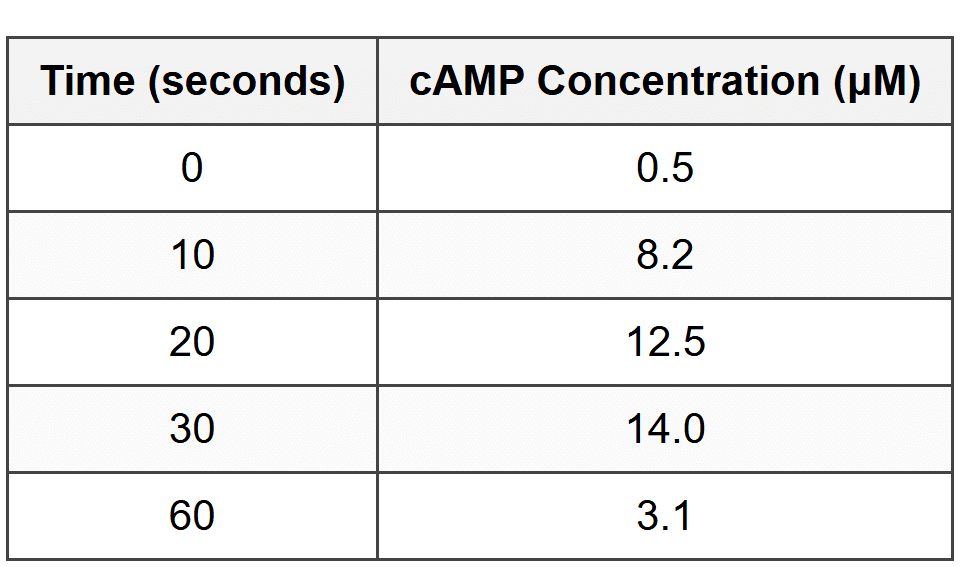
Which statement best explains the decrease in cAMP concentration observed between 30 and 60 seconds?
- The hormone has been completely degraded by extracellular enzymes
- Phosphodiesterase enzyme is breaking down cAMP into AMP
- The cells have stopped producing ATP needed for cAMP synthesis
- The G protein-coupled receptors have all been internalized
Question 5
Testosterone is a steroid hormone that regulates gene expression in target cells. Unlike peptide hormones such as insulin, testosterone can pass directly through the plasma membrane.
Which property of testosterone best explains its ability to cross the plasma membrane?
- Testosterone is hydrophilic and dissolves in the aqueous cytoplasm
- Testosterone is hydrophobic and can dissolve in the lipid bilayer
- Testosterone is positively charged and is attracted to the negatively charged membrane
- Testosterone binds to transport proteins that carry it across the membrane
Question 6
Researchers create three groups of cultured cells:
- Group 1: Normal cells with functional receptors
- Group 2: Cells with a mutation that prevents receptor binding to ligand
- Group 3: Cells with a mutation that prevents receptor autophosphorylation
All groups are exposed to a growth factor, and cell proliferation is measured after 48 hours.
Which prediction about cell proliferation is most likely correct?
- Groups 1, 2, and 3 will all show similar levels of proliferation
- Group 1 will show proliferation; Groups 2 and 3 will not proliferate
- Groups 1 and 2 will proliferate; Group 3 will not proliferate
- Groups 1 and 3 will proliferate; Group 2 will not proliferate
Question 7
In many signaling pathways, protein kinases transfer phosphate groups from ATP to specific amino acids on target proteins, thereby activating or deactivating those proteins. Protein phosphatases remove these phosphate groups.
What is the primary role of protein phosphatases in cell signaling?
- To amplify the signal by activating additional protein kinases
- To provide negative feedback and terminate the signaling response
- To transport the signal across the plasma membrane
- To convert the signal from one type of molecule to another
Question 8
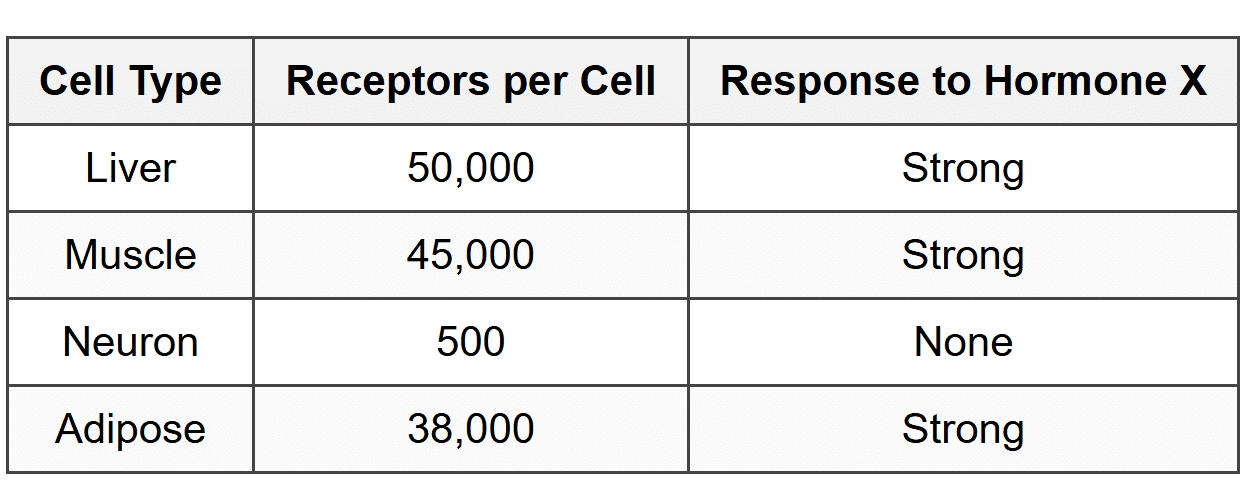
Based on the data, which conclusion about cell communication is most strongly supported?
- Hormone X is lipid-soluble and can enter all cell types equally
- The response to hormone X depends primarily on the presence of specific receptors on target cells
- Neurons require higher hormone concentrations to respond than other cell types
- Hormone X inhibits cellular function in liver, muscle, and adipose tissue
Question 9
Quorum sensing is a form of cell-to-cell communication used by many bacterial species. Bacteria release signaling molecules called autoinducers into their environment. When the population density reaches a threshold level, the concentration of autoinducers becomes high enough to activate specific genes in the bacterial cells.
Which statement best describes the adaptive advantage of quorum sensing?
- It allows bacteria to conserve energy by expressing certain genes only when the population is large enough to benefit from coordinated action
- It prevents bacterial cells from dividing too rapidly and depleting available nutrients
- It enables bacteria to identify and eliminate competitors from different species
- It allows individual bacteria to reproduce more quickly than bacteria that do not use quorum sensing
Question 10
Scientists studying apoptosis (programmed cell death) expose cells to different concentrations of a death signal molecule. They measure the percentage of cells that undergo apoptosis after 24 hours:
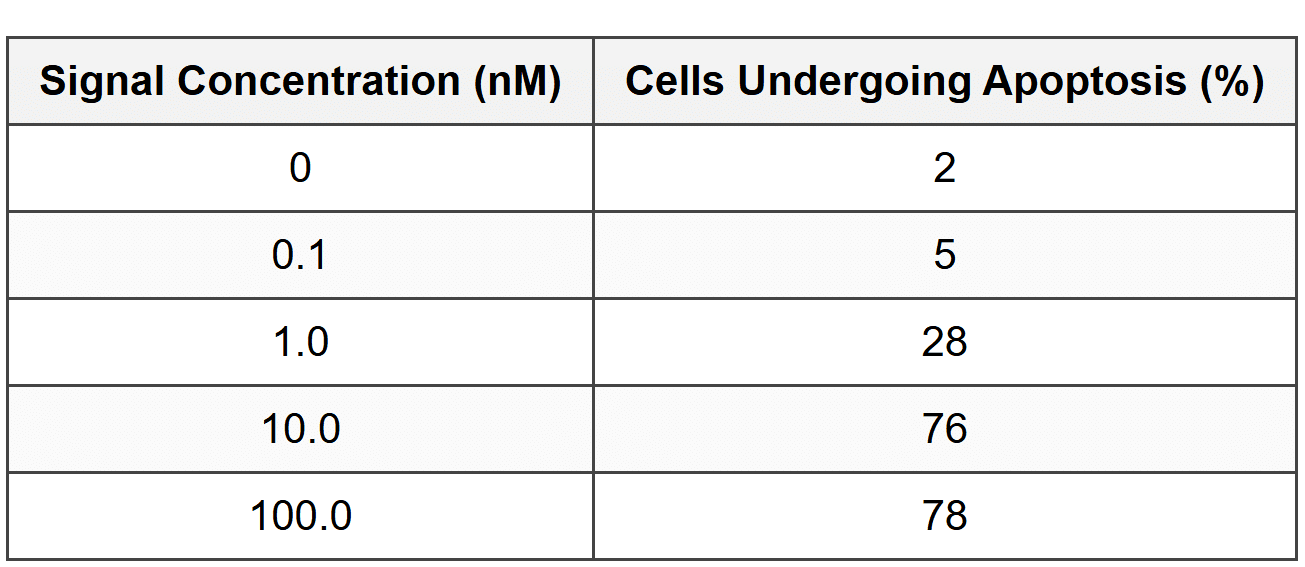
Which statement is best supported by these data?
- The death signal molecule becomes less effective at concentrations above 10 nM
- The percentage of cells undergoing apoptosis increases with signal concentration until receptors become saturated
- Cells are equally likely to undergo apoptosis at all signal concentrations tested
- The death signal molecule prevents apoptosis at concentrations below 1.0 nM
Question 11
Gap junctions are protein channels that directly connect the cytoplasm of adjacent animal cells, allowing small molecules and ions to pass between cells. Plasmodesmata serve a similar function in plant cells.
A researcher treats a tissue with a drug that blocks gap junctions. Which cellular process would be most directly disrupted?
- Reception of hormones that bind to cell-surface receptors
- Direct cell-to-cell communication through cytoplasmic connections
- Transcription of genes in response to steroid hormones
- Amplification of signals through second messenger cascades
Question 12
A signal molecule binds to a receptor tyrosine kinase (RTK) on the cell surface. The following cascade occurs:
- RTK dimerizes and autophosphorylates
- Adaptor proteins bind to phosphorylated RTK
- Ras protein is activated
- MAP kinase cascade is initiated
- Transcription factors are phosphorylated and enter the nucleus
- Target genes are transcribed
A mutation in the Ras protein causes it to remain in the active state even in the absence of a signal. What is the most likely consequence of this mutation?
- Cells will be unable to respond to any extracellular signals
- Cells will undergo apoptosis immediately
- Cells will continuously activate the MAP kinase pathway, potentially leading to uncontrolled cell division
- Cells will produce excessive amounts of receptor tyrosine kinases
Question 13
In pancreatic beta cells, an increase in blood glucose concentration leads to glucose uptake and metabolism. This increases the ATP/ADP ratio in the cell, which causes ATP-sensitive potassium channels to close. The resulting change in membrane potential triggers calcium channels to open, and the influx of calcium ions stimulates the release of insulin.
In this example, what serves as the initial signal that triggers the response?
- ATP binding to potassium channels
- An increase in extracellular glucose concentration
- Calcium ions entering the cell
- Insulin binding to receptors on target cells
Question 14
Cells are exposed to varying concentrations of a signaling molecule, and the cellular response is measured. The graph shows:
- At 0-1 nM: minimal response (5% of maximum)
- At 1-10 nM: response increases steeply (5% to 85% of maximum)
- At 10-100 nM: response plateaus (85% to 95% of maximum)
- At 100-1000 nM: response remains at approximately 95% of maximum
The plateau in the response at high concentrations of the signaling molecule is most likely due to which phenomenon?
- The signaling molecule begins to degrade rapidly at high concentrations
- All available receptors are occupied, limiting further response
- Cells undergo apoptosis when exposed to high signal concentrations
- The signaling molecule changes shape and can no longer bind receptors
Question 15
Acetylcholine is a neurotransmitter released at the synapse between a motor neuron and a muscle cell. After acetylcholine binds to receptors on the muscle cell and triggers a response, the enzyme acetylcholinesterase rapidly breaks down acetylcholine in the synaptic cleft.
What is the primary function of acetylcholinesterase in this system?
- To amplify the signal by producing more acetylcholine molecules
- To terminate the signal so the muscle can respond to subsequent nerve impulses
- To transport acetylcholine across the synaptic cleft more efficiently
- To prevent acetylcholine from binding to receptors on the wrong cell type
Question 16
Scientists investigate whether two different signaling pathways interact. They treat cells with:
- Treatment A: Signal molecule X only → 40% of cells show response R
- Treatment B: Signal molecule Y only → 35% of cells show response R
- Treatment C: Both signal molecules X and Y → 95% of cells show response R
- Treatment D: Neither signal molecule → 3% of cells show response R
Which conclusion is best supported by these experimental results?
- Signal molecules X and Y bind to the same receptor and compete for binding
- Signal molecules X and Y have antagonistic effects on response R
- Signal molecules X and Y activate pathways that work synergistically to produce response R
- Signal molecule Y inhibits the pathway activated by signal molecule X
Question 17
Nitric oxide (NO) is a small, uncharged molecule that acts as a local regulator in animal tissues. Unlike most signaling molecules, NO is not stored in cells but is synthesized on demand. It diffuses readily across membranes and has a very short half-life (a few seconds).
Which characteristic of nitric oxide makes it particularly suited for paracrine signaling rather than endocrine signaling?
- Its small size allows it to bind to receptors with high specificity
- Its short half-life limits its range of action to nearby cells
- Its synthesis requires ATP, which is only available near the site of production
- Its positive charge prevents it from traveling through the bloodstream
Question 18
Researchers measure the density of epidermal growth factor (EGF) receptors on three cell lines and their proliferation rate in response to EGF treatment:
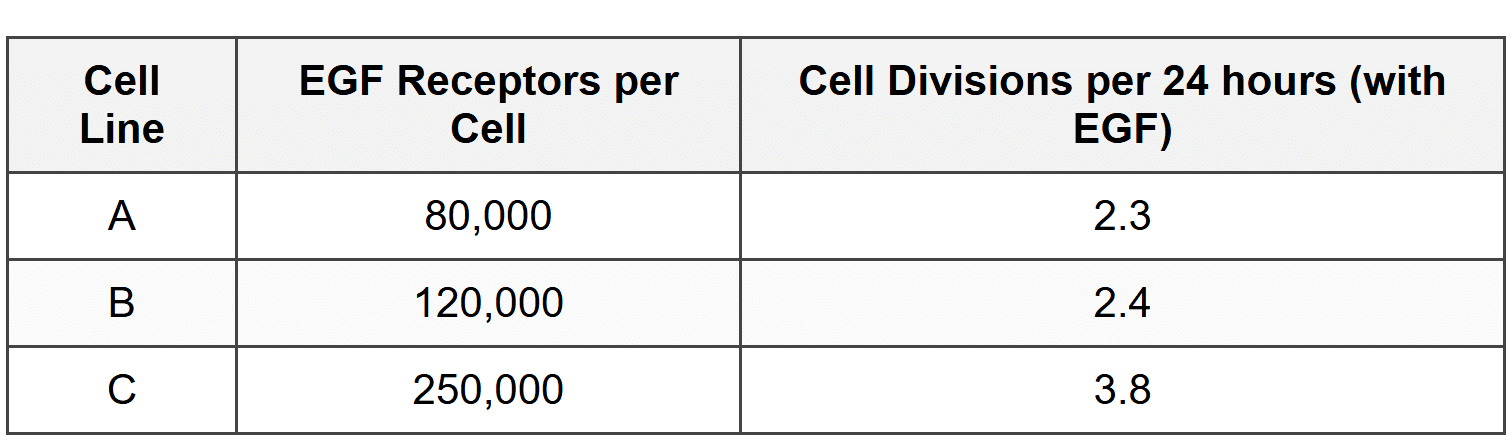
Note: In the absence of EGF, all three cell lines divide approximately 0.4 times per 24 hours.
Based on these data, which statement represents the most reasonable interpretation?
- Cell division rate is entirely independent of EGF receptor density
- A threshold density of EGF receptors must be reached before cells can respond to EGF
- Higher EGF receptor density is associated with greater proliferation response to EGF
- Cell line A has nonfunctional EGF receptors that cannot transduce signals
Question 19
Select TWO answers. In yeast cells, mating factors are signaling molecules that bind to receptors on cells of the opposite mating type. This binding triggers a signal transduction pathway that prepares the cells to fuse. The pathway involves G proteins, kinases, and transcription factors.
Which TWO statements accurately describe components or principles of this signaling system?
- The mating factor receptors are likely G protein-coupled receptors that activate intracellular signaling cascades
- The signal transduction pathway allows for amplification, so a single mating factor molecule can lead to multiple cellular responses
- Mating factors must enter the cell and bind to intracellular receptors in order to alter gene expression
- The kinases in the pathway remove phosphate groups from target proteins to activate them
Question 20
The mitogen-activated protein kinase (MAPK) pathway is involved in regulating cell division. Scientists develop a drug that specifically inhibits MEK, a kinase in this pathway. They test the drug on cancer cells that have overactive RTK signaling.
Results:
- Without drug: cells divide rapidly (doubling time = 18 hours)
- With drug: cells divide slowly (doubling time = 72 hours)
- Drug does not affect cell viability or apoptosis rates
Which explanation best accounts for the effect of the MEK inhibitor on cancer cell division?
- The drug prevents receptor tyrosine kinases from binding growth factors
- The drug blocks a critical step in the signal transduction pathway that promotes cell division
- The drug increases the rate of apoptosis, reducing the number of dividing cells
- The drug causes receptors to remain in an active state, leading to cell cycle arrest
SECTION II: FREE RESPONSE
Directions
This section contains 2 free-response questions. Answer all parts of each question completely. Where calculations are required, clearly show your work. Where explanation or discussion is required, support your answers with relevant evidence and logical reasoning. Write your responses in complete sentences.
- Question 1 is a long free-response question (approximately 10 points; suggested time 20 minutes).
- Question 2 is a short free-response question (approximately 4 points; suggested time 8 minutes).
Question 1 (Long FRQ)
Epinephrine is a hormone that helps regulate the body's response to stress. When epinephrine binds to beta-adrenergic receptors on liver cells, it triggers a signal transduction pathway that ultimately leads to the breakdown of glycogen into glucose. This pathway involves multiple steps of signal amplification.
- Epinephrine binds to a G protein-coupled receptor (GPCR)
- The activated receptor causes a G protein to exchange GDP for GTP
- The active G protein activates adenylyl cyclase
- Adenylyl cyclase converts ATP to cyclic AMP (cAMP)
- cAMP activates protein kinase A (PKA)
- PKA phosphorylates phosphorylase kinase
- Phosphorylase kinase activates glycogen phosphorylase
- Glycogen phosphorylase breaks down glycogen to glucose-1-phosphate
(a) Identify the second messenger in this signal transduction pathway.
(b) Describe how signal amplification occurs at the adenylyl cyclase step of this pathway.
(c) Scientists investigate the role of phosphodiesterase, an enzyme that breaks down cAMP into AMP, by conducting an experiment. They treat liver cells with epinephrine and measure glucose production over time under two conditions:
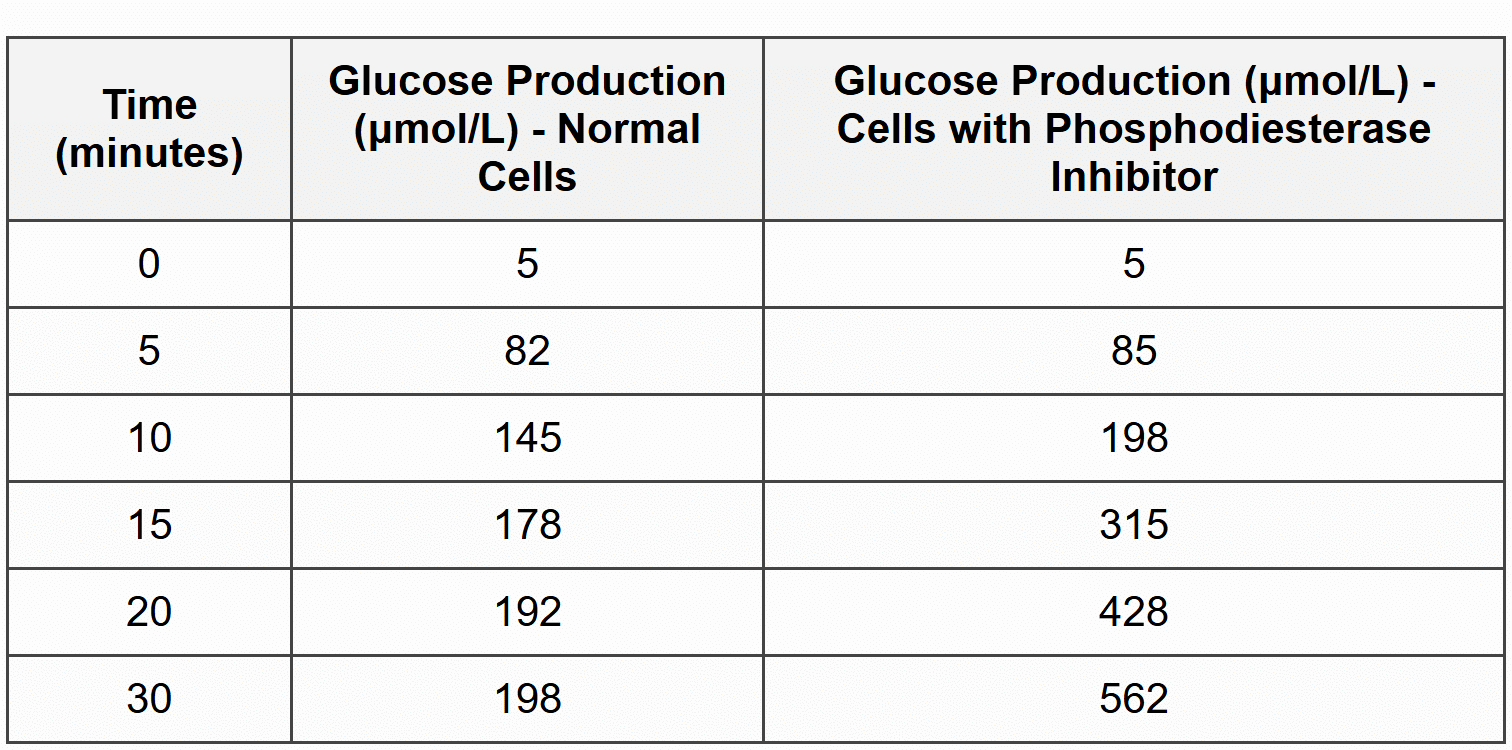
(i) Calculate the average rate of glucose production (in μmol/L per minute) for normal cells between 10 and 20 minutes.
(ii) Based on the data, explain how phosphodiesterase affects the duration of the cellular response to epinephrine.
(d) A mutation in the gene encoding the G protein results in a version that cannot hydrolyze GTP to GDP. Predict the effect of this mutation on glucose production in liver cells, even in the absence of epinephrine. Justify your prediction.
(e) Design an experiment to determine whether caffeine increases the duration of the epinephrine response by inhibiting phosphodiesterase. Your description should include:
- The independent variable and dependent variable
- A control group
- How the results would support or refute the hypothesis
(f) Explain how the epinephrine signaling pathway in liver cells illustrates the concept that cellular responses to signals depend on the specific proteins present in the target cell.
Question 2 (Short FRQ)
Cell communication can occur through different mechanisms depending on the distance between the signaling cell and the target cell. Three major types of signaling are:
- Endocrine signaling: hormones travel through the bloodstream to distant target cells
- Paracrine signaling: local regulators act on nearby cells
- Direct contact signaling: cells communicate through gap junctions or cell-surface molecules
- Scenario 1: Heart muscle cells are connected by gap junctions that allow ions to flow rapidly between cells, coordinating the heartbeat
- Scenario 2: Immune cells release cytokines that signal nearby cells to respond to an infection
- Scenario 3: The pituitary gland releases thyroid-stimulating hormone (TSH) that travels through the blood to the thyroid gland
(a) Identify which type of cell signaling (endocrine, paracrine, or direct contact) is represented in Scenario 1.
(b) Explain why paracrine signaling (Scenario 2) is more appropriate than endocrine signaling for rapid, localized immune responses.
(c) The signaling molecule in Scenario 2 (cytokines) is composed of amino acids and cannot cross plasma membranes. Based on this information, describe where the receptors for cytokines are most likely located and justify your answer.
(d) Predict what would happen to coordination of the heartbeat if a drug blocked gap junctions between heart muscle cells (Scenario 1). Justify your prediction.
ANSWER KEY
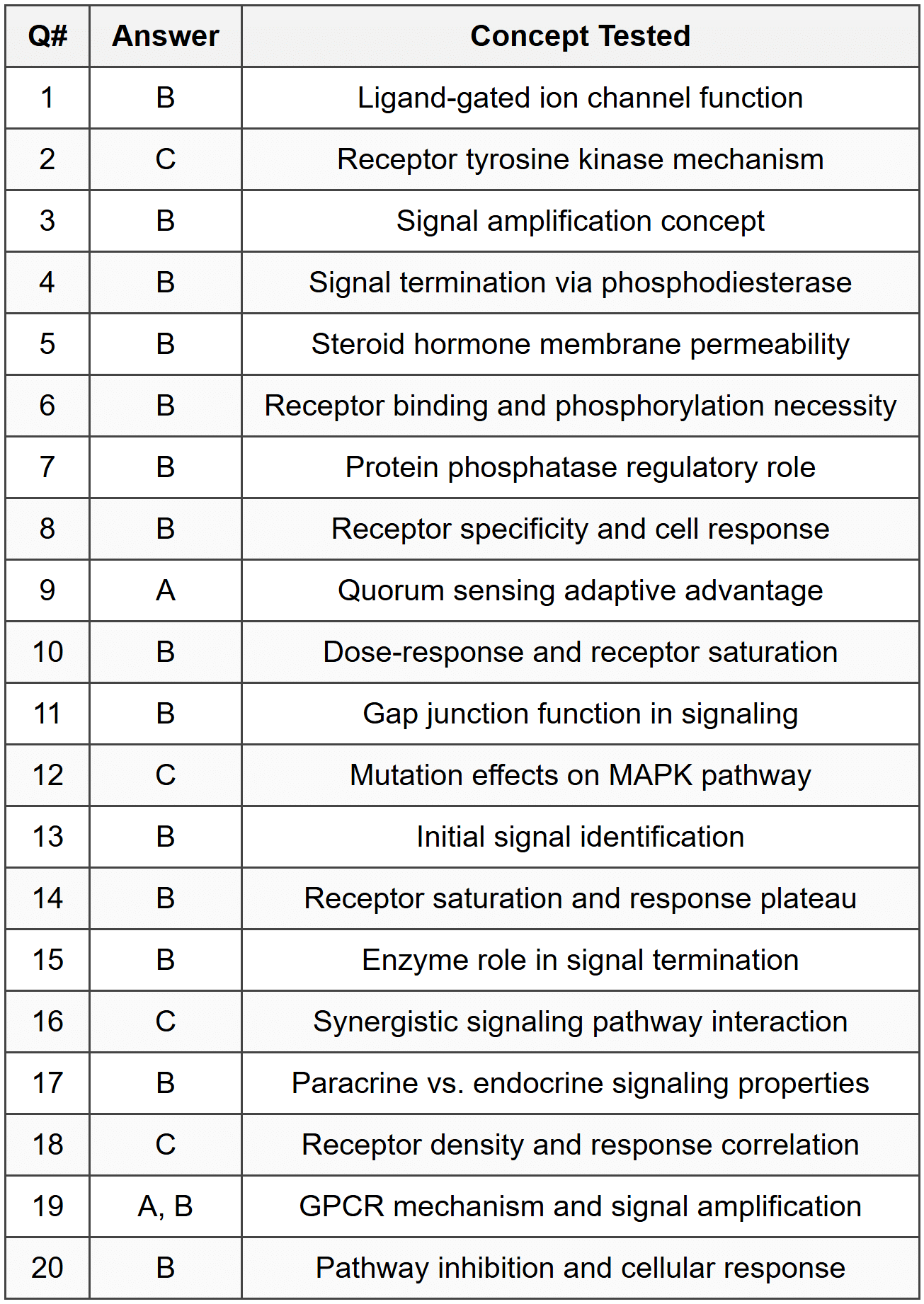
Part A: Multiple-Choice Answers
Part B: Free-Response Answers
FRQ 1 - Answer Key
Part (a): Identify the second messenger
Cyclic AMP (cAMP) is the second messenger in this signal transduction pathway. It is produced from ATP by adenylyl cyclase and carries the signal from the membrane-associated enzyme into the cytoplasm, where it activates protein kinase A.
Part (b): Describe signal amplification at adenylyl cyclase step
Signal amplification at the adenylyl cyclase step occurs because one activated adenylyl cyclase enzyme can catalyze the conversion of many ATP molecules into cAMP molecules. A single activated G protein can keep adenylyl cyclase active for a period of time, during which hundreds or thousands of cAMP molecules are produced. This means that the binding of a single epinephrine molecule to one receptor can result in the production of many second messenger molecules, thereby amplifying the initial signal.
Part (c)(i): Calculate average rate of glucose production
The average rate of glucose production for normal cells between 10 and 20 minutes is calculated as follows:
\[ \text{Rate} = \frac{\Delta \text{[glucose]}}{\Delta \text{time}} = \frac{192 - 145}{20 - 10} = \frac{47}{10} = 4.7 \text{ μmol/L per minute} \]
Answer: 4.7 μmol/L per minute
Part (c)(ii): Explain phosphodiesterase effect on response duration
The data show that cells treated with a phosphodiesterase inhibitor produce significantly more glucose over time compared to normal cells. By 30 minutes, inhibitor-treated cells produce 562 μmol/L glucose compared to 198 μmol/L in normal cells. Additionally, glucose production in normal cells begins to plateau after 20 minutes, while production in inhibitor-treated cells continues to increase.
This indicates that phosphodiesterase normally limits the duration of the cellular response by breaking down cAMP. When phosphodiesterase is inhibited, cAMP accumulates to higher levels and persists longer, prolonging the activation of protein kinase A and downstream enzymes, which results in sustained glucose production. Therefore, phosphodiesterase acts as a negative regulator that terminates the signal.
Part (d): Predict effect of G protein mutation
Prediction: The mutation would cause glucose production to occur continuously, even in the absence of epinephrine, resulting in chronically elevated blood glucose levels.
Justification: The G protein normally cycles between an inactive state (bound to GDP) and an active state (bound to GTP). The active form stimulates adenylyl cyclase to produce cAMP. The G protein's intrinsic GTPase activity hydrolyzes GTP to GDP, returning the protein to its inactive state and turning off the signal. If the mutant G protein cannot hydrolyze GTP, it will remain permanently in the active state, continuously activating adenylyl cyclase and producing cAMP. This will lead to constant activation of protein kinase A and the downstream glycogen breakdown pathway, causing unregulated glucose production regardless of epinephrine levels.
Part (e): Design experiment to test caffeine hypothesis
A complete experimental design should include:
Independent variable: Presence or absence of caffeine
Dependent variable: Duration and magnitude of glucose production following epinephrine treatment
Experimental procedure:
- Control group: Liver cells treated with epinephrine only
- Experimental group: Liver cells treated with both epinephrine and caffeine
- Measure glucose production at regular time intervals (e.g., every 5 minutes) for 60 minutes after adding epinephrine
- Compare the time course and total amount of glucose produced between the two groups
Expected results that would support the hypothesis: If caffeine inhibits phosphodiesterase, cells treated with caffeine should show higher glucose production that persists for a longer time period compared to control cells. The glucose production curve for caffeine-treated cells should remain elevated while the control group returns to baseline more quickly, similar to the pattern observed with the phosphodiesterase inhibitor in part (c).
Expected results that would refute the hypothesis: If glucose production shows the same time course and magnitude in both groups, this would suggest caffeine does not inhibit phosphodiesterase in this system.
Part (f): Explain cell-specificity concept
The epinephrine signaling pathway in liver cells illustrates that cellular responses to signals depend on the specific proteins present in the target cell in several ways:
First, only cells with beta-adrenergic receptors can respond to epinephrine in this manner. Cells lacking these receptors will not respond to the hormone, even if it is present at high concentrations. This explains why epinephrine has different effects on different tissues.
Second, the presence of specific intracellular proteins (G proteins, adenylyl cyclase, protein kinase A, phosphorylase kinase, and glycogen phosphorylase) in liver cells allows them to convert the epinephrine signal into glycogen breakdown. Other cell types with the same receptor but different downstream proteins might respond to epinephrine by altering different cellular processes (e.g., heart muscle cells respond with increased contraction rate).
This demonstrates the principle that the same signaling molecule can produce different responses in different cell types based on the complement of receptors and signal transduction proteins that each cell expresses. Cell specialization is therefore achieved not only by which signals cells receive, but by how they interpret and respond to those signals based on their unique protein expression profiles.
FRQ 2 - Answer Key
Part (a): Identify type of signaling in Scenario 1
Direct contact signaling (also acceptable: cell-to-cell signaling via gap junctions)
In Scenario 1, heart muscle cells communicate through gap junctions, which create direct cytoplasmic connections between adjacent cells, allowing ions and small molecules to pass directly from one cell to another without crossing extracellular space.
Part (b): Explain appropriateness of paracrine signaling for immune response
Paracrine signaling is more appropriate than endocrine signaling for rapid, localized immune responses because paracrine signals act on nearby cells within a localized region, whereas endocrine signals must travel through the circulatory system to reach distant targets.
When an infection occurs at a specific site, immune cells need to quickly alert and recruit other immune cells to that precise location. Paracrine signaling allows cytokines released by immune cells to rapidly diffuse short distances to affect only neighboring cells, creating a concentrated, localized response at the site of infection. This limits inflammation and immune activity to where it is needed.
In contrast, endocrine signaling would distribute the signal throughout the entire body via the bloodstream, which would be slower, less efficient, and could trigger unnecessary systemic responses in tissues far from the infection site. The short range and rapid action of paracrine signals make them ideal for coordinating localized responses.
Part (c): Describe receptor location for cytokines
Cytokine receptors are most likely located on the cell surface (plasma membrane), specifically as integral membrane proteins with their binding domains facing the extracellular environment.
Justification: Because cytokines are composed of amino acids (making them proteins or peptides) and cannot cross the hydrophobic lipid bilayer of the plasma membrane, they must bind to receptors on the exterior surface of target cells. Hydrophilic signaling molecules like proteins require cell-surface receptors because they cannot diffuse through the membrane to reach intracellular receptors. Only small, lipid-soluble (hydrophobic) molecules such as steroid hormones can pass through membranes and bind to intracellular receptors. Therefore, cytokines must interact with transmembrane receptor proteins that can relay the signal from the outside of the cell to the inside through conformational changes and subsequent activation of intracellular signaling pathways.
Part (d): Predict effect of blocking gap junctions
Prediction: Blocking gap junctions between heart muscle cells would disrupt the coordinated contraction of the heart, leading to irregular or ineffective heartbeats (arrhythmia) and potentially causing the heart to fail to pump blood effectively.
Justification: The coordinated heartbeat depends on the rapid propagation of electrical signals (in the form of ion flows) from one heart muscle cell to the next through gap junctions. When one cell depolarizes, ions flow through gap junctions to depolarize adjacent cells in a wave-like pattern. This synchronized depolarization causes all cells in a region to contract nearly simultaneously, producing the forceful, coordinated contraction needed to pump blood efficiently. If gap junctions are blocked, electrical signals cannot pass between cells. Each cell would contract independently based only on signals it receives directly, destroying the coordinated timing necessary for effective pumping. The heart chambers would contract irregularly or not at all, severely compromising cardiac function.




