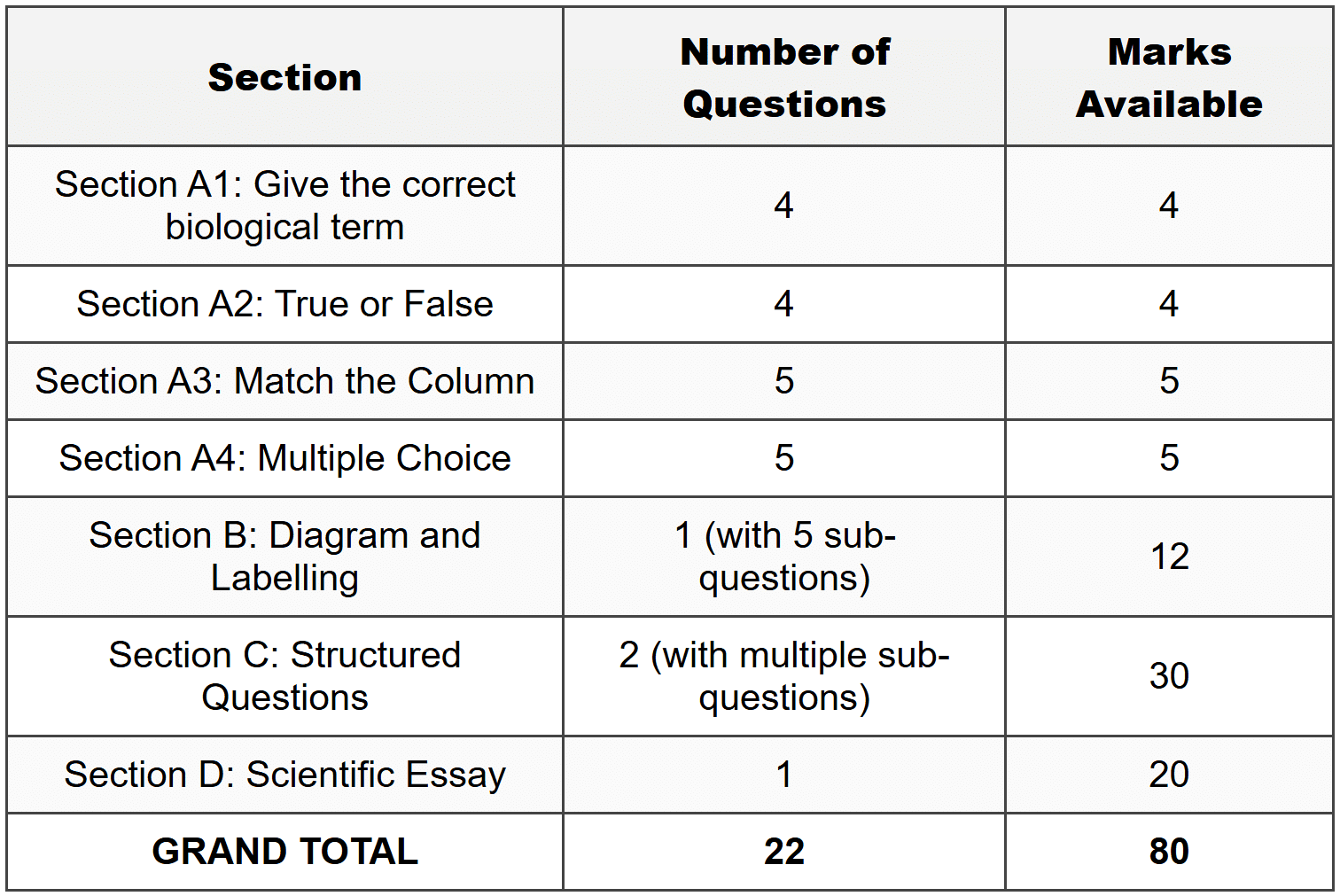
Biodiversity and Classification

SECTION A: SHORT QUESTIONS
(Total: 18 marks)A1: Give the correct biological term
(Total: 4 marks) 1. The variety of all living organisms, the genes they contain, and the ecosystems they form. 2. The science of naming, describing, and classifying organisms into groups based on shared characteristics. 3. A group of organisms that can interbreed to produce fertile offspring. 4. The taxonomic rank that consists of one or more related classes and is positioned below kingdom.A2: True or False - if False, correct the underlined word or phrase only
(Total: 4 marks) 5. The two-kingdom classification system divides all organisms into Prokaryotae, Protoctista, Fungi, Plantae, and Animalia. 6. Organisms in the kingdom Fungi are autotrophic and obtain nutrients by secreting enzymes onto organic matter and absorbing the digested products. 7. The binomial nomenclature system uses the genus name and the species name to give each organism a unique scientific name. 8. Convergent evolution occurs when organisms that share a recent common ancestor develop similar adaptations due to similar environmental pressures.A3: Match Column A to Column B
(Total: 5 marks)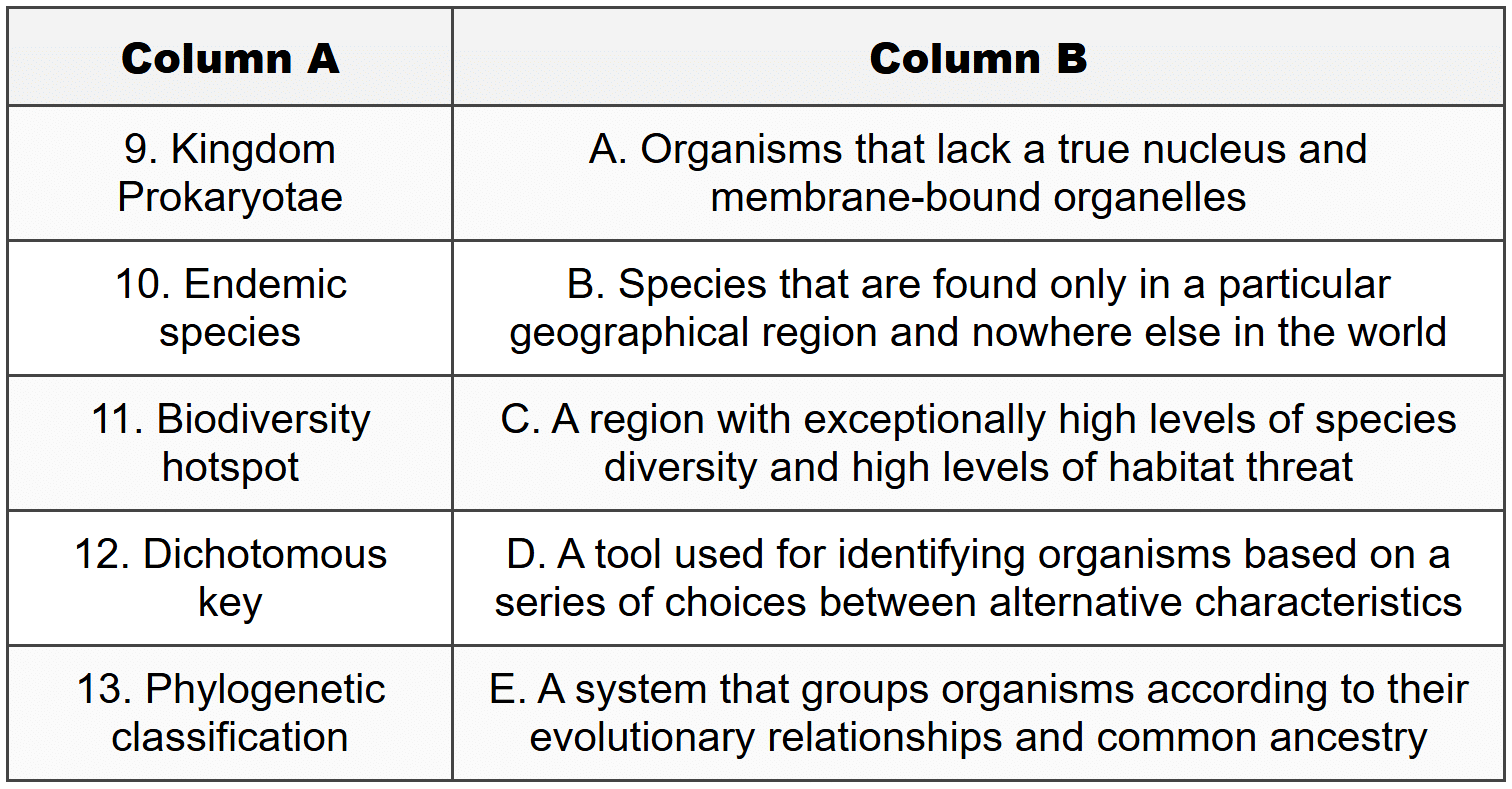
A4: Multiple Choice
(Total: 5 marks) 14. Thandi is studying a unicellular organism under the microscope. She observes that it has a nucleus, chloroplasts, and an eyespot, and it moves using a flagellum. Into which kingdom should she classify this organism?A. Kingdom Plantae
B. Kingdom Protoctista
C. Kingdom Prokaryotae
D. Kingdom Animalia 15. A scientist discovers two plant species growing in the same mountainous region. Both species have thick, waxy leaves and shallow root systems. However, genetic analysis shows they are not closely related. Which biological concept best explains this observation?
A. Divergent evolution
B. Convergent evolution
C. Artificial selection
D. Genetic drift 16. In a nature reserve, ecologists recorded 45 different bird species, 23 mammal species, 67 insect species, and 12 reptile species. What aspect of biodiversity are they directly measuring?
A. Genetic diversity
B. Ecosystem diversity
C. Species diversity
D. Habitat diversity 17. Which of the following sequences represents the correct hierarchical order of taxonomic ranks from the most inclusive to the least inclusive?
A. Kingdom → Phylum → Class → Order → Family → Genus → Species
B. Kingdom → Class → Phylum → Order → Family → Genus → Species
C. Kingdom → Phylum → Order → Class → Family → Genus → Species
D. Kingdom → Class → Order → Phylum → Genus → Family → Species 18. A biologist is comparing the scientific names Panthera leo and Panthera tigris. What can she correctly conclude about these two organisms?
A. They belong to the same species but different genera
B. They belong to the same genus but different species
C. They belong to different families
D. They can interbreed to produce fertile offspring
SECTION B: DIAGRAM AND LABELLING QUESTIONS
(Total: 12 marks)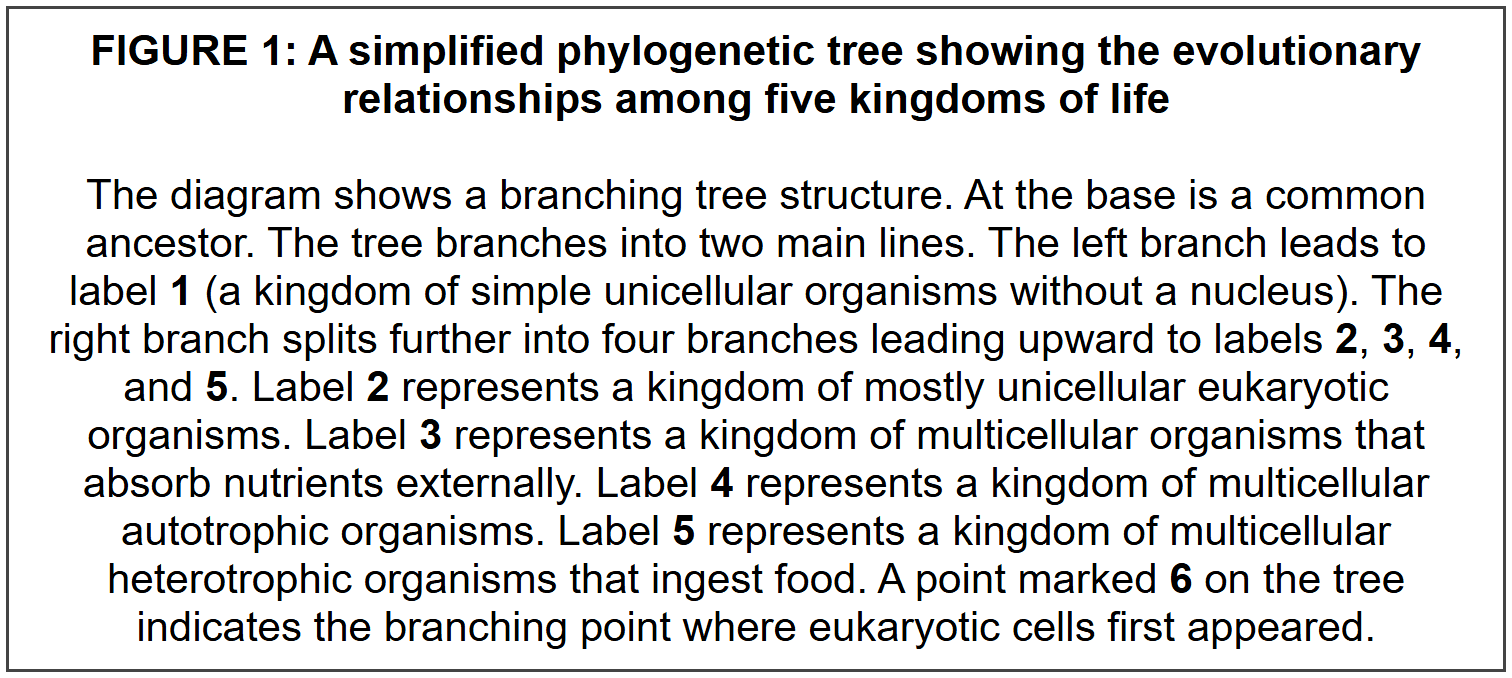 19. Study FIGURE 1 and answer the following questions: (a) Identify the kingdom represented by each of the labels 1 to 5. (b) What does the point labelled 6 represent in terms of evolutionary history? (c) State TWO structural characteristics that distinguish organisms in kingdom 1 from those in kingdoms 2 to 5. (d) Explain why organisms in kingdom 3 and kingdom 5 are both heterotrophic, yet they are classified into different kingdoms. (e) Predict what would happen to the biodiversity of organisms in kingdom 4 if all organisms in kingdom 1 were suddenly removed from all ecosystems on Earth. Provide a scientifically reasoned explanation for your answer.
SECTION C: STRUCTURED QUESTIONS
(Total: 30 marks)Question 20: Biodiversity in the Cape Floral Kingdom
The Cape Floral Kingdom in South Africa is the smallest of the six floral kingdoms in the world, yet it contains over 9 000 plant species, of which approximately 69% are endemic. The region is characterised by fynbos vegetation and is recognised as a biodiversity hotspot. However, urban expansion, invasive alien plant species, and climate change threaten this unique ecosystem. 20. (a) Define the term endemic species. (b) Explain why the Cape Floral Kingdom is classified as a biodiversity hotspot. (c) Propose TWO ways in which invasive alien plant species reduce the biodiversity of the fynbos ecosystem. (d) Evaluate the potential long-term consequences for the Cape Floral Kingdom if the current rate of habitat loss continues. In your answer, refer to genetic diversity, species diversity, and ecosystem functioning.Question 21: Classification and evolutionary relationships
Sipho is conducting a research project on three species of antelope found in southern Africa: the blue wildebeest (Connochaetes taurinus), the black wildebeest (Connochaetes gnou), and the red hartebeest (Alcelaphus buselaphus). He collects morphological data and DNA sequences from all three species to investigate their evolutionary relationships. 21. (a) Based on the scientific names provided, identify which TWO species are most closely related. Give a reason for your answer. (b) Explain how DNA sequence analysis can be used to determine the evolutionary relationships between these three species. (c) Sipho observes that both the blue wildebeest and the red hartebeest have similar body sizes and both inhabit grassland ecosystems. However, DNA analysis shows that the blue wildebeest is more closely related to the black wildebeest than to the red hartebeest. Explain how this observation supports the concept of convergent evolution. (d) Construct a reasoned argument explaining why phylogenetic classification systems based on evolutionary relationships are more scientifically accurate than classification systems based solely on physical appearance.SECTION D: SCIENTIFIC ESSAY
(Total: 20 marks) 22. Write a structured scientific essay on the importance of biodiversity and the impact of human activities on biodiversity in South Africa. Your essay must include the following:- A definition of biodiversity and an explanation of the three levels of biodiversity: genetic diversity, species diversity, and ecosystem diversity.
- An explanation of the ecological and economic importance of biodiversity to human societies, with reference to at least TWO specific examples.
- A description of THREE major human activities that threaten biodiversity in South Africa.
- An evaluation of TWO conservation strategies currently used in South Africa to protect biodiversity, including one example of a species or habitat being conserved. Use correct binomial nomenclature where appropriate.
- A conclusion that summarises the relationship between biodiversity and sustainable development.
- Definition and explanation of three levels of biodiversity: 5 marks
- Ecological and economic importance with examples: 5 marks
- Description of three human threats to biodiversity: 4 marks
- Evaluation of two conservation strategies with example: 4 marks
- Conclusion linking biodiversity and sustainable development: 2 marks
ANSWER KEY
Well done for completing this worksheet! Before you check your answers, make sure you have attempted every question to the best of your ability. Use this answer key to mark your work carefully, paying close attention to the correct biological terminology. Remember, using precise scientific language is essential in Life Sciences. If you lost marks, read the explanations to understand where you can improve. Keep up the excellent work!
SECTION A1 - Question 1
Biodiversity
Biodiversity refers to the total variety of life on Earth, including all the different species, the genetic variation within those species, and the variety of ecosystems they form.
SECTION A1 - Question 2
Taxonomy
Taxonomy is the branch of biology that deals with identifying, naming, and organising organisms into hierarchical groups based on their similarities and evolutionary relationships.
SECTION A1 - Question 3
Species
A species is a group of organisms that share similar characteristics and can reproduce together to produce fertile offspring under natural conditions.
SECTION A1 - Question 4
Phylum
A phylum is a major taxonomic rank that groups together organisms with a similar body plan or structural organisation. It sits between kingdom and class in the hierarchy.
SECTION A2 - Question 5
FALSE
Corrected word: five-kingdom
The statement incorrectly refers to a two-kingdom system. The modern five-kingdom classification system, proposed by Robert Whittaker, divides organisms into Prokaryotae, Protoctista, Fungi, Plantae, and Animalia based on cell structure, mode of nutrition, and complexity.
SECTION A2 - Question 6
FALSE
Corrected word: heterotrophic (or saprotrophic)
Fungi are not autotrophic; they cannot make their own food through photosynthesis. Instead, they are heterotrophic organisms that obtain nutrients by secreting digestive enzymes onto organic matter and then absorbing the digested nutrients. Many fungi are specifically saprotrophic, feeding on dead organic material.
SECTION A2 - Question 7
TRUE
This statement is correct. The binomial nomenclature system, developed by Carl Linnaeus, uses two names: the genus name (capitalised) and the species name (lowercase), both written in italics, to give each organism a unique scientific identifier that is recognised worldwide.
SECTION A2 - Question 8
FALSE
Corrected word: Divergent
The statement describes divergent evolution, not convergent evolution. Divergent evolution occurs when related species that share a common ancestor evolve different characteristics over time, often because they adapt to different environments. Convergent evolution, on the other hand, occurs when unrelated organisms develop similar features independently because they adapt to similar environmental conditions.
SECTION A3 - Matching Pairs
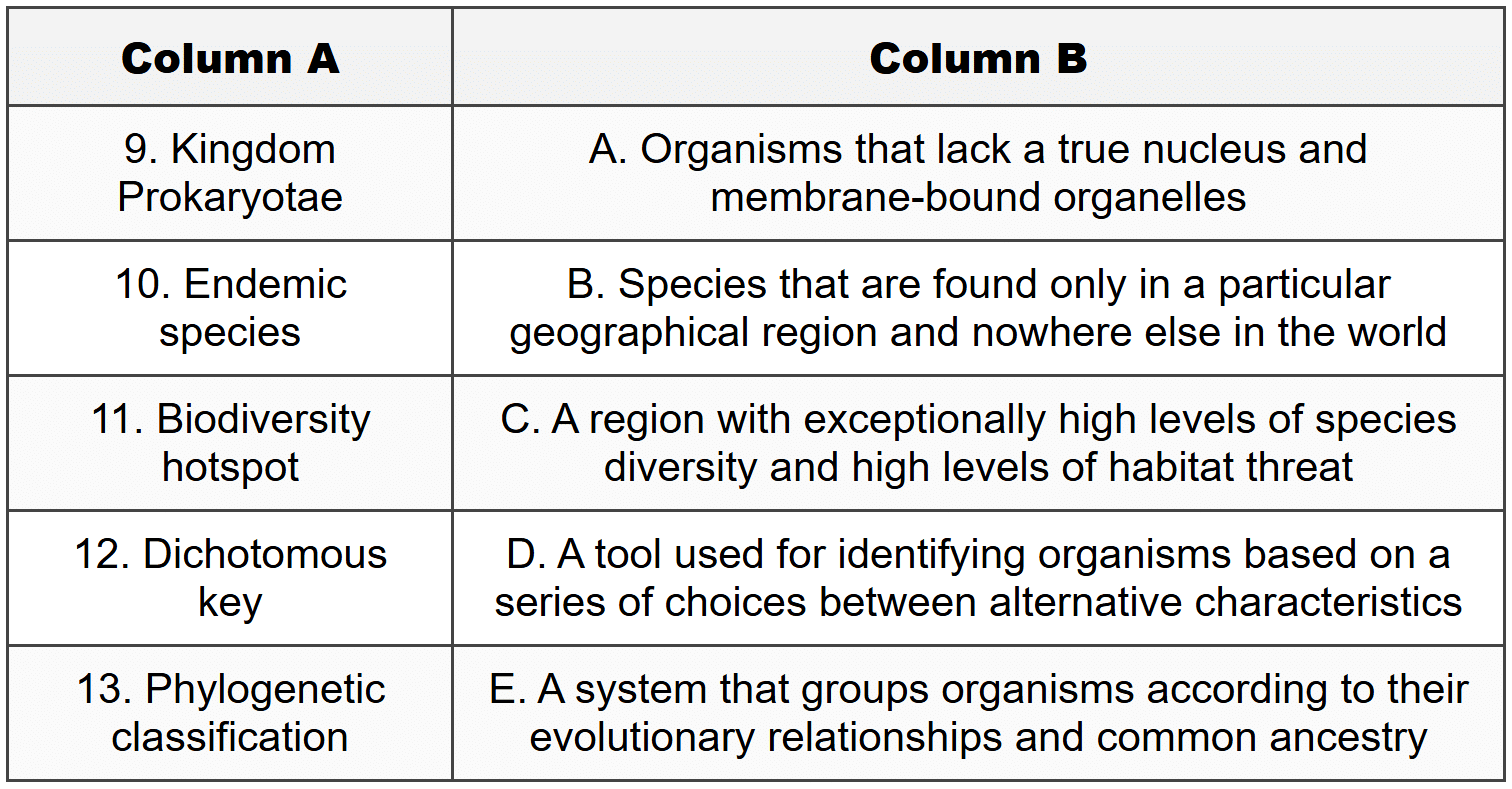
9 → A: Kingdom Prokaryotae contains bacteria and cyanobacteria, which are simple organisms with no membrane-bound nucleus or organelles like mitochondria.
10 → B: Endemic species are unique to a specific location and are important indicators of biodiversity in conservation planning.
11 → C: Biodiversity hotspots are priority areas for conservation because they contain many unique species but face serious threats from human activity.
12 → D: A dichotomous key uses paired statements to help scientists identify unknown organisms step by step.
13 → E: Phylogenetic classification reflects evolutionary history and is based on genetic and anatomical evidence showing how species are related through common ancestors.
SECTION A4 - Question 14
B. Kingdom Protoctista
The organism Thandi observes is a unicellular eukaryote with chloroplasts (for photosynthesis) and a flagellum (for movement), which are characteristics of organisms in Kingdom Protoctista. Examples include Euglena species. It cannot be Plantae because plants are multicellular, and it cannot be Prokaryotae because the organism has a nucleus.
SECTION A4 - Question 15
B. Convergent evolution
The two plant species have developed similar adaptations (thick, waxy leaves and shallow roots) because they live in similar environmental conditions, even though they are not closely related genetically. This is convergent evolution: unrelated organisms evolving similar traits independently due to similar environmental pressures.
SECTION A4 - Question 16
C. Species diversity
The ecologists are counting the number of different species in each group of organisms. This measurement reflects species diversity, which refers to the variety and abundance of different species in a particular area. Genetic diversity refers to variation within a species, and ecosystem diversity refers to the variety of different habitats.
SECTION A4 - Question 17
A. Kingdom → Phylum → Class → Order → Family → Genus → Species
This is the correct hierarchical sequence of taxonomic ranks from the broadest (most inclusive) category to the most specific (least inclusive). A useful mnemonic is: "King Phillip Came Over For Good Soup."
SECTION A4 - Question 18
B. They belong to the same genus but different species
Both organisms share the genus name Panthera, which means they are closely related and share many structural and genetic characteristics. However, they have different species names (leo for lion and tigris for tiger), which means they are distinct species. They cannot interbreed to produce fertile offspring under natural conditions.
SECTION B - Question 19(a)
1: Kingdom Prokaryotae
2: Kingdom Protoctista
3: Kingdom Fungi
4: Kingdom Plantae
5: Kingdom Animalia
These five kingdoms represent the major groups of life based on cell structure, nutrition, and complexity.
SECTION B - Question 19(b)
Point 6 represents the evolutionary divergence or branching point where eukaryotic cells first evolved from prokaryotic ancestors. This marks the origin of all organisms with a true nucleus and membrane-bound organelles. The student must refer to the evolution of eukaryotic cells to earn full marks.
SECTION B - Question 19(c)
Any TWO of the following characteristics:
1. Organisms in kingdom 1 lack a true nucleus, whereas organisms in kingdoms 2 to 5 have a membrane-bound nucleus.
2. Organisms in kingdom 1 lack membrane-bound organelles such as mitochondria, chloroplasts, and endoplasmic reticulum, whereas organisms in kingdoms 2 to 5 possess these organelles.
3. Organisms in kingdom 1 have a simpler cell structure, often with a single circular chromosome, whereas organisms in kingdoms 2 to 5 have multiple linear chromosomes enclosed in a nucleus.
The student must use correct biological terms such as nucleus, membrane-bound organelles, and prokaryotic versus eukaryotic to earn full marks.
SECTION B - Question 19(d)
Organisms in both kingdom 3 (Fungi) and kingdom 5 (Animalia) are heterotrophic, meaning they cannot produce their own food and must obtain organic nutrients from other sources. However, they differ in their mode of nutrition. Fungi are saprotrophic or parasitic: they secrete digestive enzymes externally onto their food source and absorb the digested nutrients through their cell walls. Animals, on the other hand, ingest food into an internal digestive system where it is broken down, and nutrients are absorbed internally. This fundamental difference in feeding strategy, along with differences in cell structure (fungi have cell walls; animals do not), justifies their classification into separate kingdoms. A full-mark answer must mention mode of nutrition, external digestion (fungi), and ingestion (animals).
SECTION B - Question 19(e)
If all organisms in kingdom 1 (Prokaryotae) were removed, the biodiversity of kingdom 4 (Plantae) would be severely reduced or possibly collapse entirely. Many bacteria in kingdom Prokaryotae, such as nitrogen-fixing bacteria and decomposers, play critical roles in nutrient cycling. Nitrogen-fixing bacteria convert atmospheric nitrogen into nitrates and ammonia, which plants absorb and use to synthesise proteins and nucleic acids. Without these bacteria, plants would suffer from nitrogen deficiency, leading to reduced growth, reproduction, and survival. Additionally, decomposer bacteria break down dead organic matter and release nutrients back into the soil, making them available for plant uptake. The loss of these bacteria would halt decomposition and nutrient recycling, further threatening plant biodiversity. Over time, many plant species would become extinct, drastically reducing overall ecosystem biodiversity. A full-mark answer must explain the role of bacteria in nitrogen fixation and decomposition, link this to plant survival, and predict the consequence for biodiversity using cause-and-effect reasoning. A partial-mark answer may only mention that bacteria are important but fail to explain the mechanism or the nutrient cycle.
SECTION C - Question 20(a)
Endemic species are species that are found naturally in only one specific geographical region or location and occur nowhere else in the world. The student must emphasise the restricted geographical range to earn the mark.
SECTION C - Question 20(b)
The Cape Floral Kingdom is classified as a biodiversity hotspot because it meets two key criteria: it has exceptionally high levels of species diversity and a very high proportion of endemic species (approximately 69% of its plant species are found nowhere else), and it is experiencing significant habitat loss or threat due to human activities such as urban expansion, agriculture, and invasive species. Biodiversity hotspots are priority areas for conservation efforts. The student must mention both high endemism (or high species diversity) and habitat threat to earn full marks.
SECTION C - Question 20(c)
Any TWO of the following:
1. Competition for resources: Invasive alien plants often grow rapidly and outcompete native fynbos species for resources such as water, nutrients, and sunlight, leading to a decline in native plant populations and reduced species diversity.
2. Alteration of ecosystem processes: Invasive species may change soil chemistry, water availability, or fire regimes in ways that make the environment unsuitable for native species, thereby reducing biodiversity.
3. Displacement of native species: Invasive plants can dominate habitats, physically crowding out indigenous plants and reducing the number of niches available for native species.
4. Disruption of food webs: Native animals that depend on indigenous fynbos plants for food and shelter may decline or disappear if invasive plants replace their natural habitat, leading to reduced animal diversity.
The student must provide two distinct mechanisms and use terms like competition, outcompete, native species, and species diversity to earn full marks.
SECTION C - Question 20(d)
If habitat loss continues at the current rate, the Cape Floral Kingdom will experience severe long-term consequences across all levels of biodiversity. Genetic diversity will decline as plant populations become smaller and more fragmented, reducing the gene pool and increasing inbreeding, which can lead to reduced fitness and adaptability to environmental change. Species diversity will decrease dramatically as many endemic species, which are already restricted to small areas, will face extinction due to loss of habitat and inability to migrate to new areas. This will result in a loss of unique plant species that exist nowhere else on Earth. At the ecosystem level, the loss of plant species will disrupt ecosystem functioning: pollination networks, nutrient cycling, soil stability, and water regulation will all be compromised. This will have a cascading effect on animal species that depend on fynbos plants, leading to further biodiversity loss. Economically, the region's value for ecotourism and its cultural significance will be diminished. Overall, continued habitat loss threatens the ecological integrity and resilience of the entire Cape Floral Kingdom, making it less able to recover from disturbances such as climate change. A full-mark answer must address all three levels of biodiversity (genetic, species, ecosystem), explain the mechanisms of decline, and use scientific reasoning to predict consequences. Partial marks are awarded if the student addresses only one or two levels or uses general rather than biological language.
SECTION C - Question 21(a)
The blue wildebeest (Connochaetes taurinus) and the black wildebeest (Connochaetes gnou) are most closely related. Reason: Both species share the same genus name (Connochaetes), which indicates they belong to the same genus and therefore share a more recent common ancestor and more genetic and structural similarities than either shares with the red hartebeest, which belongs to a different genus (Alcelaphus). The student must refer to the shared genus name to earn full marks.
SECTION C - Question 21(b)
DNA sequence analysis compares the nucleotide sequences of specific genes or regions of DNA from the three species. Species that are more closely related will have more similar DNA sequences because they share a more recent common ancestor and have had less time for mutations to accumulate. By analysing the number and type of differences in the DNA sequences, scientists can construct a phylogenetic tree that shows the evolutionary relationships among the species: species with fewer DNA differences are placed closer together on the tree, indicating closer evolutionary relationships. The student must mention DNA sequence comparison, mutations or differences, and the concept that similarity reflects recent common ancestry to earn full marks.
SECTION C - Question 21(c)
This observation supports the concept of convergent evolution because the blue wildebeest and the red hartebeest have evolved similar physical traits (body size and grassland adaptations) independently, not because they share a recent common ancestor, but because they adapted to similar environmental conditions (grassland habitats). Despite their physical similarities, DNA analysis reveals that the blue wildebeest is more closely related to the black wildebeest, meaning the similarities between the blue wildebeest and red hartebeest arose through independent evolution rather than shared ancestry. This demonstrates that similar traits can evolve in unrelated species when they face similar selective pressures in their environments. The student must explain that similar traits evolved independently due to similar environments and that DNA shows different ancestry, to earn full marks.
SECTION C - Question 21(d)
Phylogenetic classification systems are more scientifically accurate than systems based solely on physical appearance because they reflect the true evolutionary relationships and common ancestry of organisms, rather than just superficial similarities. Physical traits can be misleading because of convergent evolution, where unrelated organisms develop similar features due to similar environmental pressures, or because of analogous structures, which have similar functions but different evolutionary origins. For example, wings in bats (mammals) and birds are analogous structures that evolved independently. Phylogenetic classification uses multiple lines of evidence, including DNA sequences, protein structures, fossil records, and homologous structures (structures with the same evolutionary origin but possibly different functions), to determine how species are related through evolution. This approach groups organisms based on their shared derived characteristics inherited from a common ancestor, providing a more objective and evidence-based understanding of biodiversity. Classification based on evolutionary relationships also helps scientists predict characteristics of newly discovered organisms and understand how traits have evolved over time. A full-mark answer must include: reference to evolutionary relationships, explanation of why physical appearance can be misleading (convergent evolution or analogous structures), mention of DNA or molecular evidence, and a statement that phylogenetic systems are based on common ancestry. Partial marks are given if the answer is too general or lacks specific biological examples.
SECTION D - Question 22: Model Essay Answer
1. Definition and explanation of three levels of biodiversity:
Biodiversity refers to the variety of all living organisms on Earth, encompassing the diversity of species, the genetic variation within those species, and the variety of ecosystems they inhabit. Biodiversity can be understood at three levels:
Genetic diversity refers to the variation in genes within a particular species. Different individuals of the same species possess different versions of genes (alleles), which give rise to variation in physical traits, behaviour, and physiological processes. Genetic diversity is essential for the survival and adaptability of species because it provides the raw material for natural selection. Populations with high genetic diversity are more likely to survive environmental changes, diseases, and other pressures because some individuals may possess advantageous traits that allow them to adapt.
Species diversity refers to the variety of different species present in a particular region or ecosystem. It includes both the number of species (species richness) and the relative abundance of each species (species evenness). High species diversity indicates a healthy, complex ecosystem with many different organisms occupying various ecological niches. For example, the Cape Floral Kingdom in South Africa contains over 9 000 plant species, many of which are endemic, making it one of the most species-diverse regions in the world.
Ecosystem diversity refers to the variety of different habitats, communities, and ecological processes within a particular area. South Africa, for instance, has diverse ecosystems including fynbos, grasslands, savannas, forests, wetlands, and marine environments. Each ecosystem supports different communities of organisms and provides different ecosystem services such as water purification, pollination, and climate regulation.
For full marks (5), the student must define biodiversity, explain all three levels clearly, and use correct biological terminology such as alleles, natural selection, species richness, and ecosystem services. Partial marks (2-3) are given if only one or two levels are explained or if terminology is too general.
2. Ecological and economic importance of biodiversity with examples:
Biodiversity is ecologically important because it maintains the stability and resilience of ecosystems. Ecosystem stability refers to the ability of an ecosystem to resist disturbances and continue functioning, while resilience refers to its ability to recover after a disturbance. High biodiversity ensures that if one species is lost, others can take over its ecological role, preventing ecosystem collapse. For example, diverse plant communities support a wide range of pollinators such as bees, butterflies, and birds. If one pollinator species declines, others can continue the pollination process, ensuring plant reproduction and food production.
Biodiversity also plays a critical role in nutrient cycling. Decomposer organisms such as bacteria, fungi, and earthworms break down dead organic matter and recycle nutrients like nitrogen, phosphorus, and carbon back into the soil, making them available for plants. Without biodiversity in decomposer communities, nutrient cycling would slow down, soil fertility would decline, and plant growth would be severely reduced.
Economically, biodiversity provides numerous benefits to human societies. One major example is ecotourism. South Africa's rich biodiversity attracts millions of tourists each year who visit national parks such as Kruger National Park to observe species like the African elephant (Loxodonta africana), lion (Panthera leo), and rhinoceros. Ecotourism generates significant income, creates jobs, and supports local communities. Another example is the role of biodiversity in agriculture and food security. Wild relatives of crop plants contain genetic diversity that can be used in breeding programs to develop new crop varieties that are resistant to pests, diseases, and climate change. Additionally, many medicines are derived from plant and animal compounds; for instance, the rosy periwinkle (Catharanthus roseus) has been used to develop treatments for cancer.
For full marks (5), the student must explain both ecological and economic importance, provide at least two specific examples (such as pollination, nutrient cycling, ecotourism, or medicine), and use correct biological terminology and binomial nomenclature where relevant. Partial marks (2-3) are given if examples are vague or if ecological and economic aspects are not clearly distinguished.
3. Three major human activities that threaten biodiversity in South Africa:
Habitat destruction and fragmentation: The conversion of natural habitats into agricultural land, urban areas, and industrial sites is one of the greatest threats to biodiversity. When habitats are destroyed or broken into smaller, isolated patches, species lose their homes, food sources, and breeding grounds. Fragmentation also reduces genetic diversity by isolating populations and preventing gene flow between them. In South Africa, the expansion of cities and farmland has led to significant loss of indigenous vegetation, particularly in biodiversity hotspots like the Cape Floral Kingdom.
Invasive alien species: Non-native species introduced by human activities can outcompete, prey on, or bring diseases to indigenous species. Invasive plants such as Acacia species and Pinus species have spread rapidly in South Africa, altering water availability, fire regimes, and soil chemistry, and displacing native fynbos vegetation. Invasive animals such as the European starling and certain fish species also threaten native biodiversity by competing for resources and disrupting food webs.
Pollution: Pollution from industrial waste, agricultural runoff, sewage, and plastic contaminates soil, water, and air, harming organisms and disrupting ecosystems. For example, nutrient pollution (eutrophication) from fertilisers causes excessive growth of algae in rivers and dams, which depletes oxygen levels and kills fish and other aquatic organisms. Air pollution and climate change caused by greenhouse gas emissions alter temperature and rainfall patterns, forcing species to migrate or face extinction.
For full marks (4), the student must describe three distinct human threats clearly and explain how each impacts biodiversity. Use of terms like habitat fragmentation, gene flow, invasive species, and eutrophication is essential. Partial marks (2) are given if threats are listed but not explained, or if examples are too vague.
4. Evaluation of two conservation strategies with example:
Protected areas and national parks: South Africa has established numerous protected areas, including national parks, nature reserves, and marine protected areas, to conserve biodiversity. These areas provide safe habitats where species can live, breed, and maintain viable populations without human disturbance. For example, the Cape Floristic Protected Areas is a UNESCO World Heritage Site that conserves the unique fynbos vegetation and its endemic species. Protected areas also serve as genetic reservoirs, preserving genetic diversity for future generations. However, the effectiveness of protected areas depends on adequate funding, enforcement of anti-poaching laws, and community involvement.
Species-specific conservation programs: Targeted conservation efforts focus on protecting individual species that are endangered or critically endangered. One example is the conservation program for the African penguin (Spheniscus demersus), which is endemic to southern Africa. The species has experienced significant population declines due to overfishing of its prey (sardines and anchovies), oil spills, and habitat disturbance. Conservation strategies include establishing breeding colonies on protected islands, regulating fisheries to ensure food availability, rehabilitating oiled birds, and raising public awareness. Captive breeding and reintroduction programs have also been used successfully for species such as the black rhinoceros (Diceros bicornis).
Both strategies are effective but face challenges. Protected areas require large expanses of land and ongoing management, while species-specific programs can be costly and may not address broader ecosystem threats. Integrated approaches that combine habitat protection, species management, and community engagement are most successful in conserving biodiversity.
For full marks (4), the student must evaluate (not just describe) two conservation strategies, include at least one example with correct binomial nomenclature, and discuss both strengths and challenges. Partial marks (2) are given if examples are missing or if evaluation is superficial.
5. Conclusion:
Biodiversity is essential for the health and stability of ecosystems and for the well-being of human societies. It provides critical ecosystem services such as pollination, nutrient cycling, water purification, and climate regulation, as well as economic benefits through ecotourism, agriculture, and medicine. However, human activities such as habitat destruction, invasive species, and pollution pose serious threats to biodiversity in South Africa and globally. Sustainable development requires that we balance economic growth with the conservation of biodiversity by implementing effective conservation strategies, restoring degraded habitats, and promoting responsible use of natural resources. Only by protecting biodiversity can we ensure a healthy planet for future generations.
For full marks (2), the conclusion must summarise the key points and clearly link biodiversity to sustainable development. Partial marks (1) are given if the conclusion is present but vague or incomplete.
Marker's note: Common errors in this type of essay include: failing to define biodiversity or explain all three levels; using general language instead of precise biological terms (e.g., "animals and plants" instead of "species diversity"); not providing specific examples or using incorrect binomial nomenclature (e.g., writing "african penguin" instead of Spheniscus demersus); listing conservation strategies without evaluating their effectiveness or challenges; and writing a weak or missing conclusion. Students should practice using scientific terminology consistently and structuring essays clearly according to the numbered requirements.
Mark Allocation Summary Table