Mood And Tone


Understanding mood and tone is critical for success in the JAMB English Language exam because these two literary elements appear across comprehension passages, prose, poetry, and drama questions. Many students confuse mood with tone, but they are distinct concepts that examiners test frequently. In this chapter, you will learn how to identify mood and tone accurately, how they differ, and how to tackle exam questions that test your understanding of them.
KEY CONCEPTS AND DEFINITIONS
What is Tone?
Tone refers to the attitude of the writer or speaker toward the subject matter or the audience. It reveals how the writer feels about what they are writing. Think of tone as the "voice" you hear when reading - is the writer angry? Amused? Serious? Sarcastic?
Tone is conveyed through:
- Choice of words (diction)
- Sentence structure and length
- Use of figurative language
- Punctuation and emphasis
Examples of common tones:
- Formal: "The government has implemented new fiscal policies to address economic challenges."
- Informal: "The government is trying some new money tricks to fix our broke economy."
- Sarcastic: "Oh wonderful, another brilliant policy from our leaders - just what we needed!"
- Optimistic: "With determination and unity, we will overcome these challenges."
- Pessimistic: "Things will likely get worse before they get better, if they ever do."
What is Mood?
Mood refers to the emotional atmosphere or feeling that the writer creates for the reader. While tone is the writer's attitude, mood is what the reader feels. It is the emotional response the text evokes in you as you read.
Mood is created through:
- Setting and descriptive details
- Imagery and sensory language
- The events and actions described
- The tone of the writing
Examples of common moods:
- Suspenseful: "The footsteps grew louder. Someone was approaching the door. She held her breath and waited."
- Peaceful: "The village square was quiet at dawn, with only the soft chirping of birds breaking the silence."
- Gloomy: "Dark clouds gathered overhead, and the abandoned compound seemed to sink deeper into decay."
- Joyful: "Laughter filled the air as children ran through the streets, celebrating the festival."
- Tense: "The exam hall was silent except for the scratching of pens and nervous coughs."
Key Difference Between Tone and Mood
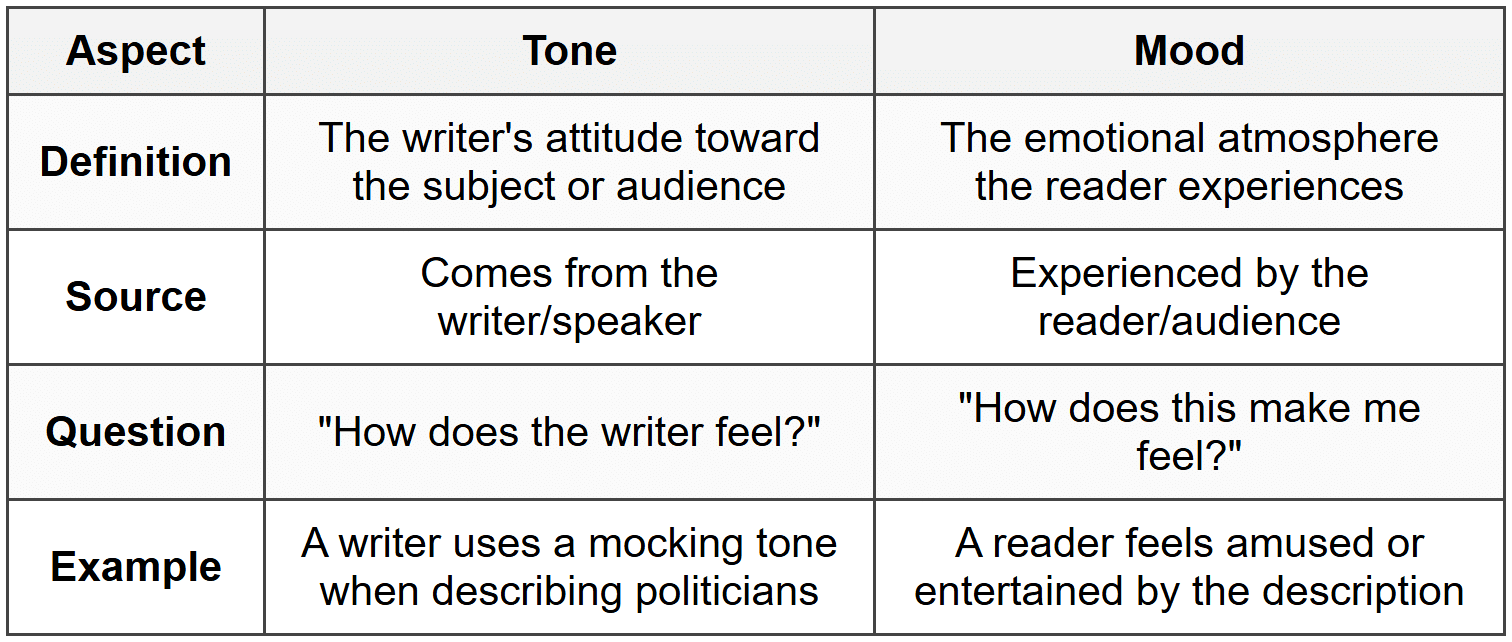
Why JAMB Tests Tone and Mood
JAMB examiners want to know if you can:
- Understand not just what is written, but how it is written
- Recognize the writer's intentions and attitudes
- Interpret subtle meanings beyond literal words
- Distinguish between similar emotional qualities
These questions typically appear in comprehension passages, poetry analysis, and prose fiction sections.
IDENTIFYING TONE IN TEXTS
Common Tone Words You Must Know
JAMB uses specific tone descriptors in answer options. Familiarize yourself with these:
Positive Tones:
- Appreciative: showing gratitude or admiration
- Optimistic: hopeful and positive about the future
- Respectful: showing regard and consideration
- Enthusiastic: eager and excited
- Sympathetic: showing understanding and compassion
Negative Tones:
- Critical: expressing disapproval or finding fault
- Cynical: distrustful of human nature or motives
- Bitter: showing resentment or disappointment
- Hostile: openly unfriendly or aggressive
- Condescending: showing superiority or talking down to others
Neutral/Analytical Tones:
- Objective: factual, without personal feelings or bias
- Formal: following conventional rules, serious
- Analytical: examining details systematically
- Informative: providing facts and information
Humorous/Playful Tones:
- Sarcastic: saying the opposite of what is meant, usually mockingly
- Satirical: using humor to criticize or expose foolishness
- Ironic: expressing meaning through words that mean the opposite
- Witty: clever and amusing
How to Identify Tone
Follow these steps when analyzing tone:
- Read carefully: Pay attention to word choice and how ideas are presented
- Look for loaded words: Words that carry emotional weight reveal attitude (e.g., "squandered" vs. "spent")
- Notice sentence structure: Short, sharp sentences suggest anger or urgency; long, flowing ones may suggest reflection
- Consider the context: What is the writer discussing? How would you feel if you were writing about it?
- Eliminate extremes: If the passage seems moderate, avoid choosing extreme tone words like "hostile" or "ecstatic"
IDENTIFYING MOOD IN TEXTS
Common Mood Words You Must Know
Positive Moods:
- Cheerful: bright and happy
- Hopeful: optimistic about the future
- Romantic: associated with love and beauty
- Peaceful: calm and tranquil
- Exciting: thrilling and energetic
Negative Moods:
- Gloomy: dark and depressing
- Melancholy: sad and thoughtful
- Tense: nervous and anxious
- Frightening: causing fear or alarm
- Depressing: causing sadness or hopelessness
Mysterious/Suspenseful Moods:
- Mysterious: puzzling and intriguing
- Suspenseful: creating anxious uncertainty about what will happen
- Eerie: strange and frightening
- Ominous: suggesting something bad will happen
How to Identify Mood
- Focus on descriptions: Pay attention to how settings, characters, and events are described
- Notice sensory details: What images, sounds, smells, or feelings are described?
- Consider your emotional response: How does the passage make you feel as you read?
- Look at word connotations: Words like "shadows," "whispered," "crept" create different moods than "sunshine," "shouted," "ran"
- Check the overall atmosphere: What feeling dominates the passage?
COMMON JAMB TRICKS AND HOW TO AVOID THEM
Trick 1: Similar-Sounding Options
JAMB often gives you tone/mood words that sound similar but mean different things:
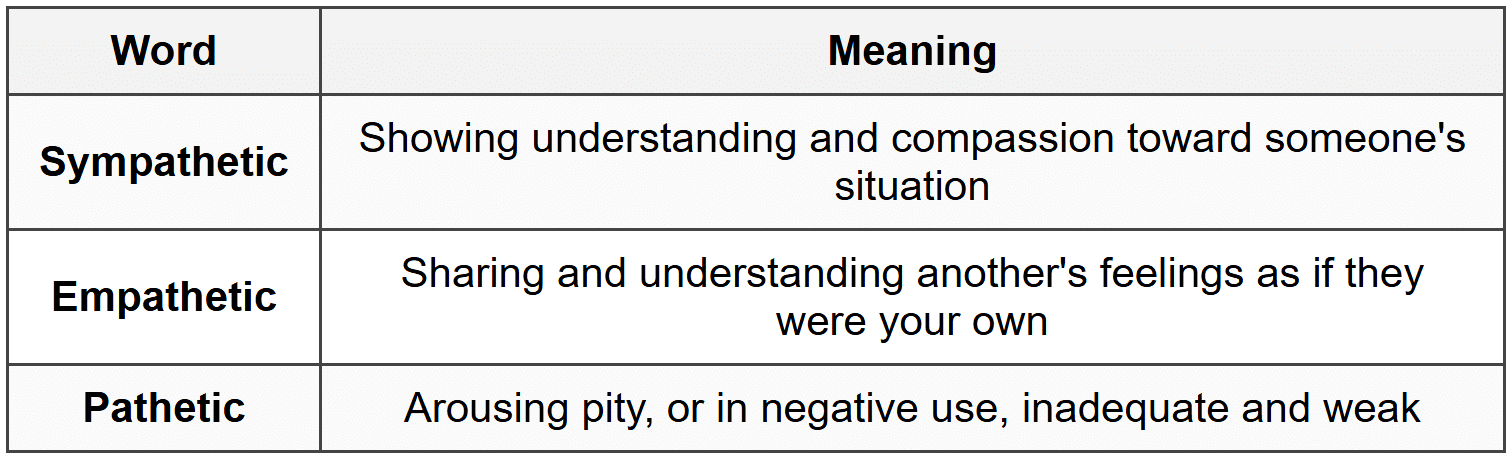
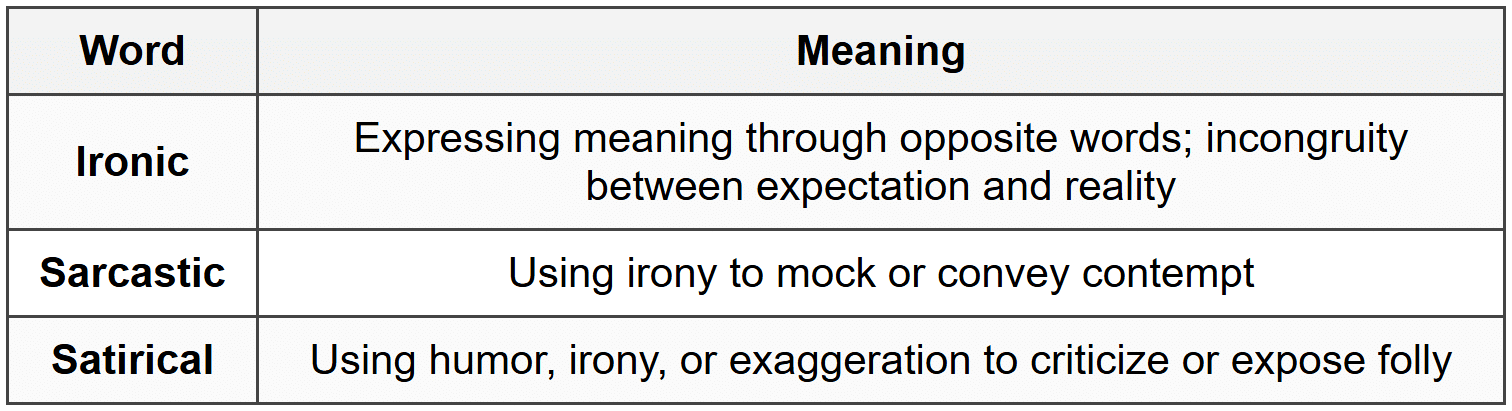
Trick 2: Confusing Tone with Mood
The question might ask for tone, but options might include mood words (and vice versa). Always check:
- If the question asks about the writer's attitude → it's asking for tone
- If the question asks about the atmosphere or feeling created → it's asking for mood
Trick 3: Extreme vs. Moderate Descriptors
Unless the passage is clearly extreme in emotion, avoid extreme tone/mood words:

WORKED EXAMPLES
Q1: Read the passage below and answer the question:
"After months of preparation, the results finally arrived. Chinedu tore open the envelope with trembling hands. His eyes scanned the paper once, twice, then a third time. A slow smile spread across his face as he whispered, 'I did it.'"
What is the mood of this passage?
(a) Suspenseful
(b) Triumphant
(c) Melancholic
(d) Tense
Ans: (b)
Explanation: The mood is triumphant because the passage creates a feeling of success and achievement. While there is initial tension when Chinedu opens the envelope with "trembling hands," the dominant emotional atmosphere comes from his success - the "slow smile" and his whispered words "I did it" create a feeling of victory and accomplishment in the reader. The earlier tension resolves into triumph, making triumphant the best answer.
Q2: Read the passage below and answer the question:
"The government's so-called 'revolutionary' policy has, predictably, achieved nothing but confusion. Citizens are left wondering whether incompetence or indifference is responsible for this spectacular failure."
What is the tone of the writer?
(a) Appreciative
(b) Objective
(c) Sarcastic
(d) Sympathetic
Ans: (c)
Explanation: The writer's tone is sarcastic. The use of quotation marks around 'revolutionary' suggests the policy is anything but revolutionary - the writer is mocking it. Words like "so-called," "predictably," and "spectacular failure" reveal contempt and mockery. The writer is clearly criticizing the government using irony and bitter humor, which defines sarcasm. The tone is not objective (which would be neutral and factual) or sympathetic (which would show understanding). It's definitely not appreciative since the writer is criticizing, not praising.
Q3: Read the passage below and answer the question:
"The old cemetery lay silent under the pale moonlight. Shadows moved between the weathered tombstones, and somewhere in the distance, an owl hooted. The rusted gate creaked as the wind pushed it back and forth."
What mood does the passage create?
(a) Peaceful
(b) Joyful
(c) Eerie
(d) Romantic
Ans: (c)
Explanation: The mood is eerie - strange and frightening. The setting (cemetery, pale moonlight), the imagery (shadows moving, weathered tombstones), and the sounds (owl hooting, gate creaking) all work together to create an unsettling, mysterious atmosphere. While the scene is technically quiet, it's not peaceful because the descriptive details evoke discomfort and unease rather than calm. The mood is definitely not joyful or romantic - the entire description points toward something spooky and unsettling.
QUICK SUMMARY
- Tone = writer's attitude toward subject/audience; Mood = emotional atmosphere reader experiences
- Tone is identified through word choice, sentence structure, and how ideas are presented
- Mood is identified through descriptive details, imagery, setting, and sensory language
- Common tone categories: positive, negative, neutral/analytical, humorous/critical
- Common mood categories: positive, negative, mysterious/suspenseful
- Always distinguish what the question asks: writer's attitude (tone) vs. feeling created (mood)
- Avoid extreme tone/mood words unless the passage is clearly extreme
- Watch for JAMB tricks: similar words with different meanings, mood words in tone questions
- Key tone words: appreciative, critical, sarcastic, objective, formal, cynical, optimistic, bitter
- Key mood words: suspenseful, cheerful, gloomy, tense, peaceful, eerie, melancholic
- Sarcastic = mocking through opposite meaning; Ironic = incongruity between expectation and reality
- Sympathetic = showing compassion; Pathetic = arousing pity or being inadequate
- Context matters: consider the entire passage, not just isolated sentences
- Your first emotional response as a reader often indicates the mood correctly
PRACTICE QUESTIONS
Q1: "The principal's speech lasted for two endless hours. Students shifted uncomfortably in their seats, stealing glances at their watches and praying for dismissal."
What is the mood of this passage?
(a) Exciting
(b) Tedious
(c) Frightening
(d) Romantic
Q2: "Despite the challenges we face, I remain confident that with hard work and determination, our students will excel in their examinations."
What is the tone of the speaker?
(a) Pessimistic
(b) Critical
(c) Optimistic
(d) Sarcastic
Q3: "The minister announced yet another 'temporary' fuel price increase, the fifth this year. Citizens have heard this story before."
What is the writer's tone?
(a) Appreciative
(b) Cynical
(c) Enthusiastic
(d) Respectful
Q4: Read the passage below:
"Thunder rumbled in the distance as dark clouds gathered overhead. The market women hurriedly packed their goods while children ran for shelter. A sudden flash of lightning split the sky, followed by the first heavy drops of rain."
What mood does this passage create?
(a) Peaceful
(b) Joyful
(c) Ominous
(d) Romantic
Q5: "The research findings indicate a statistically significant correlation between study hours and examination performance across the sampled population."
What is the tone of this statement?
(a) Emotional
(b) Objective
(c) Hostile
(d) Playful
Q6: "Our leaders have once again demonstrated their remarkable ability to transform simple problems into complex disasters. Congratulations are certainly in order for such consistent excellence in failure."
What is the tone of the writer?
(a) Appreciative
(b) Objective
(c) Satirical
(d) Sympathetic
ANSWER KEY AND EXPLANATIONS
Q1 Answer: (b) Tedious
Explanation: The mood is tedious - boring and tiresome. The description "two endless hours," students shifting "uncomfortably," "stealing glances at their watches," and "praying for dismissal" all create an atmosphere of boredom and discomfort. The reader feels the weariness and impatience of the students. This is a medium-difficulty question testing your ability to identify mood through cumulative descriptive details.
Q2 Answer: (c) Optimistic
Explanation: The speaker's tone is optimistic - hopeful and positive about the future. Despite acknowledging challenges, the speaker expresses confidence in positive outcomes ("I remain confident," "will excel"). The tone is forward-looking and encouraging rather than negative or mocking. This is an easy question with clear positive language indicating the speaker's hopeful attitude.
Q3 Answer: (b) Cynical
Explanation: The writer's tone is cynical - distrustful and skeptical. The quotation marks around 'temporary' suggest disbelief, and the phrase "Citizens have heard this story before" reveals distrust of official explanations. The writer doubts the sincerity or truthfulness of the announcement. While there is sarcasm in the quotation marks, cynical better captures the overall distrustful attitude toward government motives. This is a medium-difficulty question requiring you to distinguish between similar negative tones.
Q4 Answer: (c) Ominous
Explanation: The mood is ominous - suggesting that something bad is about to happen. The imagery of thunder, dark clouds, people hurrying for shelter, lightning, and approaching rain creates a threatening atmosphere. The mood is not peaceful (there's urgency and threat) or joyful (the atmosphere is foreboding). This is an easy-to-medium question testing mood identification through weather and action descriptions.
Q5 Answer: (b) Objective
Explanation: The tone is objective - factual and unbiased. The language is formal, technical, and impersonal ("statistically significant correlation," "sampled population"). There is no emotional language, personal opinion, or bias expressed. The statement simply presents research findings in a neutral, scientific manner. This is an easy question with clear academic language indicating objectivity.
Q6 Answer: (c) Satirical
Explanation: The writer's tone is satirical - using irony and sarcasm to criticize and expose foolishness. The writer praises leaders for "remarkable ability" and "consistent excellence" but is actually criticizing them for turning "simple problems into complex disasters." The congratulations are ironic. Satirical is better than simply sarcastic because the criticism targets broader leadership incompetence, using exaggerated praise to highlight failure. This is a hard question requiring you to recognize sophisticated irony and distinguish satirical from merely sarcastic tone.
