Tone And Mood In Poetry


Poetry is one of the most beautiful and expressive forms of literature, and understanding how a poet conveys feelings and attitudes is essential for interpreting any poem correctly. In JAMB, questions on tone and mood test your ability to identify the emotional atmosphere of a poem and the poet's attitude toward the subject. This chapter will teach you how to recognize, distinguish, and analyze tone and mood in poetry, equipping you with the skills to tackle exam questions confidently and accurately.
KEY CONCEPTS AND DEFINITIONS
What is Tone in Poetry?
Tone refers to the poet's attitude or feelings toward the subject of the poem, the audience, or the poem itself. It is the voice or personality that comes through the words. Think of tone as how someone sounds when they speak to you-angry, happy, sad, sarcastic, formal, or playful.
Tone is revealed through:
- Word choice (diction)
- Imagery and figurative language
- Sound devices like rhythm and rhyme
- Sentence structure and punctuation
Examples of Tone:
- Angry: harsh, strong, accusatory words
- Nostalgic: reflective, longing, wistful language
- Celebratory: joyful, energetic, uplifting expressions
- Bitter: resentful, cynical, harsh words
- Sarcastic: ironic, mocking, indirect criticism
- Formal: dignified, respectful, elevated language
- Informal: casual, conversational, everyday language
What is Mood in Poetry?
Mood is the emotional atmosphere or feeling that the poem creates in the reader. It is the emotion you feel when you read the poem. While tone is the poet's attitude, mood is the reader's emotional response.
Mood is created through:
- Setting and imagery
- Descriptive language
- Sound devices (alliteration, assonance, onomatopoeia)
- Theme and subject matter
Examples of Mood:
- Gloomy: dark, sad, depressing atmosphere
- Suspenseful: tense, anxious, uncertain feeling
- Romantic: loving, warm, affectionate atmosphere
- Peaceful: calm, serene, tranquil feeling
- Hopeful: optimistic, encouraging, uplifting atmosphere
- Eerie: strange, unsettling, mysterious feeling
Difference Between Tone and Mood
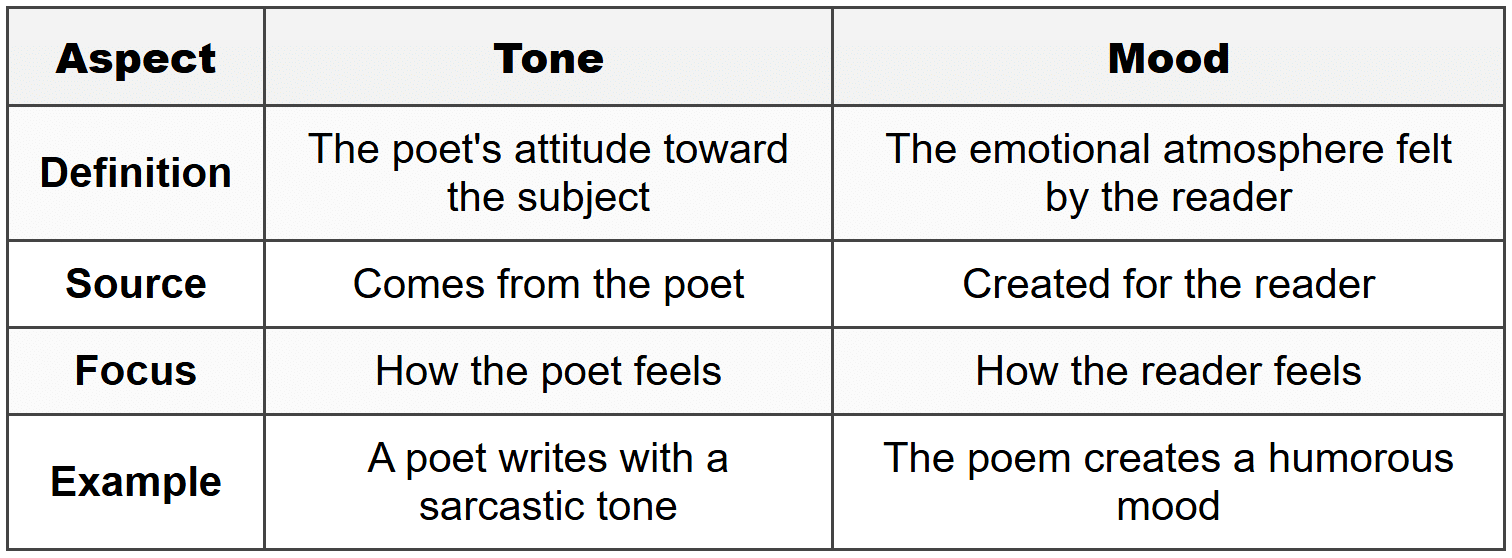
Important Note: Tone and mood often overlap but are not the same. A poem with an angry tone may create a tense or uncomfortable mood. A nostalgic tone may create a melancholic or wistful mood.
HOW TO IDENTIFY TONE IN POETRY
Step 1: Analyze Word Choice (Diction)
Look closely at the words the poet uses. Are they positive, negative, or neutral? Are they formal or informal? Strong or gentle?
Example: If a poet describes a city as "bustling, vibrant, and alive," the tone is likely positive or celebratory. If the city is described as "crowded, noisy, and suffocating," the tone is negative or critical.
Step 2: Examine Imagery and Figurative Language
Imagery creates mental pictures. The type of images used reveals the poet's attitude. Dark, gloomy images suggest a somber or pessimistic tone. Bright, colorful images suggest an optimistic or joyful tone.
Example: "The sky wept tears of sorrow" suggests a sad or mournful tone, while "The sun danced joyfully across the sky" suggests a cheerful or playful tone.
Step 3: Consider Sound Devices
Rhythm, rhyme, alliteration, and other sound devices affect tone. Smooth, flowing sounds suggest calmness or elegance. Harsh, abrupt sounds suggest anger or tension.
Example: "The silent shadows softly sleep" uses soft sounds (alliteration of 's') to create a calm, peaceful tone. "Clashing, crashing, cruel and cold" uses harsh sounds to create an aggressive, hostile tone.
Step 4: Look at the Subject and Theme
What is the poem about? A poem about death may have a somber, reflective, or melancholic tone. A poem about love may have a romantic, passionate, or tender tone.
HOW TO IDENTIFY MOOD IN POETRY
Step 1: Pay Attention to Setting and Atmosphere
The time, place, and environment described in the poem influence mood. A graveyard at night creates a gloomy or eerie mood. A sunny beach creates a relaxed or joyful mood.
Step 2: Notice Descriptive Language
Adjectives, adverbs, and sensory details shape the mood. Words like "cold," "dark," "lonely," and "empty" create a sad or depressing mood. Words like "bright," "warm," "lively," and "vibrant" create a happy or energetic mood.
Step 3: Observe the Poem's Emotional Progression
Mood can change throughout a poem. The beginning may feel hopeful, but the end may feel sorrowful. Track how the emotional atmosphere shifts.
Step 4: Reflect on Your Own Emotional Response
Ask yourself: How does this poem make me feel? What emotions does it stir in me? Your honest emotional reaction is a clue to the mood.
COMMON TONES IN POETRY
JAMB often tests your ability to recognize specific tones. Here are some commonly tested tones with brief descriptions:
- Sarcastic: Mocking, ironic, saying the opposite of what is meant
- Melancholic: Sad, thoughtful, sorrowful
- Optimistic: Hopeful, positive, confident
- Pessimistic: Negative, gloomy, expecting the worst
- Reflective: Thoughtful, contemplative, looking back
- Critical: Disapproving, fault-finding, analytical
- Nostalgic: Longing for the past, wistful, sentimental
- Humorous: Funny, lighthearted, playful
- Solemn: Serious, grave, formal
- Defiant: Rebellious, bold, challenging authority
COMMON MOODS IN POETRY
Similarly, JAMB may ask you to identify the mood. Here are commonly tested moods:
- Tense: Anxious, uncertain, stressful
- Joyful: Happy, celebratory, uplifting
- Mysterious: Puzzling, secretive, enigmatic
- Romantic: Loving, passionate, affectionate
- Peaceful: Calm, serene, restful
- Melancholic: Sad, sorrowful, reflective
- Eerie: Strange, unsettling, spooky
- Hopeful: Encouraging, optimistic, inspiring
- Gloomy: Dark, depressing, bleak
- Suspenseful: Full of anticipation, uncertain, thrilling
WORKED EXAMPLES
Q1: Read the following excerpt and identify the tone:
"The rain fell softly on the roof, each drop a gentle whisper from the sky, lulling the earth to sleep."
(a) Angry
(b) Peaceful
(c) Sarcastic
(d) Critical
Ans: (b) Peaceful
Explanation: The words "softly," "gentle whisper," and "lulling" suggest calmness and tranquility. The poet's attitude toward the rain is gentle and soothing, which creates a peaceful tone. There is no anger, sarcasm, or criticism present. The imagery of soft rain and sleep evokes serenity.
Q2: Determine the mood of this excerpt:
"The old house stood alone on the hill, its broken windows staring like hollow eyes into the gathering darkness."
(a) Joyful
(b) Romantic
(c) Eerie
(d) Hopeful
Ans: (c) Eerie
Explanation: The description of the house as "old," "alone," with "broken windows" like "hollow eyes" and "gathering darkness" creates an unsettling, strange, and spooky atmosphere. This is characteristic of an eerie mood. There is no joy, romance, or hope in the imagery.
Q3: Identify the tone in this line:
"Oh, how wonderful! Another rainy day to ruin our plans."
(a) Celebratory
(b) Sarcastic
(c) Nostalgic
(d) Optimistic
Ans: (b) Sarcastic
Explanation: The word "wonderful" is used ironically. The speaker does not truly think the rainy day is wonderful; instead, they are expressing frustration. The use of irony to express displeasure is the hallmark of sarcasm. The tone is mocking and bitter, not celebratory, nostalgic, or optimistic.
TIPS FOR ANSWERING TONE AND MOOD QUESTIONS IN JAMB
Tip 1: Read the Poem or Excerpt Carefully
Do not rush. Read the lines two or three times. Pay attention to every word, especially adjectives and verbs.
Tip 2: Look for Clue Words
Certain words signal tone and mood. Words like "dark," "silent," "cold," and "lonely" suggest sadness or gloom. Words like "bright," "lively," "joyful," and "radiant" suggest happiness.
Tip 3: Eliminate Obviously Wrong Options
If a poem talks about war and destruction, it is unlikely to have a joyful or romantic tone. Eliminate options that clearly do not fit the content.
Tip 4: Distinguish Between Tone and Mood
If the question asks for tone, focus on the poet's attitude. If it asks for mood, focus on how the poem makes you feel. Do not confuse the two.
Tip 5: Consider the Overall Emotion
Even if some words are positive, the overall emotion of the poem may be negative. Look at the big picture, not just isolated words.
Tip 6: Practice with Past Questions
JAMB often uses similar patterns in tone and mood questions. Practicing with past questions will help you recognize these patterns quickly.
QUICK SUMMARY
- Tone is the poet's attitude toward the subject; mood is the emotional atmosphere felt by the reader.
- Tone is revealed through word choice, imagery, sound devices, and structure.
- Mood is created through setting, descriptive language, and sensory details.
- Common tones include sarcastic, melancholic, optimistic, reflective, and defiant.
- Common moods include eerie, joyful, tense, peaceful, and gloomy.
- To identify tone, analyze diction, figurative language, and sound devices.
- To identify mood, pay attention to setting, emotional progression, and your own feelings.
- Always read the poem carefully and eliminate clearly wrong options.
- Distinguish between tone (poet's attitude) and mood (reader's feeling).
- Practice with past questions to recognize JAMB patterns.
PRACTICE QUESTIONS
Q1: Read the following lines:
"I wandered lonely as a cloud, drifting aimlessly across the empty sky."
What is the mood of these lines?
(a) Cheerful
(b) Melancholic
(c) Excited
(d) Angry
Q2: Identify the tone in this excerpt:
"The politicians speak of change, yet their pockets grow fatter while the people starve."
(a) Appreciative
(b) Humorous
(c) Critical
(d) Nostalgic
Q3: What mood is created by the following lines?
"The children laughed and played in the golden sunshine, their voices ringing like bells."
(a) Gloomy
(b) Joyful
(c) Suspenseful
(d) Eerie
Q4: Determine the tone of this line:
"Once, we danced beneath the mango trees, our hearts light and free. Those days are gone forever."
(a) Defiant
(b) Nostalgic
(c) Sarcastic
(d) Optimistic
Q5: What is the mood of this excerpt?
"The footsteps echoed in the empty corridor, each sound louder than the last. Someone-or something-was coming."
(a) Peaceful
(b) Romantic
(c) Suspenseful
(d) Hopeful
Q6: Identify the tone in these lines:
"Death, be not proud, though some have called thee mighty and dreadful, for thou art not so."
(a) Fearful
(b) Defiant
(c) Celebratory
(d) Melancholic
ANSWER KEY AND EXPLANATIONS
Q1: Ans: (b) Melancholic
The words "lonely," "drifting aimlessly," and "empty" suggest sadness and isolation. The mood is reflective and sorrowful, which is melancholic. There is no cheerfulness, excitement, or anger.
Q2: Ans: (c) Critical
The poet criticizes politicians by contrasting their promises of change with their greed and the suffering of the people. The tone is disapproving and fault-finding, which is critical. It is not appreciative, humorous, or nostalgic.
Q3: Ans: (b) Joyful
The imagery of children laughing and playing in "golden sunshine" with voices "ringing like bells" creates a happy, uplifting atmosphere. The mood is clearly joyful. There is nothing gloomy, suspenseful, or eerie about it.
Q4: Ans: (b) Nostalgic
The poet recalls happy memories from the past ("Once, we danced...") and laments that those days are "gone forever." This longing for the past is nostalgic. The tone is not defiant, sarcastic, or optimistic.
Q5: Ans: (c) Suspenseful
The echoing footsteps in an empty corridor and the uncertainty about who or what is coming create tension and anticipation. This is suspenseful. The mood is not peaceful, romantic, or hopeful.
Q6: Ans: (b) Defiant
The poet challenges and confronts Death directly, telling it not to be proud and denying its power. This bold, confrontational attitude is defiant. The tone is not fearful, celebratory, or melancholic.



