PE Exam Exam > PE Exam Notes > Civil Engineering (PE Civil) > Cheatsheet: Load Analysis Dead, Live, Wind, Seismic
Cheatsheet: Load Analysis Dead, Live, Wind, Seismic


1. Dead Loads
1.1 Definition and Components

1.2 Unit Weights

2. Live Loads
2.1 Floor Live Loads

2.2 Live Load Reduction

2.3 Roof Live Loads

2.4 Snow Loads
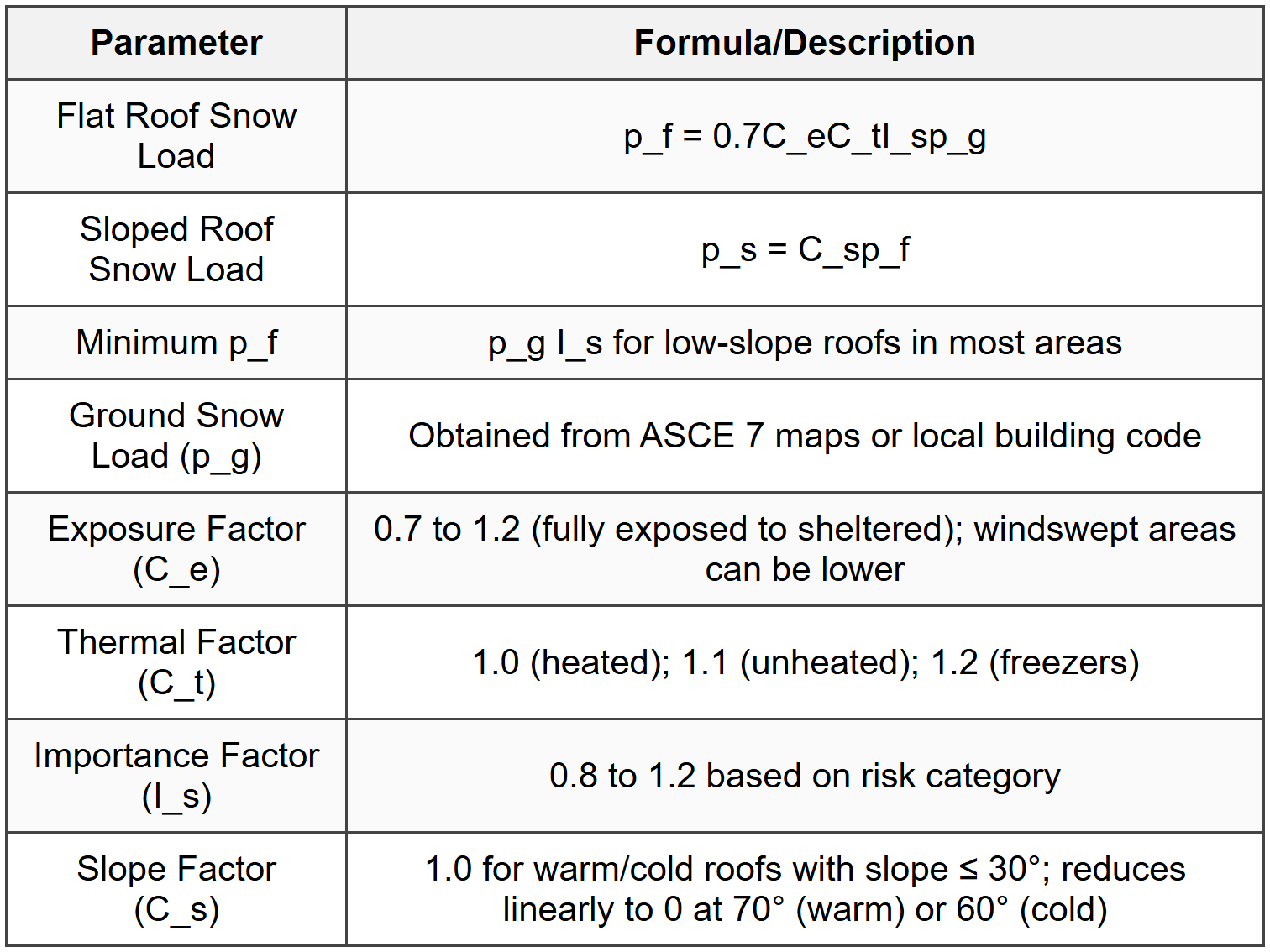
2.4.1 Drift and Unbalanced Loads
- Leeward drift: p_d = h_dγ (h_d = drift height)
- Windward drift: p_d = (3/4)h_dγ
- Snow density γ: 0.13p_g + 14 (pcf), max 30 pcf
- Drift height based on windward fetch length and roof geometry
- Unbalanced loads apply to hip and gable roofs with slopes > 2.38° and <>
3. Wind Loads
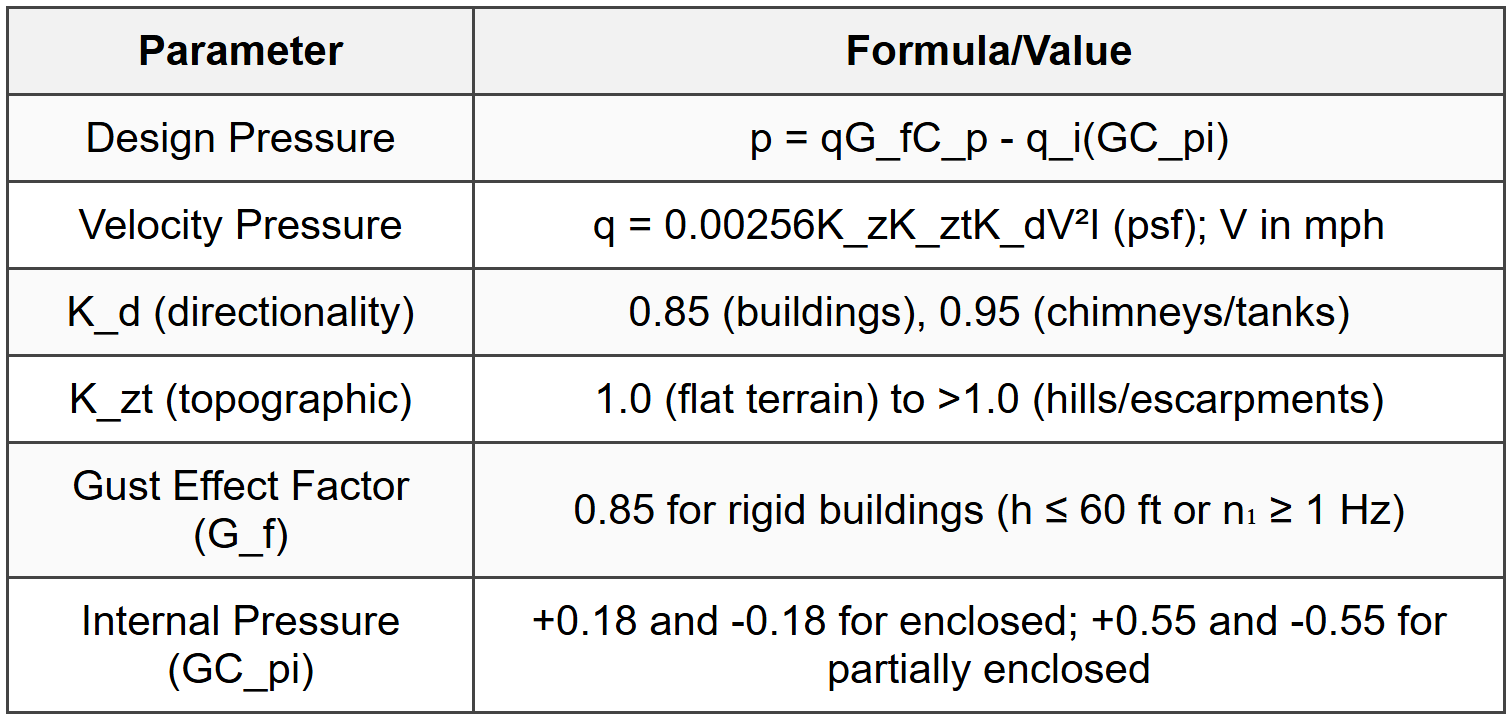
3.1 Basic Parameters

3.2 Directional Procedure (Method 1)
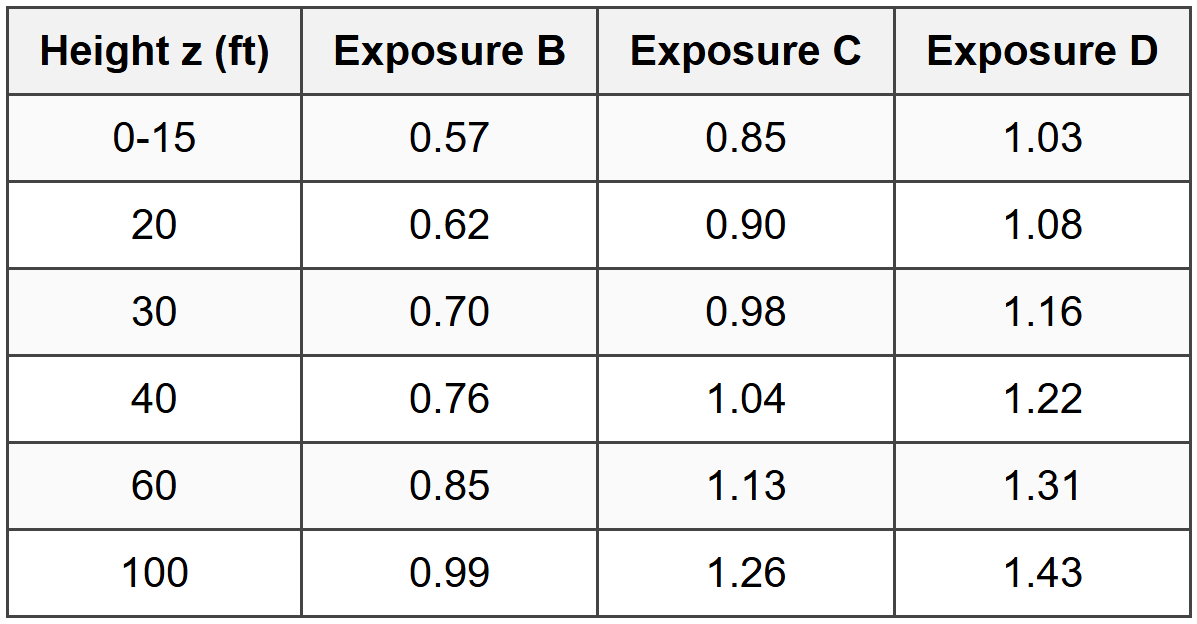
3.2.1 Velocity Pressure Exposure Coefficient K_z
3.2.2 External Pressure Coefficients C_p
- Windward wall: +0.8
- Leeward wall: -0.5 (L/B ≤ 1) to -0.3 (L/B ≥ 4)
- Side walls: -0.7
- Roof (windward, slope ≤ 10°): -0.9 to -0.18
- Roof (leeward): -0.3 to -0.6
- Components and cladding have separate C_p values based on area and location
3.3 Envelope Procedure (Method 2 - Simplified)

3.4 MWFRS vs. Components and Cladding

4. Seismic Loads
4.1 Basic Parameters

4.2 Site Classification
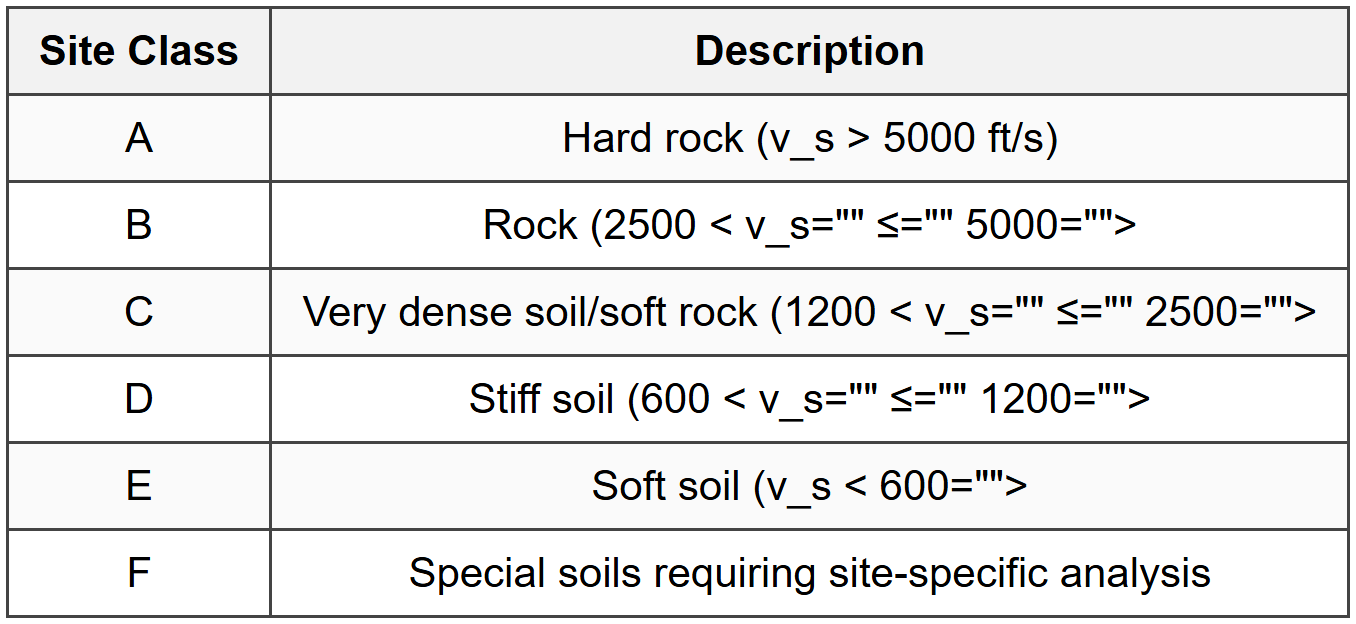
4.3 Seismic Design Category
- Determined from Risk Category and S_DS, S_D1 values
- Categories: A (lowest) through F (highest seismicity)
- SDC A: S_DS <>
- SDC B: 0.167g ≤ S_DS <>
- SDC C: 0.33g ≤ S_DS <>
- SDC D: 0.50g ≤ S_DS or S_D1 ≥ 0.20g
- Higher SDC requires more stringent detailing and analysis
4.4 Equivalent Lateral Force Procedure

4.5 Fundamental Period T

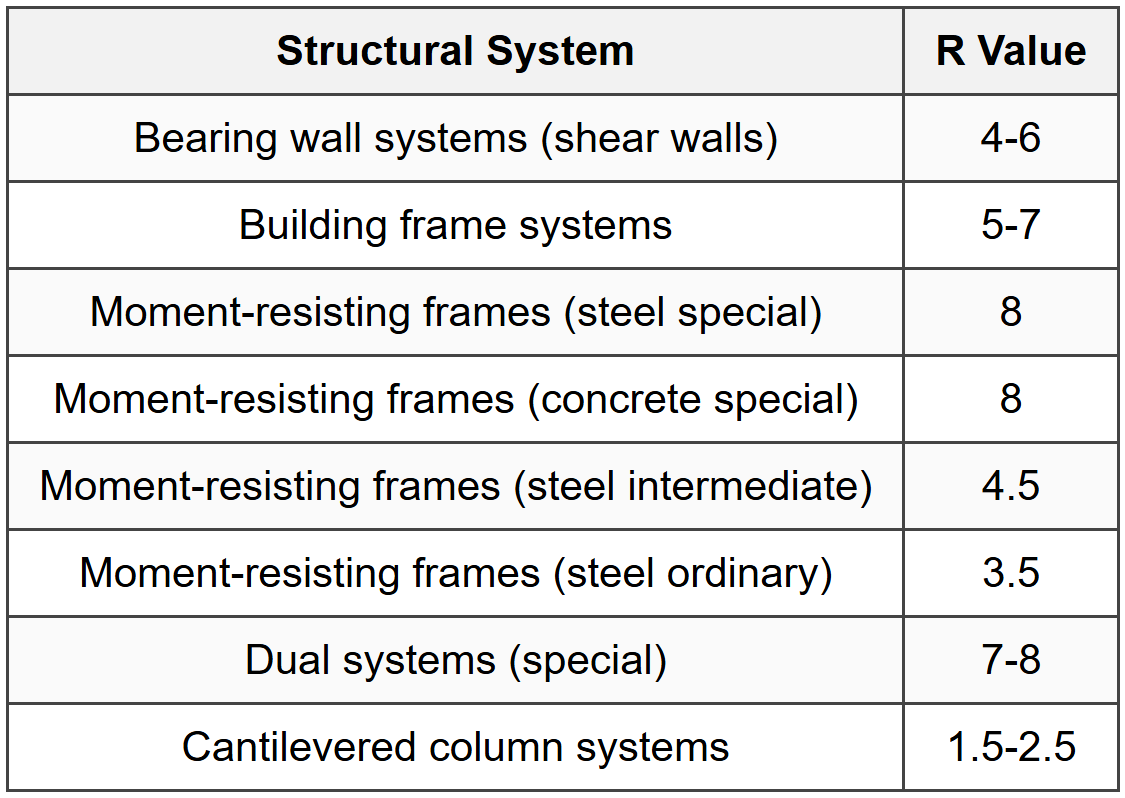
4.6 Response Modification Factor R
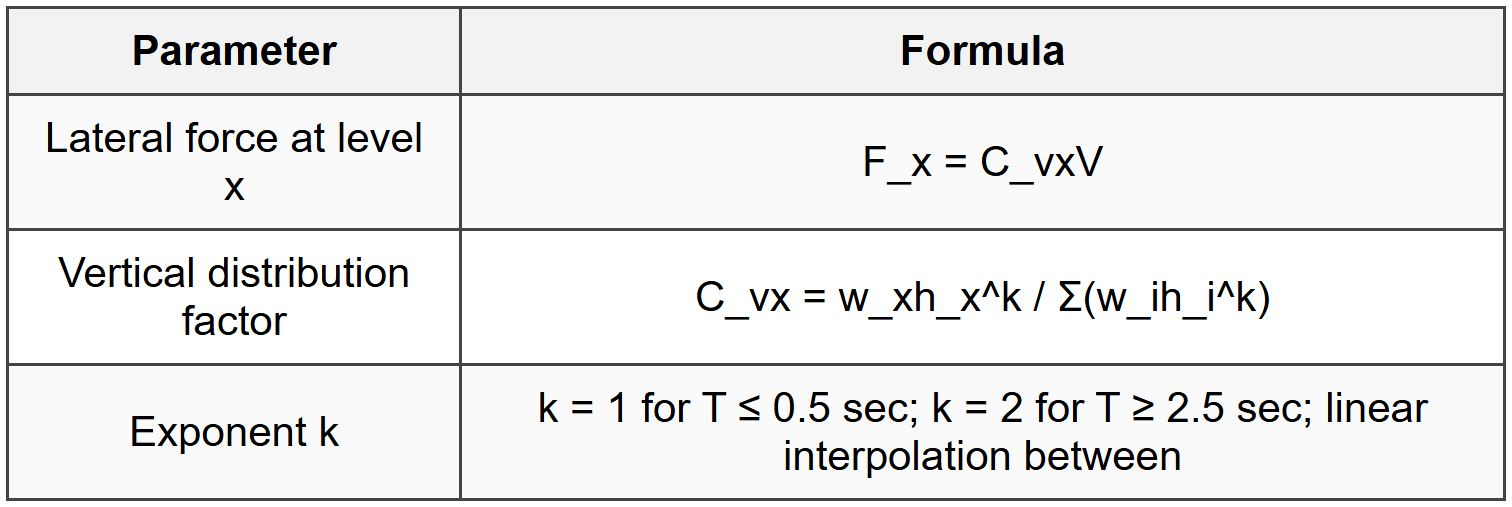
4.7 Vertical Distribution of Forces
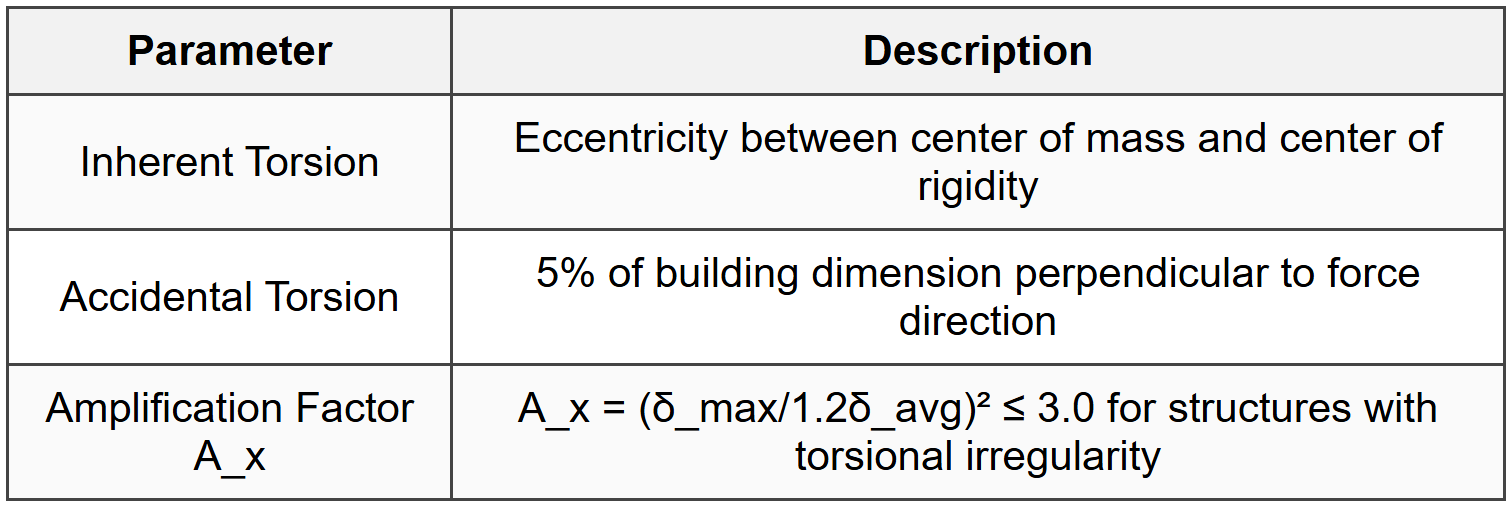
4.8 Horizontal Distribution and Torsion
4.9 Drift Limits
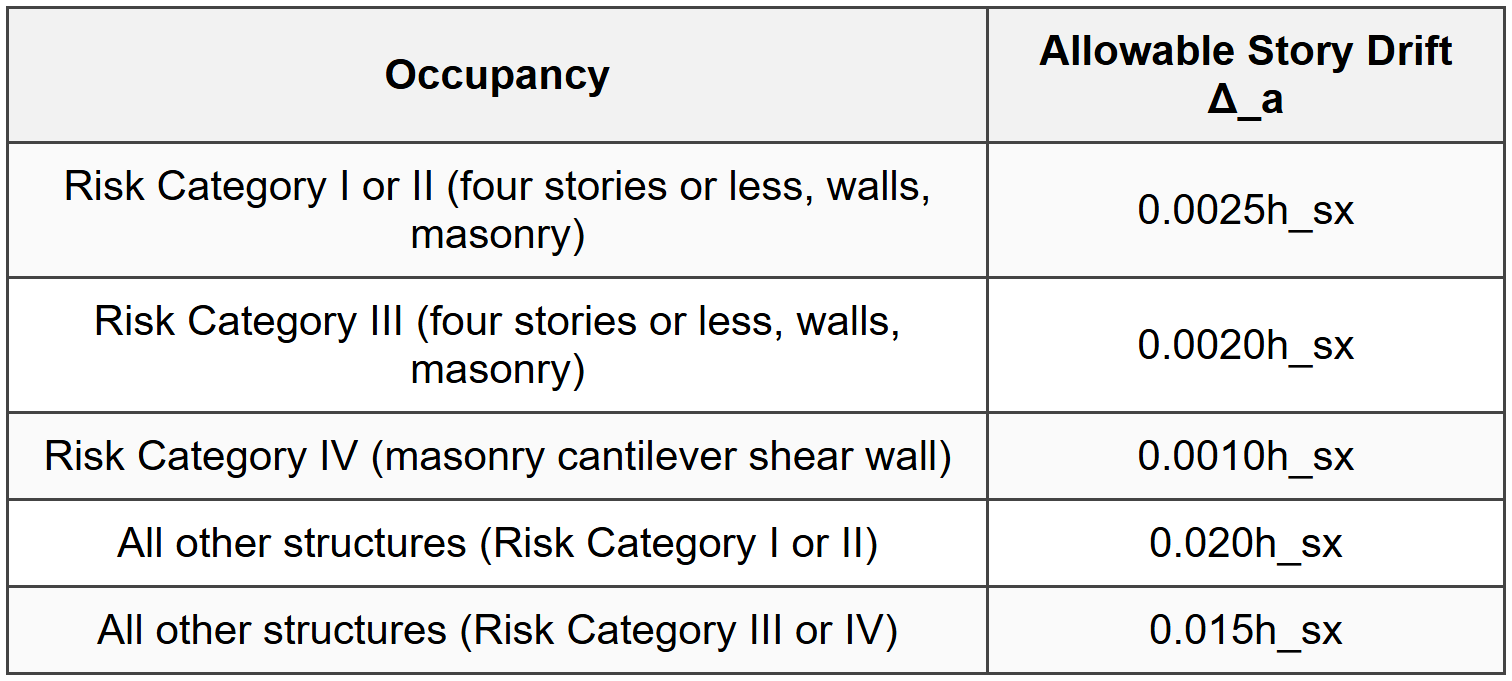
- Design story drift: Δ = C_dδ_xe/I_e
- δ_xe = deflection from elastic analysis
- C_d = deflection amplification factor (2.5 to 6 depending on system)
5. Load Combinations
5.1 LRFD Load Combinations (ASCE 7)
- 1.4D
- 1.2D + 1.6L + 0.5(L_r or S or R)
- 1.2D + 1.6(L_r or S or R) + (L or 0.5W)
- 1.2D + 1.0W + L + 0.5(L_r or S or R)
- 1.2D + 1.0E + L + 0.2S
- 0.9D + 1.0W
- 0.9D + 1.0E
5.2 ASD Load Combinations (ASCE 7)
- D
- D + L
- D + (L_r or S or R)
- D + 0.75L + 0.75(L_r or S or R)
- D + (0.6W or 0.7E)
- D + 0.75L + 0.75(0.6W) + 0.75(L_r or S or R)
- D + 0.75L + 0.75(0.7E) + 0.75S
- 0.6D + 0.6W
- 0.6D + 0.7E
5.3 Seismic Load Effect

5.4 Special Considerations
- Roof live load L_r: minimum 20 psf (12 psf for steep slopes)
- Rain load R accounts for ponding if roof drainage is inadequate
- For soil/hydrostatic loads H, use 1.6H in LRFD, 1.0H in ASD
- Fluid load F: 1.4F in LRFD, 1.0F in ASD
- Self-straining loads T (temperature): 1.2T in LRFD, 1.0T in ASD
6. Special Topics
6.1 Diaphragm Design Forces

6.2 Orthogonal Loading
- Apply 100% of forces in one direction plus 30% in perpendicular direction
- Required for structures with irregularities or SDC C and above
- Consider both positive and negative orthogonal combinations
6.3 Overturning and Uplift

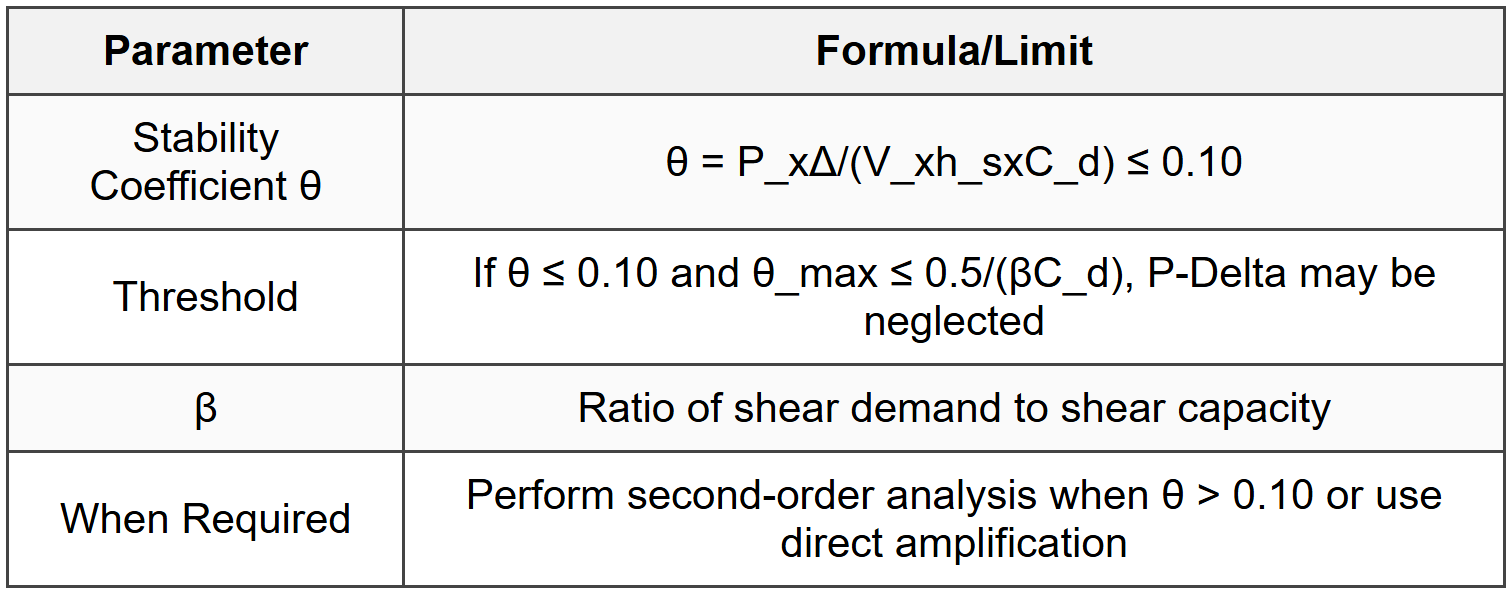
6.4 P-Delta Effects
6.5 Nonbuilding Structures
- Tanks, vessels, bins: use specific R values (2.5-3.5)
- Electrical/mechanical equipment: use component seismic coefficients
- Chimneys and stacks: K_d = 0.95, special R values apply
- Sign structures: K_d = 0.85, R = 3.5
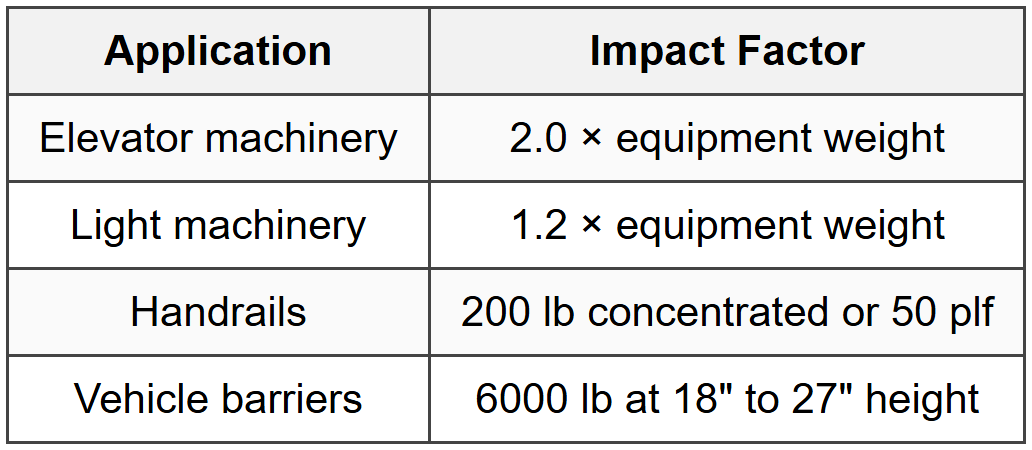
6.6 Impact Loads
The document Cheatsheet: Load Analysis Dead, Live, Wind, Seismic is a part of the PE Exam Course Civil Engineering (PE Civil).
All you need of PE Exam at this link: PE Exam
About this Document

Apr 20, 2026 Last updated
Related Exams
Document Description: Cheatsheet: Load Analysis Dead, Live, Wind, Seismic for PE Exam 2026 is part of Civil Engineering (PE Civil) preparation. The notes and questions for Cheatsheet: Load Analysis Dead, Live, Wind, Seismic have been prepared according to the PE Exam exam syllabus. Information about Cheatsheet: Load Analysis Dead, Live, Wind, Seismic covers topics like and Cheatsheet: Load Analysis Dead, Live, Wind, Seismic Example, for PE Exam 2026 Exam. Find important definitions, questions, notes, meanings, examples, exercises and tests below for Cheatsheet: Load Analysis Dead, Live, Wind, Seismic.
Introduction of Cheatsheet: Load Analysis Dead, Live, Wind, Seismic in English is available as part of our Civil Engineering (PE Civil) for PE Exam & Cheatsheet: Load Analysis Dead, Live, Wind, Seismic in Hindi for Civil Engineering (PE Civil) course. Download more important topics related with notes, lectures and mock test series for PE Exam Exam by signing up for free. PE Exam: Cheatsheet: Load Analysis Dead, Live, Wind, Seismic
Description
Cheatsheet: Load Analysis Dead, Live, Wind, Seismic of Civil Engineering to help you remember important concepts with short tricks. Start learning for PE Exam exam & improve retention with EduRev.
Information about Cheatsheet: Load Analysis Dead, Live, Wind, Seismic
In this doc you can find the meaning of Cheatsheet: Load Analysis Dead, Live, Wind, Seismic defined & explained in the simplest way possible. Besides explaining types of Cheatsheet: Load Analysis Dead, Live, Wind, Seismic theory, EduRev gives you an ample number of questions to practice Cheatsheet: Load Analysis Dead, Live, Wind, Seismic tests, examples and also practice PE Exam tests



Related Searches
Live, Summary, Previous Year Questions with Solutions, Wind, Live, mock tests for examination, shortcuts and tricks, ppt, Wind, Seismic, Important questions, study material, Semester Notes, Viva Questions, Free, Cheatsheet: Load Analysis Dead, pdf , Extra Questions, Wind, Seismic, practice quizzes, Sample Paper, Cheatsheet: Load Analysis Dead, past year papers, MCQs, Cheatsheet: Load Analysis Dead, Exam, Seismic, Objective type Questions, Live, video lectures;