PE Exam Exam > PE Exam Notes > Civil Engineering (PE Civil) > Cheatsheet: Pavement Design
Cheatsheet: Pavement Design


1. Pavement Types and Components
1.1 Flexible Pavement
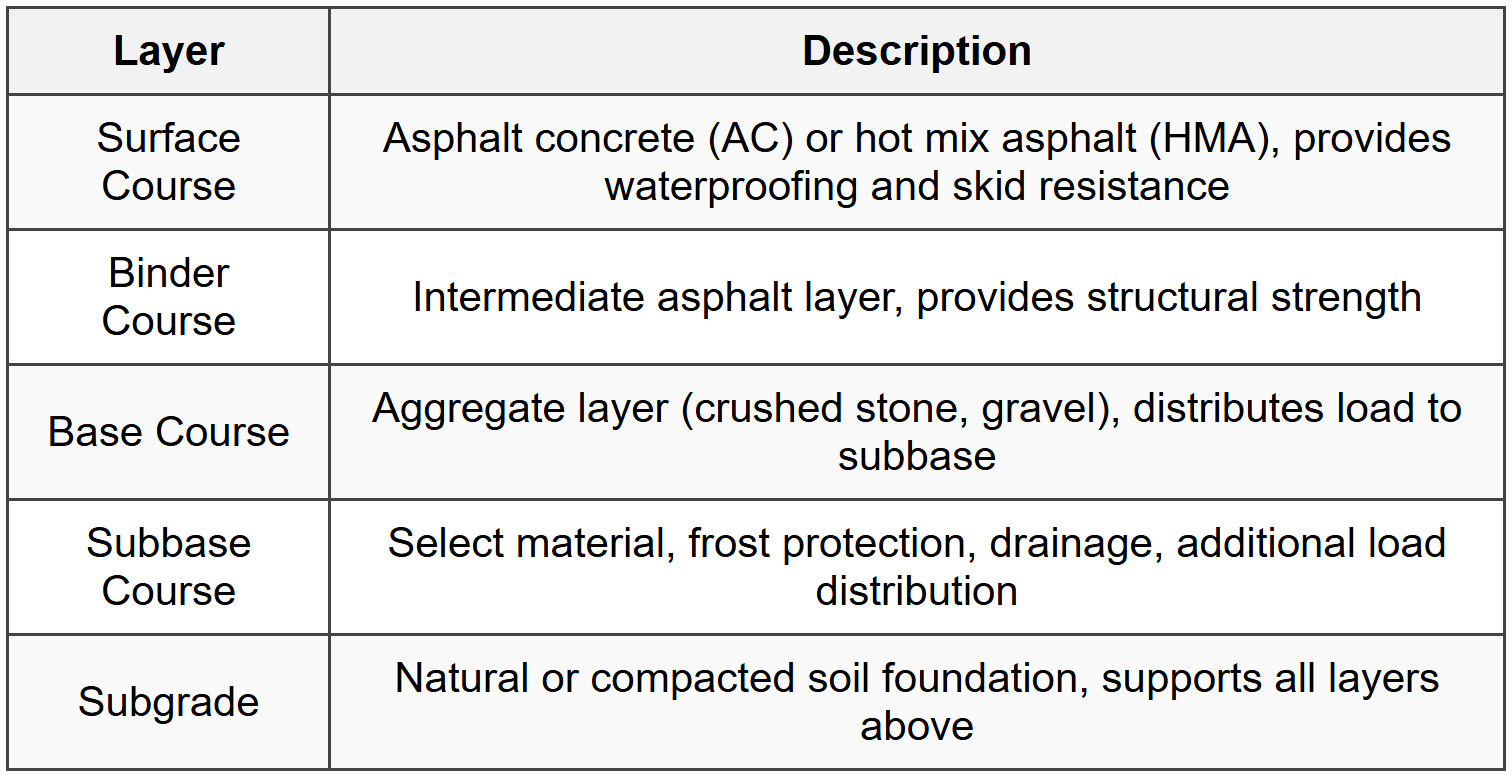
1.2 Rigid Pavement

1.3 Pavement Type Comparison

2. Traffic Analysis
2.1 Equivalent Single Axle Load (ESAL)
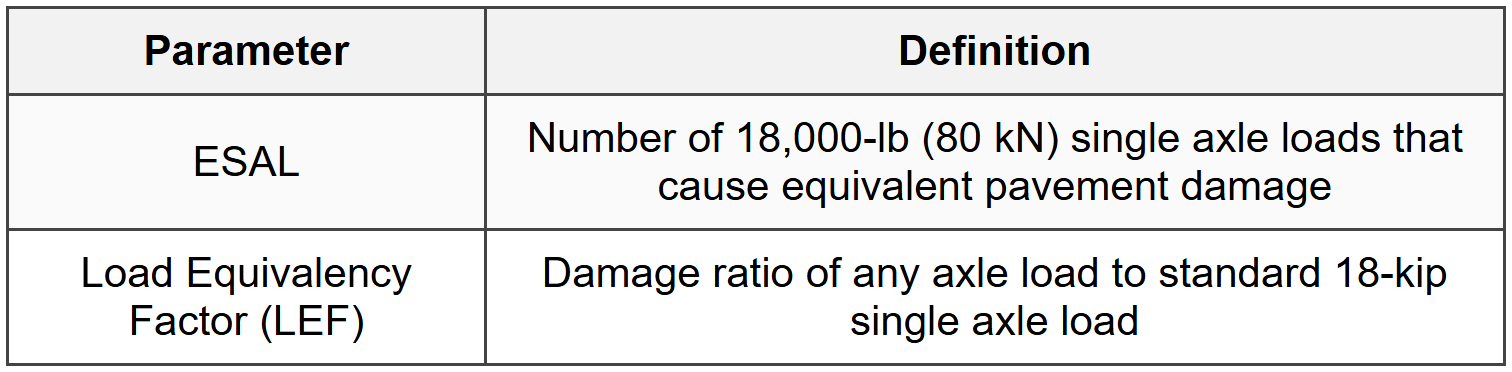
2.2 ESAL Calculation
ESAL = AADT × % Trucks × Truck Factor × 365 × Growth Factor × Design Life
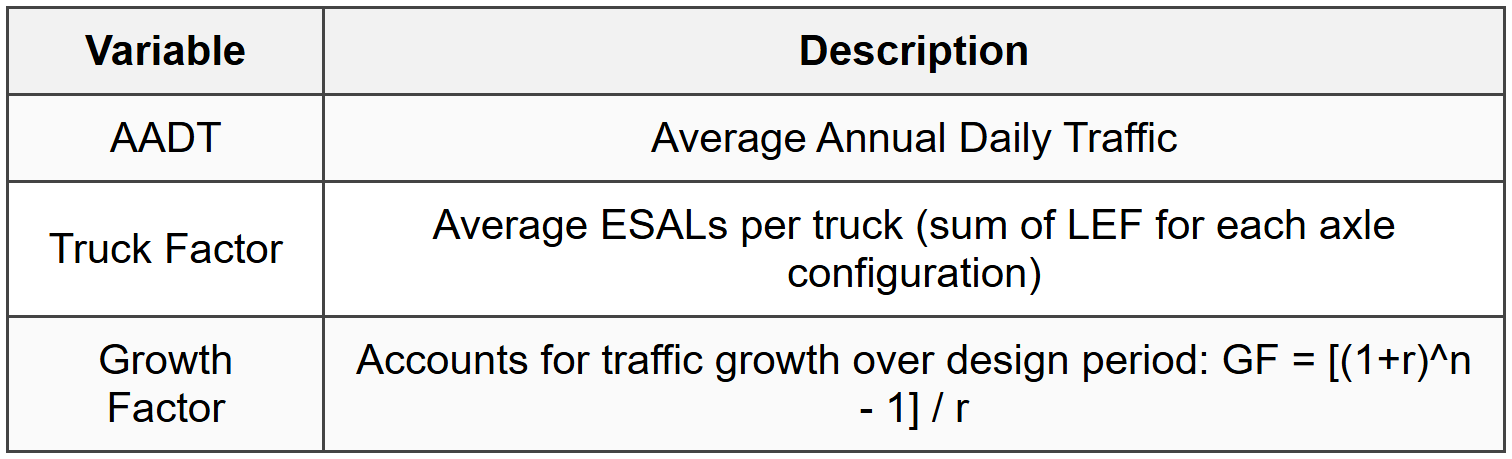
2.3 Load Equivalency Factors
- Single axle, 18 kips: LEF = 1.0 (standard reference)
- Single axle, 10 kips: LEF ≈ 0.08
- Single axle, 22 kips: LEF ≈ 2.2
- Tandem axle, 34 kips: LEF ≈ 1.0
- LEF increases exponentially with axle load (approximately fourth power law)
3. Flexible Pavement Design - AASHTO Method
3.1 AASHTO Design Equation
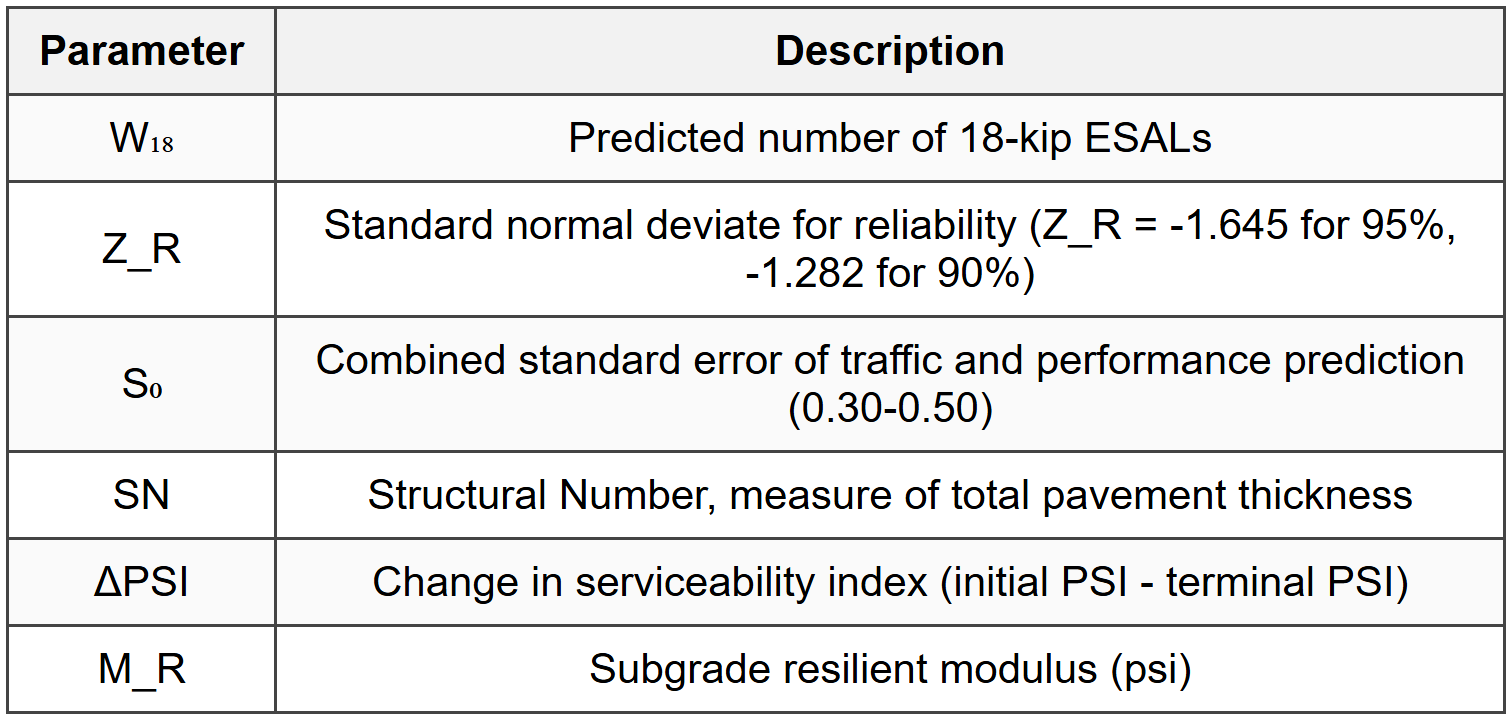
log₁₀(W₁₈) = Z_R × S₀ + 9.36 × log₁₀(SN + 1) - 0.20 + [log₁₀(ΔPSI / (4.2 - 1.5))] / [0.40 + 1094 / (SN + 1)^5.19] + 2.32 × log₁₀(M_R) - 8.07
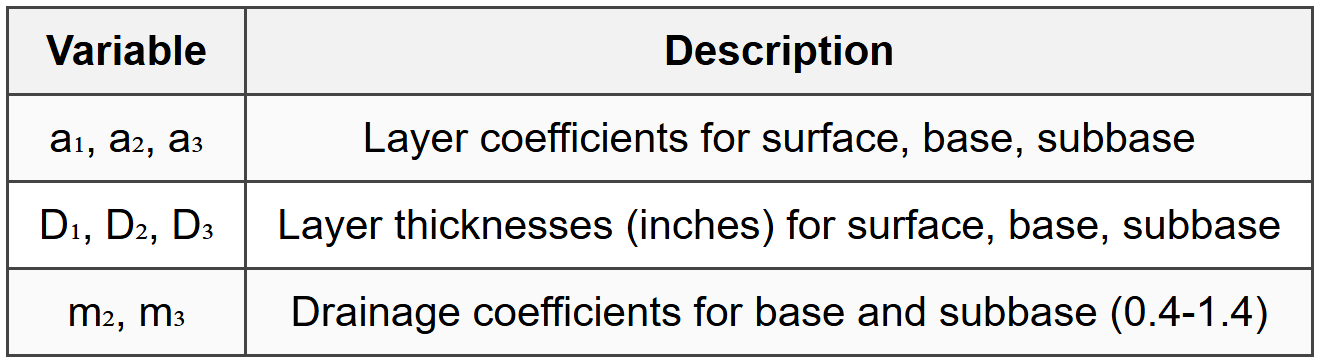
3.2 AASHTO Parameters
3.3 Serviceability Index (PSI)

3.4 Structural Number (SN)
SN = a₁D₁ + a₂D₂m₂ + a₃D₃m₃
3.5 Layer Coefficients

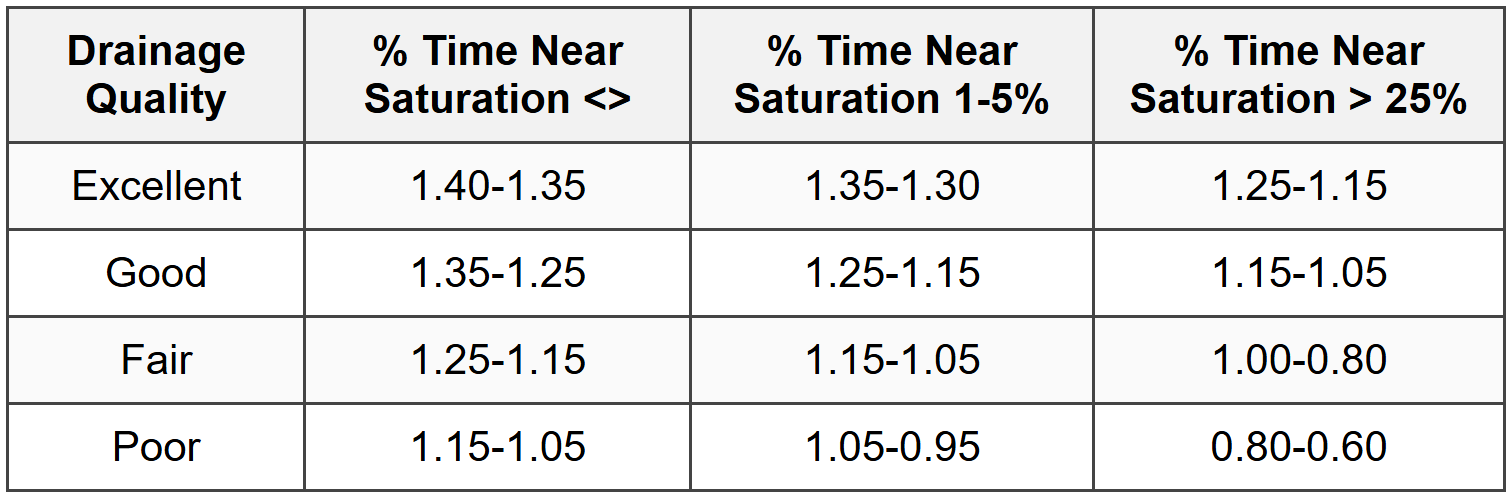
3.6 Drainage Coefficients (m_i)
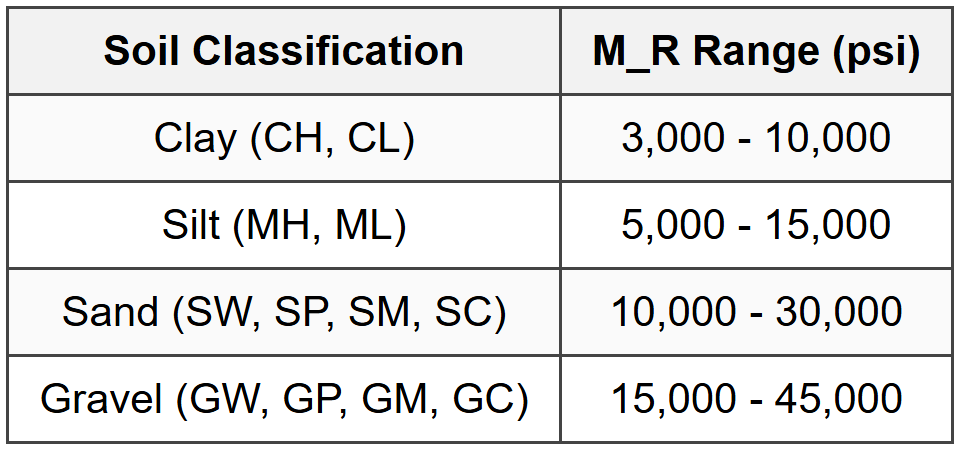
3.7 Resilient Modulus (M_R)
M_R (psi) = 1,500 × CBR (correlation for fine-grained soils)
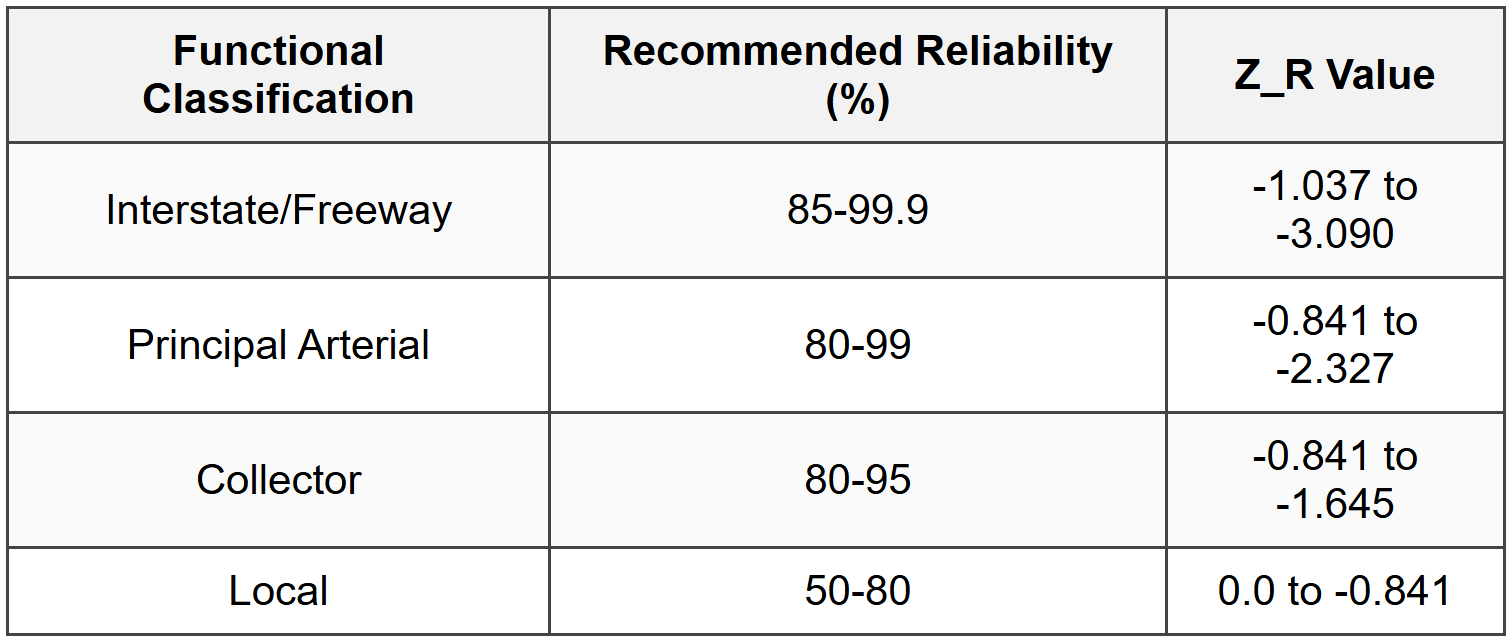
3.8 Reliability Levels
4. Rigid Pavement Design - AASHTO Method
4.1 AASHTO Rigid Pavement Equation
log₁₀(W₁₈) = Z_R × S₀ + 7.35 × log₁₀(D + 1) - 0.06 + [log₁₀(ΔPSI / (4.5 - 1.5))] / [1 + 1.624 × 10^7 / (D + 1)^8.46] + (4.22 - 0.32p_t) × log₁₀[S'_c × C_d × (D^0.75 - 1.132)] / [215.63 × J × (D^0.75 - 18.42/(E_c/k)^0.25)]
4.2 Rigid Pavement Parameters

4.3 Load Transfer Coefficient (J)

4.4 Modulus of Subgrade Reaction (k)
Effective k = k × (1 + subbase correction)

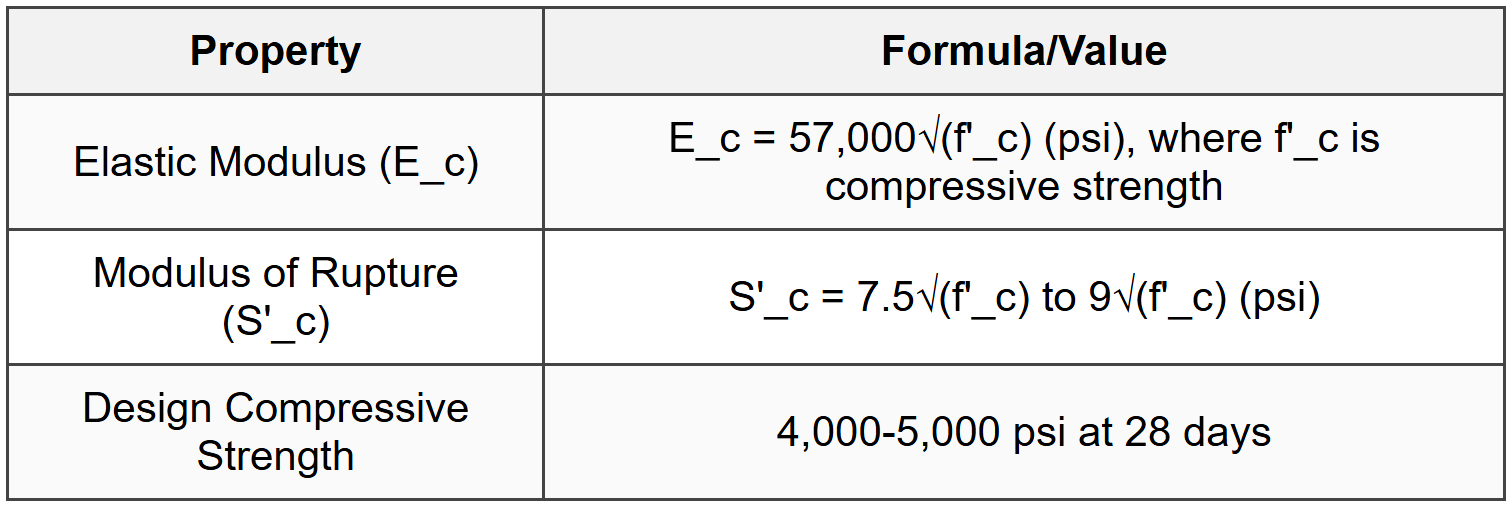
4.5 Concrete Properties
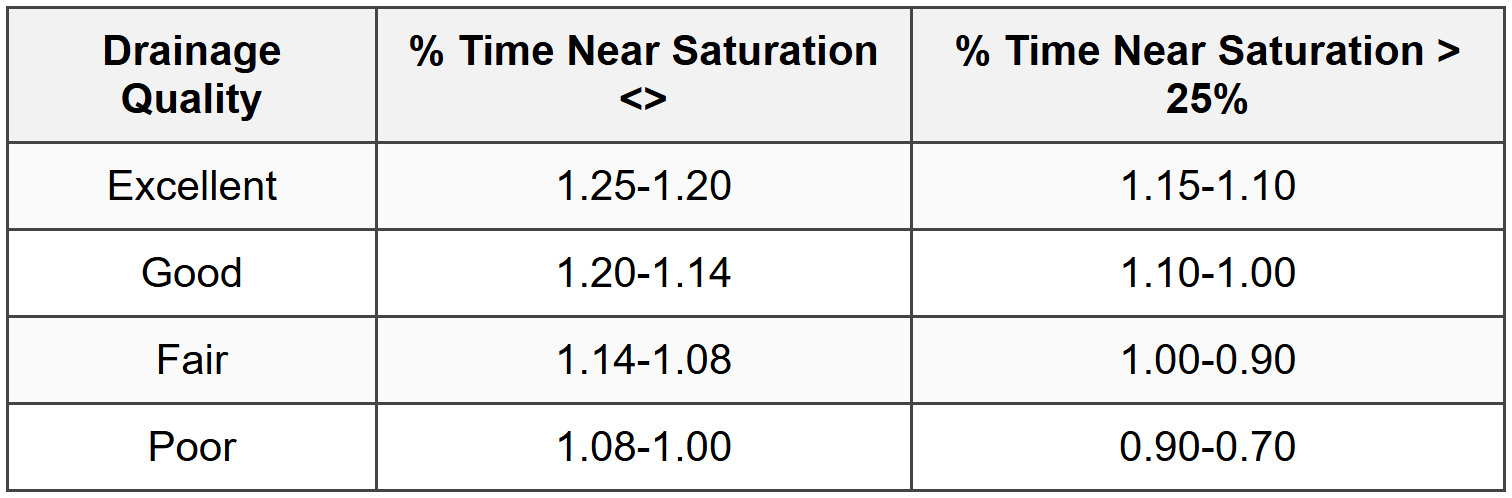
4.6 Rigid Pavement Drainage Coefficient (C_d)
4.7 Joint Spacing and Design

5. Mechanistic-Empirical Pavement Design (MEPDG)
5.1 MEPDG Overview

5.2 Flexible Pavement Distress Criteria

5.3 Rigid Pavement Distress Criteria

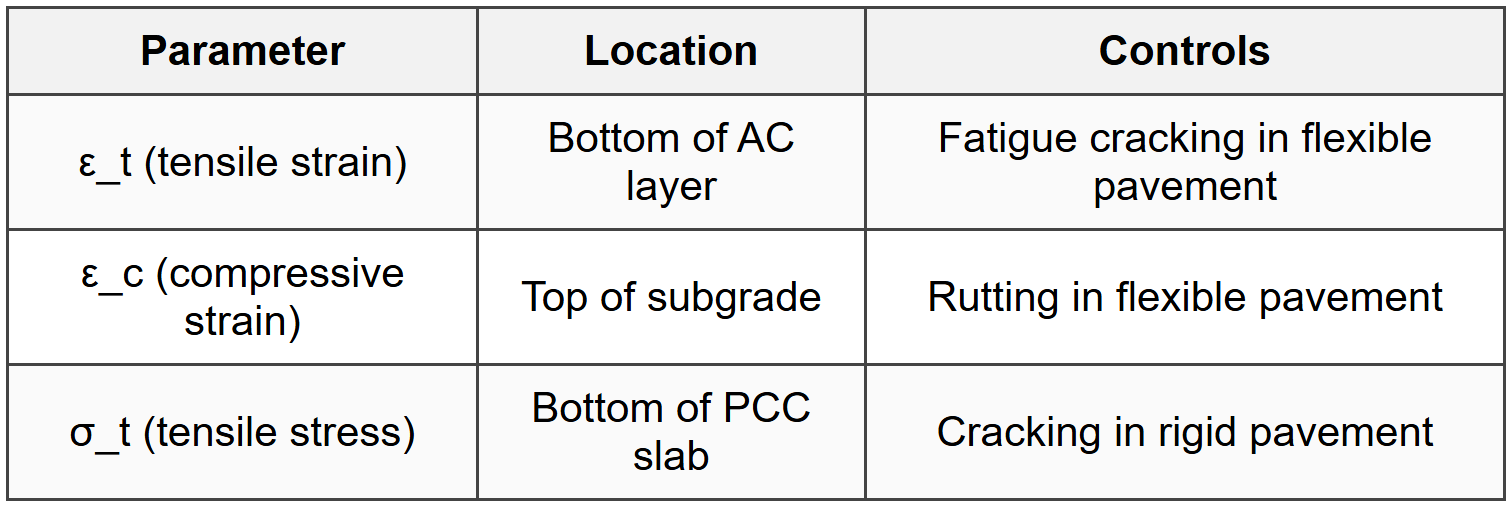
5.4 Critical Strains and Stresses
6. Asphalt Mix Design
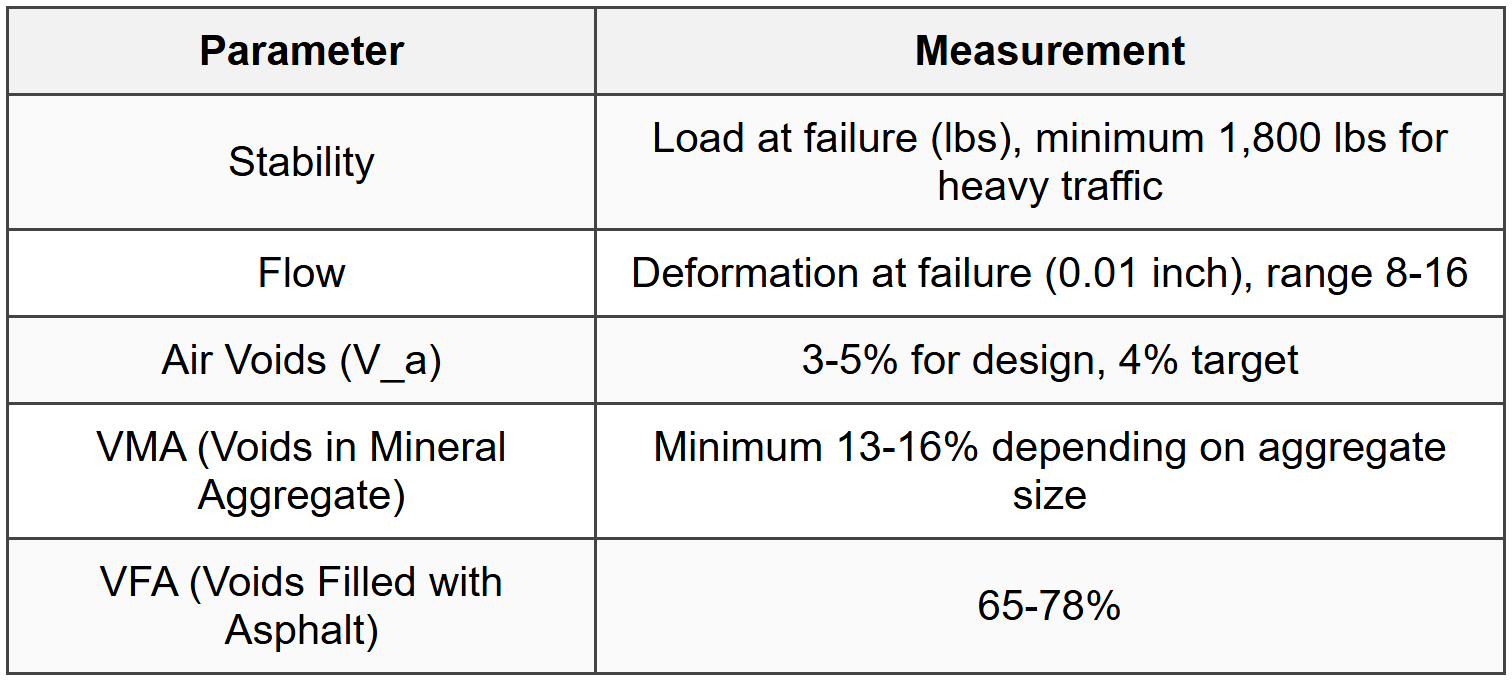
6.1 Marshall Mix Design Method
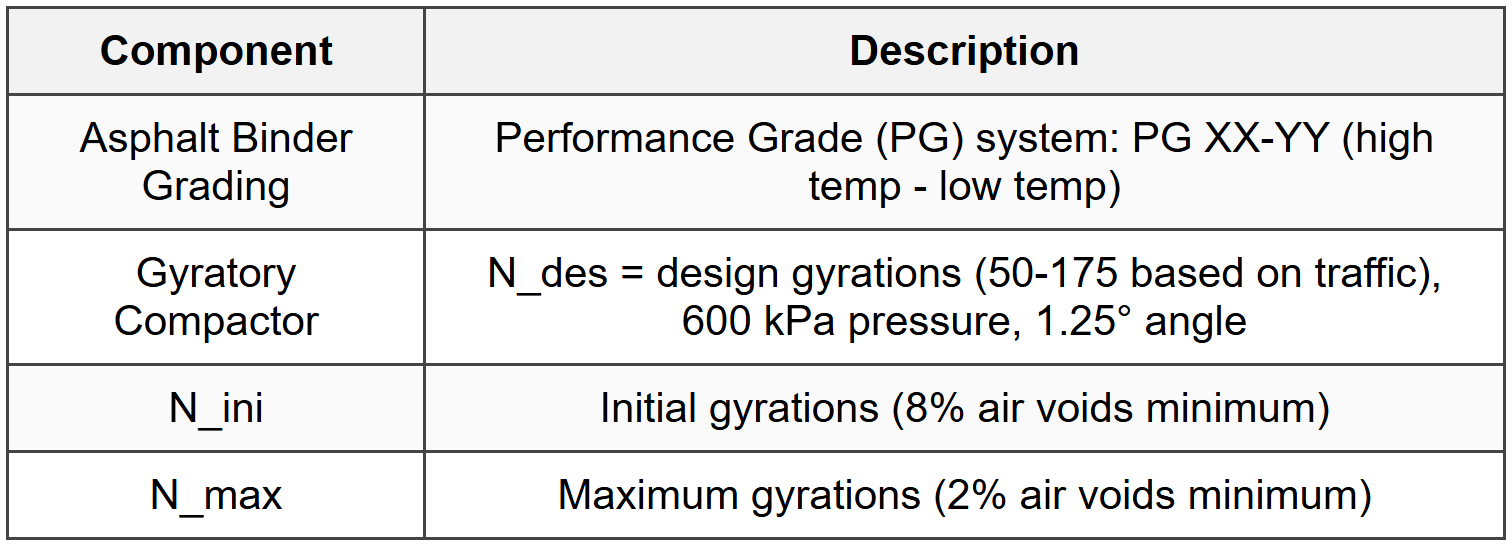
6.2 Superpave Mix Design
6.3 Asphalt Volumetric Properties
V_a = (1 - G_mb / G_mm) × 100%
VMA = 100 - (G_mb × P_s / G_sb)
VFA = 100 × (VMA - V_a) / VMA

6.4 Performance Grade (PG) Asphalt Binder

7. Pavement Distresses and Evaluation
7.1 Flexible Pavement Distresses

7.2 Rigid Pavement Distresses

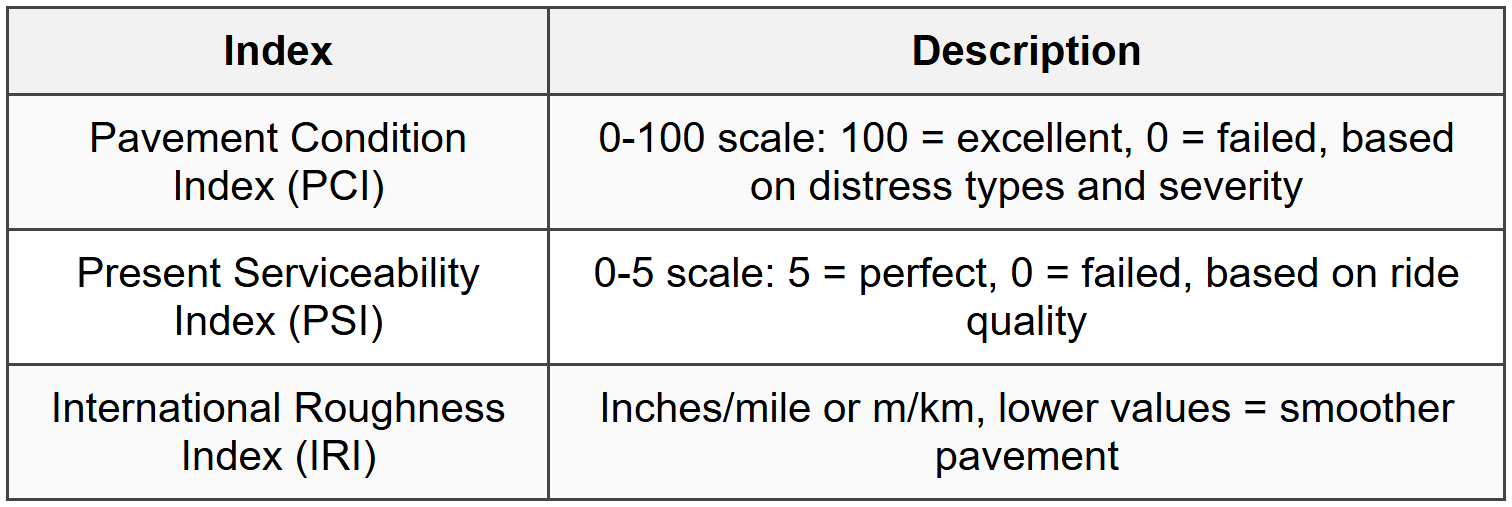
7.3 Pavement Condition Indices
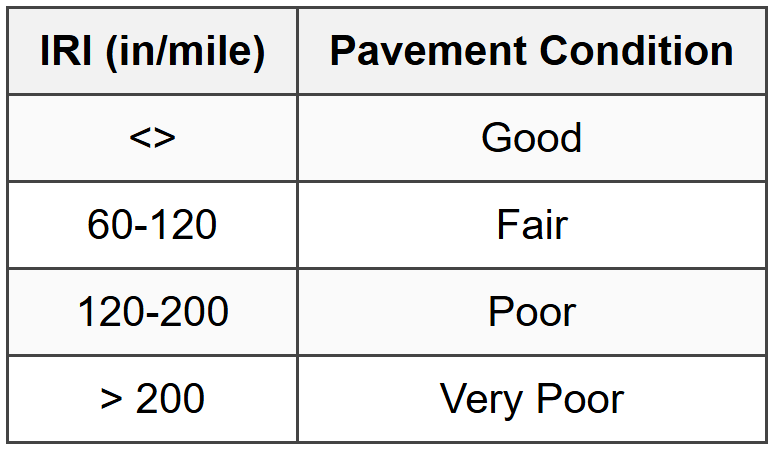
7.4 IRI Values and Pavement Condition
8. Pavement Rehabilitation and Maintenance
8.1 Maintenance Strategies

8.2 Flexible Pavement Rehabilitation

8.3 Rigid Pavement Rehabilitation

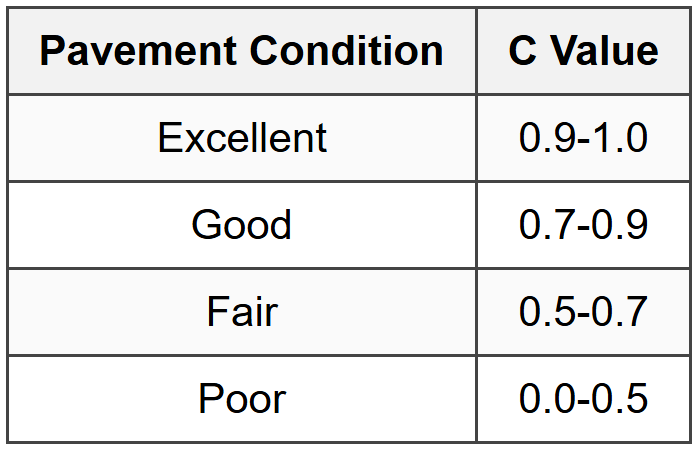
8.4 Overlay Design
SN_overlay = SN_required - SN_existing × C
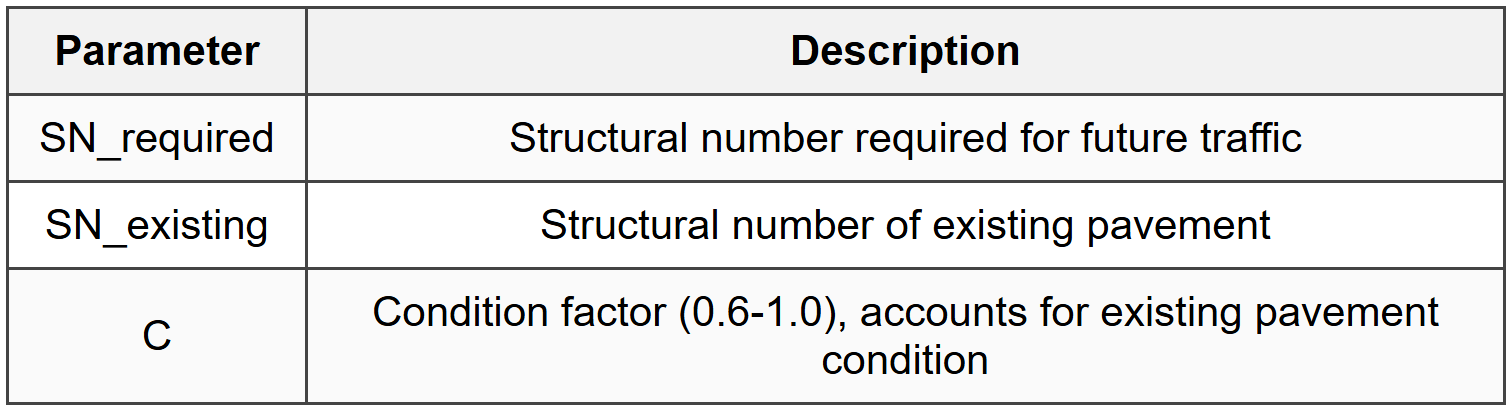
8.5 Condition Factor (C) for Overlay Design
9. Soil Support and Stabilization
9.1 California Bearing Ratio (CBR)
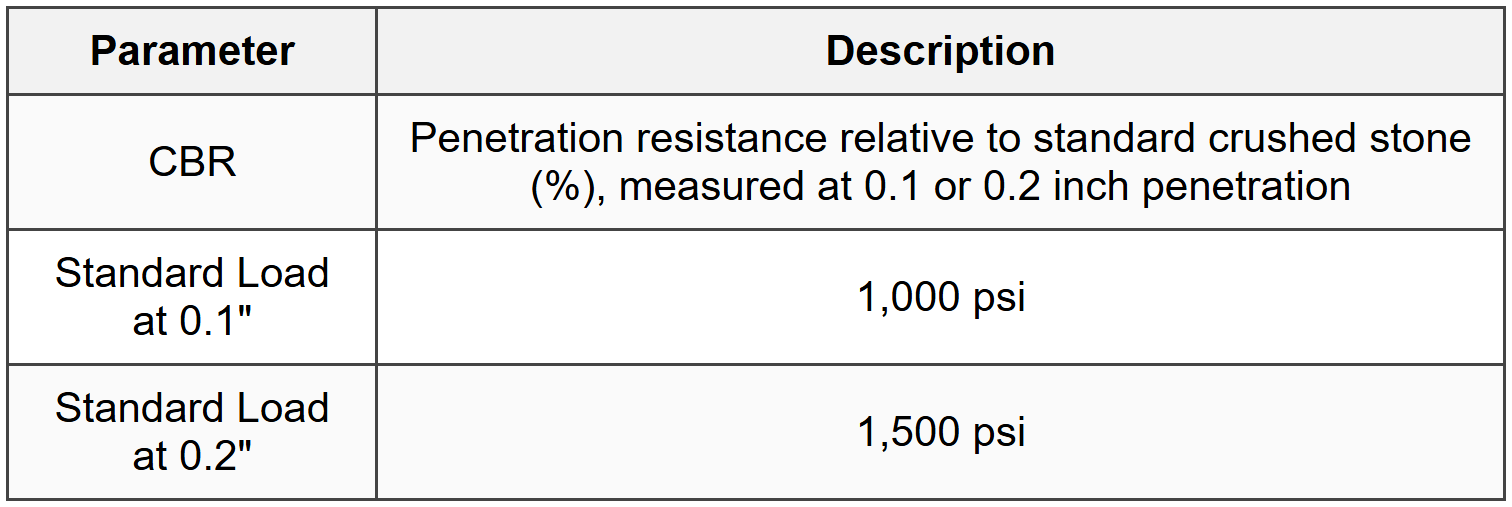
CBR = (Test Load / Standard Load) × 100%
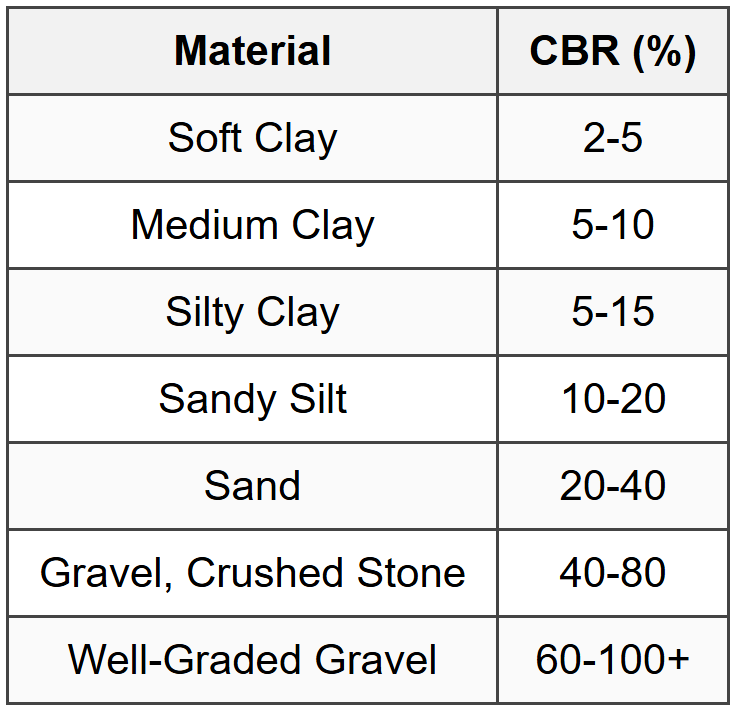
9.2 Typical CBR Values
9.3 Soil Stabilization Methods

9.4 Frost Depth and Action

10. Construction and Quality Control
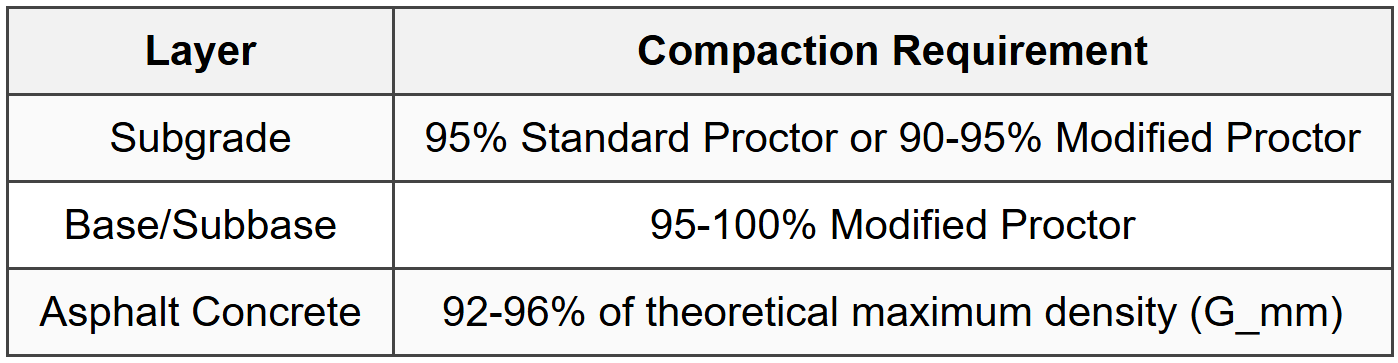
10.1 Compaction Requirements
10.2 Asphalt Placement

10.3 Concrete Placement

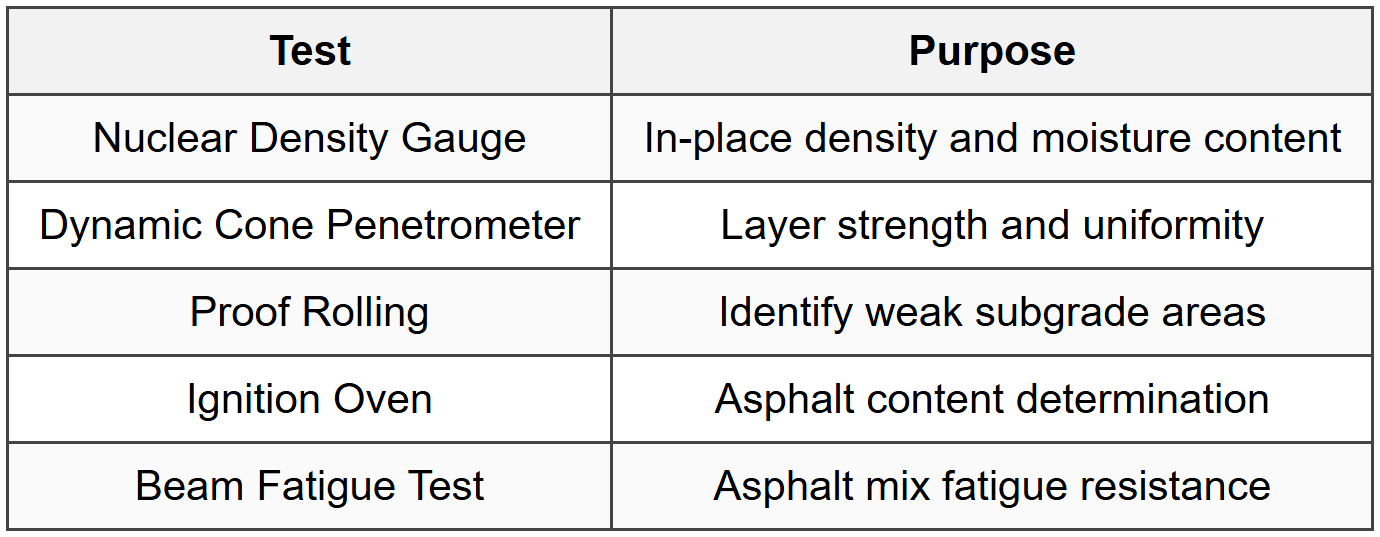
10.4 Quality Control Tests
The document Cheatsheet: Pavement Design is a part of the PE Exam Course Civil Engineering (PE Civil).
All you need of PE Exam at this link: PE Exam
About this Document

Apr 20, 2026 Last updated
Related Exams
Document Description: Cheatsheet: Pavement Design for PE Exam 2026 is part of Civil Engineering (PE Civil) preparation. The notes and questions for Cheatsheet: Pavement Design have been prepared according to the PE Exam exam syllabus. Information about Cheatsheet: Pavement Design covers topics like and Cheatsheet: Pavement Design Example, for PE Exam 2026 Exam. Find important definitions, questions, notes, meanings, examples, exercises and tests below for Cheatsheet: Pavement Design.
Introduction of Cheatsheet: Pavement Design in English is available as part of our Civil Engineering (PE Civil) for PE Exam & Cheatsheet: Pavement Design in Hindi for Civil Engineering (PE Civil) course. Download more important topics related with notes, lectures and mock test series for PE Exam Exam by signing up for free. PE Exam: Cheatsheet: Pavement Design
Description
Cheatsheet: Pavement Design of Civil Engineering to help you remember important concepts with short tricks. Start learning for PE Exam exam & improve retention with EduRev.
Information about Cheatsheet: Pavement Design
In this doc you can find the meaning of Cheatsheet: Pavement Design defined & explained in the simplest way possible. Besides explaining types of Cheatsheet: Pavement Design theory, EduRev gives you an ample number of questions to practice Cheatsheet: Pavement Design tests, examples and also practice PE Exam tests



Related Searches
mock tests for examination, Exam, Viva Questions, Extra Questions, pdf , Semester Notes, Important questions, video lectures, past year papers, study material, MCQs, shortcuts and tricks, Cheatsheet: Pavement Design, Cheatsheet: Pavement Design, Previous Year Questions with Solutions, practice quizzes, Summary, Sample Paper, Cheatsheet: Pavement Design, Objective type Questions, ppt, Free;