AWS Solutions Architect Exam > AWS Solutions Architect Notes > : Associate Level > Cheat Sheet: ElastiCache — Redis vs Memcached
Cheat Sheet: ElastiCache — Redis vs Memcached


1. ElastiCache Overview
1.1 Service Definition
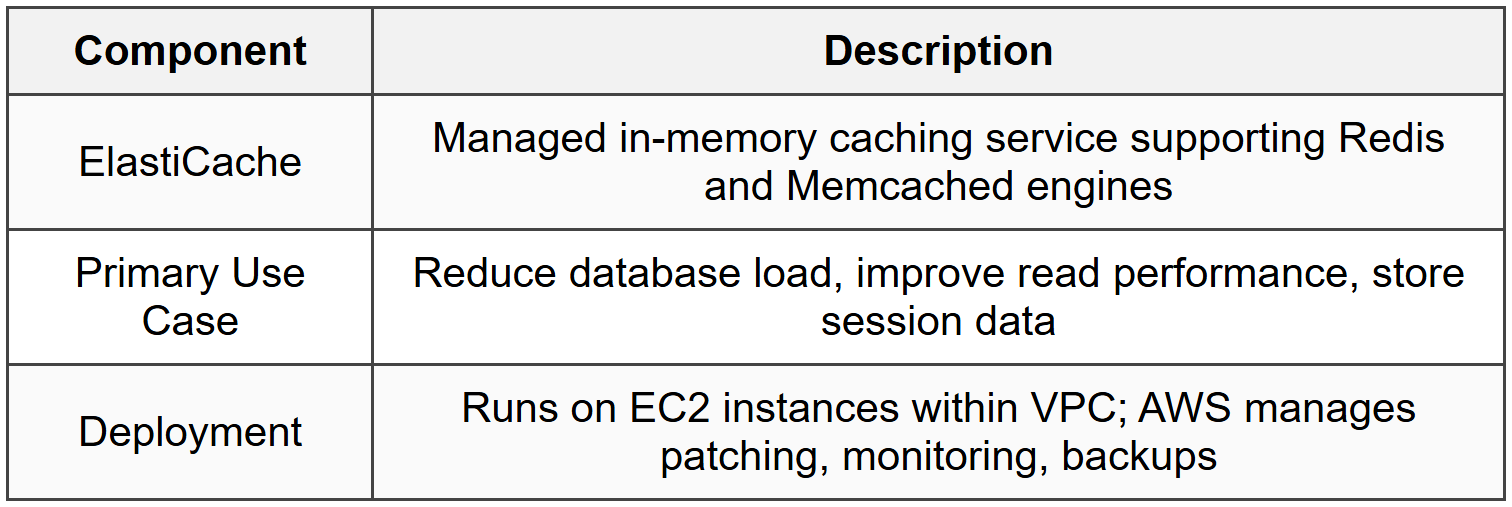
1.2 Key Benefits
- Sub-millisecond latency for read/write operations
- Automatic failure detection and recovery
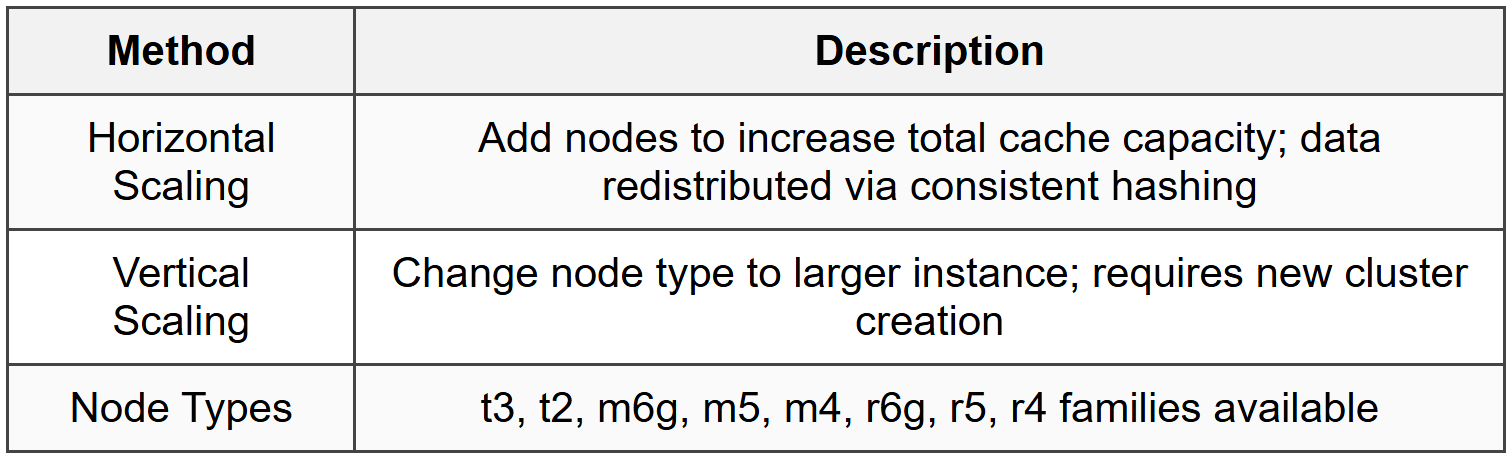
- Scales horizontally (add read replicas) and vertically (change node type)
- Integration with CloudWatch for monitoring
- Supports encryption at rest and in transit
2. Redis vs Memcached Comparison
2.1 Core Differences
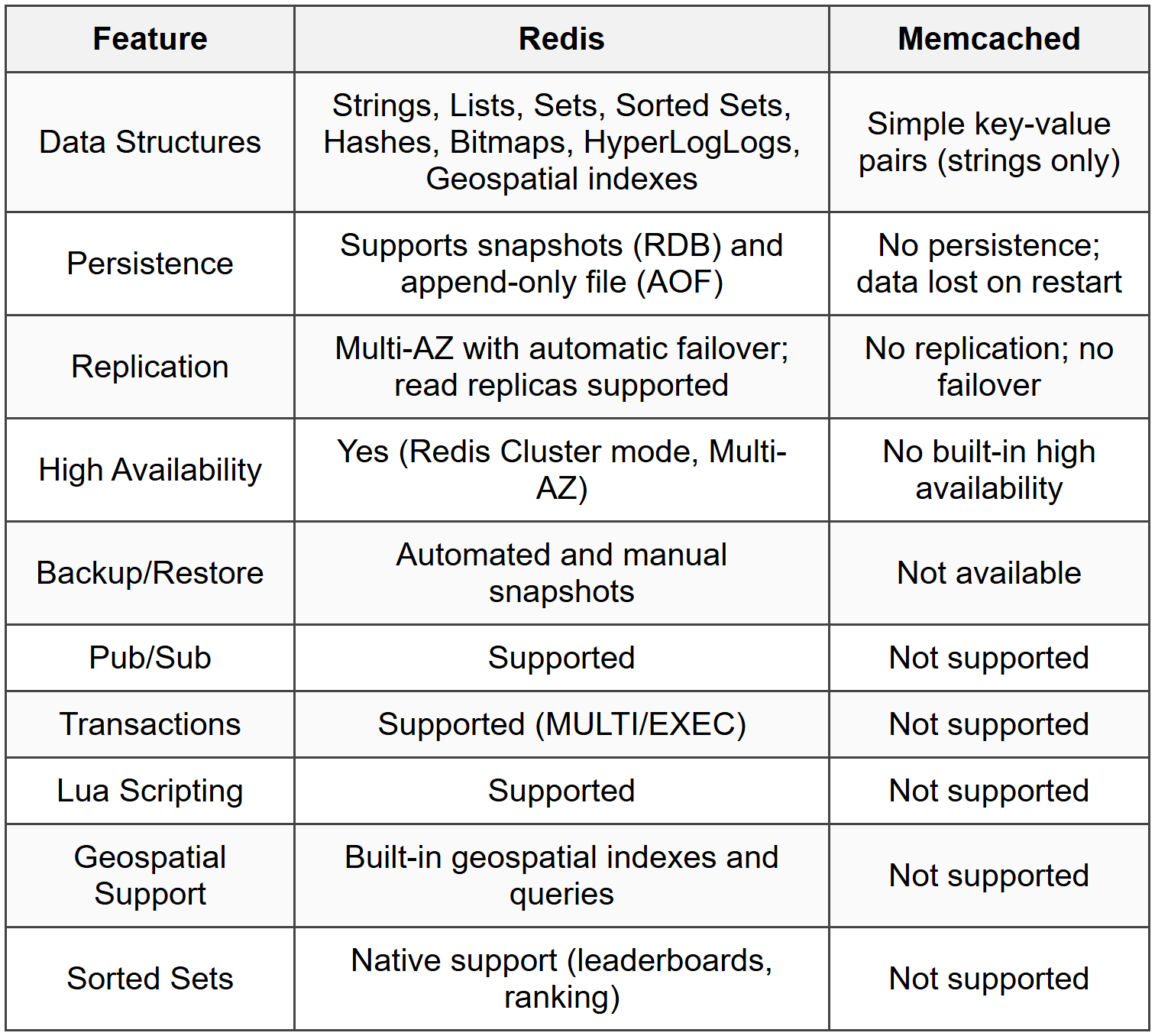
2.2 Architecture Differences
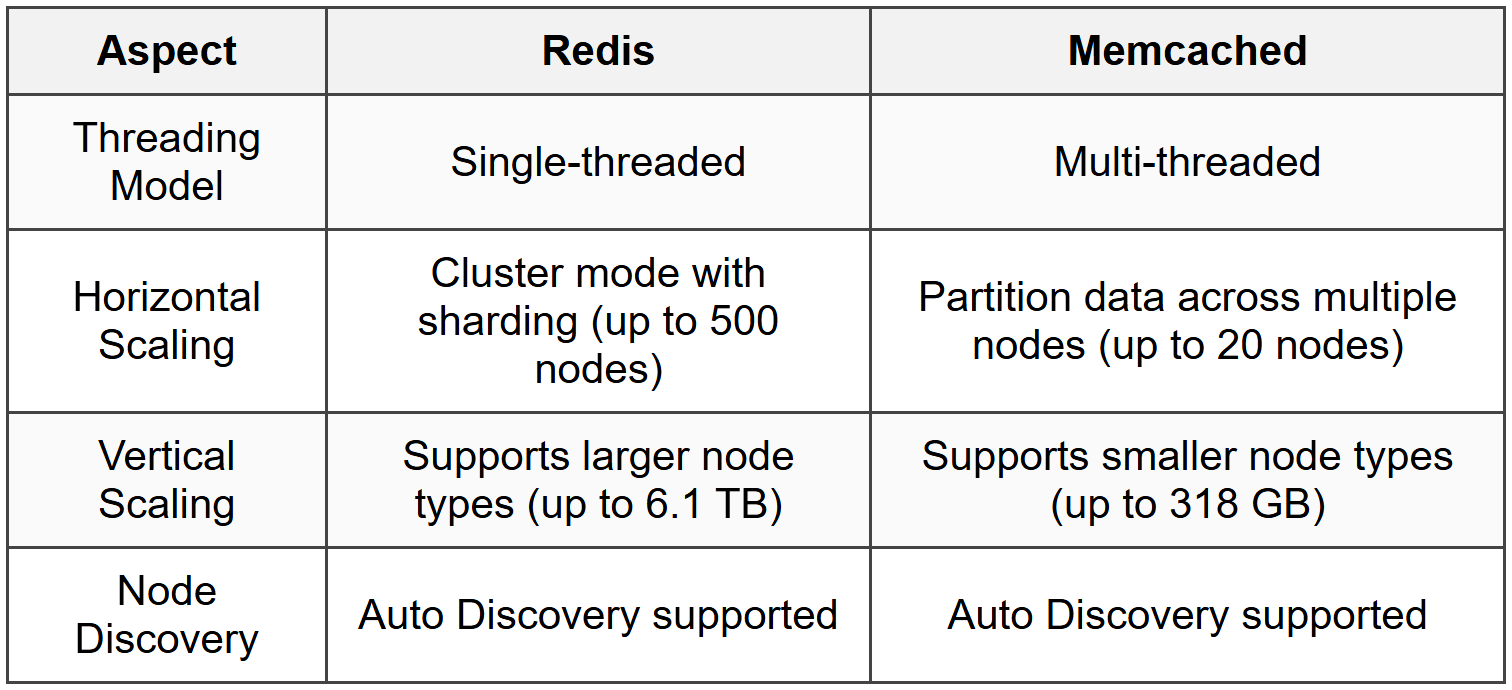
2.3 Performance Characteristics
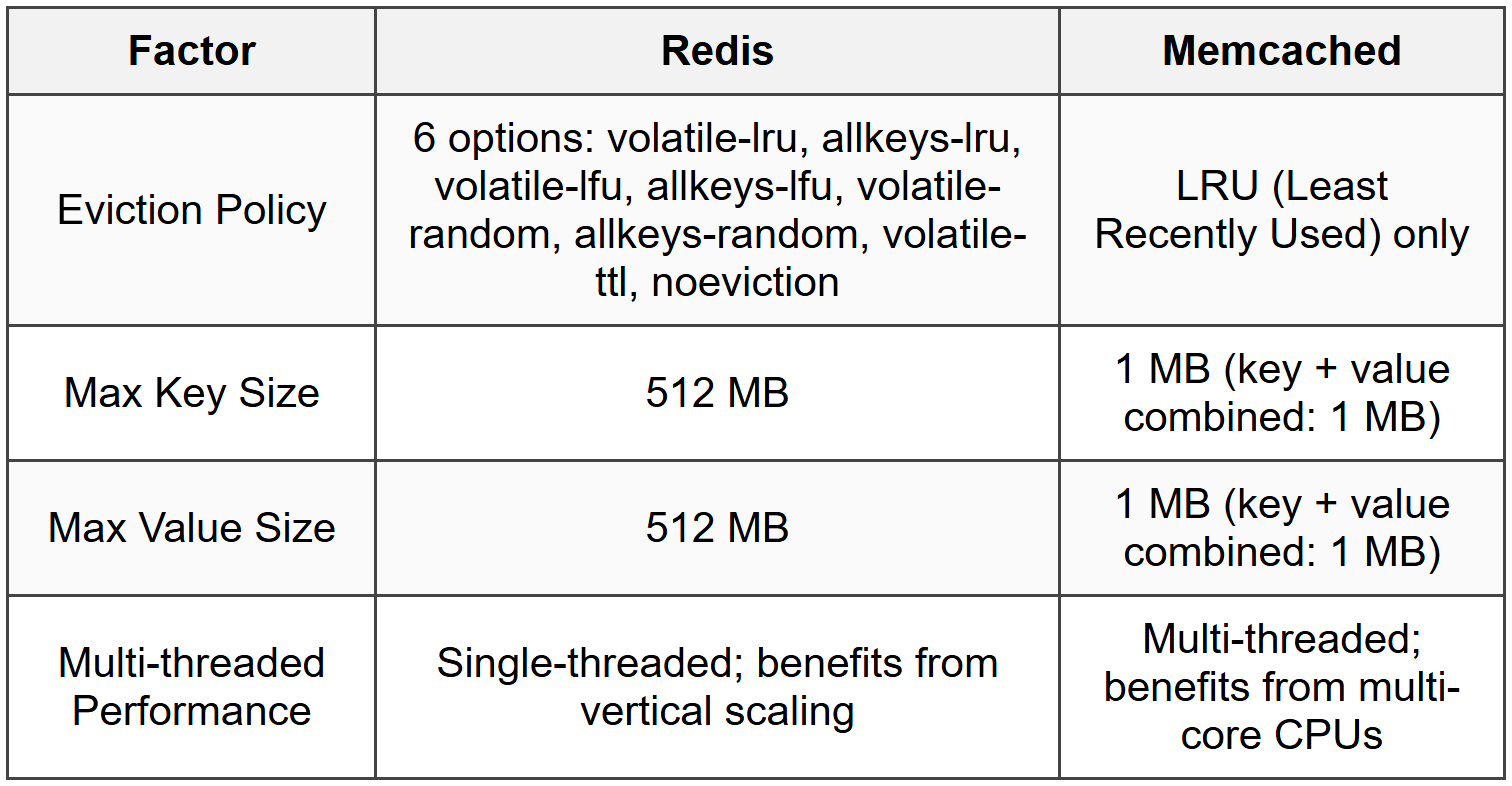
3. Redis-Specific Features
3.1 Data Persistence
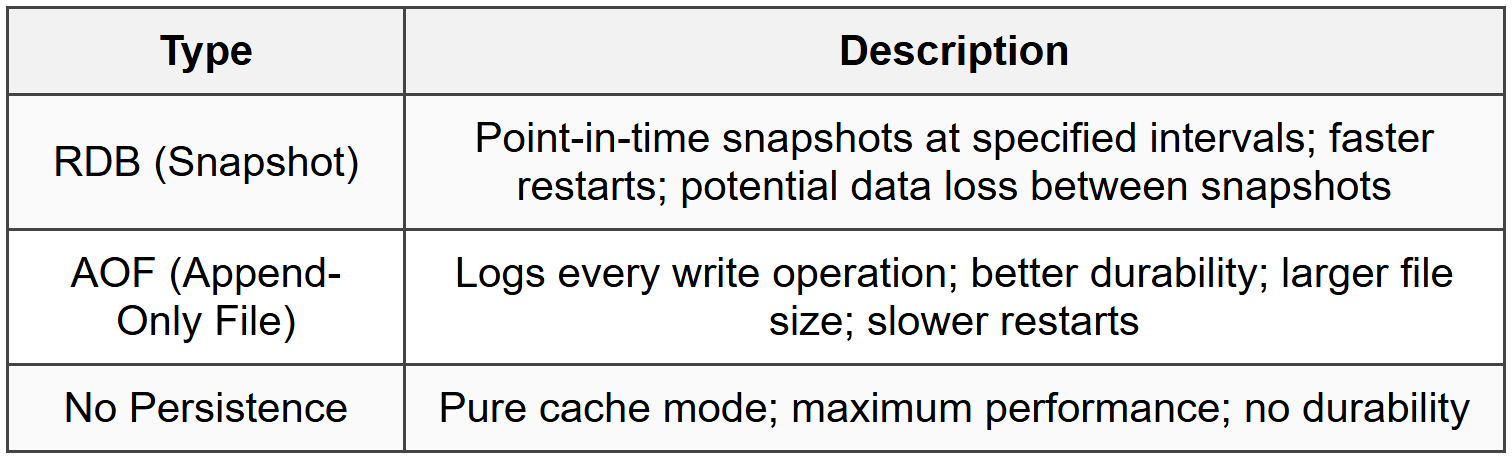
3.2 Redis Cluster Modes
3.2.1 Cluster Mode Disabled
- Single shard (node group) with 1 primary and up to 5 read replicas
- All data stored on single primary node
- Read replicas for read scaling and high availability
- Multi-AZ automatic failover available
- Suitable for smaller datasets that fit on single node
3.2.2 Cluster Mode Enabled
- Data partitioned across multiple shards (1-500 shards)
- Each shard has 1 primary and up to 5 read replicas
- Supports up to 500 nodes total
- Horizontal scaling by adding/removing shards
- Online resharding to change shard configuration
- 16,384 hash slots distributed across shards
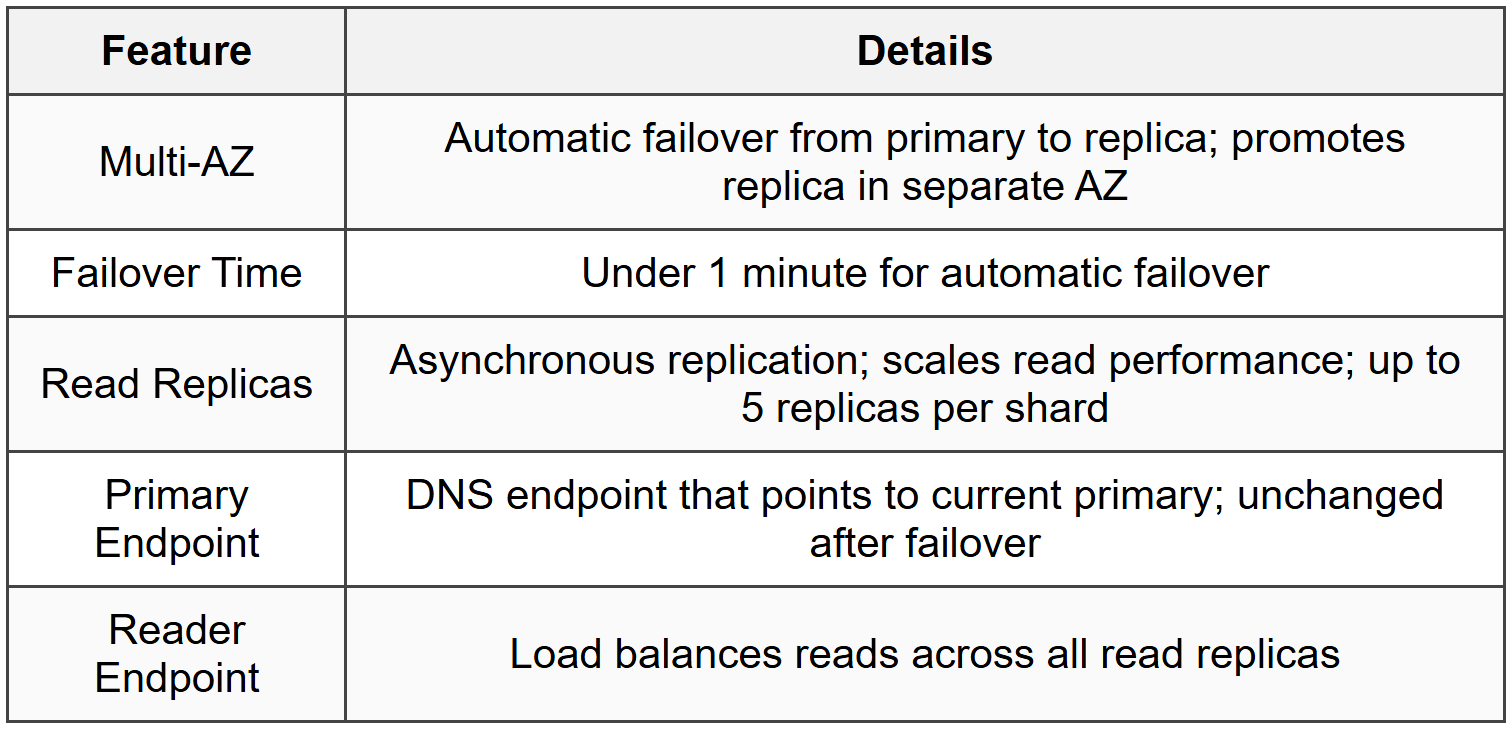
3.3 Redis Replication and Failover
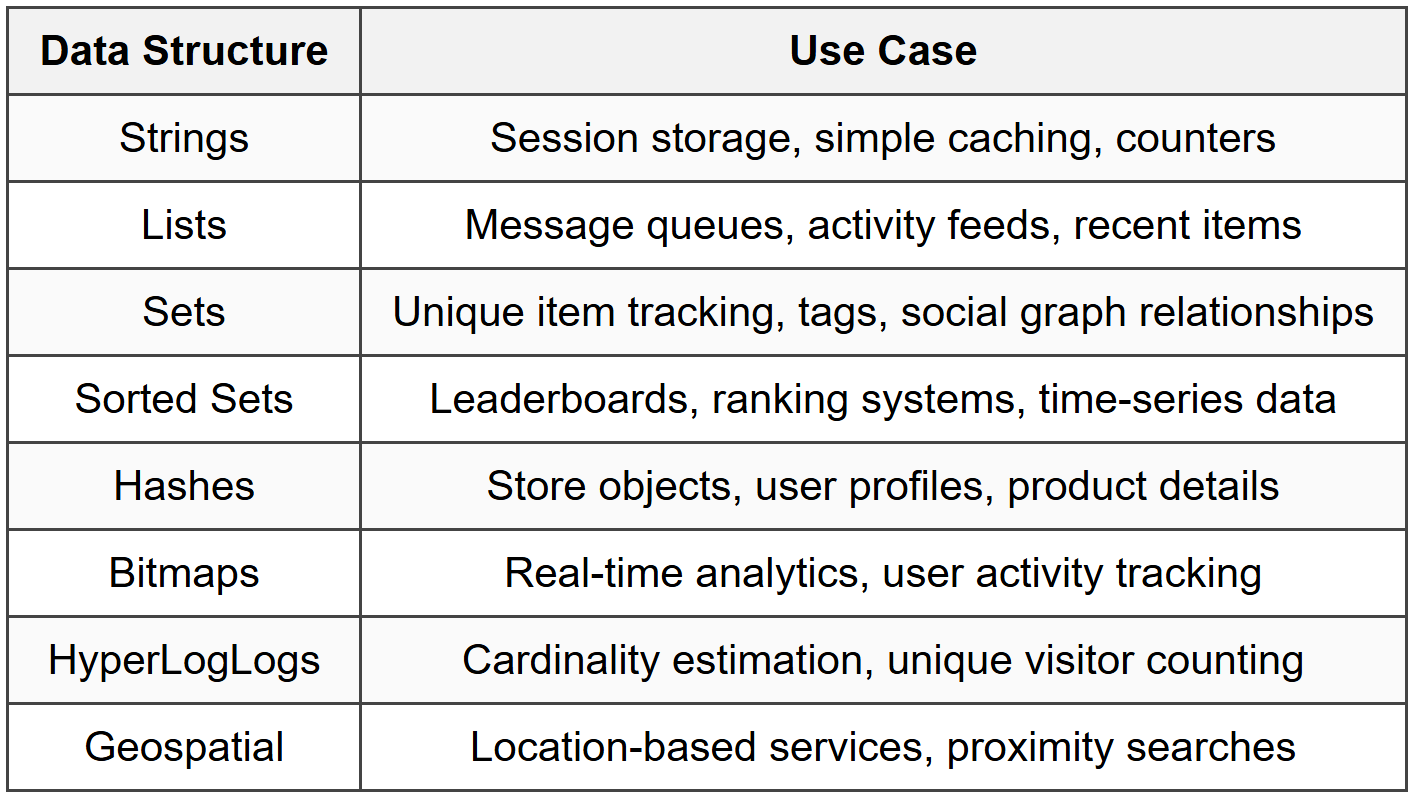
3.4 Redis Data Structures Use Cases
3.5 Redis Pub/Sub
- Publish messages to channels; multiple subscribers receive messages
- Real-time messaging and notifications
- Fire-and-forget model; messages not persisted
- Pattern-based subscriptions (wildcards supported)
3.6 Redis Transactions
- MULTI command starts transaction block
- EXEC command executes all queued commands atomically
- DISCARD command cancels transaction
- All commands execute sequentially without interruption
- No rollback mechanism; errors don't stop execution
4. Memcached-Specific Features
4.1 Architecture
- Multi-threaded: utilizes multiple CPU cores on single node
- Horizontal partitioning: client-side consistent hashing distributes keys
- No replication or persistence: simplest caching model
- Up to 20 nodes per cluster
- Auto Discovery: automatic node discovery for client configuration
4.2 Scaling
4.3 Auto Discovery
- Configuration endpoint provides list of all cache nodes
- Client libraries automatically discover and connect to nodes
- Handles node additions and removals automatically
- Reduces application code complexity for node management
5. Security Features
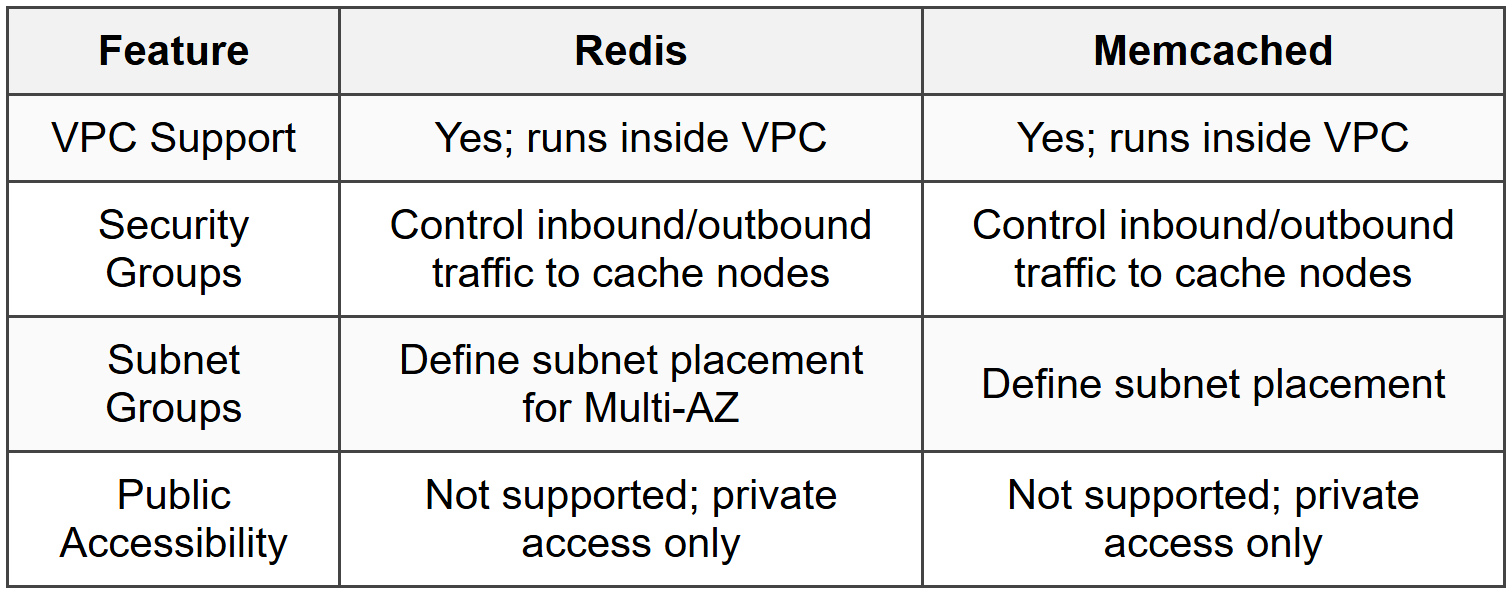
5.1 Network Security
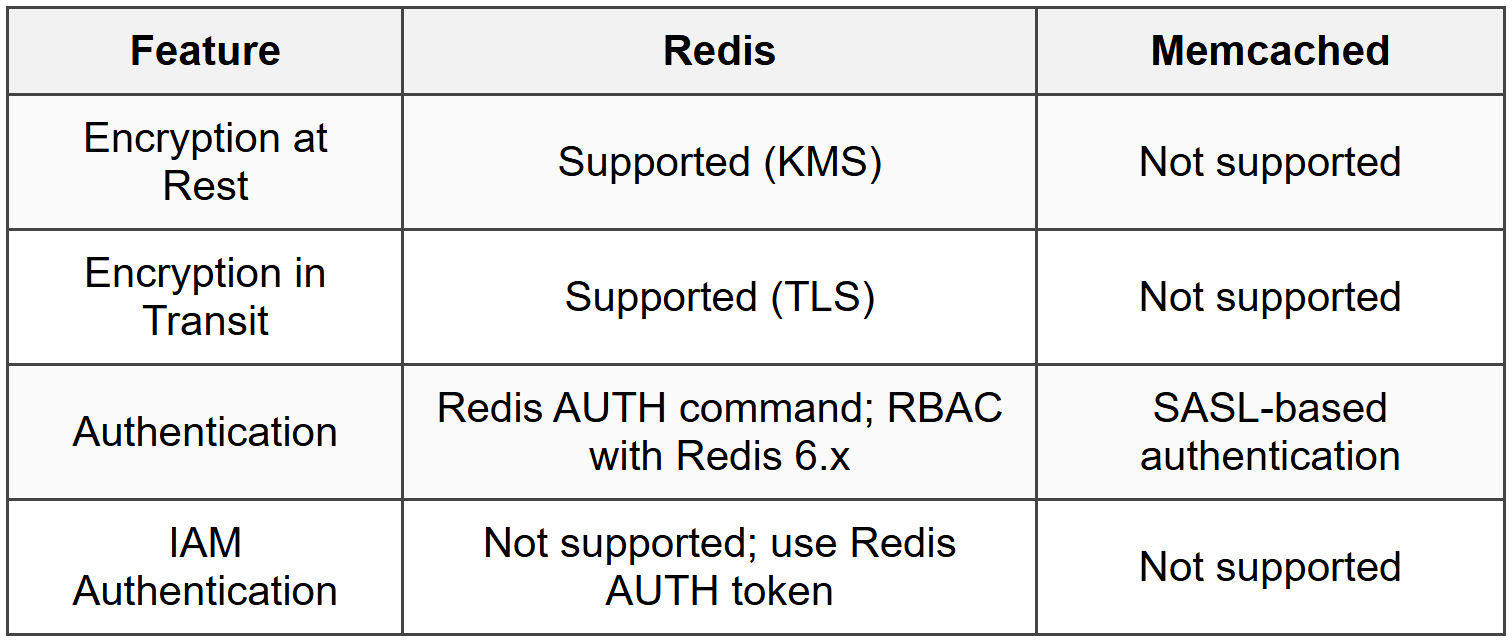
5.2 Encryption and Authentication
5.3 Redis RBAC (Role-Based Access Control)
- Available in Redis 6.x and later
- Define users with specific permissions
- Control access to commands and keys
- User groups for managing multiple users
- Default user can be disabled for enhanced security
6. Monitoring and Maintenance
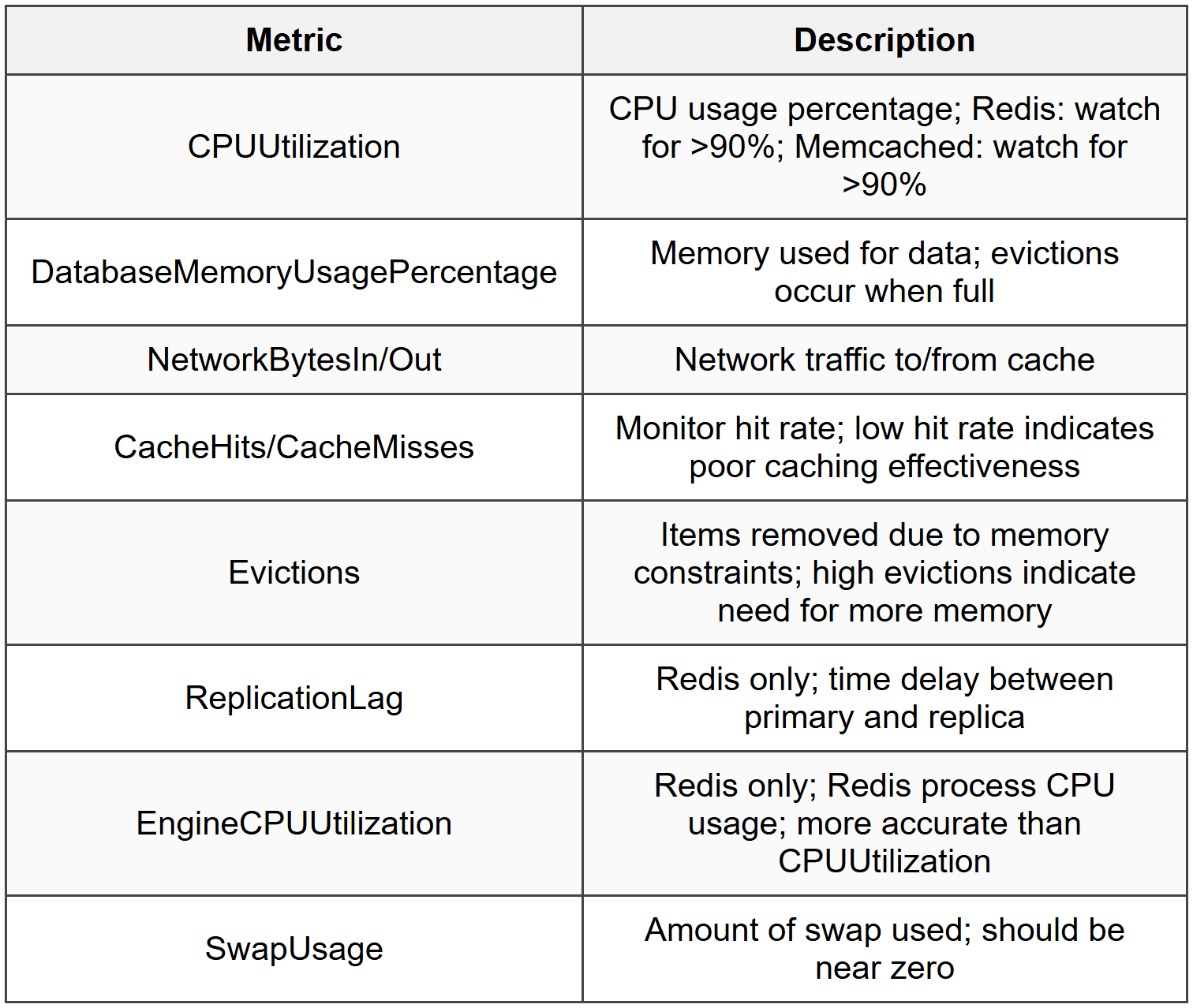
6.1 CloudWatch Metrics
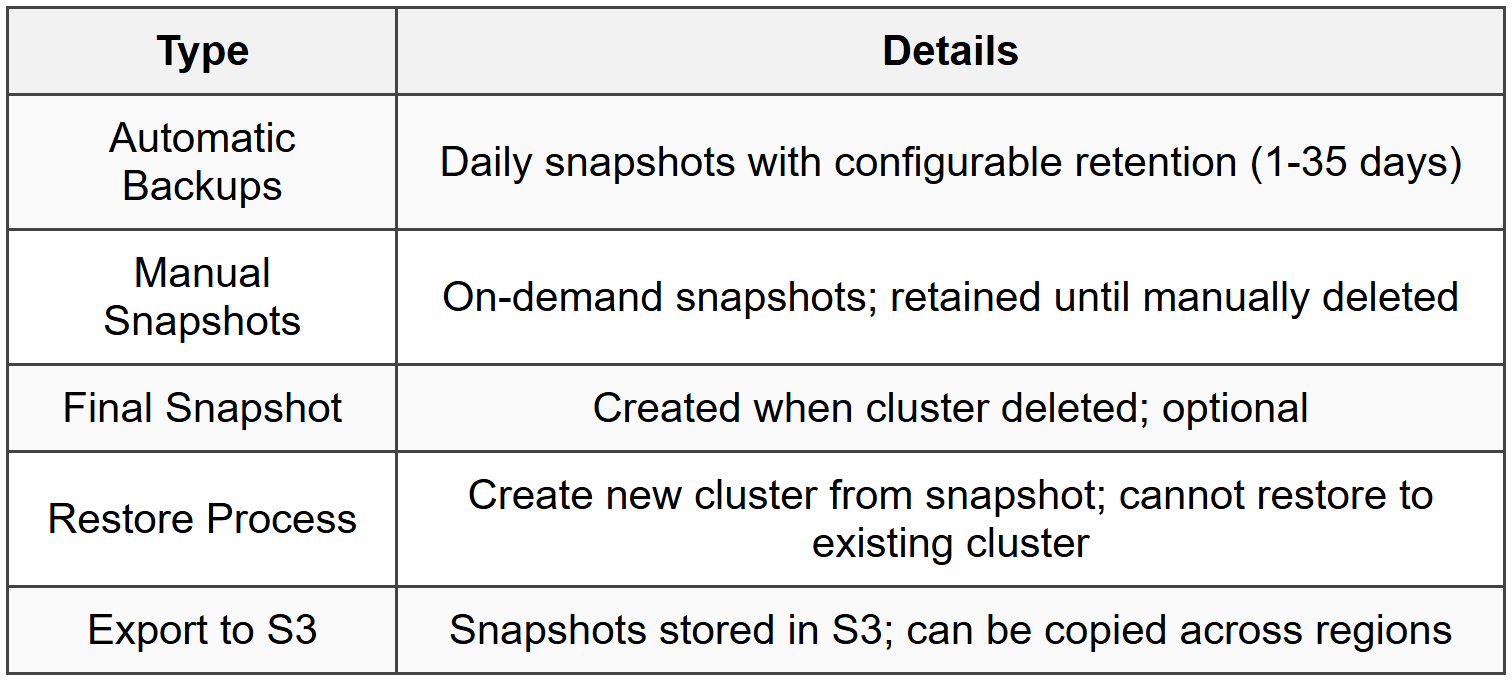
6.2 Backup and Restore (Redis Only)
6.3 Maintenance Windows
- Specify weekly maintenance window for patches and updates
- Minimum 60-minute window required
- Multi-AZ: updates performed on replicas first, then primary
- Service updates applied automatically or deferred
7. Use Case Selection Guide
7.1 Choose Redis When:
- Advanced data structures needed (lists, sets, sorted sets, hashes)
- Persistence required (survive restarts)
- High availability and automatic failover required
- Read replicas needed for scaling reads
- Backup and restore functionality required
- Pub/Sub messaging needed
- Transactions or Lua scripting required
- Geospatial data queries needed
- Leaderboards or ranking systems (sorted sets)
- Complex data types beyond simple key-value
- Multi-AZ replication required
- Encryption at rest and in transit required
7.2 Choose Memcached When:
- Simple key-value caching needed
- Multi-threaded performance important (utilize multi-core CPUs)
- Horizontal scaling with partitioning preferred
- No persistence required (ephemeral cache)
- No replication or high availability needed
- Simplest caching model desired
- Large nodes with multiple cores (maximizes multi-threading)
- Object caching (e.g., database query results, session data)
7.3 Common Use Cases by Feature
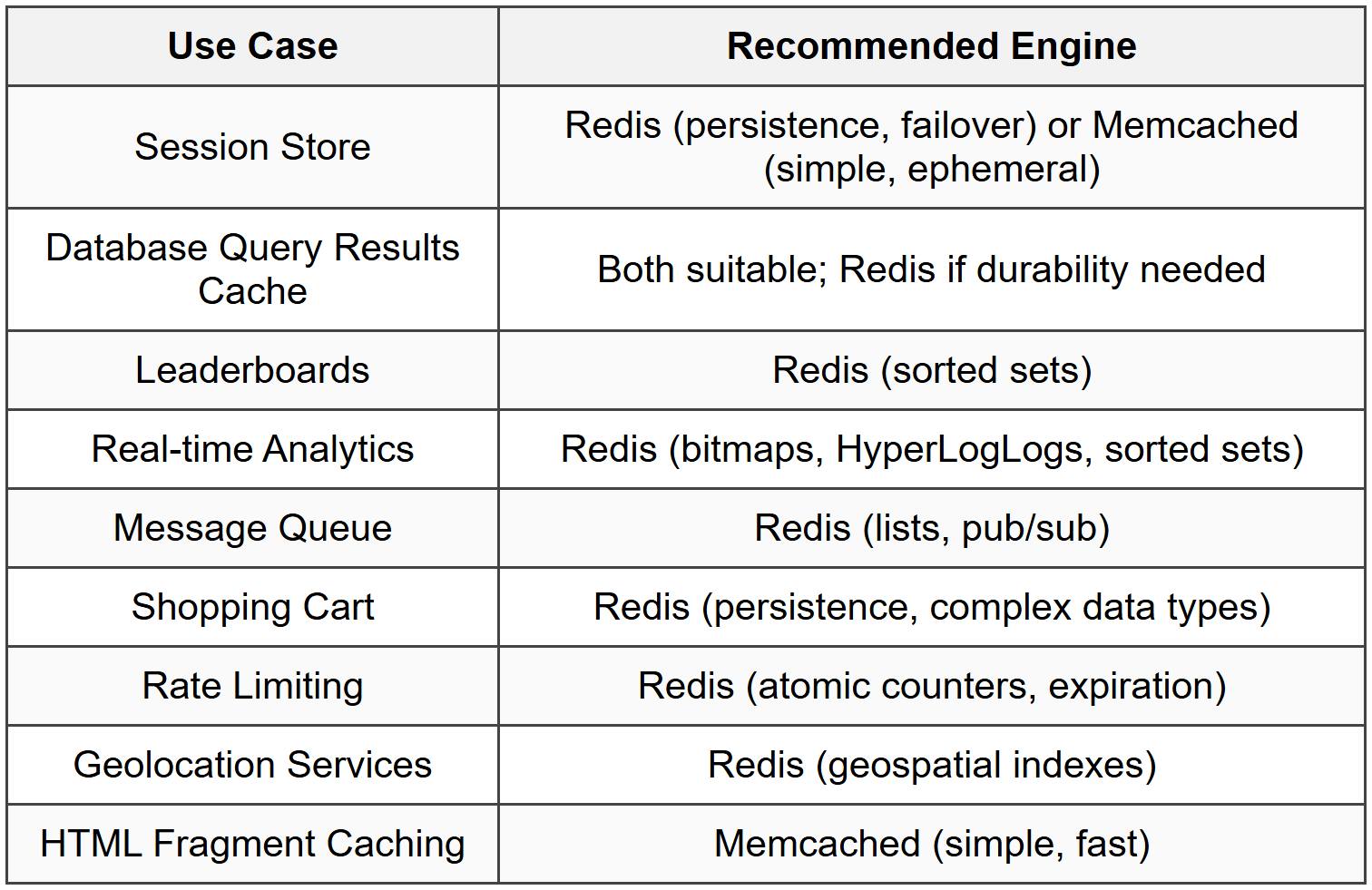
8. Cost Optimization
8.1 Node Types and Pricing Factors
- Node type determines hourly cost (larger instances = higher cost)
- On-Demand vs Reserved Nodes (1-year or 3-year commitments for savings)
- Data transfer costs for cross-AZ replication (Redis Multi-AZ)
- Snapshot storage costs (Redis only)
- Reserved nodes: up to 55% savings compared to On-Demand
8.2 Right-Sizing
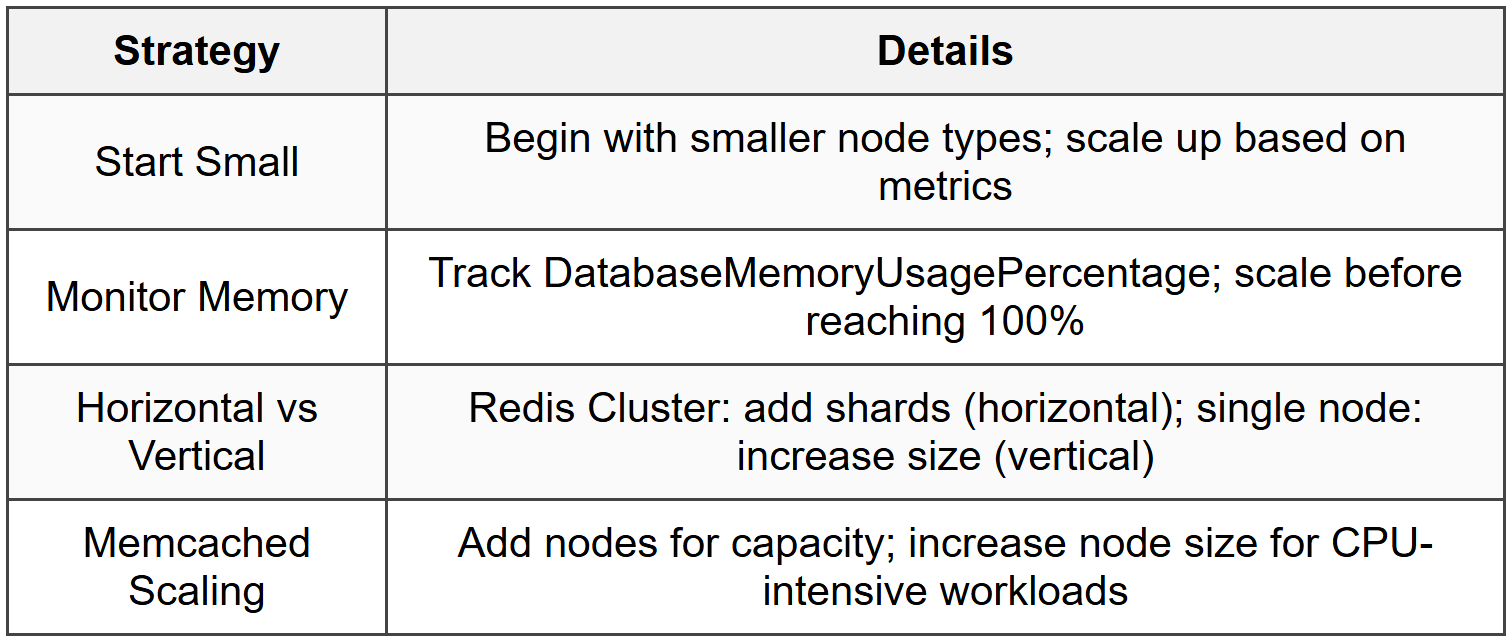
9. Limitations and Quotas
9.1 Service Limits
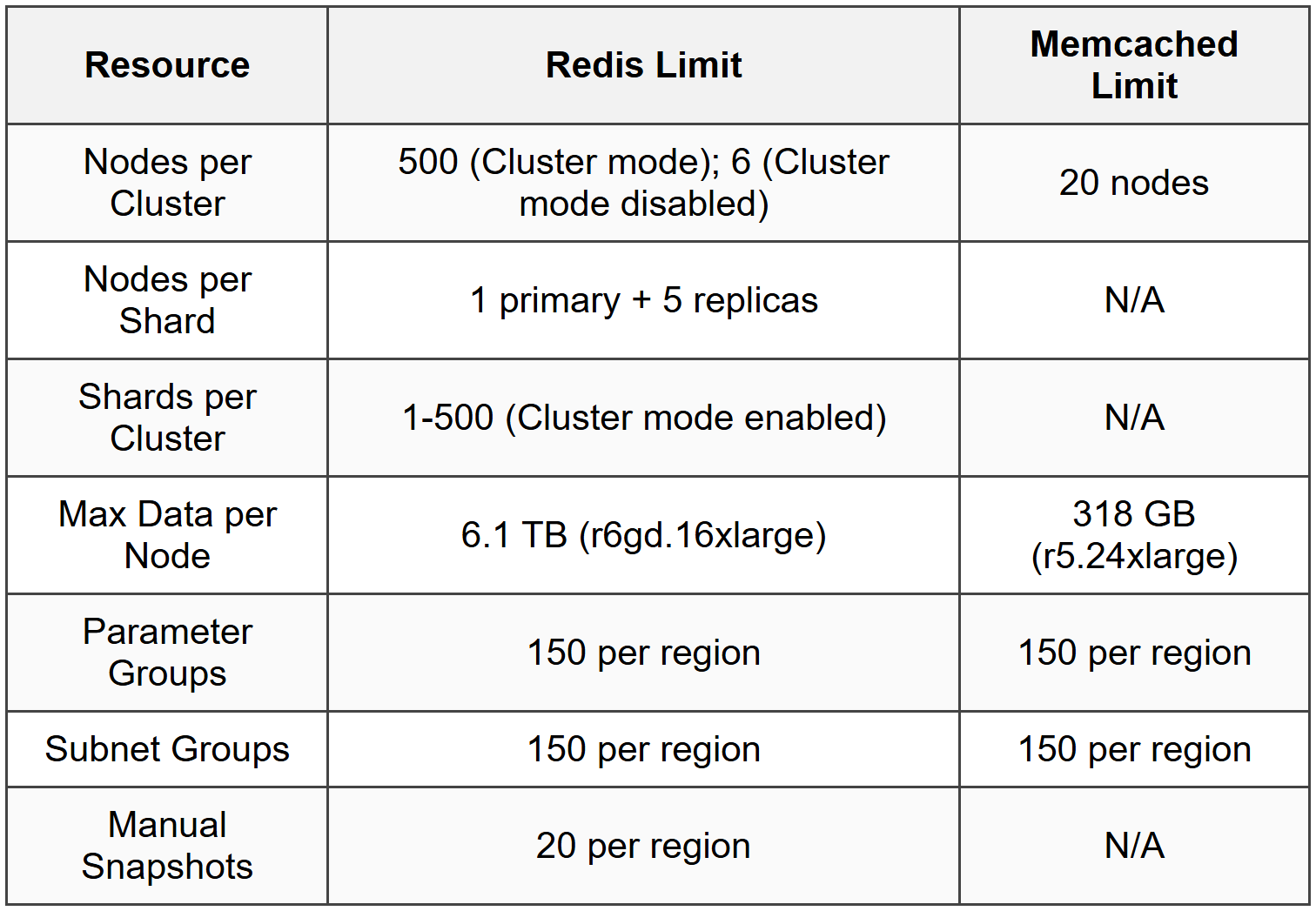
9.2 Configuration Constraints
- Redis Cluster mode cannot be enabled/disabled after creation
- Encryption at rest and in transit cannot be enabled after creation
- Node type changes require brief downtime for non-clustered Redis
- Memcached does not support snapshot operations
- Cannot change engine type (Redis to Memcached or vice versa)
10. Best Practices
10.1 Design Patterns
- Lazy Loading: Load data into cache on cache miss; reduces unnecessary caching
- Write-Through: Write to cache and database simultaneously; ensures consistency
- Adding TTL: Set expiration on keys to prevent stale data; balances freshness and cache hits
- Redis Cluster: Use for datasets >170 GB or when needing >5 read replicas
- Multi-AZ: Enable for production workloads requiring high availability
10.2 Performance Optimization
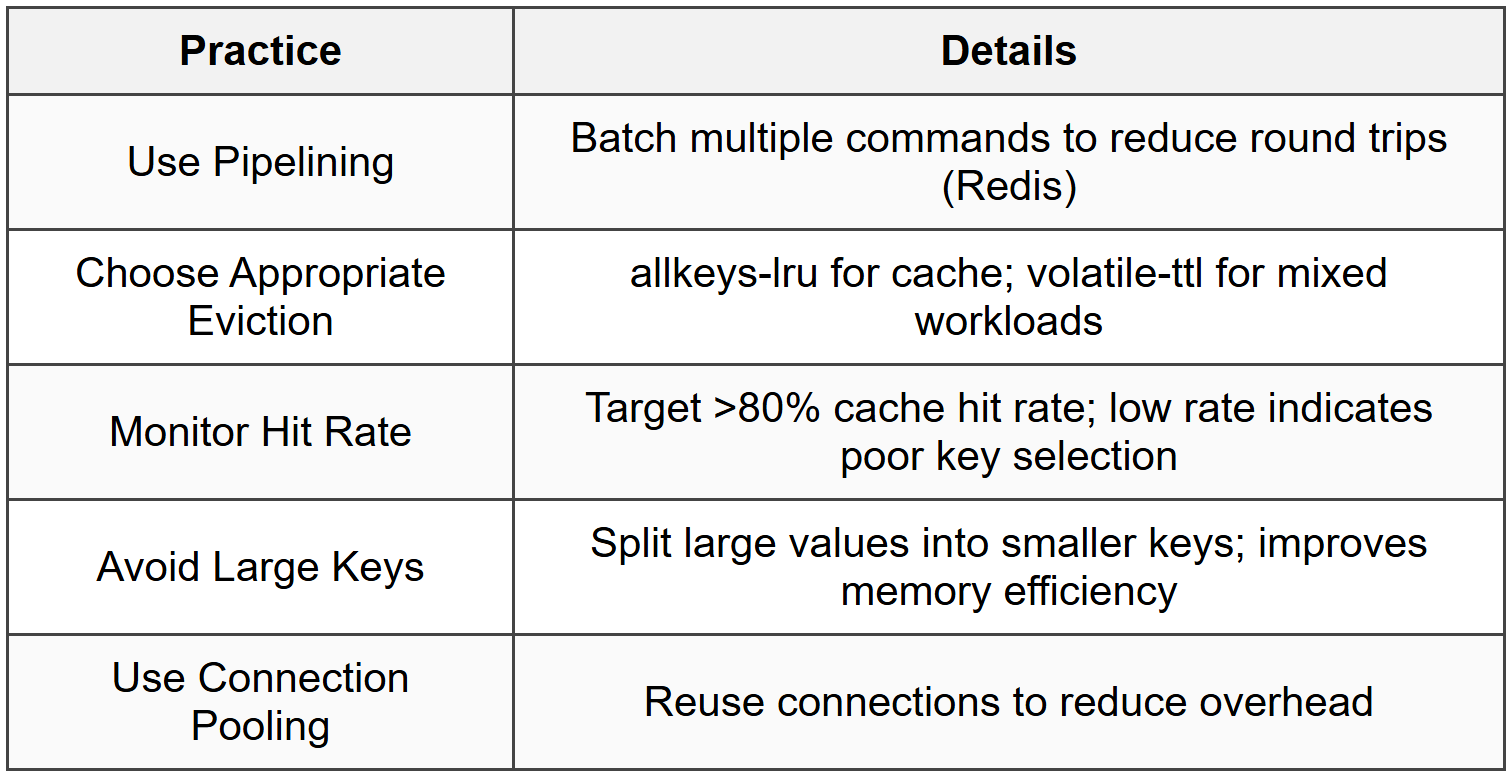
10.3 Availability and Durability
- Use Multi-AZ for automatic failover in production (Redis)
- Enable AOF persistence for maximum durability (Redis)
- Deploy read replicas across multiple AZs
- Test failover procedures during maintenance windows
- Use primary endpoint for writes; reader endpoint for read scaling
- For Memcached: design application to tolerate node failures
10.4 Security Hardening
- Enable encryption in transit for sensitive data (Redis)
- Enable encryption at rest using KMS (Redis)
- Use security groups to restrict access to known sources
- Disable default user and create specific users with RBAC (Redis 6.x)
- Rotate AUTH tokens regularly (Redis)
- Never expose cache nodes to public internet
11. Integration Patterns
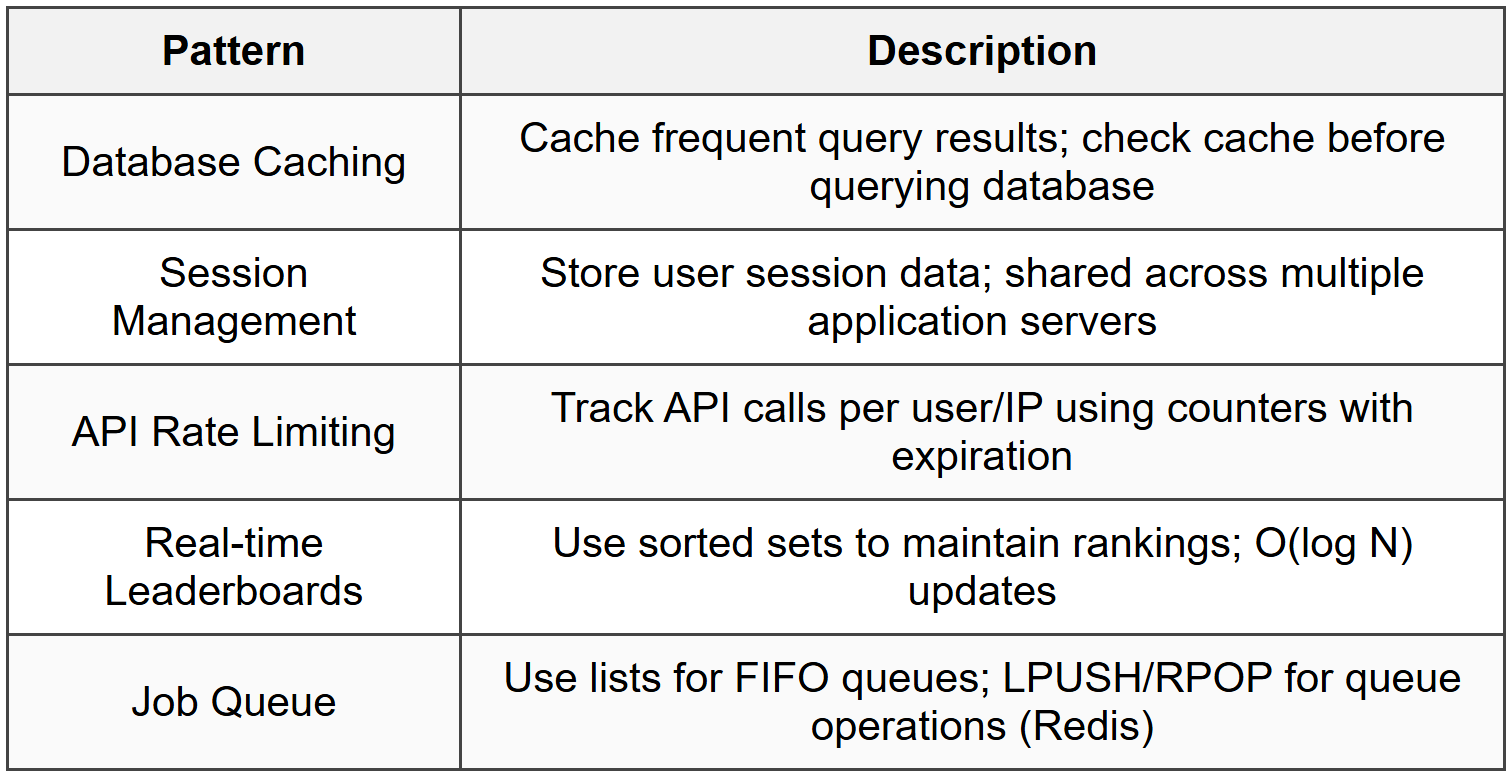
11.1 Application Integration
11.2 Multi-Region Strategies
- Global Datastore (Redis): Replicate across regions for disaster recovery
- Cross-region snapshot copy: Manual backup to another region (Redis)
- Application-level replication: Write to multiple regional caches
- Read local, write global: Reads from local cache; writes propagate globally
The document Cheat Sheet: ElastiCache — Redis vs Memcached is a part of the AWS Solutions Architect Course AWS Solutions Architect: Associate Level.
All you need of AWS Solutions Architect at this link: AWS Solutions Architect
About this Document

Apr 20, 2026 Last updated
Related Exams
Document Description: Cheat Sheet: ElastiCache — Redis vs Memcached for AWS Solutions Architect 2026 is part of AWS Solutions Architect: Associate Level preparation. The notes and questions for Cheat Sheet: ElastiCache — Redis vs Memcached have been prepared according to the AWS Solutions Architect exam syllabus. Information about Cheat Sheet: ElastiCache — Redis vs Memcached covers topics like and Cheat Sheet: ElastiCache — Redis vs Memcached Example, for AWS Solutions Architect 2026 Exam. Find important definitions, questions, notes, meanings, examples, exercises and tests below for Cheat Sheet: ElastiCache — Redis vs Memcached.
Introduction of Cheat Sheet: ElastiCache — Redis vs Memcached in English is available as part of our AWS Solutions Architect: Associate Level for AWS Solutions Architect & Cheat Sheet: ElastiCache — Redis vs Memcached in Hindi for AWS Solutions Architect: Associate Level course. Download more important topics related with notes, lectures and mock test series for AWS Solutions Architect Exam by signing up for free. AWS Solutions Architect: Cheat Sheet: ElastiCache — Redis vs Memcached
Description
Cheat Sheet: ElastiCache — Redis vs Memcached of AWS Solutions Architect to help you remember important concepts with short tricks. Start learning for AWS Solutions Architect exam & improve retention with EduRev.
Information about Cheat Sheet: ElastiCache — Redis vs Memcached
In this doc you can find the meaning of Cheat Sheet: ElastiCache — Redis vs Memcached defined & explained in the simplest way possible. Besides explaining types of Cheat Sheet: ElastiCache — Redis vs Memcached theory, EduRev gives you an ample number of questions to practice Cheat Sheet: ElastiCache — Redis vs Memcached tests, examples and also practice AWS Solutions Architect tests



Related Searches
Cheat Sheet: ElastiCache — Redis vs Memcached, Important questions, Summary, study material, ppt, Free, Objective type Questions, Cheat Sheet: ElastiCache — Redis vs Memcached, Previous Year Questions with Solutions, Semester Notes, practice quizzes, video lectures, Exam, past year papers, shortcuts and tricks, Sample Paper, Cheat Sheet: ElastiCache — Redis vs Memcached, pdf , MCQs, mock tests for examination, Viva Questions, Extra Questions;