PE Exam Exam > PE Exam Notes > Mechanical Engineering for PE > Cheatsheet: Load Calculations
Cheatsheet: Load Calculations


1. Dead Loads
1.1 Definition and Components

1.2 Material Unit Weights
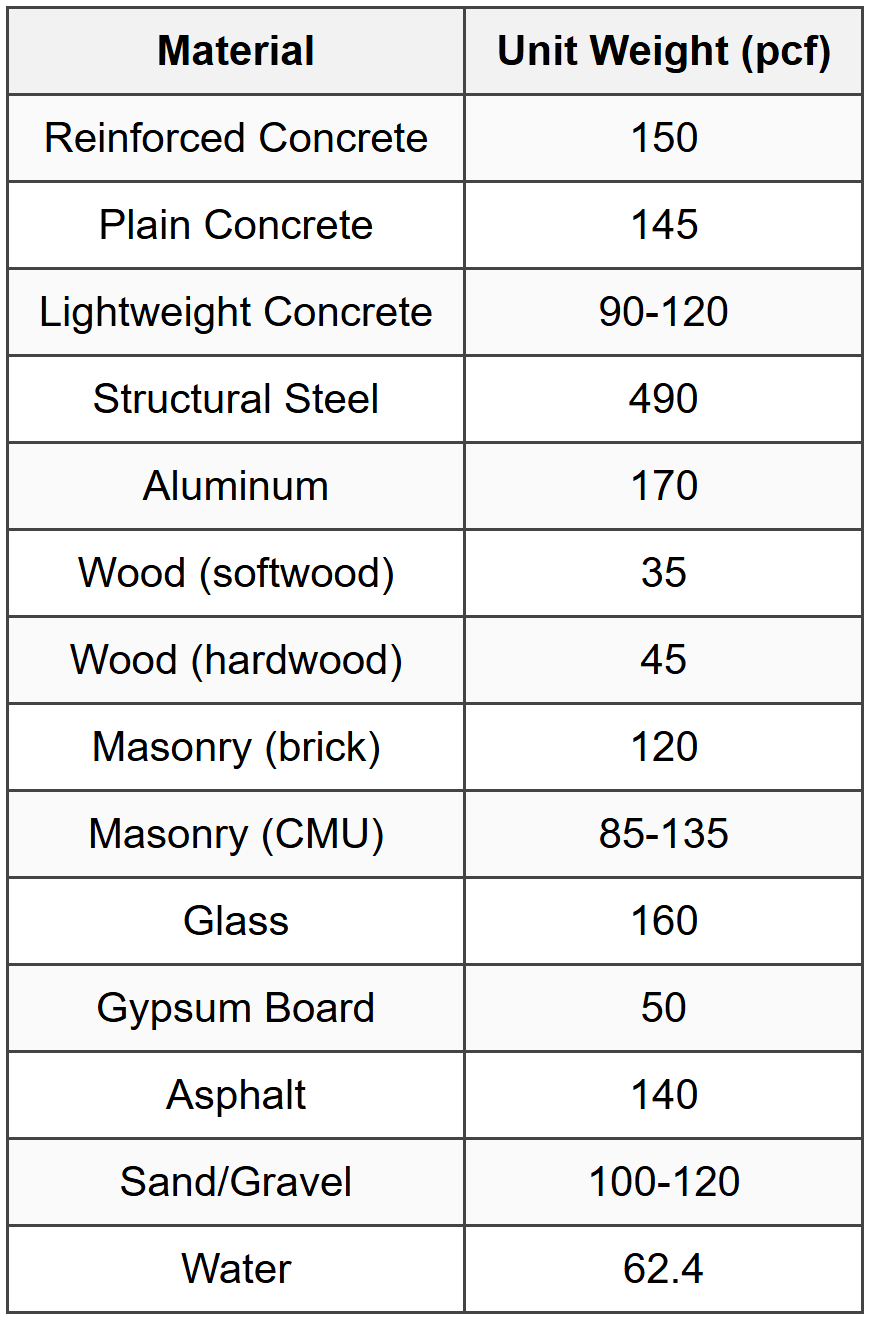
1.3 Calculation Methods
- Dead Load = Volume × Unit Weight
- For composite members: DL = Σ(Vi × γi)
- Distributed load: w = A × γ (force per unit length)
- Point load: P = V × γ (concentrated force)
2. Live Loads
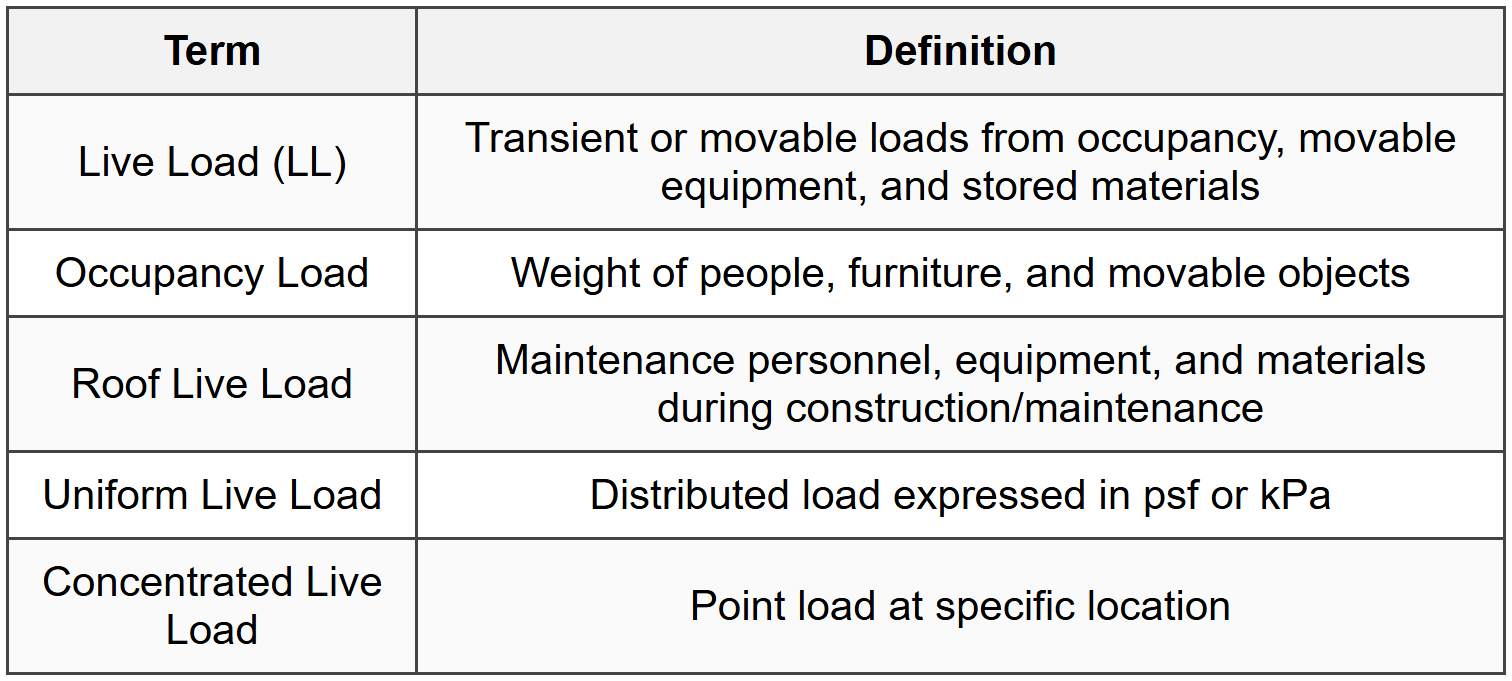
2.1 Definition and Types
2.2 Minimum Uniformly Distributed Live Loads (ASCE 7)

2.3 Live Load Reduction
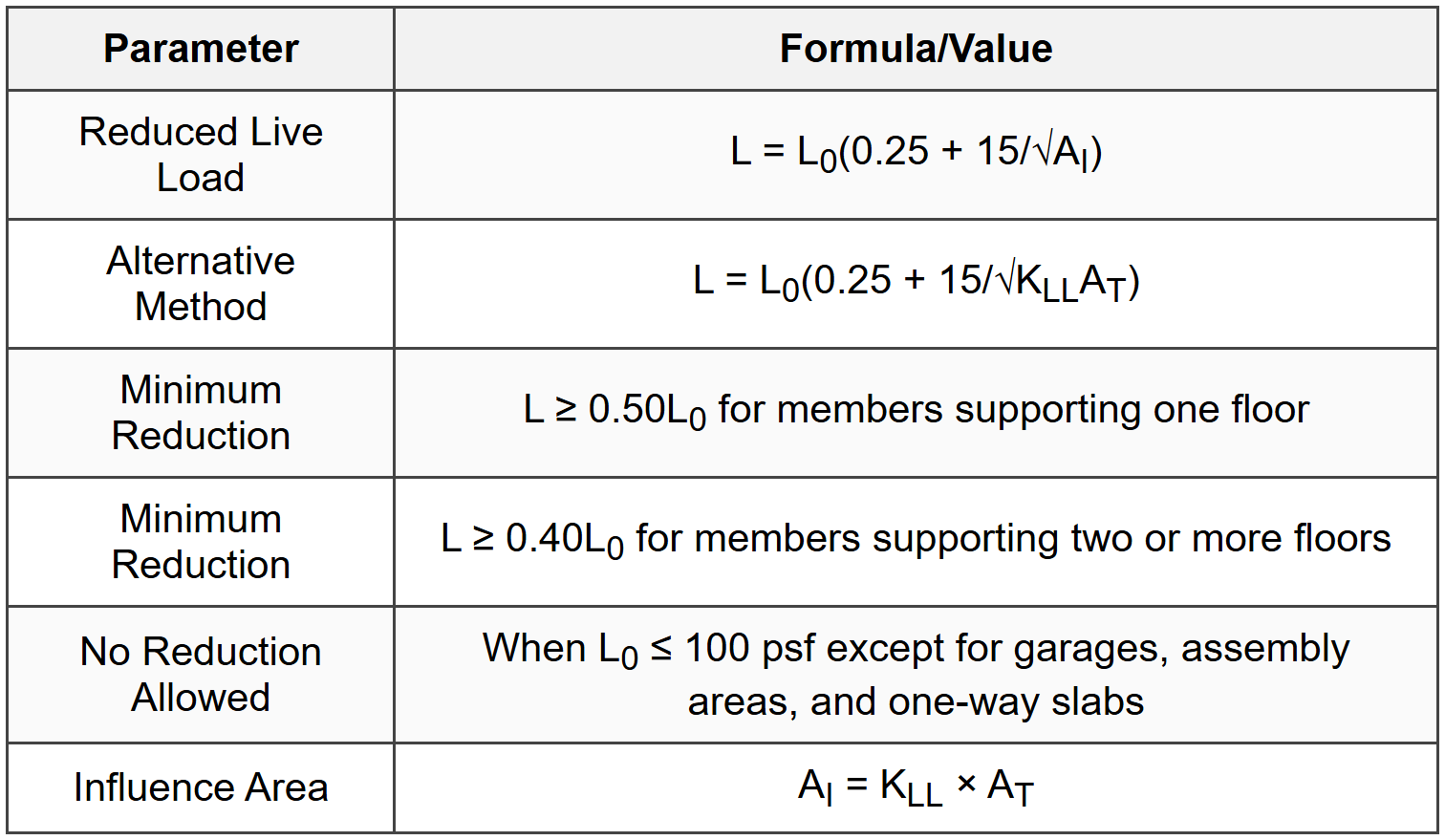
2.3.1 Live Load Element Factor (KLL)

2.4 Roof Live Load Reduction

3. Snow Loads
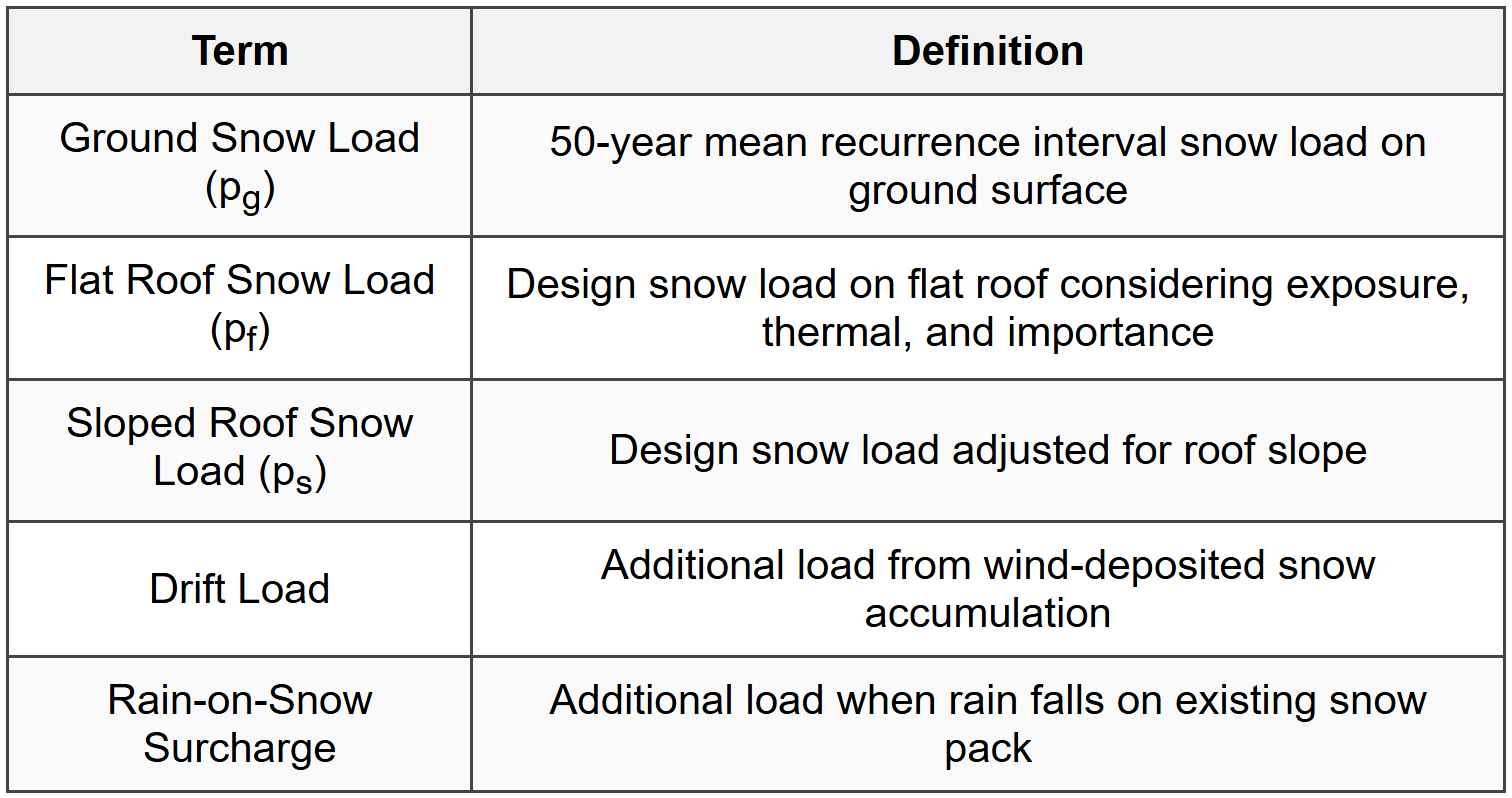
3.1 Snow Load Definitions
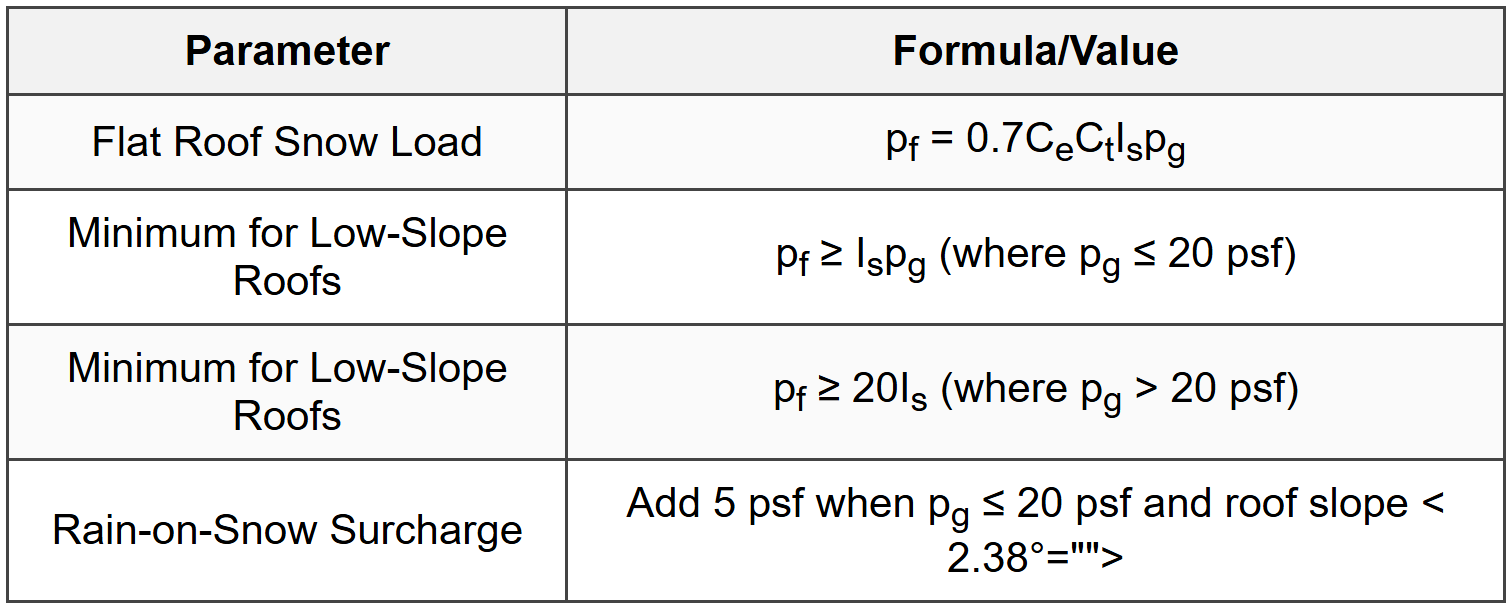
3.2 Flat Roof Snow Load Calculation
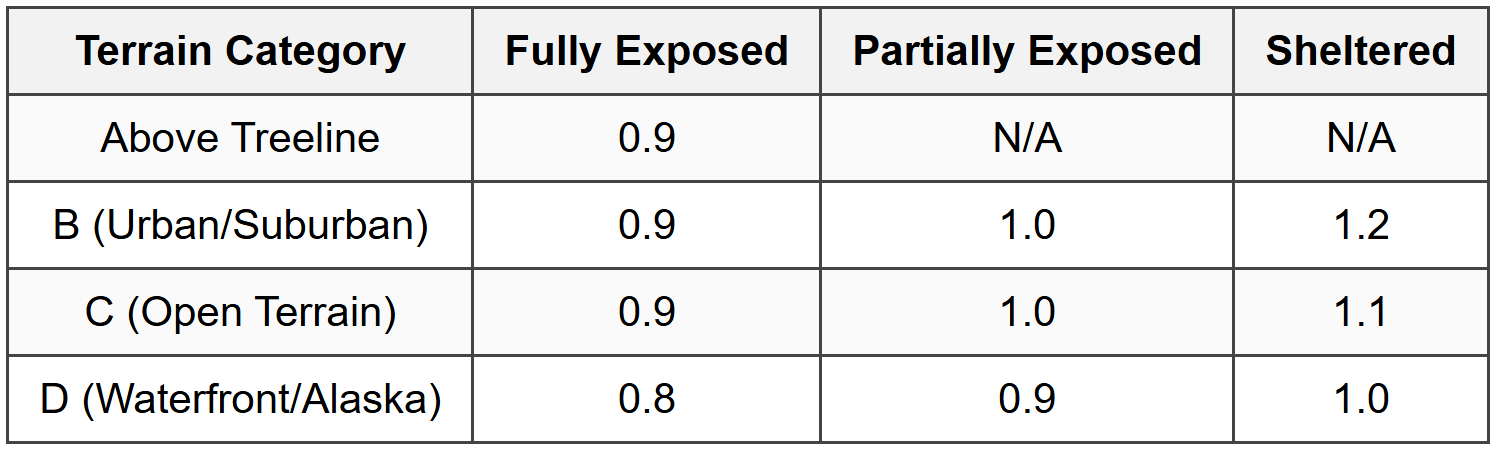
3.3 Exposure Factor (Ce)
3.4 Thermal Factor (Ct)

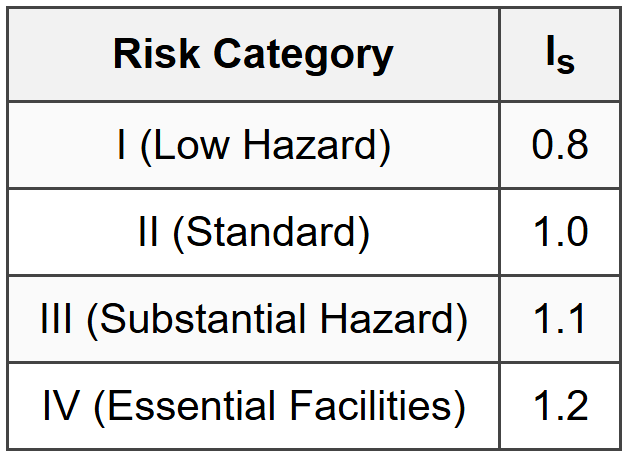
3.5 Snow Importance Factor (Is)
3.6 Sloped Roof Snow Load

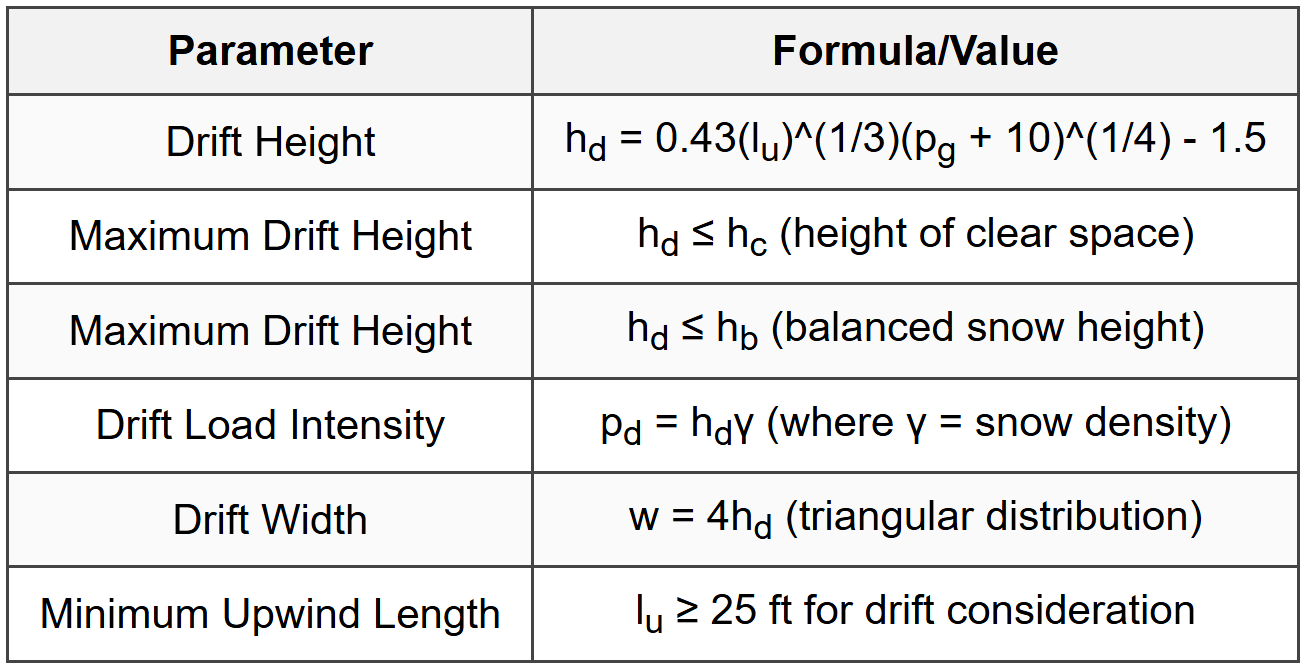
3.7 Drift Loads
3.7.1 Leeward Drift Load
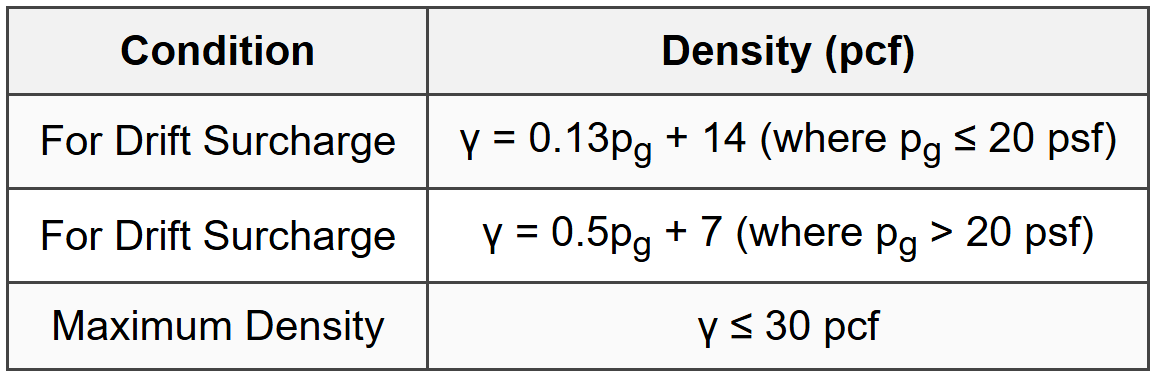
3.7.2 Snow Density
3.8 Unbalanced Snow Loads
- Required for gable and hip roofs with slope > 2.38° (½:12) and <>
- Windward side: 0.3ps or minimum from code
- Leeward side: 1.5ps/Ce or 1.2ps, whichever is less
- Apply to each roof configuration independently
4. Wind Loads
4.1 Wind Load Definitions

4.2 Velocity Pressure Calculation

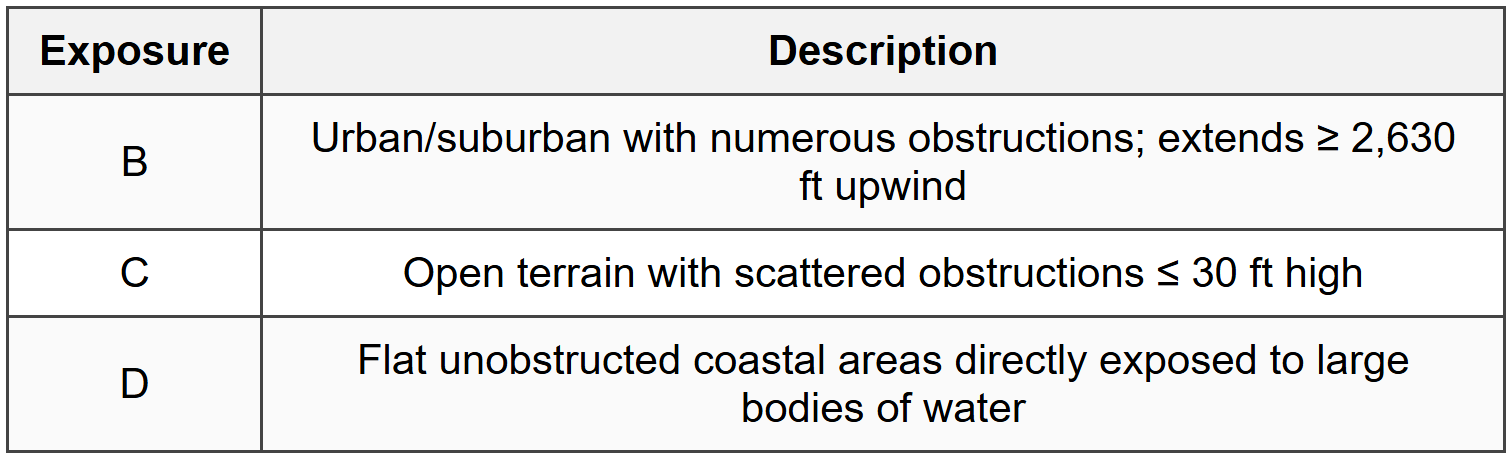
4.3 Exposure Categories
4.4 Velocity Pressure Exposure Coefficient (Kz)

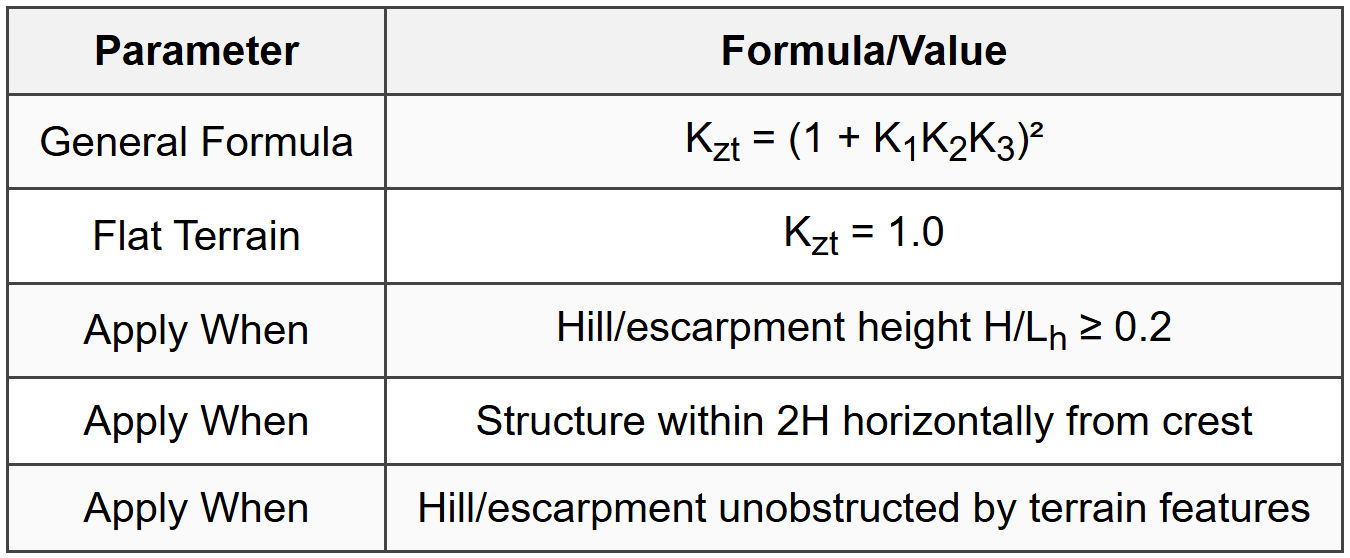
4.5 Topographic Factor (Kzt)
4.6 Wind Directionality Factor (Kd)

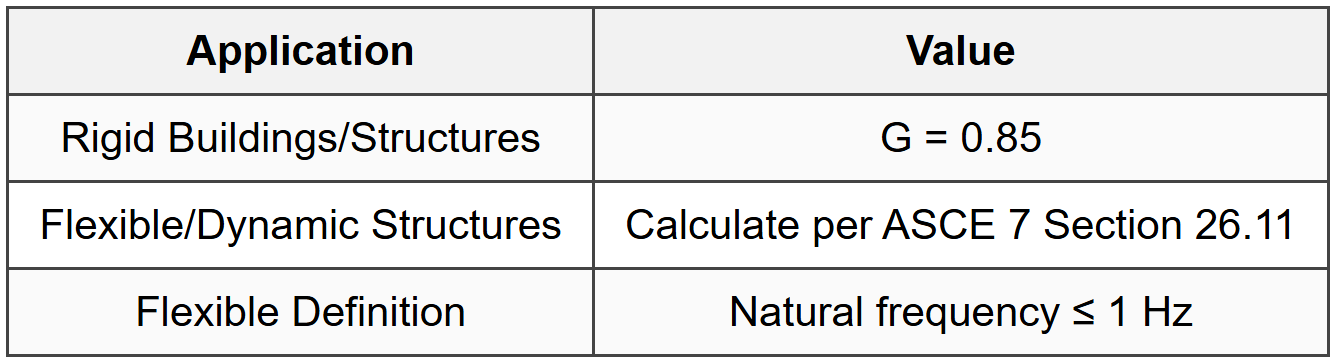
4.7 Gust Effect Factor (G)
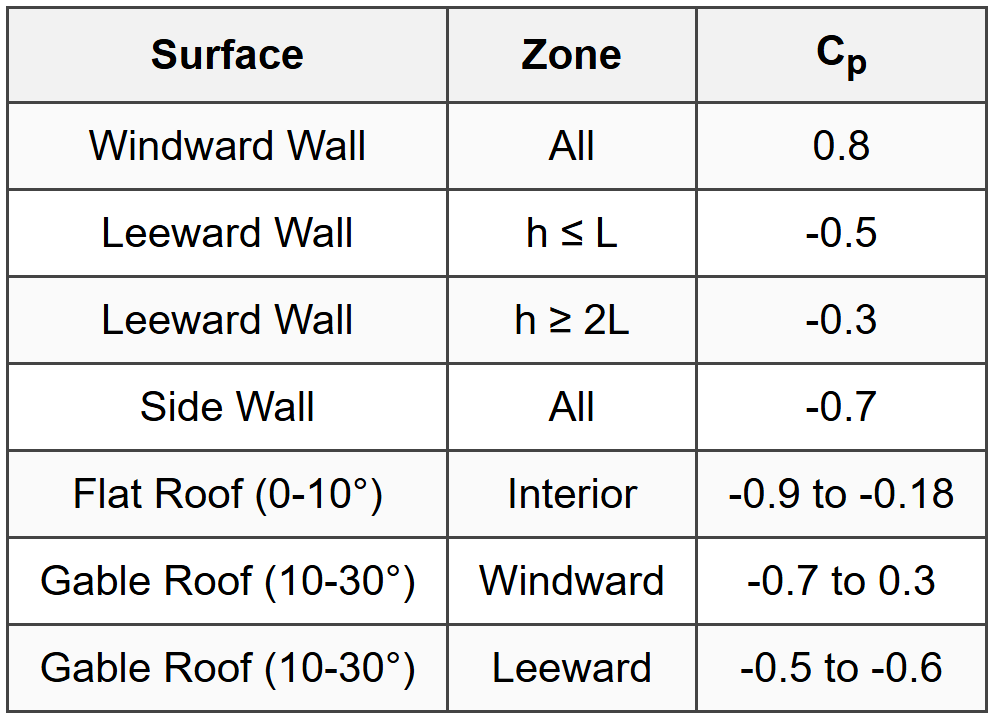
4.8 External Pressure Coefficients (Cp) - Low-Rise Buildings
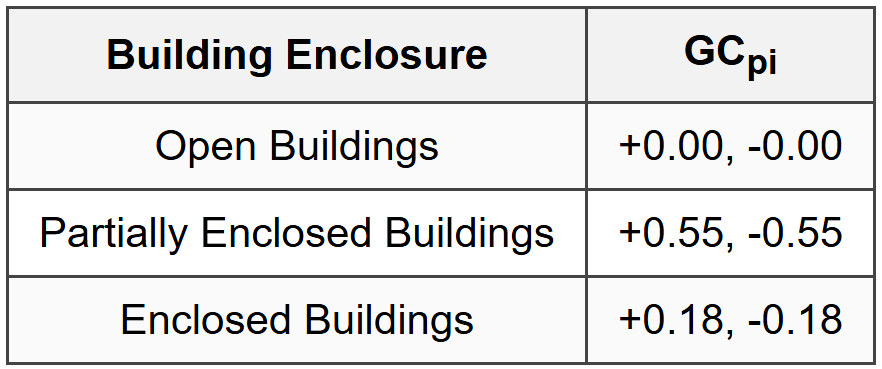
4.9 Internal Pressure Coefficient (GCpi)
4.10 Wind Importance Factor (Iw)

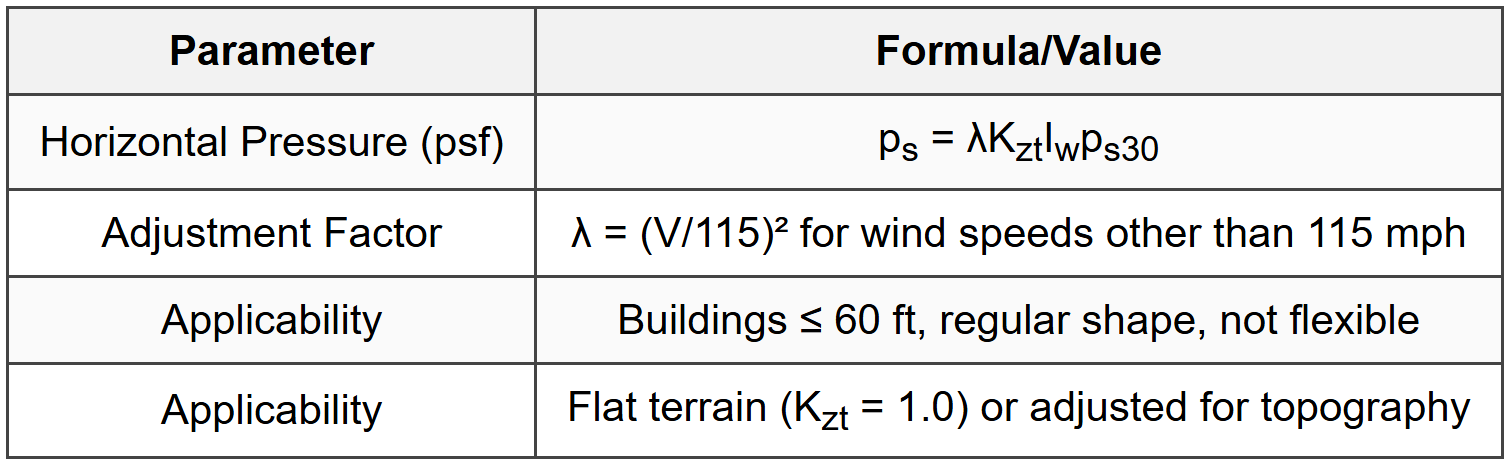
4.11 Simplified Design Wind Pressure (Low-Rise Buildings)
5. Seismic Loads
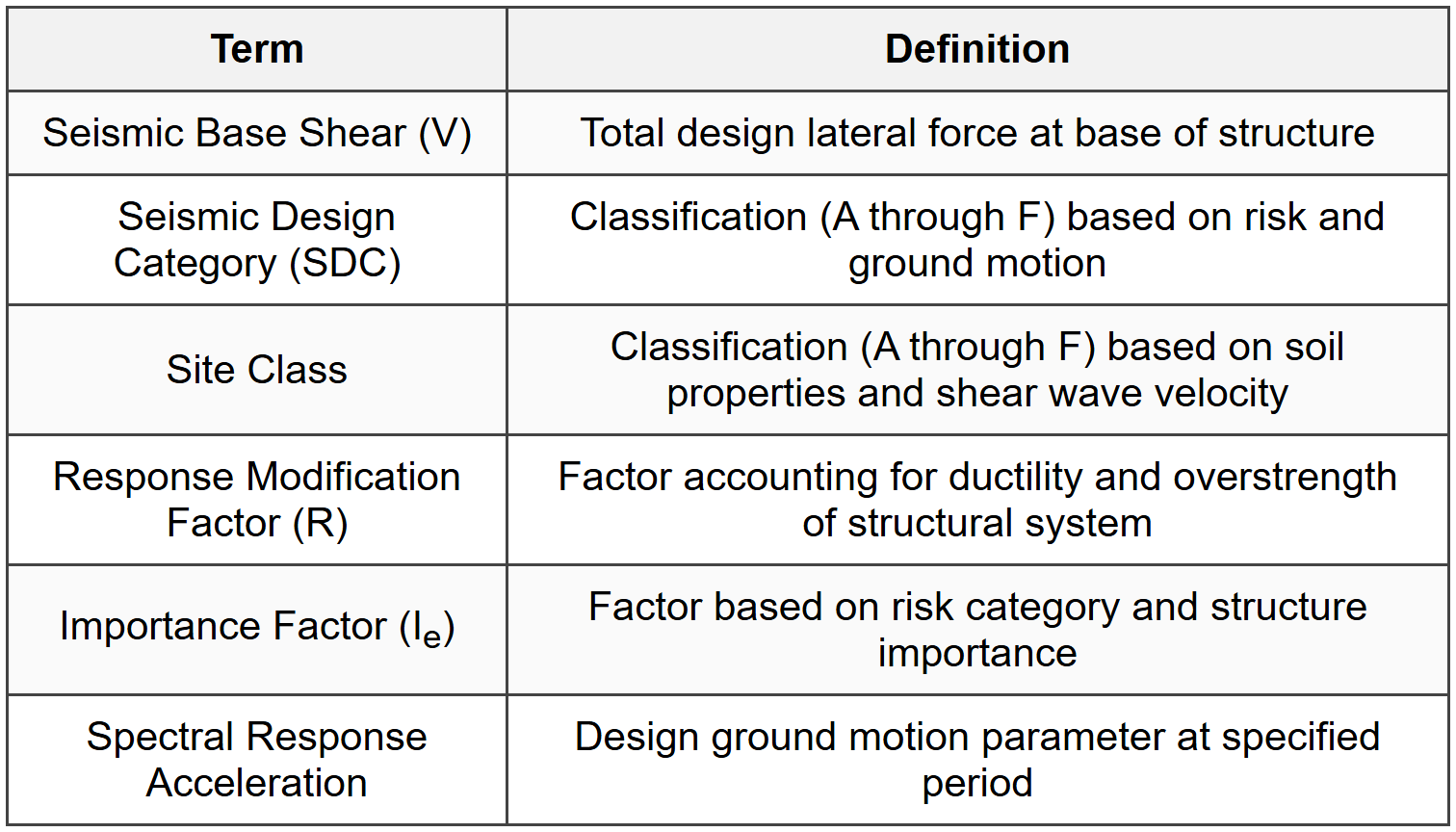
5.1 Seismic Load Definitions
5.2 Seismic Base Shear (Equivalent Lateral Force)

5.3 Design Spectral Response Acceleration

5.4 Site Coefficients
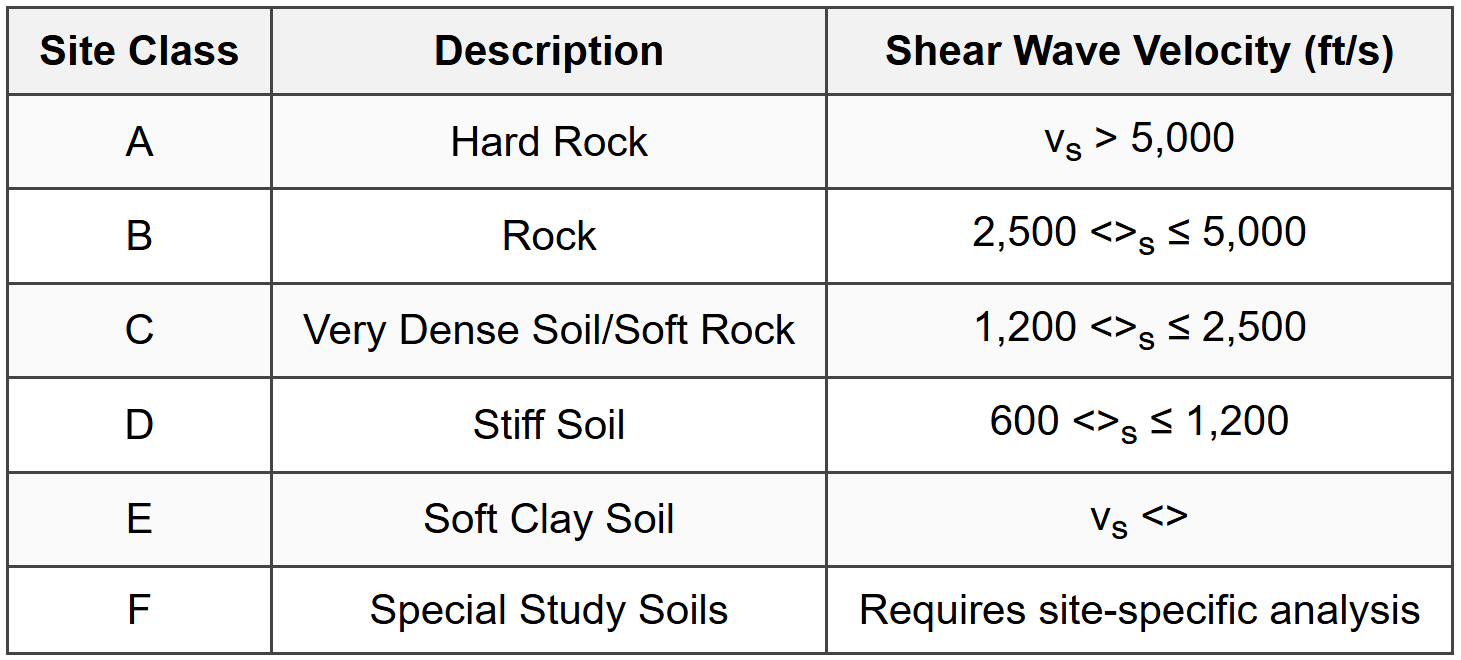
5.4.1 Site Class Definitions
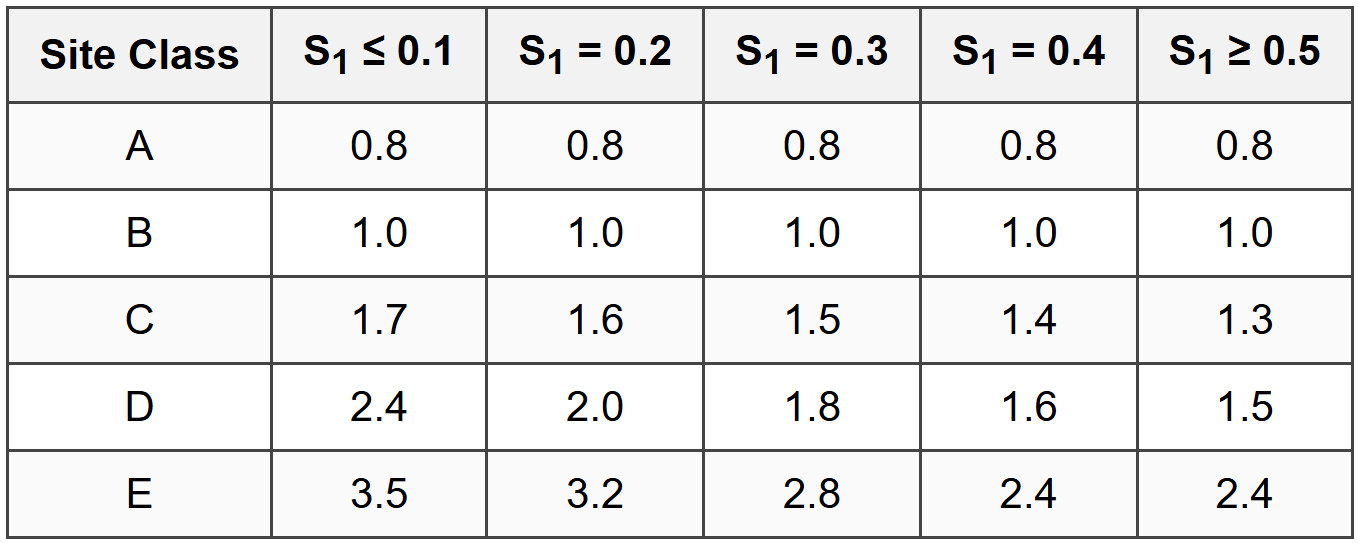
5.4.2 Short Period Site Coefficient (Fa)

5.4.3 Long Period Site Coefficient (Fv)
5.5 Seismic Design Category (SDC)
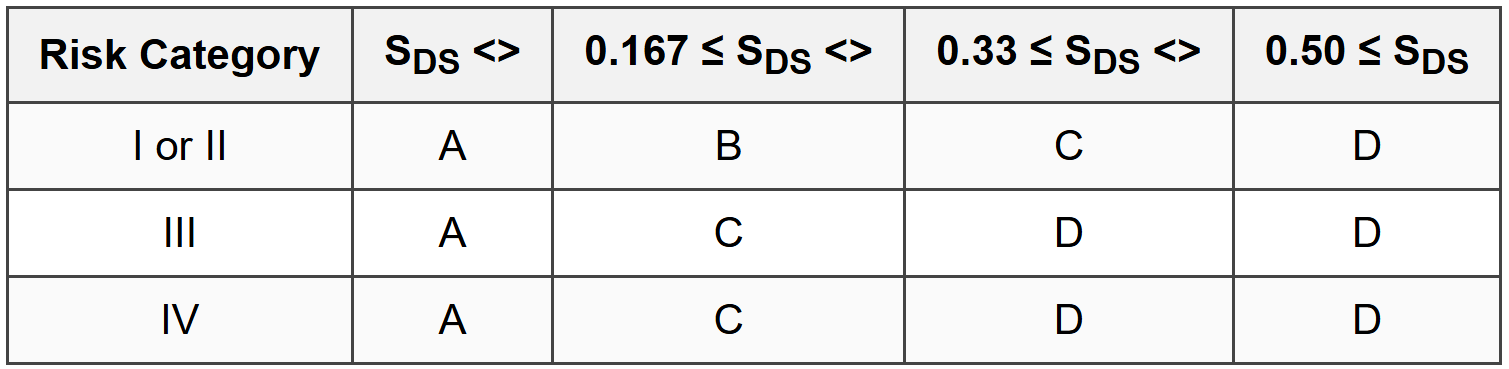
5.5.1 Based on Short Period Parameter
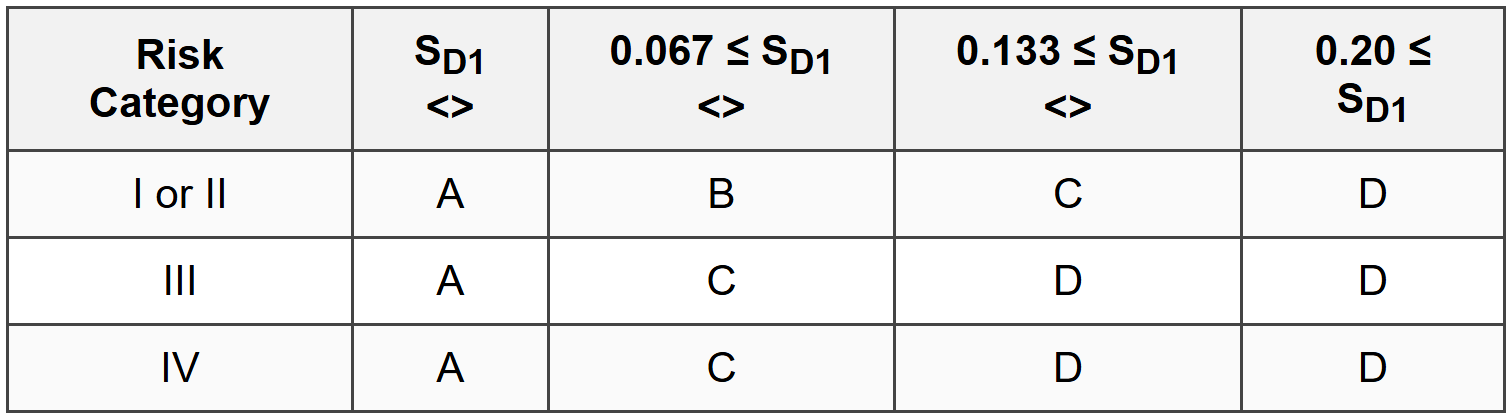
5.5.2 Based on 1-Second Period Parameter
5.6 Response Modification Factor (R)

5.7 Seismic Importance Factor (Ie)

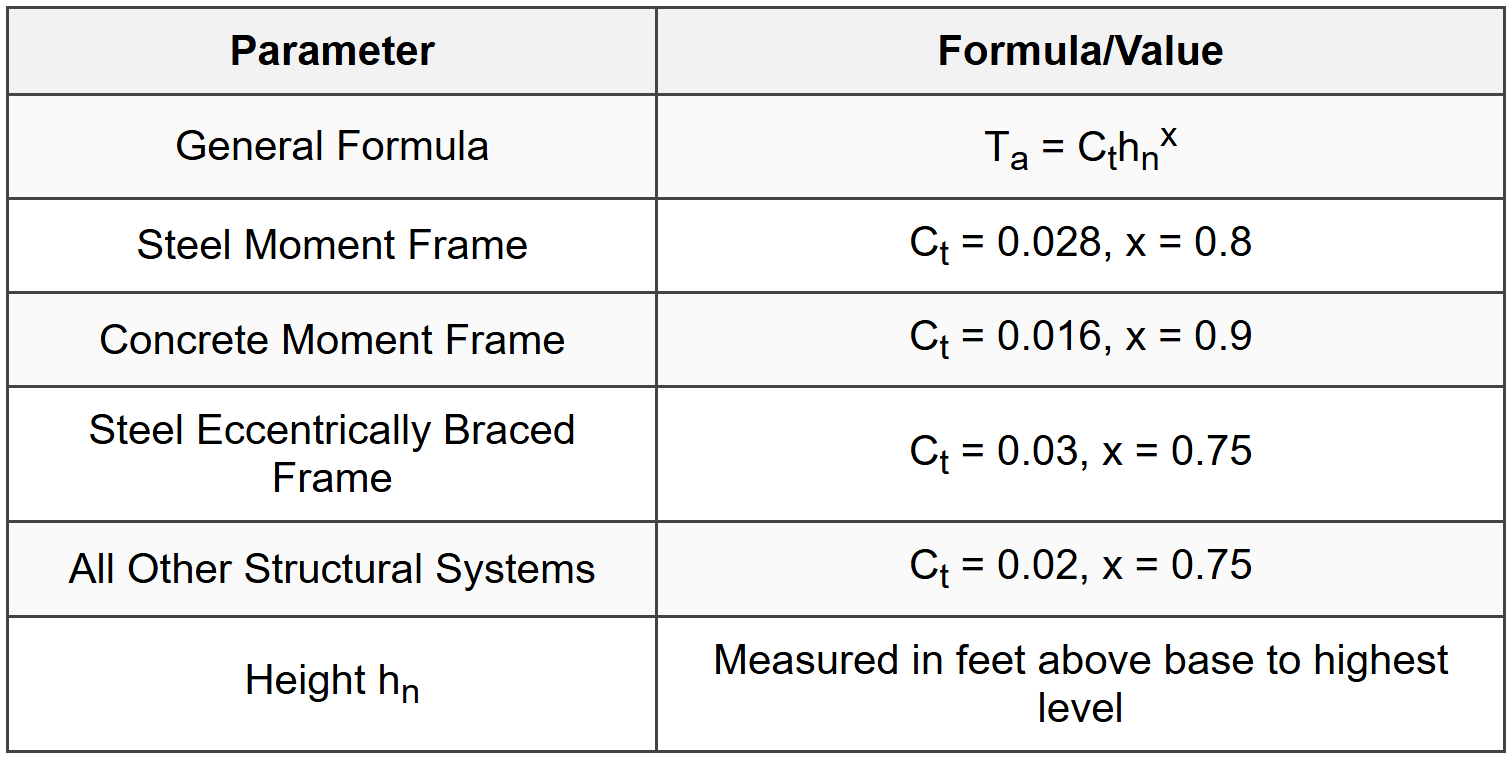
5.8 Approximate Period of Vibration
5.9 Vertical Distribution of Seismic Force

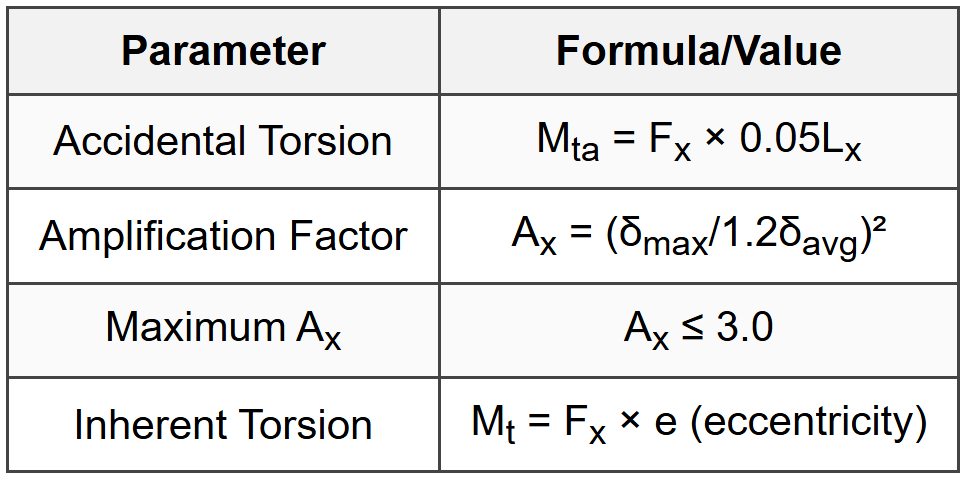
5.10 Horizontal Distribution and Torsion
6. Load Combinations
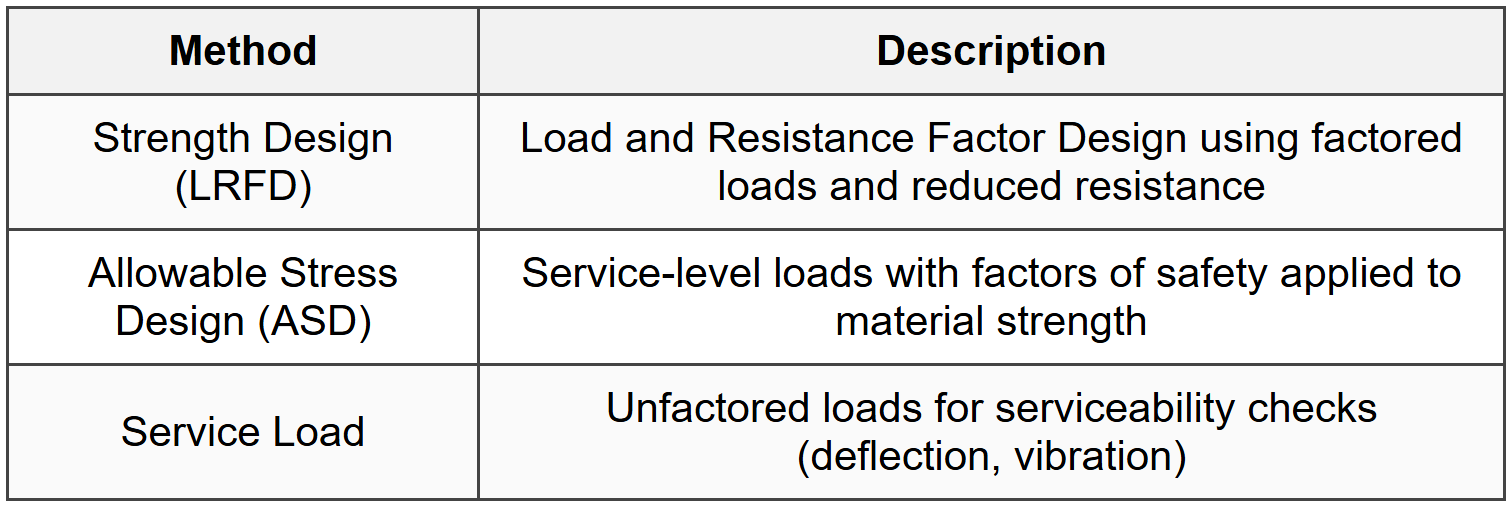
6.1 Load Combination Methods
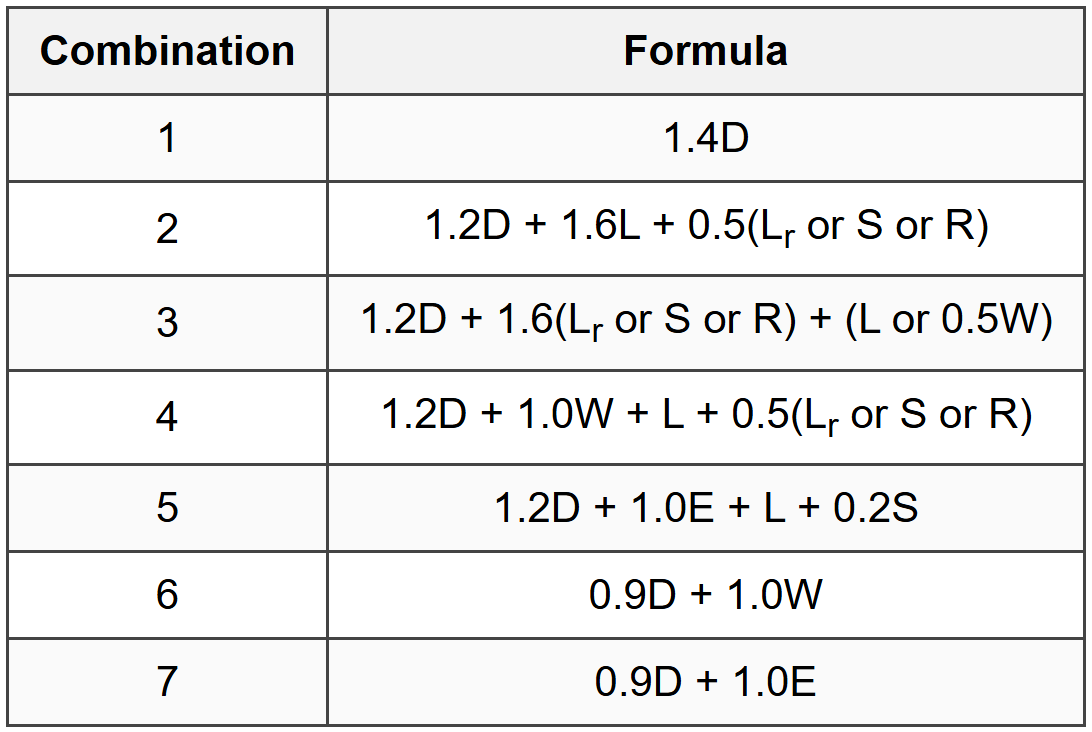
6.2 LRFD Load Combinations (ASCE 7)
6.3 ASD Load Combinations (ASCE 7)

6.4 Load Notation

6.5 Seismic Load Effect (E)

6.6 Special Load Combination Considerations
- Overturning: Use 0.9D to minimize resisting moment
- Uplift/Anchorage: Use 0.9D or 0.6D (ASD) to minimize stabilizing force
- Soil Pressure: Use service-level loads without factors
- Impact: Include impact factor with live load where applicable
- Construction loads: Consider temporary conditions with appropriate factors
- Pattern loading: Apply live load to produce maximum effect
7. Other Loads
7.1 Rain Loads

7.2 Flood Loads

7.3 Soil and Hydrostatic Pressure

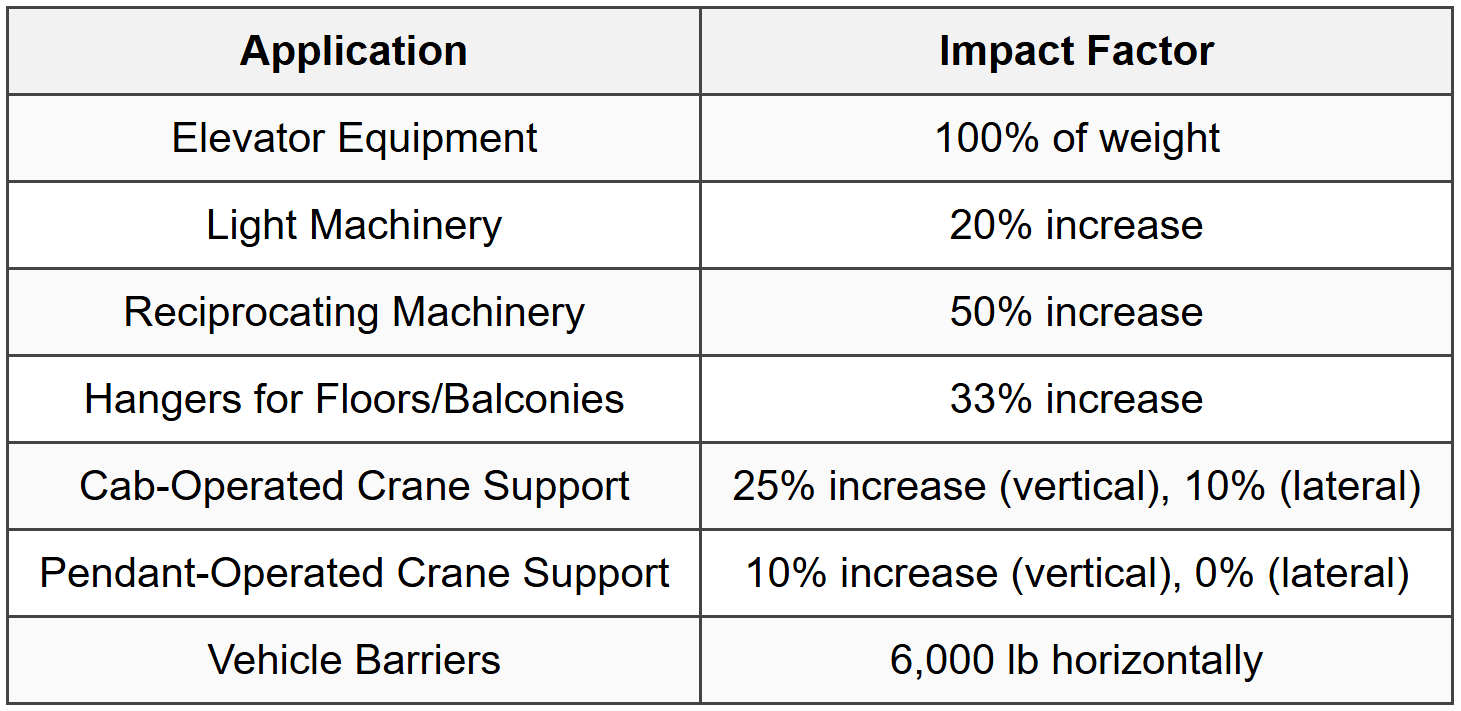
7.4 Impact Loads
7.5 Temperature and Thermal Loads

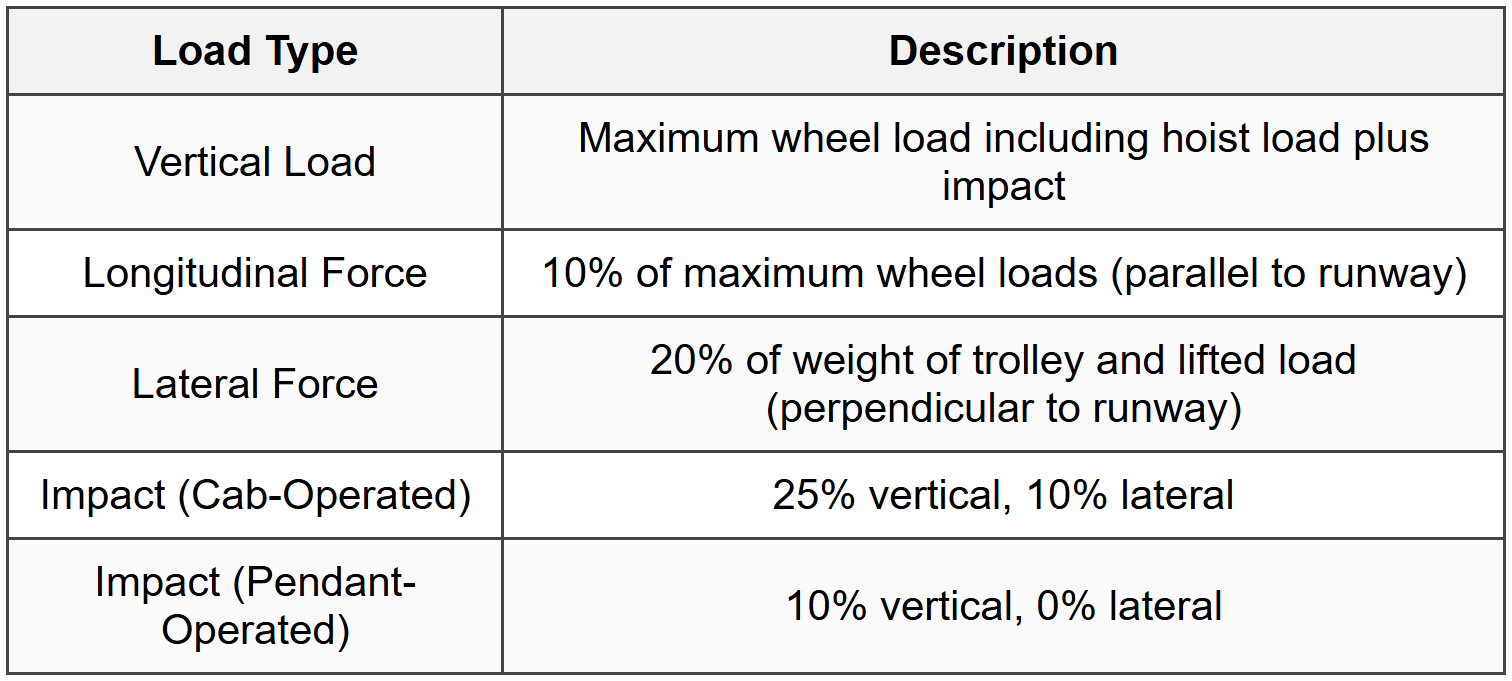
7.6 Crane Loads
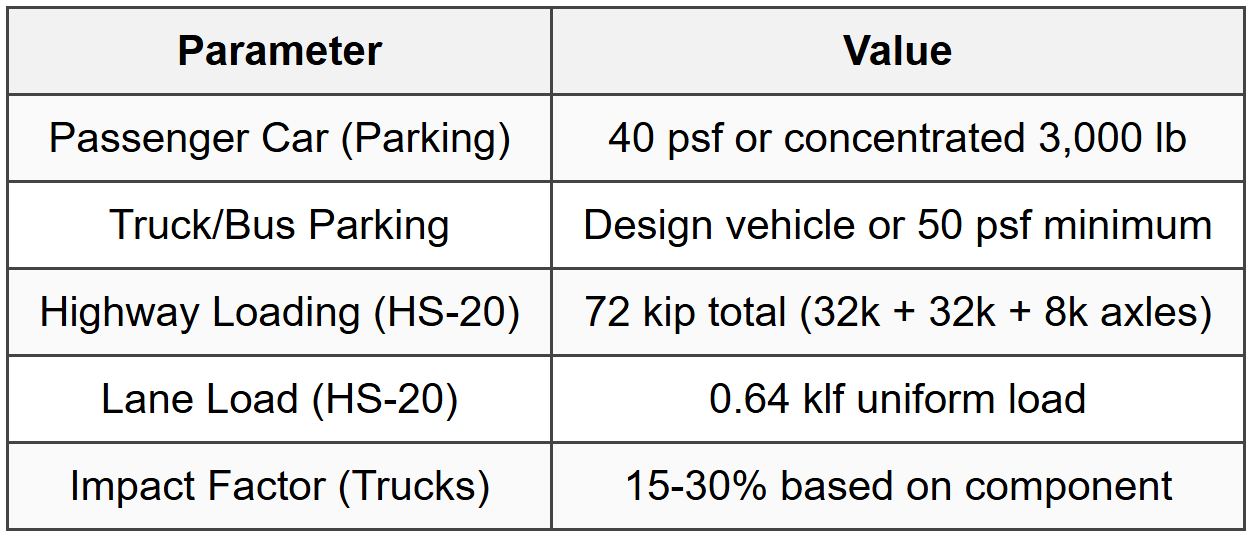
7.7 Vehicular Loads
8. Risk Categories and Importance Factors
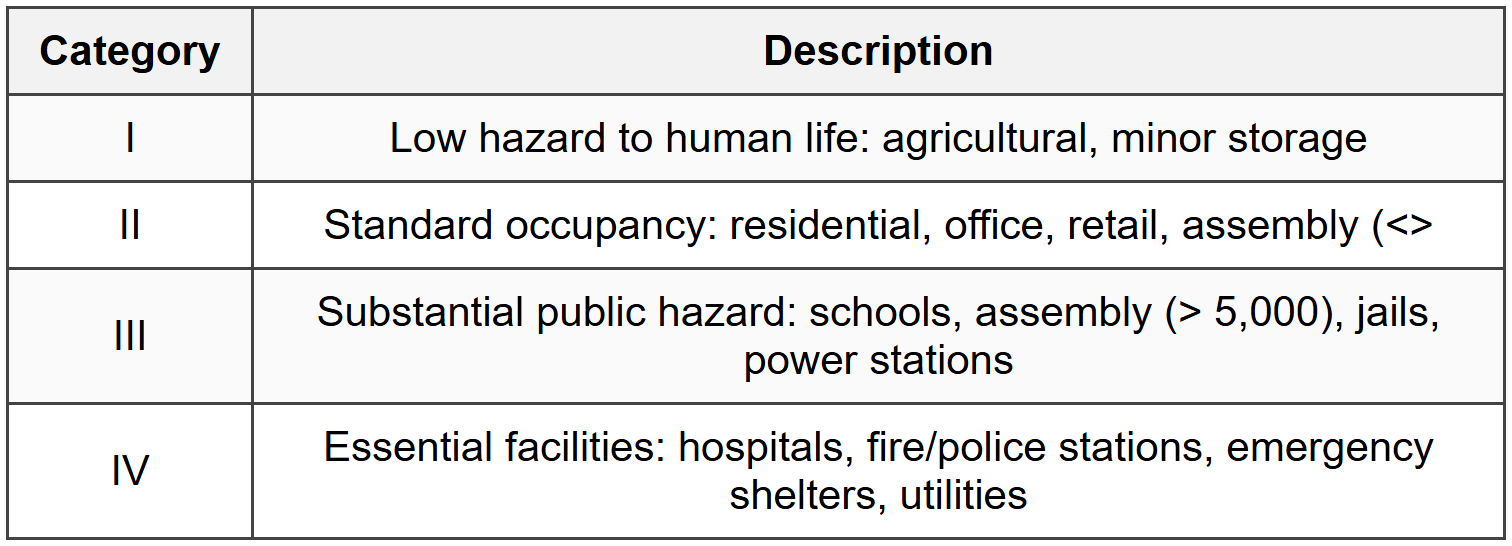
8.1 Risk Category Definitions
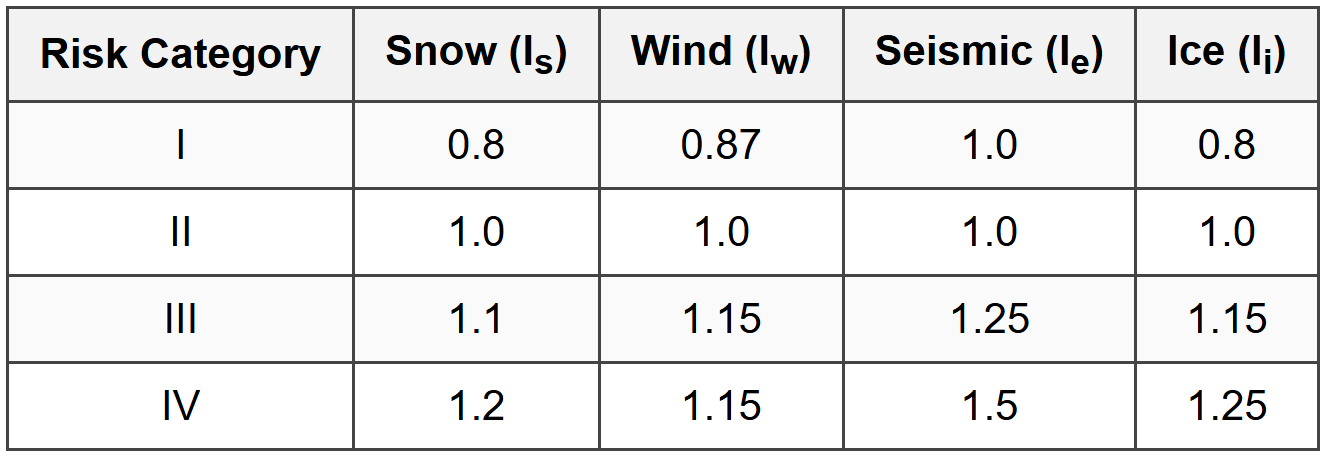
8.2 Importance Factors Summary
9. Serviceability Considerations
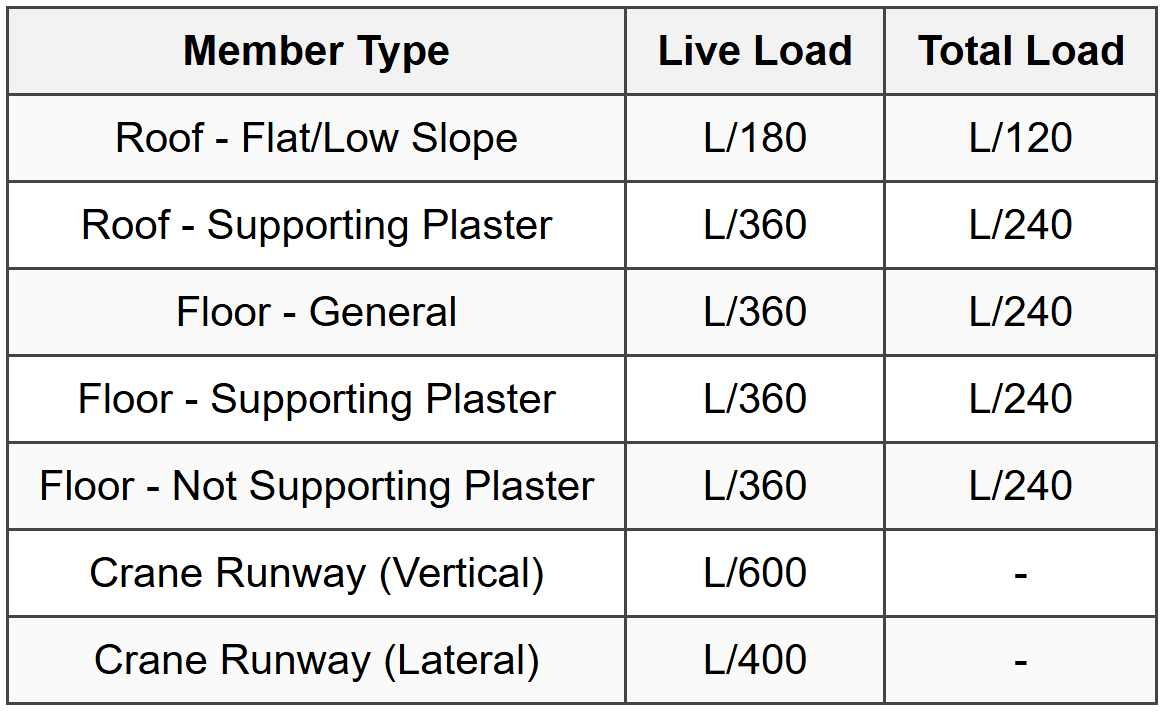
9.1 Deflection Limits
9.2 Drift Limits (Lateral Displacement)

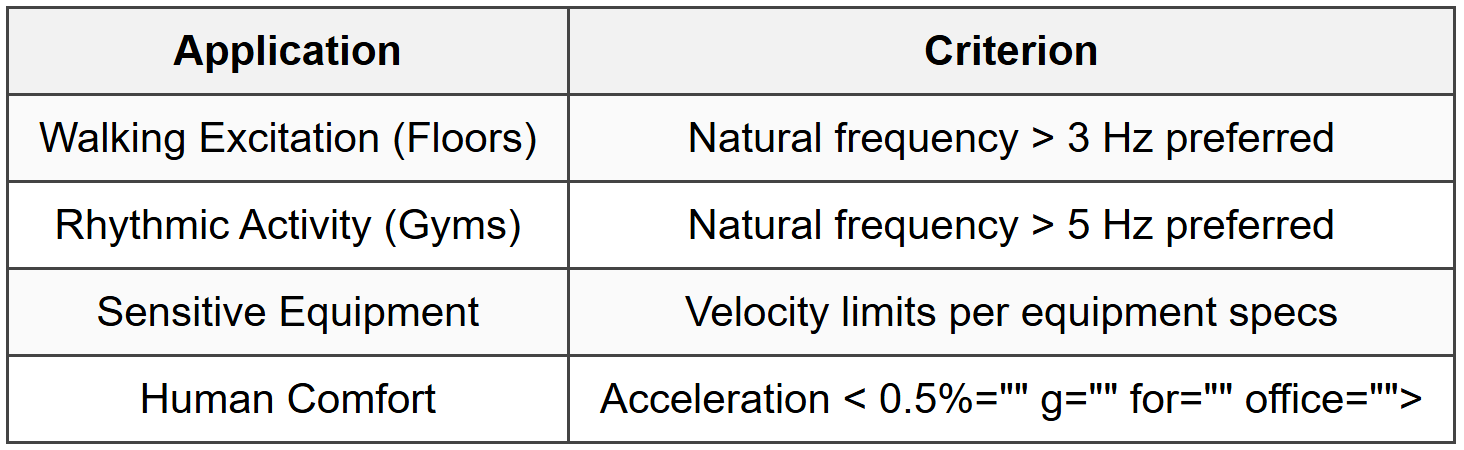
9.3 Vibration Considerations
The document Cheatsheet: Load Calculations is a part of the PE Exam Course Mechanical Engineering for PE.
All you need of PE Exam at this link: PE Exam
About this Document

Apr 20, 2026 Last updated
Related Exams
Document Description: Cheatsheet: Load Calculations for PE Exam 2026 is part of Mechanical Engineering for PE preparation. The notes and questions for Cheatsheet: Load Calculations have been prepared according to the PE Exam exam syllabus. Information about Cheatsheet: Load Calculations covers topics like and Cheatsheet: Load Calculations Example, for PE Exam 2026 Exam. Find important definitions, questions, notes, meanings, examples, exercises and tests below for Cheatsheet: Load Calculations.
Introduction of Cheatsheet: Load Calculations in English is available as part of our Mechanical Engineering for PE for PE Exam & Cheatsheet: Load Calculations in Hindi for Mechanical Engineering for PE course. Download more important topics related with notes, lectures and mock test series for PE Exam Exam by signing up for free. PE Exam: Cheatsheet: Load Calculations
Description
Cheatsheet: Load Calculations of Mechanical Engineering to help you remember important concepts with short tricks. Start learning for PE Exam exam & improve retention with EduRev.
Information about Cheatsheet: Load Calculations
In this doc you can find the meaning of Cheatsheet: Load Calculations defined & explained in the simplest way possible. Besides explaining types of Cheatsheet: Load Calculations theory, EduRev gives you an ample number of questions to practice Cheatsheet: Load Calculations tests, examples and also practice PE Exam tests
Top Courses for PE Exam
Related Searches
shortcuts and tricks, Important questions, Cheatsheet: Load Calculations, Cheatsheet: Load Calculations, Free, practice quizzes, Semester Notes, Viva Questions, study material, Exam, ppt, Summary, Extra Questions, Previous Year Questions with Solutions, Cheatsheet: Load Calculations, pdf , video lectures, mock tests for examination, Objective type Questions, Sample Paper, MCQs, past year papers;