PE Exam Exam > PE Exam Notes > Engineering Fundamentals Revision for PE > Cheatsheet: Rate of Return
Cheatsheet: Rate of Return


1. Rate of Return Fundamentals
1.1 Core Definitions

1.2 Basic ROR Equation
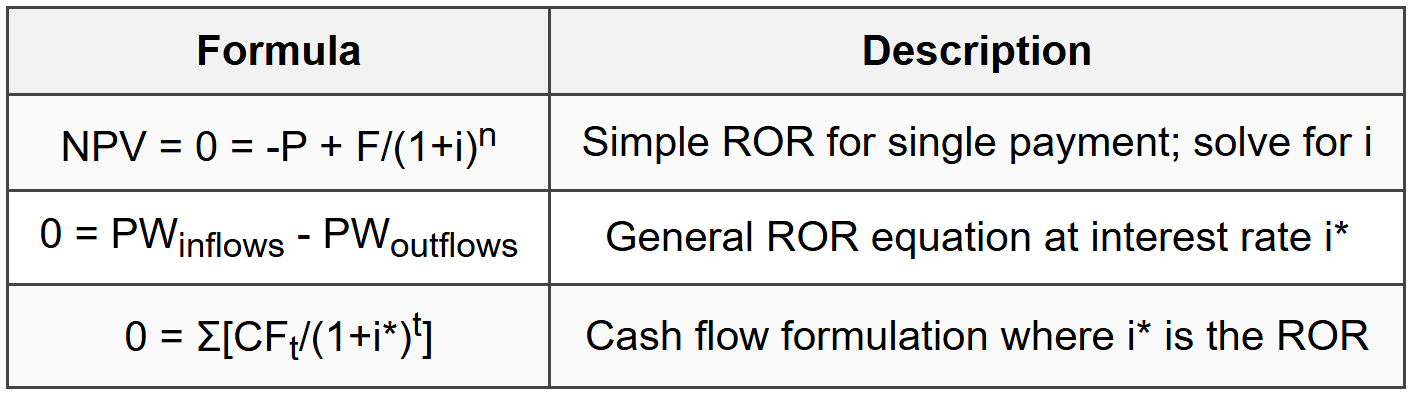
2. ROR Calculation Methods
2.1 Trial and Error Method
- Select two trial interest rates
- Calculate NPV at each rate
- Interpolate linearly between rates where NPV changes sign
- Formula: i* = iL + [(NPVL)/(NPVL - NPVH)] × (iH - iL)
- Where iL gives positive NPV and iH gives negative NPV
2.2 Direct Solution Methods

2.3 Spreadsheet Functions

3. ROR Analysis for Single Projects
3.1 Decision Criteria
- If ROR ≥ MARR: Accept project
- If ROR < marr:="" reject="">
- ROR must be calculated before comparison with MARR
3.2 Multiple ROR Values
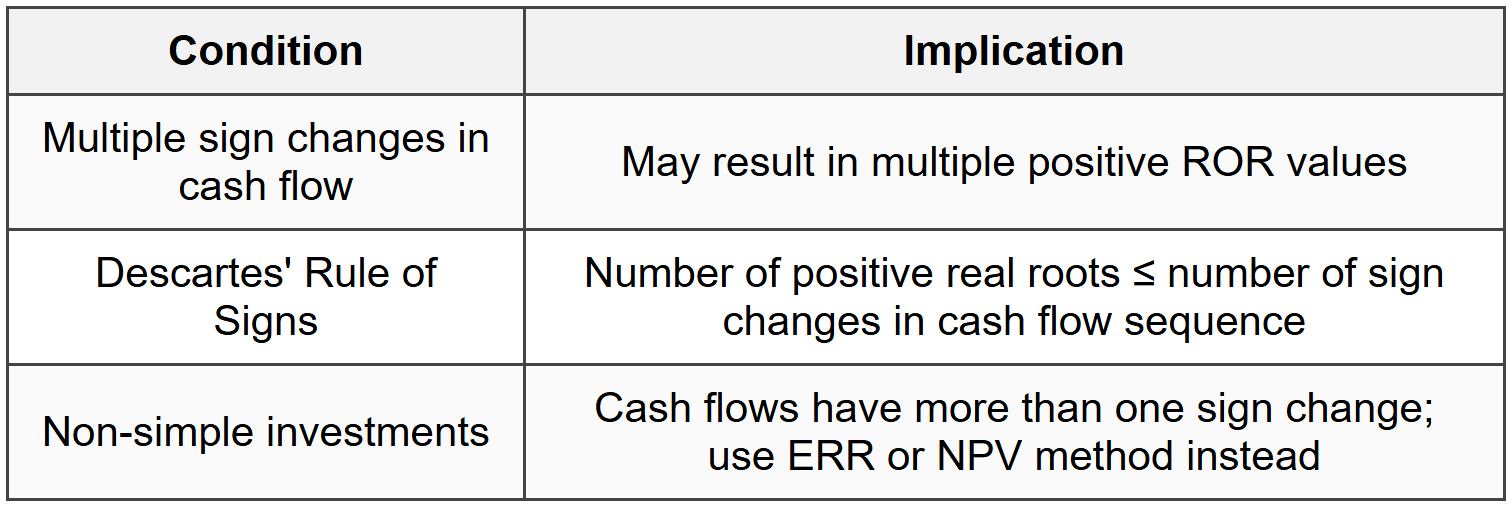
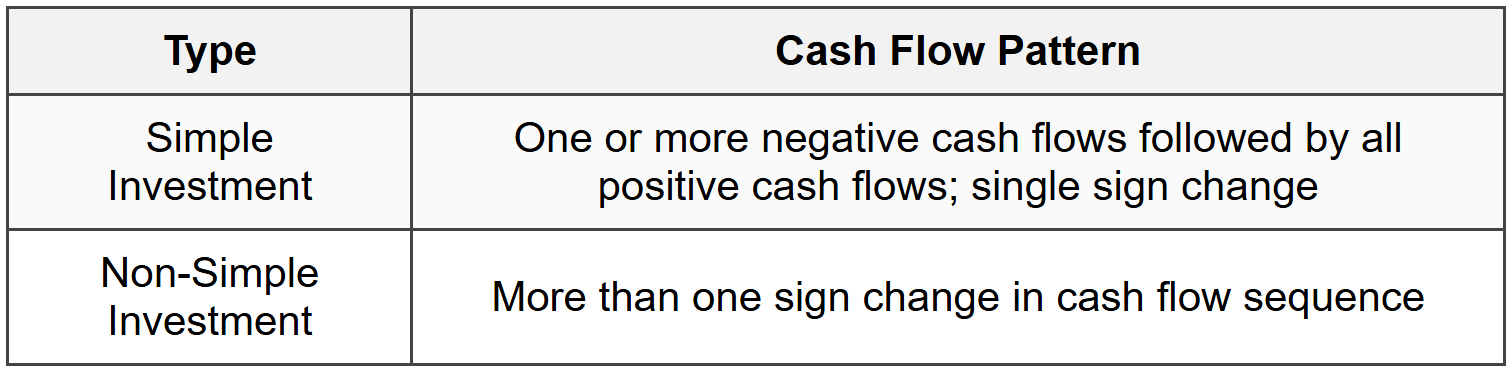
3.3 Simple vs Non-Simple Investments
4. Incremental ROR Analysis
4.1 Two-Alternative Comparison
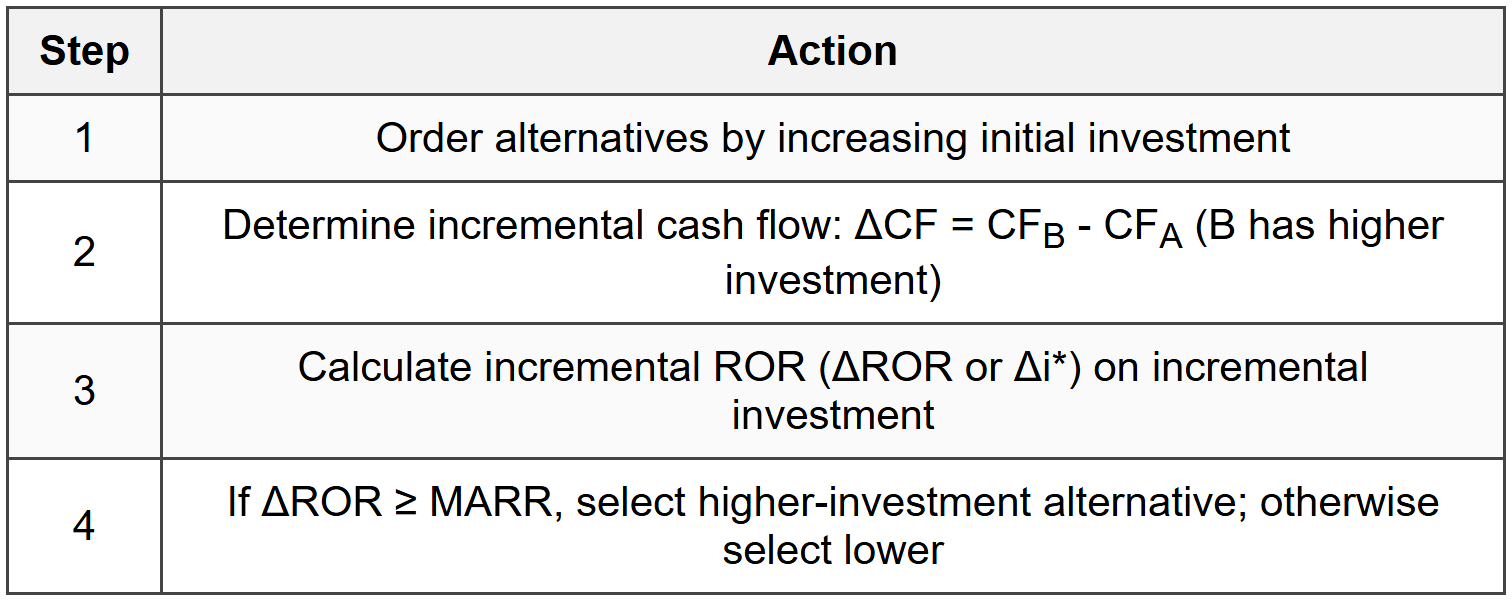
4.2 Incremental Analysis Formula
- 0 = PWB-A = Σ[(CFB,t - CFA,t)/(1+Δi*)t]
- Solve for Δi* and compare to MARR
- Must evaluate incremental investment, not individual RORs
4.3 Multiple Alternative Analysis
- Eliminate alternatives with ROR < marr="" (if="" individual="" rors="">
- Order remaining alternatives by increasing initial cost
- Compare defender (lower cost) vs challenger (next higher cost) incrementally
- Winner becomes new defender; repeat until all alternatives evaluated
- Do-nothing is default defender if included
4.4 Common Errors to Avoid
- Do not select alternative with highest individual ROR
- Do not compare individual RORs directly to each other
- Must perform incremental analysis between alternatives
- Incremental investment must be justified by ΔROR ≥ MARR
5. Special ROR Cases
5.1 Bond ROR (Yield to Maturity)

- Bond premium: Purchase price > face value; yield < coupon="">
- Bond discount: Purchase price < face="" value;="" yield=""> coupon rate
- Bond at par: Purchase price = face value; yield = coupon rate
5.2 External Rate of Return (ERR)

- External rate e = MARR or other specified reinvestment rate
- Solves multiple ROR problem
- More realistic assumption about reinvestment
5.3 Modified Internal Rate of Return (MIRR)
- MIRR = [(FVpositive/PVnegative)1/n] - 1
- FVpositive = future value of positive cash flows at reinvestment rate
- PVnegative = present value of negative cash flows at finance rate
- Eliminates multiple IRR problem
- Finance rate ≠ reinvestment rate in general
6. ROR vs Other Methods
6.1 Comparison with NPV Method
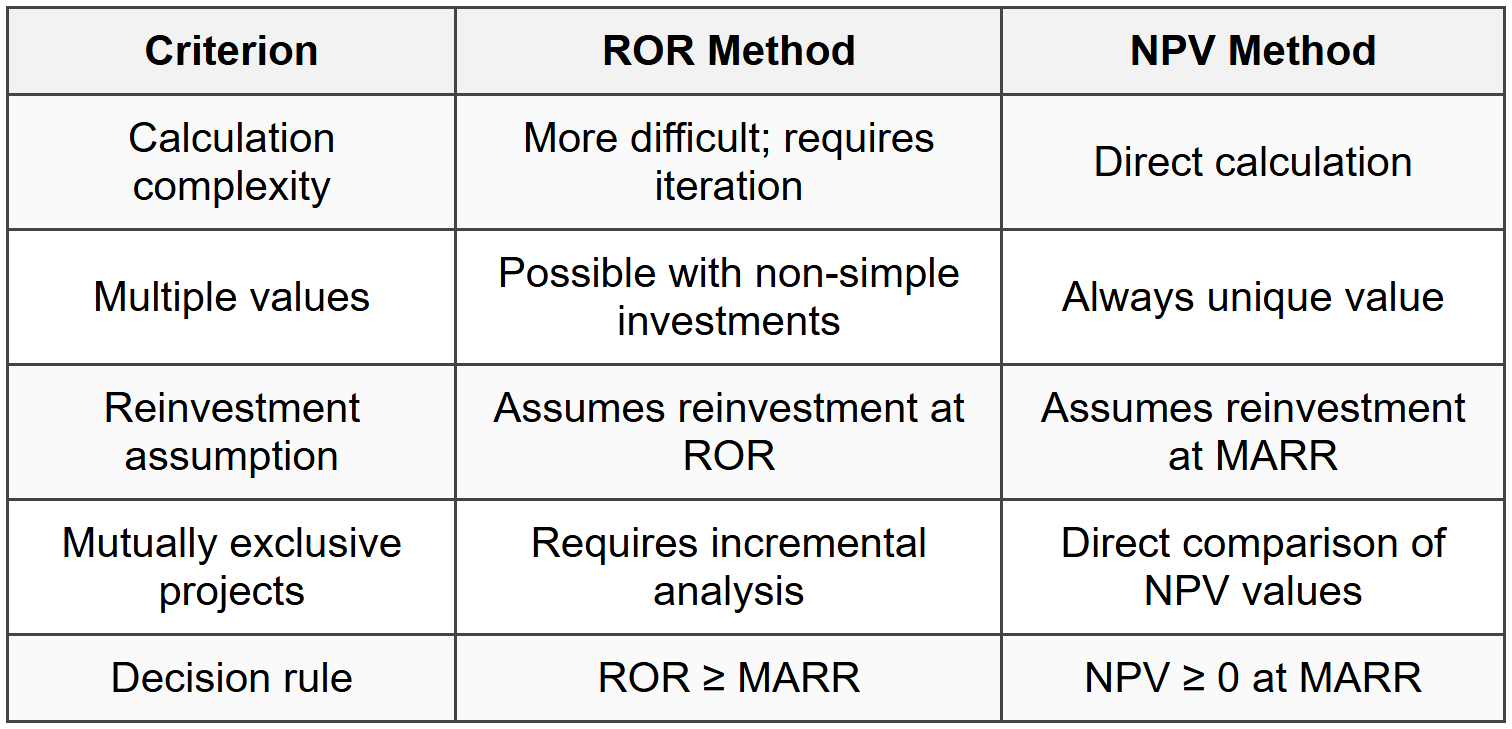
6.2 Relationship Between Methods
- When ROR = MARR, NPV = 0
- When ROR > MARR, NPV > 0
- When ROR < marr,="" npv=""><>
- For simple investments, both methods yield same accept/reject decision
- For mutually exclusive alternatives, incremental ROR = rate where NPVs are equal
7. Practical Considerations
7.1 ROR Calculation Tips
- Start trial rates far apart (e.g., 5% and 50%) to bracket the true ROR
- Narrow range once sign change is detected
- Check for multiple RORs by plotting NPV vs interest rate
- Use spreadsheet tools for complex cash flows
- Verify solution by substituting back into NPV equation
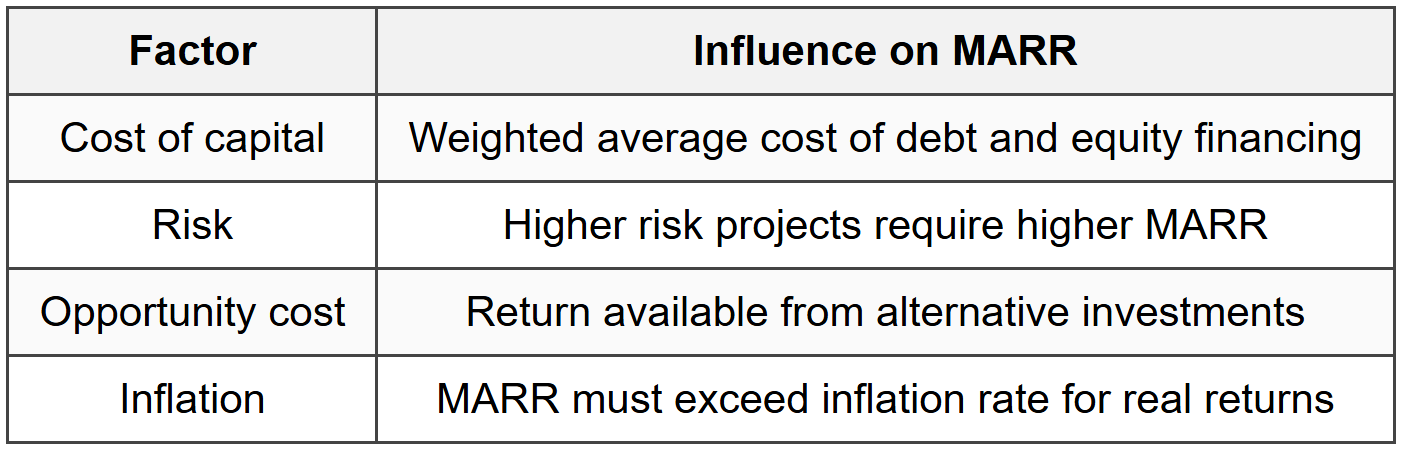
7.2 Setting MARR
7.3 Common Applications
- Capital budgeting decisions
- Equipment replacement analysis
- Lease vs buy decisions
- Bond investment analysis
- Project portfolio selection
- Make vs buy decisions
8. Key Formulas Summary

9. Decision Framework
9.1 Single Project Evaluation
- Identify all cash flows and timing
- Check for simple vs non-simple investment pattern
- Calculate ROR using appropriate method
- Compare ROR to MARR
- Accept if ROR ≥ MARR; reject if ROR <>
9.2 Mutually Exclusive Alternatives
- Ensure all alternatives have same service life (adjust if necessary)
- Order alternatives by increasing initial investment
- Calculate incremental cash flows between consecutive alternatives
- Determine ΔROR for each increment
- Select alternative where all incremental investments are justified (ΔROR ≥ MARR)
9.3 Quick Decision Rules
- Independent projects: Evaluate each against MARR separately
- Mutually exclusive projects: Must use incremental analysis
- Budget constraints: Use incremental analysis and select combination maximizing total NPV
- When in doubt: NPV method is simpler and more reliable than ROR
The document Cheatsheet: Rate of Return is a part of the PE Exam Course Engineering Fundamentals Revision for PE.
All you need of PE Exam at this link: PE Exam
About this Document

Apr 20, 2026 Last updated
Related Exams
Document Description: Cheatsheet: Rate of Return for PE Exam 2026 is part of Engineering Fundamentals Revision for PE preparation. The notes and questions for Cheatsheet: Rate of Return have been prepared according to the PE Exam exam syllabus. Information about Cheatsheet: Rate of Return covers topics like and Cheatsheet: Rate of Return Example, for PE Exam 2026 Exam. Find important definitions, questions, notes, meanings, examples, exercises and tests below for Cheatsheet: Rate of Return.
Introduction of Cheatsheet: Rate of Return in English is available as part of our Engineering Fundamentals Revision for PE for PE Exam & Cheatsheet: Rate of Return in Hindi for Engineering Fundamentals Revision for PE course. Download more important topics related with notes, lectures and mock test series for PE Exam Exam by signing up for free. PE Exam: Cheatsheet: Rate of Return
Description
Cheatsheet: Rate of Return of Engineering Fundamentals Revision to help you remember important concepts with short tricks. Start learning for PE Exam exam & improve retention with EduRev.
Information about Cheatsheet: Rate of Return
In this doc you can find the meaning of Cheatsheet: Rate of Return defined & explained in the simplest way possible. Besides explaining types of Cheatsheet: Rate of Return theory, EduRev gives you an ample number of questions to practice Cheatsheet: Rate of Return tests, examples and also practice PE Exam tests



Related Searches
shortcuts and tricks, Sample Paper, Extra Questions, Viva Questions, video lectures, Cheatsheet: Rate of Return, mock tests for examination, Cheatsheet: Rate of Return, Previous Year Questions with Solutions, Objective type Questions, Cheatsheet: Rate of Return, pdf , Summary, past year papers, Free, Exam, ppt, Important questions, practice quizzes, Semester Notes, MCQs, study material;