PE Exam Exam > PE Exam Notes > Engineering Fundamentals Revision for PE > Cheatsheet: Cost-benefit Analysis
Cheatsheet: Cost-benefit Analysis


1. Cost-Benefit Analysis Fundamentals
1.1 Core Definitions

1.2 Key Components
- Direct Costs: Explicit monetary expenditures (materials, labor, equipment)
- Indirect Costs: Overhead, administrative expenses, maintenance
- Tangible Benefits: Quantifiable monetary gains (revenue, cost savings)
- Intangible Benefits: Non-monetary advantages (reputation, employee morale, safety)
- External Costs/Benefits: Impacts on third parties not directly involved in the transaction
2. Time Value of Money
2.1 Present Value and Future Value
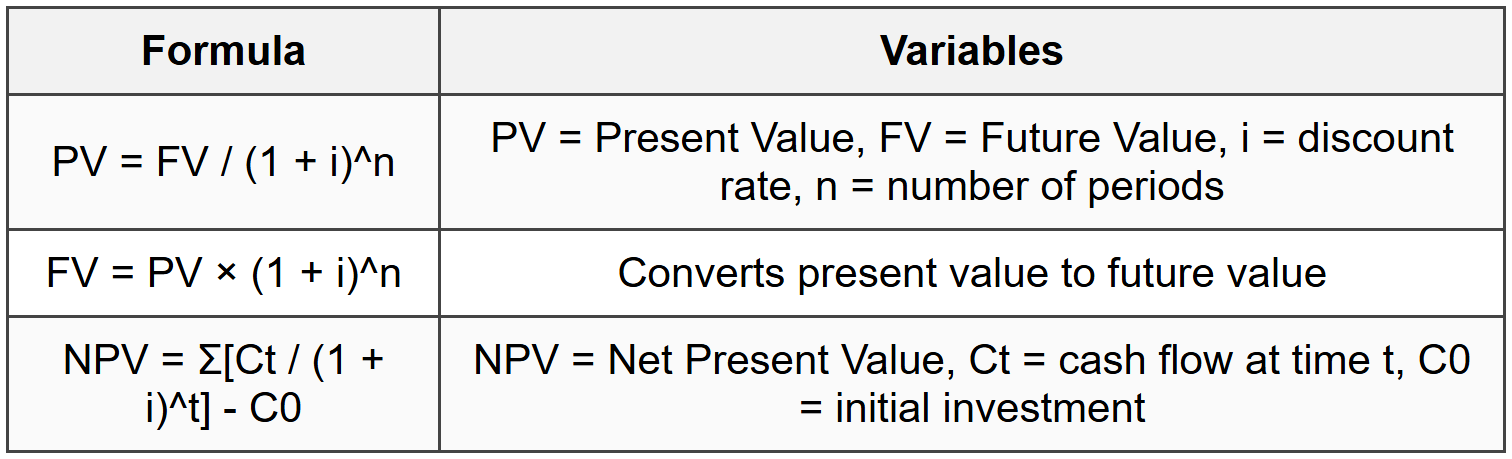
2.2 Annuity Formulas

2.3 Gradient Formulas

3. Economic Decision Criteria
3.1 Net Present Value (NPV)

3.2 Internal Rate of Return (IRR)

3.3 Benefit-Cost Ratio (BCR)
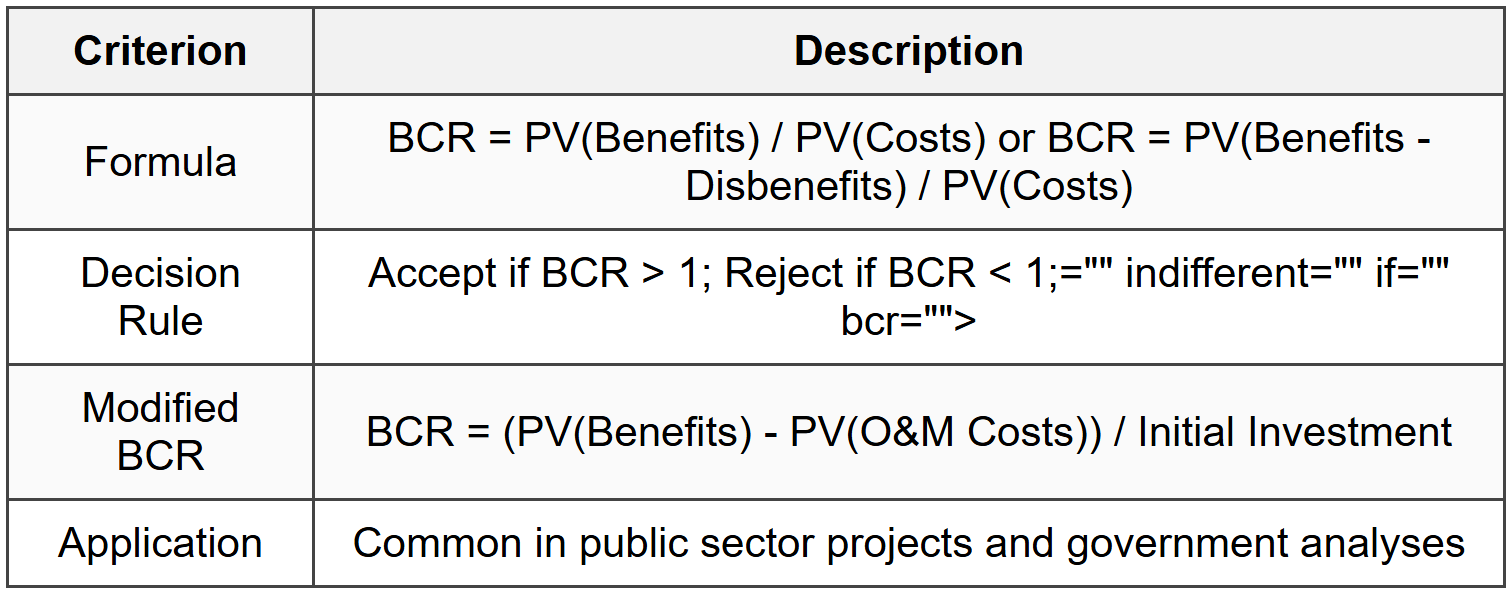
3.4 Payback Period

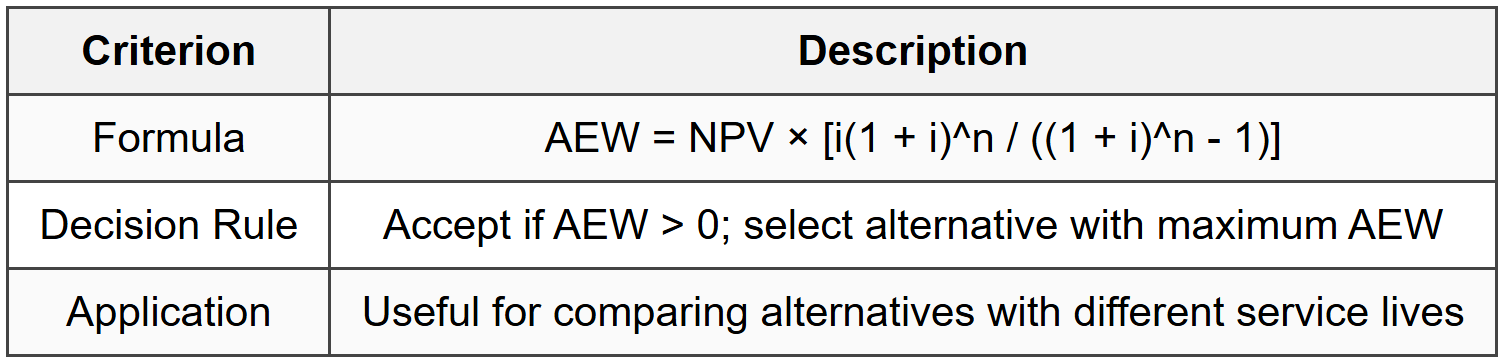
3.5 Annual Equivalent Worth (AEW)
4. Comparing Alternatives
4.1 Mutually Exclusive Alternatives

4.2 Unequal Service Lives

4.3 Incremental Analysis Decision Rule
- Order alternatives by increasing initial cost
- Start with lowest cost alternative as defender
- Compare defender to next higher cost challenger using incremental cash flows
- If ΔIRR > MARR (or ΔNPV > 0), challenger becomes new defender
- If ΔIRR < marr="" (or="" δnpv="">< 0),="" retain="">
- Continue until all alternatives evaluated
5. Depreciation and Taxes
5.1 Depreciation Methods

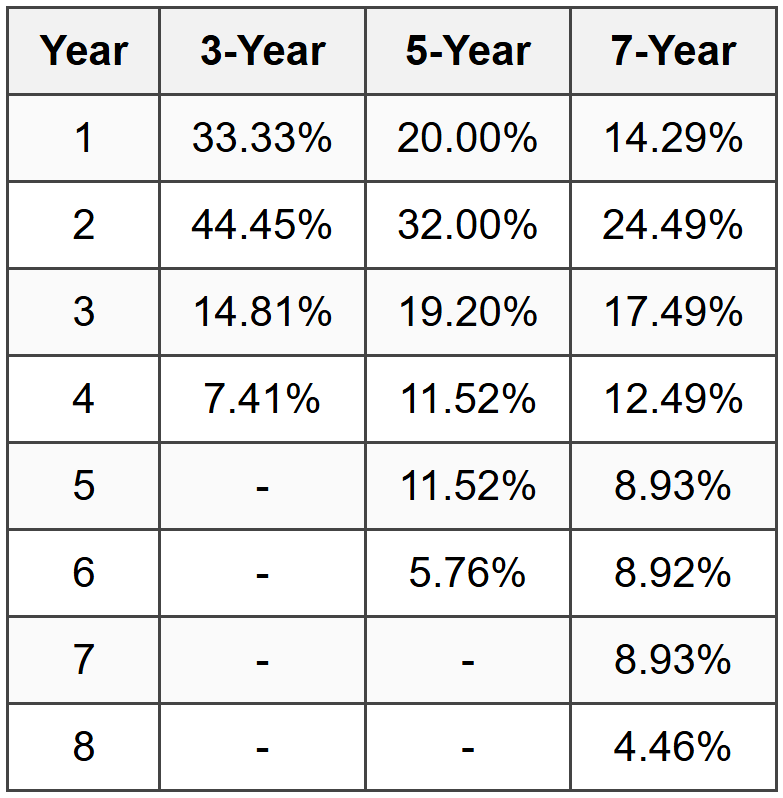
5.2 MACRS Depreciation
- 3-year property: Special tools, tractor units
- 5-year property: Automobiles, computers, office equipment
- 7-year property: Office furniture, most machinery and equipment
- Half-year convention: Asset placed in service at midpoint of first year
- No salvage value: MACRS depreciates to zero book value
5.3 After-Tax Cash Flow Analysis

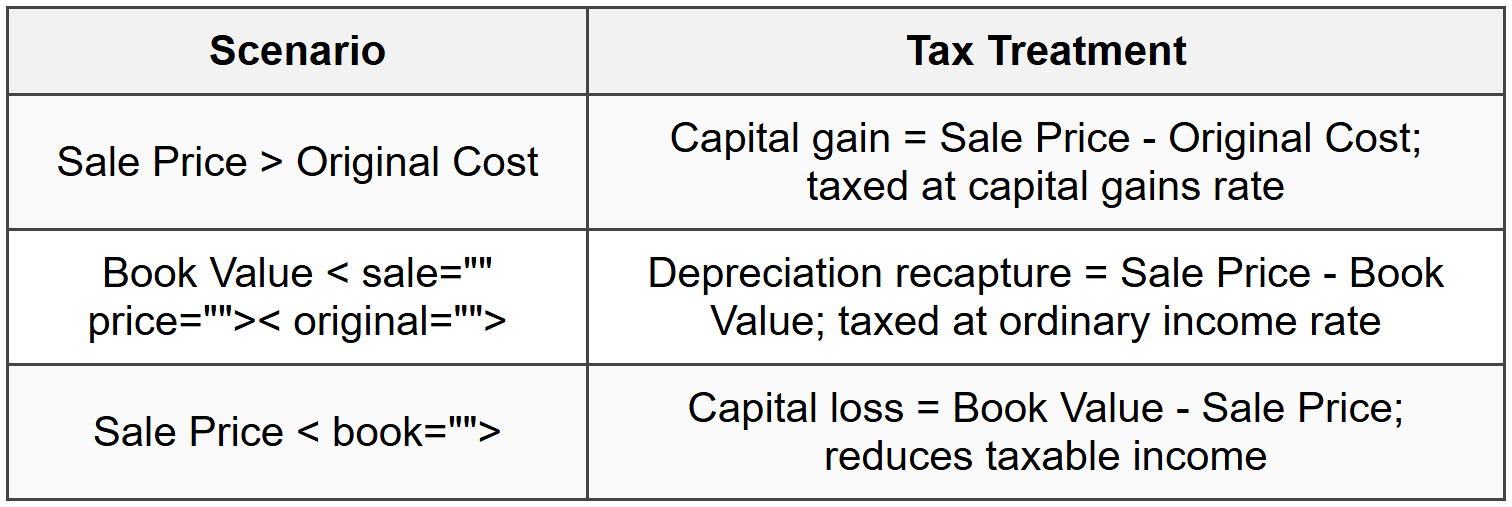
5.4 Capital Gains and Losses
6. Inflation and Cost Estimation
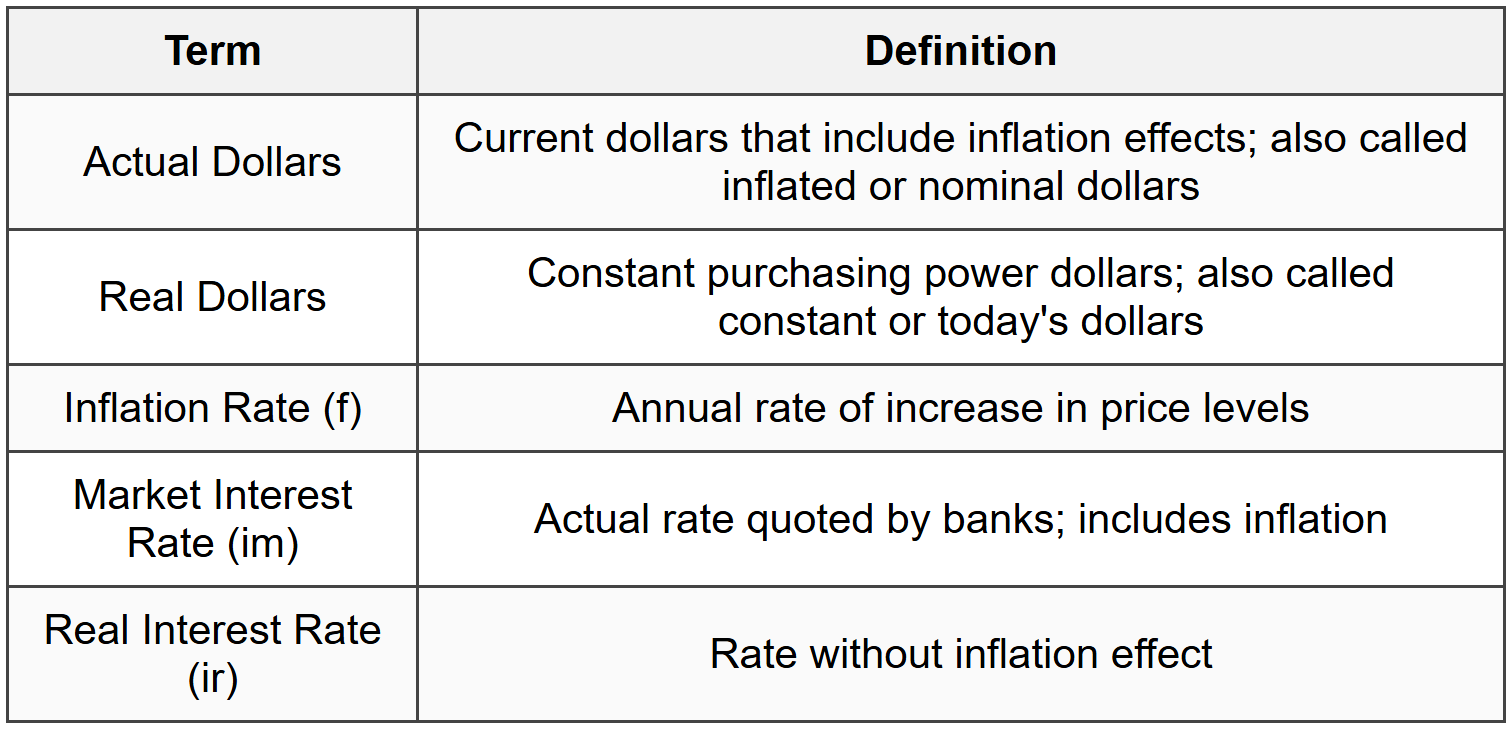
6.1 Inflation Concepts
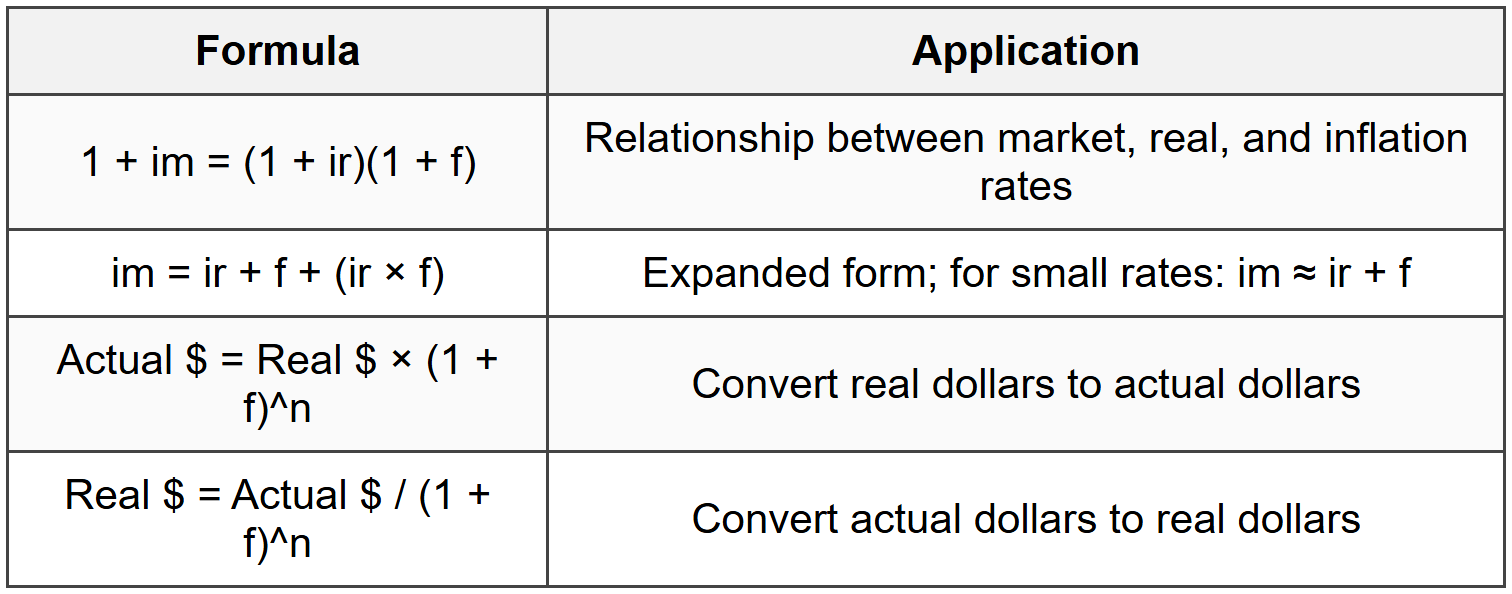
6.2 Inflation Formulas
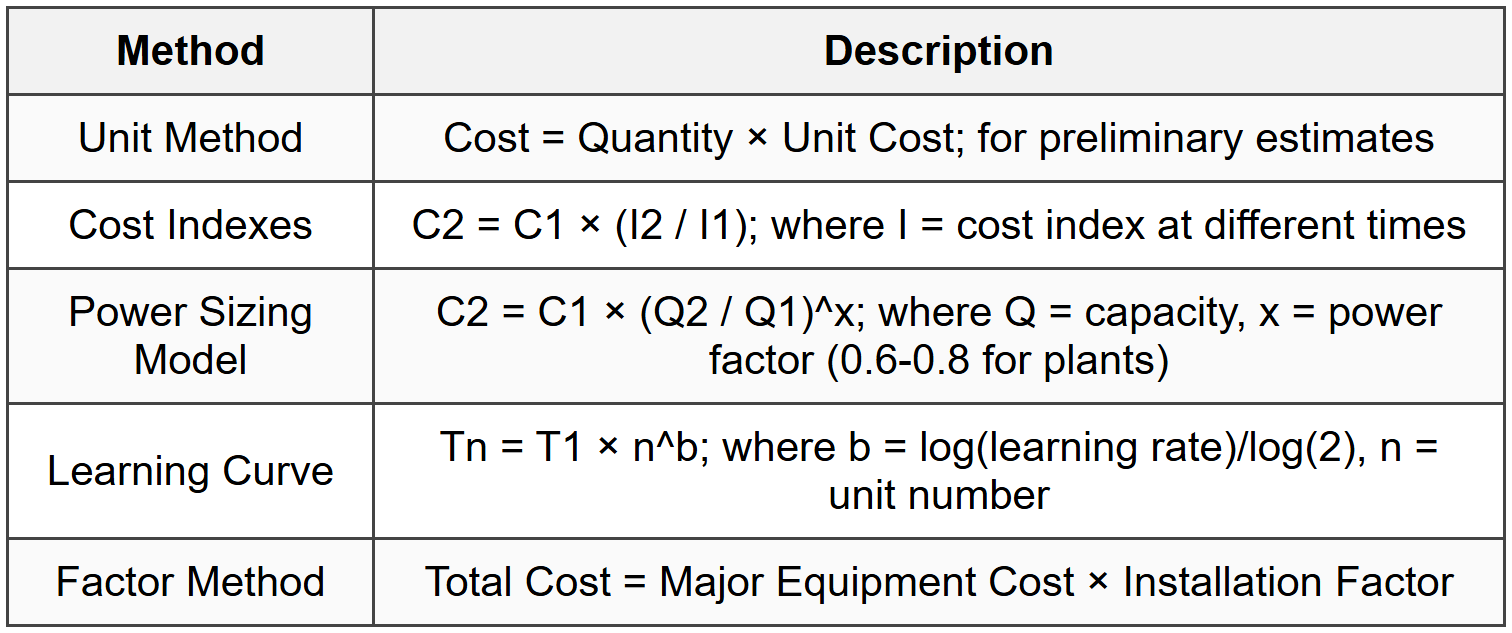
6.3 Cost Estimation Methods
6.4 Common Cost Indexes
- Consumer Price Index (CPI): Measures changes in price level of consumer goods and services
- Producer Price Index (PPI): Measures changes in selling prices received by domestic producers
- Chemical Engineering Plant Cost Index (CEPCI): Tracks capital cost trends in chemical industry
- Marshall & Swift Equipment Cost Index: Process industry equipment costs
7. Risk and Uncertainty Analysis
7.1 Decision Analysis Under Uncertainty

7.2 Risk Measures
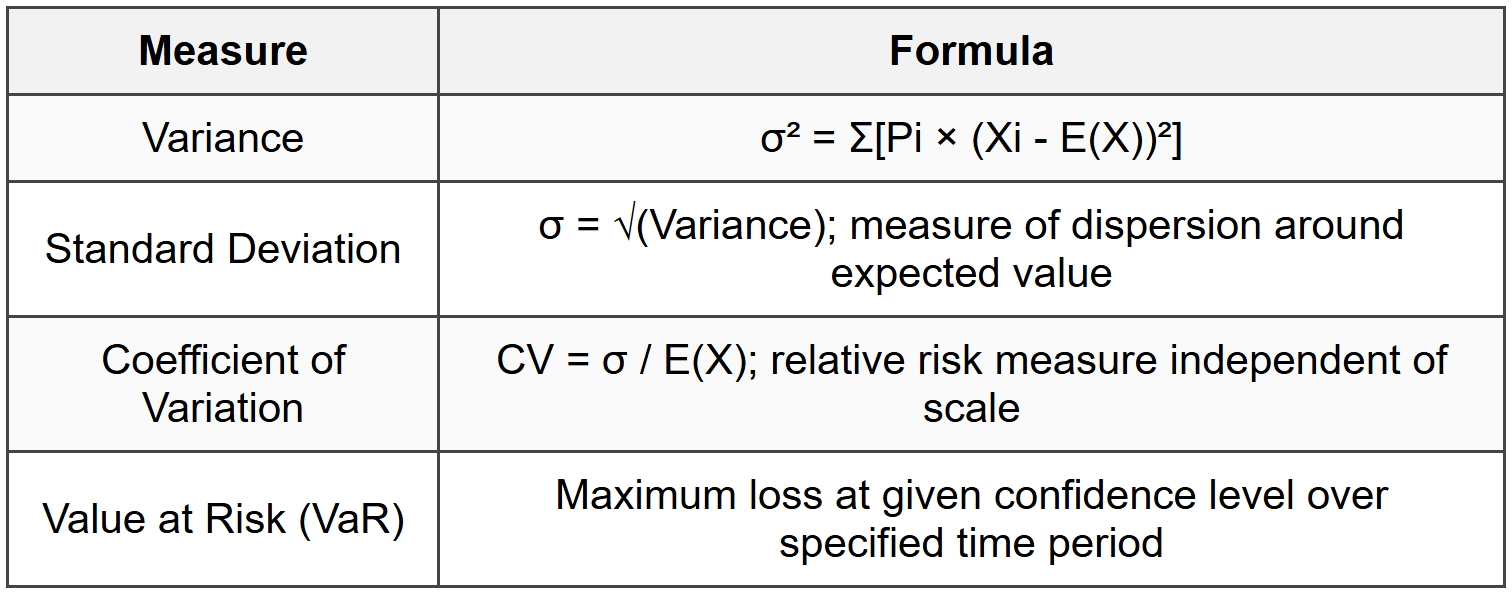
7.3 Sensitivity Analysis
- Purpose: Determine how changes in input variables affect output measure (NPV, IRR)
- One-at-a-time: Vary one parameter while holding others constant
- Breakeven Analysis: Find value where NPV = 0 or two alternatives are equivalent
- Spider Diagram: Plot multiple variables' effects on single output
- Tornado Diagram: Rank variables by impact magnitude
7.4 Decision Trees
- Decision nodes (squares): Points where decision maker chooses between alternatives
- Chance nodes (circles): Points where probabilistic outcomes occur
- Calculate expected values by working backward from terminal nodes
- Select path with highest expected monetary value at each decision node
- Expected Value of Perfect Information (EVPI) = EV with perfect info - EV without perfect info
7.5 Scenario Analysis

8. Replacement Analysis
8.1 Replacement Terminology
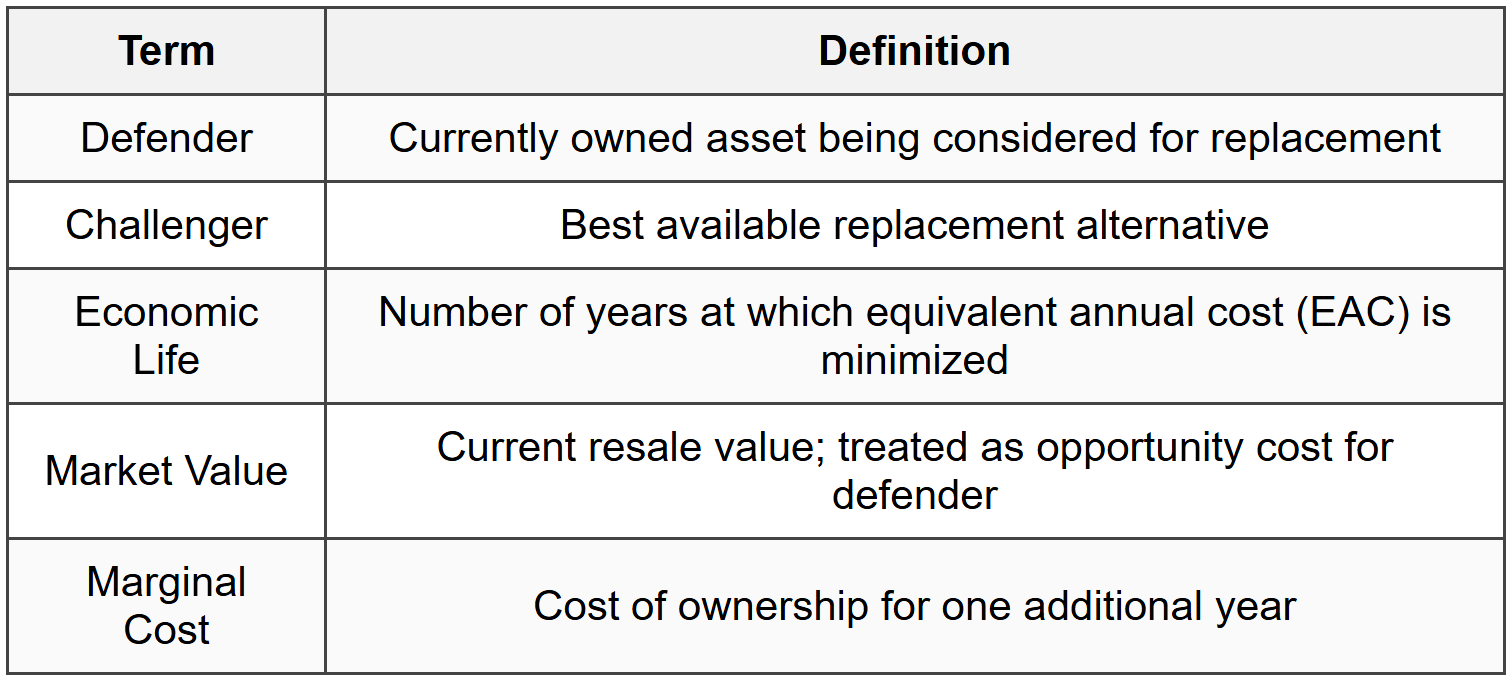
8.2 Replacement Analysis Procedure
- Sunk costs are irrelevant; use current market value as defender's initial cost
- Calculate economic life and minimum EAC for both defender and challenger
- Compare defender's marginal cost for next year with challenger's minimum EAC
- Replace when defender's marginal cost exceeds challenger's minimum EAC
- If asset serves different periods, use annual worth method
8.3 Economic Life Calculation

8.4 Replacement Decision Rules

9. Public Sector and Social Projects
9.1 Public vs. Private Projects
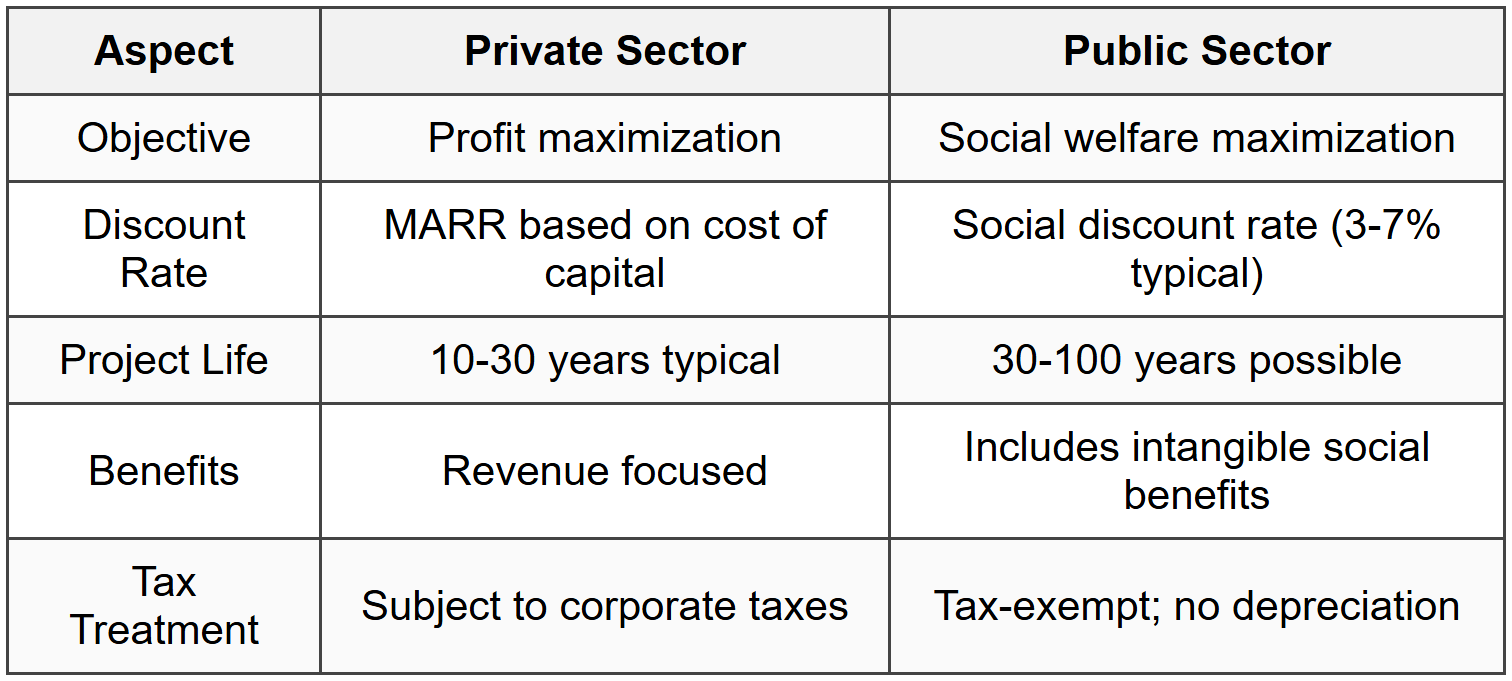
9.2 Social Discount Rate
- Social Rate of Time Preference: Rate at which society values present vs. future consumption
- Social Opportunity Cost: Return on displaced private investment
- Federal OMB guidance: 7% real discount rate for cost-benefit analyses
- Intergenerational Projects: Lower rates (2-3%) for long-term environmental projects
9.3 Benefit Classification
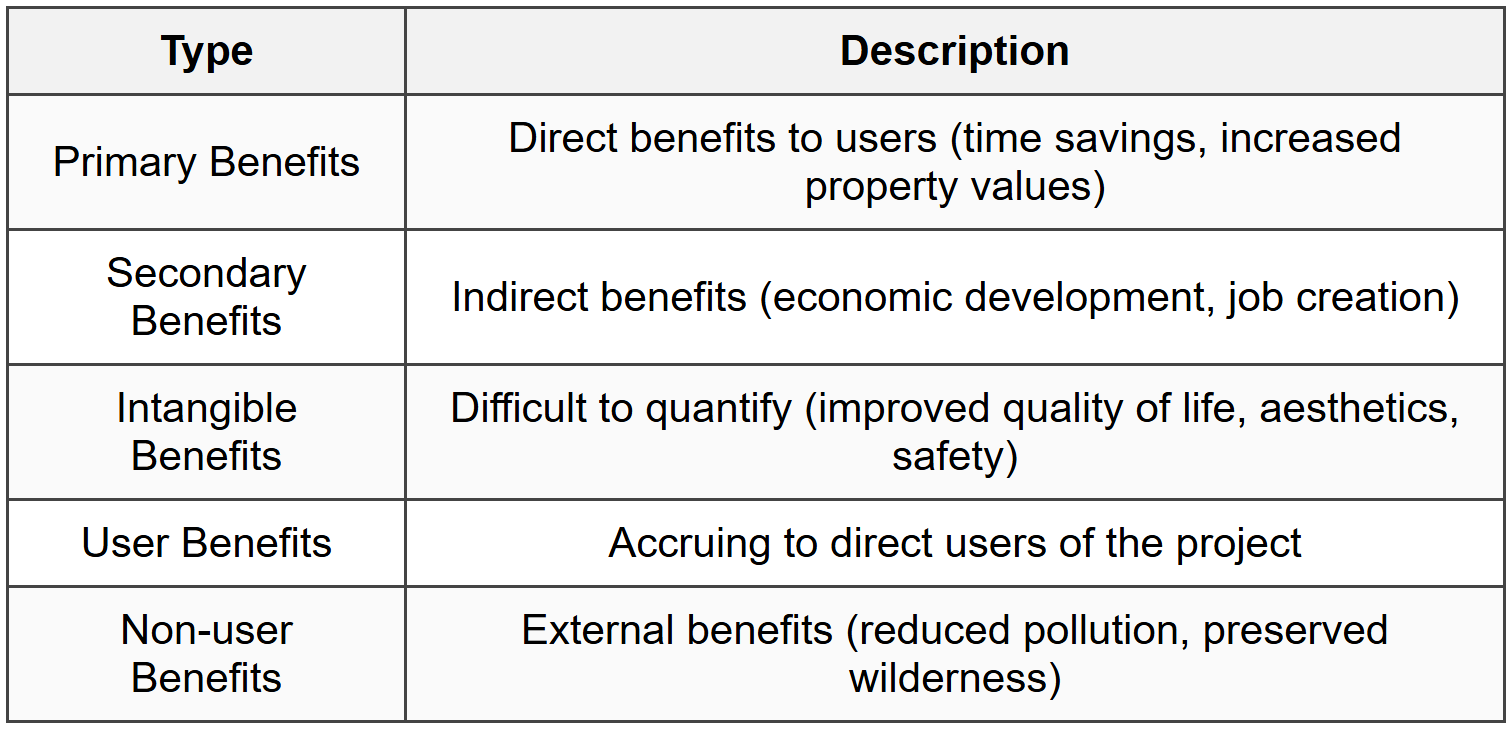
9.4 Cost Allocation
- Separable Costs: Costs attributable to single purpose in multi-purpose project
- Joint Costs: Costs common to multiple purposes; require allocation
- Proportional Use: Allocate based on relative usage or capacity
- Benefit-Based: Allocate in proportion to benefits received
- Incremental Cost Method: Allocate based on cost increases from adding each purpose
9.5 Public Project Evaluation

10. Break-Even and Make-or-Buy Analysis
10.1 Break-Even Analysis Fundamentals
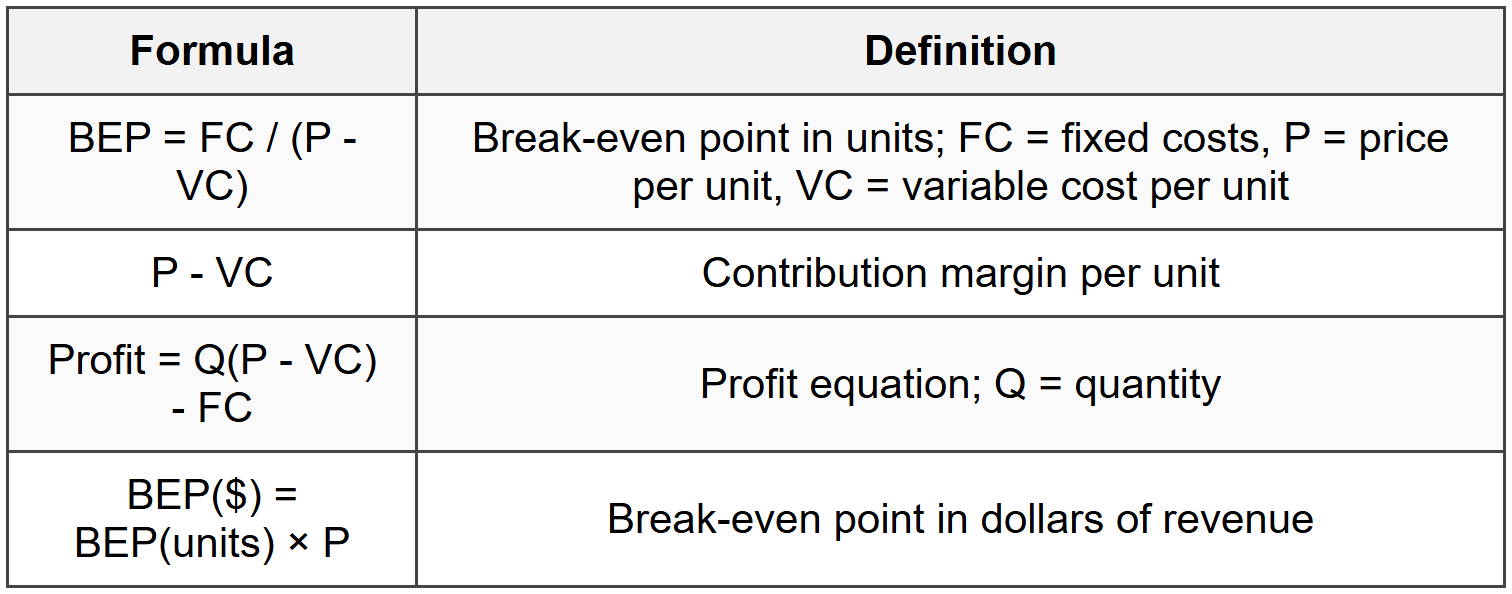
10.2 Break-Even Between Alternatives
- Set total cost equations equal: TC1 = TC2
- Solve for the activity level (units, hours, volume) where costs are equal
- Select alternative with lower cost beyond break-even point
- Multiple alternatives: compare pairwise to identify relevant ranges
10.3 Make-or-Buy Decisions
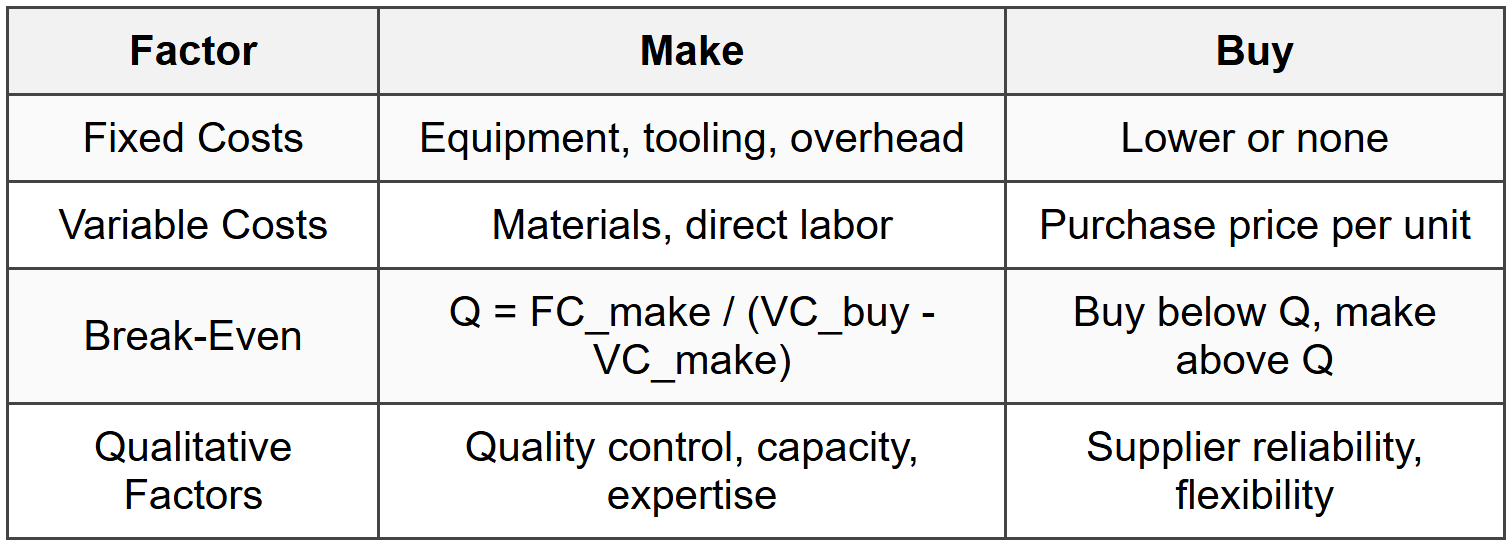
10.4 Lease-or-Buy Analysis
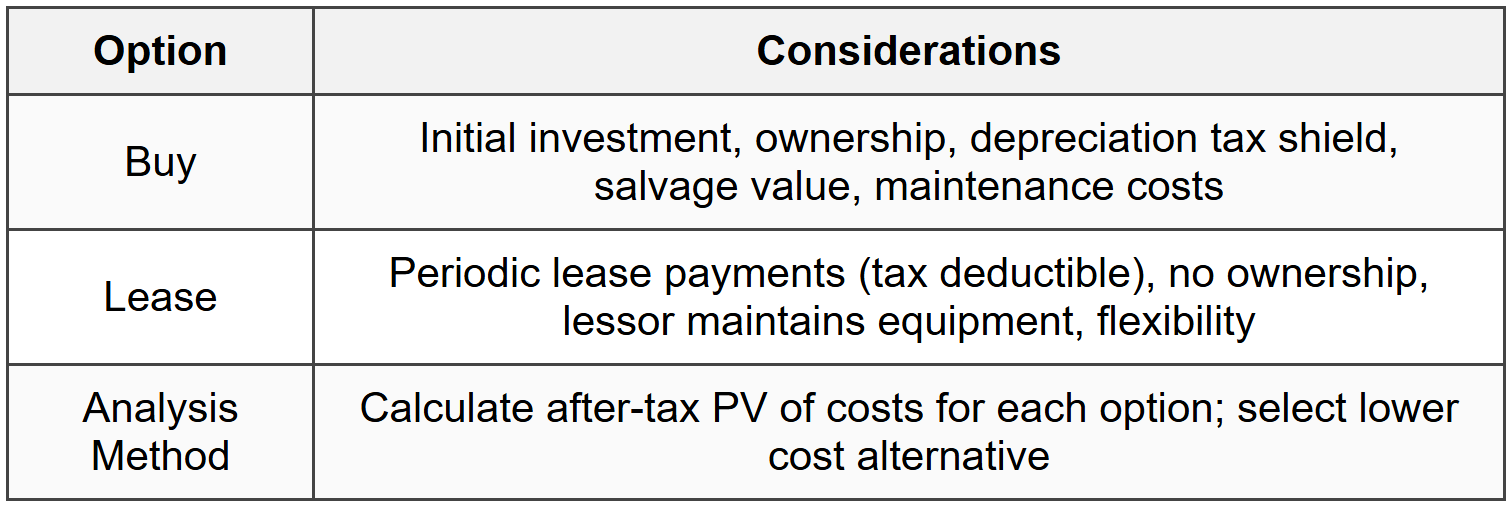
11. Key Decision-Making Principles
11.1 Core Principles
- Only differences matter: Ignore costs and benefits common to all alternatives
- Ignore sunk costs: Past expenditures that cannot be recovered are irrelevant
- Include opportunity costs: Value of foregone alternatives must be considered
- Consider time value of money: Cash flows at different times are not directly comparable
- Use marginal analysis: Compare incremental benefits with incremental costs
- Separate financing from investment: Evaluate project viability independent of financing method
11.2 Common Pitfalls
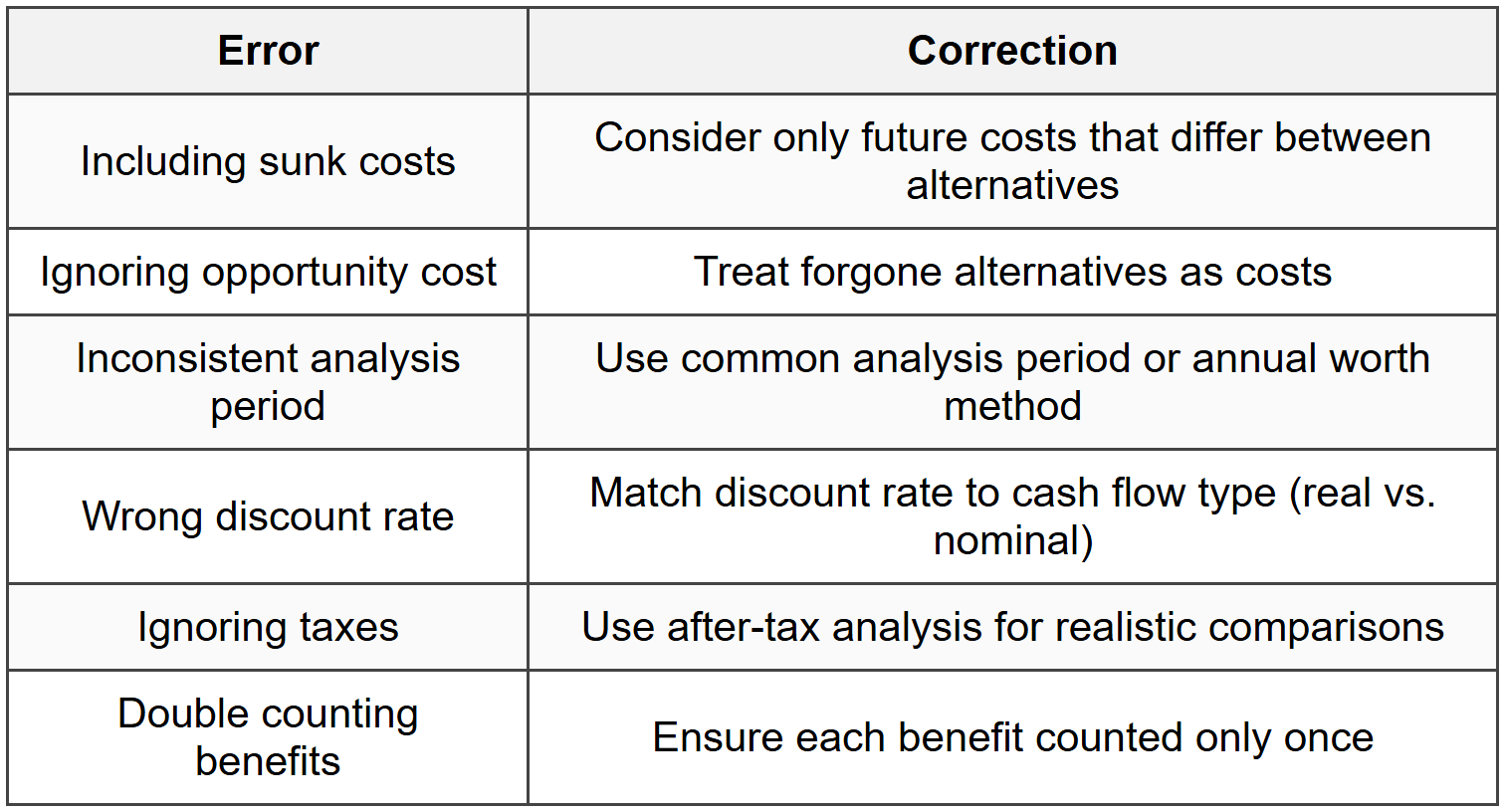
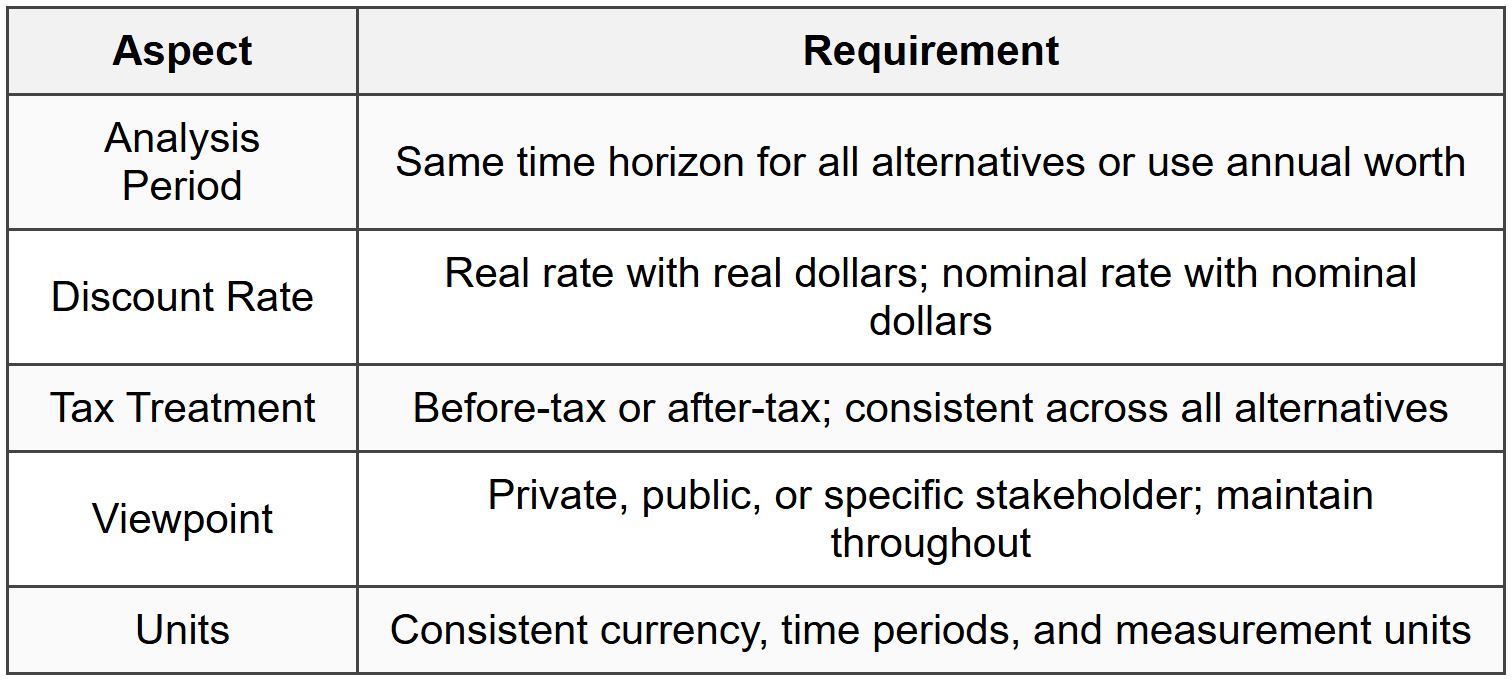
11.3 Consistency Requirements
The document Cheatsheet: Cost-benefit Analysis is a part of the PE Exam Course Engineering Fundamentals Revision for PE.
All you need of PE Exam at this link: PE Exam
About this Document

Apr 20, 2026 Last updated
Related Exams
Document Description: Cheatsheet: Cost-benefit Analysis for PE Exam 2026 is part of Engineering Fundamentals Revision for PE preparation. The notes and questions for Cheatsheet: Cost-benefit Analysis have been prepared according to the PE Exam exam syllabus. Information about Cheatsheet: Cost-benefit Analysis covers topics like and Cheatsheet: Cost-benefit Analysis Example, for PE Exam 2026 Exam. Find important definitions, questions, notes, meanings, examples, exercises and tests below for Cheatsheet: Cost-benefit Analysis.
Introduction of Cheatsheet: Cost-benefit Analysis in English is available as part of our Engineering Fundamentals Revision for PE for PE Exam & Cheatsheet: Cost-benefit Analysis in Hindi for Engineering Fundamentals Revision for PE course. Download more important topics related with notes, lectures and mock test series for PE Exam Exam by signing up for free. PE Exam: Cheatsheet: Cost-benefit Analysis
Description
Cheatsheet: Cost of Engineering Fundamentals Revision to help you remember important concepts with short tricks. Start learning for PE Exam exam & improve retention with EduRev.
Information about Cheatsheet: Cost-benefit Analysis
In this doc you can find the meaning of Cheatsheet: Cost-benefit Analysis defined & explained in the simplest way possible. Besides explaining types of Cheatsheet: Cost-benefit Analysis theory, EduRev gives you an ample number of questions to practice Cheatsheet: Cost-benefit Analysis tests, examples and also practice PE Exam tests
Top Courses for PE Exam
Related Searches
Exam, Previous Year Questions with Solutions, Cheatsheet: Cost-benefit Analysis, ppt, study material, Semester Notes, video lectures, mock tests for examination, Extra Questions, Free, Summary, shortcuts and tricks, Objective type Questions, Viva Questions, Sample Paper, Cheatsheet: Cost-benefit Analysis, MCQs, Cheatsheet: Cost-benefit Analysis, practice quizzes, pdf , past year papers, Important questions;