CBSE Class 8 > Class 8 Notes > Social Studies (SST) > Natural Vegetation & Wildlife - Land, Soil & Water Resources
Natural Vegetation & Wildlife - Land, Soil & Water Resources

Biosphere
- Natural vegetation and wildlife exist only in the narrow zone of contact between the lithosphere, hydrosphere and atmosphere that we call biosphere.
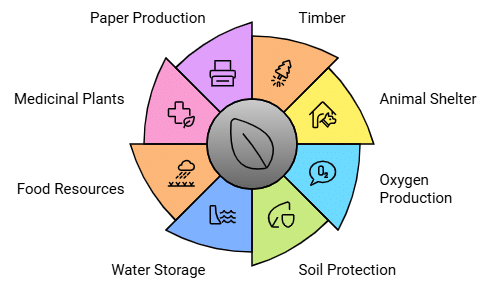
- In the biosphere living beings are interrelated and interdependent on each other for survival.
- This life-supporting system is known as the ecosystem. Vegetation and wildlife are valuable resources.
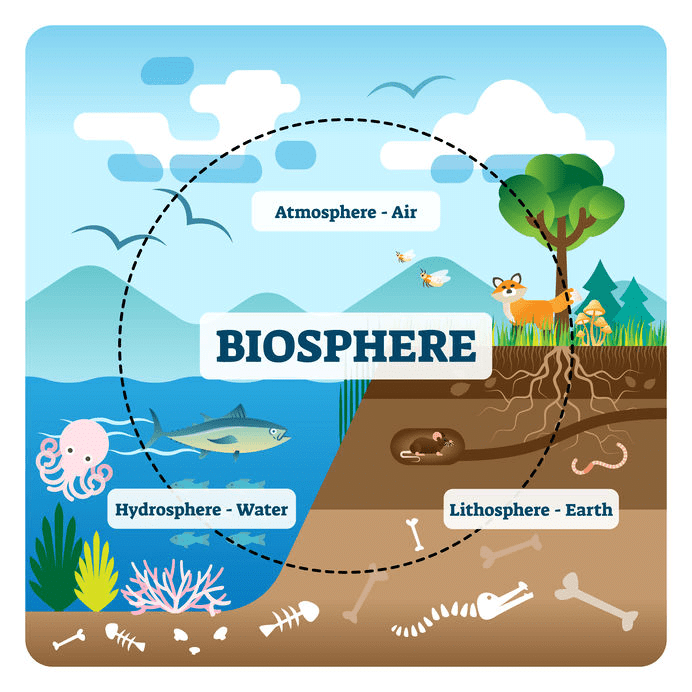
- Plants provide us with timber, give shelter to animals, produce oxygen we breathe, protect soils so essential for growing crops, act as shelter belts, help in storage of underground water, give us fruits, nuts, latex, turpentine oil, gum, medicinal plants and also the paper that is essential for your studies. There are innumerable uses of plants and you can add some more.
MULTIPLE CHOICE QUESTIONTry yourself: What are some of the valuable resources provided by plants in the biosphere?
Importance of Wildlife
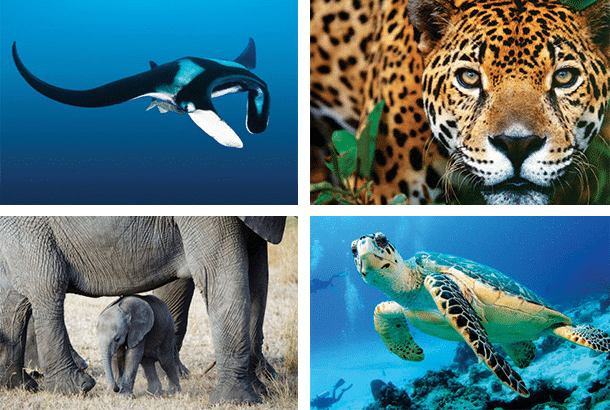
- Wildlife includes animals, birds, insects as well as the aquatic life forms. They provide us with milk, meat, hides and wool.
- Insects like bees provide us honey, help in pollination of flowers and have an important role to play as decomposers in the ecosystem.
- The birds feed on insects and act as decomposers as well. Vulture due to its ability to feed on dead livestock is a scavenger and is considered a vital cleanser of the environment. So animals big or small, all are integral to maintaining balance in the ecosystem.
 Wildlife
Distribution of Natural Vegetation
- The growth of vegetation depends primarily on temperature and moisture. The major vegetation types of the world are grouped as forests, grasslands, scrubs and tundra.
- In areas of heavy rainfall, huge trees may thrive. The forests are thus associated with areas having an abundant water supply.
- As the amount of moisture decreases the size of trees and their density reduces.
- In the regions of moderate rainfall, short stunted trees and grasses grow forming the grasslands of the world.
- In dry areas of low rainfall, thorny shrubs and scrubs grow. In such areas plants have deep roots and leaves have thorny and waxy surface to reduce loss of moisture by transpiration.
- Tundra vegetation of cold Polar Regions comprises of mosses and lichens.
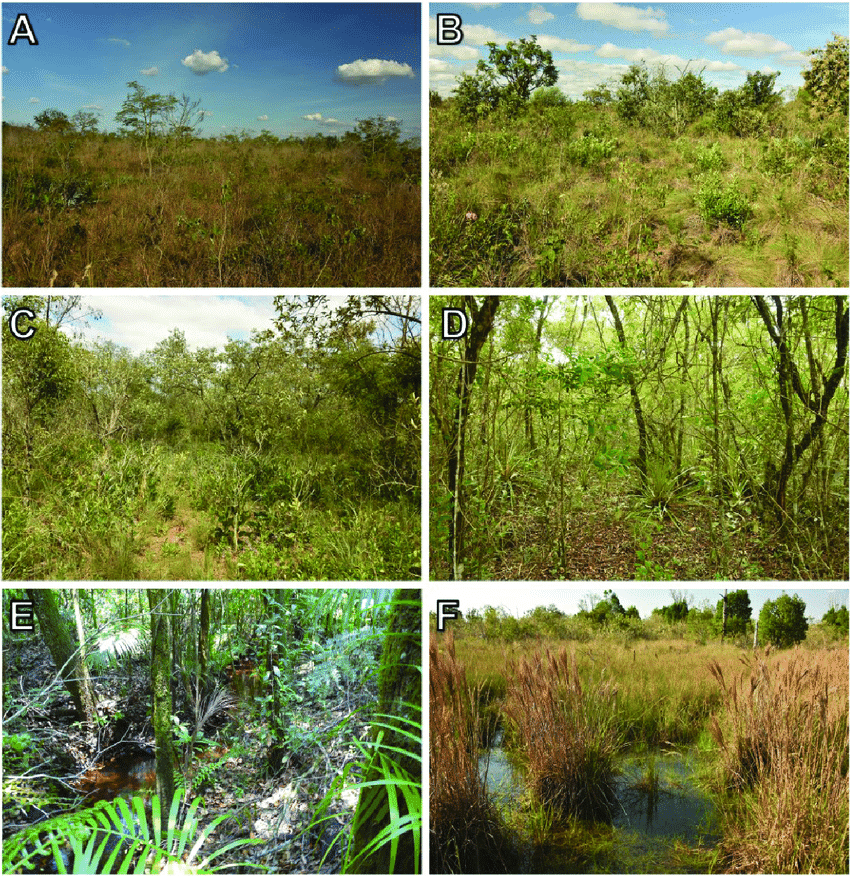 (A) Grassy scrubland, (B) Grassy scrubland with scattered trees, (C) Dense savanna, (D) Cerrado woodland, (E) Gallery forest, (F) Wet field.
Evergreen & Deciduous Forests
- Forests are broadly classified as evergreen and deciduous depending on when they shed their leaves.
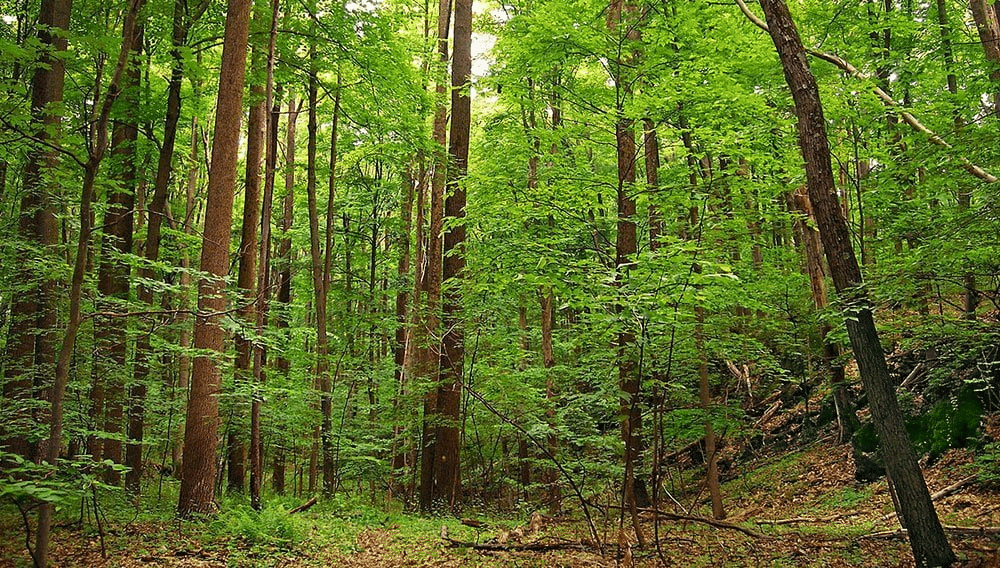 Deciduous Forest
- Evergreen forests do not shed their leaves simultaneously in any season of the year.
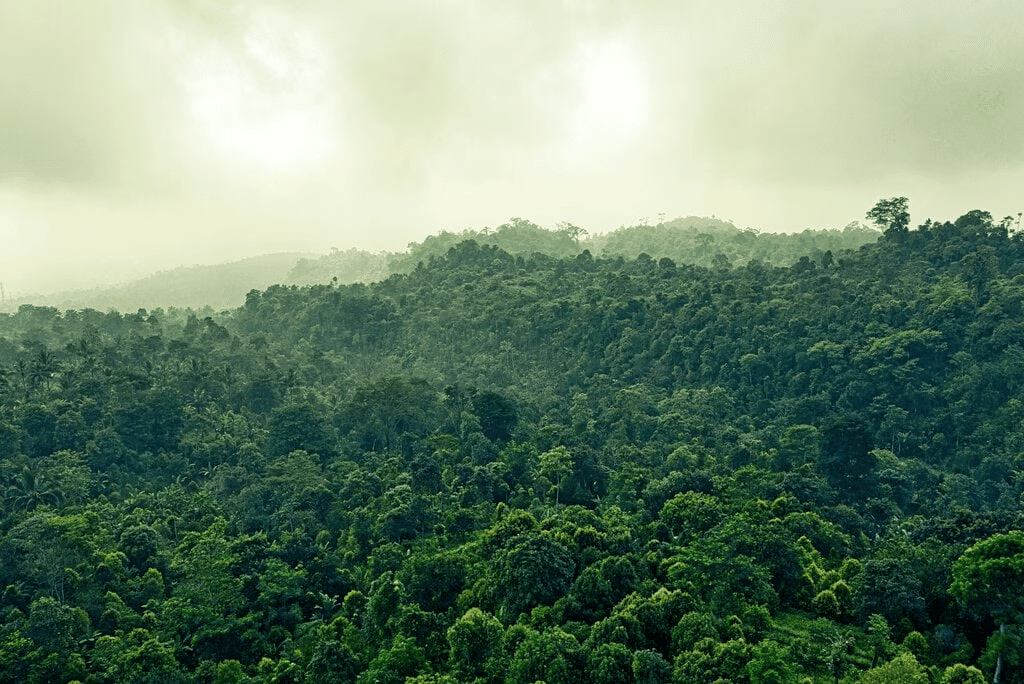 Evergreen Forest
 - Deciduous forests shed their leaves in a particular season to conserve loss of moisture through transpiration.
- These forests are further classified as tropical or temperate based on their location in different latitudes.
Try yourself: How do bees contribute to the ecosystem?MULTIPLE CHOICE QUESTION
Conservation of Natural Vegetation and Wildlife
- Forests are our wealth. Plants give shelter to the animals and together they maintain the ecosystem.
- Changes in climate and human interference can cause the loss of natural habitats for plants and animals.
- Many species have become vulnerable or endangered and some are on the verge of extinction.
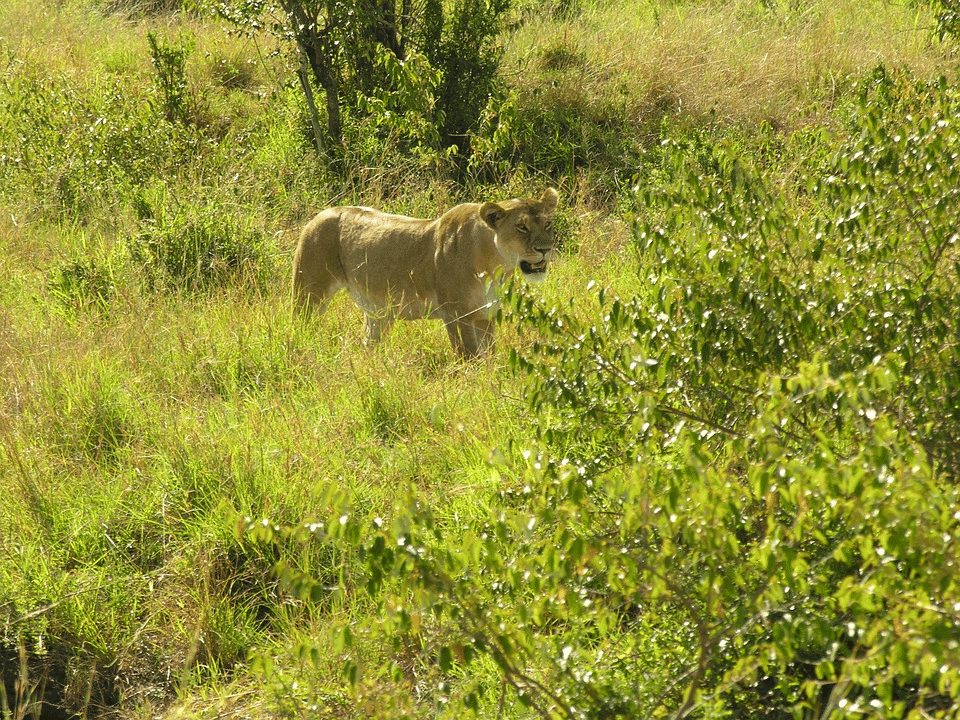 Natural Vegetation and Wildlife
- Deforestation, soil erosion, constructional activities, forest fires, tsunamis and landslides are some of the human-made and natural factors which together accelerate the process of extinction of these great natural resources.
- One of the major concerns is the increasing incidents of poaching that result in a sharp decline in the number of particular species.
- The animals are poached for collection and illegal trade of hides, skins, nails, teeth, horns as well as feathers. Some of these animals are tigers, lions, elephants, deer, blackbuck, crocodile, rhinoceros, snow leopard, ostrich and peacock.
- There is a balance in the environment if the relative number of species is not disturbed.
- Human activities in several parts of the world have disturbed the natural habitats of many species.
- Due to indiscriminate killings, several birds and animals have either become extinct or are on the verge of extinction.
- Awareness programs like social forestry and Vanmohatasava should be encouraged at the regional and community level.
- School children should be encouraged to watch birds and visit nature campus so that they appreciate the habitat of varied species.
The document Natural Vegetation & Wildlife - Land, Soil & Water Resources is a part of the Class 8 Course Social Studies (SST) Class 8.
All you need of Class 8 at this link: Class 8
FAQs on Natural Vegetation & Wildlife - Land, Soil & Water Resources
| 1. What is the biosphere and why is it important? |  |
Ans. The biosphere refers to the global sum of all ecosystems, where life exists on Earth, including land, water, and the atmosphere. It is important because it supports all living organisms by providing essential resources such as food, water, and oxygen. The biosphere also plays a crucial role in regulating climate and maintaining ecological balance.
| 2. How does wildlife contribute to the ecosystem? | |
Ans. Wildlife contributes to the ecosystem in various ways, such as pollination, seed dispersal, and maintaining food chains. Different species interact with one another and their environment, helping to sustain biodiversity, which is vital for ecosystem resilience and the overall health of the planet.
| 3. What are the main types of natural vegetation found around the world? | |
Ans. The main types of natural vegetation include forests (such as evergreen and deciduous forests), grasslands, deserts, and tundra. Each type of vegetation is adapted to its environment and plays a unique role in supporting wildlife and maintaining ecological balance.
| 4. What is the difference between evergreen and deciduous forests? | |
Ans. Evergreen forests are characterized by trees that retain their leaves throughout the year, allowing for continuous photosynthesis. In contrast, deciduous forests consist of trees that shed their leaves during certain seasons, usually in response to cold or dry conditions. This difference affects the biodiversity and types of wildlife each forest type can support.
| 5. Why is the conservation of natural vegetation and wildlife essential? | |
Ans. The conservation of natural vegetation and wildlife is essential for several reasons, including maintaining biodiversity, ensuring ecosystem stability, and providing resources for human survival. Protecting these natural resources helps combat climate change, prevents habitat destruction, and supports the overall health of the planet for future generations.
About this Document

19K Views

4.77/5 Rating

Apr 22, 2026 Last updated
Document Description: Natural Vegetation & Wildlife - Land, Soil & Water Resources for Class 8 2026 is part of Social Studies (SST) Class 8 preparation. The notes and questions for Natural Vegetation & Wildlife - Land, Soil & Water Resources have been prepared according to the Class 8 exam syllabus. Information about Natural Vegetation & Wildlife - Land, Soil & Water Resources covers topics like and Natural Vegetation & Wildlife - Land, Soil & Water Resources Example, for Class 8 2026 Exam. Find important definitions, questions, notes, meanings, examples, exercises and tests below for Natural Vegetation & Wildlife - Land, Soil & Water Resources.
Introduction of Natural Vegetation & Wildlife - Land, Soil & Water Resources in English is available as part of our Social Studies (SST) Class 8 for Class 8 & Natural Vegetation & Wildlife - Land, Soil & Water Resources in Hindi for Social Studies (SST) Class 8 course. Download more important topics related with notes, lectures and mock test series for Class 8 Exam by signing up for free. Class 8: Natural Vegetation & Wildlife - Land, Soil & Water Resources
Description
Natural Vegetation & Wildlife of SST covers all the important topics, helping you prepare for the Class 8 exam on EduRev. Start for free!
Information about Natural Vegetation & Wildlife - Land, Soil & Water Resources
In this doc you can find the meaning of Natural Vegetation & Wildlife - Land, Soil & Water Resources defined & explained in the simplest way possible. Besides explaining types of Natural Vegetation & Wildlife - Land, Soil & Water Resources theory, EduRev gives you an ample number of questions to practice Natural Vegetation & Wildlife - Land, Soil & Water Resources tests, examples and also practice Class 8 tests



Related Searches
Soil & Water Resources, MCQs, Free, Natural Vegetation & Wildlife - Land, Objective type Questions, Semester Notes, Summary, pdf , Viva Questions, Extra Questions, past year papers, video lectures, Sample Paper, Exam, Previous Year Questions with Solutions, Natural Vegetation & Wildlife - Land, Soil & Water Resources, study material, shortcuts and tricks, Natural Vegetation & Wildlife - Land, ppt, mock tests for examination, Soil & Water Resources, Important questions, practice quizzes;