NCERT Solutions: Food - Where does it Come from?

Q1. Do you find that all living beings need the same kind of food?
Ans: No, all living beings do not need the same kind of food. Some animals eat plants as food and are called herbivores. Some animals feed on other animals and are called carnivores. Some eat food from plant sources as well as animals, and such living beings are called omnivores.
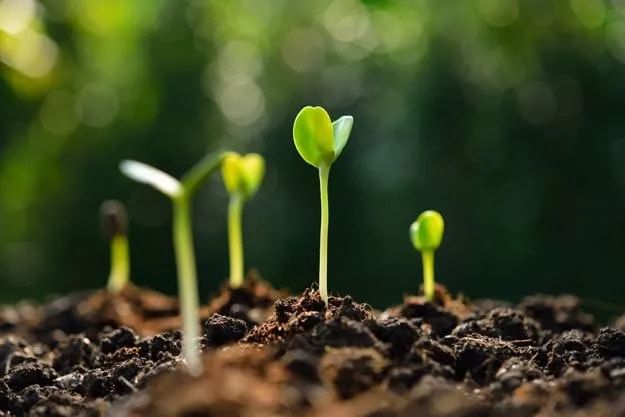
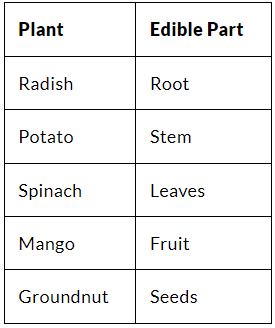
Q2. Name five plants and their parts that we eat.
Ans:
 Q3. Match the items given in column A with that in column B.
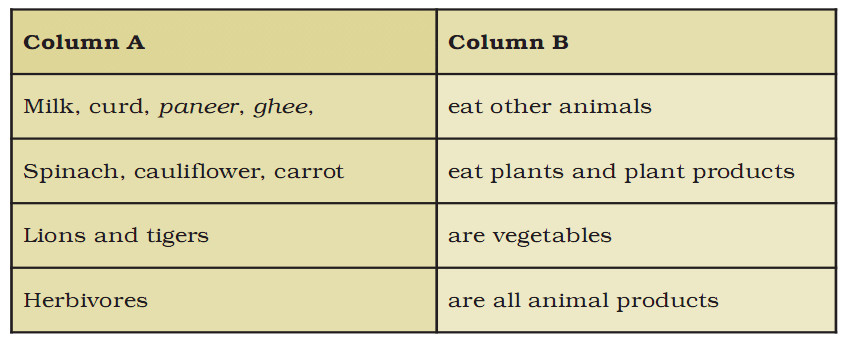
Ans:
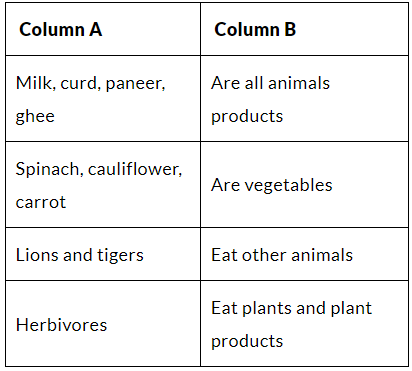 Q4. Fill up the blanks with the words given below: (Herbivore, plant, milk, sugarcane, carnivore)
(a) Tiger is a ______ because it eats only meat.
Ans: Carnivore
(b) Deer eats only plant product and so, is called ______.
Ans: Herbivore
(c) Parrot eats only ______ products.
Ans: Plant
(d) The ______ that we drink, comes from cows, buffaloes and goats is an animal product.
Ans: Milk
(e) We get sugar from ______ .
Ans: Sugarcane
Extra Questions
Choose the correct answer (MCQs)Q1. Which of the following is a carnivore?
(a) Tiger
(b) Cow
(c) Deer
(d) Elephant
Ans: (a) Tiger
Q2. Which of the following is herbivore?
(a) Lion
(b) Cow
(c) Tiger
(d) Sparrow
Ans: (b) Cow
Q3. Which of the following is an omnivore?
(a) Tiger
(b) Deer
(c) Monkey
(d) Elephant
Ans: (c) Monkey
Q4. Which of the following is example of scavenger?
(a) Tiger and lion
(b) Cow and sheep
(c) Crow and vulture
(d) None of these.
Ans: (c) Crow and Vulture
Q5. Which of the following is a root vegetable?
(a) Potato
(b) Carrot
(c) Onion
(d) Cucumber
Ans: (b) Carrot
Q6. Which part of spinach do we eat?
(a) Root
(b) Stem
(c) Leaves
(d) Fruit
Ans: (c) Leaves
Q7. Which part of sugarcane do we eat?
(a) Root
(b) Stem
(c) Leaves
(d) Seed
Ans: (b) Stem
Q8. Which part of mangoes do we eat?
(a) Fruit
(b) Stem
(c) Leaves
(d) Root.
Ans: (a) Fruit
Q9. Which of the following is obtained from animals?
(a) Honey
(b) Pigeon-pea
(c) Lentil
(d) Chick-pea
Ans: (a) Honey
Q10. Which of the following animals give eggs?
(a) Hen and Duck
(b) Cow and buffalo
(c) Tiger and Lion
(d) Goat and rabbit
Ans: (a) Hen and Duck
Answer the Following Questions
Q1. Name the products obtained from milk?
Ans: Cheese, butter, sweets, curd, etc.
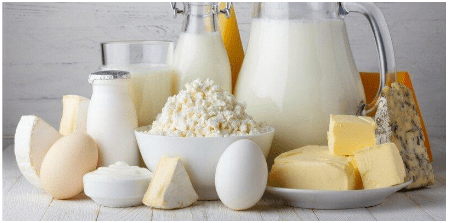 Dairy Products
Q2. Name five food items that we get from plants?
Ans: Cereals, pulses, fruits, vegetables, and oil.
Q3. Why are spices used in our food?
Ans: Spices add flavour to the food hence making it tasty.
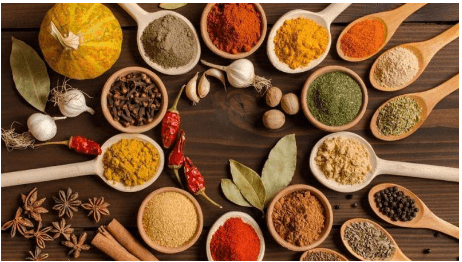 Spices
Q4. Write the name of two plants that give us oil?
Ans: Mustard and groundnut are examples of plants that give us oil.
Q5. What do you mean by herbivores?
Ans: Animals that eat only plants are known as herbivores.
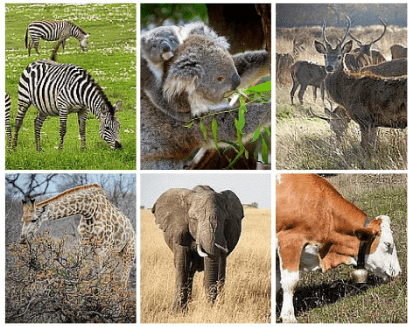 Herbivores
Q6. What do you mean by omnivores?
Ans: Animals that eat both plants and flesh of animals are known as omnivores.
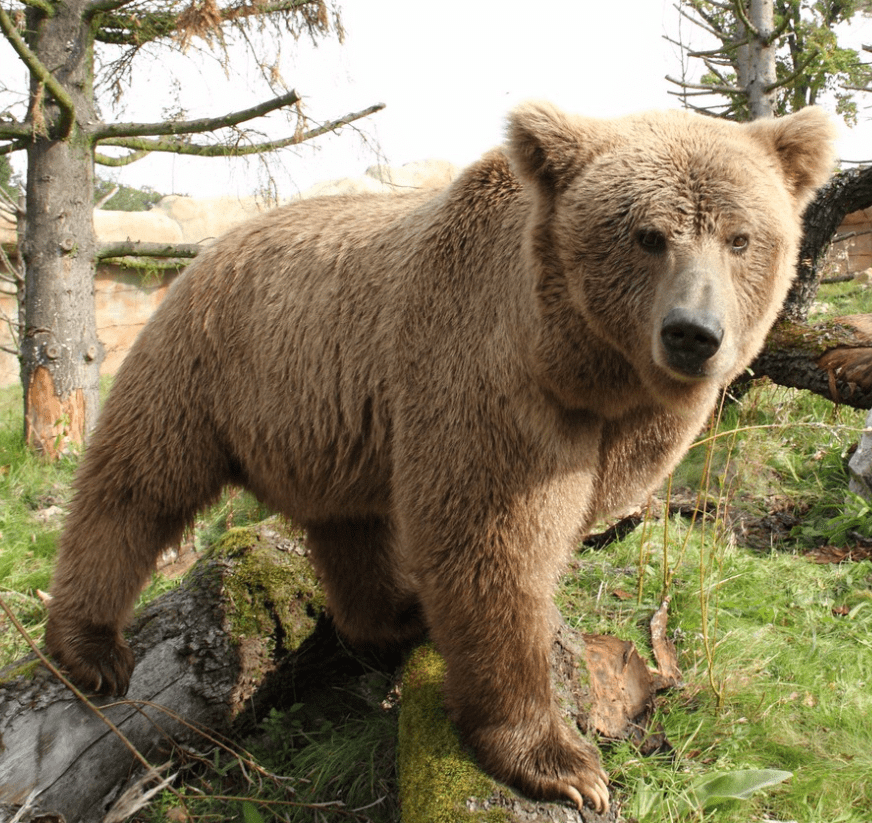 Bear: Omnivores
Q7. What do you mean by carnivores?
Ans: Animals that eat only the flesh of other animals are known as carnivores.
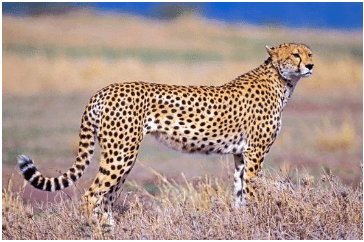 Cheetah: Carnivore
Q8. What do you mean by autotrophs?
Ans: Organisms that produce their own food are known as autotrophs. Example: Plants prepare their food by the process of photosynthesis.
Q9. What do you mean by heterotrophs?
Ans: Heterotrophs are organisms that consume plant and animal matter. They are also known as consumers.
Example: Humans.
Q10. What do you mean by scavengers?
Ans: Scavengers are animals that consume dead organisms. They play an important role in the ecosystem.
Example: A vulture.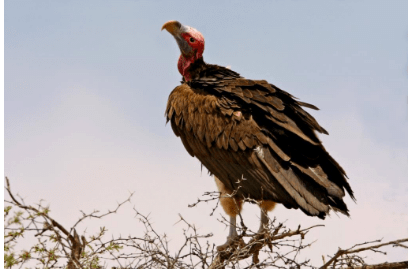 Vulture: Scavenger
Q11. Why should we eat cooked food?
Ans: The process of cooking kills harmful germs of food and enhances its taste. It is easily digested by our bodies. That is why we should prefer eating cooked food.
Q12. Define the term ingredients?
Ans: The materials that are needed to prepare a particular type of dish are called ingredients.
FAQs on NCERT Solutions: Food - Where does it Come from?
| 1. What are the different sources of food and where does our food actually come from? |  |
| 2. How do plants make their own food through photosynthesis and what role does it play in our diet? | |
| 3. What's the difference between herbivores, carnivores, and omnivores in terms of food sources and eating habits? | |
| 4. How does farming and agriculture produce the food we eat every day at home? | |
| 5. What are food chains and food webs, and how do they connect different organisms to food sources? | |