NCERT Solutions: Tissues

Page No. 61
Q1. What is a tissue?
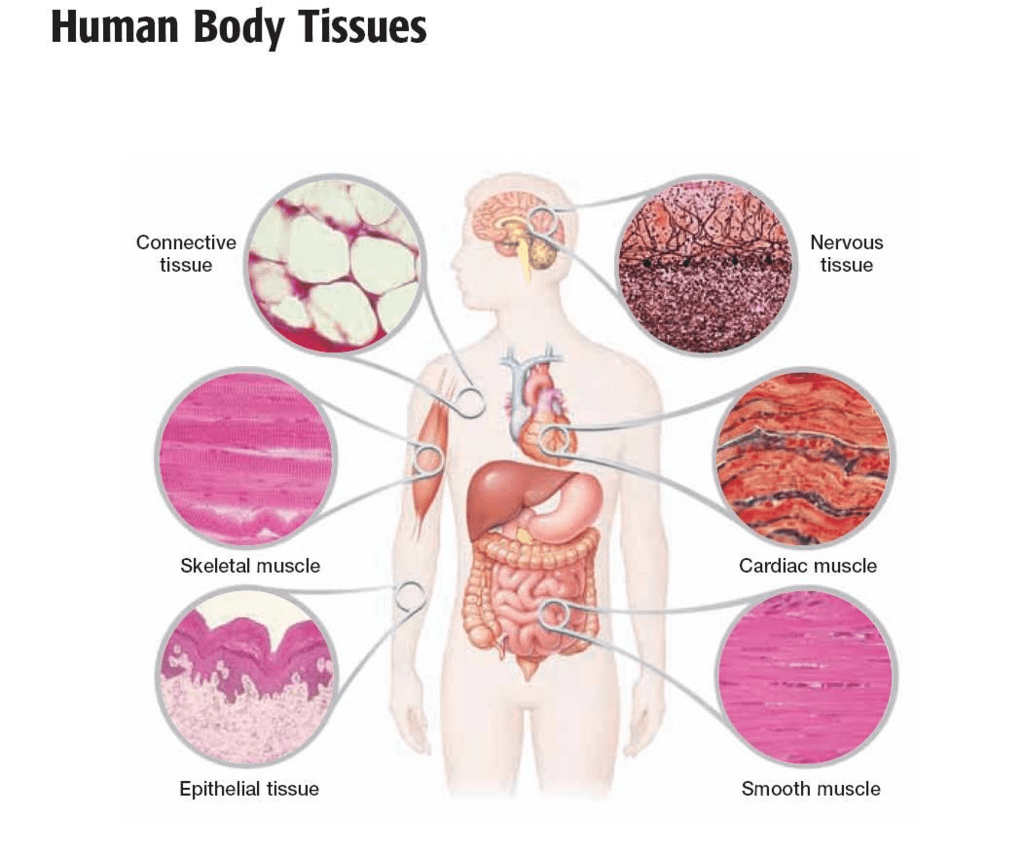
Ans: A group of cells that are similar in structure and/or work together to achieve a particular function forms a tissue.
Q2. What is the utility of tissues in multi-cellular organisms?
Ans: In multicellular organisms, the different types of tissues perform different functions. Since a particular group of cells carry out only a particular function, they do it very efficiently. So, multicellular organisms possess a definite division of labour.
Page No. 65
Q1. Name types of simple tissues.
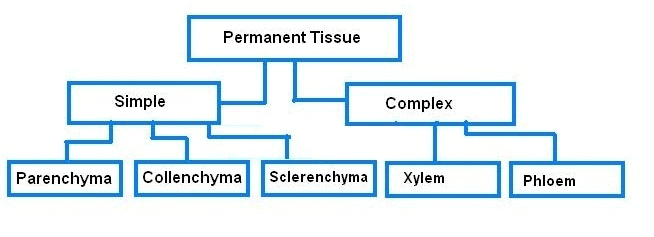
Ans: Simple permanent tissues are of three types:
(i) Parenchyma
(ii) Collenchyma
(iii) Sclerenchyma
Parenchyma tissue is of further two types:
(i) Aerenchyma
(ii) Chlorenchyma
Q2. Where is apical meristem found?
Ans: Apical meristem is present at the growing tips of stems and roots.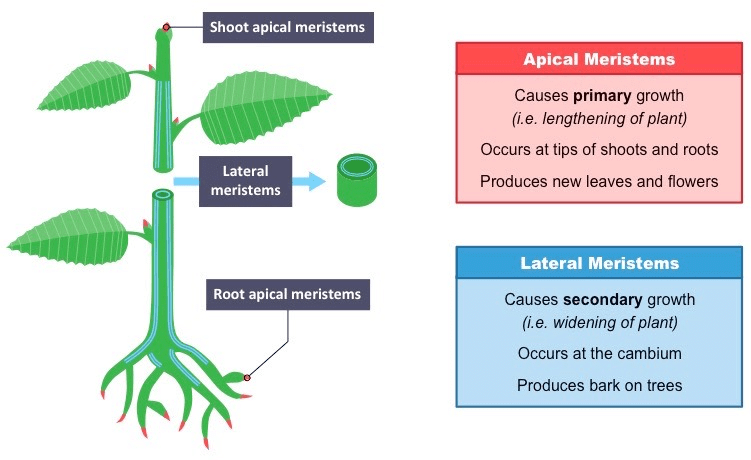
Q3. Which tissue makes up the husk of coconut?
Ans: Sclerenchyma tissue makes up the husk of coconut.
Q4. What are the constituents of phloem?
Ans: The constituents of phloem are:
- Sieve cells
- Sieve tubes
- Companion cells
- Phloem parenchyma
- Phloem fibres
Page No. 69
Ans: Two tissues jointly are responsible for the movement of our body, namely:
- Muscular tissue
- Nervous tissue
Q2. What does a neuron look like?
Ans: A neuron consists of a cell body with a nucleus and cytoplasm, from which long thin hair-like parts called dendrites arise. Each neuron has a single long part called the axon.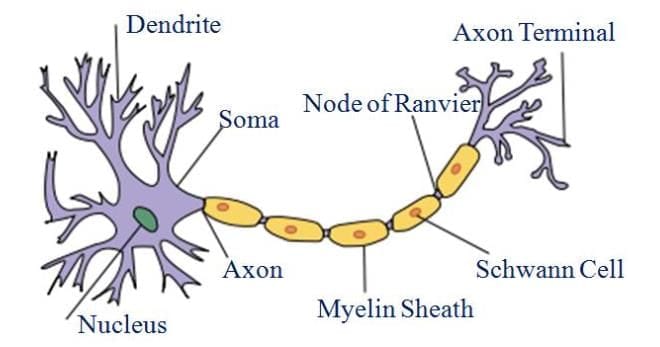
Q3. Give three features of cardiac muscles.
Ans: Three features of cardiac muscles are:
(i) Cardiac muscles are involuntary.
(ii) Cardiac muscle cells are cylindrical, branched and uninucleate.
(iii) Cardiac muscles show rhythmic contraction and relaxation.
Q4. What are the functions of areolar tissue?
Ans: Areolar tissue acts as a supportive and packing tissue between organs lying in the body cavity, and also helps in the repair of tissues.
Page No. 70
Ans: A group of cells that are similar in structure and work together to achieve a particular function is called tissue.
Q2. How many types of elements together make up the xylem tissue? Name them.
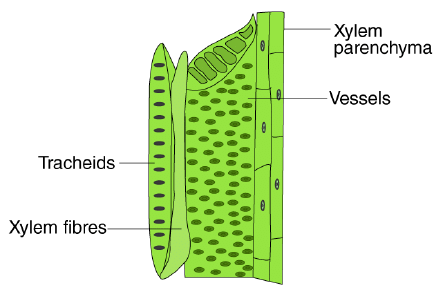
Ans: Xylem is composed of the following elements:
- Tracheids
- Vessels
- Xylem parenchyma
- Xylem fibres
Q3. How are simple tissues different from complex tissues in plants?
Ans: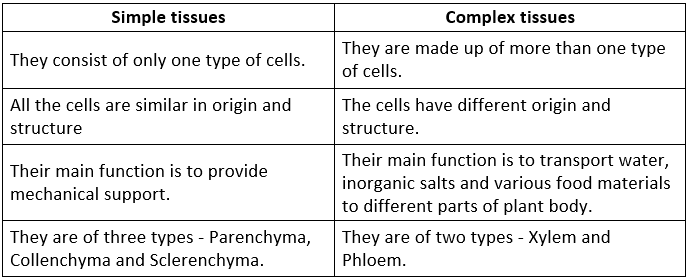
Q4. Differentiate between parenchyma, collenchyma and sclerenchyma, on the basis of their cell wall.
Ans: The differences between the cell walls of parenchyma, collenchyma and sclerenchyma are: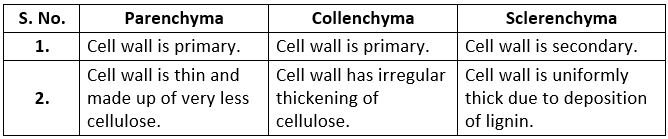
Q5. What are the functions of the stomata?
Ans: The functions of stomata are:
(i) Stomata allow gaseous exchange between the plant and the atmosphere.
(ii) These are sites of transpiration in plants.
Q6. Diagrammatically show the difference between the three types of muscle fibres.
Ans: The three types of muscle fibres are:
(i) Striated muscles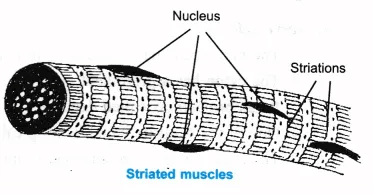 (ii) Smooth muscles (unstriated muscle fibre)
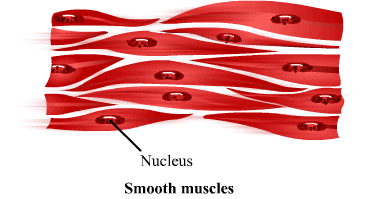 (iii) Cardiac muscles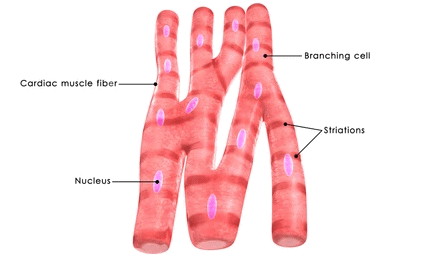
Q7. What is the specific function of the cardiac muscle?
Ans: Cardiac muscles bring about the rhythmic contraction and relaxation of the heart throughout life, thereby pumping blood continuously.
Q8. Differentiate between striated, unstriated and cardiac muscles on the basis of their structure and site/location in the body.
Ans: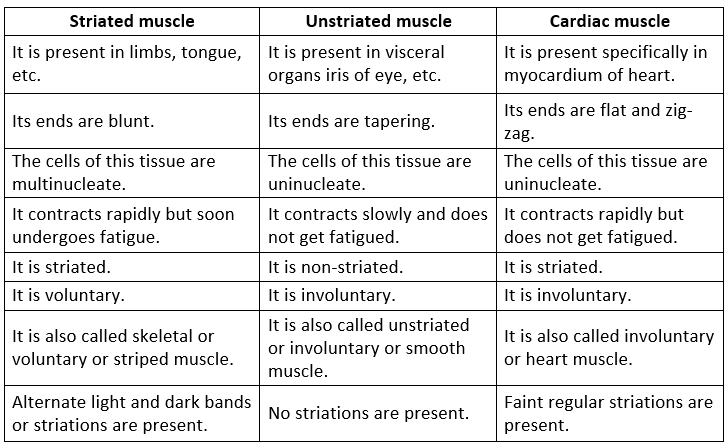
Q9. Draw a labelled diagram of a neuron.
Ans: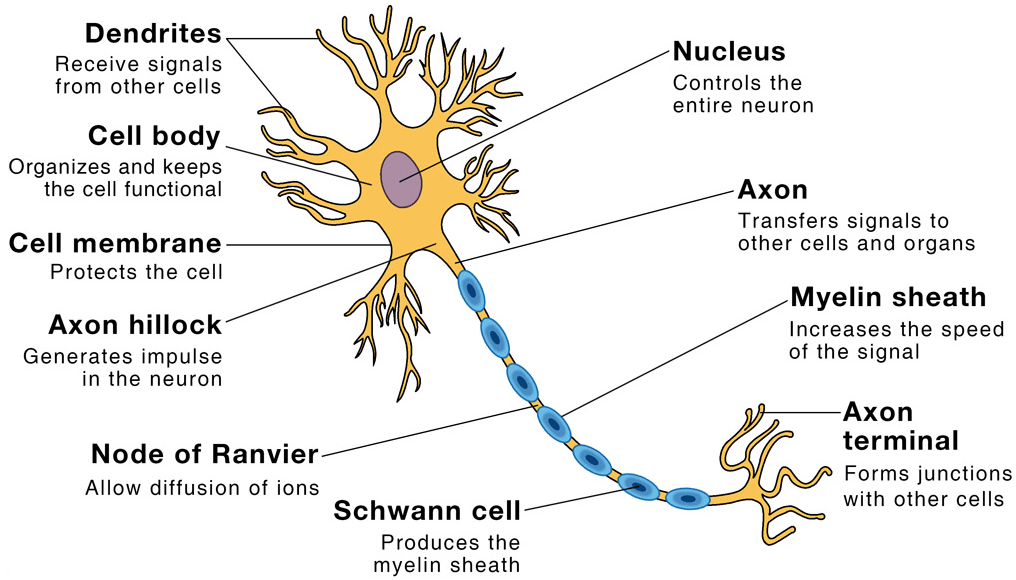
Q10. Name the following:
(a) Tissue that forms the inner lining of our mouth.
(b) Tissue that connects muscle to bone in humans.
(c) Tissue that transports food in plants.
(d) Tissue that stores fat in our body.
(e) Connective tissue with a fluid matrix.
(f) Tissue present in the brain.
Ans:
(a) Stratified squamous epithelium
(b) Tendon
(c) Phloem
(d) Adipose tissue
(e) Blood
(f) Nervous tissue
Q11. Identify the type of tissue in the following:
Skin, Bark of Tree, Bone, Lining of Kidney Tubule, Vascular Bundle.
Ans:
Skin: Stratified squamous epithelium
Bark of Tree: Cork (protective tissue)
Bone: Skeletal tissue (connective tissue)
Lining of Kidney Tubules: Cuboidal epithelial tissue
Vascular Bundle: Complex permanent tissue-xylem and phloem
Page No. 71
Q12. Name the regions in which parenchyma tissue is present.
Ans: In the pith of the roots and stems. When it contains chlorophyll, it is called chlorenchyma, found in green leaves. In aquatic plants, parenchyma contains large air cavities and help them to float. Such type of parenchyma is called aerenchyma.
Q13. What is the role of the epidermis in plants?
Ans: Cells of epidermis forms a continuous layer without intercellular spaces. It protects all the parts of plants.
Q14. How does the cork act as a protective tissue?
Ans: Cork acts as a protective tissue because its cells are dead and compactly arranged without intercellular spaces. They have deposition of suberin on the walls that make them impervious to gases and water.
Q15. Complete the table:
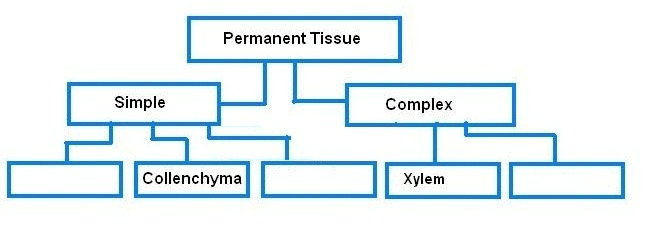 Ans:
Ans:
FAQs on NCERT Solutions: Tissues
| 1. What are the different types of plant tissues and how do they function differently? |  |
| 2. How do animal tissues differ from plant tissues in structure and function? | |
| 3. Why do epithelial tissues in animals have different shapes and what do they do? | |
| 4. What is the role of vascular tissue in plants and how does it transport materials? | |
| 5. How do connective tissues support and protect the body in animals? | |