NCERT Solutions - Improvement in Food Resources


Page No. 141
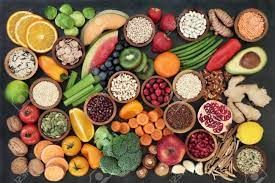
Q1: What do we get from cereals, pulses, fruits, and vegetables?
Ans: The things we get from cereals, pulses, fruits, and vegetables are as follows:
- Cereals are the source of carbohydrates and are the main source of energy.
- Pulses provide protein for growth and development.
- Vegetables and fruits are rich in minerals, vitamins, and carbohydrates, which contribute to overall health.
Page No. 142
Q1: How do biotic and abiotic factors affect crop production?
Ans: Two major kinds of factors affect crop production:
- Biotic factors: These include insects, rodents, pests and pathogens. They spread diseases and directly damage plants, reducing yield and quality.
- Abiotic factors: These include humidity, temperature, soil moisture, wind, rain and floods. Unfavourable abiotic conditions can stress or destroy crops and lower production.
Q2: What are the desirable agronomic characteristics for crop improvement?
Ans: The essential agronomic features required for crop improvement include:
- Profuse branching and adequate height in fodder crops to give more edible biomass.
- Dwarfness in cereals so that more resources go into grain production and plants are less likely to lodge (fall over).
Page No. 143
Q1: What are the macro-nutrients, and why are they called macro-nutrients?
Ans: Macro-nutrients are nutrients that plants require in relatively large amounts for normal growth and development. They are called macro-nutrients because the quantity needed is high. The six key macro-nutrients for plants are:
- Nitrogen
- Phosphorus
- Potassium
- Calcium
- Magnesium
- Sulphur
Deficiency of any of these can limit plant health and yield.
Q2: How do plants get nutrients?
Ans: Plants obtain essential elements from air, water and soil. In brief:
- Carbon: Plants take in carbon dioxide (CO₂) from the air through tiny openings (stomata) in their leaves and use sunlight to make food by photosynthesis.
- Oxygen: Plants absorb oxygen from the air for respiration and also obtain oxygen from water absorbed by their roots.
- Mineral nutrients: Roots absorb essential mineral nutrients such as nitrogen, phosphorus and potassium from the soil. These nutrients help plants to grow strong and healthy.
Page No. 144
Q1: Compare the use of manure and fertilisers in maintaining soil fertility.
Ans:
- Manure improves soil quality by adding nutrients and organic matter.
- Manure supplies humus, which increases water retention in sandy soils and improves drainage in clayey soils.
- Manures help reduce soil erosion and provide food for beneficial soil microorganisms that aid plant growth.
The effects of fertilisers are
- Fertilisers supply specific nutrients quickly but, if overused, can make soil powdery and increase erosion.
- Excessive use of chemical fertilisers may reduce organic matter and porosity, which can limit root aeration.
- Continuous use of some fertilisers can alter soil pH, making it more acidic or alkaline if not managed properly.
Page No. 145
Q1: Which of the following conditions will give the most benefits? Why?
(a) Farmers use high-quality seeds, do not adopt irrigation or use fertilisers.
(b) Farmers use ordinary seeds, adopt irrigation, use fertilisers and use crop protection measures.
(c) Farmers use quality seeds, adopt irrigation, use fertiliser and use crop protection measures.
Ans: (c)
Explanation: Good quality seeds provide the right genetic potential, but without adequate water, nutrients and protection from pests and diseases the plants cannot achieve that potential. Combining quality seeds with proper irrigation, balanced use of fertilisers and crop protection ensures healthy establishment, steady growth and higher yield; therefore option (c) gives the most benefit.
Page No. 146
Q1: Why should preventive measures and biological control methods be preferred for protecting crops?
Ans: Excessive use of chemical pesticides can harm the environment, non-target organisms and consumers. Preventive measures (good agronomy, crop rotation, sanitation) and biological control (using natural enemies, bio-pesticides) reduce chemical dependence, are safer for people and animals, and help maintain sustainable production.
Q2: What factors may be responsible for the losses of grains during storage?
Ans: Both biotic and abiotic factors cause storage losses. Examples include:
- Rodents
- Pests
- Insects
- Fungi
- Bacteria
- Sunlight
- Flood
- Rain
- Temperature fluctuations
- Moisture
Page No. 147
Q1: Which method is commonly used for improving cattle breeds and why? How is cross-breeding useful in animals?
Ans: Cross-breeding is commonly used to improve cattle breeds. It involves mating indigenous varieties with exotic or superior breeds to produce offspring that combine desirable traits. Cross-breeding is useful because it can produce animals that are higher-yielding, mature earlier and show better resistance to diseases and local climatic conditions.
Page No. 148
Q1: Discuss the implications of the following statement. It is interesting to note that poultry is India's most efficient converter of low-fibre foodstuff (which is unfit for human consumption) into highly nutritious animal protein food.
Ans: Poultry birds convert feed ingredients that are of low dietary value for humans (such as certain agricultural by-products) into high-quality animal protein in the form of meat and eggs. Poultry feed is formulated to give good growth and egg production, making poultry an efficient and economical source of nutritious food and useful manure.
Q2: What management practices are common in dairy and poultry farming?
Ans:
- Hygienic, well-designed shelters for dairy animals and poultry birds.
- Provision of good-quality and balanced feed and fodder.
- Regular animal health care including prevention and treatment of diseases caused by bacteria, viruses or fungi.
- Sunlight, adequate ventilation and proper space to keep animals comfortable.
Q3: What are the differences between broilers and layers and in their management?
Ans:
Broilers
- Broilers are poultry birds raised for meat. They are given protein-rich and energy-dense feed to promote fast growth. Vitamin levels (for example, vitamins A and K) are maintained appropriately in broiler feeds.
Layers
- Layers are birds raised mainly for egg production. Their housing, lighting and nutritional requirements differ from broilers. Layers need controlled lighting and sufficient space to maintain consistent egg production.
Page No. 150
Q1: How are fish obtained?
Ans: Fish are obtained in two main ways:
- Capture fishing: Catching fish from natural waters such as rivers, lakes and the sea.
- Culture fishery (aquaculture): Rearing fish in controlled freshwater or marine environments such as ponds, tanks or cages.
Q2: What is the advantage of composite fish culture?
Ans: The advantages of composite fish culture are:
- Different species (typically five or six) that occupy different niches can be cultured together without direct food competition.
- Food resources in the pond are fully utilised.
- Survival rates improve because niche overlap is reduced.
- Overall yield from the pond increases.
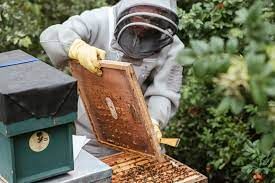
Q3: What are the desirable characters of the varieties suitable for honey production?
Ans: Desirable characteristics in bee varieties used for honey production are:
- High honey yield per colony.
- Longer staying time in the beehive (good tendency to forage and return to the hive).
- Low aggressiveness or less tendency to sting.
- Disease resistance.
 Honey Production
Q4: What is pasturage and how is it related to honey production?
Ans: Pasturage means the availability and variety of flowering plants near the beehive that supply nectar and pollen. Good pasturage ensures bees have a steady food source and strongly influences the quantity and flavour of honey.
Page No. 151
Exercises
Q1: Explain any one method of crop production which ensures high yield.
Ans: Plant breeding is a method used to ensure high crop yield. Plants with desirable traits are selected from different places and crossed (hybridised) to combine those traits. Over several generations, breeders select offspring that show the preferred characters - for example, higher yield, disease resistance or better quality - to develop improved crop varieties.
Q2: Why are manure and fertilisers used in fields?
Ans: Manures and fertilisers are used to enrich soil fertility and improve crop yield. They replenish essential nutrients (such as nitrogen, phosphorus and potassium) that plants use up, and therefore support healthy growth and better resistance to diseases.
Q3: What are the advantages of inter-cropping and crop rotation?
Ans:
Inter-cropping
- Reduces pest and rodent damage by interrupting pest cycles, decreasing the chance of total crop loss.
- Helps reduce soil erosion.
- Maintains higher yields by utilising space and resources efficiently.
- Often requires less water than growing crops separately.
Crop rotation
- Allows farmers to grow different crops in successive seasons on the same land, improving overall productivity.
- Pulses fix atmospheric nitrogen and reduce the need for chemical fertilisers for the following crops.
- Supports the cultivation of both fruits and vegetables in rotation.
- Helps maintain soil fertility and use land resources more effectively.
Q4: What is genetic manipulation? How is it useful in agricultural practices?
Ans:
- Genetic manipulation is the transfer of genes from one organism to another to introduce a desired trait; this creates a transgenic plant with that characteristic.
- Example: Bt cotton contains a bacterial gene that provides protection against certain insect pests. Similar approaches are used to develop varieties of brinjal, cabbage, rice, cauliflower and maize with improved resistance to insects.
Q5: How do storage grain losses occur?
Ans: Storage grain losses occur due to abiotic and biotic factors.
Abiotic factors
- Humidity
- Air (poor ventilation)
- Temperature
- Flood
- Wind
Biotic factors
- Insects
- Rodents
- Pests
- Bacteria
- Mites
- Birds
Q6: How do good animal husbandry practices benefit farmers?
Ans: Good animal husbandry practices benefit farmers by:
- Producing healthy, high-quality cattle.
- Improving the quantity and quality of milk production.
- Providing animals useful for agricultural tasks such as carting, irrigation and tilling.
Q7: What are the benefits of cattle farming?
Ans:
- Cattle can be used for agricultural work.
- Cattle farming helps produce good-quality breeding stock.
- Provides milk and meat for consumption and sale.
- The skin of cattle is used for the leather industry.
Q8: For increasing production, what is common in poultry, fisheries, and beekeeping?
Ans: For increasing production, selective breeding and cross-breeding techniques are adopted in poultry, fisheries and beekeeping. Along with these breeding techniques, regular and proper management practices improve productivity.
Q9: How do you differentiate between capture fishing, mariculture, and aquaculture?
Ans: Differences between capture fishing, mariculture, and aquaculture
Fishing
- Fish are obtained from natural resources such as ponds, canals and rivers.
- Locating fish in natural waters is done by experience and local methods, and they are captured using nets and boats.
 Fishing
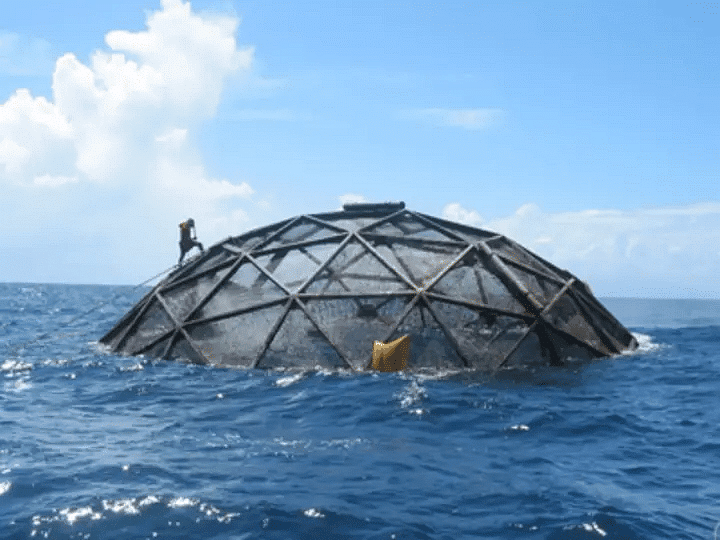
Mariculture
- A method of marine fish culture carried out in the open sea or coastal areas.
- Locating schools of fish at sea is aided by technology such as echo-sounders and satellite data; fish are then caught using various kinds of nets from fishing boats.
 Mariculture
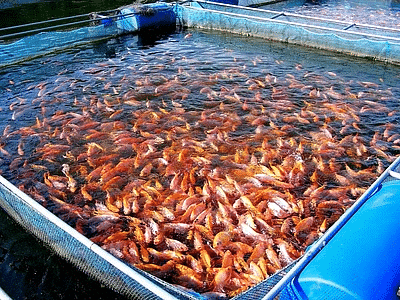
Aquaculture
- Production of fish in controlled freshwater and brackish water systems such as ponds, tanks and cages.
- Fish in aquaculture are managed and harvested using nets and other collection methods.
 Aquaculture
FAQs on NCERT Solutions - Improvement in Food Resources
| 1. What are the main methods to improve crop production in agriculture? |  |
| 2. How do hybridisation and selection help in developing better crop varieties? | |
| 3. What's the difference between inorganic and organic farming for food production? | |
| 4. Why is animal husbandry important for improving food resources? | |
| 5. What are the major challenges in increasing food production and how can they be overcome? | |