NCERT Solutions: Biotechnology & Its Applications

Q1: Which part of the plant is best suited for making virus-free plants and why?
Ans: The meristem (apical or axillary) is best suited for producing virus-free plants. Meristematic cells are small, rapidly dividing and often lack developed vascular connections that allow viruses to spread. As a result, meristems frequently remain free of infection even when the rest of the plant is diseased. By excising the meristem and growing it in vitro (meristem culture), one can regenerate whole plants that are free from viral infection.
Q2: What is the major advantage of producing plants by micropropagation?
Ans: Advantages of producing plants by micropropagation:
- Rapid multiplication: large numbers of true-to-type plants can be produced in a short time.
- Year-round production: plants can be produced irrespective of season.
- Production of disease-free (pathogen-free) planting material by using meristem culture.
- Space- and cost-efficient propagation compared with conventional methods.
Q3: Find out what the various components of the medium used for propagation of an explant in vitro are?
Ans: The culture medium for in vitro propagation typically contains:
- Carbon source (commonly sucrose) to supply energy and carbon skeletons.
- Inorganic salts providing essential ions (N, P, K, Ca, Mg, Fe, etc.).
- Vitamins and amino acids required in small amounts for growth.
- Growth regulators such as auxins and cytokinins (and sometimes gibberellins) to control organogenesis and cell division.
- Gelling agent (e.g., agar) for a solid medium, and water as the solvent.
- The medium is adjusted to an appropriate pH and sterilised to prevent microbial contamination.
Q4: Crystals of Bt toxin produced by some bacteria do not kill the bacteria themselves because-
(a) bacteria are resistant to the toxin
(b) toxin is immature
(c) toxin is inactive
(d) bacteria encloses toxin in a special sac
Ans: (c)
Explanation: The Bt toxin is synthesised and stored in an inactive crystalline form called a protoxin within Bacillus thuringiensis. This inactive form does not harm the bacterium. When an insect ingests the crystal, the alkaline gut environment and insect proteases activate the protoxin into an active toxin. The active toxin then binds to the insect gut cells, creating pores that lead to cell lysis and the insect's death.
Q5: What are transgenic bacteria? Illustrate using any one example.
Ans: Transgenic bacteria are bacteria that have been deliberately given a foreign gene (or genes) using genetic engineering so that they express a new trait or produce a useful product. They are widely used to produce medicines, enzymes and other commercial products.
- Example: E. coli engineered to produce human insulin. The DNA sequences coding for the A and B chains of human insulin are inserted into a plasmid vector and introduced into E. coli. The bacterium then produces the insulin chains, which are purified and chemically combined to form functional human insulin. This approach provides a reliable and safe supply of insulin for diabetic patients.
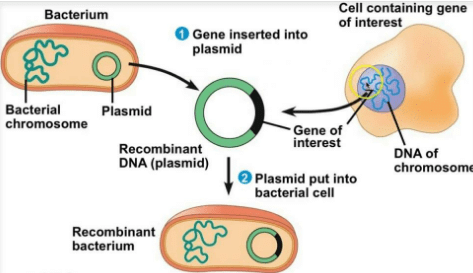 Transgenic Bacteria
An example of transgenic bacteria is E.coli. In the plasmid of E.coli, the two DNA sequences corresponding to A and B chain of human insulin are inserted, so as to produce the respective human insulin chains.
Hence, after the insertion of insulin gene into the bacterium, it becomes transgenic and starts producing chains of human insulin. Later on, these chains are extracted from E.coli and combined to form human insulin.
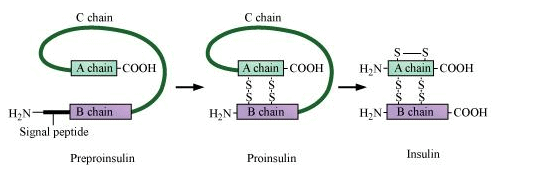 Formation of insulin
Q6: Compare and contrast the advantages and disadvantages of production of genetically modified crops.
Ans: The advantages of GM crops are:
- Increased tolerance to biotic and abiotic stresses (for example, resistance to certain pests and diseases, and improved tolerance to drought, salinity or temperature extremes).
- Reduced reliance on chemical pesticides when crops are engineered for pest resistance (e.g., Bt crops), lowering cost and pesticide exposure.
- Improved nutrient use efficiency, which may reduce fertiliser requirements and help maintain soil fertility.
- Enhanced nutritional value of food (for example, golden rice enriched with provitamin A) and the ability to biofortify crops with vitamins or essential nutrients.
In addition, GM technology is used to produce plants that yield industrially useful compounds, biofuels or pharmaceuticals.
The disadvantages of GM crops are:
- Risk of gene flow from transgenic crops to wild relatives or non-GM varieties, potentially affecting native species and biodiversity.
- Possible adverse effects on non-target organisms (for example, insects that are not pests) and reduction in biodiversity in agricultural landscapes.
- Concerns about human health, such as allergenicity or unintended changes in nutritional content; these risks require careful testing and regulation.
- Evolution of resistant pests or weeds due to prolonged exposure to single resistance traits, and socio-economic issues such as dependence of farmers on patented seeds.
Q7: What are Cry proteins? Name an organism that produces it. How has man exploited this protein to his benefit?
Ans: Cry proteins are insecticidal proteins encoded by cry genes. They are produced by the bacterium Bacillus thuringiensis (Bt) as crystalline protoxins. When an insect ingests these crystals, the alkaline conditions in the insect gut and gut proteases activate the protoxin into an active toxin. The active toxin binds to gut epithelial cells, forms pores, causes cell lysis and eventually leads to the insect's death.
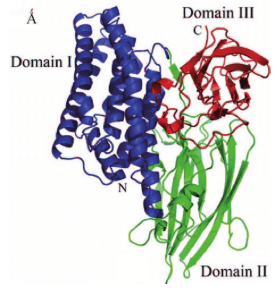 Cry Protein
Humans have exploited Cry proteins by transferring the relevant cry genes into crop plants (for example, Bt cotton, Bt maize). These transgenic plants express Cry proteins and are therefore resistant to specific insect pests, reducing the need for chemical insecticides and increasing crop yields.
Q8: What is gene therapy? Illustrate using the example of adenosine deaminase (ADA) deficiency.
Ans: Gene therapy is a technique to correct or replace a defective gene by delivering a functional copy of the gene into a patient's cells.
- Example - ADA deficiency: Adenosine deaminase (ADA) deficiency causes a severe immunodeficiency because ADA is required for normal lymphocyte function.
- Treatment by gene therapy involves removing the patient's lymphocytes or bone marrow cells, introducing a functional ADA gene into these cells (commonly using a viral vector such as a retrovirus), and then returning the corrected cells to the patient.
- The corrected cells express ADA, restoring immune function and reducing susceptibility to infections.
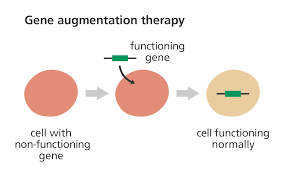 Gene Therapy
This procedure avoids replacing the whole bone marrow and provides a way to restore specific gene function by modifying the patient's own cells externally and then reintroducing them.
Q9: Diagrammatically represent the experimental steps in cloning and expressing a human gene (say the gene for growth hormone) into a bacterium like E. coli?
Ans: DNA cloning and expression of a human gene in E. coli involves a series of steps. Key experimental steps are:
- Isolate the mRNA for human growth hormone from human tissue and synthesize complementary DNA (cDNA) using reverse transcriptase.
- Use restriction enzymes to cut both the cDNA and a suitable plasmid vector, then ligate the growth hormone cDNA into the plasmid to form a recombinant plasmid.
- Introduce the recombinant plasmid into E. coli by transformation and select transformed bacteria using selectable markers (e.g., antibiotic resistance).
- Induce expression of the inserted gene (using a suitable promoter) and allow the bacteria to produce the human growth hormone protein.
- Purify the expressed protein by chromatographic techniques and process it to obtain the final, active product for therapeutic use.
The diagrams provided in the text illustrate these steps, including isolation, cloning, transformation and expression stages.
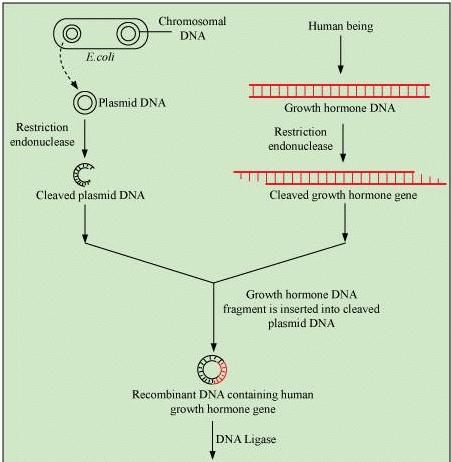
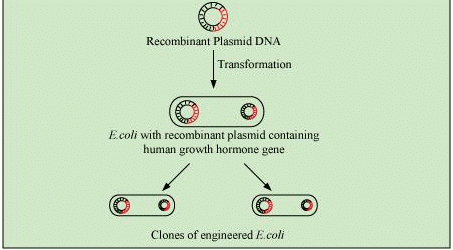 Human Gene
Q10: Can you suggest a method to remove oil (hydrocarbon) from seeds based on your understanding of rDNA technology and chemistry of oil?
Ans: Using recombinant DNA (rDNA) methods, oil content in seeds can be reduced by targeting the biosynthetic pathway of triglycerides (oils), which are made from glycerol and fatty acids. Approaches include:
- Disrupting or downregulating key genes required for fatty acid or glycerol synthesis (for example by gene knockout, antisense RNA or RNA interference) so that oil accumulation in the seed is greatly reduced.
- Redirecting metabolic precursors into other non-lipid pathways so that less substrate is available for oil formation.
Such genetic modifications must be done carefully to avoid affecting seed viability and overall plant health, and require selection and testing to obtain useful, oil-reduced varieties.
Q11: Find out from internet what is golden rice.
Ans: Golden rice is a genetically modified variety of Oryza sativa developed to address vitamin A deficiency. It contains genes introduced by genetic engineering that enable the rice endosperm (the edible part of the grain) to synthesise and accumulate beta-carotene, a provitamin A compound. The presence of beta-carotene gives the grain a characteristic golden colour, hence the name.
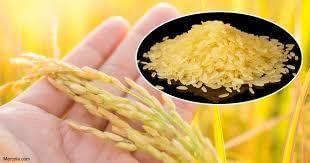 Golden Seed
However, beta-carotene is normally produced in leaves (where photosynthesis occurs) but not in the seed endosperm; genetic modification adds the missing biochemical steps in the seed. Golden rice aims to provide a dietary source of provitamin A in regions where vitamin A deficiency is common. The crop has been subject to regulatory review and public debate concerning biosafety, socio-economic and ethical issues, which has affected its deployment in some areas.
Q12: Does our blood have proteases and nucleases?
Ans: Blood contains proteases (such as those involved in clotting and complement pathways) and low levels of nucleases, but they are tightly regulated or inactive, so they do not freely degrade proteins or nucleic acids.
Q13: Consult internet and find out how to make orally active protein pharmaceutical. What is the major problem to be encountered?
Ans: Making proteins orally active is challenging because the gastrointestinal tract strongly degrades proteins and limits their absorption. Major issues and common strategies are:
- Major problem: Proteolytic enzymes and acidic conditions in the stomach and intestine rapidly degrade therapeutic proteins, and intact proteins are poorly absorbed across the intestinal epithelium.
- Common approaches to overcome this include protective formulations such as enteric coatings, encapsulation in liposomes or polymeric microcapsules, use of enzyme inhibitors or absorption enhancers, and chemical modification of the protein (for example, PEGylation) to increase stability and half-life.
- Despite these methods, many protein drugs are still administered by injection because oral delivery remains difficult to make consistently effective and safe.
FAQs on NCERT Solutions: Biotechnology & Its Applications
| 1. How is biotechnology used in agriculture? |  |
| 2. What are the ethical considerations surrounding biotechnology? | |
| 3. How is biotechnology used in medicine? | |
| 4. What are the career opportunities in biotechnology? | |
| 5. How can biotechnology help in environmental conservation? | |





