NCERT Solutions: Organisms & Populations

Q1: List the attributes that populations but not individuals possess.
Ans: A population can be defined as a group of individuals of the same species residing in a particular geographical area at a particular time and functioning as a unit. For example, all human beings living at a particular place at a particular time constitute the population of humans.
The main attributes or characteristics of a population residing in a given area are:
- Birth rate (Natality): It is the ratio of live births in an area to the population of that area. It is expressed as the number of individuals added to the population relative to the size of the population. This describes population-level reproduction, not a single individual.
- Death rate (Mortality): It is the ratio of deaths in an area to the population of that area. It is expressed as the loss of individuals relative to the population size. Mortality rates summarise loss across the group rather than for one organism.
- Sex ratio: It is the number of males or females per thousand individuals. Sex ratio is a property of the group composition and cannot be defined for a single individual.
- Age distribution: It is the percentage of individuals of different ages in a given population. At any given time, the population is composed of individuals in various age groups. Age distribution is commonly represented by age pyramids and affects growth and reproduction of the population.
- Population density: It is defined as the number of individuals of a population present per unit area at a given time. Density is meaningful only for a group occupying an area.
Q2: If a population growing exponentially double in size in 3 years, what is the intrinsic rate of increase (r) of the population?
Ans: A population growing exponentially follows the equation:
Nt = N0 ert, where Nt is the population at time t, N0 is the initial population, r is the intrinsic rate of increase and e is the base of natural logarithms.
Given that the population doubles in 3 years, set Nt = 2N0 and t = 3 years:
⇒ 2N0 = N0 e3r
⇒ 2 = e3r
Taking natural logarithm on both sides:
⇒ log 2 = 3r log e
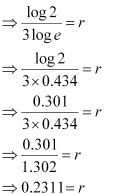
Hence, the intrinsic rate of increase for this exponentially growing population is approximately 0.2311.
Q3: Name important defence mechanisms in plants against herbivores.
Ans: Several plants have evolved both morphological and chemical mechanisms to protect themselves against herbivory.
a. Morphological defence mechanisms:
1. Leaves of cactus (Opuntia) are modified into sharp spines that deter herbivores from feeding on them.
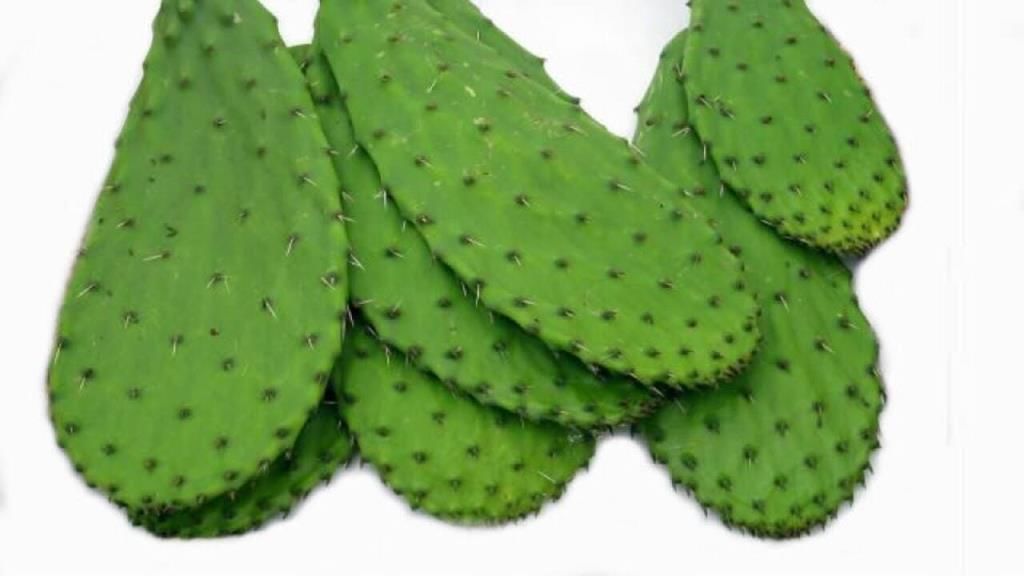 Fig: Cactus Leaves
2. Many Acacia species bear sharp thorns along their branches to reduce browsing by animals.
3. Some plants have spiny or serrated leaf margins that make feeding difficult for herbivores.
b. Chemical defence mechanisms:
1. Calotropis plants contain toxic cardiac glycosides in many parts, which can be harmful or fatal to herbivores that ingest them.
2. Plants produce a range of deterrent or toxic chemicals such as nicotine, caffeine, quinine and alkaloids like those in opium poppy; these substances reduce feeding or harm herbivores.
Q4: An orchid plant is growing on the branch of mango tree. How do you describe this interaction between the orchid and the mango tree?
Ans: An orchid growing on the branch of a mango tree is an epiphyte. Epiphytes grow on other plants for physical support but do not obtain nutrients from the host. The relationship between the orchid and the mango tree is an example of commensalism, where one species (the orchid) benefits by gaining support, access to light and air, while the other species (the mango tree) remains essentially unaffected.
Q5: What is the ecological principle behind the biological control method of managing with pest insects?
Ans: The ecological principle is based on predation (and related interactions such as parasitism and pathogen attack). Predators, parasitoids or pathogens reduce the population size of pest species, thereby controlling their numbers. Biological control uses natural enemies (for example, ladybird beetles to eat aphids, parasitoid wasps to attack caterpillars, or Bacillus thuringiensis bacteria against some insect larvae) to regulate pest populations in a sustainable way and reduce reliance on chemical pesticides.
Q6: Define population and community.
Ans:
- Population: A population is a group of individuals of the same species residing in a particular geographical area at a particular time and functioning as a unit. For example, all the people living in a town at a given time form a human population.
- Community: A community is a group of individuals of different species living together within a defined geographical area. Members of a community interact with one another but cannot interbreed across species.
Q7: Define the following terms and give one example for each:
(a) Commensalism
(b) Parasitism
(c) Camouflage
(d) Mutualism
(e) Interspecific competition
Ans: (a) Commensalism: Commensalism is an interaction in which one species benefits while the other is neither helped nor harmed. Example: An orchid on a mango branch.
(b) Parasitism: An interaction in which one organism (the parasite) benefits at the expense of the other (the host). Example: Liver fluke living in the liver of its host; the parasite gains nutrition while the host suffers reduced fitness.
(c) Camouflage: A defensive strategy used by prey species to avoid detection by predators by matching their surroundings. Example: Many frogs and insects are cryptically coloured to blend with leaves or bark.
(d) Mutualism: An interaction in which both species benefit. Example: Lichens are a mutual association between a fungus and a photosynthetic partner (alga or cyanobacterium), where both partners gain advantages.
(e) Interspecific competition: Competition between individuals of different species for the same limited resource, where both are negatively affected. Example: Flamingos and resident fishes competing for zooplankton in a lake.
Q8: With the help of suitable diagram describe the logistic population growth curve.
Ans: The logistic growth curve (Verhulst-Pearl model) is S-shaped and describes population growth when resources become limiting. A simple form of the logistic model is given by the differential equation dN/dt = rN(1 - N/K), where N is population size, r is intrinsic rate of increase and K is the carrying capacity of the environment.
The typical phases of the logistic curve are:
- Lag phase: Population is small and shows little growth as organisms acclimatise to conditions.
- Positive acceleration phase: Growth rate increases as reproduction begins and conditions are favourable.
- Exponential (log) phase: Rapid population increase occurs when resources are plentiful and density-dependent limits are weak; the curve rises steeply.
- Negative acceleration phase: As population approaches carrying capacity, growth rate slows because of increased competition and other density-dependent factors.
- Stationary phase: Population size stabilises near carrying capacity K; births balance deaths and the curve levels off.
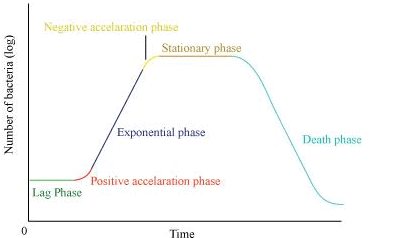
A Verhulst-Pearl logistic curve is therefore S-shaped (sigmoid) and illustrates how environmental resistance limits indefinite exponential growth.
Q9: Select the statement which explains best parasitism.
(a) One organism is benefited.
(b) Both the organisms are benefited.
(c) One organism is benefited, other is not affected.
(d) One organism is benefited, other is affected.
Ans: (d)
Explanation: In parasitism, the parasite benefits by obtaining nutrients or shelter from the host, while the host is harmed or its fitness is reduced. Examples include ticks and lice feeding on humans; the parasites gain nourishment while the host suffers harm or irritation.
Q10: List any three important characteristics of a population and explain.
Ans: A population is a group of individuals of the same species living in a given area. Three important characteristics are:
1. Birth rate (Natality): The number of live births added to the population per unit time relative to population size. Affects population growth positively; high natality increases population size.
2. Death rate (Mortality): The number of deaths per unit time relative to population size. Acts to decrease population size; mortality patterns influence life expectancy and age structure.
3. Age distribution: The proportion of individuals in different age classes within a population. Age structure determines future growth potential (for example, a large proportion of young individuals often indicates potential for rapid growth).
FAQs on NCERT Solutions: Organisms & Populations
| 1. What is the difference between an organism and a population? |  |
| 2. How do organisms interact with their environment? | |
| 3. What is the importance of studying populations in ecology? | |
| 4. How do populations change over time? | |
| 5. What are some examples of population dynamics in nature? | |





