NCERT Solutions: Biodiversity & Conservation

Q1: Name the three important components of biodiversity.
Ans: Biodiversity is the variety of living forms present in different ecosystems. It includes variability among life forms from all sources, including land, air and water.
Three important components of biodiversity are:
1. Genetic diversity - The variation of genes within a species. Genetic variation enables populations to adapt to changing conditions and reduces the risk of inbreeding depression.
2. Species diversity - The variety of different species and their relative abundances in a region. Greater species diversity increases ecosystem resilience and the range of ecological functions.
3. Ecosystem diversity - The variety of habitats, communities and ecological processes in the biosphere. Different ecosystems (for example forests, wetlands and coral reefs) support different sets of species and services.
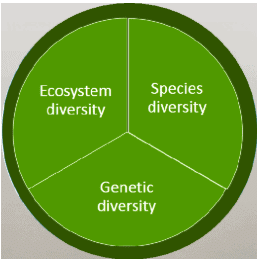 Fig: Components of Biodiversity
Q2: How do ecologists estimate the total number of species present in the world?
Ans: Ecologists estimate the total number of species using statistical comparisons and extrapolation. Since species inventories are more complete in temperate regions than in tropical regions, biologists compare the species richness of well-studied groups (such as insects) between temperate and tropical areas and then extrapolate this ratio to other groups of organisms.
Using this method, global species diversity has been estimated at about 7 million species.
Q3: Give three hypotheses for explaining why tropics show greatest levels of species richness.
Ans: Scientists have proposed several hypotheses. Three widely cited ones are:
- High energy and productivity: Tropical latitudes receive more solar energy year-round, which supports higher primary productivity. More energy at the base of food webs can sustain more species and more complex interactions.
- Climatic stability: Tropical regions experience less seasonal and climatic fluctuation. This long-term environmental stability favours specialisation and allows many species with narrow niches to coexist.
- Long evolutionary time and lower glaciation impact: Many temperate regions were repeatedly affected by glaciations, reducing local diversity. Large areas of the tropics remained more stable over geological time, allowing uninterrupted diversification and accumulation of species.
Q4: What is the significance of the slope of regression in a species - area relationship?
Ans: The slope of regression (commonly called z) in the species-area relationship (S = cAz) indicates how rapidly the number of species (S) increases with area (A). A larger z means species accumulate more quickly as area increases. At small spatial scales z tends to be low, reflecting similar habitats and local sampling; at larger scales z is higher because larger areas include more habitat types and environmental gradients. Thus z helps compare how species richness responds to area across scales and regions.
Q5: What are the major causes of species losses in a geographical region?
Ans: Biodiversity is declining rapidly in many parts of the world. Major causes of species loss include:
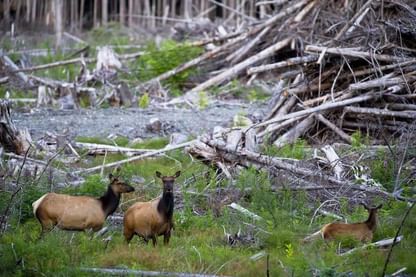
- Habitat loss and fragmentation: Natural habitats are altered or removed by human activities such as deforestation, agriculture, mining and urbanisation. Fragmentation divides large habitats into smaller isolated patches, which reduces population sizes, disrupts migration and gene flow, and increases local extinction risk.
- Over-exploitation: Excessive hunting, fishing or harvesting of plants and animals reduces population sizes and can drive species to endangered status or extinction (for example, historic overhunting of the passenger pigeon).
- Alien species invasions: Introduced non-native species can outcompete, predate upon or bring diseases to native species, often causing major declines (for example, invasive predators or plants that alter habitat structure).
- Co-extinction: Species are interconnected in ecological networks. Loss of a host or a key mutualist can cause dependent species (such as specialised parasites or pollinators) to disappear as well.
- Pollution and habitat degradation: Chemical, nutrient or plastic pollution can degrade habitats and reduce survivorship of sensitive species.
- Climate change: Shifts in temperature and rainfall patterns alter habitats and species ranges, sometimes faster than species can adapt or move, increasing extinction risk.
Q6: How is biodiversity important for ecosystem functioning?
Ans:
- An ecosystem with high species diversity is generally more stable and resilient. Greater biodiversity helps maintain steady productivity over time and increases resistance to disturbances such as invasions, extreme weather or disease outbreaks.
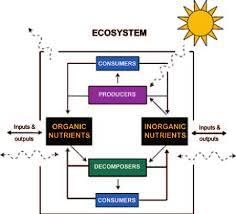
- Functional redundancy: Diverse communities often contain species that perform similar ecological roles. If one species declines, others can partly compensate, so ecosystem processes continue.
- Maintenance of food-web structure: Multiple species at each trophic level create alternative pathways for energy flow. For example, many plant species provide food for a range of herbivores, reducing the chance that loss of a single plant species will cause trophic collapse.
- Provision of ecosystem services: Biodiversity underpins services such as pollination, decomposition, nutrient cycling, water purification and soil formation, all of which sustain agriculture, fisheries and human well-being.
Q7: What are sacred groves? What is their role in conservation
Ans: Sacred groves are patches of natural vegetation protected by local religious or cultural beliefs, often associated with temples, shrines or community traditions. They occur across India, for example in parts of Rajasthan, the Western Ghats, Meghalaya and Madhya Pradesh. Their conservation roles include:
- Protection of native and often rare or endemic species because cutting trees, hunting or extraction is prohibited by custom.
- Maintenance of local ecological balance-sacred groves act as refuges for flora and fauna, support pollinators and seed dispersers, and conserve soil and water.
- Serving as genetic reservoirs: These groves preserve traditional varieties and wild relatives of useful plants that can be important for restoration and breeding programmes.
Q8: Among the ecosystem services are control of floods and soil erosion. How is this achieved by the biotic components of the ecosystem?
Ans: The biotic components, especially plants, play a central role in controlling floods and soil erosion. Key mechanisms are:
- Root systems bind soil particles together, increasing slope stability and reducing the likelihood of landslides and surface erosion.
- Vegetation increases soil porosity and promotes infiltration of rainwater into the ground, which lowers surface runoff and reduces flood peaks.
- Canopy cover and leaf litter intercept rainfall and slow down surface flow, trapping sediments and preventing topsoil loss.
- Specific communities, such as mangroves and coastal vegetation, buffer shorelines from storm surges and reduce coastal erosion, while wetlands store and slowly release floodwaters.
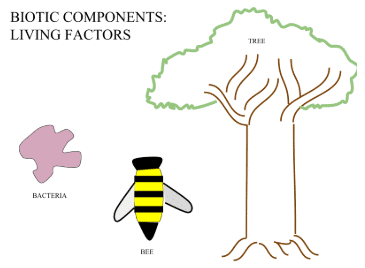 Fig: Biotic Components
The presence of healthy plant cover therefore helps prevent soil loss, moderates floods, maintains groundwater recharge and supports agricultural fertility and biodiversity.
Q9: The species diversity of plants (22 per cent) is much less than that of animals (72 per cent). What could be the explanations to how animals achieved greater diversification?
Ans: Animals have achieved greater diversification due to the following reasons:
Greater environmental heterogeneity allows animals to occupy a wide range of habitats and niches.
Specialisation and niche differentiation enable animals to adapt to diverse ecological roles.
Long evolutionary time has allowed gradual accumulation of species diversity.
These factors have led to a higher diversification of animals compared to plants.
Q10: Can you think of a situation where we deliberately want to make a species extinct? How would you justify it?
Ans: Yes, in certain situations, humans may deliberately attempt to eradicate harmful organisms such as disease-causing microbes or pests.
Such actions can be justified when:
The species poses a serious threat to human health or survival.
Its removal does not significantly disturb ecological balance.
However, such decisions must be taken with great caution because every species has ecological importance, and its removal may lead to unforeseen consequences.
FAQs on NCERT Solutions: Biodiversity & Conservation
| 1. What is biodiversity? |  |
| 2. Why is biodiversity important for conservation? | |
| 3. How can human activities impact biodiversity? | |
| 4. What are some strategies for conserving biodiversity? | |
| 5. What are the consequences of loss of biodiversity? | |





