
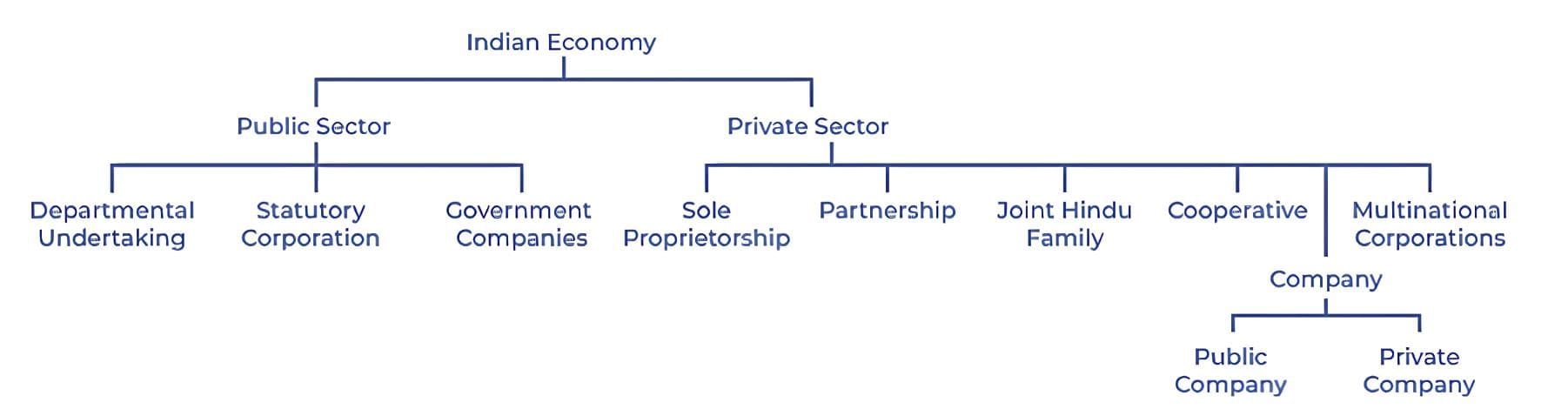
- The private sector includes businesses owned by individuals or groups, such as sole proprietorships, partnerships, joint Hindu families, cooperatives, and companies.
- The public sector comprises government-owned organisations like departmental enterprises, statutory corporations, and government companies.
- The public sector's changing role demands increased efficiency and modernisation to meet economic challenges.
Commerce Exam > Commerce Notes > Business Studies (BST) Class 11 > Chapter Notes: Private, Public and Global Enterprises
Chapter Notes: Private, Public and Global Enterprises
Introduction
Business organisations exist in various forms, such as private, public, and global enterprises. Private organisations include local shops and service providers, while public enterprises like the Railways and Post Office are government-owned. Global enterprises operate internationally, and joint ventures enable companies to share resources and enter new markets. The evolving public sector requires greater efficiency and modernisation.
Private Sector and Public Sector
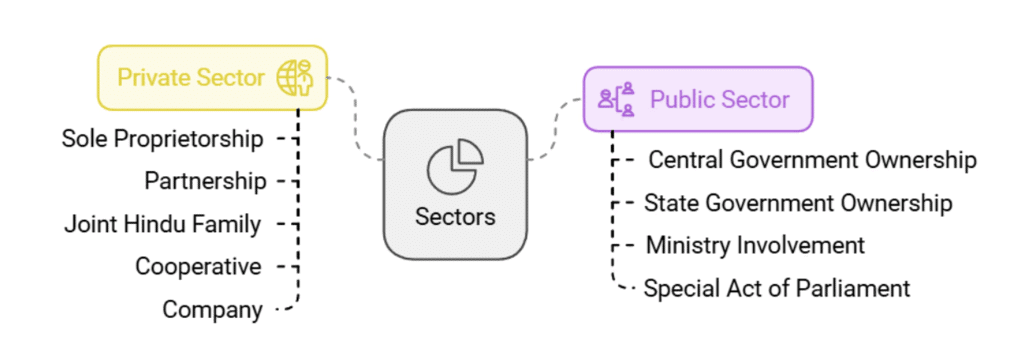
The 1948 Industrial Policy Resolution
- The 1956 Industrial Policy Resolution promoted public sector growth and industrialisation and recognised the interdependence of private and public sectors.
- The 1991 Industrial Policy encouraged disinvestment in the public sector, greater private sector freedom, and foreign direct investment (FDI).
- This policy enabled multinational corporations (MNCs) to enter the Indian market.
- India's economy is a mixed economy, including public, private, and global enterprises.
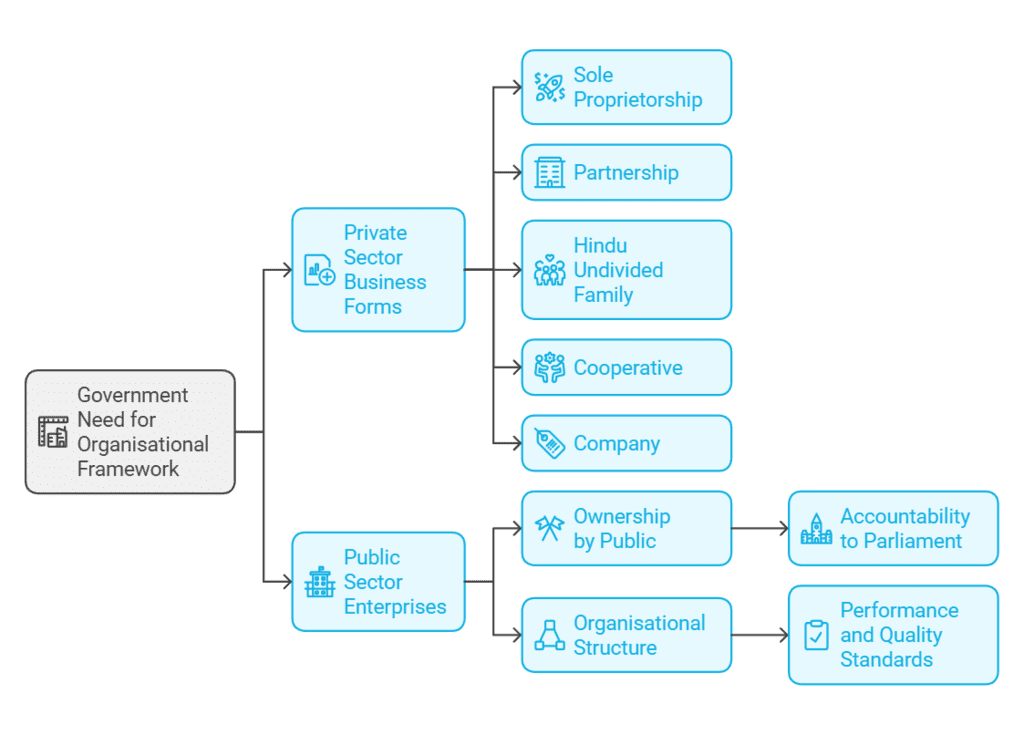
Forms of Organising Public Sector Enterprises
- The government organises public enterprises to participate in economic activities.
- Private sector forms include sole proprietorship, partnership, Hindu undivided family, cooperative, and company.
- Public enterprises are owned by the public and accountable to Parliament.
- They involve public ownership, use of public funds, and accountability to citizens.
- Public enterprises contribute to economic development in a competitive environment.
- The form depends on operations and government relationship.
- Focus is on performance, productivity, and quality standards.
Public Sector
- Departmental Undertakings
- Statutory Corporations
- Government Companies
1. Departmental Undertakings
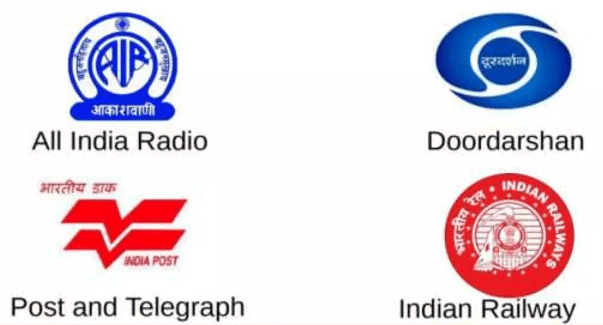
- Departmental undertakings are parts of ministries without separate legal status.
- They operate as ministry departments with government employees.
- Operations follow government rules, managed by IAS officers and civil servants.
- Examples include Railways and the Post and Telegraph Department.
Features
- Funded by the Government Treasury through annual budgets; revenue returns to the treasury.
- Follow government accounting and audit standards.
- Employees have recruitment and working conditions similar to other government servants.
- Supervised directly by ministries with some operational independence.
- Accountable to the ministry.
Merits
- Parliament maintains effective oversight.
- Ensure public accountability.
- Revenue contributes directly to government income.
Limitations
- Lack flexibility for smooth operations.
- Decision-making requires ministry approval, causing delays.
- Bureaucratic caution limits innovation and risk-taking.
- Poor responsiveness to consumer needs.
2. Statutory Corporations
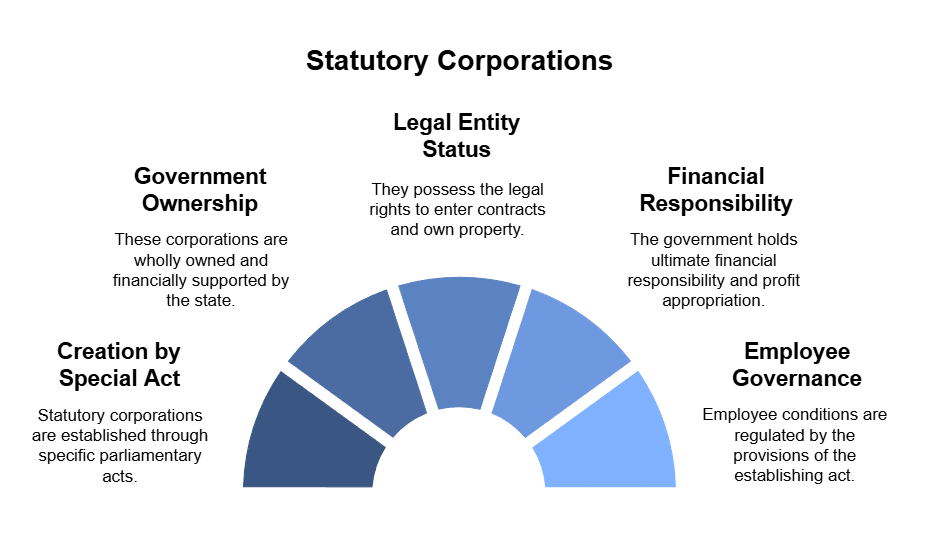
- Created by a Special Act of Parliament defining their powers, functions, and staff rules.
- Have government authority and flexibility similar to private companies.
- Fully state-owned and regulated by the Act's provisions.
- The government holds final financial responsibility and utilises profits.
- They are legal entities able to sue, be sued, enter into contracts, and own property.
- Funds are raised by borrowing from the government or the public.
- Staff employment terms are specified by the Act.
Merits
- Enjoy independence and operational flexibility.
- The government does not interfere in financial matters.
- Create policies and procedures within legislative powers.
- Valuable instrument for economic development.
Limitations
- Operations are governed by strict rules, limiting flexibility.
- Government and political intervention are common in major decisions.
- Corruption risks due to public interaction.
- Advisors on boards may limit decision-making powers.
3. Government Company
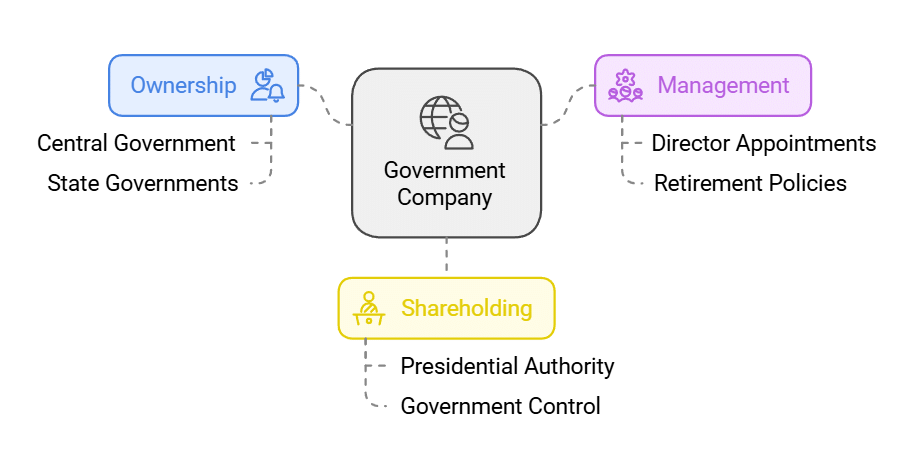
- Defined under Section 2(45) of the Companies Act 2013 with at least 51% government ownership.
- Restrictions on the appointment and retirement of directors and key management.
- Shares held in the name of the President of India.
- Functions as a separate legal entity distinct from the government.
- Established under the Companies Act or earlier laws.
- Can sue and be sued, enter into contracts, and acquire property in its name.
- Management follows the Companies Act; employees are appointed per the Memorandum and Articles of Association.
- Exempt from some accounting and audit rules; an auditor appointed by the Central Government; Annual Report presented to Parliament or State Legislature.
- Funding from government shareholdings, private investors, and capital markets.
Merits
- Legal entity distinct from the government.
- Autonomy in management decisions.
- It can regulate markets and discourage unhealthy practices through pricing.
Limitations
- The government's sole stakeholding can limit the Companies Act's effectiveness.
- May neglect constitutional duties of government-funded enterprises.
- Government control can undermine autonomy and defeat the company's purpose.
Changing Role of the Public Sector
- Initially, public sector enterprises supported economic goals by building infrastructure and investing where the private sector hesitated.
- Post-1990s liberalisation required them to compete with private companies and be accountable for losses and returns.
- Loss-making units were referred to the Board for Industrial and Financial Reconstruction (BIFR) for restructuring or closure.
- Efforts were made to improve the efficiency and profitability of inefficient units.
- The public sector's role has evolved significantly since its inception.
1. Development of Infrastructure
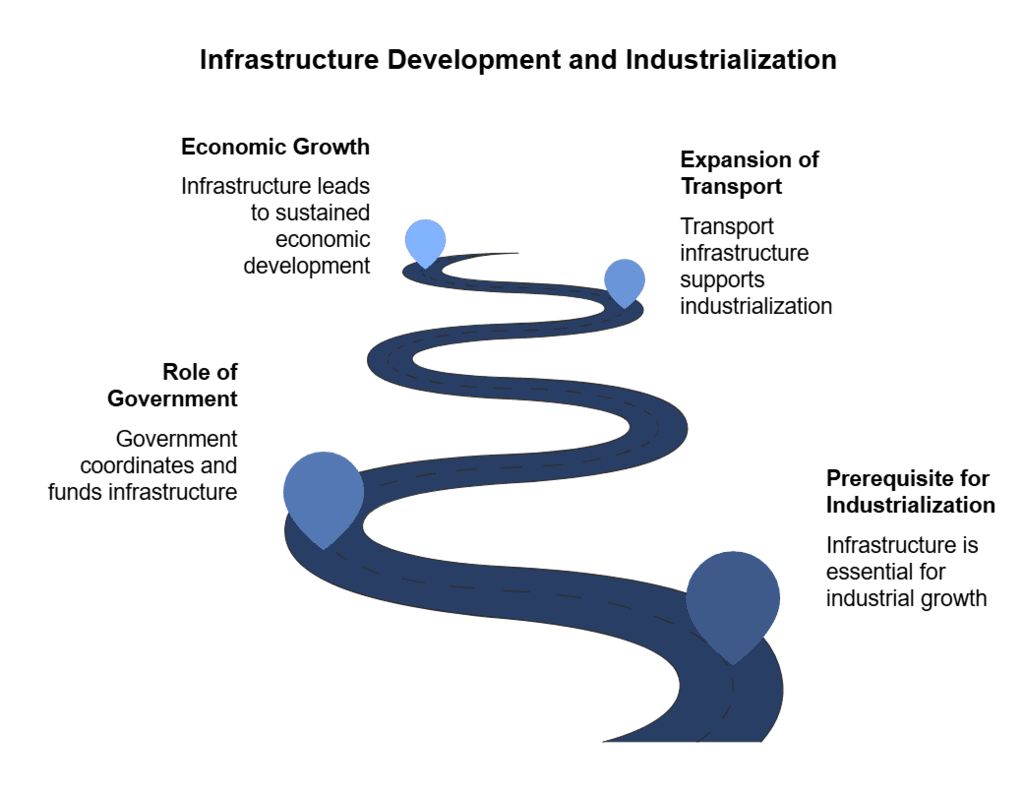
- Infrastructure development is essential for industrialisation.
- Requires transport, communication, fuel, energy, and basic and heavy industries.
- The government mobilises large capital, coordinates projects, and trains the workforce.
- Public sector enterprises built heavy engineering capabilities, reducing imports during the second and third Five-Year Plans.
2. Regional Balance
- The government promotes balanced regional development and reduces inequalities.
- Public sector industries in less developed areas stimulate growth, create jobs, and support ancillary industries.
- Four major steel plants were established in underdeveloped regions to boost economic progress.
3. Economies of Scale
- Large-scale industries require substantial capital investment, leading to government involvement for economies of scale.
- Industries like electricity, petroleum, and telecommunications need mass production supported by government resources.
4. Check Over-Concentration of Economic Power
- New private-sector groups should invest in heavy industries to avoid wealth concentration.
- The public sector can establish large industries requiring substantial investment.
- This prevents the accumulation of wealth and economic power in private hands.
In summary, the public sector has evolved, adapting to India's economic landscape and addressing challenges of industrialisation, regional balance, and economic power distribution.
5. Import Substitution
- During the second and third Five-Year Plans, India aimed for self-reliance, facing foreign exchange shortages that limited imports of heavy machinery.
- The government set up public sector companies in heavy engineering to support import substitution.
- Public sector enterprises such as STC and MMTC significantly boosted exports.
6. Government Policy Towards Public Sector Since 1991
- In 1991, four major reforms were introduced: restructure viable PSUs, close non-viable ones, reduce government share in non-strategic PSUs to 26% or less, and protect workers' interests.
- The 1956 Industrial Policy reserved 17 industries for the public sector; by 2001, only atomic energy, arms, and rail transport remained exclusively reserved.
- Disinvestment involves selling shares to the private sector and the public to raise funds and increase ownership participation.
- PSUs were referred to the Board of Industrial and Financial Reconstruction (BIFR) for revival or closure decisions.
Global Enterprises
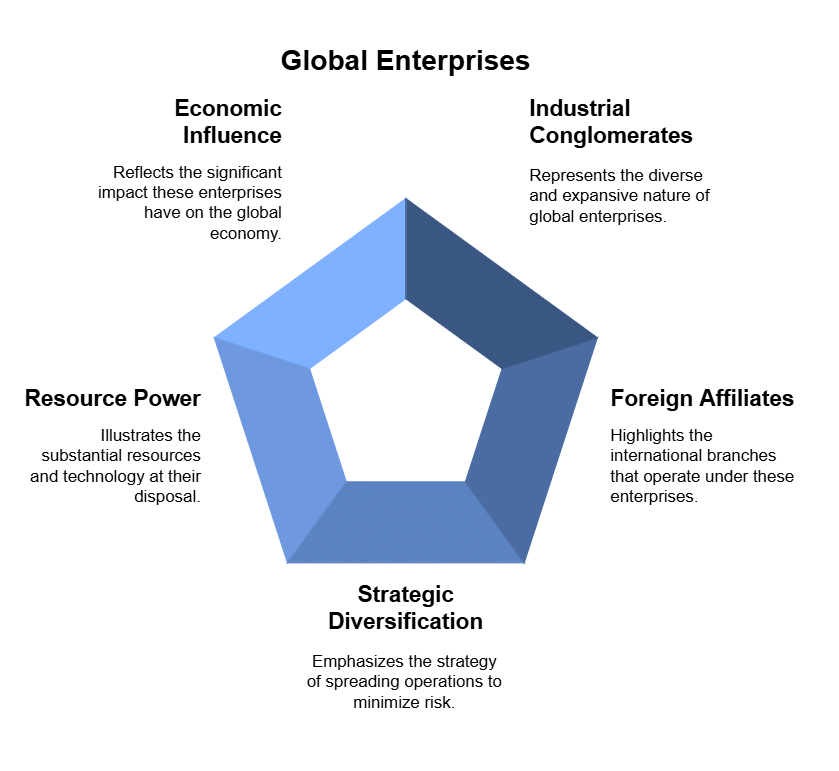
- Global enterprises are large industrial groups operating across countries through subsidiaries.
- Also called Majority Owned Foreign Affiliates (MOFA).
- They focus on a broad global presence rather than few products.
- With financial resources, advanced technology, and reputation, they significantly influence the global economy.
Features
1. Huge Capital Resources
- They have significant financial resources and can raise funds globally through equity, debentures, bonds, or borrowing.
2. Foreign Collaboration
- Form agreements with local companies for technology transfer, manufacturing, and branding.
- Agreements may include restrictions on technology, pricing, dividends, and foreign control.
- Collaborate with government and private sector entities.
3. Advanced Technology
- Benefit from technological advancements in production.
- Comply with international quality standards.
- Maximise use of local resources, promoting industrial growth in host countries.
4. Product Innovation
- Have R&D teams focused on new products and improvements.
- Require large investments manageable by global companies.
- Use superior technology to meet international standards.
5. Marketing Strategies
- Use aggressive marketing to increase sales rapidly.
- Maintain reliable market information systems.
- Established global brands ease sales across markets.
6. Expansion of Market Territory
- Operate beyond home countries via subsidiaries and affiliates.
- Grow international reputation and establish global brands.
7. Centralised Control
- Headquarters exercise full control over branches and subsidiaries.
- Control aligns with parent company policies.
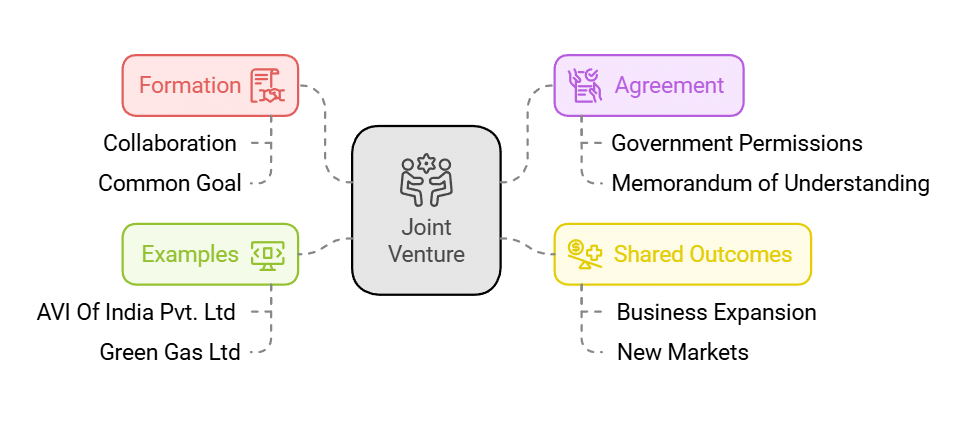
Joint Ventures
- Two or more businesses combine resources and expertise to share risks and rewards.
- Joint venture agreements ensure timely government approvals and licenses.
- Based on a memorandum of understanding (MoU) detailing terms.
- Formed for business growth, new products, or entering new markets, especially abroad.
- In India, treated as domestic companies without separate laws.
Joint Venture - Types
A. Equity-Based Joint Venture
- Involves creating a separate co-owned business entity.
- Forms of entities vary.
B. Contractual Joint Venture
- No new entity formed; collaboration based on agreement.
- No shared ownership; parties maintain some control and share management.
Features of Joint Ventures
- Include significant capital, foreign collaboration, advanced technology, product innovation, marketing strategies, market expansion, and centralised control.
Benefits
- Shared risks and costs.
- Access to new markets and technologies.
- Enhanced expertise and improved project efficiency.
Public Private Partnership
A public-private partnership (PPP) is a cooperative arrangement between public and private organisations for infrastructure and services.
Features
- Public partners include government bodies and state-owned companies.
- Private partners include domestic or international businesses providing technical or financial expertise.
- Government contributes social responsibility, sustainability, financial support, and asset transfer.
- Private sector provides expertise in operations, management, and innovation.
- NGOs and communities act as stakeholders.
PPPs operate globally in sectors like power, water, waste management, hospitals, schools, roads, IT, and housing.
Merits
- Shift risk of design and construction.
- Speed up project completion.
Weaknesses
- Environmental conflicts may arise.
- Attracting private investment can be challenging.
HOTS
1. Can the public sector companies compete with the private sector in terms of profit & loss efficiency? Give reasons for your answer.
Ans. No, public sector companies cannot compete with private sector efficiency due to:
- Their focus on social services over profit, aiming to develop backward areas and create jobs.
- Influence of government policies limiting autonomy and flexibility.
- Bureaucratic management often leads to inefficiency.
2. Public sector enterprises have played a vital role in India's economic development. Why is the Government pursuing disinvestment now?
Ans. Despite contributions like filling industrial gaps and creating jobs, PSUs face:
- High overhead costs.
- Low production capacity utilisation.
- Inefficient management.
- Low returns or losses.
Disinvestment aims to reduce government ownership by selling shares to private sector and public.
3. State three situations where a Government Company is most suitable.
Ans. Ideal when:
- Government wants to control a private company without nationalisation during crises.
- Promoting an economic activity area.
- Starting ventures involving private local or international interests.
4. What motivates a company to go global?
Ans. To expand business by accessing larger markets for increased profits and reduced costs through large-scale production.
5. Why are global enterprises considered superior to other business organisations?
Ans. They benefit from economies of scale, access bigger markets, enhance competitiveness, optimise resources, innovate effectively, and ensure better profitability and sustainability.
6. What are the benefits of joint ventures and public-private partnerships?
Ans. Benefits include shared risks and costs, access to new markets and technologies, enhanced expertise, and improved project efficiency, leading to better services and innovation.
The document Chapter Notes: Private, Public and Global Enterprises is a part of the Commerce Course Business Studies (BST) Class 11.
All you need of Commerce at this link: Commerce
FAQs on Chapter Notes: Private, Public and Global Enterprises
| 1. What's the difference between private enterprises and public enterprises in India? |  |
Ans. Private enterprises are owned and operated by individuals or private groups for profit, while public enterprises are owned by the government and established to serve public interest alongside generating revenue. Private sector businesses like Reliance focus on profitability; public sector organisations like Indian Railways prioritise social welfare and essential services for citizens.
| 2. How do global enterprises differ from domestic businesses in terms of operations? | |
Ans. Global enterprises operate across multiple countries with international supply chains, markets, and workforce, while domestic businesses function within national boundaries. Multinational corporations like Apple and Microsoft leverage worldwide resources, face varied regulations across nations, and generate revenue from diverse markets globally, unlike companies serving only domestic consumers.
| 3. What exactly is meant by a cooperative enterprise and how does it work? | |
Ans. A cooperative enterprise is jointly owned and democratically controlled by members who share profits equally based on participation. Unlike private enterprises seeking maximum profit or public enterprises serving state goals, cooperatives prioritise member welfare. Dairy cooperatives and farmer collectives exemplify this model, where stakeholders collectively make decisions and distribute surpluses fairly among members.
| 4. Why do governments establish public sector enterprises instead of letting private businesses handle everything? | |
Ans. Governments establish public enterprises to ensure equitable access to essential services like healthcare, education, and utilities that private businesses may neglect due to low profitability. Public sector organisations guarantee affordable services to all citizens regardless of income, maintain strategic industries for national security, and reinvest profits into public welfare rather than shareholder returns.
| 5. What are the main challenges multinational corporations face when expanding into foreign markets? | |
Ans. Multinational corporations encounter regulatory compliance across different jurisdictions, cultural adaptation of products and marketing, fluctuating exchange rates, and political risks in unfamiliar markets. Global enterprises must navigate labour laws, taxation systems, and consumer preferences varying significantly by country. Supply chain complexities and competition from local businesses also demand strategic planning for successful international expansion and market penetration.
About this Document

59.6K Views

4.85/5 Rating

Apr 18, 2026 Last updated
Document Description: Chapter Notes: Private, Public and Global Enterprises for Commerce 2026 is part of Business Studies (BST) Class 11 preparation. The notes and questions for Chapter Notes: Private, Public and Global Enterprises have been prepared according to the Commerce exam syllabus. Information about Chapter Notes: Private, Public and Global Enterprises covers topics like and Chapter Notes: Private, Public and Global Enterprises Example, for Commerce 2026 Exam. Find important definitions, questions, notes, meanings, examples, exercises and tests below for Chapter Notes: Private, Public and Global Enterprises.
Introduction of Chapter Notes: Private, Public and Global Enterprises in English is available as part of our Business Studies (BST) Class 11 for Commerce & Chapter Notes: Private, Public and Global Enterprises in Hindi for Business Studies (BST) Class 11 course. Download more important topics related with notes, lectures and mock test series for Commerce Exam by signing up for free. Commerce: Chapter Notes: Private, Public and Global Enterprises
Description
Chapter Notes: Private, Public & Global Enterprises of Business Studies with clear explanations of key concepts & important topics of the chapter, to help you underst& lessons better & revise quickly, & crack the Commerce exam.
Information about Chapter Notes: Private, Public and Global Enterprises
In this doc you can find the meaning of Chapter Notes: Private, Public and Global Enterprises defined & explained in the simplest way possible. Besides explaining types of Chapter Notes: Private, Public and Global Enterprises theory, EduRev gives you an ample number of questions to practice Chapter Notes: Private, Public and Global Enterprises tests, examples and also practice Commerce tests



Related Searches
pdf , Chapter Notes: Private, Public and Global Enterprises, ppt, Important questions, Free, Chapter Notes: Private, Summary, video lectures, practice quizzes, Previous Year Questions with Solutions, mock tests for examination, Viva Questions, Chapter Notes: Private, Sample Paper, Semester Notes, Objective type Questions, shortcuts and tricks, Public and Global Enterprises, MCQs, past year papers, Public and Global Enterprises, study material, Exam, Extra Questions;