Long Answer Questions - Consumer's Equilibrium and Demand (Theory of Consumer Behaviour)

Q1. How is equilibrium achieved with the help of indifference curve analysis?
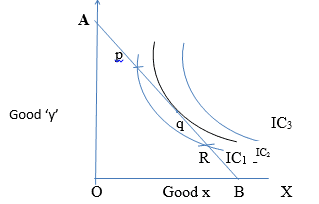
Ans:- a) In the indifference curve approach, a consumer's equilibrium is achieved at the point at which the budget line is tangent to a particular indifference curve. This is the point of maximum satisfaction.
b) Diagram:
c) Explanation of the diagram:
i) 'AB' is the budget line.
ii) It is sure that the consumer's equilibrium will lie on some point on 'AB'
iii) Indifference map (set of IC1, IC2, IC3) shows the consumer's scale of preferences between different combinations of good 'x' and good 'y'
iv) Consumer's equilibrium will be achieved where the budget line (AB) is tangent to the IC2.
d) Essential conditions for the consumer's equilibrium:
i) Budget line must be tangent to the indifference curve, i.e., MRS xy = Px / Py
ii) The indifference curve must be convex to the origin, or MRS xy should decrease.
e) Consumers cannot achieve the following:
i) P and R points on the budget line give satisfaction, but they lie on the lower indifference curve IC1. Choosing point 'q' puts him on a higher IC, which gives more satisfaction.
ii) He cannot move on to IC3, as it is beyond his income.
Q2. Explain the various degrees of price elasticity of demand with the help of diagrams.
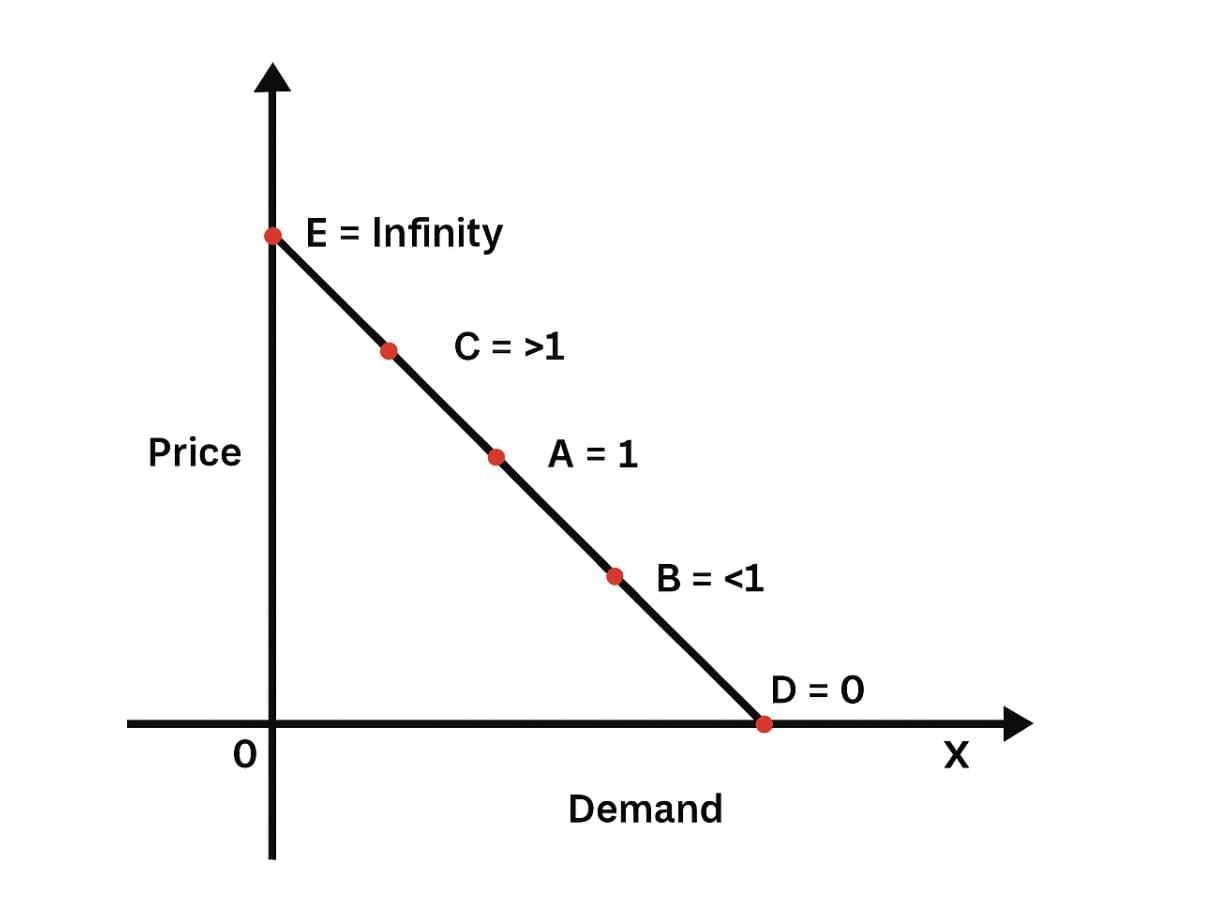
Ans: There are five degrees of price elasticity of demand. They are,
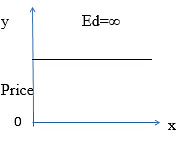
- Perfectly elastic demand (Ed=∞): a slight or no change in the price leads to infinite changes in the quantity demanded.
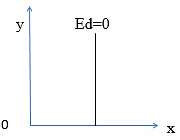
- Perfectly Inelastic demand (Ed=0) : The demand for a commodity does not change at all, irrespective of any change in its price.
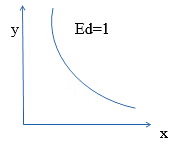
- Unitary elastic demand (Ed=1): When the percentage change in demand (%) of a commodity is equal to the percentage change in price.
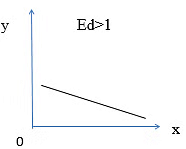
- Greater than unitary elastic demand (Ed>1): When the percentage change in demand of a commodity is more than the percentage change in its price.
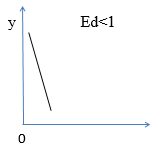
- Less than unitary elastic demand (Ed<1): When the percentage change in demand of a commodity is less than the percentage change in its price.
Q3. What are the methods of measuring price elasticity of demand?
Ans: The methods of measuring price elasticity of demand include the following:
1. Proportionate or Percentage Method:
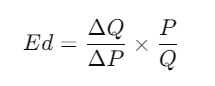
- This method calculates elasticity as the ratio of the percentage change in quantity demanded to the percentage change in price.
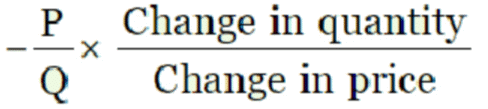
- Formula:

OR
Example: If the price of a product increases by 10% and the quantity demanded decreases by 20%, the price elasticity of demand is calculated as follows:
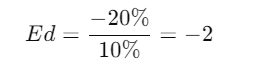
This means the demand is elastic.
2. Total Outlay Method:
- This method looks at how total spending changes as prices change.
- If total spending increases when prices fall, elasticity is greater than one.
- If total spending remains constant when prices change, elasticity is equal to one.
- If total spending decreases when prices fall, elasticity is less than one.
Example: If the price of a product decreases from Rs. 10 to Rs. 8 and the total spending increases from Rs. 1000 to Rs. 1200, then the elasticity of demand is greater than one, indicating elastic demand.
3. Geometric or Point Method:
- This method measures elasticity at different points along the demand curve.
- Formula:

Example: Suppose a demand curve has a price of Rs. 5 at the upper segment and Rs. 3 at the lower segment, and the quantity demanded changes from 50 to 70 units. Using the formula:
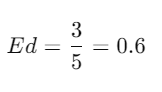
This indicates inelastic demand at this specific point on the demand curve. These methods help in understanding how responsive the quantity demanded is to a change in price.
Q4. Describe any four factors that affect a commodity's demand.
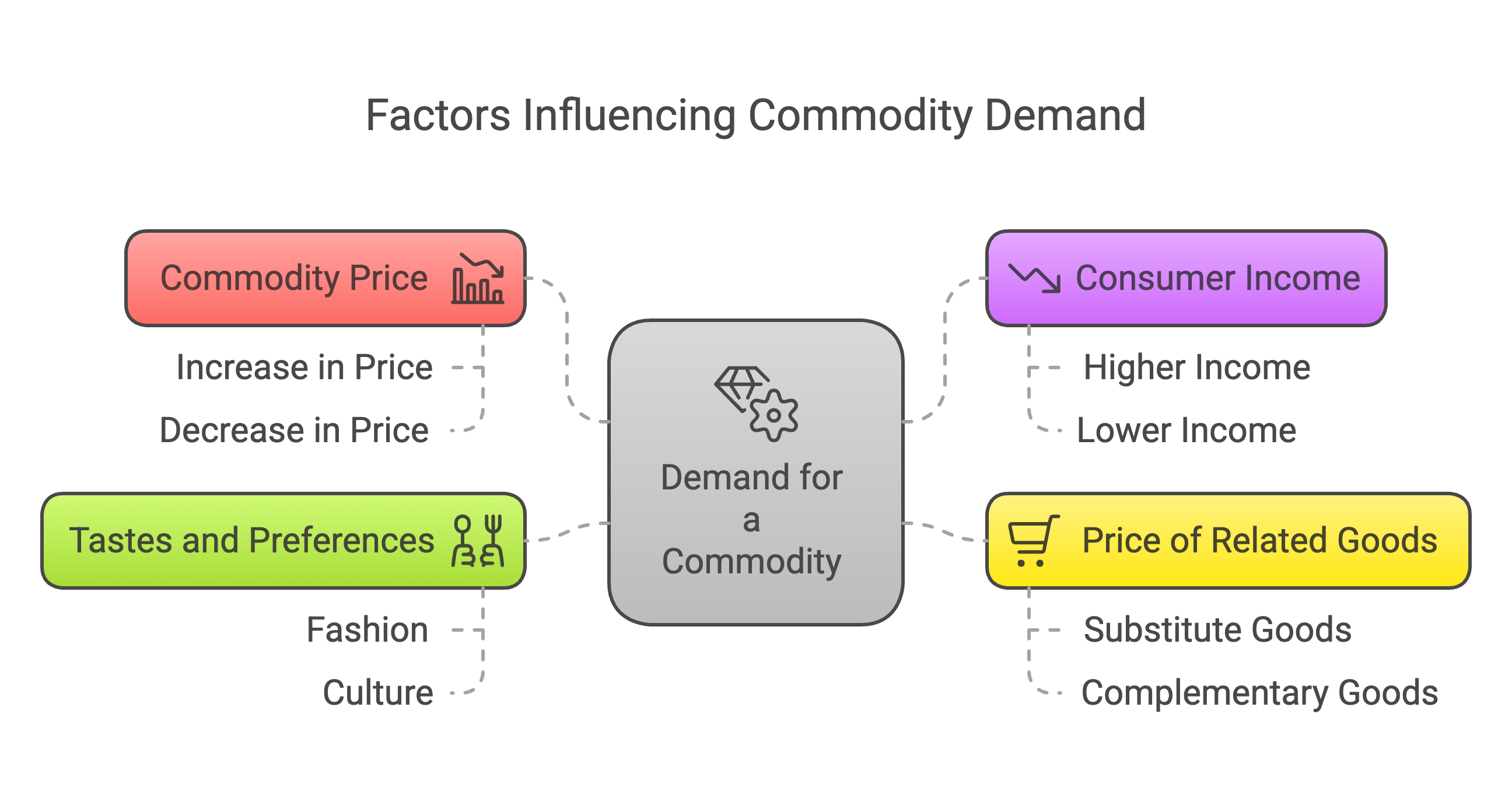
Ans: The factors that influence the demand for a commodity include:
Commodity Price (Px):
- The price of a commodity is a major factor affecting its demand. Generally, if the price of a commodity increases, the demand for it decreases, and if the price decreases, the demand increases. This inverse relationship means that consumers tend to buy less of a product when its price goes up and more when its price goes down.
Consumer Income (Y):
- Another important factor affecting demand is consumer income. When consumers have higher incomes, they tend to buy more goods, increasing the demand for everyday items. Conversely, when income levels drop, the demand for these items decreases. This shows a direct relationship between income and demand.
Price of Related Goods:
- The demand for a commodity is also influenced by the prices of related goods, which include substitute goods and complementary goods.
- Substitute Goods: These are products that can replace each other, like tea and coffee. If the price of tea rises, people might buy more coffee instead, even if the price of coffee remains the same. This positive relationship means that an increase in the price of one leads to an increase in the demand for its substitute.
- Complementary Goods: These are products used together, like cars and gasoline. If the price of gasoline increases, the demand for cars might decrease because using the car becomes more expensive. This negative relationship means that an increase in the price of one leads to a decrease in the demand for its complement.
Tastes and Preferences:
- Changes in consumer tastes and preferences, influenced by factors like fashion, culture, and traditions, significantly affect the demand for commodities. If a product becomes more popular or fashionable, its demand increases. Conversely, if consumer preferences shift away from a product, its demand decreases. Therefore, a commodity's demand is closely tied to the tastes and preferences of consumers.
Q5. A consumer buys 50 units of a good at Rs. 4/- per unit. When its price falls by 25 percent its demand rises to 100 units. Find out the price elasticity of demand.
Ans:- Ed=4
Initial Price (P0)=Rs.4
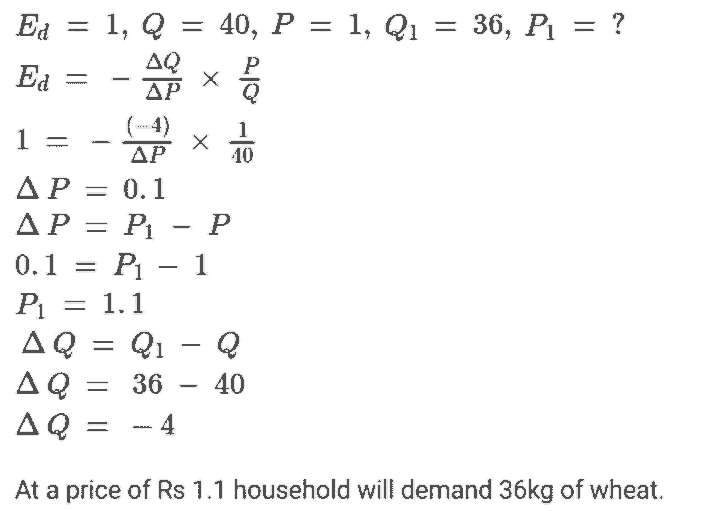
Q6. Price elasticity of demand for wheat is equal to unity, and a household demands 40 Kg of wheat when the price is Rs 1 per kg. At what price will the household demand 36 kg of wheat?
Ans:
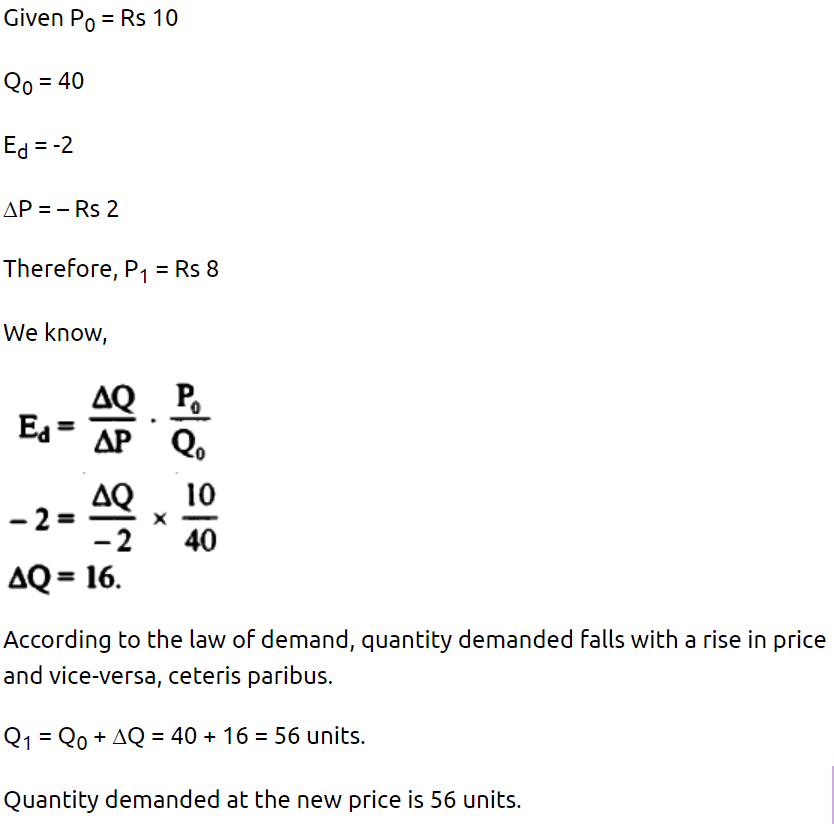
Q7. The quantity demanded of a commodity at a price of Rs 10 per unit is 40 units. Its price elasticity of demand is -2. Its price falls by Rs 2/- per unit. Calculate its quantity demanded at the new price.
Ans :
Q8. Suppose the price elasticity of demand for a good is -0.2. How will the expenditure on the good be affected if there is a 10% increase in its price?
Ans:
According to the question:
- Price elasticity of demand (Ed) = -0.2
- Percentage increase in price = 10%
We can use the elasticity formula:
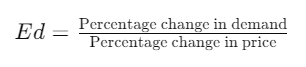
Putting the values:

Percentage change in demand=-0.2×10
Percentage change in demand = -2 %
From the above calculation, we infer that when the price increases and the elasticity of demand is less than 1 (inelastic), the demand decreases by a smaller percentage compared to the price increase. Therefore, the total expenditure on the good will increase.
FAQs on Long Answer Questions - Consumer's Equilibrium and Demand (Theory of Consumer Behaviour)
| 1. How do you find consumer's equilibrium using the marginal utility approach? |  |
| 2. What's the difference between consumer's equilibrium and market demand in consumer behaviour theory? | |
| 3. Why does the indifference curve approach work better than marginal utility for consumer equilibrium? | |
| 4. How does budget constraint affect consumer's equilibrium and purchasing decisions? | |
| 5. What happens to consumer's equilibrium when price of one good changes suddenly? | |