NCERT Solutions - Sensory, Attentional and Perceptual Processes

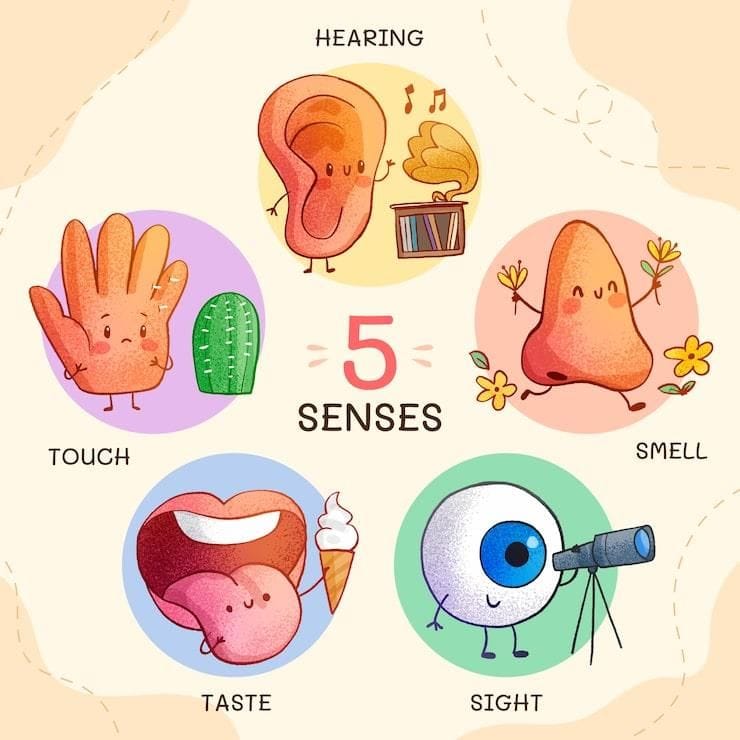
Q1: Explain the functional limitations of sense organs.
Ans: The functional limitations of sense organs of human beings refer to their limited range of stimulation. In order to be noticed, a stimulus has to be of an optimal intensity and magnitude. Thus, the stimulus has to carry a minimum value or weight. For example, our ears cannot hear very faint sounds, and extremely loud sounds may cause discomfort or hearing damage. Similarly, our eyes cannot see objects in very dim or very bright light.
Q2: Define attention. Explain its properties.
Ans: Attention refers to the process through which certain stimuli are selected from a group of others. It requires an allocation of effort. The objects that are at the centre are the focus of attention while objects that are away from the centre are at the fringe.
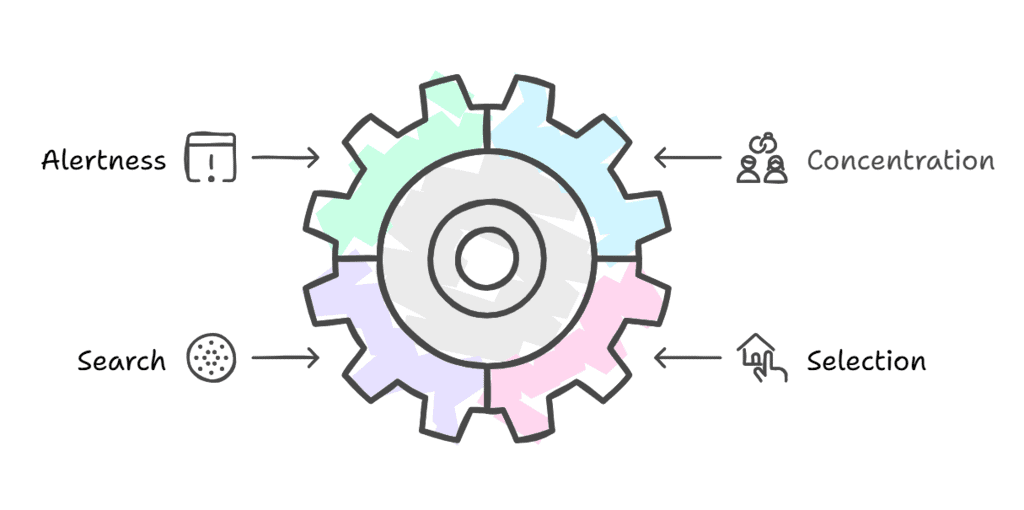
Attention has following properties:
- Alertness: It refers to the individual's readiness to deal with stimulus that they experience. For instance, the situations where people are alert while crossing the road in order to avoid mishaps.
- Concentration: It refers to the focus of awareness on specific objects while excluding others in that period of time. For instance, the executives in a meeting concentrate upon their work while ignoring other activities outside.
- Search: It takes place when an observer looks for specific subset of objects among a set of objects. For example, the historians search for sites to gain information about events within a particular time period.
- Selection: It refers to the focus of conscious awareness on a particular stimulus, upon which the attention is gained.
Q3: State the determinants of selective attention. How does selective attention differ from sustained attention?
Ans: Sustained attention refers to the ability to maintain focus on a specific object or activity over an extended period. It is concerned mainly with the selection of a limited number of stimuli or objects from a larger number of stimuli.
Factors affecting selective attention:
External factors:
- These are related to the features of the stimuli. Other factors held constant.
- The size, intensity and movement of stimuli are important determinants.
- Large, bright and moving objects easily catch our attention.
- Auditory stimuli are often more attention-grabbing than visual ones, especially when they are loud or distinct.
- Stimuli that are novel and slightly complex catch our attention.
- Human figures are more likely to attract attention than inanimate objects, due to their social significance.
Internal factors can be of two types:
(a) Cognitive factors include factors like interests, attitudes and preparatory set.
- Stimuli that appear interesting are readily attended.
- Stimuli that are favorably disposed by us also catch our attention.
- Preparatory set a state of mind to act in a certain way and to respond to some stimuli and not to others at that moment.
(b) Motivational factors
- These are related to our biological and social needs e.g. hungry person will attain food first. During examination days students focus more on teacher's instructions.
- Selective attention is concerned mainly with the selection of a limited number of stimuli from a large number of stimuli whereas sustained attention refers to focusing of awareness on specific objects while excluding others for the movement.
- It is ability to maintain attention on an object or event for longer duration.
Q4: What is the main proposition of Gestalt psychologists with respect to perception of the visual field?
Ans: Gestalt psychologists (Wertheimer, Koffka and Kohler) outlines several principles that describe the way in which basic sensory input are oganized into whole patterns.
- According to Gestalt psychologists, human beings perceive different stimuli not as discrete elements, but as an organised, "whole" that carries a definite form.
- They believe that the form of an object lies in its whole, which is different from the sum of their parts.
- For example, a flower-pot with a bunch of flowers is a whole. If the flowers are removed, the flower-pot still remain a whole. It is the configuration of the flower-
pot that has changed. Flower pot with flower is one configuration, without flowers it is another configuration. - Gestalt psychologists also indicate that cerebral processes of human beings are always oriented towards the perception of a good figure. That is the reason why human being perceive everything in an organized form.
Some of these principles are discussed below:
(a) Figure ground relationship: We tend to divide the world around us into two parts: figure, which has a definite shape and a location in spaces; and ground, which has no shape, seems to continue behind the figure, and has no definite location. The' figure-ground relationship helps clarity the distinction between sensation and perception.
(b) Contours: Contours are formed whenever a marked difference occurs in the brightness or colour of the background. Contours give shape to the objects in our visual world because they mark one object off-from another or they mark an object off from the general ground. Contours determine shape, but by themselves they are shapeless.
(c) Grouping: Laws of grouping describe basic ways in which we group items together perceptually. These are simple principles through which we perceive the world around us. The principles of grouping include similarity, proximity, closure, and continuity.
- The principle of similarity says that objects of similar shape, size, or colour tend to be grouped together. In the auditory sense, sounds of similar tone and intensity are grouped together.
- The law of proximity says that items which are close together in space or time tend to be perceived as belonging together or forming an organized group
- Principle of continuation describes the tendency to perceive a line that starts in one way as continuing in the same way.
- Law of closure refers to perceptual processes that organize the perceived world by filling in gaps in stimulation.
- In case of principle of continuity if interruptions are too pronounced or too long, continuity disappears and a unified whole is not perceived.
(d) Camouflage: When contours are disrupted visually, objects are difficult to distinguish from the background. This is camouflage. It works because it breaks up contours, e.g. uniform of soldiers in the forest.
Q5: How does perception of space take place?
Ans: Space is perceived in three dimensions. This is because of our ability to transfer a two-dimensional retinal vision into a three dimensional perception. Spatial attributes of objects like, size, shape and distance between objects also contribute towards the perception of space.
Q6: What are the monocular cues of depth perception? Explain the role of binocular cues in the perception of depth?
Ans: The monocular cues of depth perception allow us to perceive depth using just one eye. These cues are often referred to as pictorial cues because artists use them to create the illusion of depth in two-dimensional artworks.
Key monocular cues include:
- Relative Size: Objects that are closer appear larger, while those that are further away look smaller.
- Interposition: When one object overlaps another, the overlapped object is perceived as being further away.
- Linear Perspective: Parallel lines appear to converge in the distance, creating a sense of depth.
- Aerial Perspective: Distant objects appear hazier and less detailed than those that are closer.
- Light and Shade: The way light falls on objects helps us judge their shape and distance.
- Texture Gradient: The texture of surfaces appears finer as they recede into the distance.
- Motion Parallax: When we move, closer objects appear to move faster than those further away.
The binocular cues of depth perception are provided by both the eyes in three dimensional spaces. Their role in the perception of depth are as follows:
- Retinal or Binocular disparity: It occurs when the two eyes have different locations in the head and are separated horizontally with a difference of 6.5 centimetres. The difference in the images formed by the eyes is due to retinal disparity. Large retinal disparity means a close object and small retinal disparity means a distant object.
- Convergence: When the eyes converge inward to bring the image on the fovea of each eye, a group of muscles send messages to the brain which are interpreted as cues to the perception of depth. The degree of convergence decreases as the distance of the object increases.
- Accommodation: It is the process through which image is focussed on the retina with the help of ciliary muscle. These muscles change the thickness of the eye lens. The degree of contraction of the muscles provides a cue to distance. The muscles relax when the object is distant and contract when the object is near.
Q7: Why do illusions occur?
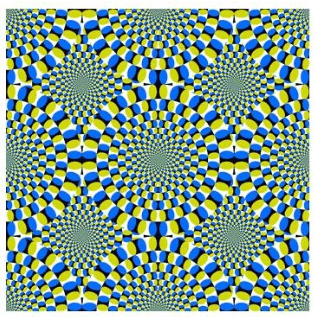
Ans: Illusions occur because of a result of a mismatch between the physical stimuli and its perception by the individual. The mismatch is caused by incorrect interpretation of information received by sensory organs.
Key points include:
- Illusions are often referred to as primitive organisations because they are generated by external stimuli that create similar experiences for everyone.
- Some illusions are universal, meaning they are experienced by all individuals regardless of background.
- Universal illusions remain consistent and do not change with experience or practice.
- In contrast, personal illusions vary from person to person and can be influenced by individual experiences.
Q8: How do socio-cultural factors influence our perceptions?
Ans:
- Several psychologists have studied the processes of perception in different socio-cultural setting. For example, they have used Muller-Lyer and vertical-Horizontal illusion figures with several groups of people living in Europe, Africa, and many others place, by comparing samples from remote. African villages and western settings.
- It was found that African subjects showed greater susceptibility to horizontal vertical illusions, whereas Western subjects showed greater suspectibility to Muller-Lyer illusion.
- Similar findings have been reported in other studies also. Living in dense forests the African subjects regularly experienced vertically (e.g., long trees) and developed a tendency to overestimate it.
- The Westerners, who lived in an environment characterised by right angles, developed a tendency to underestimate the length of line characterised enclosure (e.g., arrowhead).
- This research suggests that the habits of perception are learnt differently in different cultural settings.
- Hudson did a study in Africa, and found that people, who had never seen pictures, had great difficulty in recognizing objects depicted in them and in interpreting depth cues.
- Sinha and Mishra have carried out several studies on pictorial perception using a variety of pictures with people from diverse cultural settings, such as hunters and gatherers living in forests, agriculturists in cities.
- Their studies indicate that interpretation of pictures is strongly related to cultural experiences of people.
FAQs on NCERT Solutions - Sensory, Attentional and Perceptual Processes
| 1. What are sensory processes and how do they influence perception? |  |
| 2. How does attention affect our perceptual processes? | |
| 3. What are the different types of attentional processes? | |
| 4. What is the relationship between perception and cognition? | |
| 5. How do perceptual processes develop over time? | |