NCERT Solutions: The Earth in the Solar System

Q1. Answer the following questions briefly.
(a) How does a planet differ from a star?
Ans: A planet is different from a star in these ways:
- Planets do not emit their own light, while stars generate light through nuclear reactions.
- Planets shine by reflecting the light of a nearby star, such as the Sun.
- Stars are generally much larger and hotter compared to planets.
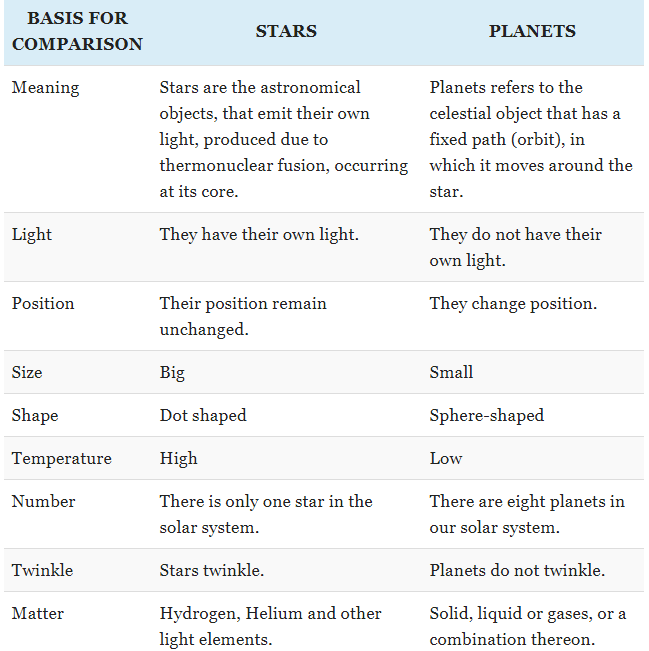 Detailed difference between Stars and Plantes
(b) What is meant by the 'Solar System'?
Ans: The term Solar System refers to the collective system centered around the Sun. It comprises the Sun, eight planets, their natural satellites, and other celestial bodies such as asteroids, comets, and meteoroids, all orbiting the Sun.
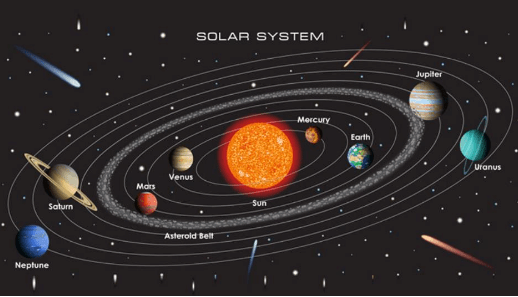 Solar System
(c) Name all the planets according to their distance from the sun.
Ans: The planets, listed in order of their distance from the Sun, are:
- Mercury
- Venus
- Earth
- Mars
- Jupiter
- Saturn
- Uranus
- Neptune.
(d) Why is the Earth called a unique planet?
Ans:
- Earth is considered a unique planet because it is the only known celestial body that supports life.
- It has favorable conditions for life, including a moderate temperature range, the presence of water, and an atmosphere containing essential gases like oxygen.
(e) Why do we see only one side of the moon always?
Ans:
- The Moon takes approximately 27 days to orbit the Earth and requires the same time to complete one rotation.
- Due to this synchronous rotation, the same side of the Moon always faces Earth.
(f) What is the Universe?
Ans:
- The Universe encompasses all of existence, including billions of galaxies, each containing vast numbers of stars, dust, and gases.
- These galaxies collectively make up the expanse of the Universe.
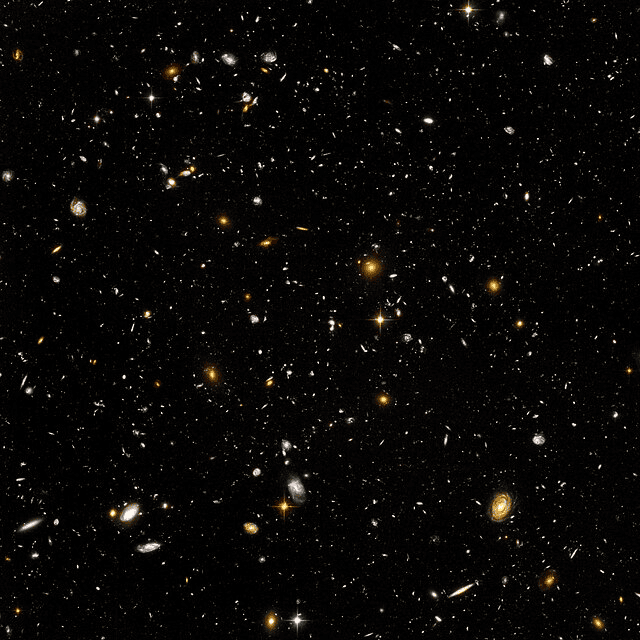 UniverseQ2. Tick the correct answer.
(a) The planet known as the "Earth's Twin" is
(i) Jupiter
(ii) Saturn
(iii) Venus
Ans: (iii) Venus
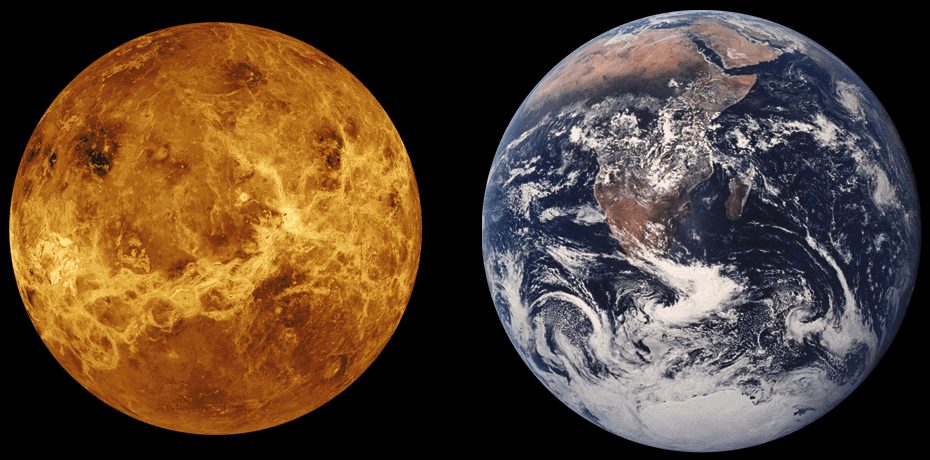 Earth and its Twin Venus
(b) Which is the third nearest planet to the sun?
(i) Venus
(ii) Earth
(iii) Mercury
Ans: (ii) Earth
(c) All the planets move around the sun in a
(i) Circular path
(ii) Rectangular path
(iii) Elongated path
Ans: (iii) Elongated path
(d) The Pole Star indicates the direction to the
(i) South
(ii) North
(iii) East
Ans: (ii) North
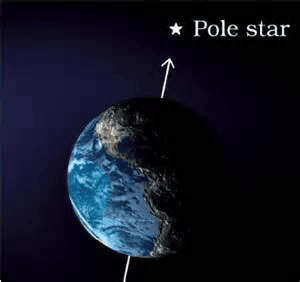 Pole Star
(e) Asteroids are found between the orbits of
(i) Saturn and Jupiter
(ii) Mars and Jupiter
(iii) The Earth and Mars
Ans: (ii) Mars and Jupiter
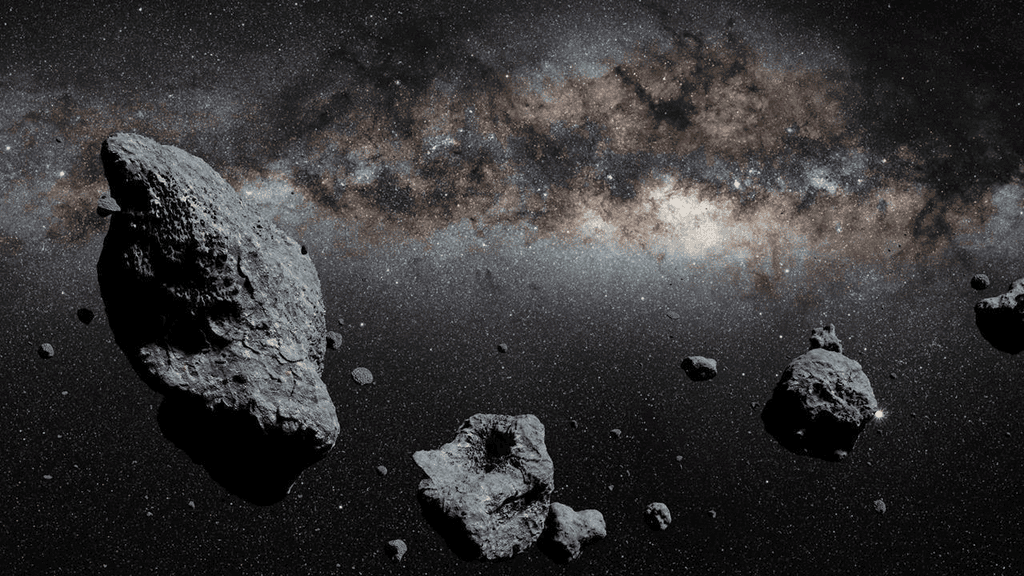 Asteroids
Q3. Fill in the blanks.
(a) A group of ______ forming various patterns is called a ______.
Ans: Stars, constellation
(b) A huge system of stars is called______.
Ans: Galaxy
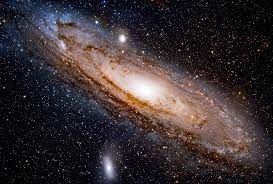 Galaxy
(c) ______ is the closest celestial body to our earth.
Ans: The Moon
(d) ______ is the third nearest planet to the Sun.
Ans: Earth
(e) Planets do not have their own ______ and ______.
Ans: Heat, Light
FAQs on NCERT Solutions: The Earth in the Solar System
| 1. What is the solar system and what does it consist of? |  |
| 2. How do planets differ from stars in the solar system? | |
| 3. What are the names of the eight planets in our solar system? | |
| 4. What is the significance of the Earth in the solar system? | |
| 5. What is the difference between a comet and an asteroid? | |





