NCERT Solutions: Buildings Paintings & Books

Let's Recall
Q1. Match the following: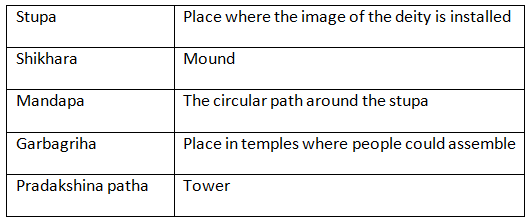
Ans: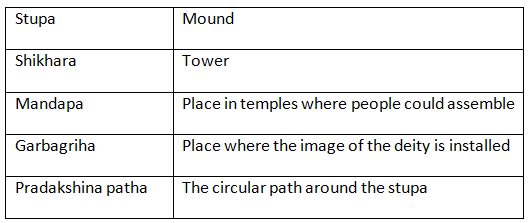
Q2. Fill in the blanks:
(a) _____________ was a great astronomer.
Ans: Aryabhatta was a great astronomer.
(b) Stories about gods and goddesses are found in the _____________.
Ans: Stories about gods and goddesses are found in the puranas.
(c) _____________ is recognised as the author of the Sanskrit Ramayana.
Ans: Valmiki is recognised as the author of the Sanskrit Ramayana.
(d) __________ and __________ are two Tamil epics.
Ans: Silappadikaram and Manimekalai are two Tamil epics.
Let's Discuss
Q3:. Make a list of the chapters in which you find mention of metal working. What are the metals objects mentioned or shown in those chapters?
Ans: The list of the chapters is:
- In the earliest cities: Copper used to make tools, gold and silver to make ornaments.
- What Books and Burials Tell us: Iron tools and weapons, ornaments of gold.
- Kingdoms, Kings and Early Republic: Iron or mines.
- Vital villages and Thriving Towns: Iron tools.
- Traders, Kings and Pilgrims: Gold as a gift.
- Buildings, Paintings and Books: Iron pillar, gold jewellery.
Q4. Read the story on page 122. In what ways is the monkey king similar to or different from the kings you read in chapter 5 and 10?
Ans: Similarities:
- The monkey king as well as the kings felt the pulse of the public.
- The monkey king as well as others kings worked for the welfare of the people.
Dissimilarities:
- The monkey king and his followers survived on the mango, while the other kings' followers required proper food.
- The monkey king did not try to capture the other kings' property, while the other kings did capture try to kill the monkey and their king for just a fruit.
Q5. Find out more and tell a story from one of the epics.
Ans: There are plenty of stories in epics, students can go through any of them and mention the same.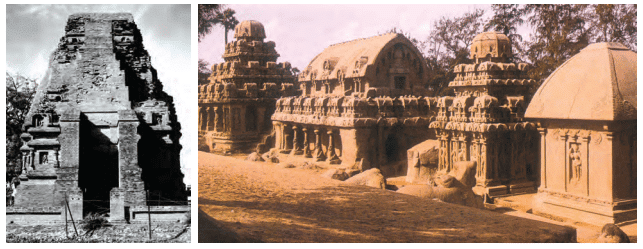 An early temple at Bhitargaon
Let's Do
Q6. List some steps that can be taken to make buildings and monuments accessible to differently-abled people.
Ans:
- Construction of ramps, this will help disabled people who are on wheelchairs
- Railing can be placed on the sidewalls of the staircase so that it helps as support while climbing
- Proper lighting
Q7. Try and list as many uses of paper as you can.
Ans: Paper is used in manufacturing the following:
- Newspapers
- Notebooks
- Grocery bags
- Boxes
- Envelopes
- Magazines
- Cartons
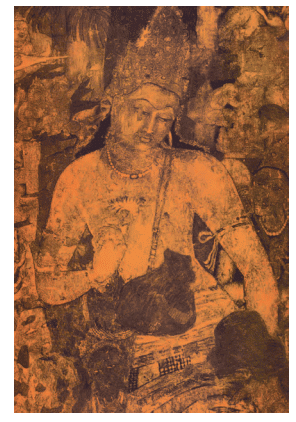 Paintings from AjantaQ8. If you could visit any one of the places described in this chapter, which would you choose and why?
Ans: If I get an opportunity to visit any one of these places, I would plan to go to Mahabalipuram. The main reasons are:
- It is built on the waterfront, near the Bay of Bengal.
- Both monolithic and structural temples are built in the same complex.
- The beauty of temples cannot be surpassed by others.
- Monolithic temples are skillfully chiseled, owned, and sculpted.
- Most of the temples are intact. They have not been destroyed by vagaries of time.
FAQs on NCERT Solutions: Buildings Paintings & Books
| 1. What are the main differences between ancient Indian architecture and medieval Indian buildings? |  |
| 2. Why are paintings in Indian temples and palaces considered important historical records? | |
| 3. How did Indian manuscripts and books influence the preservation of knowledge in ancient times? | |
| 4. What can we learn about daily life in ancient India from studying building structures and artistic representations? | |
| 5. How do NCERT solutions on buildings, paintings, and books help prepare for Class 6 history exams? | |