Chapter Notes: Transportation in Animals & Plants

Every living organism-both animals and plants-needs food, water and oxygen to stay alive. These substances must be moved to every cell, and waste products must be removed. In animals, the heart and blood vessels form the major transport network called the circulatory system. Plants use specialised tissues to move water, minerals and food. This chapter explains how substances are transported within animals and plants and how wastes are excreted.
Circulatory System
The circulatory system is the body's transport network. It carries oxygen, nutrients and water to tissues and removes waste products from them.
Main parts of the circulatory system
- Heart: Pumps blood throughout the body.
- Blood: A fluid that transports oxygen, nutrients and wastes.
- Blood vessels: Tubes that carry blood to and from different parts of the body.
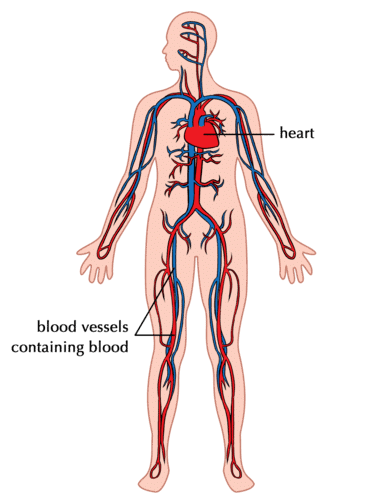 Circulatory System
Blood
Blood is a fluid that carries oxygen from the lungs to cells and transports waste products such as carbon dioxide away from the cells for removal from the body.
Components of blood
- Plasma
- Red blood cells
- White blood cells
- Platelets
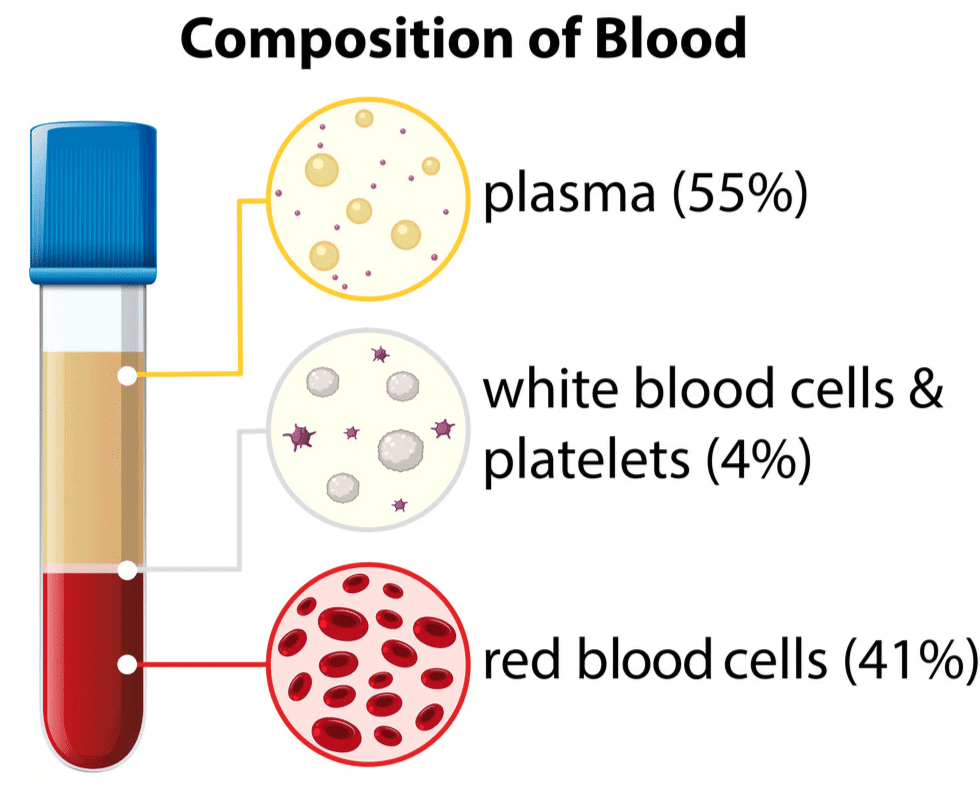 Components of Blood
Plasma
- The liquid part of blood in which cells and other components are suspended.
- Transports nutrients, hormones and waste products.
Red blood cells (RBCs)
- Contain haemoglobin, an iron-containing pigment that binds oxygen.
- Carry oxygen from the lungs to body cells and bring carbon dioxide back to the lungs.
- Haemoglobin gives blood its red colour.
White blood cells (WBCs)
- Defend the body by fighting infections caused by bacteria, viruses and other microbes.
- Are an essential part of the body's immune system.
Platelets
- Small cell fragments involved in blood clotting.
- Help prevent excessive bleeding after injury.
- A very low platelet count can cause uncontrolled bleeding and be life-threatening.
Blood vessels
Blood flows through narrow pipe-like structures called blood vessels. They transport oxygen, nutrients and wastes within the body.
- Different types of blood vessels carry blood to specific parts of the body.
- When we breathe, oxygen enters the lungs and must be delivered to all body cells.
- Arteries carry oxygen-rich blood from the heart to the body (except the pulmonary artery which carries oxygen-poor blood to the lungs).
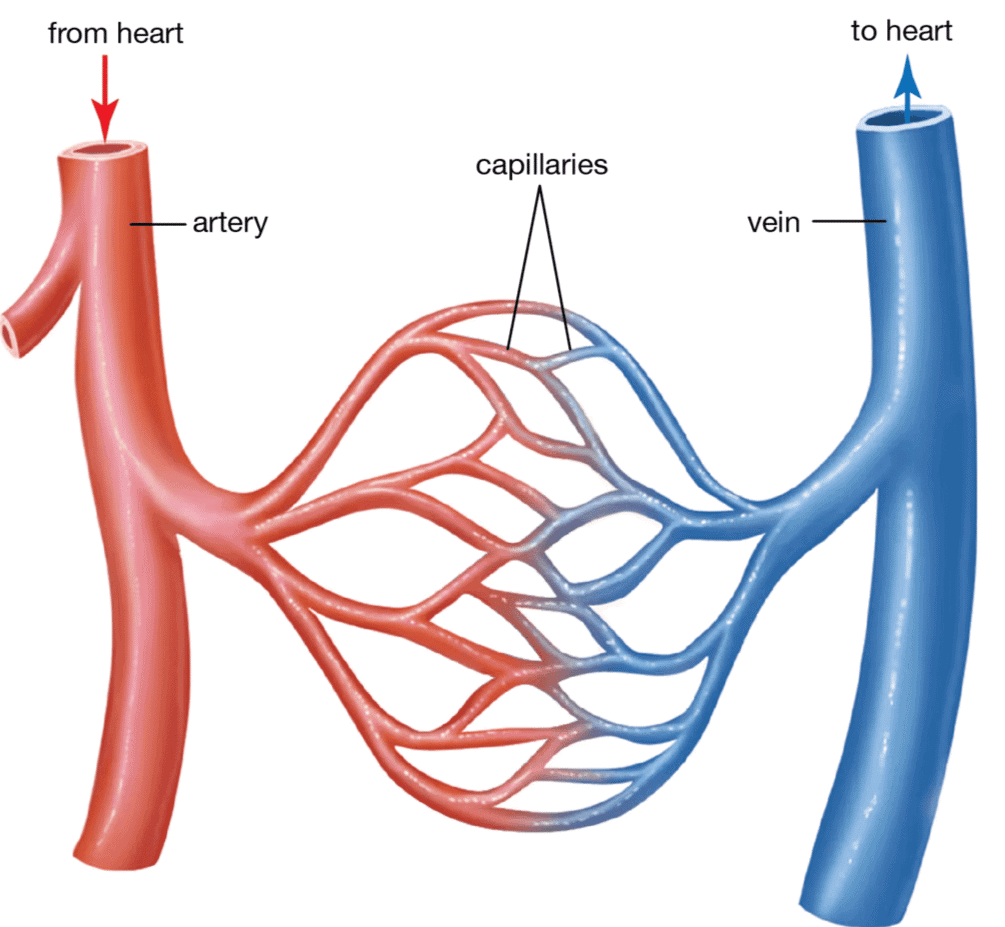 Blood Vessels
Types of blood vessels
- Arteries
- Veins
- Capillaries
Arteries
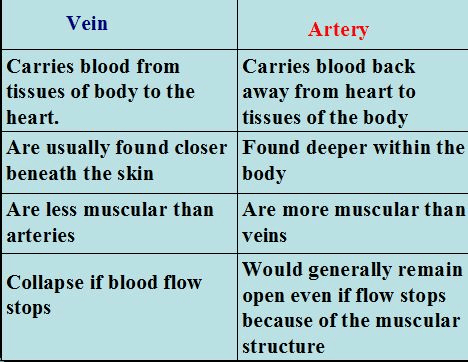
- Carry oxygen-rich blood away from the heart to different parts of the body (pulmonary artery is an exception).
- Have thick, elastic walls because blood in them flows rapidly and under high pressure.
Pulse
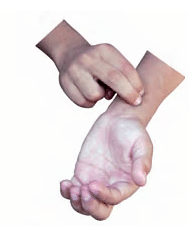
- The pulse is the rhythmic throbbing felt where an artery lies close to the skin (for example, at the wrist or neck).
- The throbbing is produced each time the heart pumps blood into the arteries.
Pulse rate
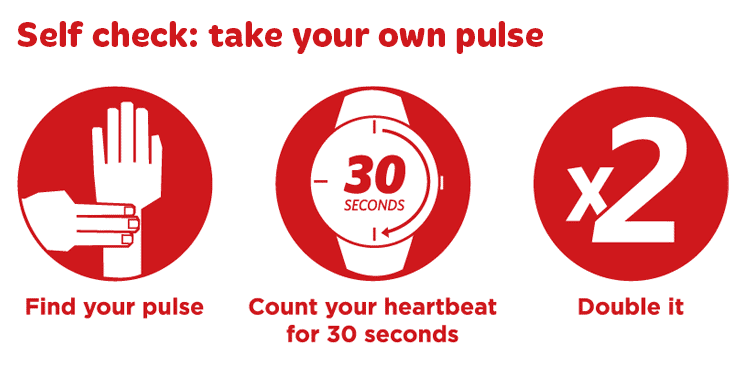
- The pulse rate is the number of pulse beats felt in one minute.
- It indicates how fast the heart is beating.
- For most resting people, the normal pulse rate is about 72-80 beats per minute, but it varies with activity, emotions and health.
Veins
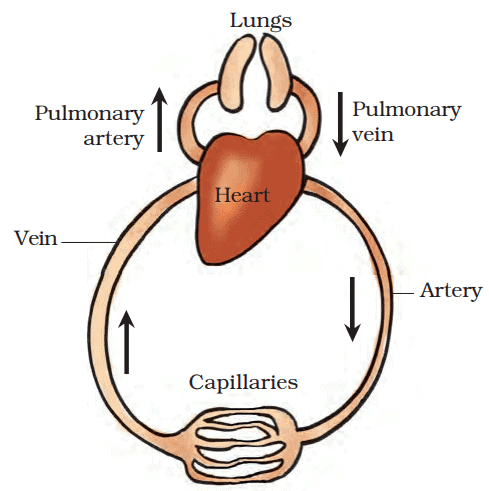
- Carry oxygen-poor blood and metabolic wastes from the body back to the heart (pulmonary vein is an exception, as it carries oxygen-rich blood from the lungs to the heart).
- Blood returning from tissues contains carbon dioxide and other wastes which must be removed in the lungs and other organs.
- Some important vessels: pulmonary artery (carries carbon dioxide-rich blood from the heart to the lungs) and pulmonary vein (carries oxygen-rich blood from the lungs to the heart).
Capillaries
- Extremely thin, microscopic vessels that form networks connecting arteries and veins.
- Arteries branch into many capillaries in tissues; exchange of gases, nutrients and wastes occurs across capillary walls.
- Capillaries then join to form veins that carry blood back to the heart.
Heart
The heart is a muscular organ that acts as a pump to maintain continuous blood circulation.
- Its main function is to circulate blood through blood vessels so that oxygen and nutrients reach all body parts and wastes like carbon dioxide are removed.
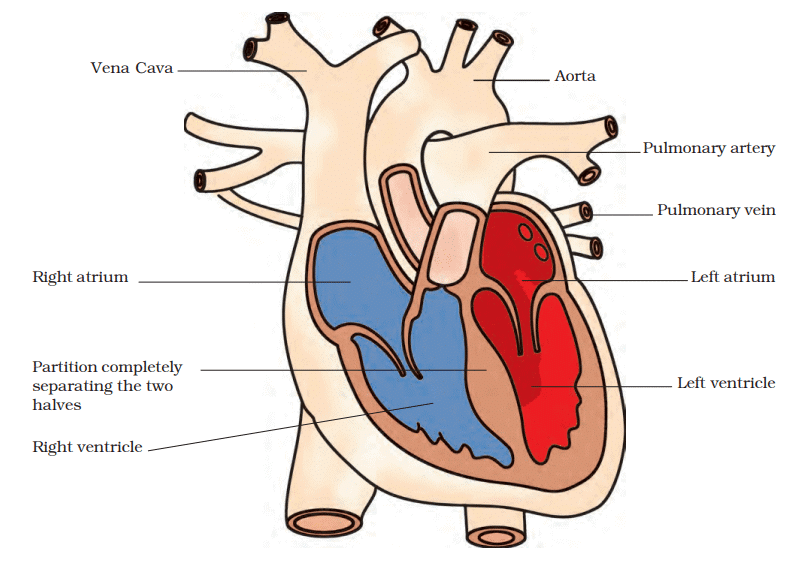
Location and size of the heart
- Location: The heart lies in the chest cavity slightly left of the mid-line.
- Size: Approximately the size of a clenched fist.
Structure of the heart
Four chambers
- The mammalian heart has four chambers to keep oxygen-rich and carbon dioxide-rich blood separate.
- The two upper chambers are the atria (singular: atrium).
- The two lower chambers are the ventricles.
Wall (septum)
- A muscular wall called the septum separates the left and right sides of the heart to prevent mixing of the two types of blood.
Direction of blood flow
Blood flow through the heart follows a fixed unidirectional path:
- Oxygen-poor blood from the body enters the heart and is pumped to the lungs where it releases carbon dioxide and picks up oxygen.
- Oxygen-rich blood returns from the lungs to the heart.
- The heart pumps this oxygenated blood to all parts of the body through arteries.
Heartbeat
Heartbeat is the rhythm made by contraction and relaxation of the heart muscles as blood is pumped.
- The heart is made of strong muscle tissue that contracts and relaxes regularly to maintain blood flow.
- You can feel a heartbeat by placing the palm on the left side of the chest or by feeling the pulse at the wrist or neck.
- A stethoscope amplifies the sound of the heartbeat and is commonly used by doctors to check heart function.
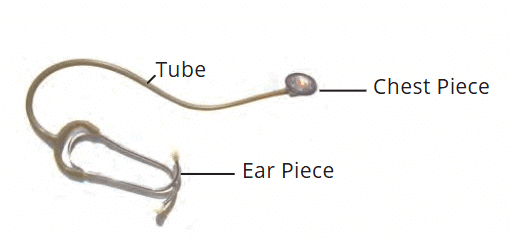 Stethoscope
- Regular heartbeats are essential for continuous supply of oxygen and nutrients and for removal of wastes.
Do sponges and hydra have blood?
- No circulatory system: Simple organisms like sponges and hydra do not have blood or a circulatory system.
- How they survive: These animals live in water and rely on the surrounding water to bring oxygen and food directly into their bodies and to carry away wastes.
- Because exchange with the environment is sufficient for their needs, a specialised transport system (blood) is not required.
Excretion in animals
Cells produce waste products during metabolic activities. The process of removing cellular wastes such as urea, uric acid and excess water from the body is called excretion. The organs that perform excretion together form the excretory system.
Common excretory products
- Aquatic animals such as fishes excrete ammonia, which dissolves directly in water.
- Some terrestrial animals (birds, reptiles like lizards and snakes) excrete semi-solid uric acid.
- Humans and many land animals excrete urea as the main nitrogenous waste.
Excretory system in humans
The excretory system removes waste products and excess substances from blood to maintain internal balance and health.
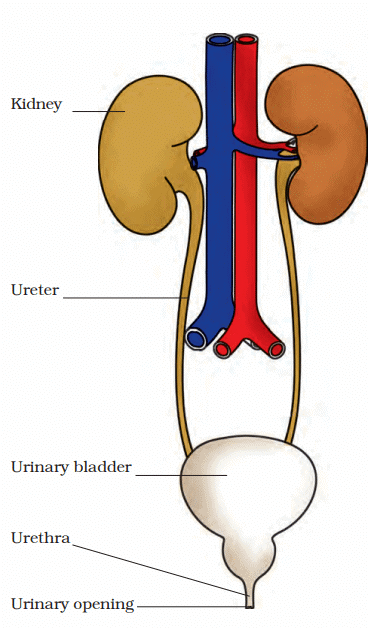
How blood is filtered
Role of kidneys
- Blood is filtered in the kidneys through a dense network of tiny blood vessels called capillaries.
- Harmful substances such as urea, excess salts and toxins are removed from blood during filtration.
- Useful substances like certain amounts of water and nutrients are reabsorbed back into the blood.
Formation and flow of urine
- Formation in kidneys: Filtered wastes combine with water to form urine.
- Transport through ureters: Urine flows from each kidney to the urinary bladder through narrow tubes called ureters.
- Storage in urinary bladder: The bladder stores urine temporarily and stretches as it fills; stretch receptors signal the need to pass urine.
- Elimination via urethra: When appropriate, urine is expelled from the bladder to the outside through the urethra.
Urine composition and output
- An adult typically passes about 1 to 1.8 litres of urine in 24 hours (varies with fluid intake and other factors).
- Urine is largely water (about 95%) with urea and other wastes (about 5% combined).
Kidney failure and dialysis
- If kidneys stop functioning due to disease or infection, wastes build up in the blood. This condition is called kidney failure.
- To remove wastes when kidneys fail, blood is cleaned by an artificial kidney or dialysis machine-a process called dialysis.
Sweating and its purpose
- Sweat is mainly water with some salts and small amounts of other substances.
- Sweating helps remove excess salts and contributes to cooling the body by evaporation, similar to water evaporation from an earthen pot.
- Salt residues can sometimes be seen as white patches on clothing where sweat evaporates.
Transport of substances in plants
Plants make food by photosynthesis, taking carbon dioxide from air and water and minerals from soil. The food and water must be transported to various cells. Special tissues-xylem and phloem-carry out these transport functions.
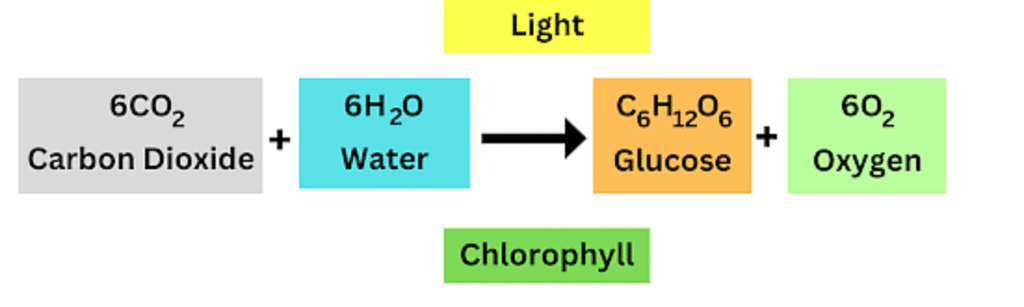 Photosynthesis equation
Transport of water and minerals
Water absorption by roots
- Water and minerals are absorbed from soil by root hairs, tiny extensions of root epidermal cells that increase the surface area for absorption.
- Root hairs are in direct contact with water in the soil and help efficient uptake of water and dissolved minerals.
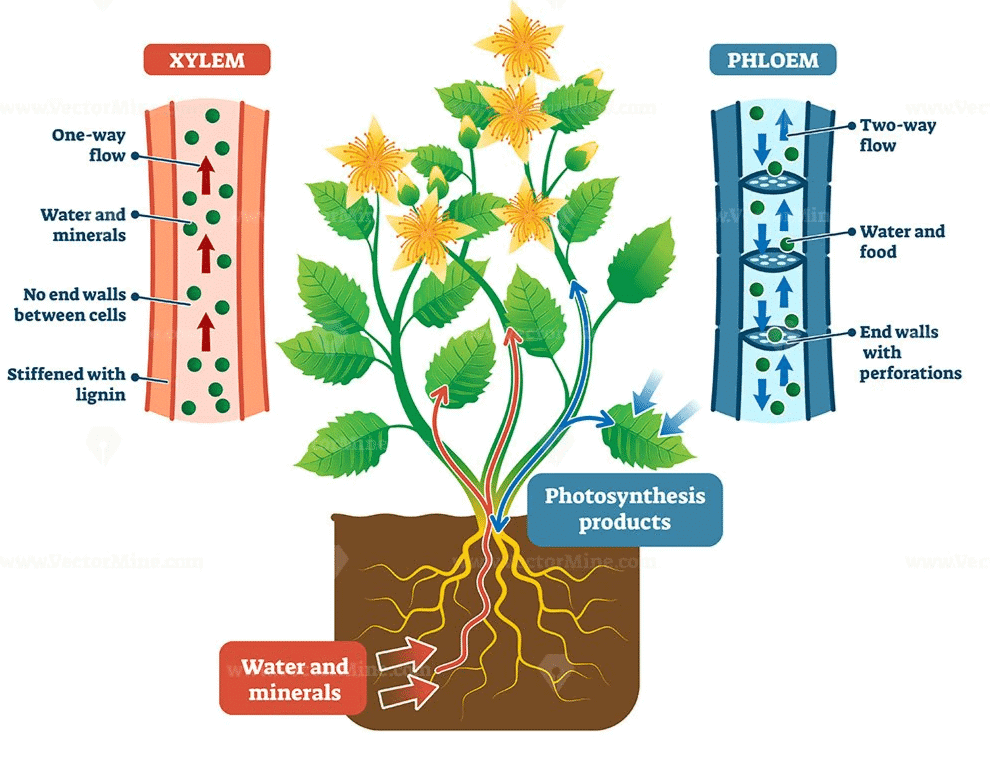 Xylem and Phloem
Role of xylem
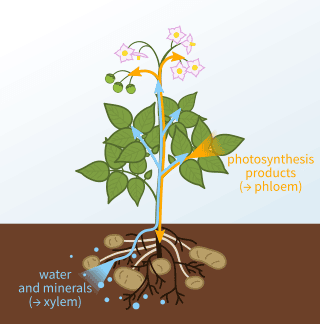
- Xylem is a vascular tissue that transports water and dissolved minerals from roots upward to stems, branches and leaves.
- Xylem vessels form continuous channels that allow water to move through the plant.
Transport across the plant
- Water and minerals move through xylem from roots to leaves.
- Phloem is the vascular tissue that transports food (mainly sugars produced in leaves) to all plant parts where needed or to storage organs.
Importance of xylem and phloem
- Xylem and phloem together ensure water, minerals and food reach every part of the plant, supporting growth, metabolism and storage.
Transpiration
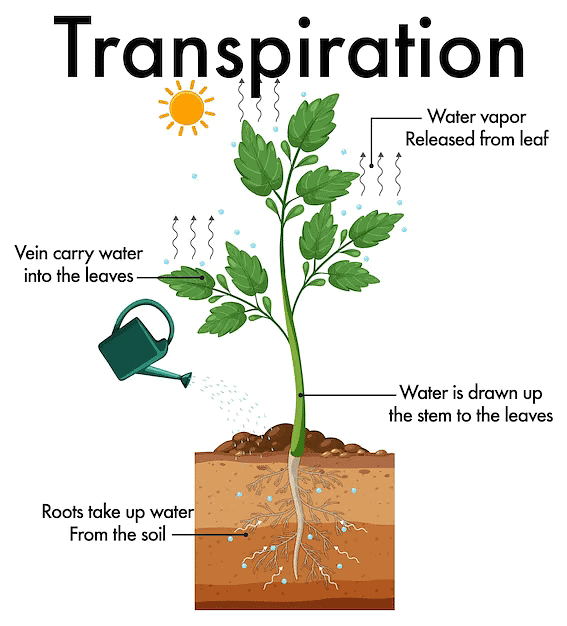
Transpiration is the loss of water vapour from plant leaves and other aerial parts through tiny openings called stomata. It helps in cooling the plant and in the movement of water from roots to leaves.
Role in water and nutrient transport
- Loss of water vapour from leaves creates a transpiration pull (a suction force) that helps draw water and dissolved minerals from roots to the upper parts of the plant.
- This pull assists water movement even in very tall trees, allowing water to reach the highest leaves.
How transpiration happens
- Water absorbed by roots travels upward through xylem to the leaves.
- Only a small portion of the absorbed water is used in making food; the remainder evaporates from leaf surfaces through stomata.
Effects of transpiration
Cooling effect
- Evaporation of water from leaf surfaces cools the plant and adds moisture to the surrounding air.
Suction force
- Transpiration pull helps maintain a continuous upward flow of water and minerals from the roots to the leaves, supporting hydration and nutrient supply.
In summary, animals rely on the circulatory and excretory systems to deliver materials and remove wastes; plants depend on xylem and phloem for transport and on transpiration to drive the upward movement of water and dissolved minerals. Both systems are essential for growth, survival and proper functioning of living organisms.
FAQs on Chapter Notes: Transportation in Animals & Plants
| 1. What are the main components of the circulatory system in humans? |  |
| 2. How does excretion occur in animals? | |
| 3. What role does the heart play in the circulatory system? | |
| 4. How do plants transport water and minerals? | |
| 5. What is the structure and function of blood vessels? | |