Wastewater story Class 7 Notes Science Chapter 13
| Table of contents |

|
| Introduction |
|
| Water, Our Lifeline |
|
| Water Freshens Up an Eventful Journey |
|
| Better Housekeeping Practices |
|
| Sanitation & Disease |
|

Introduction
Water is essential for many things we do every day. When you wash your hands, take a shower, or flush the toilet, the water that goes down the drain becomes wastewater. It's dirty and filled with things we don’t want in our water. But instead of just letting it go, we need to clean it. Have you ever thought about where this dirty water goes and how it gets cleaned?
Water, Our Lifeline
Clean water, a basic human need, gets contaminated easily by humans and it is not safe for drinking. Drinking contaminated water results in diseases such as cholera, typhoid, and diarrhea. Polluted water can also prove fatal. Water getting polluted in various ways
Water gets contaminated and scarcity of clean water is due to various reasons, examples of which include:
- People take baths and wash clothes in rivers and lakes.
- Many people bathe their animals in rivers and lakes.
- Increase in the population, industries, and improper disposal of waste.
On World Water Day, 22 March 2005, the United Nations General Assembly declared the period from 2005 to 2015 as the International Decade for Action on "Water for Life". The aim was to halve the number of people without access to safe drinking water. Although progress has been made, there is still much work to do.
Clean water is needed not only for drinking but also for cooking, washing and bathing. A lot of waste water is produced at home, which needs to be cleaned before it drains into rivers or lakes and also before it is reused.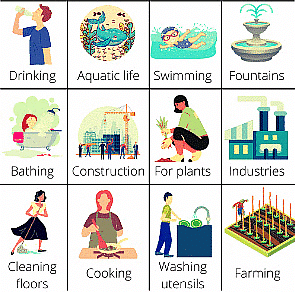 Uses of clean water
Process of Cleaning Water
The process of cleaning water, known as sewage treatment, involves several stages to remove pollutants before it enter a water body or is reused.
- The cleaning of water, known as sewage treatment, consists of various steps to eliminate pollutants before the water is released into nature or reused.
- Sewage includes wastewater from homes, factories, hospitals, offices, and more. It also encompasses rainwater that has flowed down streets during storms.
- This liquid waste primarily consists of water, mixed with dissolved and suspended impurities, making it a complex combination of solids, organic and inorganic matter, nutrients, and harmful microbes.
Treatment facilities work to reduce pollution in wastewater so that nature can handle the remaining substances. The treatment process generates sludge and biogas as by-products.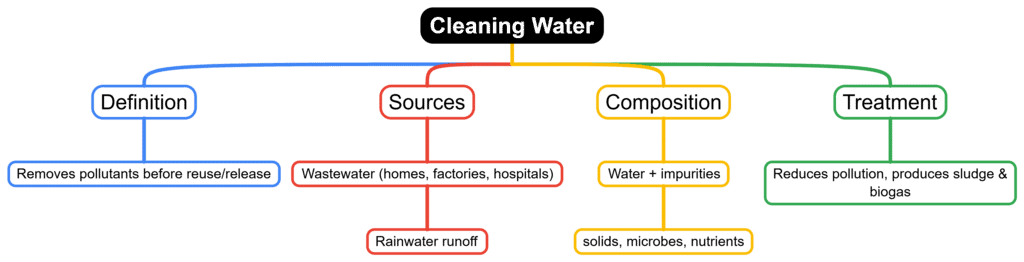
What is Sewage?
Sewage is dirty water that comes from homes, businesses, hospitals, and other places. It also includes rainwater that flows down the streets during storms. It is liquid waste, consisting of water and many impurities.
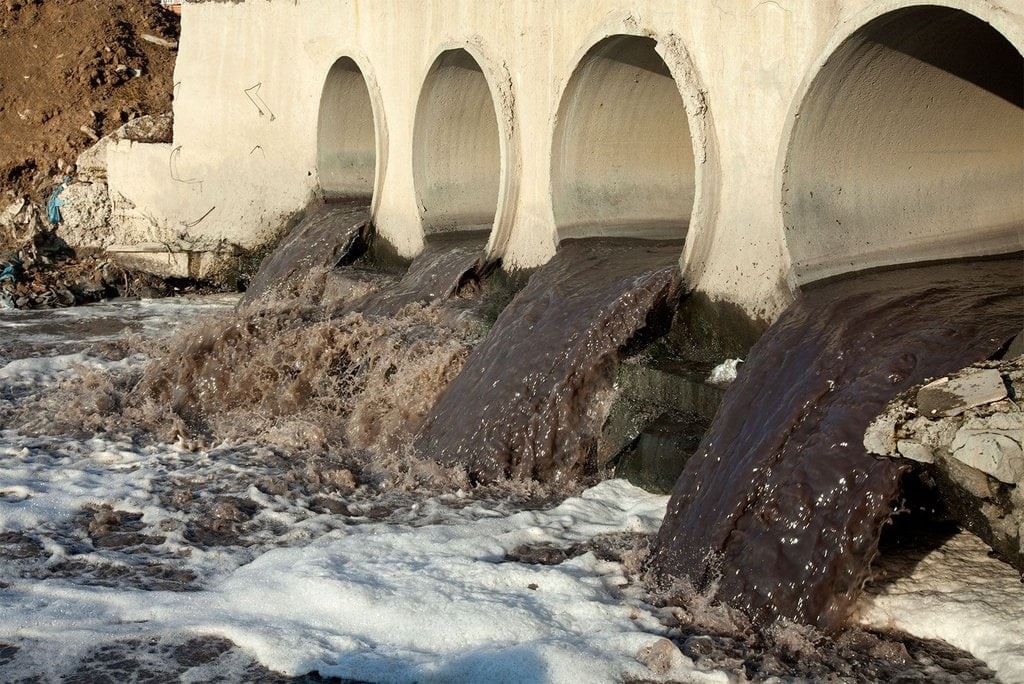 Sewage Water
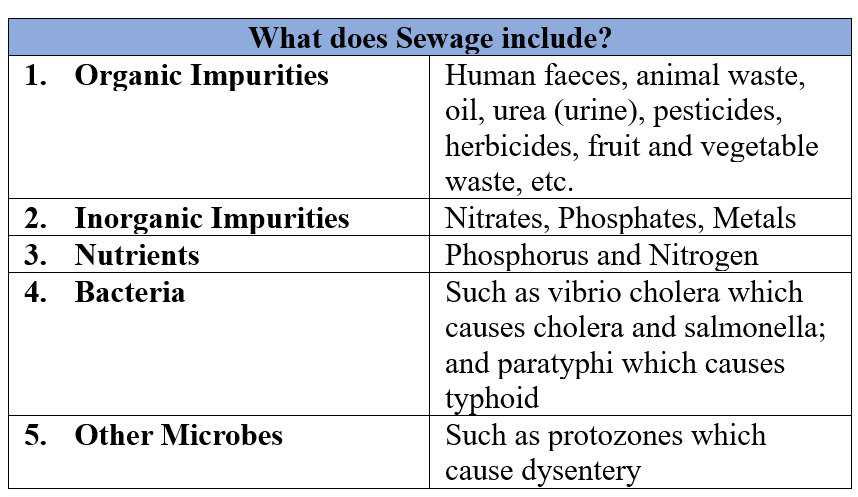
- Organic impurities: Organic impurities include animal waste, urine, oil, vegetable and fruit waste, feces, pesticides and herbicides.
- Inorganic impurities: Inorganic impurities include phosphates, nitrates and metals.
- Bacteria: Bacteria like vibrio cholera which causes cholera and salmonella paratyphi which causes typhoid.
- Nutrients: Sewage contains some useful nutrients, such as phosphorus and nitrogen.
- Other microbes: Microbes such as protozoans which cause dysentery are also present in sewage water.
Water Freshens Up an Eventful Journey
- Sewage is the wastewater that comes from homes, industries, hospitals, offices, and other places.
- The system of pipes, both large and small, that transport wastewater is known as sewers, and collectively these are referred to as sewerage.
- This wastewater is moved from homes to a location for disposal, typically a sewage treatment plant.
- Sewage is a complicated mixture that includes suspended solids, organic and inorganic waste, nutrients, saprophytes, and harmful bacteria and microbes.
- After treatment, plants ensure that the pollutants in wastewater are lowered to a level manageable by nature.
- Sewerage features manholes placed every 50 to 60 m, at the intersection of multiple sewers, and where directions change.
- Manholes can be accessed for clearing any blockages.
- It is possible to dispose of excreta safely using low-cost methods.
If there is no sewage facility, then wastewater is directly drained into nearby streams and lakes, which results in water contamination.
Treatment of Polluted Water
Waste water needs to be treated before it can be reused, or released into a water body. Wastewater has many impurities and these impurities should be removed by water treatment.Wastewater Treatment Plant (WWTP)
Wastewater treatment involves physical, chemical, and biological processes to remove contaminants.
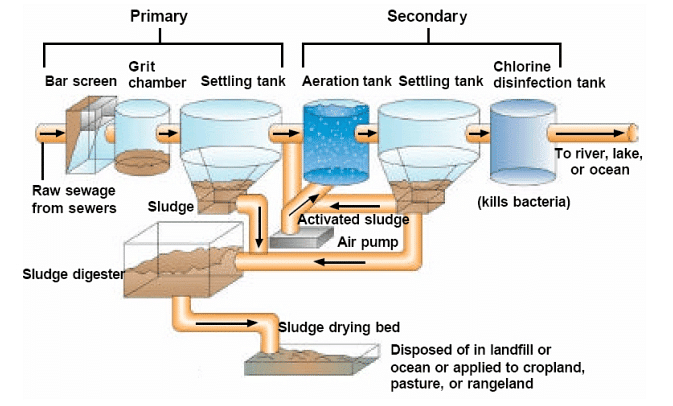 Wastewater Treatment Plant(WWTP)
The following are steps of water treatment:
1. Bar Screening:
- Wastewater passes through bar screens to filter out large items such as rags, sticks, cans, plastic packets, and napkins.
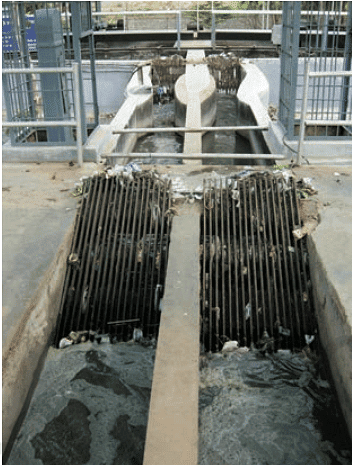 Bar Screening
2. Primary Sedimentation:
- Wastewater is directed into a large tank with a sloped bottom, allowing solids like faeces to settle to the bottom.
- Solid waste is removed using a scraper, forming sludge.
- Floatable solids like oil and grease are skimmed off the surface, leaving behind clarified water.
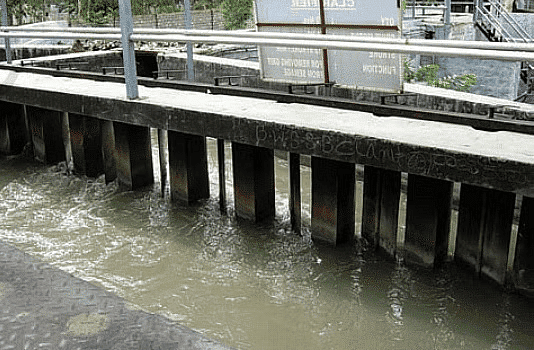 Grit and Sand Removal Tank
3. Sludge Treatment:
- Sludge is transferred to a separate tank where anaerobic bacteria decompose it, generating biogas.
- Biogas produced can be used as fuel or for electricity production.
 Sludge Treatment
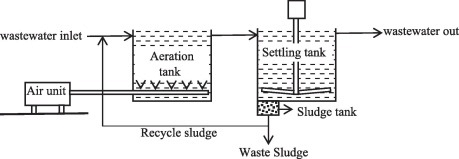
4. Aeration:
- Air is pumped into the clarified water to support the growth of aerobic bacteria.
- Aerobic bacteria consume remaining human waste, food waste, soaps, and other unwanted matter, further purifying the water.
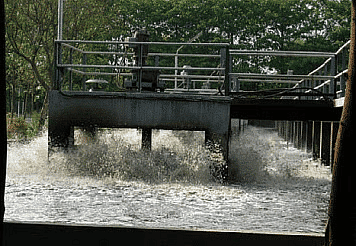 Aerator
5. Secondary Sedimentation:
- Suspended microbes settle at the tank bottom, forming activated sludge.
- Water is separated from the top of the tank.
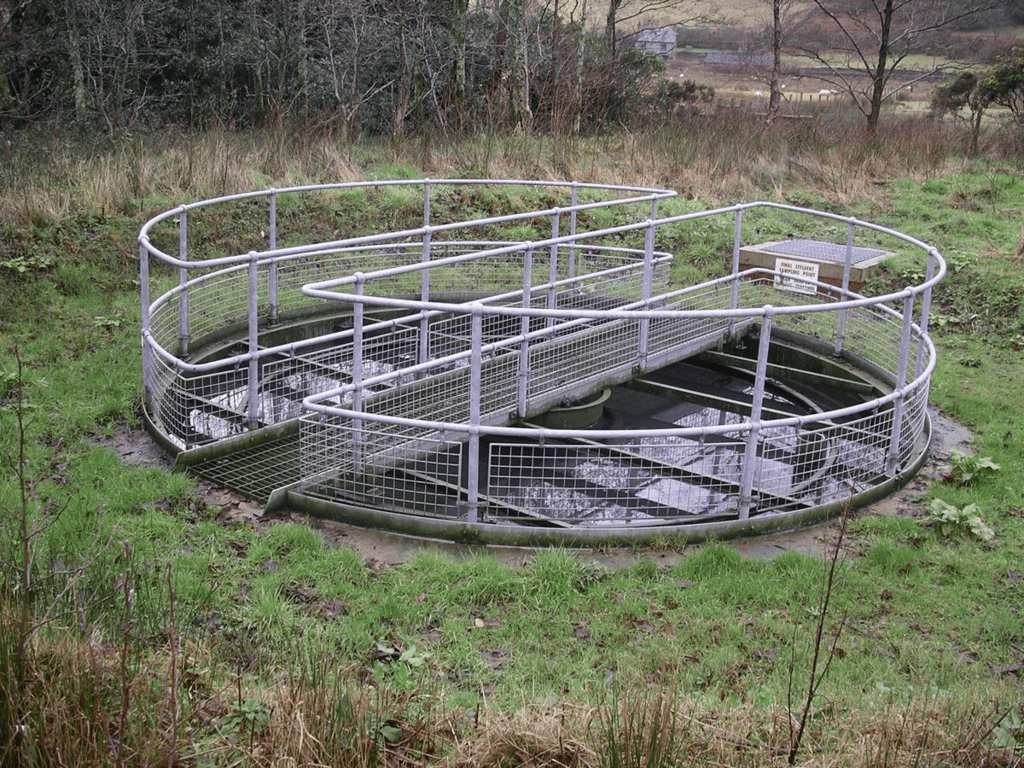 Secondary Sedimentation
6. Sludge Dewatering:
- The activated sludge, containing about 97% water, is removed using sand drying beds or machines.
- Dried sludge is utilized as manure, enriching soil with organic matter and nutrients.
9. Discharge of Treated Water:
- Treated water, with minimal organic material and suspended matter, is released into the environment such as seas, rivers, or the ground.
- Nature continues the cleaning process.
- Sometimes, water may require disinfection with chemicals like chlorine or ozone before distribution.
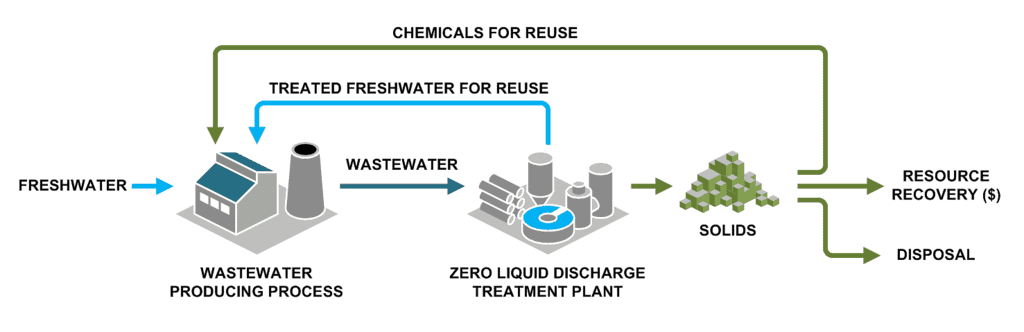 Discharge of Treated Water
Become an Active Citizen
Waste is a regular part of life, but we can manage the kinds and amounts of waste we create.
- Unpleasant smells and open drains can be very unpleasant, particularly during the rainy season when they overflow.
- Overflowing drains can cause muddy puddles in the streets, leading to unclean conditions.
- Flies, mosquitoes, and other insects thrive in these filthy areas.
What you can do:
- You can be an informed citizen and approach the local council or the gram panchayat. Ask them to cover the open drains.
- If a neighbour's sewage makes the area dirty, kindly ask them to consider the health of others.
Better Housekeeping Practices
To prevent waste and pollutants from entering drains, follow these practices:- Avoid pouring cooking oil and fats into the drain as they can solidify and block pipes. In open drains, fats can also clog soil, making it harder for water to filter through. Dispose of these in the dustbin instead.
- Chemicals like paints, solvents, insecticides, motor oil, and medicines can harm the microbes that clean water. Do not dispose of them down the drain.
- Items like used tea leaves, leftover food, soft toys, cotton, and sanitary towels should go in the dustbin. Avoid increasing the burden on wastewater treatment plants (WWTP).
- Be a responsible citizen and reach out to the local council or gram panchayat about sanitation concerns.
Sanitation & Disease
- Poor sanitation and contaminated drinking water cause numerous diseases.
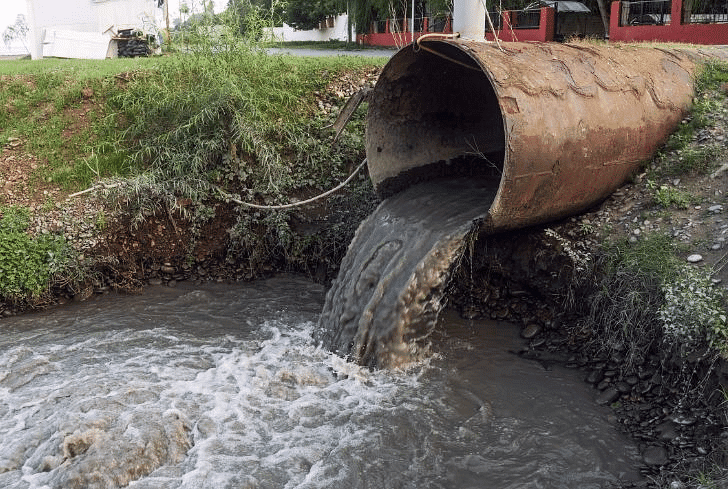 Contamination of Water
 - Many people in our country lack proper sewerage facilities, leading to outdoor defecation in places like dry riverbeds, railway tracks, and fields.
 Poor sanitation system
 - Untreated human waste poses dangers as it can contaminate water and soil.
- Contamination affects surface water and groundwater, with groundwater being essential for wells and rivers.
 Groundwater Contamination
 - Groundwater becomes a common route for diseases such as cholera, typhoid, polio, meningitis, hepatitis, and dysentery.
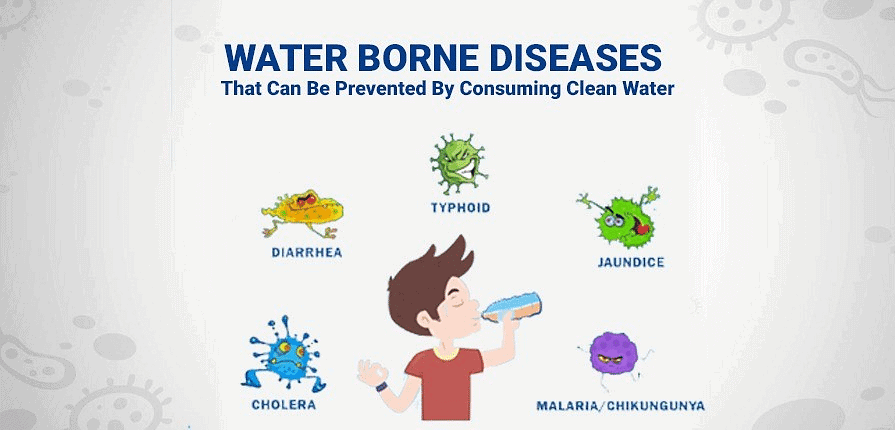 Diseases caused by drinking polluted water
Alternate Arrangement For Sewage Disposal
Following are some of the alternate ways for sewage water disposal:
(i) To enhance sanitation, promoting low-cost onsite sewage disposal systems.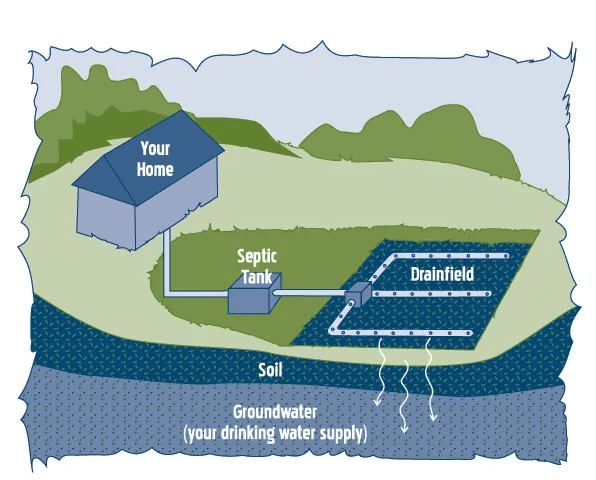 On-site Sewage Disposal System
(ii) Examples include septic tanks, chemical toilets, and composting pits.
(iii) Septic tanks are suitable for areas lacking sewerage, such as hospitals or isolated buildings. It is an underground chamber made of concrete, fiberglass, or plastic that is used to treat sewage from homes and buildings in areas without access to centralized sewer systems. 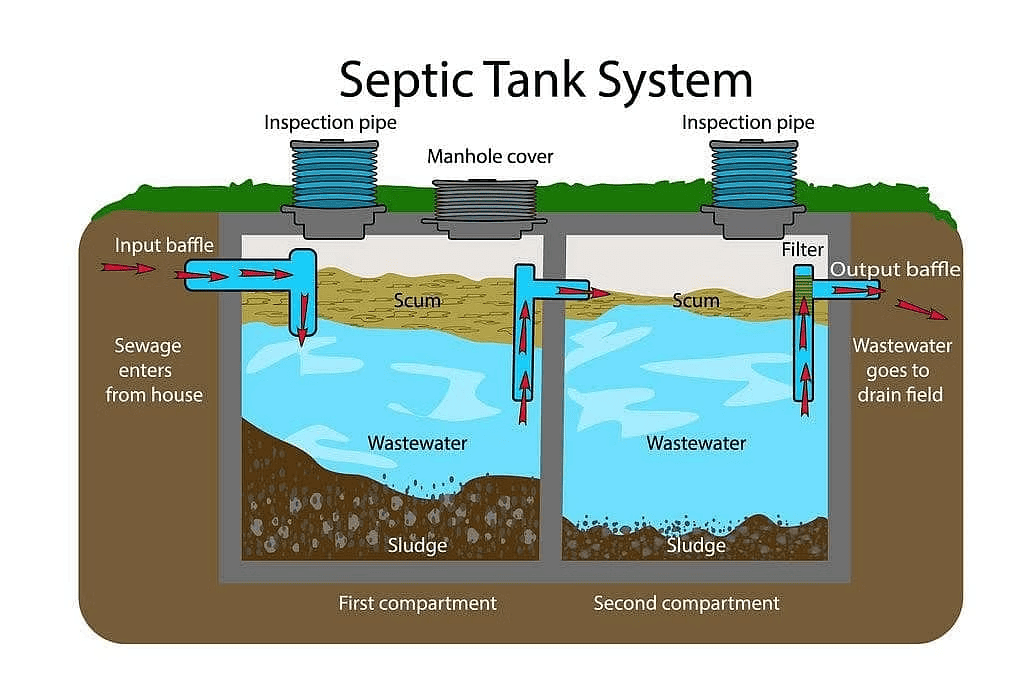 Septic Tank System
(iv) Organizations offer innovative toilets that don't require manual cleaning.
(v) Waste from these toilets flows into a biogas plant. A biogas plant is a facility that turns organic waste into biogas through anaerobic digestion. Organic waste, like food scraps or manure, is broken down by bacteria in the absence of oxygen, producing biogas composed mainly of methane and carbon dioxide.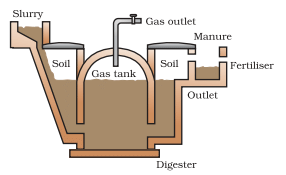 Biogas Plant
(vi) This biogas can be used as a renewable energy source for cooking, heating, electricity generation, and more.
Sanitation at Public Places
- Fairs, railway stations, bus depots, airports, and hospitals are busy places where large amounts of waste are generated due to thousands of daily visitors.
- Proper waste disposal is vital to stop diseases from spreading, especially since open defecation and poor sanitation can cause epidemics and disease transmission.
- Government rules on sanitation might not always be enforced well.
The "Swachh Bharat" mission, launched by the Government of India in 2016, aims to enhance sanitation, including proper sewage management and ensuring toilets for all. Untreated human waste poses a health risk, potentially causing water and soil pollution, which can lead to further health problems.
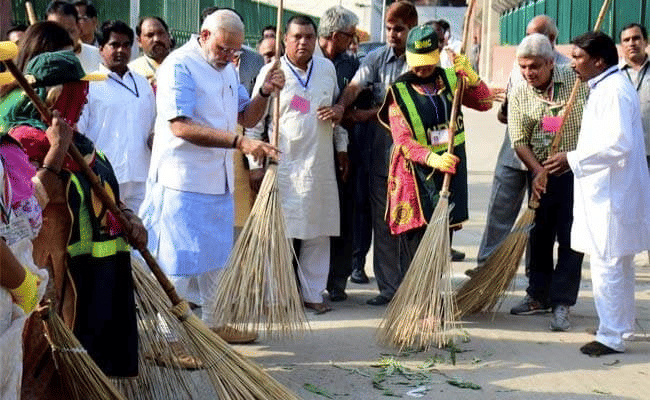 Swachh Bharat Mission We all play a part in keeping our surroundings clean and healthy. Good sanitation practices should become a part of our daily lives. As individuals, our efforts can create significant change. Inspire others with your commitment and ideas.
Conclusion
We all have a duty to keep our environment clean and safe.
Mahatma Gandhi once said, “No one need to wait for anyone else to adopt a humane and enlightened course of action.”
We must understand our role in keeping water sources healthy by practicing good sanitation habits every day. Each of us can make a significant impact by taking individual responsibility and inspiring others with our energy, ideas, and optimism. When people come together and work collectively, remarkable things can be achieved.
|
112 videos|286 docs|28 tests
|
FAQs on Wastewater story Class 7 Notes Science Chapter 13
| 1. What is the importance of water in our daily lives? |  |
| 2. How can better housekeeping practices improve sanitation? | |
| 3. What are the common diseases associated with poor sanitation? | |
| 4. What alternate arrangements can be made for sewage disposal? | |
| 5. Why is sanitation important in public places? | |



practice quizzes
,Sample Paper
,Wastewater story Class 7 Notes Science Chapter 13
,Previous Year Questions with Solutions
,ppt
,MCQs
,Semester Notes
,Important questions
,past year papers
,Viva Questions
,shortcuts and tricks
,Wastewater story Class 7 Notes Science Chapter 13
,Wastewater story Class 7 Notes Science Chapter 13
,Exam
,study material
,Extra Questions
,Objective type Questions
,Free
,video lectures
,mock tests for examination
,Summary
;




Chapter Notes: Wastewater Story Free PDF Download
Importance of Chapter Notes: Wastewater Story
Chapter Notes: Wastewater Story
Chapter Notes: Wastewater Story Class 7 Questions
Study Chapter Notes: Wastewater Story on the App
|
© EduRev
|
Education Revolution
|


|




