NCERT Solutions: Quality

Working with the Text
Q1: What was the author's opinion about Mr Gessler as a bootmaker?
Ans: The author held Mr Gessler in very high regard as a bootmaker. He knew that Mr Gessler made only what was ordered and that each pair fitted perfectly. The author found Mr Gessler's skill almost mysterious and thought it wonderful that boots made by him never failed to fit well.
Q2: Why did the author visit the shop so infrequently?
Ans: The author visited the shop so seldom because Mr Gessler's boots lasted for a very long time. Since each pair was well made and durable, the author did not need replacements often.
Q3: What was the effect on Mr Gessler of the author's remark about a certain pair of boots?
Ans: When the author said that a certain pair of boots creaked, Mr Gessler stared at him for a moment as if expecting him to change or qualify the remark. He then said that the boots should not have creaked and asked the author to send them back. Mr Gessler offered to examine and mend them, and if he could not put them right he said he would take them off the bill. This showed his honesty and pride in his workmanship.
Q4: What was Mr Gessler's complaint against 'big firms"
Ans: Mr Gessler complained that big firms gained customers through advertising rather than by doing better work. He loved his craft and made good-quality boots, but he had little work because people preferred to buy from the large firms. He felt this favoured reputation and advertisement over real skill and careful making.
Q5: Why did the author order so many pairs of boots? Did he really need them?
Ans: The author knew Mr Gessler made excellent, long-lasting boots. He also realised that, despite his skill, Mr Gessler was not getting enough customers because people were choosing big firms. To help him and to reward his craft, the author ordered many pairs even though he did not actually need so many at once. His decision was motivated by a wish to support a skilled craftsman and to ensure that good work was kept in being.
Working with Language
Q1: Study the following phrases and their meanings. Use them appropriately to complete the sentences that follow.
- look after: take care of
- look down on: disapprove or regard as inferior
- look in (on someone): make a short visit
- look into: investigate
- look out: be careful
- look up: improve
- look up to: admire
(i) After a very long spell of heat, the weather is __________________ at last.
(ii) We have no right to ____________________people who do small jobs.
(iii) Nitin has always _________________ his uncle, who is a self-made man.
(iv) The police are ____________________ the matter thoroughly.
(v) If you want to go out, I will ______________________ the children for you.
(vi) I promise to __________________ on your brother when I visit Lucknow next.
(vii) _________________ when you are crossing the main road.
Ans:
(i) After a very long spell of heat, the weather is looking up at last.
(ii) We have no right to look down on people who do small jobs.
(iii) Nitin has always looked up to his uncle, who is a self-made man.
(iv) The police are looking into the matter thoroughly.
(v) If you want to go out, I will look after the children for you.
(vi) I promise to look in on your brother when I visit Lucknow next.
(vii) Look out when you are crossing the main road.
Q2: Read the following sets of words loudly and clearly.
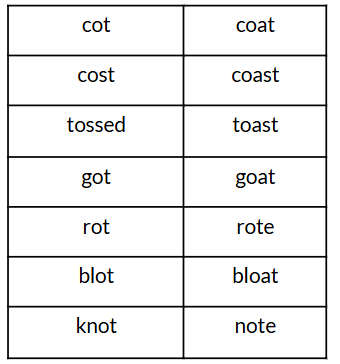
Ans: Read the sets aloud, paying attention to how each sound is formed. Practise slowly at first and then increase speed. This exercise helps you notice differences in pronunciation and improves clarity of speech.
Q3: Each of the following words contains the sound 'sh' (as in shine) in the beginning or in the middle or at the end. First speak out all the words clearly. Then arrange the words in three groups in the table on page
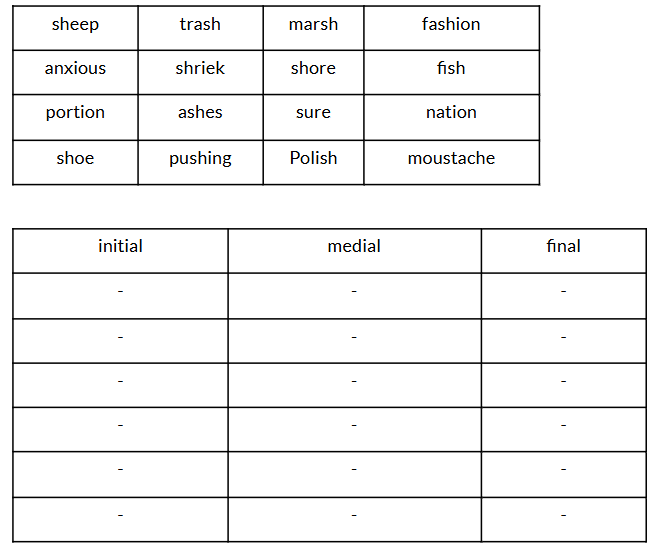
Ans:
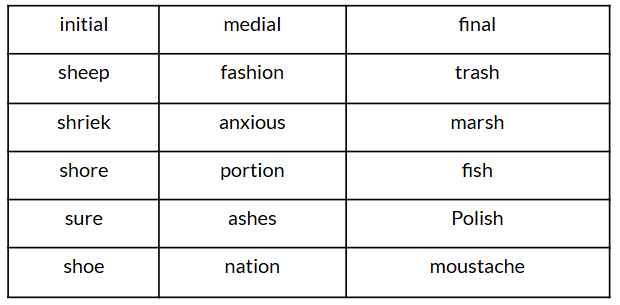
Arrange the words into three columns labelled: initial 'sh', medial 'sh', and final 'sh', and practise saying each column aloud to notice the position of the sound.
Q4: In each of the following words 'ch' represents the same consonant sound as in 'chair'. The words on the left have this sound initially. Those on the right have it finally. Speak each word clearly.
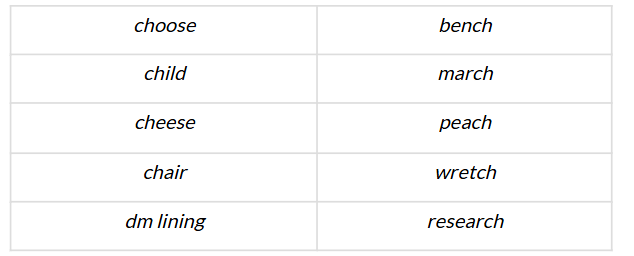
Underline the letters representing this sound in each of the following words.
(i) feature (iv) reaching (vii) riches
(ii) archery (v) nature (viii) batch
(iii) picture (vi) matches (ix) church
Ans:
(i) Feature
(ii) Archery
(iii) Picture
(iv) Reaching
(v) Nature
(vi) Matches
(vii) Riches
(viii) Batch
(ix) Church
FAQs on NCERT Solutions: Quality
| 1. What are NCERT solutions? |  |
| 2. What is the significance of NCERT solutions for Class 7? | |
| 3. How can NCERT solutions for Class 7 help in exam preparation? | |
| 4. Are NCERT solutions for Class 7 available for free? | |
| 5. How to use NCERT solutions effectively for Class 7 exam preparation? | |