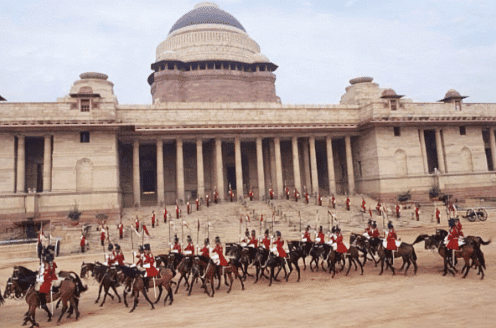
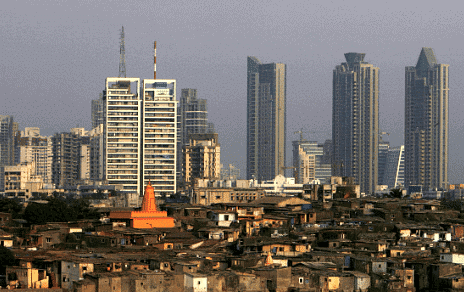
The impact of colonial rule in India was far-reaching and touched every aspect of society, including transport systems such as the railways, industry, the postal service, and the social, cultural, economic and political spheres.
Compared to earlier instances of conquest and annexation, British colonialism stood out because it operated on a modern, capitalist foundation: policies and institutions were often constructed to serve the needs of British capital rather than merely to collect tribute.
Where pre-capitalist conquerors generally left local economic structures intact and appropriated tribute, colonialism under British rule intervened directly in agrarian and industrial relations, trade patterns, legal frameworks and labour arrangements to favour metropolitan economic interests.
Implementing English
The diffusion of the English language in India is a complex legacy of colonial rule with mixed consequences.
English became a language of administration, law, education and wider communication; as a result, a substantial body of English literature developed in India and many Indians gained access to global opportunities through competence in English.
At the same time, fluency in English has often become a marker of privilege; those who lack English proficiency can face barriers in employment and social mobility.
For some historically marginalised groups, including sections of the Dalit population, learning English opened avenues of formal education, employment and social advancement that had been denied under older hierarchical structures.
Colonial rule also produced major patterns of internal migration: for example, large numbers of workers from areas such as Jharkhand moved to Assam to work on tea estates.
A growing middle class, formed in the Presidency towns and other colonial administrative centres (for example in Bengal and Madras), moved across regions as government employees, professionals such as doctors and lawyers, and traders.
Many Indians were transported to work in other colonised regions in parts of Asia, Africa and the Americas. Large numbers died during transit and many could not return; their descendants today form diasporic communities commonly described as people of Indian origin.
MULTIPLE CHOICE QUESTION
Try yourself: What was one significant impact of colonialism on the movement of people within India?
A
Development of a new middle class
B
Relocation of Jharkhandis to Assam for work
C
Transportation of workers to other colonized lands
D
Promotion of English language education
Correct Answer: B
- The movement of people within India due to colonialism resulted in individuals relocating from one region to another for work, such as Jharkhandis moving to Assam to work on tea plantations.
Report a problem
Understanding Colonialism
Capitalism is an economic system in which production and exchange are predominantly privately organised and undertaken with the primary aim of earning profit.
The rise of modern Western capitalism was accompanied by extensive European exploration, the extraction of resources from overseas territories, and major technological and scientific advances which were applied to agriculture, manufacturing and transport.
Western colonialism sought to secure raw materials, new markets and investment opportunities for metropolitan capital; colonised areas were reorganised economically to supply resources and to absorb manufactured goods from the coloniser.
This history shaped the development trajectory of colonised regions like India, affecting land tenure, artisanal industries, trade patterns and labour relations.
As capitalism and the modern nation-state expanded in the nineteenth and twentieth centuries, the idea of national self-rule gained force. Indian nationalists argued that political sovereignty and economic control belonged to the people of India - a claim commonly expressed as swaraj.
Indian leaders and intellectuals highlighted the contradictions of colonial sovereignty and mobilised both political and economic arguments for independence.
Some regions and towns were particular sites of colonial activity and resistance; examples of places affected by British administration and agrarian policies include Patna, Gaya, Arrah, Saran, Tirhoot, Champaran, Munger (Monghyr), Bhagalpur and Purnea.
Urbanisation and Industrialisation
The Colonial Experience
Industrialisation denotes the growth of machine-based production using modern energy sources such as steam and electricity and the accompanying shift in the occupational structure from agriculture towards factory, service and commercial work.
In industrial societies most people are employed in factories, offices or shops rather than in small-scale agriculture or craft production.
Britain was the first country to industrialise; during the colonial era this transformed Britain from a largely rural to a largely urban society and created new patterns of global trade and investment.
The expansion of British industrial production affected India: cheap mass-produced European goods flooded Indian markets and undermined many traditional artisanal and village industries.
Coastal cities such as Mumbai (Bombay), Kolkata (Calcutta) and Chennai (Madras) became key nodes in the imperial economy, facilitating the export of raw materials and the import of manufactured goods.
Some older urban centres declined as trade routes and manufacturing shifted; for example, cities such as Surat and Masulipatnam experienced decline while colonial port towns grew.
The creation of Western-style factories in India and the import of European goods had a particularly adverse effect on small-scale producers and village industries, though the intensity of decline varied regionally.
Colonial industrialisation also produced unintended and contradictory social consequences: while creating a small Indian middle class tied to new professions and services, it also intensified rural distress and uneven regional development. Indian sociology has paid close attention to these complex outcomes.
MULTIPLE CHOICE QUESTION
Try yourself: Which of the following is a characteristic of modern societies?
A
Emphasis on group identity
B
Limited role of government
C
Decrease in social mobility
D
Rationalization of social life
Correct Answer: D
Modern societies are characterized by rationalization of social life, which refers to the application of scientific and technical knowledge to social problems. Emphasis on individual identity, expansion of government role, and increase in social mobility are also features of modern societies.
Report a problem
The Tea Plantations
Colonial planters and administrators frequently used coercive labour practices to secure a reliable and cheap workforce for plantations; officials were generally aware that the standards of labour protection in colonies differed from those in Britain.
India's commercial tea industry began in Assam in 1851, and most of the tea gardens were located in the region's sparsely populated hills; the location required the importation of labour from other parts of India.
Recruitment of labour for Assam's tea gardens was largely handled by contractors under legal frameworks such as the Transport of Native Labourers Act (No. III) of 1863, which was subsequently amended in 1865, 1870 and 1873.
Assamese planters were often unwilling to provide sufficient incentives to recruit workers from remote areas; as a result, recruitment sometimes involved deception and coercion, and planters pressed the colonial state to enact laws that facilitated labour transport and control.
Large-scale movement to tea plantations is an example of how colonial economic demands reconfigured labour systems, migration patterns and local ecologies.
Industrialisation in Independent India
Indian nationalists were deeply concerned about economic exploitation under colonialism and argued for building national industry to remove dependence on foreign manufactures; the Swadeshi movement promoted indigenous production as a response to colonial deindustrialisation.
After independence, policymakers saw rapid industrialisation and the growth of heavy industry, machine tool production and the public sector as essential to economic development and social justice.
The state promoted capital-intensive industries, planned investment, and the expansion of government owned enterprises; a prominent expectation was that industrial growth would create employment, reduce poverty and modernise the economy.
The earlier influx of cheap European goods and the decline of village industries left a mixed legacy: while some regions developed modern manufacturing, many traditional producers had been displaced and regional inequalities persisted.
Sociological studies of post-colonial India continued to explore how industrialisation reshaped social relations, rural-urban linkages and class formations.
Urbanisation in Independent India
Reasons for Urban Migration
People migrate from rural areas to towns and cities in search of improved employment opportunities, better access to education and health services, and an enhanced standard of living.
The anonymity of urban life and the possibility of changing social identity or choosing a new occupation encourage migration; cities can offer relative freedom from traditional caste and kinship constraints.
Economic and Social Tensions
Economic drivers are central: better job prospects and higher incomes draw migrants to urban centres, but rapid in-migration can create competition for housing, services and jobs.
Tensions may arise between long-term residents and newcomers as local resources become strained; conflicts over land, employment and civic provision are common in growing cities.
Urban Population Growth
The proportion of India's population living in urban areas has been rising. For the first time since independence, urban population growth in several recent decades has outpaced rural growth, reflecting a sustained decline in rural growth rates and continuing urbanisation. This trend is recorded in successive Census of India reports and municipal statistics.
Impact of Urban Influences
Sociologist M.S.A. Rao observed that in the first two decades after independence many villages began to feel urban influences: towns and cities affected surrounding rural areas through markets, transport, education and administrative links. Early industrial and colonial influences also shaped patterns of agricultural change and labour mobility.
MULTIPLE CHOICE QUESTION
Try yourself: Which of the following is NOT a consequence of urbanization in India?
A
Increase in air pollution
B
Decrease in poverty
C
Growth of slums and informal settlements
D
Expansion of infrastructure
Correct Answer: B
Urbanization in India has led to several consequences, including an increase in air pollution, growth of slums and informal settlements, and expansion of infrastructure. However, urbanization has not resulted in a significant decrease in poverty, as many urban poor struggle to make ends meet and lack access to basic amenities.
Report a problem
Conclusion
Colonialism was not only a political arrangement; its economic and social legacies continue to shape patterns of production, migration, language, law and urban form in contemporary India.
Processes of industrialisation and urbanisation change how people live and work: they transform occupations, social relations and everyday life, producing both opportunities and new forms of inequality.
Colonial interventions introduced legal, institutional and architectural changes that have had lasting effects on governance, education, infrastructure and urban planning.
Understanding these structural changes - the interplay of colonial policy, capitalist markets, industrial policy and migratory movements - is essential to analysing modern Indian society.
1. What exactly is structural change in sociology and how does it differ from social change?
Ans. Structural change refers to transformation in the fundamental institutions, norms, and organisation of society, affecting the entire social system. Unlike social change, which can be temporary or superficial, structural change is deep, lasting, and reshapes how society functions. It involves shifts in economic systems, family structures, political institutions, and class hierarchies that alter society's core framework.
2. How does industrialisation cause structural change in traditional societies?
Ans. Industrialisation transforms agrarian economies into manufacturing-based systems, triggering structural shifts from feudal hierarchies to capitalist class structures. Traditional joint families fragment into nuclear units; occupations shift from agriculture to factory work; urbanisation accelerates; and social mobility increases. This economic restructuring fundamentally alters power relations, gender roles, and community bonds in society.
3. What role do social movements play in creating structural change within a society?
Ans. Social movements challenge existing institutions and norms, forcing systemic reforms that reshape societal structures. The women's movement, labour movements, and independence struggles have driven legislative changes, redistributed power, and altered social hierarchies. Movements create collective consciousness, mobilise groups, and pressure institutions to transform their foundational rules and practices.
4. Why do conflicts between traditional and modern values lead to structural changes in CBSE sociology?
Ans. Conflicts between tradition and modernity expose contradictions in existing institutions, prompting societies to adapt or reform. When traditional practices clash with modern values-such as caste systems versus equality-institutions must evolve or lose legitimacy. This tension drives changes in education systems, legal frameworks, and family structures, realigning society toward new structural forms.
5. What are the key agents of structural change and how do they influence social transformation?
Ans. Agents of structural change include government policies, technological innovation, social movements, and intellectual thought. Government legislation transforms institutions; technology reshapes work and communication; movements challenge inequalities; and intellectuals redefine values. These agents interact dynamically, creating pressure points where old structures break down and new social organisations emerge across multiple sectors.
Extra Questions, MCQs, Objective type Questions, Chapter Notes - Structural Change, practice quizzes, pdf , mock tests for examination, Semester Notes, past year papers, Previous Year Questions with Solutions, Exam, Important questions, Sample Paper, Chapter Notes - Structural Change, study material, ppt, Viva Questions, Chapter Notes - Structural Change, Summary, shortcuts and tricks, Free, video lectures;