Wren and Martin Summary: Pronouns


Introduction
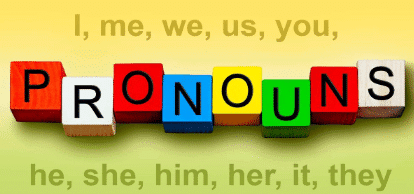
A pronoun is a word that can be substituted for a noun, noun phrase, or for other pronouns without changing the meaning of the sentence.
Personal Pronouns
Personal pronouns represent three kinds of people:
- First Person: The speaker (e.g., I, we).
- Second Person: The person spoken to (e.g., you).
- Third Person: The person or thing spoken about (e.g., he, she, it, they).
Forms of Personal Pronouns
Personal pronouns change depending on their role in a sentence:
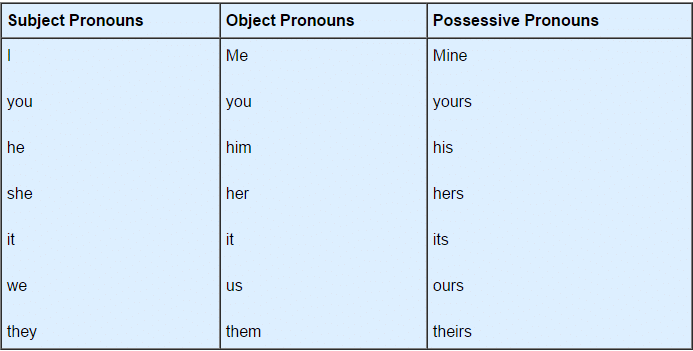
- Nominative (subject): I, we, you, he, she, it, they.
- Possessive (showing ownership):
- Adjectives (used with nouns): my, our, your, his, her, its, their.
- Pronouns (stand alone): mine, ours, yours, his, hers, theirs.
- Accusative (object): me, us, you, him, her, it, them.
Examples:
- "This is my book" (possessive adjective).
- "This book is mine" (possessive pronoun).
Special Notes on "It"
The pronoun "it" is used for:
- Non-living things (e.g., "Take it away" for a book).
- Animals, unless their gender is specified (e.g., "The horse broke its leg").
- Young children, unless gender is clear (e.g., "The baby tore its clothes").
- Referring to earlier statements (e.g., "He lied, and he knows it").
- As a temporary subject (e.g., "It is easy to learn").
- For emphasis (e.g., "It was I who spoke").
- Weather/time (e.g., "It rains," "It is ten o'clock").
Rules for Using Personal Pronouns
Agreement
A pronoun must match the noun it replaces in number (singular/plural), gender (male/female/neuter), and person (first/second/third).
- "Rama is kind. He helps others."
- "The girls are here. They are happy."
Collective Nouns
- Singular pronoun if the group is a unit (e.g., "The team won its match").
- Plural pronoun if individuals are highlighted (e.g., "The team argued among themselves").
Joined Nouns
- Two singular nouns with "and" = plural pronoun (e.g., "Rama and Sita are here. They are friends").
- Same person/thing with "and" = singular pronoun (e.g., "The Secretary and Treasurer is negligent of his duty").
- "Each" or "every" before nouns = singular pronoun (e.g., "Each boy has his book").
- Nouns with "or," "either...or," "neither...nor" = usually singular pronoun (e.g., "Rama or Hari lost his pen").
- Mixed singular/plural with "or" = plural pronoun (e.g., "The boys or Sita forgot their bags").
Order
Say "you and I," not "I and you" (e.g., "You and I will go").
After Prepositions
Use accusative forms (e.g., "Nobody but me can help").
Reflexive and Emphatic Pronouns
What Are They?
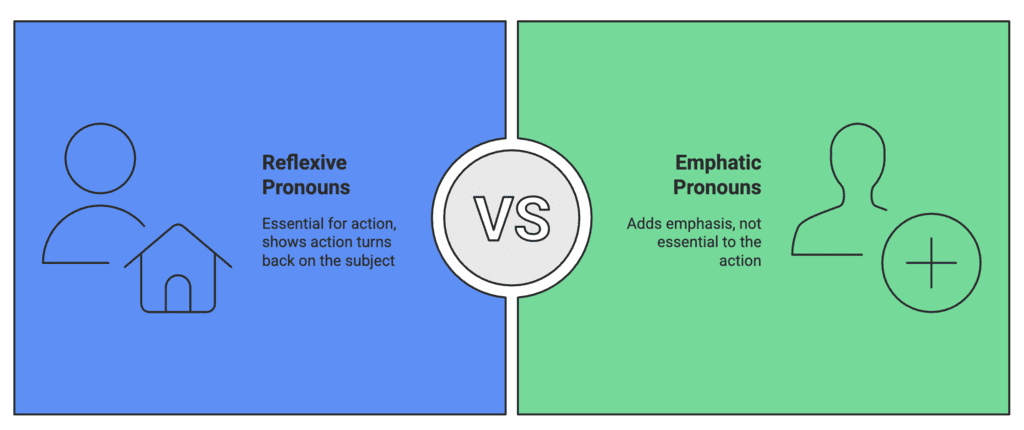
When "-self" (singular) or "-selves" (plural) is added to personal pronouns, they become compound personal pronouns: myself, yourself, himself, herself, itself, ourselves, yourselves, themselves.
Two Uses:
- Reflexive Pronouns: Show the action turning back on the subject.
- "I hurt myself" (I am both doer and receiver).
- "They helped themselves."
- Emphatic Pronouns: Add emphasis to the subject.
- "I will do it myself" (I, and no one else).
- "She herself told me."
Key Difference:
- Reflexive: Part of the action (object).
- Emphatic: For stress, not essential to the action.
Demonstrative, Indefinite, and Distributive Pronouns
Demonstrative Pronouns
These "point out" specific things:
- "This" (near, singular), "these" (near, plural).
- "That" (far, singular), "those" (far, plural).
- Examples: "This is my gift," "That is better than those."
- As adjectives: "This book is mine."
Indefinite Pronouns
These refer to people/things generally, not specifically:
- Examples: one, none, some, any, many, few, all, they (people in general), others.
- Examples: "One should try," "Some are lost."
- As adjectives: "Some water spilled."
Distributive Pronouns
These refer to individuals separately and are always singular:
- "Each," "either," "neither."
- Examples: "Each has a prize," "Either can go."
- As adjectives: "Each boy ran."
- Note: "Either" = one of two; "neither" = not one nor the other.
Relative Pronouns
What Are They?
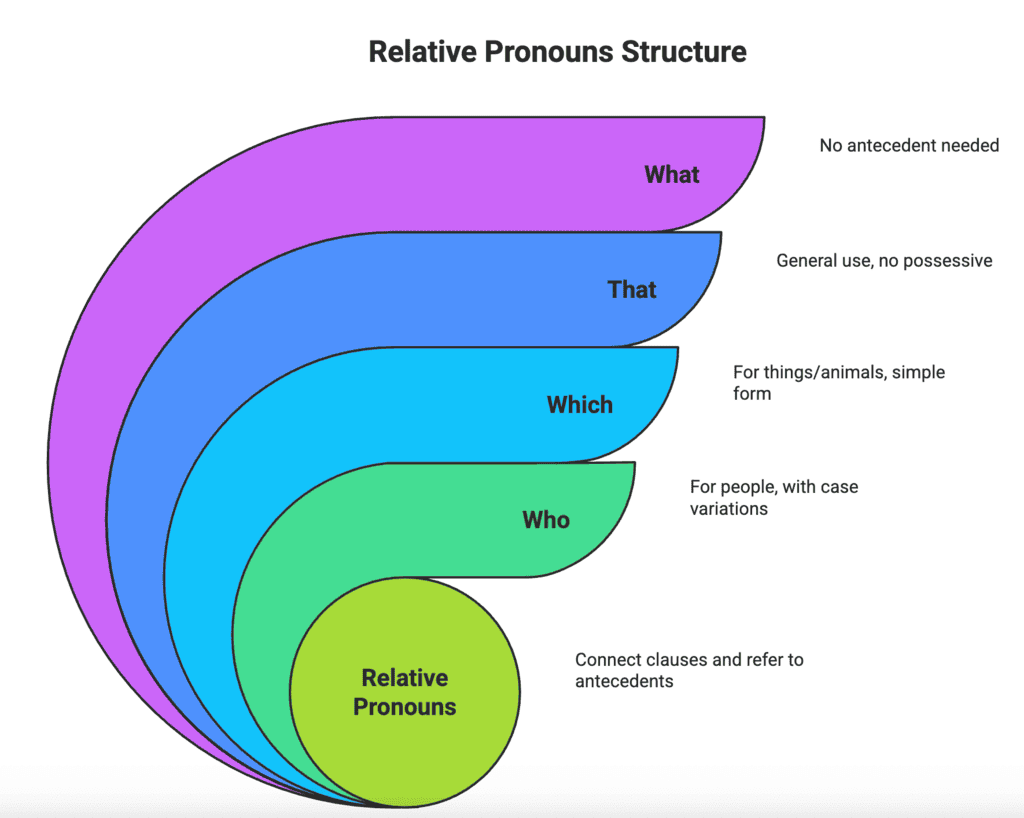
Relative pronouns connect clauses and refer back to a noun/pronoun (called the antecedent). Examples: who, which, that, what.
Forms and Uses:
- Who: For people.
- Nominative: who (e.g., "The boy who came").
- Possessive: whose (e.g., "The girl whose bag is here").
- Accusative: whom/who (e.g., "The man whom I met").
- Which: For things/animals.
- Same form for nominative/accusative (e.g., "The book which I read").
- Possessive: whose (e.g., "The car whose tire burst").
- That: For people/things, no possessive form.
- "The house that I bought."
- What: For things, no antecedent (e.g., "I know what you did").
Functions:
- Defining: Limits the antecedent (e.g., "The man who stole it ran").
- Non-defining: Adds extra info, uses commas (e.g., "My sister, who is a nurse, is here").
Special Rules:
- "That" after superlatives (e.g., "The best book that I read").
- "That" after "all," "any," "none" (e.g., "All that glitters").
- "What" = "that which" (e.g., "Take what you need").
Omission:
- Often omitted in the accusative case (e.g., "The book ^ I read").
Interrogative and Exclamatory Pronouns
Interrogative Pronouns
Interrogative pronouns are words we use to ask questions and gather information about people, things, or choices. The main ones are who, which, and what, and each serves a specific purpose depending on what you're asking about.
- Who: People (e.g., "Who is there?").
- Nominative: who, Possessive: whose, Accusative: whom/who.
- Which: People/things, implies choice (e.g., "Which do you want?").
- What: Things (e.g., "What is this?").
- Examples: "Whose is this?" "What do you need?"
- As adjectives: "Which book is yours?"
Exclamatory Pronouns
Exclamatory pronouns are used in exclamations to express strong emotions like surprise, disbelief, or excitement. The words what and who can take on this role, but they're not asking questions here-they're making statements.
- "What! You're still here?"
- "Who! I can't believe it!"
FAQs on Wren and Martin Summary: Pronouns
| 1. What are pronouns in English grammar? |  |
| 2. How do pronouns work in English sentences? | |
| 3. What are some common types of pronouns in English? | |
| 4. When should I use pronouns in English sentences? | |
| 5. Can pronouns have different forms depending on their role in a sentence? | |