Chapter Notes: What is Government?

What Is a Government?
A government is a group that makes important decisions for a country. Its job is to handle many different tasks to improve life for everyone.
A government is crucial for organizing and improving every aspect of life in a country. The government has many important jobs to ensure everything runs smoothly and people's needs are met. Here's how it handles its responsibilities:
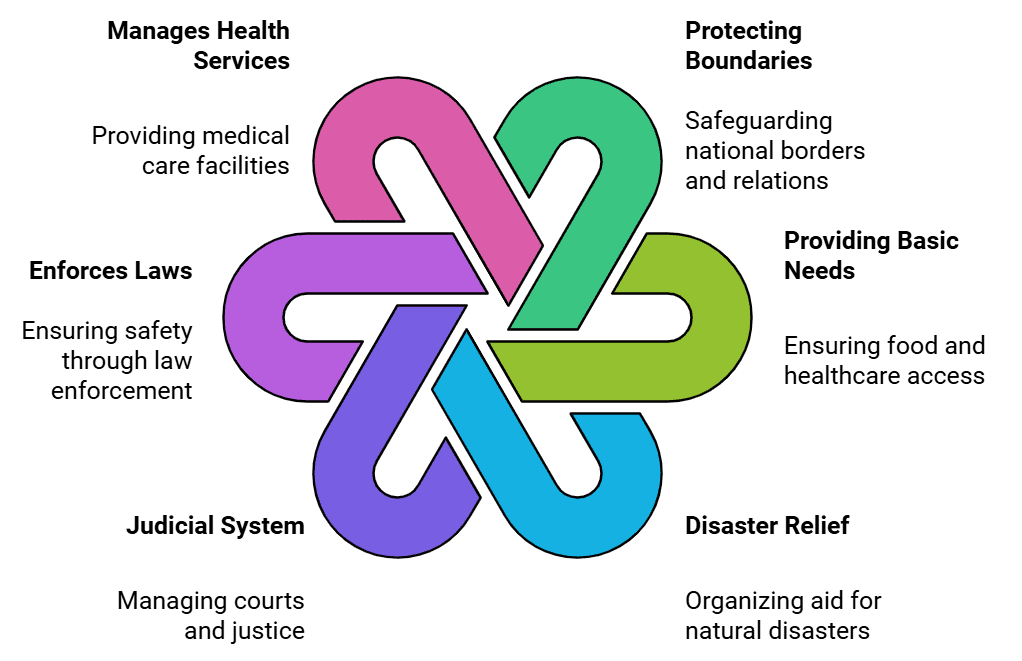 Role of Government
- Protecting Boundaries: The government safeguards the country's borders and works to maintain peaceful relations with other nations.
- Providing Basic Needs: It ensures that all citizens have enough food and access to good health facilities.
- Disaster Relief: In case of natural disasters like tsunamis or earthquakes, the government organizes aid and assistance for affected people.
- Judicial System: When disputes arise or crimes are committed, the government manages the courts where justice is served. Courts are a crucial part of the government.
- Enforces Laws: Keeps people safe by making sure laws are followed.
- Manages Health Services: Ensures access to medical care through hospitals and clinics.
- Sets Education Policies: Provides and regulates education through schools and colleges.
- Building and Services: The government decides where to build roads and schools, and it manages essential services like postal and railway systems.
- Managing Costs: It works on keeping prices stable for important things like food and electricity. For example, if the price of onions goes up too much, the government might find ways to bring it down.
- Helping People: The government runs programs to help people who are struggling, making sure they get the support they need.
The government's role is vital in enhancing life and maintaining order in the country.
Try yourself: What do governments do for their people?
Levels of Government
- Government in any country functions at several levels- central, state and local.
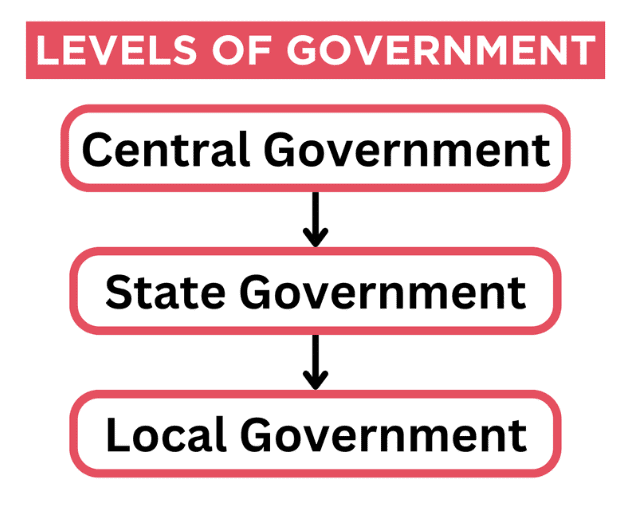
- The central government looks after the nation, the state after the provinces and the local looks after the villages and towns.
- At the local level (means in your village or town locality), at the level of the state (covers an entire state like Haryana or Assam) and at the national level (relates to the entire country).
Try yourself: Which level of government is responsible for managing and administering the affairs of villages and towns?
Laws and the Government
The government makes laws that everyone must follow to maintain order and enforce decisions. For example, the law requires drivers to have a license, and those caught driving without one can be fined or jailed. This ensures that driving is safe.
Importance of Laws
- Maintains Order: Laws keep society organized.
- Enforces Decisions: They allow the government to implement and uphold its decisions.
Taking Action
If a law isn't followed, people can go to court. For instance, if someone is unfairly denied a job due to their religion or caste, they can seek justice through legal action.
Types of Government
- The laws are made by the government in a manner depending on the type of government in the country.
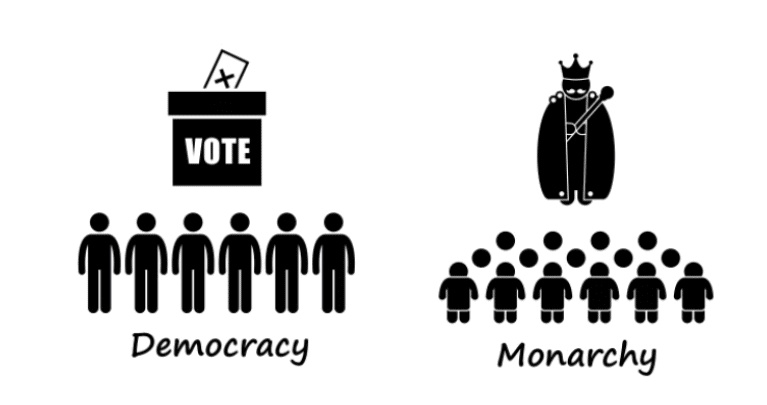
- There are two types of governments: Democratic and Monarchy.
- In a democratic government, people have a right to choose their representatives. For example, India, UK and USA.
In the olden days, there was monarchy where the King had the sovereign power. People would also not elect the King. Generally, the rule was dynastic in nature. Most of time, King had little regard for the desires and expectations of the people.
Democratic Governments
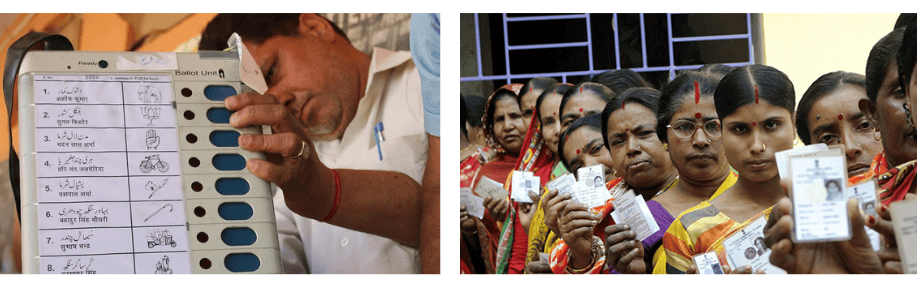
- India is a democracy, meaning that the people have the power to elect their leaders. This is the essence of democracy: people rule themselves by participating in the decision-making process.
- In modern times, most democracies are representative democracies. In these systems, people do not make decisions directly but elect representatives who make decisions on their behalf.
The Struggle for Democracy
Democracy did not always include everyone. Historically, only certain men-typically property owners and educated individuals-were allowed to vote. Women, the poor, and the uneducated were excluded.Women's Suffrage Movement
The struggle for voting rights for women gained momentum during the First World War. With many men away at war, women took on jobs previously reserved for men, proving their capability in various roles. This led to the realization that women should also have the right to vote.- Suffragettes fought hard for this right, chaining themselves to railings, going on hunger strikes, and facing imprisonment.
- In the USA, women won the right to vote in 1920.
- In the UK, women gained voting rights on par with men in 1928.
Try yourself: What was a significant action taken by suffragettes to demand voting rights?
Universal Adult Franchise
- Today, a government is considered democratic only if it allows universal adult franchise, meaning all adults can vote. Before this, voting was restricted to a small, privileged group.
- In India, before independence, only a minority had the right to vote. Leaders like Gandhiji fought for universal voting rights, arguing that all adults, regardless of wealth or education, should have the right to vote.
Democracy has evolved to include more people in the decision-making process, ensuring fair representation and participation for all citizens.
FAQs on Chapter Notes: What is Government?
| 1. What is the definition of government? |  |
| 2. What are the different levels of government? | |
| 3. What role do laws play in government? | |
| 4. What are the main types of government? | |
| 5. How does a democratic government function? | |