NCERT Solutions: Who Will Be Ningthou?

Reading is Fun
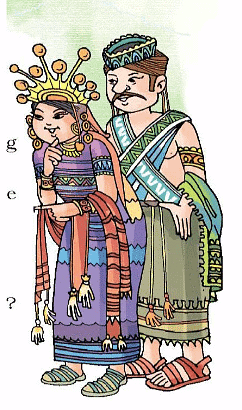
1. Name the place in Manipur where the Ningthou and Leima ruled.Ans. Ningthou and Leima ruled in the land of Kangleipak in Manipur.
2. Why did the people of Kangleipak love their king and queen?
Ans. The people of Kangleipak loved their king and queen because they loved the people and always thought of making them happy.
3. Why did Ningthou want to choose a future king?
Ans. Ningthou wanted to choose a future king because the king was growing old.
4. How did the king want to select their future king?
Ans. The king did not want to follow the old custom. He wanted to choose the future king by holding a contest. He wanted to see who was worthy of being the future king.
5. What kind of child was Sanatombi?
Ans. Sanatombi was soft and beautiful from the inside. She could feel the pain of others, like animals, trees, birds, and people.
6. Have you ever seen an animal or a bird in pain? What did you do?
Ans. Once a little parrot fell in the yard of my house. I saw someone had tied its legs with a string. It had escaped but could not sit or fly anymore. I picked it up. I cut the string with a razor very carefully. Then I released it. It flew away immediately.

Let's Listen and Talk
1. Where is Manipur on the map of India?
Ans. Manipur is in the northeastern part of India on the border of Myanmar.
2. What language do the people of Manipur speak?
(i) Assamese
(ii) Maithailon
(iii) Mizo
(iv) Manpuri
Ans. Manipuri.
3. Who do you think should have been made the future king?
(i) Sanajaoba, the one who jumped through the tree.
(ii) Sanayaima, the one who jumped over the tree.
(iii) Sanatomba, the one who uprooted the tree.
Why do you think so?
Ans. I think so because he was brave. He completed and won the contest.
4.Who was made the future queen and why?
Ans. Sanatombi was made the future queen because she could feel the pain of not only humans out of birds, animals, and trees also.
Word Building
1. Write the meanings of the following in English.(i) Tunggi Ningthou
Ans. Future king.
(ii) Thouro! Thouro!
Ans. Bravo! Bravo!
(iii) Phajei! Phajei!
Ans. Wonderful! Wonderful!
(iv) Shagol thauba nupa!
Ans. Such fine horsemen.
Fun With Sound Words
Some interesting words sound like the noises for which they stand. You use a different tone of voice when you say these words. The voice becomes louder and more forceful.For example
Zoom! went the car., Bang! went the door., Pip! pop! flippety flop!
Say the following and write what would make these sounds or actions.
Ans.
Click! - camera
Chirp! - bird
Whisper! - talking in low voice
Bravo! - It is said when someone is doing well.
Oh! - It is said to express surprise and pain.
Ah! - It is said to express pleasure.
Hurrah! - It is said to express happiness.
Alas! - It is said to express sadness.
Wonderful! - It is said to express pleasure or happiness.
Hi! - It is said to greet someone.
Ho! - It said to attract someone's attention.
Hop away! - It is a sound produced at the time of jumping.
Language Use
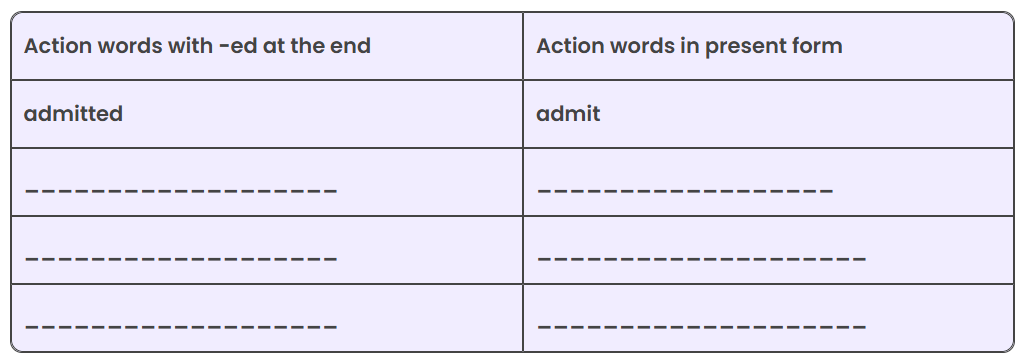
1. Read the lesson carefully and put a circle around all the action words with -ed at the end. Then write them in one column and their present form in another.
Ans.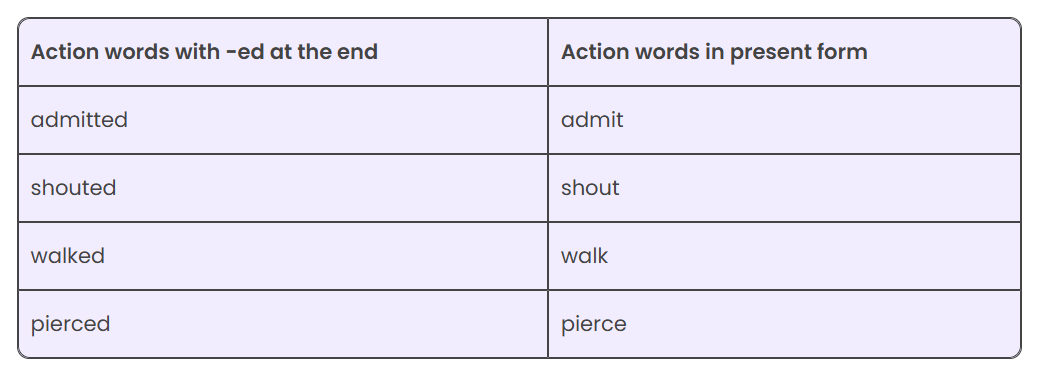
2. Fill in the correct word in the blanks and complete the story.
In a forest, there _________ (live/lives/lived) a goblin named Cruel. One day, he __________ (meet/met/meets) an old man wandering in the forest. Immediately, Cruel _____________ (leap/ leaps/leapt) on to the old man's shoulders and _____________ (order/ orders/ ordered) him, "Let's go. Move fast." The frightened old man _________ (obey/obeys/ obeyed) the nasty goblin and _______ (walk/ walks/walked) on. As they ___________on, (move/moves/moved) he _________ (notice/ notices/ noticed) that the goblin's feet were very tender. The old man ____________ (ask/asks/asked) Cruel, " Sir, how are your feet so soft and tender?" Cruel __________, (reply/ replies/replied) " I have taken a vow that I will not touch the ground with my feet, till I wash them." They soon ____________ (come/comes/ came) to a pool. The goblin ________ (instruct/ instructs/ instructed) the old man to wait for him while he ___________ (enter/enters/ entered) the pool. The old man ___________ (think/ thinks/ thought) to himself, "Now that the goblin has wet his feet, he does not need me. Let me run for my life or he will surely eat me up." So he ___________ (run/runs/ran) off.
Ans.
In a forest, there lived a goblin named Cruel. One day, he met an old man wandering in the forest. Immediately, Cruel leapt onto the old man's shoulders and ordered him, "Let's go. Move fast." The frightened old man obeyed the nasty goblin and walked on. As they moved on, he noticed that the goblin's feet were very tender. The old man asked Cruel, " Sir, how are your feet so soft and tender?" Cruel replied, " I have taken a vow that I will not touch the ground with my feet, till I wash them." They soon came (come/comes/ came) to a pool. The goblin instructed the old man to wait for him while he entered the pool. The old man thought to himself, "Now that the goblin has wet his feet, he does not need me. Let me run for my life or he will surely eat me up." So he ran off.
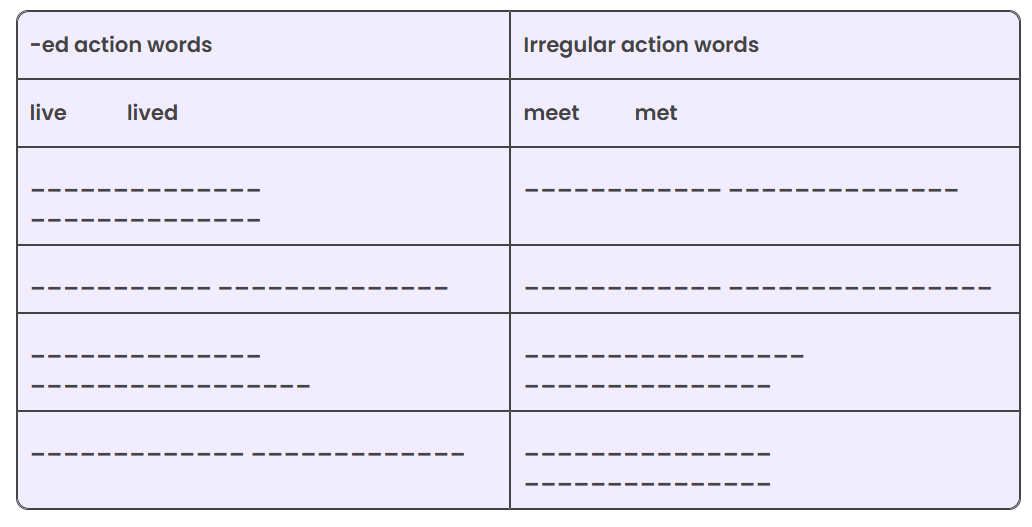
3. Make a list of the action words from this story.
 Ans.
Ans.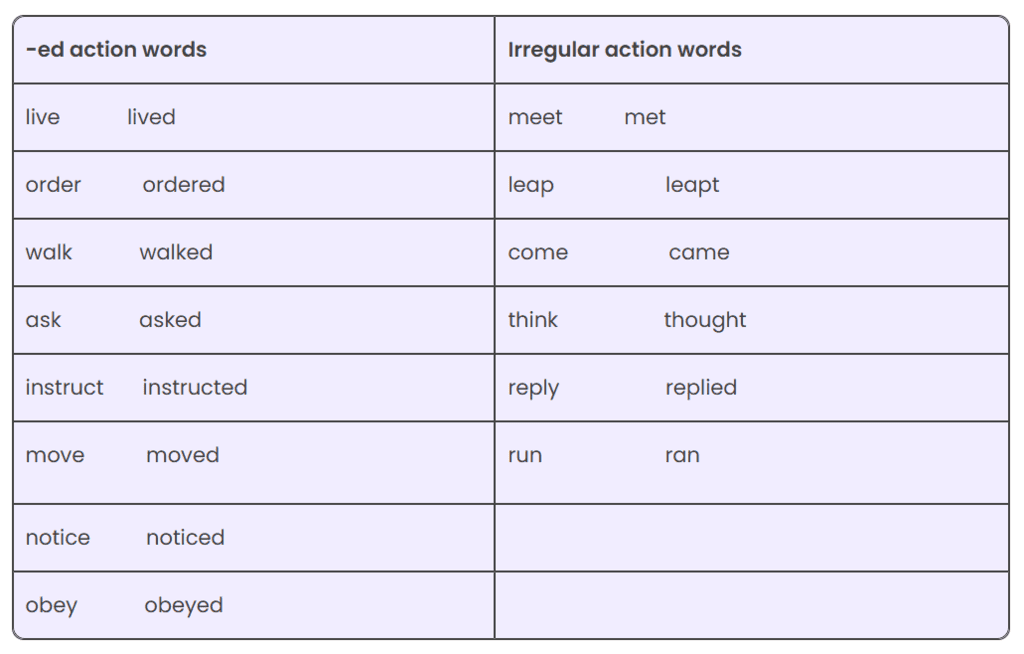
FAQs on NCERT Solutions: Who Will Be Ningthou?
| 1. What is the main theme of the article "Who Will Be Ningthou"? |  |
| 2. How does the narrative structure of the article contribute to its message? | |
| 3. What cultural significance does the concept of Ningthou hold in the Meitei community? | |
| 4. Can you explain the character traits that are typically associated with a Ningthou as mentioned in the article? | |
| 5. How can the lessons from "Who Will Be Ningthou" be applied to modern leadership? | |