Chapter Notes - Understanding Secularism

Introduction to Secularism
Imagine living in a place where the majority practice a particular religion and social pressure or local customs make life difficult for those who follow another faith. For example, as a Hindu or Muslim living in a neighbourhood where Christian fundamentalism is strong, you might face discrimination such as being refused a house because of your religion. Even if you are a US citizen, being told to "go back to India" when you complain would be deeply hurtful and unjust. Such experiences can produce two kinds of reactions:
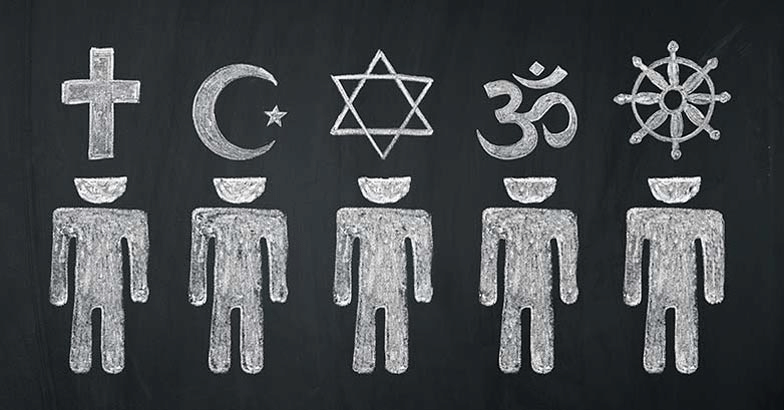
- Retaliation: Wanting to treat followers of the majority religion in areas where you form a local majority in the same unfair way; a response based on getting even.
- Fighting for Justice: Believing that discrimination on the basis of religion is wrong and working to ensure equal treatment for everyone; this approach aligns with the idea of secularism.
Secularism aims to prevent any one religion from dominating others and to ensure justice and equal treatment for all citizens, no matter what their faith is.
Historical Context of Religious Discrimination
History shows many tragic examples where people suffered because of their religion. These examples underline why separating religion from State power is important:
- Nazi Germany: Under Adolf Hitler's rule, Jews were persecuted and millions were killed during the Holocaust.
- Modern Israel: The State of Israel has often been criticised for the way its policies affect its Muslim and Christian minorities; religion and nationalism sometimes combine to create tension.
- Saudi Arabia: Non-Muslims face restrictions in public worship; building non-Muslim places of worship and public non-Muslim religious gatherings are largely prohibited.
Try yourself: What happened in Hitler's Germany?
What is Secularism?
Secularism means the separation of religion from State power. The State does not officially adopt, promote or favour any religion.
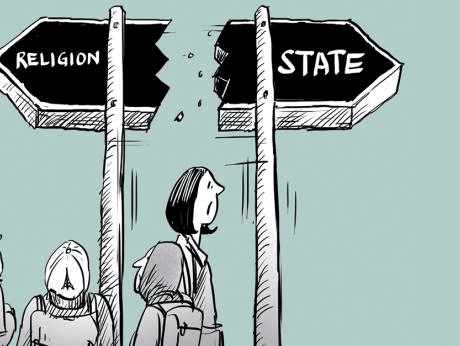 Secularism: Separation of Religion from State.
This separation is important because it:
- Prevents religious domination: No single religion should use the powers of the State to subordinate other religions.
- Protects individual freedom: People have the right to follow, change, or interpret their religion freely without State interference.
In India the Constitution declares the State to be secular. In practice this means the State must:
- Prevent religious domination: Ensure that one religious community does not dominate others.
- Avoid enforcing religion: Not prescribe religious beliefs or impose religious practices on citizens.
- Prevent discrimination: Not discriminate against any citizen on the basis of religion.
Why Separate Religion from the State?
In a democratic nation with many religions, separating religion from the State helps stop the majority religion from using government power to discriminate against minority communities.
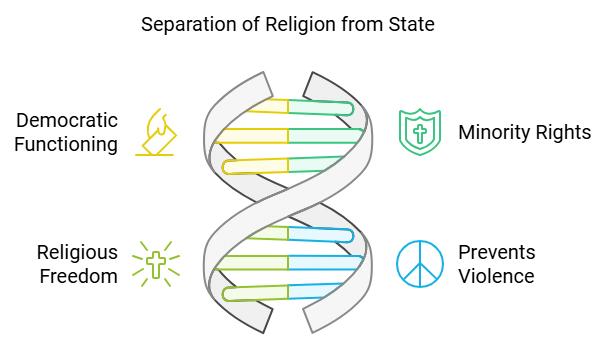
The main reasons for keeping religion and State separate are:
- Ensures democratic functioning: When the State remains neutral about religion, democratic institutions such as courts and public offices can function fairly for all citizens.
- Protects minority rights: Separation safeguards minorities from the tyranny of the majority and helps protect the Fundamental Rights guaranteed by the Constitution.
- Promotes religious freedom: Citizens are free to practise, change, or reinterpret their religion without fear of State coercion.
- Reduces religious conflict: By not favouring any religion, the State reduces the chances of religion-based violence and social unrest.
Examples
- Abolition of untouchability: Untouchability was a discriminatory social practice within Hindu society. The State intervened to abolish it and to protect the rights of those discriminated against; this was necessary to uphold equality before the law.
- Religious schools and equality: The State allows religious communities to run schools and colleges, but financial aid and recognition must be provided without giving preferential treatment to one religion over others.
Try yourself: What could the tyranny of the majority result in?
What is Indian Secularism?
The Indian Constitution requires the State to be secular so that:
- No religious community dominates another.
- Within a religion, no group is allowed to dominate others.
- The State neither promotes nor rigidly restricts religious freedom; it treats all religions with equal respect while upholding constitutional values.
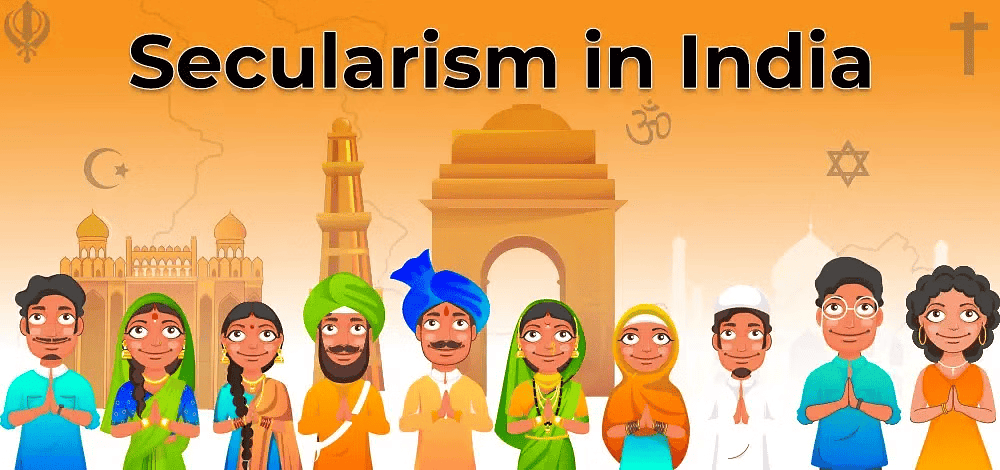
Key features of Indian secularism include:
- Non-alignment with religion: The State maintains an official distance from religious observance. Government institutions such as courts, schools and official offices do not endorse or promote a particular religion.
- Religious freedom in public institutions: Government schools and offices should not officially promote any religion, for example by forcing prayers or religious instruction that favour one faith. Private institutions may have different rules, but constitutional rights remain for all citizens.
- Allowing religious institutions to function: Religious communities are free to run their places of worship, educational institutions and charitable bodies, while the State provides support and regulation on a non-discriminatory basis.
Strategies of Indian secularism (how the State acts in relation to religion):
- Non-interference: The State normally allows religious communities to follow their own practices. For example, Sikhs have exemptions for wearing a turban and related religious headgear, which is treated as an essential religious practice.
- Intervention where needed: The State intervenes when religious practices violate constitutional rights or cause discrimination. The legal abolition of untouchability is an example where the State acted to stop an oppressive social practice that was being justified in the name of religion.
State support for religion in India is provided in a neutral manner: the Constitution permits religious communities to set up schools and colleges and allows the State to assist such institutions on an equal basis without favouring one religion.
Comparison with other secular democracies
- United States: The US Constitution, through the First Amendment, establishes a strict separation that prevents the federal government from establishing a religion or favouring one religion over another.
- Difference in Indian practice: Indian secularism is not strict separation in the US sense. India allows controlled State involvement in religious affairs when required to protect rights and promote equality. The aim is equal respect for all religions rather than absolute separation.
Importance of secularism in India: Secularism underpins equality, protects religious freedom and seeks to prevent discrimination. Although violations may occur, constitutional safeguards and awareness of rights enable citizens to challenge such acts and seek justice.
Some Important Terms
- Secularism: Separation of religion from the State and the equal treatment of all religions by the State.
- Coercion: Forcing someone to act or believe in a certain way, especially by legal or official authority.
- Freedom to interpret: The right of individuals to understand and practise their religion in their own way.
- Intervene: When the State steps in to act in a matter, for example to protect rights or stop discriminatory practices, using constitutional authority.
FAQ's
Q.1. What is a 'Democratic country'?
Ans. A political system in which the government is chosen and replaced through free and fair elections, and where the active participation of citizens in politics and civic life is encouraged and protected.
Q.2. What is a 'Minority group'?
Ans. A culturally, ethnically or racially distinct group that coexists with, but is numerically or politically smaller than, a more dominant group in society.
Q.3. What is the 'Constitution'?
Ans. A constitution is a set of fundamental principles or established precedents that form the legal basis of a political system or organisation, and that determine how that entity is to be governed.
Summary
Secularism requires the State to be neutral in matters of religion so that all citizens enjoy equal rights and freedoms. In India, secularism means both non-alignment with any religion and the ability to intervene when religious practices threaten equality or fundamental rights. This balance helps preserve democracy, protect minority rights, promote religious freedom and reduce religion-based conflict.
FAQs on Chapter Notes - Understanding Secularism
| 1. What exactly is secularism and how does it work in India? |  |
| 2. Why did India choose to be a secular nation instead of a religious one? | |
| 3. What's the difference between secularism in India and Western countries? | |
| 4. How does the Indian Constitution protect religious freedom and secular values? | |
| 5. What are real-life examples of secularism in action within Indian society? | |