Chapter Notes: Parliament and the Making of Laws

Parliament and the Making of Laws
We will explore how participation in decision-making is essential to democracy and why democratic governments must have the approval of their citizens. These ideas together define democracy. The Parliament is the principal institution in which democratic participation and oversight of the government are exercised in India.
The Parliament in India allows citizens to engage in decision-making and oversee the government, making it a vital symbol of Indian democracy and a fundamental aspect of the Constitution.

Why Should People Decide?
Before independence on 15 August 1947, most Indians could not take part in public decision-making. British colonial rule concentrated political power with the rulers and limited the right of people to criticise government actions.

- India became independent on 15 August 1947 after a long freedom struggle involving people from many sections of society.
- Participants in the freedom movement were motivated by ideas of freedom, equality and participation in public decision-making.
- Under British rule, people often lived in fear and could not safely criticise government decisions.
- Open criticism of British policies could lead to imprisonment or other punishments.
- The freedom movement encouraged nationalists to demand political rights and led to greater public involvement in politics.
- As early as 1885, the Indian National Congress (INC) asked for elected members in the legislature with the right to discuss budgets and question the government.
- The Government of India Act, 1909 (Morley-Minto Reforms) allowed a limited number of elected representatives in legislatures, but did not provide full adult voting rights.
- The experience of colonial rule and popular participation in the freedom struggle convinced leaders that, in independent India, everyone should have a part in making decisions.
- After independence, Indians became citizens of a democratic republic rather than subjects of a colonial power.
- Independence meant that governments must be responsible to the people and sensitive to their needs.
- The aspirations of the freedom struggle were incorporated in the Constitution, which introduced universal adult franchise - the right of all adult citizens to vote.
People and Their Representatives
The central idea of democratisation is that the consent and active participation of the people are essential for a legitimate government.
- In a democracy, ordinary people are central: they elect representatives who act on their behalf and make collective decisions.
- The government must gain the confidence and approval of the citizens to govern effectively.
- During elections, people select representatives and thereby authorise the government to act. The party or coalition that wins majority support forms the government.
- The Parliament, made up of all elected representatives, supervises, guides and controls the government.
- Thus, through their representatives, people both form the government and regulate its actions.
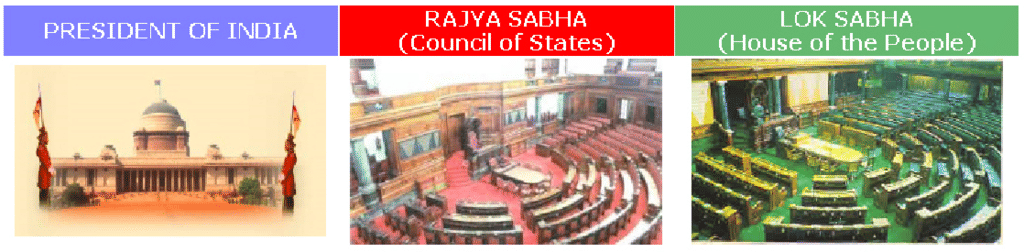 Indian Parliament
What is the Role of the Parliament?
The Indian Parliament came into existence after independence and plays a central role in the political system.
- The parliamentary system enables people to take part in decision-making through their elected representatives; Parliament represents the people.
- Elections to the Lok Sabha are held every five years (unless earlier dissolved), similar to state legislative elections.
- The country is divided into constituencies, each of which elects one representative to the Lok Sabha.
- Candidates from different political parties and independent candidates contest elections in these constituencies.
- Those who win the election become Members of Parliament (MPs).
- After elections, Parliament is the institution in which governance and decision-making take place.

Try yourself: What is the significance of Indian Parliament in the political framework?
1. To Select the National Government
Parliament is formed by the elected MPs. The party or coalition that secures a majority in the Lok Sabha forms the national government. Lok Sabha has 543 elected members, so a majority requires at least 272 seats.

- Opposition Party: All parties that do not form the government make up the Opposition. The Opposition plays a critical role in holding the government to account.
- Selection of the Executive: The Lok Sabha chooses the executive (the Prime Minister and the Council of Ministers). The Prime Minister, usually the leader of the majority party or coalition, selects ministers who together run the government and implement laws made by Parliament.
- Coalition Government: If no single party wins a majority, two or more parties may join to form a coalition government based on an agreement to work together.
- Rajya Sabha: The upper house represents the states. Its members are elected by state legislative assemblies; in the composition mentioned here there are 233 elected members and 12 nominated by the President. Both houses must normally consider a bill before it becomes law.
2. To Control, Guide and Inform the Government
- Each session of Parliament starts with a period set aside for asking questions to the government. This is known as the Question Hour.
- The Question Hour allows MPs to obtain information, press for action and draw attention to problems in administration.
- Opposition parties scrutinise government policies, point out shortcomings, and offer alternative policies; this keeps the government accountable.
- Making laws is a key function of Parliament: it debates, modifies and passes bills which become laws after the prescribed procedures and final approval.
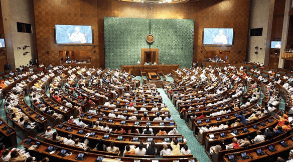 Session of Parliament
How Do New Laws Come About?
- The Parliament is central to the creation of new laws. Bills are discussed, amended and passed in Parliament before they become laws.
- Problems and demands from various sections of society often lead to proposals for specific laws.
- Parliament must be sensitive to people's problems and responsive to public demands.

- Citizens, activists, media reports, local meetings and interest groups all help draw attention to social problems that may require legal action.
- An illustrative example is the enactment of laws to protect women from domestic violence.
- Public discussion, campaigning and demands from citizens and civil-society groups often push Parliament to consider and pass laws addressing such problems.
Domestic violence refers to violence and abuse occurring in a household or within a relationship such as marriage or cohabitation. It includes not only physical harm but also any behaviour intended to gain power and control over another person - emotional abuse, economic control, sexual abuse and threats.
The law that followed public demand recognised important rights for survivors of domestic violence. Two rights highlighted by such legal changes are:
- Recognition of a woman's right to live in a shared household and access to a protection order to prevent further violence.
- Provision of monetary relief to cover expenses such as medical treatment and other immediate needs.
(For example, public campaigns and legislative action in India contributed to the Protection of Women from Domestic Violence Act, 2005.)
Unpopular and Controversial Laws
Parliament sometimes passes laws that are constitutionally valid but are unpopular because many people find them unfair or harmful. In a democracy, citizens have the right to express disagreement and ask for change.
- Criticise the law publicly.
- Hold public meetings and protests.
- Write articles and opinion pieces in newspapers and online.
- Use television, radio and social media to highlight concerns.
- Approach the courts: if a law is challenged as unconstitutional, the judiciary can review it and may modify or strike it down.
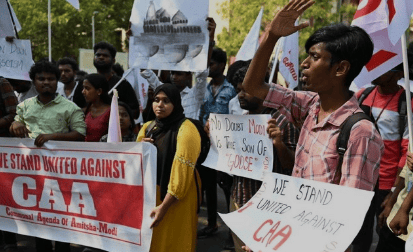 People Protesting against Controversial Law
Example: Municipal laws on hawking and street vending
Many municipal rules restrict hawking and street vending to keep public spaces clear. While regulation is needed for order and safety, hawkers provide low-cost goods and are a livelihood for many. Such laws can favour one group (pedestrians and shop owners) over another (hawkers), producing conflict. Those who feel laws are unfair may approach the courts; the judiciary can intervene if a law violates the Constitution.
Rosa Parks
- On 1 December 1955, African-American woman Rosa Parks refused to give up her bus seat to a white man in Montgomery, Alabama.
- Her refusal was an act of protest against segregation laws that enforced racial separation in public places.
- The act became a spark for the Civil Rights Movement in the United States.
- The movement helped bring about the Civil Rights Act of 1964, which made discrimination on the basis of race, religion or national origin illegal in many public spheres.
- Rosa Parks's action inspired wider protest for the rights and equality of Black Americans and was influenced by principles of non-violent resistance associated with Mahatma Gandhi.
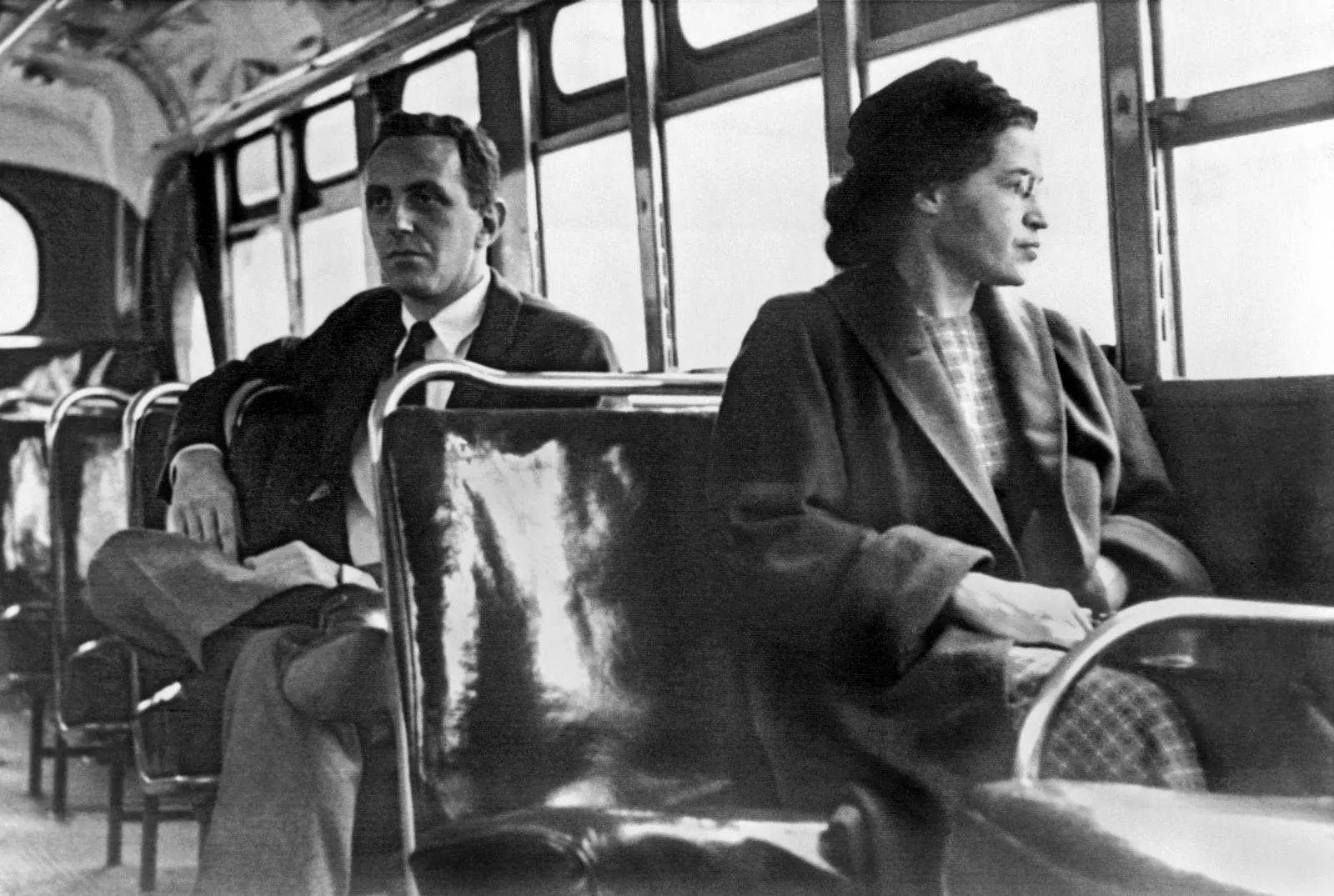 Rosa Parks
Key Words
- Approval: Formal agreement or acceptance of a proposal or decision by a person or body with authority.
- Coalition: An alliance of political parties or groups formed to achieve a common goal, often to form a government when no single party wins a majority.
- Criticise: To express disapproval or point out faults in a policy, action or decision.
- Evolution: A gradual process of change; in biology this refers to change in species over time through natural processes.
- Sedition: Acts or speech that incite people to rebel against lawful authority; often a criminal offence under colonial and some modern laws if it encourages violence or public disorder.
- Repressive: Actions or policies that limit freedoms and suppress dissent, usually enforced by an authority to maintain control.
- Unresolved: A situation, issue or problem that has not yet been settled or resolved.
Frequently Asked Questions (FAQs)
Q1: What is the Parliament?
The Parliament is the supreme legislative body of India. It consists of two houses - the Lok Sabha (House of the People) and the Rajya Sabha (Council of States).
Q2: Why do we need a Parliament?
The Parliament makes laws for the country, holds the government accountable, debates public issues and ensures that government policies serve the interests of citizens.
Q3: What are the functions of the Parliament?
Major functions include making laws, controlling finance (approval of budgets), providing oversight of the executive (by questioning and debates), examining the work of the Cabinet, representing the views of citizens, performing certain constitutional and elective functions, and acting as a forum for national discussion.
Q4: What is the difference between Lok Sabha and Rajya Sabha?
The Lok Sabha is the lower house representing the people; its members are directly elected by citizens. The Rajya Sabha is the upper house representing the states and union territories; its members are elected by state legislative assemblies or nominated by the President.
Q5: How are the members of the Lok Sabha elected?
Members of the Lok Sabha are directly elected by the people in general elections held every five years (unless dissolved earlier). The country is divided into constituencies; each constituency elects one member. Elections are conducted by the Election Commission of India.
FAQs on Chapter Notes: Parliament and the Making of Laws
| 1. How does a bill become a law in the Indian Parliament? |  |
| 2. What's the difference between Lok Sabha and Rajya Sabha in the law-making process? | |
| 3. Why do bills need to go through multiple readings instead of just getting passed once? | |
| 4. What happens when the President doesn't give assent to a bill passed by Parliament? | |
| 5. How can ordinary citizens influence the law-making process in Parliament? | |