NCERT Solutions: A Seed Tells a Farmer's Story


Tell
1. Are Rotis made in your home? From which grains are they made?Ans. Yes, rotis are made in my home. These are made of wheat or bajra grains.
 Rotis2. Have you eaten roti made from bajra or jowar? Did you like these?
Ans. Yes, I have eaten roti made from bajra or jowar. I liked them; they have a unique taste and are nutritious.
Find Out and Write
1. In your house what is done to protect grains and pulses from insects?Ans. In my house, the grains and pulses are kept in air-tight containers to protect them against insects.
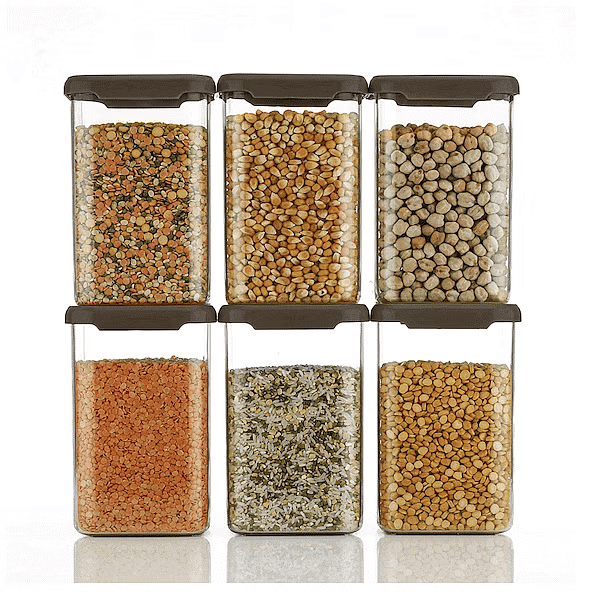 Pulses are kept in air-tight containers2. Which are different festivals related to farming celebrated in different seasons? Find out more about any one of such festivals and write in your notebook - The name of the festival, in which season it is celebrated, in which states of India, what special food is made, is it celebrated only at home with the family, or together with many people.
Ans. There are several festivals related to farming that are celebrated in different seasons across India. These include:
- Baisakhi (Spring, Punjab)
- Lohri (Winter, Punjab, Haryana)
- Makar Sankranti (Winter, across India)
- Pongal (Winter, Tamil Nadu)
- Onam (Autumn, Kerala)
- Basant Panchami (Spring, North India)
Pongal Festival
- Season: Pongal is celebrated in the winter season, typically in January.
- States: It is primarily celebrated in Tamil Nadu.
- Special Food: The most famous dish prepared during this festival is 'Pongal,' a sweet rice dish made from newly harvested rice, milk, and jaggery. Other traditional foods include sugarcane and various sweets.
- Celebration Style: Pongal is celebrated with much enthusiasm, not only at home with family but also as a community festival. People gather to celebrate together, offering prayers, performing traditional dances, and organizing fairs.
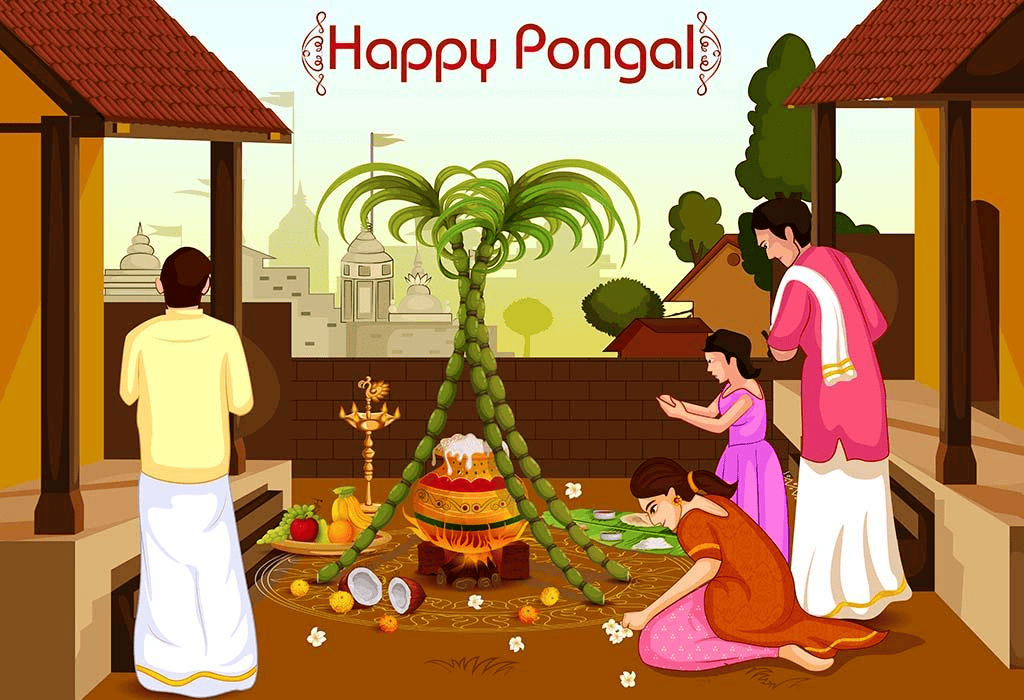 Pongal Festival3. Talk to the elders in your family and find out if there were some special foods cooked earlier, that are not cooked anymore?
Ans.
- After speaking with my grandparents, I learned about several special foods that were commonly made earlier but are rarely prepared now.
- For instance, my grandfather recalled a sweet made from 'khaand,' a type of unrefined sugar, which his mother would make during his school days.
- They also enjoyed multigrain chapatis, which have become quite rare today.
4. Find out about the crops - cereals, vegetables, and pulses that are grown in your area. Of these, is there anything that is famous across the country?
Ans.
- In our area, the commonly grown crops include wheat, bajra, mushrooms, and jowar.
- Among these, mushrooms are particularly renowned and well-known across the country for their unique flavor and nutritional benefits.
5. Can you identify these grains
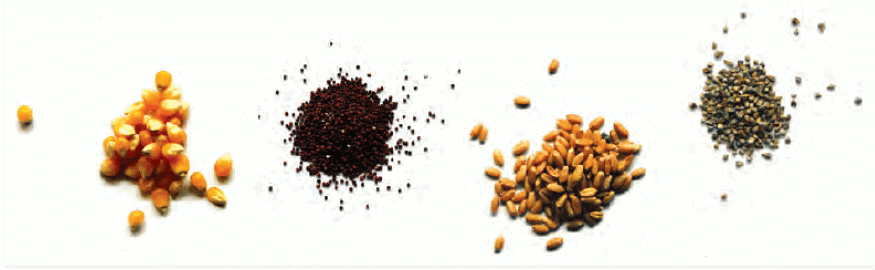 Identify these Grains
Ans. Yes, I can identify these grains. These are
(1) Corn seeds
(2) Mustard Seeds
(3) Wheat grains
(4) Bajra grains
Discuss
1. The bajra seed saw differences in the way Damjibhai and Hasmukh did farming (for example in irrigation, plowing, etc.) What were these differences?Ans. Here are the differences in the farming practices of Damjibhai and Hasmukh.
Damjibhai:
- Traditional Practices: Damjibhai uses old-fashioned farming techniques that have been passed down for generations.
- Plowing with Bullocks: He plows his fields using bullocks, which are strong animals that help to turn the soil.
- Storing Grains: After harvesting, he keeps some grains to plant in the next season, ensuring he has seeds for future crops.\
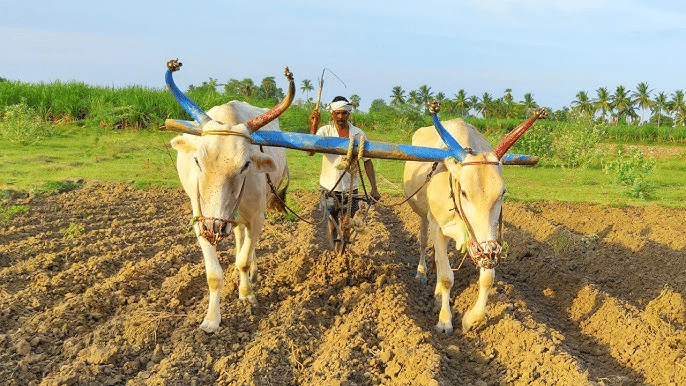 Plowing with Bullocks
Hasmukh:
- Modern Techniques: Hasmukh uses new and advanced farming methods that can help him grow more food.
- Using a Tractor: He uses a tractor, a powerful machine, to plow the fields quickly and efficiently.
- Applying Fertilizers: Hasmukh buys and uses special fertilizers that help his crops grow better and yield more food.
2. Hasmukh said, "With profits from our fields, we can progress". What is your understanding of 'progress'?
Ans. Definition of 'Progress':
- Improved Standard of Living: When Hasmukh talks about progress, he means that life gets better and more comfortable for him and his family.
- Better Housing: This means having a nicer and more secure home where they can live happily.
- Access to Nutritious Food: Progress also means being able to buy and eat healthy food that keeps them strong and healthy.
- Entertainment Opportunities: Hasmukh wants his family to enjoy fun activities, like watching television and listening to the radio, which makes life more enjoyable.
- Earning Respect: True progress means gaining respect from others in the community, showing that their hard work is appreciated and recognized.
Write
1. What kind of progress would you like to see in your area?Ans. I envision the following types of progress in my town:
(i) Establishment of quality schools
(ii) Development of large, well-equipped hospitals
(iii) Improvement of transportation and communication infrastructure
(iv) Creation of more recreational and entertainment spaces
Discuss and Think
1. What can happen to Hasmukh's farm after some years?
Ans. Hasmukh's farm will lose fertility due to his consistent use of chemical fertilisers.
2. Damjibhai's son Hasmukh chose to become a farmer like his father, Hasmukh's son Paresh is not a farmer, but a truck driver. Why would he have done so?
Ans. Paresh decided against farming after observing his father's significant losses and outstanding bank loans. Recognizing the challenges and expenses associated with agriculture, he decided to become a truck driver to earn a more stable income and help repay the family's debts.
3. The seeds were not sure that what Hasmukh was talking about was really progress. What do you feel?
Ans.
- Hasmukh's adoption of new farming methods led to negative outcomes.
- The new seed varieties were prone to pests, and reliance on expensive fertilizers poorly affected soil quality.
- As many farmers followed similar practices, crop prices reduced and groundwater levels decreased.
- Consequently, Hasmukh's venture into modern agriculture did not lead to stability but rather to financial distress, indicating that this was not true progress.
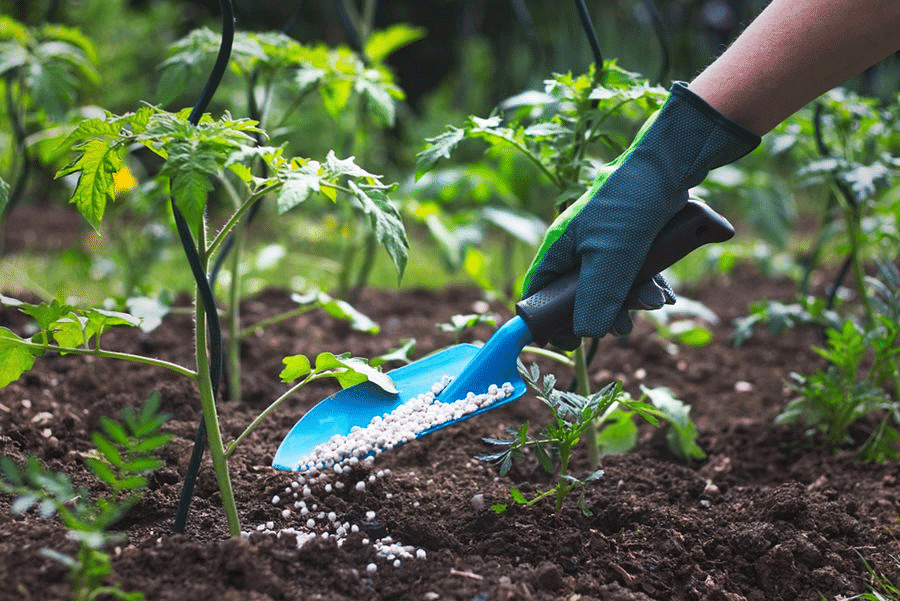 Garden fertilizer4. Have there been any changes near your area, which may be difficult to call 'progress'? What changes are these? What are the different opinions about them?
Ans. Several changes in my area, while intended for progress, have negative results that make advancement difficult.
For Example:
- Improved transportation facilitates access to distant locations but contributes to increased pollution, leading to health issues.
- The introduction of electrical appliances has made household chores easier, yet it may promote unhealthy lifestyles and health problems due to reduced physical activity.
- The use of computers has eased-up many tasks, but it has also resulted in job losses for individuals in various sectors.
Project
1. What question comes to your mind about farmers and farming? Write some questions in your group and ask a farmer. For example, how many crops do they grow in a year? Which crop needs how much water?
Ans.
Here are some questions I posed to a farmer, along with their responses:
- Student: How long have you been farming?
Farmer: I have been farming for about 15 years. - Student: What and how many crops do you typically grow in a year?
Farmer: I usually grow wheat, paddy, pulses, and cotton. - Student: Which crop requires a lot of water?
Farmer: Paddy needs a high amount of water. - Student: Do you use factory-made fertilizers?
Farmer: Yes, I use factory-made fertilizers. - Student: Where do you source your seeds? Do you store some for the next year?
Farmer: Sometimes, I purchase seeds from the market, and other times, I store some for the next planting season.
2. Visit a farm near your area. Observe and talk to the people there. Write a report.
Ans. Recently, I visited my friend's farm in Panipat along with a few friends. It was one of the most beautiful places I had ever seen. Upon entering the farm, we were greeted by a scenic view surrounded by pink bougainvillea flowers and tall coconut trees. A diverse range of plants was cultivated, including lemons, oranges, spinach, radish, and coriander. The sight of fresh carrots sprouting from the soil tempted us to uproot a few. The farmers shared that they grew all these plants without any artificial fertilizers, instead relying on earthworms for natural soil enrichment. The earthworms aerate the soil, making it more suitable for plants. Additionally, they composted organic waste, which enriched the soil with essential minerals. This visit was not only enjoyable but also enlightening, as we learned about eco-friendly farming practices.
What we have Learnt
1. There have been many changes in our food. What can this mean? Use the seed story and what you know from elders to explain.
Ans. The changes in our food habits indicate a significant shift in agricultural practices and dietary preferences:
- In the past, people consumed a variety of grains like bajra, jowar, and wheat, whereas today, wheat is the most common.
- Older methods involved storing seeds for future planting, whereas modern practices focus on growing new seed varieties with different characteristics.
- Traditional foods were often simpler and less heavily seasoned compared to contemporary tastes.
- Historical farming relied on usual methods, while modern agriculture now employs advanced technologies and techniques.
2. What would happen if all the farmers were to use only one kind of seed and grow only one kind of crop?
Ans.
If all farmers used just one kind of seed to grow one type of crop, several things could happen:
- Lower Prices: The price of that crop would drop a lot because there would be so much of it in the market, which means farmers would earn less money.
- Soil Problems: Growing the same crop over and over would take away important nutrients from the soil. This could make the soil weak and less able to grow healthy plants.
- Less Variety: Relying on only one crop would mean there wouldn't be many different foods available, which is not good for people or animals.
Overall, using just one kind of seed can cause big problems for farmers and the environment.
FAQs on NCERT Solutions: A Seed Tells a Farmer's Story
| 1. What does the seed represent in the story "A Seed Tells a Farmer's Story"? |  |
| 2. What are the main stages of seed germination that the farmer experiences in this NCERT chapter? | |
| 3. Why does the farmer need to understand seed characteristics before sowing crops? | |
| 4. How do soil conditions and water affect a seed's ability to grow into a healthy plant? | |
| 5. What lessons about farming and nature can Class 5 students learn from studying this farmer's seed story? | |