Scanner - Demand (Theory of Consumer Behaviour)

NCERT Questions
(Q1) Give the meaning of demand and demand schedule ?
Ans: Demand is the quantity of a commodity that consumers are both willing and able to buy at various prices during a given period of time. It is not only the desire to buy but also the purchasing power to pay the price. Demand schedule is a tabular statement showing the quantity of a commodity demanded at different possible prices during a specific period. It summarises how quantity demanded varies with price, holding other factors constant.
(Q2) Name two determinants of demand ?
Ans: Two important determinants of demand are: (i) Price of the commodity (own price); (ii) Income of consumers. (Other determinants include prices of related goods, tastes and preferences, expectations, and number of buyers.)
(Q3) If the price of good A rises and it leads to an increase in demand for good Y, how are the
two goods related ?
Ans: The two goods are substitutes. When the price of A rises, consumers switch to Y, increasing the demand for Y.
(Q4) If the price of good A rises and it leads to an decrease in demand for good Y, how are the
two goods related ?
Ans: The two goods are complements. A rise in the price of A reduces its consumption and therefore reduces the demand for Y, which is used together with A.
(Q5) How will increase in price of coffee affect demand for tea ?
Ans: Coffee and tea are generally substitute goods. If the price of coffee increases, some consumers will switch to tea, so the demand for tea will increase (shift right), ceteris paribus.
(Q6) How will increase in price of tea affect the demand for sugar ?
Ans: Tea and sugar are generally complements (used together). If the price of tea increases and its consumption falls, the demand for sugar will also decrease (shift left), ceteris paribus.
(Q7) Given below is demand for Gulab jamun at each possible price
Price (Rs) AMAR AKBAR ANTHONY

- Calculate Market demand and plot it
- suppose Akbar is droped out, find new M.D
- What will be M.D if new person joins them with double the demand of Amar ?
Ans: The computations and plot require the numerical demands shown in the image.
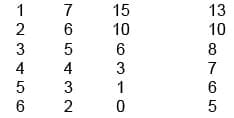
Since the figure/table in the image is essential to calculate exact numbers, follow these steps to obtain the required answers once the data are available:
- At each price, add the individual quantities demanded by Amar, Akbar and Anthony to get market demand (horizontal summation).
- If Akbar drops out, remove Akbar's quantities and add only Amar's and Anthony's quantities to obtain the new market demand.
- If a new person joins with double the demand of Amar, at each price add twice Amar's quantity to the quantities of the existing members to get the adjusted market demand.
Plot the market demand by placing price on vertical axis and total quantity demanded on horizontal axis and mark the points corresponding to each price, then join them to obtain the market demand curve.
(Q8) What is meant by cross -price effect ? Give two numerical example to illustrate it ?
Ans: Cross-price effect (or cross-price elasticity conceptually) refers to how the demand for one good changes when the price of another good changes. If demand for good X rises when price of Y rises, X and Y are substitutes. If demand for X falls when price of Y rises, X and Y are complements.
Numerical illustrations:
- Substitute example: Suppose at Price of tea = Rs 10, demand for coffee is 50 units. If price of tea rises to Rs 12 and demand for coffee rises to 60 units, an increase of 10 units in coffee demand shows a positive cross-price effect - tea and coffee are substitutes.
- Complement example: Suppose at price of printers = Rs 5,000 demand for ink cartridges is 200 units. If price of printers rises to Rs 6,000 and demand for ink cartridges falls to 150 units, a fall of 50 units in cartridge demand shows a negative cross-price effect - printers and ink cartridges are complements.
(Q9) Differentiate between
(a) Substitute and Complementary Good
(b) Normal and Inferior Good
Ans:
(a) Substitute goods are goods that can replace each other; when the price of one rises, demand for the other rises (e.g., tea and coffee). Complementary goods are goods used together; when the price of one rises, demand for the other falls (e.g., cars and petrol).
(b) Normal goods are goods for which demand increases when consumer income rises (e.g., branded clothing). Inferior goods are goods for which demand falls as income rises (e.g., cheaper substitutes like coarse cloth for some consumers).
(Q10) How does an increase in income affect the demand curve for
(a) Normal (b) Inferior Good
Ans: (a) For a normal good, an increase in income raises demand at every price, so the demand curve shifts rightwards (increase in demand). (b) For an inferior good, an increase in income reduces demand at every price, so the demand curve shifts leftwards (decrease in demand).
(Q11) How is the market demand curve derived from the individual demand curves ?
Ans: The market demand curve is obtained by horizontal summation of individual demand curves. For each price, sum the quantities demanded by all individual buyers; plotting these total quantities against the price and joining the points gives the market demand curve.
(Q12) Distinguish between individual and market demand curves ?
Ans: Individual demand curve shows the relation between price and quantity demanded by a single consumer. Market demand curve shows the relation between price and total quantity demanded by all consumers in the market. The market curve is obtained by adding quantities demanded by individuals at each price; it is typically smoother and has larger quantities.
(Q13) Distinguish between change in quantity demanded and change in demand ?
Ans: Change in quantity demanded is a movement along the same demand curve caused only by a change in the good's own price (upward movement when price rises; downward when price falls). Change in demand is a shift of the entire demand curve caused by changes in non-price determinants (income, tastes, prices of related goods, expectations, number of buyers).
(Q14) Explain the determinants of market demand curves ?
Ans: Major determinants are:
- Price of the good (own price)
- Income of buyers (normal vs inferior goods)
- Prices of related goods (substitutes and complements)
- Tastes and preferences (advertising, fashion)
- Expectations about future prices or incomes
- Number of buyers in the market
Changes in any of these (other than own price) shift the market demand curve.
(Q15) Why does demand curve slopes downward ?
Ans: The demand curve slopes downward because of three main reasons:
- Substitution effect: When price falls, the good becomes cheaper relative to alternatives, so consumers substitute away from other goods toward it.
- Income effect: A fall in price increases the consumer's real purchasing power, enabling them to buy more.
- Law of diminishing marginal utility: As a consumer consumes more units, additional satisfaction from each extra unit falls, so they will buy more only at lower prices.
Together these cause a negative relationship between price and quantity demanded.
(Q16) Determine how the following changes will affect market demand curve for a product
(a) A new steel plant comes up in Jharkhand. Many people who were previously
unemployed in the area are now employed. How will this affect the demand curve for colour TVs and Black and White TVs in the region ?
(b) In order to encourage tourism to Goa, the GOI suggests Indian Airlines to reduce air
fare to Goa from the four major cities - Chennai, Kolkata , Mumbai and New Delhi. If the Indian airlines reduces the air fare to Goa, how will this affect the market demand curve for air travel to Goa?
(c) There are train and bus services between New Delhi and Jaipur. Suppose that the
train fare between the two sities comes down. How will this affect the demand curve for bus travel between the two cities ?
Ans:
(a) Employment rise raises incomes. Demand for normal and higher quality goods such as colour TVs will increase significantly (demand curve shifts right). Demand for inferior or low-quality goods like black-and-white TVs will either increase little or decline (their demand curve may shift left or remain unchanged), depending on whether they are considered inferior in that community.
(b) A fall in air fare makes air travel relatively cheaper and more attractive; market demand for air travel to Goa will increase, i.e., the demand curve shifts rightwards.
(c) A fall in train fare makes train travel relatively cheaper than bus travel. Some bus travellers will switch to trains, so the demand for bus travel will decrease (demand curve shifts leftwards).
(Q17) Explain the impact on demand curve of :
(a) Railways with the commencement of budget airlines which are as cheap as 2nd A.C
fare
(b) Computer Disks ( CD ) when the price of computer increases
(c) Clothes when The TATA group announces a bonus for its employees
Ans:
(a) Budget airlines priced similar to 2nd A.C are substitutes for rail travel for some travellers. Demand for railways (for routes where airlines compete) will fall, shifting the rail demand curve leftwards.
(b) Computer disks (CDs) are often complements to computers. If computer prices rise and fewer computers are bought, demand for CDs will fall, shifting their demand curve leftwards.
(c) A bonus raises incomes of Tata employees. For normal clothes, demand will increase, shifting the demand curve for clothes rightwards. The effect will be larger for branded or higher-quality clothing.
(Q18) What is the slope of giffen goods ?
Ans: Giffen goods are a special case where the demand curve is upward sloping; as price rises, quantity demanded also rises. This happens when the negative income effect of a price rise on a staple inferior good outweighs the substitution effect.
(Q19) From the given demand function Qx = 100 - 2P , derive the individual demand schedule and demand curve. What is the maximum quantity the individual will demand of commodity X per time period ?
Ans: The demand function Qx = 100 - 2P is linear with intercept 100 and slope -2.
Individual demand schedule (examples):
- When P = 0, Q = 100 - 2×0 = 100
- When P = 10, Q = 100 - 2×10 = 80
- When P = 20, Q = 100 - 2×20 = 60
- When P = 30, Q = 100 - 2×30 = 40
- When P = 40, Q = 100 - 2×40 = 20
- When P = 50, Q = 100 - 2×50 = 0
The demand curve is a straight line with vertical intercept at Q = 100 (when P = 0) and slope -2 (quantity falls by 2 units for every 1 rupee rise in price). The maximum quantity demanded (when price is zero) is 100 units per time period.
C.B.S.E Questions
(Q1) Explain the effect of rise in price of related goods on the demand of a good ?
Ans: When price of a related good changes, its effect on the demand of the given good depends on whether the related good is a substitute or a complement. If the related good is a substitute, a rise in its price increases demand for the given good (consumers switch). If the related good is a complement, a rise in its price reduces demand for the given good (joint consumption falls).
(Q2) Distinguish between
(a) Normal Good and inferior good
(b) Individual and market demand Schedule
(c) Total utility and Marginal Utility
Ans:
(a) Normal good: demand rises as income rises. Inferior good: demand falls as income rises.
(b) Individual demand schedule shows quantity demanded by one buyer at various prices. Market demand schedule shows total quantity demanded by all buyers at various prices.
(c) Total utility is the overall satisfaction obtained from consuming a given total quantity of a good. Marginal utility is the additional satisfaction gained from consuming one more unit of the good.
(Q3) When is a good called an inferior good
Ans: A good is called inferior when, other things remaining the same, an increase in consumer's income leads to a decrease in the quantity demanded of that good.
(Q4) Explain law of demand with the help of schedule and diagram ?
Ans: Law of demand states that, ceteris paribus, the quantity demanded of a good falls when its price rises, and rises when its price falls. A demand schedule lists prices and the corresponding quantities demanded. The demand curve, plotted with price on vertical axis and quantity on horizontal axis, slopes downward from left to right, illustrating this inverse relationship. (Diagram: plot the schedule points and join to get a downward-sloping curve.)
(Q5) State any three causes of a rightward shift of demand curve of a commodity.
Ans: Three causes of a rightward shift (increase in demand) are:
- Increase in income for a normal good.
- Rise in price of a substitute good.
- Change in tastes/fashion that favours the good (increased preference).
(Q6) Explain any three factors, other price of a commodity that affect its demand ?
Ans: Three non-price factors affecting demand are:
- Income of consumers (higher income increases demand for normal goods).
- Prices of related goods (substitutes and complements).
- Tastes and preferences (advertising, trends).
(Q7) Show the effect of the following on demand for a commodity
(a) A rise in the money income of household
(b) A Fall in prices of other commodity
(c) A fall in price of substitute goods
(d) Unfavourable change in taste
(e) Fall in income of inferior goods
(f) Rise in price of complementary good
Ans:
(a) Rise in income: For a normal good demand increases (shift right). For an inferior good demand may fall.
(b) Fall in price of other commodity: If the other is a substitute, demand falls for the given commodity; if it is a complement, demand may rise.
(c) Fall in price of substitute goods: Given good becomes relatively expensive, so its demand falls (shift left).
(d) Unfavourable change in taste: Demand falls (shift left).
(e) Fall in income: For an inferior good, demand increases; for a normal good, demand falls.
(f) Rise in price of complementary good: Demand for the given good falls (shift left).
(Q8) Explain law of demand and reasons behind it ?
Ans: Law of demand: ceteris paribus, quantity demanded decreases as price increases, and increases as price decreases. Reasons: substitution effect (cheaper alternatives), income effect (price fall raises real income), and diminishing marginal utility (additional units give less satisfaction so consumers buy more only at lower prices).
(Q9) Define Market demand ?
Ans: Market demand is the total quantity of a good that all consumers in the market are willing and able to purchase at various prices during a given period. It is the horizontal sum of individual demands.
(Q10) What cause downward movement of demand curve and what it is called ?
Ans: A downward movement along the demand curve is caused by a fall in the own price of the commodity; this is called an expansion (increase) in quantity demanded. An upward movement is caused by a rise in price and is called contraction (decrease) in quantity demanded.
(Q11) Distinguish between decrease in quantity demanded and decrease in demand ?
Ans: Decrease in quantity demanded is a movement up along the same demand curve due to an increase in the commodity's own price. Decrease in demand is a leftward shift of the entire demand curve caused by changes in non-price factors (e.g., fall in income, rise in price of complement, unfavourable tastes).
(Q12) Why does consumer buy more // less of a commodity at given price ?
Ans: At a given price a consumer's purchase decision depends on income, tastes, prices of related goods, expectations and the marginal utility derived from the good. If income or preference rises, consumer may buy more; if substitute becomes cheaper or income falls (for normal goods), consumer may buy less.
(Q13) Explain Law of Demand with assumption ?
Ans: Law of demand: ceteris paribus, an increase in price leads to a decrease in quantity demanded and vice versa. Key assumptions: (i) other determinants of demand (income, tastes, prices of related goods, expectations) are held constant; (ii) number of buyers remains unchanged; (iii) tastes and preferences remain constant; (iv) consumers are rational.
(Q14) If the Quantity demanded of X good decreases as the household income increase, what type of good X is ?
Ans: Good X is an inferior good, because demand for it falls when household income rises.
(Q15) How is the demand for the commodity affected by an increase in the income of consumer?
Ans: If the commodity is a normal good, demand increases and the demand curve shifts rightwards. If the commodity is an inferior good, demand decreases and the demand curve shifts leftwards.
(Q16) Explain income, substitution and price effect on demand ?
Ans:
Substitution effect: When the price of a good falls, it becomes cheaper relative to other goods so consumers substitute it for relatively more expensive goods, increasing quantity demanded.
Income effect: A fall in price increases the consumer's real purchasing power, enabling them to buy more of the good (for a normal good) or less (for an inferior good).
Price effect: The total change in quantity demanded due to a price change is the sum of the substitution and income effects.
(Q17) When will rise in demand called expansion of demand and when will it be called an increase in demand ?
Ans: Terminology clarification:
- A change along the demand curve due to a fall in price, causing a higher quantity demanded, is called an expansion in quantity demanded (not a shift).
(Sometimes informally called expansion of demand.)
- An increase in demand refers to a rightward shift of the entire demand curve due to non-price factors (income rise for normal goods, higher number of buyers, favourable tastes, rise in price of substitutes, fall in price of complements).
Sample Paper & C.B.S.E Question's
(Q1) State three changes leading to the shift of demand curve of a consumer to the right.
Ans: Three changes causing a rightward shift are:
- Increase in consumer's income (for a normal good).
- Rise in price of a substitute good.
- Favourable change in tastes or preferences (greater desire for the good).
(Q2) Distinguish between an inferior good and a normal good. Explain the effect of change in income on each giving suitable examples.
Ans: An inferior good is one whose demand falls when income rises (e.g., coarse cloth for some consumers). A normal good is one whose demand rises when income rises (e.g., branded shirts). When income increases, demand for normal goods shifts rightwards, while demand for inferior goods shifts leftwards.
(Q3) Define change in demand?
Ans: Change in demand means a shift of the entire demand curve either to the right (increase in demand) or to the left (decrease in demand) caused by changes in non-price determinants of demand (income, tastes, prices of other goods, expectations, number of buyers).
(Q4) Explain the effect of rise in the prices of related goods on the demand for a good X. Use diagrams. OR Explain the effects of rise in income on demand for a good. Use diagram.
Ans: If the price of a substitute good rises, demand for good X increases (demand curve shifts right). If price of a complement rises, demand for X decreases (demand curve shifts left). Similarly, a rise in income increases demand for a normal good (curve shifts right) and decreases demand for an inferior good (curve shifts left). (Diagrams: show original and shifted demand curves.)
(Q5) What is a demand schedule?
Ans: A demand schedule is a table showing the quantity of a good demanded at various possible prices over a given period, holding other determinants constant.
(Q6) Explain the effect of the following on demand for a good:
(i) Rise in income
(ii) Rise in prices of related goods
Ans:
(i) Rise in income: For a normal good, demand rises (shift right); for an inferior good, demand falls (shift left).
(ii) Rise in prices of related goods: If price of a substitute rises, demand for the good rises. If price of a complement rises, demand for the good falls.
C.B.S.E Questions
(Q1) What is meant by inferior good in economics ?(1)
Ans: An inferior good is one whose demand decreases when the consumer's income increases, ceteris paribus.
(Q2) Distinguish between demand by an individual and market demand with the help of a schedule.(3)
Ans: Individual demand schedule shows quantities a single consumer demands at different prices. Market demand schedule shows total quantities demanded by all consumers at different prices. Market demand is obtained by summing individual quantities at each price.
(Q3) State the law of demand and show it with the help of a schedule.(3)
Ans: Law of demand: ceteris paribus, quantity demanded falls when price rises and increases when price falls. A schedule lists price and corresponding demanded quantities; the plotted curve is downward sloping showing the inverse relation.
(Q4) Explain the effect of the following on the market demand of a commodity :(6)
(i) Change in price of related goods
(ii) Change in the number of its buyers
Ans:
(i) Change in price of related goods: If price of a substitute rises, market demand for the good increases. If price of a complement rises, market demand falls.
(ii) Change in number of buyers: An increase in number of buyers increases market demand (shift right); a decrease reduces market demand (shift left).
(Q5) State the causes of an 'increase' in demand. Explain any two of them.(6)
Ans: Causes of increase in demand include:
- Rise in consumer income for a normal good.
- Rise in price of substitute goods.
- Fall in price of complementary goods.
- Favourable change in tastes/preferences.
- Increase in number of buyers.
Explain any two: For example, (i) Rise in income: consumers can afford more so demand rises; (ii) Rise in price of substitute: given good becomes relatively cheaper, so its demand rises.
CBSE + Sample Paper Question's
(Q1) What is meant by inferior good in economics ?(1M)
Ans: An inferior good is one whose demand falls when consumer income increases, ceteris paribus.
(Q2) Explain any two causes of 'increase' in demand of a commodity.(3M)
OR
Explain the inverse relationship between price and quantity demanded of a commodity.
Ans:
Two causes of increase in demand are:
- Increase in consumer income (for normal goods) so consumers buy more at the same price.
- Rise in price of substitutes making the given good relatively cheaper.
Inverse relationship: As price falls, quantity demanded rises due to substitution and income effects and diminishing marginal utility.
(Q3) What causes an upward movement along a demand curve of a commodity ?(1 M)
Ans: An upward movement along the demand curve is caused by a rise in the own price of the commodity, resulting in a decrease in quantity demanded (contraction).
(Q4) Explain the inverse relationship between the price of a commodity and its demand.(3 M)
Ans: The inverse relationship exists because when price rises, consumers substitute away to other goods (substitution effect), their real income falls reducing purchasing power (income effect), and because marginal utility declines with each additional unit so consumers buy less at higher prices.
(Q5) State any three factors that cause an 'increase' in demand of a commodity.(3 M)
Ans: Three factors are: (i) Rise in consumer income (for a normal good), (ii) Rise in price of substitute goods, (iii) Favourable change in tastes or preferences.
(Q6) Explain the effect of a rise in the prices of 'related goods' on the demand for a good X.
Ans: If the related good is a substitute, a rise in its price increases demand for X. If it is a complement, a rise in its price decreases demand for X. The direction depends on the nature of the relationship between the goods.
CBSE Questions
(Q1) Give one reason for a shift in demand curve.(1 M)
Ans: A change in consumer income (increase or decrease) is one reason for a shift in the demand curve.
(Q2) Explain how rise in income of a consumer affects the demand of a good. Give examples.(4 M)
Ans: If the good is a normal good, a rise in income increases demand (shift right); for example, higher income can increase demand for branded food. If the good is an inferior good, a rise in income reduces demand (shift left); for example, demand for cheap instant noodles may fall as income rises and consumers buy better substitutes.
(Q3) Explain the difference between (i) inferior goods and normal goods(4 M)
Ans: For normal goods, demand rises with rising income. For inferior goods, demand falls with rising income. Whether a good is normal or inferior can vary across consumers and income levels.
(Q4) Good X and Y are substitutes . Explain the effect of fall in price of Y on demand of X.
Ans: If X and Y are substitutes, a fall in the price of Y makes Y relatively cheaper; consumers will switch from X to Y, so the demand for X will decrease (demand curve for X shifts left).
(Q5) Explain how demand for a good is affected by the prices of its related goods . Give examples .
Ans: If the price of a substitute rises, demand for the good increases (e.g., price of tea rises; demand for coffee rises). If the price of a complement rises, demand for the good decreases (e.g., price of petrol rises; demand for cars used frequently may fall).
(Q6) Derive the inverse relation between price of good and its demand from the single commodity equilibrium condition " Marginal Utility = Price"
OR
Show that price and demand of a commodity are inversely related ? Use utility analysis.
Ans: Under the equilibrium condition Marginal Utility (MU) = Price (P), if P rises, MU must rise to restore equality. Since MU falls with additional units consumed (diminishing marginal utility), the consumer will buy fewer units when price rises. Thus higher price leads to lower quantity demanded, establishing an inverse relation.
(Q7) True or False with reason
(a) If the Goods X and Y are substitutes , a rise in price of X will result in a rightward shift in demand curve
(b) The demand for commodity always increases with increase in the price of other goods
(c) The demand for good increases with the increase in the income of its buyer ( T , F , F )
Ans:
(a) True. If X and Y are substitutes, a rise in price of X makes Y relatively cheaper, increasing demand for Y (rightward shift).
(b) False. Demand for a given good does not always increase when price of other goods rises; it depends whether the other goods are substitutes (then demand may increase) or complements (then demand may decrease).
(c) False (in general). Demand increases with income only for normal goods. For inferior goods, demand falls as income rises.
Sample Paper
(Q1) Ceteris Paribus, if the government provides subsidies on electricity bills, what would be the likely change in the market demand of desert coolers?(1M)
Ans: Demand for desert coolers will increase. Explanation: A subsidy on electricity reduces the operating cost of using an electric appliance like a desert cooler, making it cheaper to use. This raises consumers' effective affordability and encourages more purchases, shifting the market demand curve rightwards.
(Q2) State the meaning of 'quantity demanded of a commodity'.
Ans: Quantity demanded is the specific amount of a commodity that a consumer is willing and able to buy at a particular price during a given period of time.
(Q3) What policy initiatives can the government undertake to increase the demand of milk in the country? Mention any one.
Ans: Provide subsidies to lower the price of milk, making it more affordable and thus increasing demand. (Other valid initiatives include public health campaigns promoting milk consumption or improving distribution to raise availability.)
(Q4) A good is an 'inferior' good for one and at the same time 'normal 'good for another consumer. Do you agree? Explain with the help of an example. (4)
Ans: Yes. Whether a good is normal or inferior depends on the consumer's income level and preferences. For example, coarse cloth may be a normal good for a low-income consumer (demand rises when their income increases) but an inferior good for a higher-income consumer who switches to finer cloth as income rises. Thus the classification can differ across consumers.
→ Whether a good is normal or inferior is determined by the income level of the consumer.A good which is a normal good for a consumer with a lower income, may become an inferior good for a consumer with higher income. (2)
→ For example, coarse cloth may be a normal good for a low income consumer, but for a high income consumer it may be an inferior good as she can afford a better quality cloth.
Thus, when a consumer moves to a higher income level, she may consider coarse cloth as being below their income status, and has the ability to buy more expensive fine cloth, thus considering coarse cloth as being inferior. (2)
(Q5) On 19 December 2013, the following news item was printed in the Economic Times :
"Households in Southern India prefer to eat oranges for breakfast as banana plantations in Kerala have been destroyed and prices of apples and grapes have also risen." Analyse the impact of the rise in price of apples and grapes on the market of oranges.
Ans: Apples and grapes are substitutes for oranges as breakfast fruits. A rise in prices of apples and grapes makes them less affordable, so some consumers switch to oranges. Therefore the market demand for oranges increases, shifting the demand curve for oranges rightwards.
C.B.S.E & Sample Paper
(Q1) What does a rightward shift of demand curve indicate ?(1 M)
Ans: It indicates an increase in demand - consumers buy more of the good at the same prices.
(Q2) How is the demand for a good affected by a rise in the prices of other goods ? Explain.(3 M)
Ans:
(a) Substitute Goods :: When prices of substitute goods rise, the demand for the given good will rise because consumers switch to the relatively cheaper good.
(b) Complementary Goods :: When price of a complementary good rises, demand for the given good will fall because the joint consumption becomes more expensive.
(Q3) What is 'market'demand ? State four factors causing 'increase' in market demand.(4 M)
Ans: Market demand is the sum total of demand by all buyers of a good at different prices during a period. Four factors causing an increase in market demand are:
- Increase in consumers' incomes (for normal goods)
- Rise in price of substitute goods
- Fall in price of complementary goods
- Increase in number of buyers
C.B.S.E Paper
(Q1) Give the meaning of "inferior"good and explain the same with the help of an example.(4M)
Ans: When with the rise in income of a consumer, the consumer buys less quantity of a good, then that good is an inferior good for that consumer. Suppose when the consumer's income rises, he buys less of coarse cloth and purchases fine cloth. Then for that consumer specifically coarse cloth is an inferior good.
(Q2) How does change in price of a complementary good affect the demand of the given good? Explain with the help of an example.(4 M)
Ans: Change in price of a complementary good affects demand for the given good. Suppose X is the given good and Y is the complementary good. If price of Y rises, demand for Y decreases. Since X and Y are used jointly, demand for X will also fall. Example: If petrol price rises significantly, demand for car trips may fall, reducing demand for automobiles or car usage-related goods.
(Q3) How does change in price of a substitute good affect the demand of the given good? Explain with the help of an example.
Ans: A rise in the price of a substitute makes the given good relatively cheaper, so demand for the given good increases. For example, if price of tea rises, demand for coffee increases as consumers substitute coffee for tea.
(Q4) What is meant decrease in demand ?(1 M)
Ans: A decrease in demand means the demand curve shifts leftwards - at every price level consumers now demand less than before due to changes in non-price factors.
(Q5) Give one reason for leftward shift in demand curve.(1 M)
Ans: A fall in consumers' income (for a normal good) is one reason for a leftward shift in the demand curve.
(Q6) Distinguish between an inferior and a normal good .Is a good which is inferior for one consumer also inferior for all the consumers ? Explain
Ans: When with the rise in income of the consumer demand for a good increases, that good is a normal good. If with rise in income demand for the good decreases then that good is inferior for that consumer. A good is not necessarily inferior for all consumers; it depends on the consumer's income level and preferences. A good may be inferior for a higher-income consumer and normal for a lower-income consumer.
(Q7) Distinguish between demand by a individual consumer and market demand of a good . also state the factor leading to fall in demand by an individual consumer
Ans: Demand by an individual refers to the quantity of a good the consumer is willing to buy at a price during a given period. Market demand refers to the total quantity demanded by all consumers at a price during a period.
Factors leading to fall in demand by an individual consumer include :
1) Rise in own price of the normal good
2) Fall in the price of substitute good
3) Rise in the price of complementary good
4) Fall in the income of the consumer in case of a normal good
5) Rise in income of the consumer in case of an inferior good
6) Decline in taste for the good (any four)
C.B.S.E Paper
(Q1) If due to fall in the price of good X, demand for good Y rises, the two goods are : (1 M)
(a) Substitutes
(b) Complements
(c) Not related
(d) Competitive
Ans: (b) Complements.
(Q2) If with the rise in price of Good-Y, demand for Good-X rises, the two goods are : (choose the correct alternative)
(a) Substitutes
(b) Complements
(c) not related
(d) Jointly demanded
Ans: (a) Substitutes. If rise in price of Y leads consumers to buy more of X, X and Y are substitutes.
(Q3) The demand curve of a good shifts from DD` to dd`. [Delhi (C)]
This shifts can be caused by :
(a) fall in pricee of a good
(b) rise in price of a good
(c) rise in price of substitute goods
(d) rise in price of complementary goods
Ans: (c) rise in price of substitute goods. An increase in price of substitutes makes the good relatively cheaper, raising its demand (rightward shift).
(Q4) If income of the consumer falls the impact on the price - demand curve of an inferior good
(a) shifts to the right
(b) shifts to the left
(c) there is upward movement along the curve
(d) there is downward movement along the curve
Ans: (a) shifts to the right. For an inferior good, a fall in income raises demand.
(Q5) What economic measure can the Government take to reduce demand for commodity x which is harmful for health ?
Ans: Put a tax on it so that its price rises and demand falls. (Any other relevant measure: public awareness campaigns, restrictions on sale/advertising.)
(Q6) Explain the difference between 'change in demand' and 'change in quantity demaned'.
Ans: A change in quantity demanded is movement along the demand curve caused by a change in the good's own price. A change in demand is a shift of the entire demand curve caused by changes in factors other than the good's own price (income, tastes, prices of related goods, expectations, number of buyers).
(Q7) Explain the effect of the following on the demand for a good : (6)
(i) Increase in income of its consumer
(ii) Rise in price of its substitute good
Ans: (i) When the good is normal, increase in income of its consumer raises his purchasing power, so he buys more of it. When the good is inferior, then with an increase in income the demand for such good will fall.
(ii) Rise in the price of substitute goods makes the given good relatively cheaper. So its demand increases and demand for substitute good falls.
(Q8) Explain the effect of the change in the prices of related goods on the demand for a given good.
Ans: If the related good is a substitute, a rise in its price increases demand for the given good. If the related good is a complement, a rise in its price decreases demand for the given good. The effect depends on whether the goods are used in place of each other or used together.
(Q9) Explain any three causes of a rightward shift in demand curve.
Ans: Causes for rightward shift in demand curves :
(a) Increase in income if the good is normal.
(b) Rise is price of substitute good. (any other relevant cause)
(c) Fall in price of complementary good. (Explanation)
Sample paper
(Q1) What policy initiatives can the government undertake to increase the demand of milk in the country ? Mention any one.(1 M)
Ans: Provide subsidies to lower the retail price of milk or run nutritional campaigns promoting milk consumption.
(Q2) A good is an 'inferior' good for one and at the same time 'normal' good for another consumer. Do you agree ? Explain with the help of an example.(4 M)
On 19 December 2013, the following news item was printed in the Economic Times : "Households in Southern India prefer to eat oranges for breakfast as banana plantations in Kerala have been destroyed and prices of apples and grapes have also risen." Analyse the impact of the rise in price of apples and grapes on the market of oranges.
Ans: Yes, a good can be inferior for one consumer and normal for another depending on income and preferences. In the news item, apples and grapes have become more expensive; these are substitutes for oranges. As their prices rise, consumers switch to oranges, so market demand for oranges increases and the demand curve shifts rightwards.
CBSE
(Q1) When does 'change in demand' take place ? (1M)
Ans: When there is a change in a factor affecting demand other than the own price of the good (for example income, tastes, price of related goods, expectations or number of buyers), a change in demand (shift of the demand curve) takes place.
(Q2) When does "change in quantity demanded" take place ? (1M)
Ans: A change in quantity demanded takes place when there is a change in the own price of the good, leading to movement along the demand curve.
(Q3) When does 'decrease' in demand take place ?
Ans: A decrease in demand takes place when, ceteris paribus, demand falls due to factors other than the good's own price (for example, fall in income for a normal good, fall in price of substitutes, rise in price of complements, unfavourable change in tastes).
(Q4) Define demand. Name the factors affecting market demand. (4M)
Ans: Demand is the quantity of a commodity that consumers are willing and able to buy at various prices during a period of time. Factors affecting market demand include: price of the good, income of consumers, prices of related goods (substitutes and complements), tastes and preferences, expectations, and number of buyers.
(Q5) Distinguish between individual's demand and market demand. Name the factors affecting demand for a good by an individual. (4M)
Ans: Individual demand is the quantity a single consumer is willing and able to buy at different prices. Market demand is the total quantity all consumers in the market are willing and able to buy at different prices (sum of individual demands). Factors affecting an individual's demand include own price, income, prices of related goods, tastes and expectations.
(Q6) Price elasticity of demand of good X is "2 and of good Y is "3. Which of the two goods is more price elastic and why ? (3)
Ans: Good Y is more price elastic because its price elasticity (3) is higher; a 1% change in price of Y will cause a larger percentage change in its quantity demanded than the same 1% change in the price of X (elasticity 2).
(Q7) Explain the effects of change in income on demand for a good.
Ans: If income rises, demand for normal goods increases (shift right). For inferior goods, demand decreases (shift left). If income falls, the reverse happens.
(Q8) Explain the effect of
(a) change in own price , and
(b) change in price of substitute on demand of a good
Ans:
(a) Change in own price causes movement along the demand curve: price rise causes contraction (quantity demanded falls), price fall causes expansion (quantity demanded rises).
(b) Change in price of substitute: If substitute's price rises, demand for the given good increases (shift right). If substitute's price falls, demand for the given good decreases (shift left).
CBSE
(Q1) Any statement about demand for a good is considered complete only when the following is/are mentioned in it (Choose the correct alternative) : (1M)
(a) Price of the good
(b) Quantity of the good
(c) Period of time
(d) All of the above
Ans: (d) All of the above
(Q2) Distinguish between 'increase in demand' and 'increase in quantity demanded' of a good.
Ans: When demand rises due to a fall in price it is called an increase in quantity demanded (movement along the curve). When demand rises at the same price (due to non-price factors) it is called an increase in demand (rightward shift of the demand curve).
(Q3) Giving reason, state the impact of each of following on demand curve of a normal good 'X' if
(i) Price of its complementary good falls.
(ii) News reports claims that consumption of product X has harmful effect on human health
(iii) Income of consumer increases,
Ans: (i) If price of complement falls, joint consumption becomes cheaper, so demand for X increases and its demand curve shifts right.
(ii) Harmful news reduces consumer preference, so demand for X falls and the demand curve shifts left.
(iii) For a normal good, an increase in income increases demand for X and the demand curve shifts right.
FAQs on Scanner - Demand (Theory of Consumer Behaviour)
| 1. What is the demand for scanners from 2008 to 2017? |  |
| 2. How does the theory of consumer behavior relate to scanner demand? | |
| 3. What were the key factors that affected scanner demand during the period of 2008-2017? | |
| 4. How did the demand for scanners change over the years from 2008 to 2017? | |
| 5. What are some possible reasons for the increase or decrease in scanner demand from 2008 to 2017? | |