NCERT Solutions: Chemical Coordination & Integration

Q1: Define the following:
(a) Exocrine gland
(b) Endocrine gland
(c) Hormone
Ans: (a) Exocrine glands: Exocrine glands are glands that discharge their secretions into ducts, which carry the secretions to a surface or cavity. Examples include the sebaceous glands in the skin and the salivary glands in the buccal cavity.
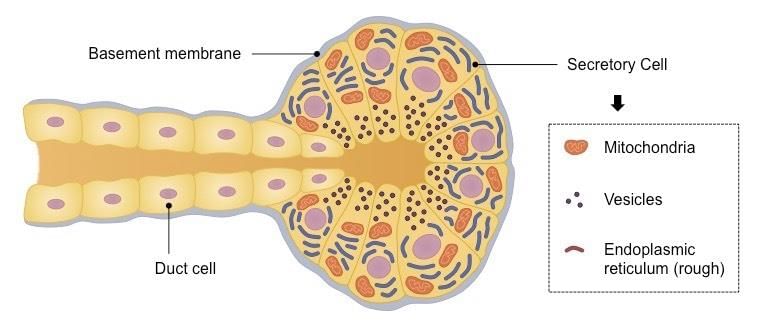
(b) Endocrine glands: Endocrine glands do not use ducts; instead, they release their secretions directly into the blood. Their secretions travel in the circulation to act on distant targets. Examples are the pituitary, thyroid and adrenal glands.
(c) Hormones: Hormones are chemical messengers secreted by endocrine glands. They are carried by the blood and act on specific cells, tissues or organs called target cells, regulating physiological processes such as growth, metabolism and reproduction.
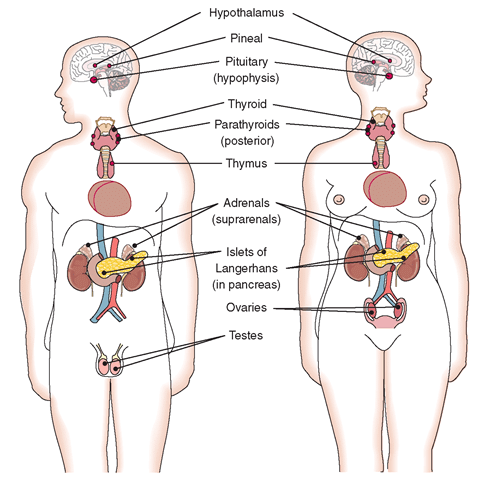
Q2: Diagrammatically indicate the location of the various endocrine glands in our body.
Ans: The principal endocrine glands and their typical locations are:
- Hypothalamus: at the base of the brain (controls pituitary function).
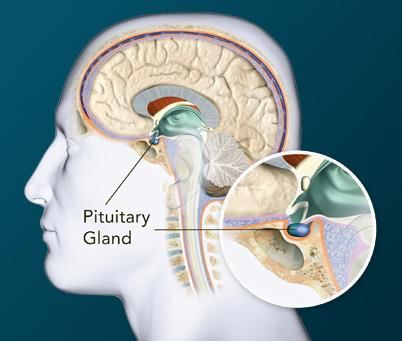
- Pituitary: in the sella turcica at the base of the brain.
- Thyroid: in the front of the neck, below the larynx.
- Parathyroids: small glands on the posterior surface of the thyroid.
- Thymus: in the upper part of the chest, behind the sternum (larger in children).
- Adrenal glands: on top of the kidneys.
- Pancreas: behind the stomach, in the upper abdomen (endocrine islets within it).
- Gonads (testes/ovaries): testes in the scrotum; ovaries in the pelvic cavity.
Q3: List the hormones secreted by the following:
(a) Hypothalamus
(b) Pituitary
(c) Thyroid
(d) Parathyroid
(e) Adrenal
(f) Pancreas
(g) Testis
(h) Ovary
(i) Thymus
(j) Atrium
(k) Kidney
(l) G-I Tract
Ans: (a) Hypothalamus: The hypothalamus secretes both releasing and inhibiting hormones that regulate pituitary function. Examples:
(1) Releasing hormones: gonadotrophin-releasing hormone (GnRH), thyrotrophin-releasing hormone (TRH), somatotropin-releasing hormone (GHRH), adrenocorticotrophin-releasing hormone (CRH).
(2) Inhibiting hormones: somatostatin (growth hormone-inhibiting).
(b) Pituitary: The pituitary has two parts: adenohypophysis (anterior) and neurohypophysis (posterior).
Hormones of the adenohypophysis include:
(i) Growth hormone (GH)
(ii) Prolactin (PRL)
(iii) Thyroid-stimulating hormone (TSH)
(iv) Adrenocorticotrophic hormone (ACTH)
(v) Luteinizing hormone (LH)
(vi) Follicle-stimulating hormone (FSH)
(vii) Melanocyte-stimulating hormone (MSH)
Hormones of the neurohypophysis:
(i) Oxytocin
(ii) Vasopressin (antidiuretic hormone, ADH)
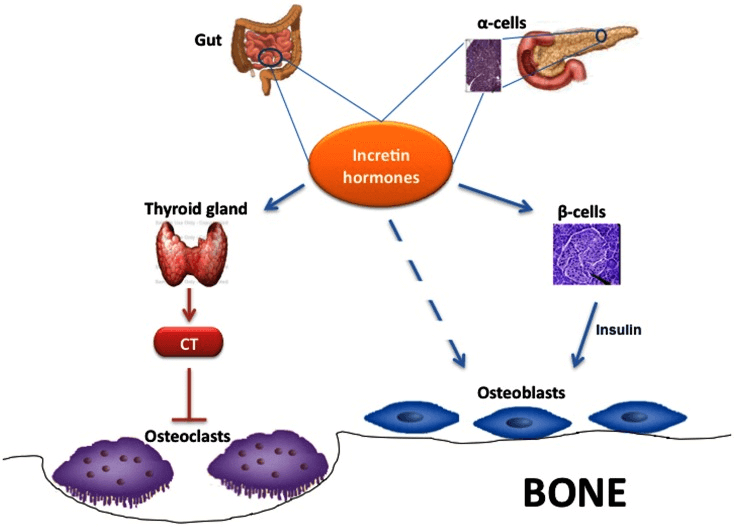
(c) Thyroid: The thyroid secretes thyroxine (T4), triiodothyronine (T3) and calcitonin (also called thyrocalcitonin).
(d) Parathyroid: The parathyroid glands secrete parathyroid hormone (PTH) (also called parathormone).
(e) Adrenal: The adrenal gland has cortex and medulla.
Adrenal cortex hormones: mineralocorticoids (e.g., aldosterone) and glucocorticoids (e.g., cortisol).
Adrenal medulla hormones:adrenaline (epinephrine) and noradrenaline (norepinephrine).
(f) Pancreas: The endocrine pancreas secretes insulin (from β-cells) and glucagon (from α-cells).
(g) Testis: The testes secrete the male sex hormone testosterone (and smaller amounts of other androgens).
(h) Ovary: The ovaries secrete female sex hormones estrogen (e.g., estradiol) and progesterone.
(i) Thymus: The thymus secretes thymosins and related thymic hormones involved in immune-cell development.
(j) Atrium: The atrial wall of the heart secretes atrial natriuretic factor (ANF) (also called ANP).
(k) Kidney: The kidney secretes erythropoietin (EPO), which stimulates red blood cell production.Renin (released by JG cells; also considered in endocrine-like functions)
(l) G-I tract: The gastrointestinal tract secretes peptide hormones such as gastrin, secretin, cholecystokinin (CCK) and gastric inhibitory peptide (GIP).
Q4: Fill in the blanks:
Hormones Target gland
(a) Hypothalamic hormones __________________
(b) Thyrotrophin (TSH) __________________
(c) Corticotrophin (ACTH) __________________
(d) Gonadotrophins (LH, FSH) __________________
(e) Melanotrophin (MSH) __________________
Ans:
(a) Hypothalamic hormones - pituitary gland (adenohypophysis/neurohypophysis)

(b) Thyrotrophin (TSH) - thyroid gland

(c) Corticotrophin (ACTH) - adrenal cortex

(d) Gonadotrophins (LH, FSH) - gonads (ovaries and testes)

(e) Melanotrophin (MSH) - melanocytes (pigment cells) in the skin

Q5: Write short notes on the functions of the following hormones,
(a) Parathyroid hormone (PTH)
(b) Thyroid hormones
(c) Thymosins
(d) Androgens
(e) Estrogens
(f) Insulin and Glucagon
Ans: (a) Parathyroid hormone (PTH):
- PTH is secreted by the parathyroid glands and its primary role is to raise blood calcium level.
- It increases calcium reabsorption in the kidneys and promotes calcium absorption from the intestine (indirectly), and it stimulates bone resorption to release calcium into the blood.
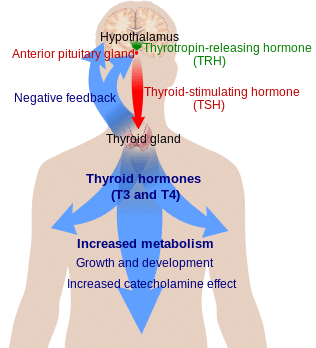
(b) Thyroid hormones: Thyroid hormones include thyroxine (T4), triiodothyronine (T3) and calcitonin.
- T3 and T4 regulate the basal metabolic rate (BMR) and influence carbohydrate, fat and protein metabolism, growth and development.
- Calcitonin helps lower blood calcium by inhibiting bone resorption, acting in opposition to PTH.
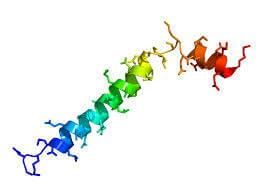
(c) Thymosins: Thymosins are secreted by the thymus and are important for T-lymphocyte development and maturation. They support cell-mediated immunity and help the immune system respond effectively to infections. Thymic hormones also influence the development of certain other immune cells.
(d) Androgens: The principal androgen is testosterone, produced by Leydig cells in the testes. Its functions include:
- development of male secondary sexual characteristics (facial hair, deepening of voice, etc.),
- stimulation of spermatogenesis and maturation of male reproductive organs,
- influence on male sexual behaviour and maintenance of accessory glands.
(e) Estrogens:
- Estrogens (for example, estradiol) promote development and maintenance of female secondary sexual characteristics, including breast development and the female body contour.
- They also support growth and maturation of ovarian follicles and play roles in the menstrual cycle and reproductive behaviour.
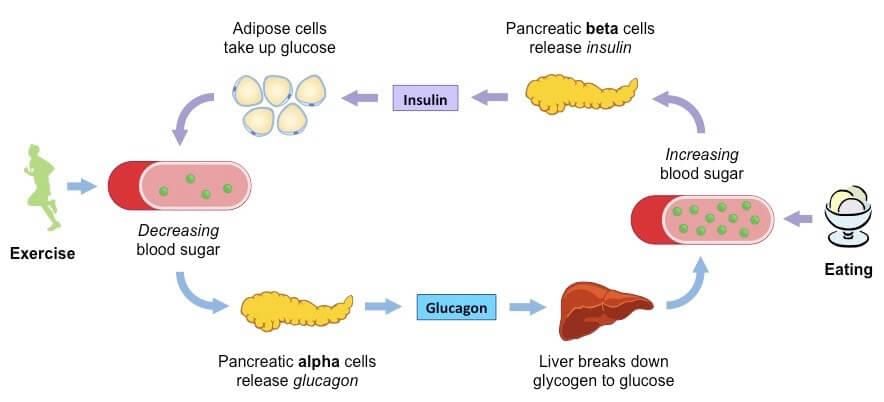
(f) Insulin and glucagon: Both are pancreatic hormones that maintain blood glucose homeostasis.
- Insulin (from β-cells) is a hypoglycaemic hormone: it promotes uptake of glucose into cells and stimulates glycogenesis (conversion of glucose to glycogen) in liver and muscle, lowering blood glucose.
- Glucagon (from α-cells) is a hyperglycaemic hormone: it stimulates glycogenolysis (breakdown of glycogen to glucose) and gluconeogenesis, raising blood glucose when it falls.
Q6: Give example(s) of:
(a) Hyperglycemic hormone and hypoglycemic hormone
(b) Hypercalcemic hormone
(c) Gonadotrophic hormones
(d) Progestational hormone
(e) Blood pressure lowering hormone
(f) Androgens and estrogens
Ans:
(a) Hyperglycemic hormone and hypoglycemic hormone: Glucagon is a hyperglycaemic hormone, while insulin is a hypoglycaemic hormone.
(b) Hypercalcemic hormone: Parathyroid hormone (PTH) is a hypercalcaemic hormone.
(c) Gonadotrophic hormones: Luteinizing hormone (LH) and follicle-stimulating hormone (FSH) are gonadotrophic hormones.
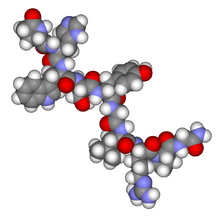
(d) Progestational hormone: Progesterone is a progestational hormone.
(e) Blood pressure lowering hormone: Atrial natriuretic factor (ANF) lowers blood pressure by promoting sodium and water excretion and by dilating blood vessels.
(f) Androgens and estrogens: Testosterone is an example of an androgen, while estradiol (an estrogen) is an example of an estrogen.
Q7: Which hormone deficiency is responsible for the following?
(a) Diabetes mellitus
(b) Goitre
(c) Cretinism
Ans: (a) Diabetes mellitus (type 1) is due to the deficiency of insulin, which leads to abnormally high blood glucose levels.
(b) Goitre is an abnormal enlargement of the thyroid gland commonly resulting from deficiency of thyroxine (T4) (often due to iodine deficiency), leading to increased TSH stimulation and gland enlargement.
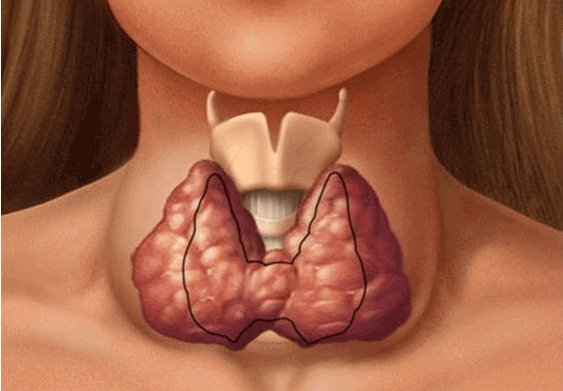
(c) Cretinism (congenital hypothyroidism) is caused by deficient secretion of thyroid hormones during early development, resulting in stunted physical and mental growth.
Q8: Briefly mention the mechanism of action of FSH.
Ans:
- Follicle stimulating hormone (FSH) is produced by the pars distalis (anterior pituitary).
- In females, FSH stimulates the growth and maturation of ovarian follicles. As follicles develop they secrete hormones (including inhibin) that exert negative feedback on pituitary FSH secretion.
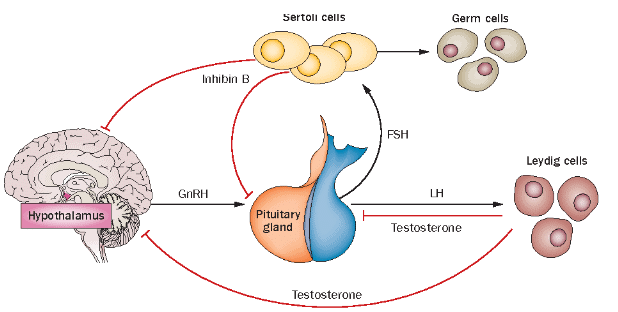
- Action of FSH: FSH acts by binding to specific receptors on the cell membranes of target follicular cells (granulosa cells) in the ovary.
- Formation of the hormone-receptor complex triggers intracellular biochemical changes that promote follicle growth, follicular cell proliferation and hormone production. Mature follicles then proceed towards ovulation, releasing a mature ovum into the fallopian tube for possible fertilisation.
Q9: Match the following: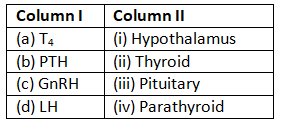
Ans: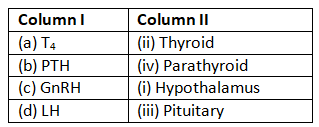
FAQs on NCERT Solutions: Chemical Coordination & Integration
Ans. The endocrine system is a network of glands that secrete hormones into the bloodstream to regulate various bodily functions such as growth, metabolism, and reproduction. These hormones travel to target organs where they exert their effects, helping to maintain homeostasis in the body.
2. What are some common endocrine disorders that can affect chemical coordination and integration?$#
Ans. Some common endocrine disorders include diabetes, thyroid disorders, adrenal insufficiency, and growth hormone deficiency. These conditions can disrupt the normal functioning of the endocrine system, leading to various health problems.
3. How do hormones play a role in chemical coordination and integration?$#
Ans. Hormones are chemical messengers produced by the endocrine glands that regulate various physiological processes in the body. They help coordinate different organ systems and ensure they work together harmoniously to maintain internal balance and respond to external stimuli.
4. How does the hypothalamus-pituitary axis contribute to chemical coordination and integration?$#
Ans. The hypothalamus and pituitary gland are key components of the endocrine system that work together to regulate hormone production and secretion. The hypothalamus controls the pituitary gland's release of hormones, which in turn stimulate other endocrine glands to produce their hormones, thus coordinating the body's overall hormonal balance.
5. Can lifestyle factors such as diet and exercise impact chemical coordination and integration in the body?$#
Ans. Yes, lifestyle factors such as diet, exercise, stress, and sleep can influence hormone levels and overall endocrine function. Maintaining a healthy lifestyle with a balanced diet, regular physical activity, and adequate rest can help support optimal chemical coordination and integration in the body.





