NCERT Solutions: Human Health & Disease

Q1: What are the various public health measures, which you would suggest as safeguard against infectious diseases?
Ans: Public health measures are preventive steps taken to reduce the spread of infectious diseases. Their aim is to lower contact between people and infectious agents and to reduce the opportunity for pathogens to multiply and spread. These measures are community-level as well as individual-level and include the following important actions.
Some of these methods are:
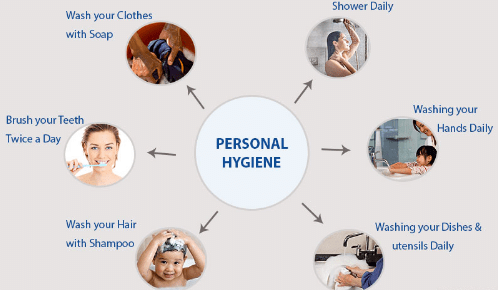
- Maintenance of personal and public hygiene: Personal hygiene includes regular bathing, hand washing with soap before eating and after using the toilet, safe food handling and storage, and drinking clean water. Public hygiene involves proper disposal of household and hospital waste, safe sewage disposal, cleaning and disinfection of public water reservoirs, and ensuring clean public spaces. These simple practices reduce the chances of many infections.
- Safe food and water: Ensure that food is cooked properly and that dairy products are pasteurised. Drink treated or boiled water and avoid food from unhygienic sources to prevent food- and water-borne infections.
- Environmental sanitation: Regular cleaning of streets, markets and water bodies, safe disposal of garbage and sewage, and control of animal and human waste help reduce disease transmission in the community.
- Isolation: Isolate infected individuals with contagious respiratory or skin diseases (for example, tuberculosis, chicken pox, influenza) to prevent person-to-person spread until they are no longer infectious.
- Vaccination: Vaccination stimulates the immune system to protect individuals and communities from specific infectious diseases. Routine immunisation programmes against diseases such as tetanus, polio, measles and others have dramatically reduced illness and deaths.
- Vector control: Control of disease vectors (for example, mosquitoes) reduces diseases like malaria, dengue and filariasis. Measures include removing stagnant water, using mosquito nets, spraying insecticides in breeding sites, and introducing larvivorous fish such as Gambusia in ponds.
- Surveillance and reporting: Early detection of outbreaks by health surveillance, prompt reporting to health authorities and rapid response help contain infections quickly.
- Health education: Teaching people about modes of transmission, prevention methods and when to seek medical care encourages responsible behaviour and community protection.
Q2: In which way has the study of biology helped us to control infectious diseases?
Ans: Advances in biology have greatly improved our ability to prevent, detect and treat infectious diseases. Biology provides knowledge of pathogens, their life cycles and modes of transmission; this information underpins effective control measures.
 Precautions to control infections
Practical contributions of biology include:
- Understanding pathogen life cycles and vectors, which allows targeted control measures (for example, mosquito control to prevent malaria).
- Development of vaccines and vaccination programmes that prevent many infectious diseases or reduce their severity.
- Discovery and improvement of antibiotics and antiviral drugs to treat infections.
- Biotechnology and diagnostics that enable rapid detection of pathogens and safer, more effective therapeutics and vaccines.
- Public-health strategies based on epidemiology and laboratory biology, such as screening, surveillance and outbreak management.
Q3: How does the transmission of each of the following diseases take place?
(a) Amoebiasis
(b) Malaria
(c) Ascariasis
(d) Pneumonia
Ans:
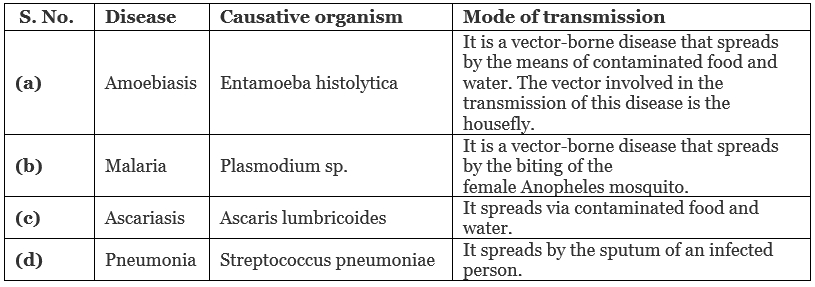
(a) Amoebiasis: Transmission occurs by the faecal-oral route. Infective cysts of Entamoeba histolytica are passed in faeces and contaminate food or water. When a person ingests contaminated food or water, the cysts reach the intestine and cause infection.
(b) Malaria: Malaria is a vector-borne disease transmitted by the bite of infected female Anopheles mosquitoes. The mosquito injects sporozoites into the human bloodstream while feeding; these reach the liver and then the red blood cells, causing the disease.
(c) Ascariasis: Ascariasis is caused by the roundworm Ascaris lumbricoides. Infection occurs when a person ingests eggs from contaminated soil, food or hands. The eggs hatch in the intestine and larvae mature into adult worms.
(d) Pneumonia: Pneumonia is most commonly spread by respiratory droplets from an infected person when they cough or sneeze. It can be caused by bacteria, viruses or fungi; close contact and crowded conditions increase the risk of transmission.
Q4: What measure would you take to prevent water-borne diseases?
Ans: Water-borne diseases such as cholera, typhoid and viral hepatitis spread mainly through contaminated water. Preventive measures focus on ensuring water is safe to drink and reducing contamination at source.
- Boiling water before drinking it: Boiling kills most bacteria, viruses and parasites. When municipal supply is uncertain, boiling or using an approved purifier makes water safe.
- Using water filters: Household water filters and community filtration systems remove particulate matter and many pathogens, improving safety.
- Chlorination: Chlorination of public water supplies is an effective and widely used method to disinfect water and control microbial contamination.
- Proper sanitation: Good sanitation-clean toilets, safe sewage disposal, hand washing and hygienic food handling-prevents faecal contamination of water sources.
- Avoiding contaminated water sources: Avoid drinking from ponds, lakes or open wells that may be contaminated; use piped or treated water when available.
Q5: Discuss with your teacher what does 'a suitable gene' means, in the context of DNA vaccines.
Ans: A 'suitable gene' for a DNA vaccine is a segment of DNA that encodes a pathogen protein (an antigen) capable of stimulating a protective immune response when produced inside the host's cells. The gene is selected so that the expressed protein is safe, antigenic (able to be recognised by the immune system) and able to induce immunity without causing disease. In practice, this gene is placed in a harmless vector (for example a plasmid) and delivered so host cells make the antigen and trigger immune memory.
Q6: Name the primary and secondary lymphoid organs.
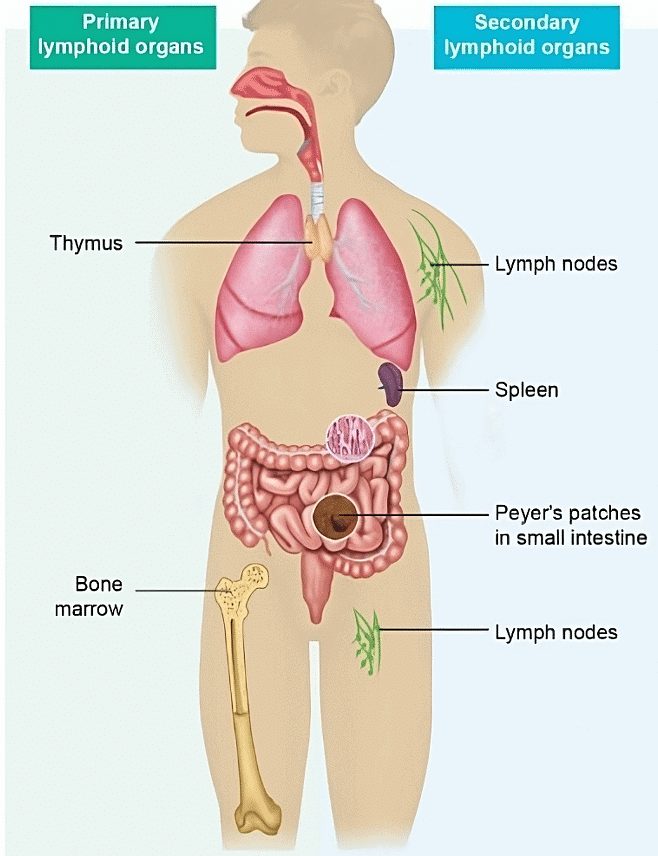
Ans: (a) Primary lymphoid organs: Bone marrow and thymus. These organs are sites where lymphocytes are produced and mature: B lymphocytes develop in the bone marrow and T lymphocytes mature in the thymus.
(b) Secondary lymphoid organs: Spleen, lymph nodes, tonsils, Peyer's patches of the small intestine and the appendix. These organs are sites where mature lymphocytes encounter antigens and mount immune responses.
Q7: The following are some well-known abbreviations, which have been used in this chapter. Expand each one to its full form:
(a) MALT
(b) CMI
(c) AIDS
(d) NACO
(e) HIV
Ans: (a) MALT - Mucosa-Associated Lymphoid Tissue (aggregates of lymphoid tissue in mucous membranes such as tonsils and Peyer's patches).
(b) CMI - Cell-Mediated Immunity (immune response involving T lymphocytes against infected cells or intracellular pathogens).
(c) AIDS - Acquired Immuno Deficiency Syndrome (a clinical condition caused by HIV infection leading to severe immune suppression).
(d) NACO - National AIDS Control Organization (the nodal body in India for formulating policy and implementing HIV/AIDS control programmes).
(e) HIV - Human Immuno Deficiency Virus (the virus that causes AIDS).
Q8: Differentiate the following and give examples of each:
(a) Innate and acquired immunity
(b) Active and passive immunity
Ans: (a) Innate and acquired immunity
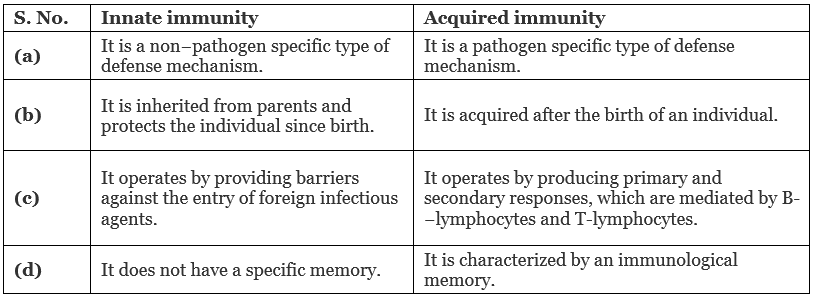
Innate immunity:
- Is present from birth and provides immediate, non-specific defence.
- Includes physical barriers (skin, mucous membranes), chemical barriers (acid in stomach), phagocytic cells (macrophages, neutrophils) and inflammatory responses.
- Example: skin barrier and phagocytosis of bacteria by neutrophils.
Acquired (adaptive) immunity:
- Develops after exposure to specific antigens and is antigen-specific.
- Involves B lymphocytes (antibody-mediated) and T lymphocytes (cell-mediated) and results in immunological memory.
- Example: immunity acquired after vaccination or recovery from measles.
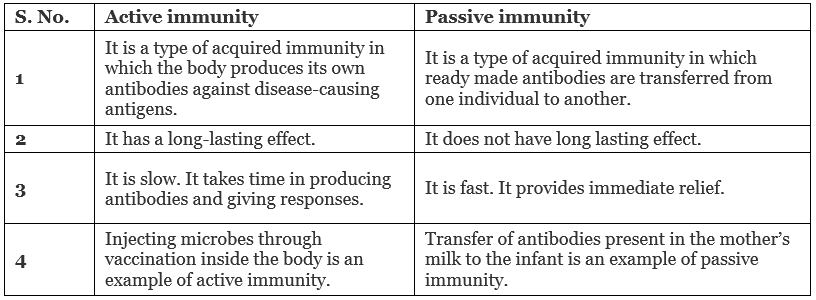
(b) Active and passive immunity
Active immunity:
- Occurs when the host's immune system produces antibodies and memory cells after exposure to an antigen or after vaccination.
- Tends to be long-lasting because of memory cell formation.
- Example: immunity following measles infection or after receiving a vaccine.
Passive immunity:
- Is the transfer of ready-made antibodies from one individual to another.
- Provides immediate protection but is short-lived because no memory cells are produced.
- Example: maternal antibodies transferred to the foetus across the placenta or by breast milk, and injection of immunoglobulin after snake bite.
Q9: Draw a well-labelled diagram of an antibody molecule.
Ans:
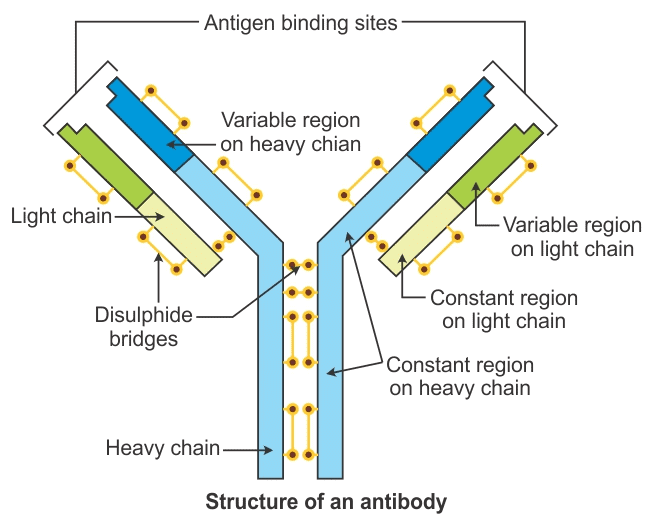
A brief labelled description of the antibody molecule (Ig) is:
- Two heavy chains and two light chains: The antibody has two identical heavy polypeptide chains and two identical light chains joined by disulfide bonds, forming a Y-shaped molecule.
- Variable (V) region: The tips of each arm contain variable regions that form the antigen-binding sites; these regions determine antigen specificity.
- Constant (C) region: The stem (Fc region) and lower parts of the arms are constant regions responsible for effector functions such as binding to phagocytes or complement.
- Antigen-binding sites: Two identical sites (one at each arm) where antigens are specifically recognised and bound.
Q10: What are the various routes by which transmission of human immunodeficiency virus takes place?
Ans: AIDS (Acquired Immuno Deficiency Syndrome) is caused by the Human Immuno Deficiency Virus (HIV). HIV is transmitted when infected bodily fluids enter the bloodstream or mucous membranes of another person. Common routes of transmission are:
- Unprotected sexual contact (vaginal, anal or oral) with an infected person.
- Transfusion of infected blood or blood products that have not been properly screened.
- Sharing contaminated needles and syringes (common in injecting drug use).
- From an infected mother to her child during pregnancy across the placenta, during delivery, or through breastfeeding (vertical transmission).
Preventive steps include practising safe sex (consistent condom use), screening blood before transfusion, using sterile needles, and providing antiretroviral therapy to reduce maternal-to-child transmission.
Q11: What is the mechanism by which the AIDS virus causes deficiency of immune system of the infected person?
Ans: HIV causes immune deficiency by targeting and destroying key immune cells, especially helper T lymphocytes (CD4+ T cells), which coordinate immune responses. The main steps are:
1. Entry and infection: HIV enters macrophages and CD4+ T cells and uses its RNA genome and the enzyme reverse transcriptase to make a DNA copy.
2. Integration and replication: Viral DNA integrates into host DNA and directs synthesis of viral proteins and new virus particles. These progeny viruses are released to infect other cells.
3. Destruction and dysfunction: Repeated infection leads to progressive loss and functional impairment of CD4+ T cells. As CD4 counts fall, the body cannot mount effective cell-mediated and antibody responses.
4. Result: The weakened immune system permits opportunistic infections and certain cancers, which characterise AIDS.
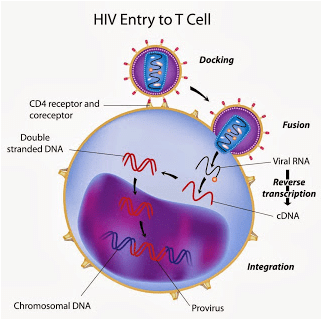 AIDS virus entering into cell
The progressive fall in helper T-lymphocyte numbers and function is the central reason for immune deficiency in HIV-infected persons.
Q12: How is a cancerous cell different from a normal cell?
Ans:
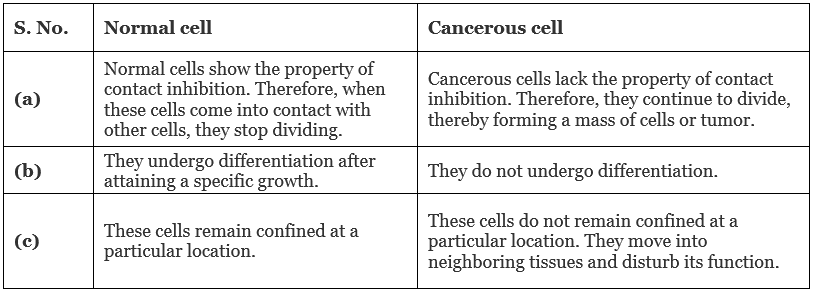
Key differences between cancerous and normal cells:
- Growth control: Cancerous cells show uncontrolled and excessive cell division, whereas normal cells divide in a regulated manner.
- Differentiation: Cancer cells often lose specialised structure and function (dedifferentiation), while normal cells are well differentiated.
- Invasiveness: Malignant cancer cells invade neighbouring tissues and can enter blood or lymphatic vessels, while normal cells respect tissue boundaries.
- Metastasis: Cancer cells may spread and form secondary tumours at distant sites; normal cells do not metastasise.
- Genetic changes: Cancer cells often have mutations and chromosomal abnormalities that drive uncontrolled growth; normal cells have stable genomes.
Q13: Explain what is meant by metastasis.
Ans: Metastasis is the process by which malignant tumour cells spread from the original (primary) site to form new tumours (secondary tumours) in distant organs. Cancer cells detach from the primary mass, enter the bloodstream or lymphatic system, travel to other tissues, exit the circulation and establish growth at new sites. Metastasis is a hallmark of malignant cancers and is often responsible for the serious clinical consequences of the disease.
Q14: List the harmful effects caused by alcohol/drug abuse.
Ans: Alcohol and drug abuse cause serious harms to the individual, the family and society. The effects are physical, psychological, social and economic.
A. Effects of alcohol:
Effects on the individual: Excessive alcohol damages the liver (fatty liver, hepatitis, cirrhosis), impairs the nervous system causing poor coordination and cognitive problems, and contributes to depression, fatigue, weight loss and appetite changes. Very high consumption can cause heart problems, coma and death. Alcohol during pregnancy may harm foetal development.
Effects on the family: Alcohol dependence often leads to family conflict, financial strain, neglect, emotional distress and domestic violence.
Effects on the society:
(a) Risky and impulsive behaviour leading to accidents.
(b) Increased violence and antisocial conduct.
(c) Breakdown of social relations and community networks.
(d) Loss of interest in work, education and social responsibilities, affecting productivity.
B. Effects of drugs: Drug addiction causes problems for the user, family and society.
Effects on the individual: Drugs damage the central nervous system and other organs such as the liver and kidneys, impair cognition and judgement, and increase the risk of infectious diseases (for example, HIV) when needles are shared. Long-term use causes mood swings, aggression and depression.
Effects on the family and society: An addicted person may become dependent, withdrawn and antisocial, causing emotional and financial harm to the family and imposing social and healthcare costs on the community.
Q15: Do you think that friends can influence one to take alcohol/drugs? If yes, how may one protect himself/herself from such an influence?
Ans: Yes. Peer influence is a strong factor in initiating alcohol or drug use, especially among young people. Ways to protect oneself include the following practical steps:
(a) Strengthen your will power and decision making; do not experiment out of curiosity.
(b) Avoid close association with friends who use drugs or pressure you to try them.
(c) Talk to parents, teachers or trusted peers about peer pressure and seek their support.
(d) Learn about the harmful effects of substances and engage in healthy extracurricular and recreational activities to fulfil curiosity and energy.
(e) Seek professional counselling promptly if you notice signs of dependence, depression or strong cravings.
Q16: Why is that once a person starts taking alcohol or drugs, it is difficult to get rid of this habit? Discuss it with your teacher.
Ans: Alcohol and many drugs produce physical and psychological dependence. Repeated use alters brain chemistry and increases tolerance, so that a person needs higher amounts to achieve the same effect. Withdrawal symptoms (such as anxiety, tremors, nausea and strong cravings) make stopping unpleasant and difficult. Social factors and routine behaviours associated with substance use also reinforce the habit.
Q17: In your view what motivates youngsters to take to alcohol or drugs and how can this be avoided?
Ans: Young people may be motivated to try alcohol or drugs by curiosity, desire for excitement, peer pressure, media influence, the need to cope with stress or negative emotions, family instability, or lack of constructive activities.
Preventive measures against addiction of alcohol and drugs:
- Parents should communicate openly, provide guidance and build their child's self-confidence and will power.
- Educate children about the health, legal and social consequences of substance use, and offer counselling where needed.
- Discourage experimentation by supervising activities and limiting exposure to peers who use substances.
- Encourage participation in sports, hobbies and other positive extracurricular activities to channel energy and reduce boredom.
- Provide prompt professional help (psychological support, counselling and medical care) if signs of dependence or depression appear.
FAQs on NCERT Solutions: Human Health & Disease
| 1. What are the common ways to prevent the spread of infectious diseases? |  |
| 2. How does the immune system protect the body from diseases? | |
| 3. What are the symptoms of a viral infection? | |
| 4. How does the body develop immunity to a specific disease? | |
| 5. Why is it important to seek medical attention when experiencing symptoms of a serious illness? | |





