NCERT Solutions: The French Revolution

Q1. Describe the circumstances leading to the outbreak of revolutionary protest in France?
Ans: Several factors contributed to the revolutionary protests in France in 1789:
- Social Inequality: French society was divided into three estates. The clergy (First Estate) and the nobility (Second Estate) enjoyed privileges, while the commoners (Third Estate) bore heavy taxes and had no say in political matters. This inequality fueled anger among the Third Estate.
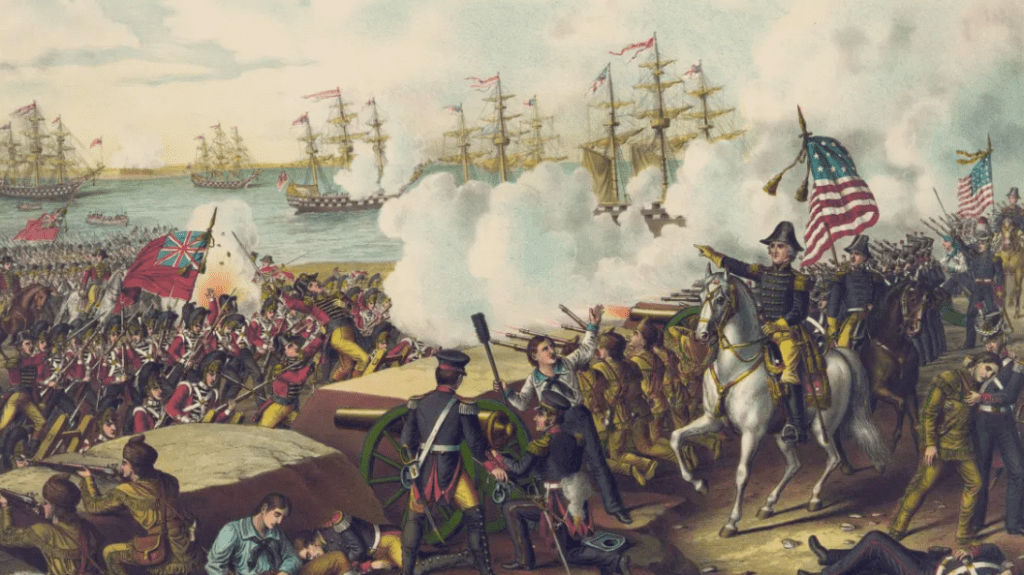 American War of Independence
 - Economic Crisis: France faced a severe financial crisis due to costly wars (like the American War of Independence) and extravagant spending by the monarchy. This led to increased taxation and widespread poverty.
- Enlightenment Ideas: Enlightenment philosophers like Rousseau criticized absolute monarchy and advocated ideas of liberty, equality, and fraternity. Their writings inspired revolutionary thinking.
- Weak Monarchy: King Louis XVI was seen as an ineffective leader who failed to address the grievances of the people. His inability to reform taxation and government deepened the crisis.
- Famine and Unemployment: Bad harvests in the 1780s led to food shortages and inflation, worsening the economic conditions. Widespread unemployment in urban areas further fueled dissatisfaction.
Q2. Which groups of French society benefited from the revolution? Which groups were forced to relinquish power? Which sections of society would have been disappointed with the outcome of the revolution?
Ans:
The French society was divided into three estates before the revolution:
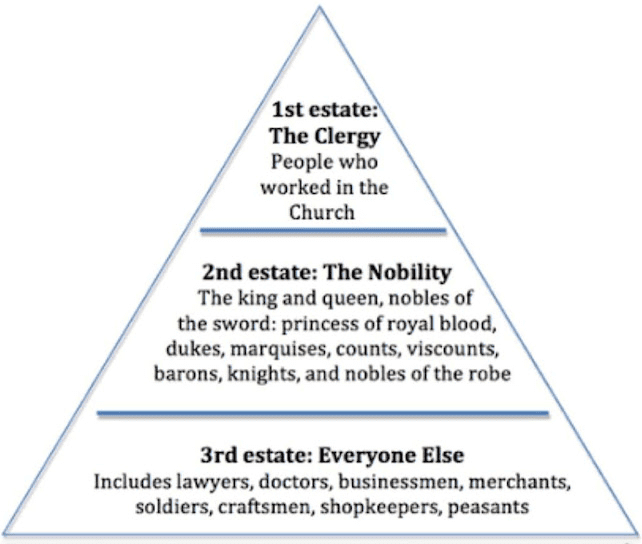 The Three Estates
Beneficiaries: The Third Estate, which included peasants, artisans, small farmers, landless labourers, servants, businessmen, merchants, court officials, and lawyers, benefited the most from the revolution. They gained rights such as freedom from feudal dues and the abolition of privileges enjoyed by the nobility and clergy.
Groups that lost power: The First Estate (clergy) and Second Estate (nobility) were forced to relinquish power. These estates had long enjoyed privileges by birth, including exemption from taxes and special political influence. After the revolution, these privileges were removed.
Disappointed groups: Women and the poorer working class were disappointed with the revolution's outcomes. Women were not granted equal rights or the right to vote, and the poor continued to face economic hardships, as the revolution did not fully address their needs.
Q3. Describe the legacy of the French Revolution for the peoples of the world during the nineteenth and twentieth centuries.
Ans:
The French Revolution left a lasting impact on the world during the 19th and 20th centuries:
 Liberty, Equality & Fraternity
Spread of revolutionary ideas: The ideals of liberty, equality, and fraternity inspired people across Europe and other parts of the world. The revolution led to the abolition of feudal systems in many countries during the 19th century.
Influence on independence movements: Colonized people adapted the ideas of freedom and equality to fight for independence. The concept of a sovereign nation-state became a powerful idea that motivated many to resist colonial rule.
Influence on notable figures: Leaders such as Tipu Sultan and Raja Ram Mohan Roy were inspired by the revolutionary ideas of France, which encouraged reforms in their own societies.
Q4. Draw up a list of democratic rights we enjoy today whose origins could be traced to the French Revolution.
Ans: Many democratic rights we enjoy today can be traced back to the French Revolution:
- Freedom of speech
- Freedom of expression
- Freedom of the press
- Abolition of censorship
- Right to vote
- Abolition of slavery
- Right to liberty
- Right to property
- Right to security
- Right to education
- Divorce laws
These rights form the foundation of modern democracies, where equality and justice are fundamental principles.
Q5. Would you agree with the view that the message of universal rights was beset with contradictions? Explain.
Ans: Yes, the message of universal rights during the French Revolution was indeed marked by contradictions:
Exclusion of women: While the revolution promoted equality, women were excluded from many basic rights. They were not allowed to vote, hold public office, or have a say in the law-making process.
Limited reach of rights: The rights to liberty, property, and security were not extended to women, and they were denied equal opportunities based on their abilities. This created a significant gap between the ideals of the revolution and its implementation.
Thus, while the revolution pushed for universal rights, it failed to include everyone equally, particularly women and certain marginalized groups.
Q6. How would you explain the rise of Napoleon?
Ans: The rise of Napoleon Bonaparte can be attributed to several factors:
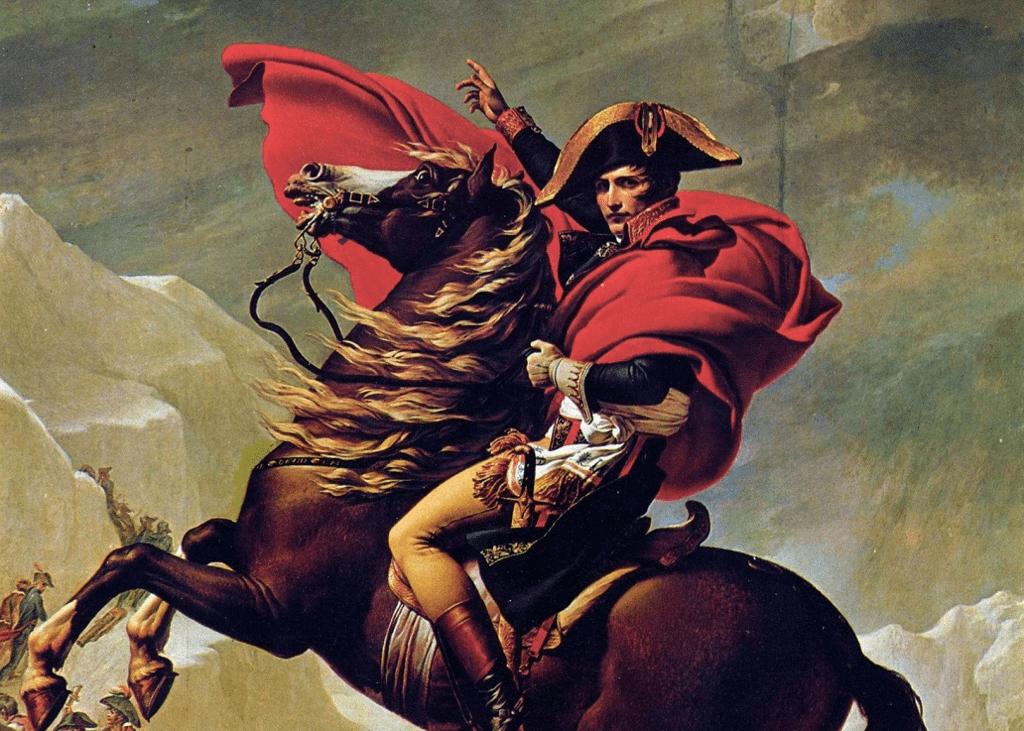 Napoleon Bonaparte
Political instability: After the revolution, France was left in a state of political turmoil. The weak and unstable government under the Directory created an opportunity for a strong leader to emerge.
Military success: Napoleon's military victories made him a national hero. His successful campaigns in Italy and Egypt boosted his popularity and increased his influence in French politics.
Support from the army: Napoleon had the loyalty of the French army, which helped him seize power through a coup in 1799, overthrowing the Directory and establishing himself as the ruler.
Introduction of reforms: As emperor, Napoleon introduced reforms such as the protection of private property and the establishment of a uniform system of weights and measures. His legal reforms, known as the Napoleonic Code, carried forward revolutionary principles of equality and modern governance.
Though Napoleon's reign ended with his defeat at the Battle of Waterloo, his impact on France and Europe remained, with many of his reforms continuing to influence modern societies.
FAQs on NCERT Solutions: The French Revolution
| 1. What were the main causes of the French Revolution that led to such a drastic change in society? |  |
| 2. How did the storming of the Bastille start the French Revolution, and why was it so significant? | |
| 3. What did the Declaration of the Rights of Man and Citizen actually mean for French society? | |
| 4. Why did the French Revolution become so violent and what happened during the Reign of Terror? | |
| 5. What were the lasting changes brought by the French Revolution to European society and government? | |





