NCERT Solutions: Socialism in Europe and the Russian Revolution

Q1. What were the social, economic, and political conditions in Russia before 1905?
Ans: The following were the social, economic, and political conditions in Russia before 1905:
(a) Social Conditions
- The majority religion was Russian Orthodox Christianity- which had grown out of the Greek Orthodox Church. But the empire also included Catholics, Protestants, Muslims, and Buddhists.
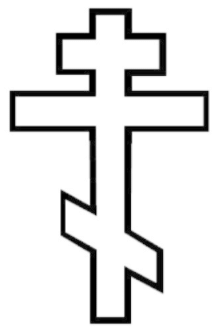 Cross of the Russian Orthodox Church
 - The non-Russian nationalities were not treated equally compared to Russian nationals.
- Workers were a divided group on the basis of skill and training.
(b) Economic Conditions
- The majority of Russians were agriculturists.
- There were few industries, and much of the production was still done by craftsmen.
- With the expansion of the Russian rail network, foreign investment in factories grew.
- There was huge coal, iron, and steel production. The workers were exploited by capitalists who made their lives miserable.
(c) Political Conditions
- Russia was a monarchy.
- The Tsars believed in the divine right of kings.
- They were not responsible to the Parliament.
- All political parties were illegal in Russia.
Q2. In what ways was the working population in Russia different from other countries in Europe before 1917?
Ans:
- In Russia, many workers maintained strong links with villages. Some even commuted daily from the countryside to work in towns, unlike most European workers.
- The workforce was divided by skill. For example, metalworkers were seen as the "aristocrats" of the working class because of their higher training and skill.
- Despite these internal divisions, Russian workers often united during strikes to protest against poor working conditions and exploitative employers.
- Factory workers faced harsh conditions, worked long hours, and were not allowed to form trade unions or political parties.
- Unlike in Europe, Russian peasants wanted to seize the land of nobles and often refused to pay rent or even attacked landlords.
Q3. Why did the Tsarist autocracy collapse in 1917?
Ans:
- The Tsar removed the first two Dumas (parliaments) and replaced them with people who only supported him.
- During World War I, he made all decisions on his own without asking the Duma.
- Many Russian soldiers died in the war, which made the people angry and lose trust in the Tsar.
- As Russian soldiers ran away from the war, they burned farms and buildings.
- This caused a big shortage of food in the country.
- These problems together led to the end of the Tsar's rule in 1917.
Q4. Make two lists: one with the main events and the effects of the February Revolution and the other with the main events and effects of the October Revolution. Write a paragraph on who was involved in each, who the leaders were, and what the impact of each was on Soviet history.
Ans:
(a) The February Revolution
In February 1917, there were severe food shortages in the workers' areas. Parliamentarians were against the Tsar's decision to dissolve the Duma.
- On 22nd February, a factory lockout happened, with many women leading strikes. The strikes spread, with workers surrounding important areas in Petrograd, like Nevskii Prospekt.
- On 25th February, the Duma was dissolved, leading to the ransacking of the Police Headquarters on 27th February. The cavalry refused to shoot at the protesters. By evening, soldiers and workers joined together to form the Petrograd Soviet, a "council."
- The Tsar abdicated his power on 2nd March, and the Soviet and Duma leaders set up a Provisional Government for Russia. The February Revolution was led by the people, not any political party. Petrograd was crucial in ending the monarchy and had an important place in Soviet history.
(b) The October Revolution
- The conflict between the Provisional Government and the Bolsheviks led to the October Revolution.
- In September 1917, Vladimir Lenin began organizing an uprising. On 16th October, he convinced the Petrograd Soviet and the Bolshevik Party to support a socialist takeover. Leon Trotsky led the Military Revolutionary Committee to carry out the plan.
- On 24th October, as the uprising began, Prime Minister Kerensky left the city for reinforcements. The Military Revolutionary Committee quickly took action: the ship Aurora shelled the Winter Palace, and by evening, the city was under Bolshevik control.
- After fierce fighting, the Bolsheviks secured the Moscow-Petrograd area. Their actions were approved by the All-Russian Congress of Soviets. The October Revolution, led by Lenin and Trotsky, marked the start of Lenin's rule with Bolshevik leadership.
Q5. What were the main changes brought about by the Bolsheviks immediately after the October Revolution?
Ans:
- Industries and banks were nationalized, meaning the government took over their ownership and management.
- Land was declared social property, allowing peasants to take land from the nobility. In cities, the Bolsheviks divided large houses to fit family needs.
- The use of old aristocratic titles was banned, and new uniforms for the army and officials were introduced. The Bolshevik Party was renamed the Russian Communist Party (Bolshevik).
- Despite opposition from their allies, the Bolsheviks made peace with Germany and withdrew from World War I.
- Later, the Bolsheviks emerged as the only dominant party in the elections to the All-Russian Congress of Soviets, which became Russia's Parliament.
Q6. Write a few lines to show what you know about
(a) Kulaks
(b) The Duma
(c) Women workers Between 1900 and 1930
(d) The Liberals
(e) Stalin's Collectivisation Programme
Ans:
(a) Kulaks
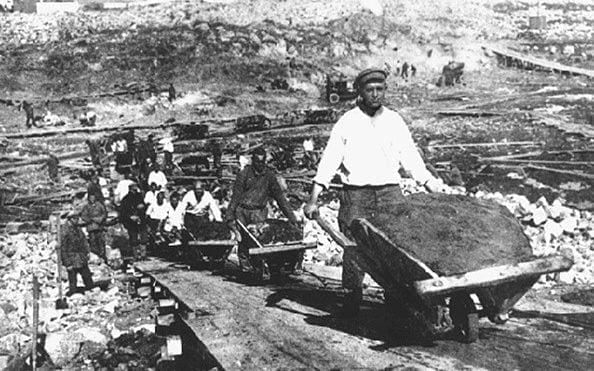
- They were the well-to-do peasants who were supposed to be holding stocks in the hope of higher prices.
- They were raided so that they may be eliminated in order to develop modern farms and establish state-controlled large farms.
(b) The Duma
The Duma was a consultative parliament that was created with the permission of the Tsar during the 1905 Revolution.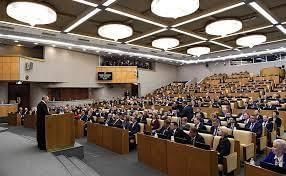
(c) Women Workers Between 1900 and 1930
- Women made up 31% of the factory labour force but were paid between 1/2 and 3/4 of a man's wages.
- They actively led the strikes in many factories. They even worked in the collective farms.
(d) The Liberals
- They were a group that looked to change society. They wanted a nation that tolerated all religions and opposed the uncontrolled power of dynastic rulers.
- They argued for a representative, elected parliamentary government with laws interpreted by a well-trained, independent judiciary that was separate from rulers and officials.
(e) Stalin's Collectivisation Programme
- Stalin hoped to solve the problem of food shortage by combining small farms with large and modern farms.
- This was a collectivisation programme that began in 1929. Peasants were forced to work in these state-controlled collective farms called Kolkhoz.
FAQs on NCERT Solutions: Socialism in Europe and the Russian Revolution
| 1. What were the main causes of the Russian Revolution in 1917? |  |
| 2. How did socialism spread across Europe in the 19th century? | |
| 3. What's the difference between Marxist socialism and utopian socialism? | |
| 4. Why did the Bolsheviks succeed where other socialist movements failed in Russia? | |
| 5. What were the key impacts of the Russian Revolution on world politics and socialism in Europe? | |





