NCERT Solutions: The Making of a Global World

Q1. Give two examples of different types of global exchanges which took place before the seventeenth century, choosing one example from Asia and one from the Americas.
Ans:
(i) Asia
- The Silk Routes are an example of vibrant pre-modern trade. These routes linked Asia with Europe and northern Africa and were used for the trade in Chinese silk and pottery, together with spices and other goods from India and Southeast Asia.
- Gold and silver were carried between Europe and Asia as part of long-distance trade. Foods and culinary ideas also travelled: for example, noodles and other Chinese foodways reached parts of Europe through these contacts.
- Christian missionaries and Muslim preachers too travelled along these routes, helping to spread religions, ideas and technical knowledge across regions.
(ii) America
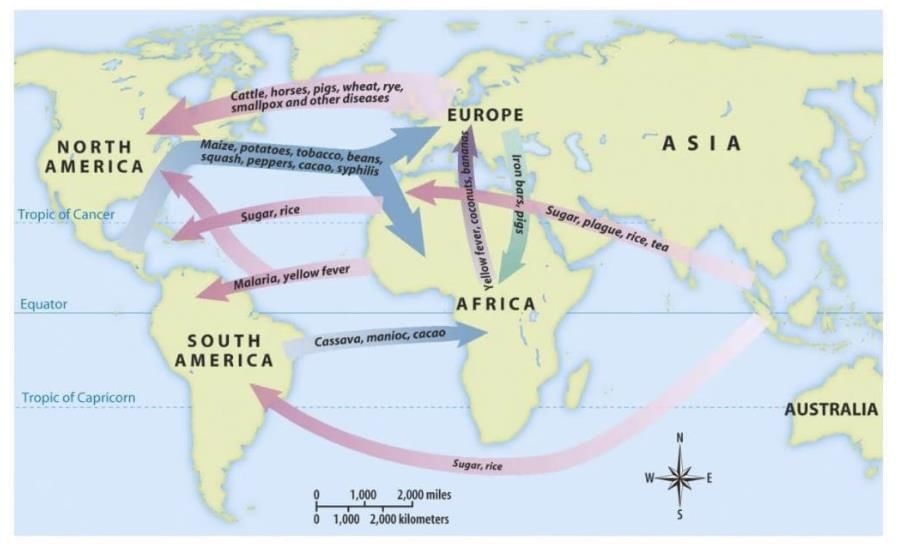
- The Americas were rich in foods and new crops. Common foods today, such as potatoes, tomatoes, chillies, maize, groundnuts and soya, were carried from the Americas to Europe and then to Asia after Christopher Columbus reached the islands of the Caribbean in the late fifteenth century.
- Precious metals such as silver from mines in Peru and Mexico increased European wealth and helped finance European trade with Asia.
- Thus, significant global exchanges in crops, animals, metals and ideas were already taking place before the seventeenth century.
Q2. Explain how the global transfer of disease in the pre-modern world helped in the colonization of the Americas.
Ans:
- The global transfer of disease helped in the colonisation of the Americas because the indigenous peoples of the Americas had no immunity to many diseases brought by Europeans.
- The Americas had been largely cut off from Eurasia for thousands of years, so native populations had not been exposed to Eurasian epidemics and lacked biological defence against them.
- In particular, smallpox proved to be a deadly killer. Epidemics of smallpox and other diseases rapidly reduced and decimated whole communities, causing social disruption and large population losses that made organised resistance and defence much harder, thereby easing European conquest and settlement.
Q3. Write a note to explain the effects of the following:
(a) The British government's decision to abolish the Corn Laws.
Ans:
- The British government's decision to abolish the Corn Laws led to the entry of cheaper imported grain into Britain. As a result, British agriculture found it hard to compete with these imports and some farming areas became unprofitable.
- Many landowners and agricultural workers lost their livelihoods and thousands of people migrated from the countryside to towns and cities in search of work. This movement contributed to rapid urbanisation, expanding the industrial labour force that supported Britain's industrial growth.
(b) The coming of Rinderpest to Africa
Ans:
- Rinderpest (a fast-spreading cattle disease) reached Africa in the late 1880s and spread rapidly, reaching Cape Town within a few years.
- The disease had a devastating effect on livelihoods and the local economy. It killed about 90% of cattle in many regions, destroying the main source of ploughing power and draught animals for transport.
- The collapse of cattle herds weakened subsistence systems and made many Africans vulnerable to colonial labour demands; planters, mine owners and colonial administrations were able to strengthen control and recruit labour for plantations and mines.
(c) The death of men of working-age in Europe because of the World War.
Ans:
- World War I, fought mainly in Europe between 1914 and 1918, caused huge losses: around nine million dead and some twenty million wounded. Many of the dead and wounded were men of working age.
- The reduction in the able-bodied workforce led to lower household incomes and labour shortages in many industries and farms.
- Women increasingly took on jobs that had been done by men, which changed social roles and helped strengthen demands for women's rights. This expansion of women's public and economic roles contributed to the growth of the feminist movement.
(d) The Great Depression on the Indian Economy
Ans:
- By the nineteenth century colonial India had become a major exporter of agricultural goods and an importer of manufactures. The Great Depression therefore affected India mainly through falling world prices for primary products.
- As international prices collapsed, agricultural incomes in India fell sharply and peasants' earnings dropped. This showed how closely India's economy was tied to the global market.
- For example, wheat prices in India fell by about 50% between 1928 and 1934. Since the colonial government did not reduce taxes, many peasants fell deeper into indebtedness across the countryside.
(e) The decision of MNCs to relocate production to Asian countries.
Ans: The relocation of industry to low-wage countries had several effects:
- It provided a cheap source of labour for multinational corporations, lowering production costs.
- It stimulated world trade and increased capital inflow into many Asian countries.
- It introduced new technology and modern production methods to those countries.
- It created greater employment opportunities, though the quality and security of employment varied across sectors.
Q4. Give two examples from history to show the impact of technology on food availability.
Ans: Examples of Technology Impacting Food Availability are:
(i) Improved Transportation Systems: Improved transport made it possible to move food to markets quickly and cheaply. Faster railways, more efficient wagons and larger ships helped carry food from distant farms to urban centres without serious spoilage.
(ii) Refrigerated Ships: The development of refrigerated ships allowed perishable foods to be carried long distances. Animals were slaughtered near the source-in places such as the United States, Australia or New Zealand, and frozen meat was transported to Europe. This cut shipping losses, reduced meat prices in destination markets and expanded food choices.
Q5. What is meant by the Bretton Woods Agreement?
Ans:
- After the Second World War, industrial countries agreed on an international economic system to preserve economic stability and promote full employment.
- The United Nations Monetary and Financial Conference was held in July 1944 at Bretton Woods in New Hampshire, USA. This conference created the International Monetary Fund (IMF) to help member countries manage external balance-of-payment problems.
- The International Bank for Reconstruction and Development(now part of the World Bank Group) was set up to finance post-war reconstruction and development; it began operations in 1947.
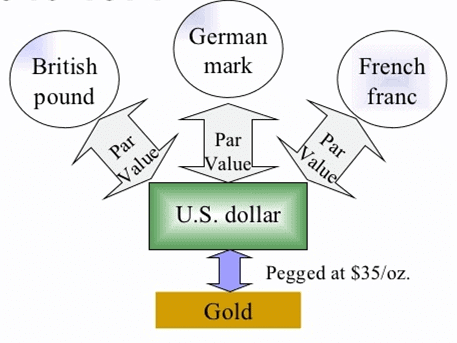 Bretton Woods System
 - Under the agreement, many currencies were pegged to the price of gold and the US dollar served as the principal reserve currency convertible to gold. Decision-making power in these institutions largely rested with the Western industrial powers.
Q6. Imagine that you are an indentured Indian labourer in the Caribbean. Drawing from the details in this chapter, write a letter to your family describing your life and feelings.
Ans:
Dear Family,
I hope you are all well. I am working in the Caribbean as an indentured labourer and wish to tell you about my life here. I was recruited under a contract that did not make clear the real conditions of work, travel and housing. The contractor often uses harsh and abusive language. The work on the plantation is heavy and long; sometimes I must finish a great deal of work in one day. If the contractor is not satisfied, he cuts our wages. I live like a servant with few rights. I know this will make you worried, but there are plans in the colonies to introduce laws to protect labourers like us, and I hope those reforms will arrive soon.
Your loving,
ABC
Q7. Explain the three types of movements or flows within the international economic exchange. Find one example of each type of flow that involved India and Indians, and write a short account of it.
Ans: The three types of movements or flows within international economic exchange are:
(i) Flow of trade (trade in goods such as cloth or wheat): India has been involved in long-distance trade since ancient times. It exported textiles and spices in return for gold and silver from Europe and other regions. These trade links connected Indian producers to distant markets and shaped local production.
(ii) Flow of labour (the migration of people to new areas in search of work): In the nineteenth century thousands of Indian labourers went abroad to work on plantations, in mines, and on road and railway projects. Many were employed as indentured labourers under contracts that promised return after a fixed period, but they often faced harsh living and working conditions and had limited legal protections.
(iii) Flow of capital (short-term and long-term loans to and from other nations): During and after the World Wars, Britain borrowed large sums from the United States. Because India was a British colony, these international financial burdens and policies affected India too: taxes and trade policies were adjusted to meet imperial financial needs, which had significant consequences for the Indian economy.
Q8. Explain the causes of the Great Depression.
Ans: There were several interlinked factors that led to the Great Depression:
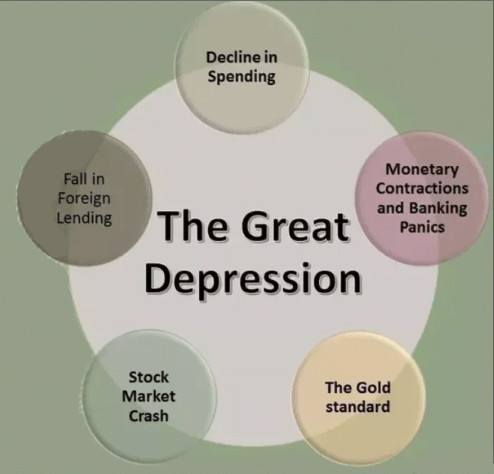
- The post-war global economy was fragile. One problem was agricultural overproduction, which caused a fall in food prices and reduced farmers' incomes.
- Farmers attempted to maintain income by increasing output, which added to the glut on the market and pushed prices down further.
- Prosperity in the United States in the 1920s created a cycle of rising employment, incomes and consumption. This boom encouraged speculative investment in the stock market, which made the system vulnerable.
- The stock market crash of 1929 produced panic among investors and depositors; people stopped investing and withdrew savings, causing a downward economic spiral.
- Many countries had borrowed heavily from the US. As American lenders reduced overseas lending, indebted countries faced severe financial strain.
- Bank failures in Europe, collapsing currencies and protectionist measures such as sharply raised US import duties worsened the global downturn. Together these factors produced a deep and prolonged depression from 1929 into the mid-1930s.
Q9. Explain what is referred to as the G-77 countries. In what ways can G-77 be seen as a reaction to the activities of the Bretton Woods twins?
Ans:
- The Group of 77 (G-77) is a coalition of developing countries that campaigned for a New International Economic Order (NIEO). Their demands included:
(i) Real control over their natural resources.
(ii) Fairer prices for raw materials.
(iii) Better access for their manufactured goods to markets in developed countries. - The G-77 grew as a political group within the United Nations, representing the collective economic interests of developing countries.
- The Bretton Woods twins - the IMF and the World Bank - were established under the leadership of the developed countries and were seen as institutions primarily serving industrialised nations' needs.
- Many developing countries felt that these institutions did not address their problems of underdevelopment or give them a fair voice in global economic decision-making.
- Therefore, the G-77 can be viewed as a reaction seeking to protect and promote the interests of developing nations and to press for reforms in the international economic system that would give them greater control and fairer terms of trade.
FAQs on NCERT Solutions: The Making of a Global World
| 1. What is the significance of the global economy in the 19th century? |  |
| 2. How did the First World War impact global trade? | |
| 3. What role did the Great Depression play in shaping the global economy? | |
| 4. How has globalization transformed cultural exchanges? | |
| 5. What are the challenges faced by countries in a globalized world? | |





