NCERT Solutions: The Age of Industrialisation

Q1. Explain the following:
(a) Women workers in Britain attacked the Spinning Jenny.
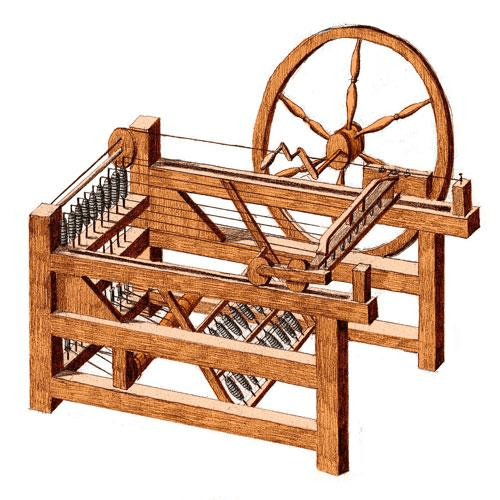 Spinning Jenny
Ans:
- With the Spinning Jenny, one worker could set a number of spindles in motion by turning a single wheel and could spin several threads at the same time, greatly speeding up the spinning process.
- Women workers in Britain depended on hand spinning for their livelihoods. The new machine threatened that livelihood and created a real fear of unemployment among women employed in the woollen and cotton industries. As a result, some women attacked the machines and factory property to protect their work and income.
- Attacks on machines were also a form of protest against falling wages and the loss of control over the pace and terms of work. These protests showed how technological change could cause immediate social distress when workers had few other means of support.
(b) In the seventeenth century merchants from towns in Europe began employing peasants and artisans within the villages.
Ans:
- Expansion of world trade increased the demand for goods, and town producers could not meet the rising quantity required for distant markets.
- Guilds in towns controlled production, raw materials and trade; their monopoly rights made it difficult for new merchants to expand production within towns.
- Because rulers often granted exclusive production and trade rights to guilds, independent merchants found it hard to operate in towns. To get around these restrictions and increase output, merchants began employing peasants and artisans in the countryside, giving them raw materials and taking finished goods back for sale.
- This practice spread the work into villages, created a system of decentralised production and is a key feature of what historians call the putting-out or domestic system.
(c) The port of Surat declined by the end of the eighteenth century.
Ans:
- European trading companies acquired increasing power and secured concessions and monopoly rights from local authorities. As colonial power grew, new ports such as Bombay and Calcutta expanded under European control.
- Much trade shifted to these new ports and was carried in European ships rather than the older indigenous networks that served Surat.
- Other factors, such as changing trade routes and the shift of commercial focus to ports controlled by Europeans, reduced Surat's importance. The gross value of trade through Surat fell from about ₹16 million to ₹3 million by 1740, reflecting this steep decline.
(d) The East India Company appointed gomasthas to supervise weavers in India.
Ans:
- After gaining political power, the East India Company sought to secure a monopoly over Indian textiles and to control costs and supplies for its trade.
- To do this, the Company appointed paid agents called gomasthas to supervise weavers, collect the cloth, inspect quality and ensure deliveries.
- Weavers who accepted advances or loans from the Company were obliged to sell their cloth only to the gomasthas, preventing them from dealing with other buyers and effectively tying them to the Company.
- Gomasthas were usually outsiders with little social connection to the village; many acted harshly towards weavers, punished delays and enforced Company terms, which increased weavers' indebtedness and reduced their bargaining power.
Q2. Write True or False against each statement:
(a) At the end of the nineteenth century, 80 per cent of the total workforce in Europe was employed in the technologically advanced industrial sector.
Ans. False
Explanation: At the end of the nineteenth century, less than 20 per cent of the total workforce in Europe was employed in technologically advanced industrial sectors. Most people still worked in agriculture or in small-scale, handicraft production rather than in modern factories.
(b) The international market for fine textiles was dominated by India till the eighteenth century.
Ans. True
Explanation: Before the rise of machine industries in Europe, fine cotton and silk goods from India dominated international trade in textiles. Indian textiles were highly valued for their quality and variety until European industrial production began to change the market in the late eighteenth century.
(c) The American Civil War resulted in the reduction of cotton exports from India.
Ans. False
Explanation: The American Civil War disrupted cotton supplies from the United States to Britain. This created a shortage in Britain and led British buyers to turn to India for raw cotton. As a result, India's raw cotton exports actually increased during that period.
(d) The introduction of the fly shuttle enabled handloom workers to improve their productivity.
Ans. True
Explanation: The fly shuttle was a mechanical device that allowed a single weaver to pass the shuttle across a much wider loom by using ropes and pulleys. This made it possible to weave wider cloth more quickly and increased productivity of handloom workers.
Q3. Explain what is meant by proto-industrialization.
Ans:
- Proto-industrialisation refers to an early phase of industrial development in which production for distant and international markets was organised on a large scale but outside factories in decentralised units.
- Goods were still made largely by hand by skilled craftspeople and rural producers working from their homes or small workshops. Merchants supplied raw materials and collected finished goods for sale.
- This system expanded production beyond towns and laid the groundwork for later factory-based industrialisation by increasing the scale of production and linking rural producers to global markets.
Q4. Why did some industrialists in nineteenth-century Europe prefer hand labour over machines?
Ans:
- New machines and technologies were often expensive and not fully proven, so many producers were cautious about investing in them.
- Machines could break down and were costly to repair, increasing production risk.
- There was an abundant supply of cheap labour because many peasants and migrants moved to towns in search of work, making hand labour economically attractive.
- In industries with seasonal demand, employers preferred hand labour so they could hire workers only when needed rather than maintain costly machines year-round.
- Many products required skilled hand work that available machines could not replicate. For example, in mid-nineteenth-century Britain hundreds of varieties of simple tools were made, each needing human skill rather than mechanised production.
Q5. How did the East India Company procure regular supplies of cotton and silk textiles from Indian weavers?
Ans: The East India Company used several methods to secure regular supplies of cotton and silk textiles:
- It established political power to assert and protect a monopoly over trade.
- The Company eliminated local intermediaries and sought direct control over production by appointing paid agents called Gomasthas to supervise weavers, collect cloth and inspect quality.
- Weavers were often given loans to buy raw materials; those who took advances were obliged to sell the cloth back to the Company through the gomasthas, preventing them from dealing with other buyers.
- The Company set up a system of management that fixed prices and controlled supplies. By controlling credit and purchases, the Company could dictate terms, reduce competition and ensure a steady flow of textiles to meet its needs.
Q6. Imagine that you have been asked to write an article for an encyclopedia on Britain and the history of cotton. Write your piece using information from the entire chapter.
Ans: During the seventeenth and eighteenth centuries a network of rural and urban producers supplied textiles for local and international markets. A garment maker would buy wool or cotton, pass it to spinners and weavers, and send the finished cloth for fulling and dyeing; London served as a major finishing and marketing centre. This decentralised phase of production is called proto-industrialisation, where the factory was not yet the main unit of production.
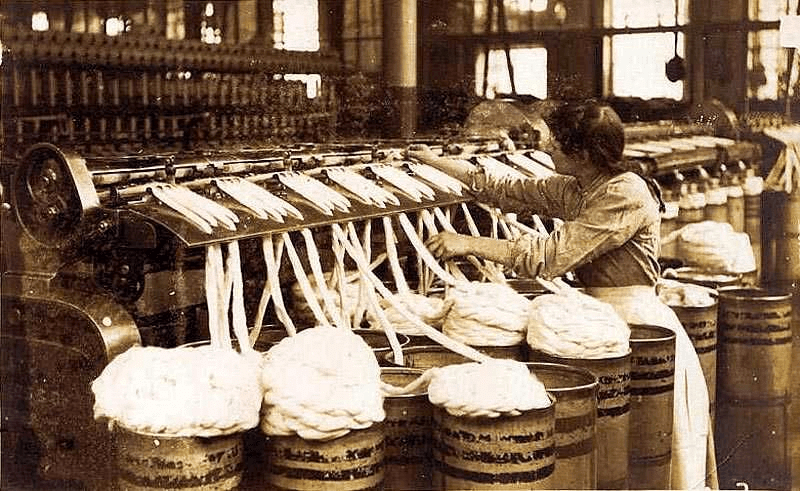 Cotton industry
Cotton became the leading material of the emerging factory system. From about 1760 onwards, the scale of cotton production in Britain grew rapidly as new machines and mill organisation were introduced. Imports of raw cotton rose sharply from 2.5 million pounds in 1760 to 22 million pounds in 1787 because of increased demand from newly established cotton mills and improved machinery.
Important inventions such as the Spinning Jenny and later water frames and power looms increased yarn and cloth output. These inventions also caused social tensions because they reduced the need for hand labour and threatened traditional livelihoods. Before industrialisation, high-quality cotton and silk textiles had been imported from India in large quantities; Indian goods were preferred for their fine quality.
As the East India Company expanded its political influence in India, it intervened in Indian textile production to secure supplies and markets, while industrial towns in Britain, notably Manchester, became hubs of cotton manufacture. Over time, Britain transformed from a major importer of Indian textiles into a leading exporter of machine-made cloth, with India increasingly becoming a market for British goods.
Q7. Why did industrial production in India increase during the First World War?
Ans:
- British factories were heavily engaged in producing war supplies, so exports to colonial markets such as India declined; this created a gap in the home market that Indian producers could fill.
- With fewer imported British goods available, Indian industries had the opportunity to supply everyday textiles and other products to local consumers.
- Indian factories were also called upon to produce war-related items such as jute bags, cloth for army uniforms, tents and leather boots, which raised demand for industrial goods.
- To meet rising demand, new factories were established and existing ones expanded production, and many new workers were employed, giving a substantial boost to Indian industrial activity during the war.
FAQs on NCERT Solutions: The Age of Industrialisation
| 1. What were the main factors that led to the rise of industrialisation in the 18th and 19th centuries? |  |
| 2. How did industrialisation impact the lives of workers during this period? | |
| 3. What role did the British East India Company play in the industrialisation of India? | |
| 4. What were the effects of industrialisation on the environment? | |
| 5. How did consumers and markets change with the advent of industrialisation? | |





